Showing posts with label Heavy-piece middlegame. Show all posts

Sunday, 4 January 2026

Cracovia 60+ Round Nine

FACED a Spaniard.

Spanton (1913) - Manuel Llopis de Aysa (2000)
QGD Exchange
1.c4 e6 2.Nc3 d5 3.d4 Nf6 4.cxd5 exd5 5.Bg5 Be6 6.e3 0-0 7.Bd3 h6!?
There was a time, not so long ago, when ...h6 had a dubious reputation in the Exchange Variation of the Queen's Gambit Declined. The problems were thought to be twofold: i) it provides White a target for a g-pawn push, or a possible piece sacrifice; ii) it takes away a square a black rook might want to use, after joining the third rank at d6 or e6, for putting pressure on White's kingside.
So what has changed? Nothing really - those criticisms are still valid, BUT 7...h6!? comes with engine approval, eg it is the top choice of Stockfish17.1 and Dragon1. Therefore, the argument goes, the benefits of ...h6 must outweigh its drawbacks.
The position after 7.Bd3 occurs 11,650 times in ChessBase's 2026 Mega database
The continuation 7...c6 occurs 3,916 times (34%), 7...Nbd7 occurs 2,939 times (25%) and 7...h6 occurs 2,251 times (19%).
However, make the same search, but from 2023 onwards only, and the results are rather different. There is still quite a substantial number of games, 2,227, and 7...c6 is still most popular, but its 695 appearances represent a more modest 31%. In second place, with 630 games (28%). is 7...h6, while 7...Nbd7's 265 games is 12%.
In other words, in recent praxis, 7...c6 has slipped three percentage points, and 7...Nbd7 has dropped 13 percentage points, but 7...h6 has gained nine percentage points.
This is surely an example of how engines are affecting opening choices, even in non-tactical positional lines.
Back to the game.
8.Bh4 Re8 9.Qc2
Guess which move is Black's most popular continuation (hint: it is also liked by the engines)
*****
*****
*****
*****
*****
Well done if you plumped for 9...c5!? - you either know your (modern) theory, or you have a natural affinity for the Exchange Variation of the QGD.
I suspect most club players would give 9...c5!? little or no consideration. After all, what happens if White captures on c5, saddling Black with an isolated queen's pawn? Well, after 10.dxc5, the engines continue 10...d4!?, and if 11.exd4 (the most popular move in Mega26) Qxd4 (attacking the h4 bishop as well as the c pawn) 12.Nf3, then 12...Bd8+!?, when the engines reckon Black is at least equal.
The engines' alternative to 10.dxc5 is 10.Nf3 or 10.Nge2, but then 10...c4!? comes with tempo. For those who do not like the ...c4 move in such positions, 10...Nc6 looks reasonable.
9...c6
This, to me, is the most natural continuation, or, at least, the one I regard as being most 'normal' in this opening.
The position occurs 2,716 times in Mega26
*****
*****
*****
*****
*****
10.Nf3 Ne4 11.Bxe7 Qxe7 12.Bxe4!?
This is very much second in popularity to 12.0-0, but it has been played by Magnus Carlsen and other strong grandmasters.
12...dxe4 13.Nd2 Bf5
ML offered a draw.
Who, if anyone, stands better?
*****
*****
*****
*****
*****
Equal chances, according to the engines.
14.0-0 Bg6 15.a3 Nd7 16.b4 Nb6 17.Na4 Nxa4
The engines reckon Black has at least the better part of equality after 17..Nd5.
18.Qxa4 a6 19.Qc2 Rad8 20.Nc4?!
The engines strongly dislike this, suggesting 20.Qc5 or 20.Rfc1 (one of the points of 20.Rfc1 is that it frees the f1 square for the knight).
20...Qg5
Best, according to the engines, is 20...Rd5, eg 21.Ne5 Bh5 22.h3 f6 23.Nc4 Rg5, when Black has promising kingside play.
21.Kh1 Bf5 22.Ne5 f6 23.Nc4 Be6 24.Rae1 Bxc4 25.Qxc4
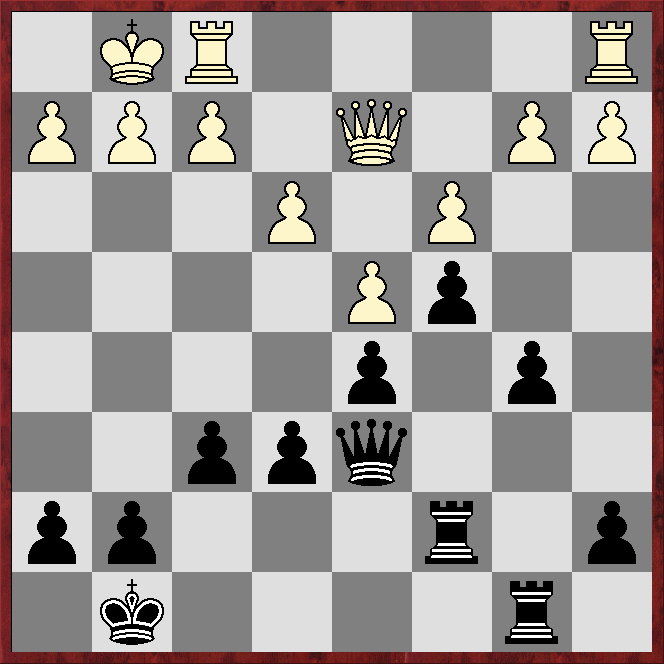
How would you assess this heavy-piece middlegame?
*****
*****
*****
*****
*****
Completely equal, according to the engines.
25...Qd5 26.Rc1 Qxc4 27.Rxc4 Rd5 28.Rfc1 Kf7 29.Rc5 Ke6 30.Kg1 Rb8 31.Kf1 Rxc5 32.Rxc5
How would you assess this rook-and-pawn ending?
*****
*****
*****
*****
*****
Completely equal, according to the engines.
32...Kd6 33.Ke2 b6 34.Rc2 Rc8 35.f3 exf3+!? 36.gxf3 Re8 37.Kd3 Re7 38.e4 Re8?!
Black should not do nothing - the engines suggest 38...g5, maintaining equality.
39.Rg2
The engines suggest 39.f4 or 39.a4.
39...Re7?!
White's rook should almost certainly not be allowed to occupy g6, so again ...g5 is called for.
40.Rg6
How should Black proceed?
*****
*****
*****
*****
*****
40...Kc7?!
The engines suggest 40...Ke6, or play on the queenside with 40...b5 or 40...a5, or 40...h5!?, but in each case with a large advantage to White.
41.f4 Rd7 42.Kc4
The engines suggest clamping down on the kingside with 42.h4, intending h5, or advancing on the queenside with 42.a4. If, for example, 42.h4 is met by 42...c5, then 43.bxc5 bxc5 44.d5.
42...Kd6!?
This is the best try, according to the engines, but they reckon White is winning.
How should White proceed?
*****
*****
*****
*****
*****
43.e5+?!
Winning a pawn, but letting the black rook become active. Instead, White should increase the pressure, eg 43.f5!? Kc7!? 44.a4 Rf7 45.a5 h5!? 46.h4 Kb7 47.Rg1 Re7 48.Re1 Rf7 49.Kd3 Kc7 50.Rc1 Kb7 51.c5 cxd5 52.exd5 bxa5 53.bxa5 Re7 54.Kd4, when White's advantage is worth more than a rook, according to the engines - Black's three kingside pawns are held up by two White pawns, leaving d5 a monster.
43...Ke6 44.exf6
The engines prefer 44.h4!?, and if 44...Kf6, then 45.Rg1!?, the point being 45...Kxf4? loses to 46.e6 Re7 47.Rf1+ Ke4 48.Re1+ Kf5 49.d5 etc.
44...gxf6 45.Rxh6 Rg7 46.Rh5 Rg1 47.f5+ Kd6 48.Rh6 Rc1+ 49.Kb3 Kd5 50.Rxf6 Kxd4 51.Kb2
Black has three plausible rook moves - which should he play?
*****
*****
*****
*****
*****
51...Rf1?
The engines agree this loses; they also agree 51...Rc4! draws. Stockfish17.1 reckons 51...Rh1!? also draws, but Dragon1 reckons it loses. Even after the 51...Rh1!? line is continued for several moves, eg 52.Rxc6 Rxh2+ 53.Kb3 b5 54.Rxa6 Rh3+ 55.Kc2 Rh2+ 56.Kd1 Rf2 57.f6 Rf5 58.Rd6+ Ke4, both engines persist in their different evaluations. One reason 51...Rc4! draws is that 52.h4 can be met by 52...Ke5.
52.Rxc6 Rf2+
How should White proceed?
*****
*****
*****
*****
*****
53.Rc2?
Both 53.Kc1 and 53.Kb3 apparently win, but the text does not. One winning line runs 53.Kc1 Rxf5 54.Rxb6 Kc3 55.Rc6+ Kb3 56.Rxa5, when White is three pawns up, and the Syzygy endgame tablebase confirms Black is lost.
53...Rxf5 54.h4 Rh5 55.Kb3!?
Black to play and draw
*****
*****
*****
*****
*****
55...b5?
The one plausible move that loses, according to the engines. Of course not 55...Rxh4?? 56.Rc4+ etc, but both 55...Kd5 and 55...a5!? leave White with at best a slight edge, according to the engines, although it takes Dragon1 a lot longer to realise this than Stockfish17.1. After 55...Kd5, White can protect the h pawn with 56.Rh2 or 56.Rc4, but there seems no way to make progress, while 56.Rd2+ Kc6 57.Rd4 does not change anything.
After 55...b5? it is White to play and win
*****
*****
*****
*****
*****
56.Rc6?
Thanks to 55...b5?, White's protecting the h pawn with 56.Rh2!? now wins, eg 56...Ke4 57.Kc3 Ke3 58.Rh3+ Ke4 59.Kc2!? Kd4 60.Ke2 Ke4 61.Kf2 Kf4 62.Rh1 Kg4 63.Ke4 Kf5 64.Kd4!? Kf6 65.Rh3!? (White's ability to temporise with the rook is what makes the endgame winning) Kf5 66.Re3!? Rxh4+ 67.Kc5 Rh6 68.Kd3 with Rd6 and Rxa6 to come. There are lots of alternatives along the way, but the engines are sure White always has a win.
56...Rxh4 57.Rxa6
The main difference between the position in the game and the one reached in the previous note is that in the game White's king is confined to the back three ranks.
57...Rh3+ 58.Kc2 Rh2+ 59.Kd1 Kd3 60.Ke1 Kc4 61.Rg6 Kb3 62.Rg3+ Ka4 63.Rd1 Ra2 64.Kc1 Rxa3 65.Rxa3+ Kxa3 66.Kc2 Kxb4 ½–½
With the b pawn in its half of the board, this is only a win for the attacking side if the king can get to one of three squares two ranks ahead, ie in this case a3, b3 or c3, and since White easily stops that with the obvious 67.Kb2, the ending is drawn

Monday, 10 November 2025

Cap Negret Round Three

Salvador Freijedo Álvarez (2123) - Spanton (1896)
QGD Semi-Tarrasch
1.d4 d5 2.Nf3 e6 3.c4 Nf6 4.Nc3 c5
This is fifth in popularity, behind 4...Nbd7, 4...Bb4, 4...c6 and especially 4...Be7.
5.e3
The main move is 5.cxd5, but there are 3,721 examples of the text in ChessBase's 2025 Mega database.
5...Nc6 6.cxd5 exd5
How should White proceed?
*****
*****
*****
*****
*****
7.Be2
This is the commonest continuation in Mega25, but Stockfish17.1 and Dragon1 marginally prefer 7.Bb5, when the main line in Mega25 runs 7...Bd6 8.dxc5 Bxc5 9.0-0 0-0 10.b3, with a slight edge for White (Dragon1), or at least the better part of equality (Stockfish17.1).
7...c4!?
This is Dragon1'a top choice by a small margin over the much more popular 7...cxd4, which is Stockfish17.1's recommendation.
8.0-0
This is the normal continuation, and the engines' preference. The problem with 8.b3!?, immediately attacking the advanced pawn, is that Black has the pinning 8...Bb4.
8...Bb4 9.Bd2 0-0
Now both sides have castled, how would you assess the position?
*****
*****
*****
*****
*****
White has a slight lead in development, but the game is probably going to hinge on how White deals with Black's space-gaining queenside pawn-majority. Stockfish17.1 gives White a slight edge; Dragon1 calls the game equal.
10.b3 Bxc3 11.Bxc3 Ne4
Possibly 11...b5 is a little better.
12.Rc1
This seems to be a novelty. The engines like 12.Be1!?, while three queen moves have been tried - to e1, c1 and c2.
12...Nxc3 13.Rxc3 b5 14.bxc4 Qa5 15.Rc1 bxc4
The engines reckon 15...dxc4?! strongly favours White after 16.a4!
16.Nd2?!
The engines give 16.e4!? dxe4 17.Rxc4, claiming equal chances.
16...Re8?!
Black has at least a slight edge, according to the engines, after 16...Rb8, occupying the open file.
17.Bf3
How should Black respond?
*****
*****
*****
*****
*****
17...Bb7!?
Preparing a pawn sacrifice for active play.
Note that in the diagram, White threatens 18.Nxc4, when 18...dxc4? makes matters worse as 19.Bxc6 wins back the piece and forks the black rooks.
The aggressive 17...c3? leaves Black in trouble after the simple 18.Nb3, and even worse is 17...Qxa2?? 18.Bxd5.
The engines recommend 17...Bd7, with what they reckon is equality.
18.Rb1 Rab8!?
Not 18...Nd8? 19.Nxc4!, but the engines suggest 18...Ba6, again with equal chances.
19.Nxc4!
The engines agree White has to accept the sacrifice to gain an advantage.
19...dxc4 20.Rxb7! Rxb7
The engines' 20...Nb4!? may be slightly better.
21.Bxc6 Reb8 22.Bxb7 Rxb7
How would you assess this heavy-piece late-middlegame?
*****
*****
*****
*****
*****
White is a pawn up, but Black's more-advanced passer is dangerous. Dragon1 reckons White is winning; Stockfish17.1 gives White only a slight edge. If the engines are given extra time to study the position, Stockfish17.1 comes for a while to give White the upper hand, but reverts to awarding only a slight edge. Dragon1, meanwhile, downgrades White's advantage to enjoying the upper hand.
23.Qc2
At first both engines reckon 23.Qf3 is best, but Dragon1 comes to prefer the text.
23...c3 24.Qe4
Dragon1 is convinced 24.Rc1 is much stronger; Stockfish17.1 is less sure. Note that 24.Rc1 does not threaten to immediately capture on c3 as White (as well as Black) has back-rank problems.
24...Rb8 25.g3 g6
This is good enough for equality, according to the engines, which reckon 25...Qxa2 also equalises.
White to play and lose
*****
*****
*****
*****
*****
26.Qe5??
Various moves maintain complete equality, according to the engines, including 26.Qc6, 26.Rc1 and 26.h4.
26...Qxe5 27.dxe5 c2 0-1

Friday, 31 October 2025

Benidorm Round Seven

Ignacio Fernández García (1802) - Spanton (1941)
Queen's Pawn Game
1.d4 d5 2.Nf3 e6 3.Nc3!?
This has been played by grandmasters, but is only seventh-most popular in ChessBase's 2025 Mega database.
3...Nf6 4.e3!? c5
White is arguably playing the black side of a Chigorin Defrence to the Queen's Gambit, but with an extra tempo
*****
*****
*****
*****
*****
Whatever it is called, Stockfish17.1 and Dragon1 are unimpressed - they already give Black at least equality.
5.Be2 Nc6 6.0-0 Bd6 7.Nb5!?
The engines like this, which is why they prefer 6...a6.
7...Be7 8.c4 dxc4!?
All three games to reach the position in Mega25 saw 8...0-0, but the engines reckon the text is better.
9.Bxc4
They suggest 9.dxc5!? or 9.Qa4!?
9...a6 10.Nc3 b5 11.Be2 0-0
Now both sides have castled, how would you assess the position?
*****
*****
*****
*****
*****
The position is symmetrical - in piece-structure, that is, not pawn-structure.
White has an extra pawn on the two central files, but a dark-square bishop restricted by its own pawns. Both engines call the game equal, although Dragon1 leans slightly towards Black.
12.Ne5?!
The engines reckon White should play 12.dxc5.
12...Nxe5 13.dxe5 Nd5
Even stronger, according to the engines, is putting pressure on the doubled pawn with 13...Nd7.
14.Qc2
The engines suggest 14.Ne4 or 14.Nxd5, but agree Black has at least a slight edge.
14...Qc7 15.f4?!
Much better, according to the engines, is 15.Nxd5 exd5 16.f4, presumably the point being White then has a mobile kingside pawn-majority.
15...Nb4 16.Qb1 Bb7 17.a3 Nd5 18.Qxc2 Nxc3 19.bxc3!?
Stockfish17.1 reckons this is marginally better than recapturing with the queen, perhaps because the resulting pawn-structure makes it harder for Black to convert the queenside majority into a passed pawn. However, White now has two isolated pawns, which is likely why Dragon1 prefers 19.Qxc3.
19...Rfd8 20.a4!? Bc6 21.axb5 axb5
White's last two moves were the top choice of Stockfish17.1, which casts doubt on my explanation for the engine liking 19.bxc3!? as Black now has a conventional two-v-one majority
*****
*****
*****
*****
*****
22.Rb1
The engines prefer 22.Rxa8 Rxa8 23.c4!?, even though 23...b4 gives Black a protected passer.
22...Rab8 23.Bb2 c4!?
Now the b pawn is backward, but White's dark-square bishop will continue to find it hard to usefully get into the game.
24.Ra1 Bc5 25.Bc1 Qb6 26.Kh1
White can save the pawn, at least in the short term, with 26.Kf2!?, but that looks very risky.
The engines come to suggest 26.Bf3!? Rd3 27.Kh1, but 27...Bxf3 28.Rxf3 Rbd8 leaves Black well on top.
26...Bxe3 27.f5!?
This may be White's best chance, as otherwise there is no compensation for being a pawn down.
27...Bxc1 28.Raxc1 Qb7
This threatens both 29...Bxg2+, and 29...Be4 followed by 30...Bxf5.
29.Bf3 Rd3 30.fxe6 fxe6 31.Bxc6 Qxc6 32.Qf2 Qd7 33.Ra1 Rd2 34.Qf3
If 34.Qc5?!, then 34...Qd5 more-or-less forces queens off, leaving Black with a relatively easy double rook-and-pawn ending.
34...h6
How would you assess this heavy-piece middlegame?
*****
*****
*****
*****
*****
Black is not just a pawn up - the black pieces are well-placed for supporting the black majority and for eyeing targets at g2, c3 and e5. White's pieces control two open files, but the engines reckon Black's advantage is roughly equivalent to being up a minor piece.
35.Rad1!? Rd3 36.Rxd3!?
This is the engines' top choice, but after ...
36...cxd3 37.Rd1 d2
... the remaining white rook is virtually tied to the d1 square, making it difficult for White to create counterplay.
38.Qe2 Rd8 39.h3 Qd5 40.Kh2
No better is 40.Kg1 Qc5+ 41.Kh1 Qxc3 42.Qxb5 Qe3.
40...Qd3 41.Qg4 Qc4 42.Qxc4 bxc4 43.Kg1 Rd5 44.Kf2 Kf7 45.Kf3
45.Ke2 Rxe5+ 46.Kxd2 Rd5+ 47.Kc2 Rxd1 48.Kxd1 gives White a lost pawn ending.
45...Kg6 46.Ke4 Kg5 47.Kf3 Kf5 0-1

Saturday, 20 September 2025

York Round One

Aaron Rich (2134) - Spanton (1936)
Maróczy Bind
1.e4 c5 2.Nf3 g6 3.d4 cxd4 4.Nxd4 Nc6 5.c4 Bg7 6.Be3 Nf6 7.Nc3 d6 8.Be2 0-0 9.Qd2!?
This is second in popularity in ChessBase's 2025 Mega database, albeit a long way behind 9.0-0.
How should Black respond?
*****
*****
*****
*****
*****
9...Ng4
This is also second in popularity, behind 9...Bd7.
10.Bxg4 Bxg4 11.0-0
Now both sides have castled, how would you assess the position?
*****
*****
*****
*****
*****
Black has the bishop-pair, but White has swopped off his bad bishop, and White retains the usual space advantage that comes with the Maróczy Bind, although with three sets of minor pieces (at least for the moment) rather than four. Stockfish17 and Dragon1 give White a slight edge.
11...Nxd4 12.Bxd4 Be6 13.Rad1
This seems to be a novelty, and is not liked by the engines. Known moves are 13.b3, 13.Bxg7, 13.Rfd1 and 13.f4.
13...Bxd4 14.Qxd4 Qa5
The engines do not like this either, claiming 14...Qb6 equalises (Stockfish17) or at least is better than the text (Dragon1).
15.b3 Rfc8!?
Perhaps 15...Rac8 was more circumspect.
16.f4 f6
This is best, according to the engines, but they give White the upper hand.
 I could have forced queens off with 16...Qc5?!. but after 17.f5 Qxd4+ 18.Rxd4 Bd7, both 19.f6 and 19.Nd5 leave White with a positionally won game, according to the engines.
17.Rf2 Rab8 18.f5 Bf7 19.fxg6 hxg6 20.Nd5 Bxd5 21.exd5
How would you assess this heavy-piece middlegame?
*****
*****
*****
*****
*****
The e7 pawn and e6 square are weak, Black has the less-safe king and the black rooks and queen are not well-placed to help on the kingside. Dragon1 reckons White is winning, although Stockfish17 is more cautious.
21...Kf7 22.Rdf1 Qc5 23.Qe4 Re8?
Better is 23...Rc7, but Black's position remains difficult.
24.Kh1 b5
The engines suggest 24...Qc7, but agree Black does not have a good answer to 25.g4.
25.Rf3 bxc4?!
Better, but still losing, according to the engines, is 25...Qc8.
26.Rg3
Also very strong is the immediate 26.Rh3.
26...Rg8 27.Qe6+ Kf8 28.Rh3 Qc7
All moves lose.
29.Rh7 1-0

Saturday, 3 May 2025

4NCL Final Weekend: Game One

PLAYED on board two (of six) for Wessex B against Ashfield 3 in division four of the Four Nations Chess League this afternoon.

Spanton (1976 ECF/1937 Fide) - Alex Bentley (1763 ECF/1784 Fide)
Sicilian ...e6/Maróczy Bind
1.e4 c5 2.Nf3 e6 3.c4 Nc6 4.d4 cxd4 5.Nxd4 Nxd4!?
This makes an odd impression, at least to me, but it has been played by Vladimir Epishin (2667), Bogdan Lalić (2507) and other grandmasters.
6.Qxd4 d6
The main line in ChessBase's 2025 Mega database runs 6...Ne7 7.Nc3 Nc6 8.Qd1 Bc5, with an equal position, according to Stockfish17, although Dragon1 favours White.
7.Nc3 Nf6
If 7...Ne7, then 8.Be3, when 8...Nc6 can be met by 9.Qd2 with a more harmonious development than in the previous note.
8.Be2 Be7 9.0-0 0-0
Now both sides have castled, how would you assess the position?
*****
*****
*****
*****
*****
White has achieved a Maróczy Bind, while also being slightly ahead on development. The engines reckon White has the upper hand.
10.Rd1!?
Of the 29 games to reach the position in Mega25, 10.Be3 was played in 21 of them, but the engines prefer the text.
10....Qd7
This seems to be a novelty. Known moves are 10...e5 and 10..a6, while the engines suggest 10...Bd7 or 10...b6.
11.Bg5 Rd8?!
Probably better is 11...h6!?, when the engines reckon 12.Bxf6 Bxf6!? 13.Qxd6 Qxd6 14.Rxd6 g5!? leaves Black with enough compensation for a pawn (Stockfish17), or at least only slightly worse (Dragon1).
12.Rd3
Even stronger, according to the engines, is 12.e5!?
12...Ne8 13.Bxe7 Qxe7 14.e5 Bd7?
Better is 14...b6.
15.exd6 Qf8!? 16.Bf3 Bc6 17.Bxc6?!
The engines prefer 17.c5.
17...Rxd6!
This is much better than 17...bxc6 18.c5.
18.Bd5 exd5 19.cxd5?
The knight recapture is significantly stronger.
19...Nf6 20.Rad1 Qe7 21.Qc4 Rad8
How would you assess this pawn-up middlegame?
*****
*****
*****
*****
*****
White is obviously better - winning, according to the engines - but the extra pawn is firmly blockaded, and, as will be shown, making progress proves difficult.
22.h3
If 22.Nb5 Black has 22...Rxd5! 23.Rxd5 Nxd5, when 24.Rxd5?? loses to 24...Qe1+ 25.Qf1 Qxf1+ 26.Kxf1 Rxd5. White instead remains a pawn up after 24.Nxa7, but no longer has a passer, and is no longer winning, according to the engines.
22...a6 23.a4 h6 24.b4 Qd7 25.b5
The engines suggest 25.Rd4, one line running 25...Re8 26.Qd3 Kf8!? 27.Kf1!? Qc7 28.Rc4 Qd7 29.Rd4 Qc7 30.Qf3 Re5, but it is unclear how White makes progress.
25...a5 26.Ne4 Nxe4 27.Qxe4 Re8 28.Qd4 b6
The engines prefer 28...Rd8.
29.Rg3 f6 30.Rdg3 Re5 31.Qc4 Qf5
Active, but not liked by the engines, which suggest holding tight with, for example, 31...Kh7.
32.g4?!
Probably stronger is 32.Re3, when 32...Rxe3 33.fxe3 will allow the d pawn to be supported by a fellow pawn, while 32...Qh5 33.Qc8+ Kh7 34.g4!? Qg5 35.Rxe5 Qxe5 36.Qf5+!? gives White a winning rook-and-pawn ending, according to the engines. In the latter line, if Black instead plays 35...fxe5, then 36.Qc4 consolidates, after which there is much less pressure on d5, and both sides have an isolani, but White's is the only passed one, and White remains a pawn up.
32...Qd7 33.f4?!
The engines much prefer 33.Re3, one point being 33...Rexd5?? loses to 34.Red3.
33...Re8 34.Qd4 f5!
White's king is much less safe than Black's - a key factor in heavy-piece middlegames
*****
*****
*****
*****
*****
35.gxf5 Qxf5 36.Rg3 Rg6
How should White proceed?
*****
*****
*****
*****
*****
37.Qf2?
Both 37.Qd3 (37...Re1+ 38.Kg2) and 37.Rxg6 Qxg6 38.Kf2 keep the position equal.
Black to play and win
*****
*****
*****
*****
*****
37...Rd6
AB offered a draw.
Instead 37...Re2! wins as 38.Qf3 can be met by 38...Qxh3!
Should I have accepted the draw offer?
*****
*****
*****
*****
*****
Black has full compensation for a pawn, according to the engines, and the Black position is easier to play, thanks to White's three isolated pawns and exposed king, so objectively, ratings aside, it is hard to make out a case for playing on.
38.Qg2 Re7 39.Qf3 Red7 40.Qe3 Rxd5 41.Rxd5 Qxd5 42.Qxb6?
White has nothing better than taking a draw by perpetual.
Black to play and win
*****
*****
*****
*****
*****
42...Qd1+
The engines show that the clever move 42...Qe4! wins as Black has no good answer to 43...Rd1+.
43.Kh2 Qd2+ 44.Kh1
Not 44.Rg2?? Qxf4+ etc.
44...Qd5+ 45.Rg2 Re7 46.Qc6
Not 46.Qxh6?? Qxg2+ etc.
46...Qd1+ 47.Kh2 Qxa4 48.Qd5+ Kh7 49.Qf5+ Kg8 50.b6 Qb4 51.Rc2
Black to play and draw
*****
*****
*****
*****
*****
51...Qe1??
Black had to guard the back rank with 51...Re8, and if 52.Rc8 White cannot escape perpetual check after, for example, 52...Qd2+ (exchanging rooks also draws).
52.Rc8 Re8 53.Rxe8+ Qxe8
White to play and win
*****
*****
*****
*****
*****
54.Qe5?
The simplest win is 54.Qd5+ Kh8 55.b7, meeting 55...Qe2+ with 56.Kg3, after which the checks eventually run out, but not 56.Qg2? as 56...Qb5, followed by pushing the a pawn, draws.
Black to play and draw
*****
*****
*****
*****
*****
54...Qf7?
The engines reckon 54...Qc6 definitely draws, eg 55.Qxa5 Qc2+ 56.Kg3 Qd3+, when the white king cannot escape the checks, and 54...Qd7!? may draw, although Dragon1 is a lot less convinced than Stockfish17.
55.Qc7 Qa2+ 56.Kg3 Qb3+
White to play and win
*****
*****
*****
*****
*****
57.Kh4
The engines show only 57.Kf2! wins - not an easy move to find.
Black to play and draw
*****
*****
*****
*****
*****
57...g5+?
The engines show both 57...Qf3 and 57...Qe3!? draw as the white king cannot escape perpetual check.
58.fxg5 hxg5+ 59.Kxg5
The white king has no cover on the kingside, but it does not need it as the black queen has no support and cannot stop the white king reaching cover on the queenside
*****
*****
*****
*****
*****]
59...Qd5+ 60.Kf6 Qf3+ 61.Ke7 Qf7+ 62.Kd8 Qf8+ 63.Kd7 Qf7+ 64.Kc8 Qe6+ 65.Kb8 1-0
Wessex B won the match 4-2.

Thursday, 17 April 2025

Bad Soden-Salmünster Round Seven

Helmut Huber (1759) - Spanton (1922)
London System
1.Nf3 d5 2.d4 e6 3.Bf4 Bd6 4.Bg3 Nf6 5.Nbd2 c5 6.c3 0-0 7.Qc2 Nc6 8.e3 b6 9.Bb5!?
This may be a novelty. Known moves are 9.Be2, 9.b3 and 9.Bd3!?
9...Bb7 10.Ne5 Rc8 11.Ndf3 Ne4 12.Nxc6 Bxc6 13.Bxc6 Rxc6 14.Qa4 Rc7
Stockfish17 suggests 14...b5!?, one line running 15.Qxb5 Rb6 16.Qe2 Bxg3!? 17.hxg3 Qb8 18.b3!? c4!? (18...Nxc3 19.Qd3 Ne4 20.dxc5) 19.Ne5 Qb7, when Dragon1 agrees with Stockfish17 that Black has more than enough compensation for a pawn.
15.Bxd6 Qxd6 16.0-0
Now both sides have castled, how would you assess the position?
*****
*****
*****
*****
*****
Black has a lead in development and a little more space on the queenside. Dragon1 gives Black a slight edge, but Stockfish17 is less sure.
16...Rb8 17.Qd1 c4 18.Ne5!? f6
The engines suggest getting on with it on the queenside by playing 18...b5.
19.Nf3
The engines suggest 19.Ng4!?, the idea being to meet 19...h5 with 19.f3, when they reckon 19...Ng3!? 20.hxg3 hxg4 21.Kf2 is equal.
19...b5 20.Nd2 Nxd2 21.Qxd2
How would you assess this heavy-piece middlegame?
*****
*****
*****
*****
*****
Black's lead in development and extra queenside space add up to a slight edge, according to Dragon1, but again Stockfish17 is less sure..
21...b4 22.Qc2
This is Dragon1's top choice for a while, but the move then drops a little behind 22.Rae1 in the evaluations. Stockfish17 also likes 22.Rae1, along with 22.e4!?
22...Rcb7
The engines suggest 22...f5!?
23.Rab1
White is completely fine after 23.cxb4 or 23.b3!?, according to the engines.
23...Qa6
How should White proceed?
*****
*****
*****
*****
*****
24.b3?!
Probably better is capturing on b4, or creating luft for the king with 24.h3 or 24.g3.
24...bxc3 25.bxc4?
Much better is 25.Ra1, although 25...cxb3 26.axb3 Qc6 27.Ra5!? Rxb3 28.Rc5 Qb6 29.Rxc3 leaves Black with the upper hand (Dragon1) or at least a slight edge (Stockfish17).
25...Qxc4?!
Immediately swopping rooks is much stronger, but the text also wins.
26.h3?!
Best is 26.Rbc1 Rc8 27.Rb1!, although 27...Rxb1 28.Rxb1 e5 29.Rd1 Rb8 is just one of several winning lines.
26...Rxb1 27.Rxb1 Rxb1+ 28.Qxb1 c2 29.Qb8+
If 29.Qc1 then 29...Qxa2 followed by ...Qb1.
29...Kf7 30.Qxa7+ Kg6 31.Qa8 c1=Q+ 32.Kh2 Qc7+ 33.g3 Qf1 34.Qe8+ Kh6 0-1

Sunday, 16 June 2024

Davos Round Three

FACED a Swiss junior (born 2009).

Spanton (1942) - Timon Trubini (1714)
Sicilian Bb5(+)
1.e4 c5 2.Nf3 d6 3.Bb5+ Bd7 4.Bxd7+ Qxd7 5.0-0 Nc6 6.c3 Nf6 7.Qe2
Considerably more popular in ChessBase's 2024 Mega database are 7.d4!? and 7.Re1.
7...e6 8.d4 cxd4 9.cxd4 d5 10.e5 Ne4 11.Nbd2 Nxd2 12.Bxd2 Rc8 13.Rac1 Be7 14.Qd3 0-0
Now both sides have castled, how would you assess the coming middlegame?
*****
*****
*****
*****
*****
White has more space on the central-kingside, but Black has the better bishop. Stockfish16 and Komodo14.1 reckon the position is equal.
15.a3 f6 16.exf6 Rxf6!?
This may be a novelty. The engines marginally prefer it over the known 16...Bxf6.
17.Rce1!? Rcf8
The engines strongly dislike this, suggesting 17...h6!?
18.Re2
White gets the upper hand after 18.Ng5 and 19.f4, according to the engines.
18...Rg6 19.Ne5 Nxe5
How should White recapture?
*****
*****
*****
*****
*****
20.Rxe5
The engines prefer 20.dxe5!?, a possible continuation being 20...Bc5 21.Kh1 Qf7!? 22.f4 Qf5 23.Rf3, claiming a slight edge for White despite Black's protected passer.
20...Bd6 21.Rg5 Rh6 22.h3
Also possible is 22.g3!?, blunting Black's dark-square bishop, but leaving light-square weaknesses around the white king.
22...Bc7 23.Bb4 Bd6!?
An exchange of dark-square bishops eases the pressure on White's position.
24.Bxd6 Qxd6 25.Re5 Qb6
How would you assess this heavy-piece middlegame?
*****
*****
*****
*****
*****
The d4 pawn is weak, but the e pawn is probably even weaker as it is backward on a half-open file. The engines give White a slight edge.
26.b4 Rf4 27.Rd1 Rhf6!?
The engines prefer this over 27...Rhh4 as then, after 28.Qc3 Rxd4 29.Rxd4 Rxd4 30.Qc8+ Kf7 31.Qd7+ Kf6 32.Re3, White seems to have more than enough for a pawn, the key feature being Black's vulnerable king.
28.f3 Qc6 29.Kh2 Qc7 30.Kh1!? Qb6
TT offered a draw.
31.Qc3 Qd8 32.Rde1 Kf7 33.a4 Qb6?!
Despite appearances, Black is not really threatening the d4 pawn, so probably better are the engines' 33...a6 and 33...Qd7.
34.Rd1
The engines reckon 34.b5! is winning, the idea being to take away the c6 square from the black queen and so make Qc8 a big threat. Black cannot reply 34...Rxd4?? as that loses to 35.a5, and 34...Qxd4 allows 35.Qc7+ followed by 36.Rxe6.
34...Ke7?!
Black probably should block the c file with 34...Qc6.
35.a5
Possibly even stronger is 35.Rc1!?
35...Qc6 36.Qd3
Black is at least equal after 36.Qxc6? bxc6.
36...g6 37.b5 Qc7?!
Probably better is 37...Qc4 as 38.Qxc4 bxc4 39.Rc5 is met by 39...R6f5.
38.a6 bxa6 39.bxa6 Rf8?
Undefending e6 is a mistake, although the engines reckon their suggestions of 39...Kf8 and 39...Qd6 leave White with the upper hand.
40.Rb1 Rb8 41.Qa3+?!
Even stronger is 41.Rbe1, when Black has no answer to the threat of Rxd5.
41...Kf7 42.Rbe1?!
The engines strongly prefer 42.Rxb8 Qxb8 43.Qc5.
42...Rb6 43.Qe3 Rf6 44.g4?!
Another probably sub-par choice. After 44.Qh6 Kg8 White has 45.Rxd5!, although the weakness of a6 means Black is still in the game.
44...Qd7 45.Qd3 Qa4!? 46.Rc1 Qxa6 47.Rc7+ Kg8
How should White proceed?
*****
*****
*****
*****
*****
48.Qxa6!?
There is really no choice as the white king is too weak to allow queens to stay on the board.
48...Rxa6
How would you assess this rook-and-pawn ending?
*****
*****
*****
*****
*****
Black is a passed pawn up, but the black king is cut off on the back rank. Stockfish16 calls the position equal, although Komodo14.1 gives Black a slight edge.
49.Re3 h6!? 50.Kg2 Rf7 51.Rec3 Rxc7 52.Rxc7 Ra4 53.Re7 a5 54.Rxe6 Kf7 55.Ra6 Rxd4
The engines agree the position is now completely equal. Komodo14.1 reckons 49...h5 or 49...Rf7 would have maintained a slight edge, but Stockfish16 disagrees.
56.Rax5 Kf6
The black king has become active, but at the cost of a pawn - the position remains equal.
57.Ra6+ Kg5?
But this is too active. The king should drop back to the seventh rank.
58.Kg3 h5
White to play and win
*****
*****
*****
*****
*****
59.f4+
59.h4+? Kh6 is a draw.
59...Kh6
Or 59...Rxf4 60.h4+ etc, but not 60.Rxg6+? Kxg6 61.Kxf4=.
60.f5
The pin on g6 is decisive.
60...hxg4 61.hxg4 Rd1 62.Rxg6+ Kh7 63.Kf4 d4 64.Rd6 1-0

Thursday, 28 September 2023

World Senior Teams Round Nine

Spanton (England 2 - 1850) - John Waterfield (Wales Silures - 1905)
Board Three
Sicilian Accelerated Dragon
1.e4 c5 2.Nf3 g6 3.d4 cxd4 4.Nxd4 Nc6 5.Nc3 Bg7 6.Nxc6!?
More popular are 6.Be3, 6.Nb3 and even 6.Nde2!?, all of which score at least 50% in ChessBase's 2023 Mega database. The text scores just 37%, but has some interesting points.
6...bxc6 7.Bc4
How should Black respond to White's unusual line?
*****
*****
*****
*****
*****
7...d6
This is the commonest continuation in Mega23, but also reasonably popular are 7...e6 and 7...Nf6!? Stockfish16 and Komodo14.1 like the text, along with 7...Qc7 and 7...Qa5.
8.0-0 e6?!
This does not sit well with having played ...d6. The engines suggest 8...Nf6 or 8...Qc7.
9.Bf4! d5?
Better is 9...e5, although the engines reckon White has the upper hand after 10.Be3.
10.exd5 Bxc3!?
This appears to be a novelty, and is an improvement on Aleksandr Shimanov (2581) - Qi B Chen (2485), Chess.com Blitz 2022, which saw 10...exd5? 11.Nxd5! (this is also the answer to 10...cxd5?)  cxd5, when 12.Bxd5 gives a winning advantage (Shimanov played 12.Qxd5, which is probably not so good, but won anyway).
11.bxc3
Even stronger seems to be the engines' 11.dxe6!?
11...cxd5 12.Bb5+ Bd7 13.Bxd7+
Stockfish16 gives 13.Re1!?, the idea being 13...Bxb5 can be met by 14.Qd4, when 14...f6?! 15.Rxe6+ looks catastrophic, and 14...Nf6 15.Bg5 is not nice either.
13...Qxd7 14.Qd4?
This 'obvious' move lets Black off the hook. The engines reckon White has the upper hand after 14.c4, the idea being to meet 14...dxc4? with 15.Qf3.
14...f6 15.Rfe1 Kf7!?
The engines agree this is best.
How should White proceed?
*****
*****
*****
*****
*****
16.Bg3?!
Probably best is 16.c4 (I looked at it, and at 16.Rab1, also with the same planned follow-up.) Both moves can be met by 16...e5, when 17.Rxe5! fxe5 18.Bxe5 is very interesting, but Black has 18...Nf6! 19.Bxf6 Rhe8. The engines reckon in both cases the game is roughly equal, but I was unsure (and 16...e5 is not forced). However, another possibility, 16.Bg5?!, certainly can be successfully met by 16...e5.
16...Ne7 17.Rab1 Nf5 18.Qd3 Nxg3!?
There was no rush to play this capture. The knight is probably at least as good as the bishop.
19.hxg3 Rhc8 20.Qa6 Rc7
Not 20...Rxc3? 21.Rb7 Rc7 22.Rxc7 Qxc7 23.Qxe6+! etc.
21.Re3 Rac8 22.Rbe1 Rc6
JW offered a draw - should I have accepted?
*****
*****
*****
*****
*****
Black has the upper hand (Komodo14.1) or is at least slightly better (Stockfish16), but I carried on. I think with most things in life I am a glass-half-full man, but not with draws at chess.
23.Qa4 Qc7?!
The best way to break the pin is probably 23...Rd6 - White's pawn weaknesses are not going away. If then, as in the game, 24.Qh4, Black has the simple 24...Kg7.
24.Qh4 Rh8
Marginally better may be 24...h5, although 25.g4 is unpleasant.
25.Rf3 e5 26.Rd1 Qd6
The engines suggest giving up a pawn with 26...Kg7!? 27.Rxd5, or to play 26...e4 followed by ...Qe5.
27.Rfd3 Rc5 28.Qa4 a5 29.c4 d4 30.c3 Qc6 31.Qb3 a4 32.Qa3 Rxc4 33.cxd4 exd4?!
Possibly better is 33...e4, although JW in the postmortem said he thought the passed d pawn would be very powerful.
34.Rxd4 Re8 35.Rd6!?
This seems better than 35.Rd7, when Black has 35...Kg8.
35...Qe4 36.Rd7+ Re7 37.Rd8?!
The engines give White the upper hand after 37.Qd6, eg 37...Rc2 38.Rb1! Rc7 39.Qxc7 Qxb1+ 40.Kh2 Qb4 41.Rxe7+ Qxe7 42.Qc4+ and 43.Qxa4.
37...Rc2?!
Black would be fine, according to the engines, after, for example, 37...Qe6.
38.R1d7! Qe2 39.Rxe7+ Qxe7 40.Qd3
Missing a win of a pawn with 41.Qxa4!, and if 41...Rc1+ then 42.Rd1.
40...Rc7 41.Qd5+ Qe6??
Black holds after 41...Kg7.
42.Rf8+ 1-0
FULL TEAM RESULT (England 2 had white on odd boards)
John M Quinn (2077) ½–½ Peter Varley (FM 2174)
Geoffrey M James (2082) 0-1 John Fletcher (2002)
Tim Spanton (1850) 1-0 John Waterfield (1905)
Stewart Reuben (1912) 1-0 Anthony Hughes (1838)
England 2 won 2.5-1.5.