Showing posts with label Upper Franconian Seniors Championship. Show all posts

Wednesday, 16 July 2025

Lessons From Bischofsgrün: More On Finding The Best Move

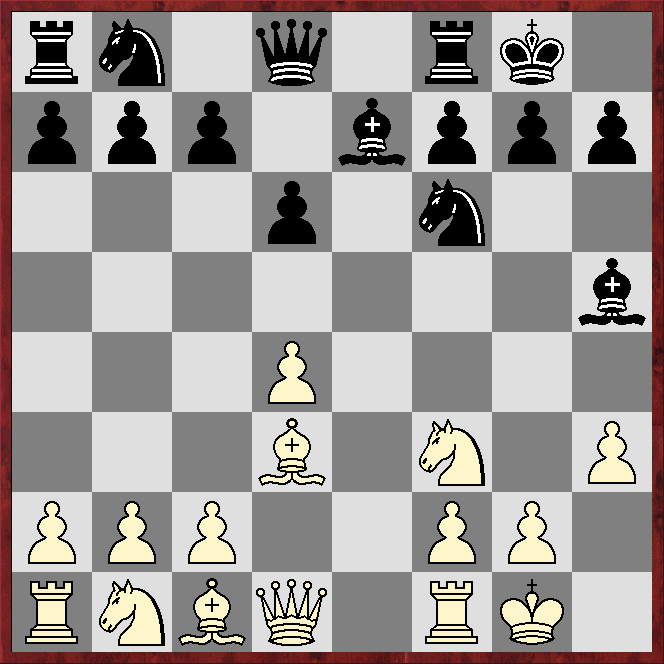
IN round nine I had to choose how to recapture after my opponent made the first capture of the game.
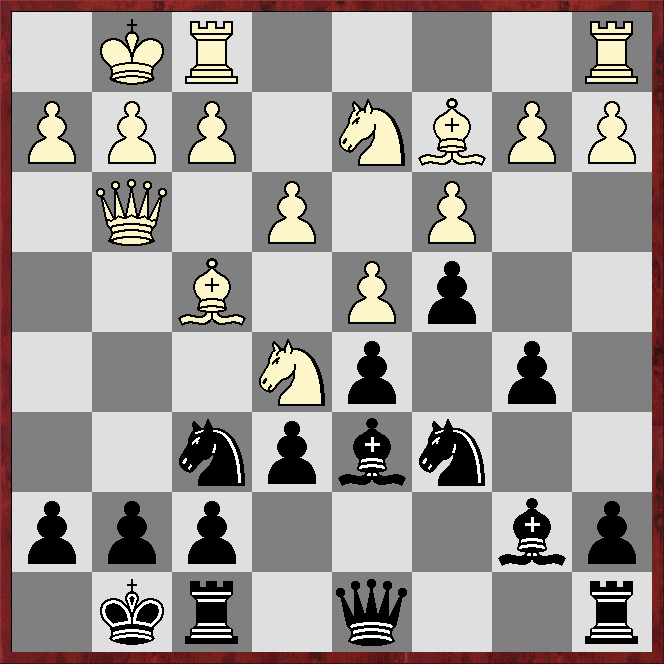
White has just played 14.cxd5 in Achim Heller (2036) - Spanton (1954)
*****
*****
*****
*****
*****
I captured with the knight, but after the further moves 15.dxc5 Bxc5 16.b4 Be7 17.Nc4 the menace to Black's kingside is palpable. Indeed, White is winning, according to Stockfish17 and Dragon1.
Instead 14...exd5 is much better. If then, as in the game, 15.dxc5, Black can reply 15...bxc5 with a reasonable hanging-pawns position in which the white queen's knight cannot advance to c4 (or e4), and the black kingside looks much safer. The game is equal, according to Stockfish17, although Dragon1 reckons White might have an edge.
The big differences between the two recaptures in the diagrammed position are a) the safety of the black king, b) the activity available to the white pieces.
LESSON: when choosing between two positional continuations, ie tactics are not a factor, choosing the option that weakens the king's setup and allows the opponent more activity is unlikely to be the correct choice.

Tuesday, 15 July 2025

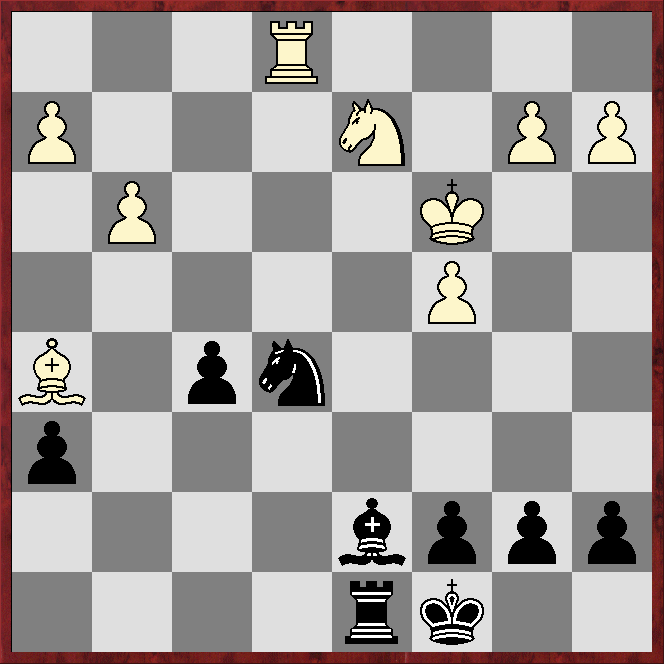
Lessons From Bischofsgrün: Finding The Best Move

IN round eight my opponent had the chance to gain a positional and material advantage that added up to a win, according to Stockfish17 and Dragon1.
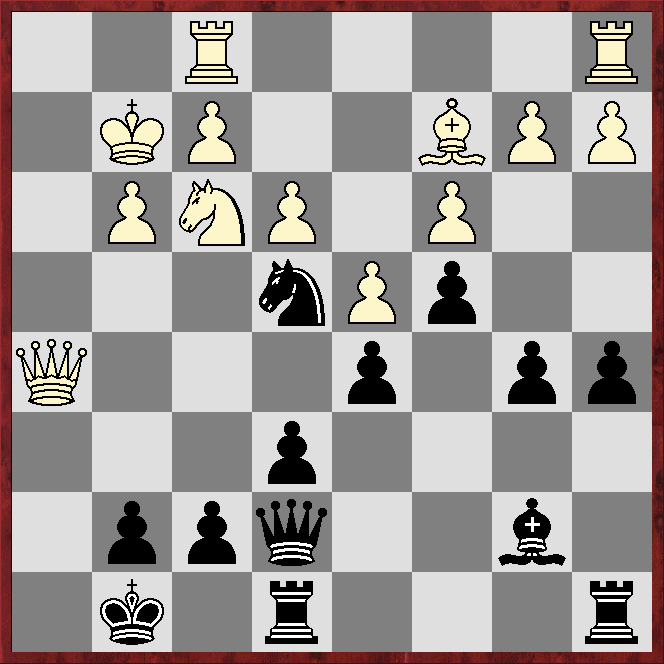
White has just captured on d1 in Spanton (1954) - Michael Schuh (1829)
*****
*****
*****
*****
*****
Black played 19...f5?, presumably on the ground that driving back the white knight while gaining space must be good.
But the engines reckon the resulting position is equal, and Black went on to lose the game.
Instead it makes perfect sense to play 19...Bxe4, which White has to answer with 20.fxe4.
Black's winning position
*****
*****
*****
*****
*****
Exchanging on e4 is sound positionally and tactically.
True, from the positional viewpoint, White is left with what is usually the better minor piece for cooperating with a rook.
But here that factor is completely outweighed by the fact White has a bad bishop against a knight, which has a strong outpost on e5 and may well later occupy another strong outpost at d4 (if Black gets in ...c5).
Tactically, the situation is even more straightforward: Black wins a pawn after continuing 20...Rd8+ and 20...Rd4.
LESSON: when a move is both positionally and tactically advantageous, the chances are good that it is the best move.

Sunday, 13 July 2025

Lessons From Bischofsgrün: Don't Help A Bad Bishop

IN round six I essayed a move that is audacious and unusual, but apparently perfectly sound.
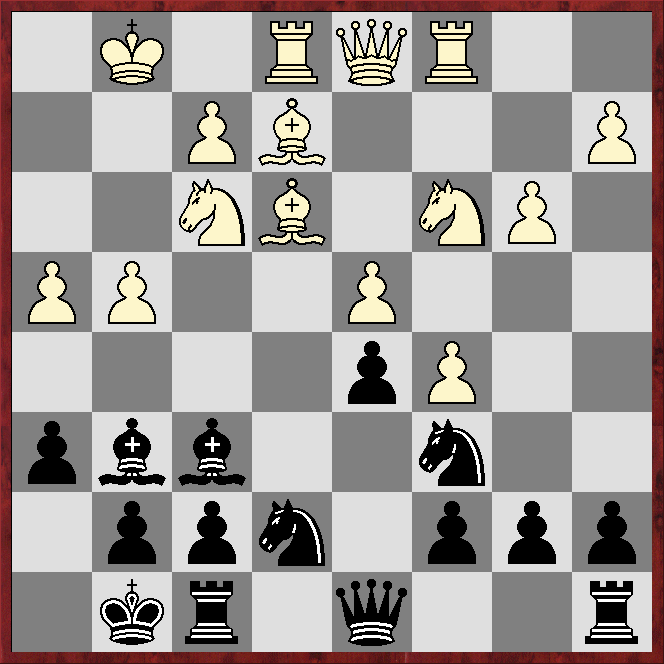
White has just played 17.Rc1-c2 in Patrick Chochoy (1757) - Spanton (1954)
*****
*****
*****
*****
*****
*****
*****
*****
I replied 17...Bxc3!?, which occurs in just seven of 121 games in ChessBase's 2025 Mega database.
The point is that after the further moves 18.Qxc3 Qxc3 19.Rxc3, Black has exchanged queens (usually a good idea in the Maróczy Bind), so dark-square weaknesses around the black king are unlikely to be exploitable. And as I pointed out in my notes to the game, 18.Rxc3 Na4 also forces queens off.
Position in the game after 19.Rxc3
*****
*****
*****
*****
*****
However, I spoilt the concept by continuing 19...f5?, allowing White to open lines for the bishop-pair, and in particular letting White move the e4 pawn (either by capturing on f5 or, even better, advancing to e5), which helps make White's light-square bishop less bad.
LESSON: opening lines is rarely a good idea when the opponent has the bishop-pair and you do not, exceptions normally only occurring when there is a concrete short-term reason.

Saturday, 12 July 2025

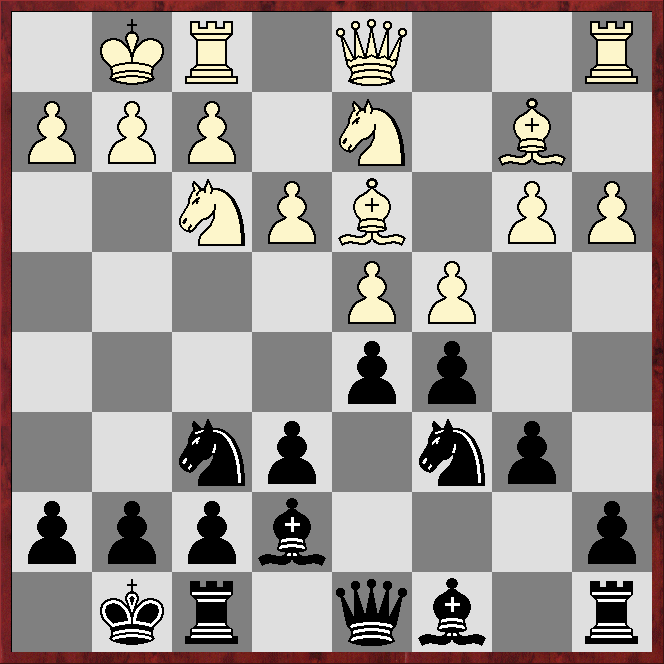
Lessons From Bischofsgrün: The Fashionable g2-g4

THE move g4, with or without a preparatory h3, is fashionable in modern chess, especially at the elite level.
But is one of those moves often frowned on in instructional books for club players, especially when White plays it after castling kingside.
I reached a position in which g4 was tempting in round five.
Black has just played 15...Nc6-a5 in Spanton (1954) - Rüdiger Schönrock (1884)
*****
*****
*****
*****
*****
I continued 16.g4!?, which may be the best move - Stockfish17 and Dragon1 fluctuate between it and 16.Qa4.
However, after 16...Bg6 I followed up by badly with 17.Ne5?! Bd6 18.Nxc4?, when 18...Nxc4 19.Bxc4 Ne4 exposed the holes in my kingside, and the engines' suggestion of 18...Nxg4!? seems even stronger.
LESSON: even when g2-g4 is good, despite being played in front of a castled king, White must be ever alert to weak squares left in the pawn's wake.

Friday, 11 July 2025

Lessons From Bischofsgrün: To Push Or Not To Push

IN round four I faced a dilemma common in queen's pawn openings - to push, or not to push, the c pawn.
The relevant position arose early in a London System.
White has just played 8.Bf1-d3 in Frank Wagner (1881) - Spanton (1954)
*****
*****
*****
*****
*****
Novices are often warned against playing ...c5-c4 (c4-c5 for White) on the ground that it relieves pressure on the opponent's centre.
But experience teaches there are many occasions when ...c5-c4 is good, eg in lines of the Winawer Variation of the French Defence.
Factors that favour pushing on include when it comes with tempo, usually, as in the diagram, by hitting the opponent's king's bishop.
Factors against pushing on include when it is relatively easy for the opponent to counter in the centre with e3-e4 (...e5-e6 for Black).
In the game I played 8...c4?! - after all, I thought, the move comes with tempo, and it will not be simple for White to respond with e4.
But I later discovered the move is unpopular - just two examples in ChessBase's 2025 Mega database out of 215 games to reach the position.
Not only that, but Stockfish17 and Dragon1 do not like the move, fluctuating between calling it dubious and just plain bad.
Black never did get in the move e4 - he did not need to, gaining a winning advantage on the kingside that lasted until he forced a perpetual when up the equivalent of about a queen (or even more).
LESSON: I am tempted to say the lesson here is not to play ...c4, even when it is good! More realistically, the lesson is to only push with the c pawn when sure, beyond a reasonable doubt, it is not a mistake.

Wednesday, 9 July 2025

Lessons From Bischofsgrün: Pawn Power

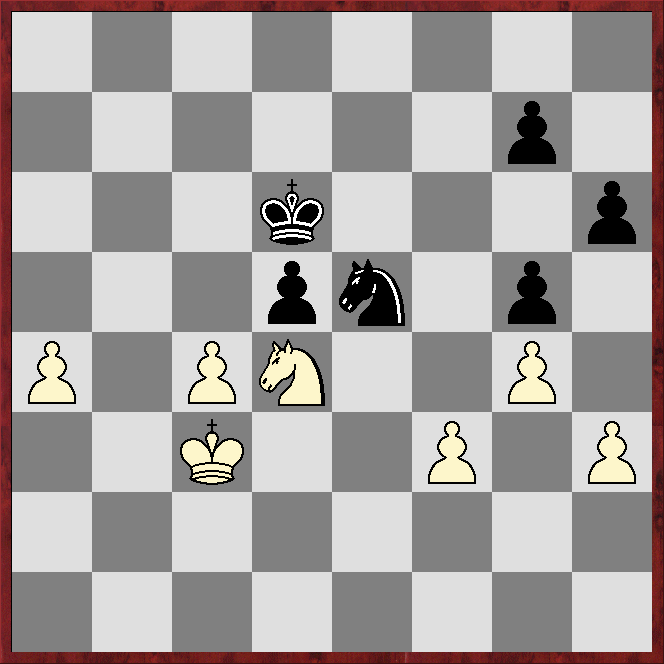
I WAS winning for most of my round-three game against a Fide master rated almost 200 elo higher, and was still winning, albeit by not such a big margin as I had been, when the following position was reached.
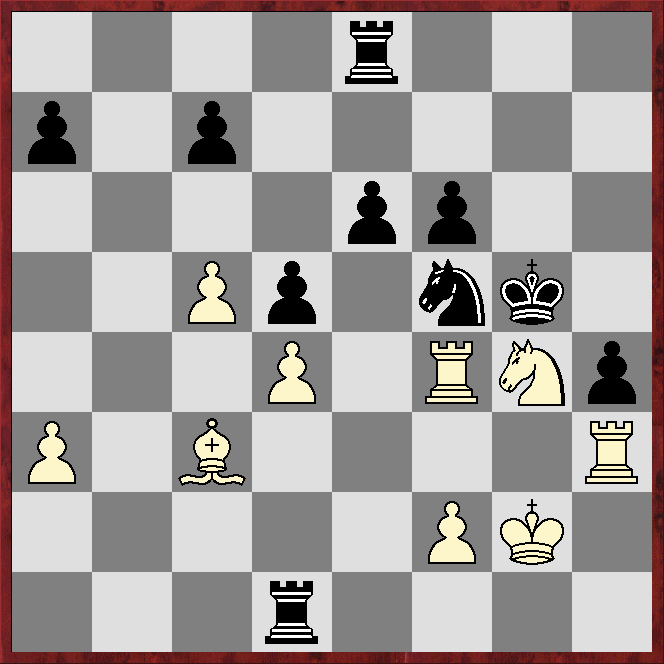
Black has just played 46...Kg6-g5 in Spanton (1954) - Dieter Seyb (2137)
*****
*****
*****
*****
*****
Best, according to Stockfish17 and Dragon1, is 47.Rxf5+!? exf5 48.Ne3 Rd3 49.Nxd5 Rxh3 50.Kxh3. Also probably winning is 47.Ne3 Kxf4 48.Nxd1.
However I played 47.Rhf3?, only to be hit by the sacrifice 47...h3+!, when capturing with the king leads to mate or massive loss of material.
There is nothing better than 48.Kh2, after which 48...Nh4+ equalises, and I even managed to go on and lose.
LESSON: some sacrifices come out of the blue, but a pawn is of such low value, relatively speaking, that there is no excuse for overlooking its sac-ability.

Tuesday, 8 July 2025

Lessons From Bischofsgrün: Chess Blindness

A COMICAL double-blunder occurred in my round-two game.
Not only did both players miss the win of a piece, but when I showed the game to a friend, he could not spot the tactic either, despite knowing something was on.
White to make his 28th move in Bob Wheat (1786) - Spanton (1954)
*****
*****
*****
*****
*****
White played 28.Rxc3??, to which I replied 28...Rxc3??
Neither I, nor, presumably, my opponent, nor my friend, saw that 28...Bxe4 wins a piece as, after 29.Rxc8+, Black has the decisive 29...Qxc8.
How to explain this mutual, or rather triple, oversight?
I think a major cause might be that subconsciously we are used to a bishop, especially a queen's bishop, being well-defended on its starting square.
It begins the game defended by the queen, to which often is quickly added the queen's rook (after the queen's knight has moved).
In addition, early kingside castling may result in the queen's bishop also being covered by the king's rook.
None of this excuses the players from failing to spot the fact that in the diagram the white queen's bishop is hanging, ie is undefended, but it may explain the blundering.
LESSON: positions need to be looked at with as clear a mind as possible, and a special effort may be needed to overcome subconscious biases.

Monday, 7 July 2025

Lessons From Bischofsgrün: Time

IN round one I reached the following winning knight-and-pawn ending.
Black has just played 37...Nc6-e5 in Spanton (1954) - Reinhold Winter (1789)
*****
*****
*****
*****
*****
*****
*****
*****
Clearly White cannot let Black win the c pawn, so I played 38.cxd5?, but this lets Black draw, the game continuing 38...Kxd5 39.Nf5 Nxf3 40.Nxg7 Ng1 41.Nf5 Nxg3 42.Kb4!? Kc6 43.a5 Nf4 44.Kc4 h5!?, when the position is so drawn that Black went on to reach a position in which he had 10 possible moves, only one of which lost.
Yet in the diagram White has two winning moves.
A) 38.Nf5+, which, after 38...Kc5 39.cxd5 Kxd5 reaches the same position as arises in the game after 39.Nf5, except now it is White rather than Black to move, and this extra tempo makes the position trivially winning (White is up the equivalent of about a rook, or even more, according to Stockfish17 and Dragon1).
B) 38.Nb5+!?, which, while not quite as emphatic as 38.Nf5+, still wins, as I show in my notes to the game. 
LESSON: a single tempo in an ending can make all the difference, and great care must be taken to avoid squandering one, and to not miss an opportunity to gain one.

Sunday, 6 July 2025

Summing Up Bischofsgrün

MY score of +3=4-2 in the seniors' championship of Upper Franconia lost exactly six Fide elo.
Because my game yesterday again finished quickly, I decided to walk up the Ocksenkof one last time, stopping by a lake for coffee and by the source of the White Main for bread and cheese, taking a final batch of photos along the way.


Saturday, 5 July 2025

Bischofsgrün Round Nine

I WAS downfloated.

Achim Heller (2036) - Spanton (1954)
Queen's Gambit Declined
1.d4 d5 2.Nf3 e6 3.c4 Nf6 4.e3!?
More popular are 4.Bg5!?, 4.g3 and especially 4.Nc3, but there are 13,345 examples of the text in ChessBase's 2025 Mega database.
How should Black respond?
*****
*****
*****
*****
*****
4...Bb4+
Stockfish17 and Dragon1 suggest 4...Be7 or 4...b6.
5.Nbd2!?
This scores 65% in Mega25.
5...0-0 6.a3 Be7 7.b3 c5 8.Bd3 Nc6 9.Bb2 b6 10.0-0
Now both sides have castled, how would you assess the position?
*****
*****
*****
*****
*****
Space is equal, and the pawn-structure almost symmetrical. The white king's bishop is more active than its opposite number, but the white queen's knight less so than its opposite number. The engines reckon the game is equal.
10...Bb7 11.Qe2 Re8 12.Rfd1 Bf8!? 13.Rac1 Rc8
Michael de Verdier (2276) - Sergey Ivanov (2530), Swedish Team Championship 2010, went 13...cxd4 14.exd4 g6 15.c5!? bxc5 16.dxc5 e5 17.Bb5, with a slight edge for White, according to the engines (but 0-1, 57 moves).
14.cxd5 Nxd5?!
Michał Olszewski (2543) - Fabrizio Bellia (2376), Bratto (Italy) 2010, saw 14...exd5 15.Ba6!? Bxa6 16.Qxa6 Qe7 17.Ne5 Nb8!?, with an equal game, according to the engines (but 1-0, 48 moves).
After the text the engines reckon White is winning.
15.dxc5 Bxc5 16.b4 Be7 17.Nc4 Bf6?
The engines reckon Black had to play something like 17...Rf8, 17...Rc7 or 17...a6, but agree White is winning.
18.b5?!
This is enough for a comfortable advantage, but stronger is 18.Bxf6, when Black has three ways to recapture, but all are deeply unpleasant:
A) 18...Qxf6 19.Nd6 Nc3 20.Rxc3 Qxc3 21.Nxb7;
B) 18...Bxf6 19.Bxh7+ and 20.Rxd8;
C) 18...gxf6 19.e4! Nf4 20.Qe3.
18...Nb8?!
Almost certainly better is 18...Na5!?
19.Nfe5
Also still good is Bxf6.
19...Nd7?
19...Qe7, or even 19...Bxe5!?, keeps the game going.
20.Nxf7?!
Even stronger is 20.Bxh7+! (20.Nxd7 is also better than the text) Kxh7 21.Qh5+ Kg8 22.Nxf7 Qe7 23.Ncd6 g6 (otherwise 24.Qh8#) 24.Qxg6+ Kf8, when White has a winning attack, eg 25.Qh6+ Kg8 26.Bxf6 Qxf6 27.Qxf6 N7xf6 28.Nxc8 Rxc8 29.Rxc8+ Bxc8 30.Nd6, with an advantage worth about a rook, according to the engines.
20...Kxf7 21.Nd6+ Kg8??
Easily the worst of three possible king moves. After 21...Kf8 22.Nxc8 Bxb2 23.Qxb2 Bxc8 24.Bxh7 White has the upper hand (Dragon1) or is at least slightly better (Stockfish17).
22.Rxc8!?
Also very strong is 22.Qh5.
22...Bxc8 23.Qh5 Nf8?!
23...h6 is a modest improvement, but 24.Qf7+ Kh8 25.Qxe8+ Qxe8 26.Nxe8 Bxb2 27.Nd6 wins easily enough.
24.Qf7+ Kh8 25.Nxe8 Qe7
Forced - White threatened 26.Qxf8#.
26.Qxe7 Bxe7 27.Nxg7
The game finished:
27...Kg8 28.Nh5 Ng6 29.Bc4 Nc7 30.Nf6+ 1-0

Friday, 4 July 2025

Bischofsgrün Round Eight

Spanton (1954) - Michael Schuh (1829)
English
1.c4 Nf6 2.Nc3 e6 3.e4!?
This is a well-known way to prevent Black playing a Nimzo-Indian or a regular Queen's Gambit Declined.
This position occurs 13,848 times in ChessBase's 2025 Mega database, but what should White's system be called?
*****
*****
*****
*****
*****
I understood it to be the Mikėnas-Flohr System, named after Vladas Mikėnas, who could be variously described as Estonian, Lithuanian and Soviet Russian, and Salo Flohr, who had claims to be Austrian, Polish, Ukrainian, Czechoslovakian and Soviet Russian.
However Wikipedia's article on the English Opening five times refers to the variation as the Mikėnas-Carls, honouring Vladas Mikėnas and the German player Carl Carls.
To further confuse the issue, the same article also calls the variation the Flohr-Mikėnas Attack, albeit spelling Mikėnas without an accent (as also happens one time in Mikėnas-Carls).
There are 16 games in Mega25 in which Carls played 3.e4!?, compared with just three for Flohr (plus a further one in which Flohr had the black pieces) and 11 for Mikėnas (plus five for Mikėnas's son Alius). 
From these numbers it could be argued that the fairest name is Carls-Mikėnas, especially as Carls seems to have been the first of the three to have played it.
On the other hand there is a long history of openings being named after the famous, rather than the originators, in which case perhaps Aron Nimzowitsch's name should be added to the list - he has six games with 3.e4!? in Mega25, including a 1931 win over Flohr.
If anyone has a definitive answer to the conundrum, I would be interested to learn it.
3...d5 4.e5
Carls usually played 4.cxd5, Flohr and Nimzowitsch preferred the text, Mikėnas (senior) began with 4.e5, but later in his career switched to 4.cxd5, and Mikenas (junior) plays 4.cxd5.
4...d4 5.exf6 dxc3 6.fxg7 cxd2+ 7.Bxd2 Bxg7 8.Qf3!?
This positional pawn sacrifice seems to a novelty. The main continuation is 8.Qc2.
How should Black respond?
*****
*****
*****
*****
*****
8...Nc6!?
Stockfish17 and Dragon1 fluctuate between accepting the gambit and declining it with 8...Bd7!?
After 8...Bxb2, play might continue 9.Rb1 Qf6!? 10.Qb3!? Be5 11.Nf3 Nc6!? 12.Nxe5!? Qxe5+ 13.Qe3 Qxe3+ 14.Bxe3, when the engines reckon White's bishop-pair does not fully compensate for being  a pawn down. However, both sides have plenty of alternative move along the way.
9.0-0-0 Qf6 10.Qxf6 Bxf6
With Black having (more-or-less) forced queens off the board, how would you assess the position? 
*****
*****
*****
*****
*****
Black has an extra pawn-island, but has the only pawn on the central two files and has an actively placed dark-square bishop. The engines reckon the game is equal.
11.Nf3 Bd7 12.Bd3 0-0-0 13.Bg5!?
The engines reckon 13.Ng5 is well-met by 13...Ne5.
13...Bxg5+ 14.Nxg5 Ne5 15.Be2 h6 16.Ne4?!
This is probably a mistake, so 16.Nf3 or possible 16.Nh3!? should have been played.
16...Bc6 17.f3 Rhg8
After 17...Bxe4!? 18.fxe4 Black has a strong knight against a bad bishop. The engines also like 17...Rdg8!?, with ...Bxe4 to come, one point being 18.Ng3?! can be met by 18...h5.
18.Rhg1?
Better is 18.Ng3, or 18.Rxd8+ Kxd8 19.Ng3.
18...Rxd1+ 19.Kxd1 f5?
Missing the win of material by 19...Bxe4 20.fxe4 Rd8+ and 21...Rd4.
20.Nd2 Rd8 21.Kc2 Ng6 22.g3 Ne5
MS offered a draw.
Who, if anyone, has the advantage?
*****
*****
*****
*****
*****
White's better pawn-structure gives a slight edge, according to Dragon1, although Stockfish17 is not so sure.
23.Re1 Bd7
Not 23...Rxd2+? 24.Kxd2 Bxf3 as White, rather than losing to 25.Bxf3?? Nxf3+ etc, plays 25.Bd3, and after the forced 25...Nxd3 26.Kxd3 Black has virtually no chance of surviving the rook-v-bishop ending, despite starting it a pawn up.
24.f4 Nc6 25.Kc3 e5 26.fxe5 Nxe5 27.Bh5!?
How should Black proceed?
*****
*****
*****
*****
*****
27...Nc6?!
Probably better is 27...Ng4, not fearing 28.Bxg4.
28.Nf3 Rf8 29.Nd4?!
Almost certainly better is going straight after the f pawn with 29...Nh4.
29...Nxd4 30.Kxd4 Kd8
The engines point out 30...f4!? is possible, as 31.Rf1 can be met by 31...Rd8.
31.Ke5 Bc6?
Still possible is ...f4 as 31.gxf4?? blunders the white bishop to 31...Rf5+.
32.Rf1 Be4?
It seems there is no defence, eg the engines' 32...Be8 is simply met by 33.Bg4, after which the f pawn falls, but there would still be quite a bit of play before Black would be obliged to resign.
33.g4 Ke7 34.gxf5 Bd3?!
Or 34...Bc2 35.f6+ Kd7 36.Rf2 Bb1 37.Rd2+ Kc6 38.b4 with an advantage the engines reckon is worth much more than a rook.
35.f6+ Kd7 36.Rd1 1-0

Thursday, 3 July 2025

Bischofsgrün Round Seven

Spanton (1954) - Roland Welsch (1890)
Caro-Kann Panov-Botvinnik
1.c4 c6 2.e4 d5 3.exd5 cxd5 4.d4 Nf6 5.Nc3 e6
This is the main move in ChessBase's 2025 Mega database, but it scores three percentage points lower than the 48% of second-most popular 5...Nc6.
6.Nf3 Be7
How should White proceed?
*****
*****
*****
*****
*****
7.Bg5!?
This has been played by grandmasters, but the main line in Mega25 runs 7.cxd5 Nxd5 8.Bd3 Nc6 9.0-0 0-0 10.Re1, with a slight edge for White, according to Dragon1, although Stockfish17 calls the game equal.
7...0-0 8.Rc1!?
The main moves are 8.c5!? and especially 8.Bd3!?
How should Black respond?
*****
*****
*****
*****
*****
8...Qb6!?
Apparently a novelty, in a position in which there are eight known moves, headed by 8...Nc6.
9.Qc2
The engines suggest 9.c5!? Qxb2 10.Bd3, claiming a slight edge.
9...Nc6
The engines prefer 9...dxc4 10.Bxc4, and now 10...Nc6.
10.c5!? Qc7 11.Bb5!? Bd7 12.Bxc6!?
The point of this manoeuvre is to slow Black getting in ...e5, the classic answer to White's queenside push.
12...Bxc6 13.b4 a6 14.0-0
Now both sides have castled, how would you assess the position?
*****
*****
*****
*****
*****
Barring blunders, the game is likely to revolve around whether Black can generate central counterplay to distract White from supporting and advancing the white queenside pawn-majority. The engines give White a slight plus.
14...Bb5?
Black spends a tempo obliging the white king's rook to move to a better location, and meanwhile provides White with a tempo for advancing the a2 pawn.
15.Rfe1 Rfe8 16.a4 Bd7
Probably no better is 16...Bc4.
17.Ne5 Nh5
Offering to give up the bishop-pair in the hope of getting Black's kingside pawns rolling.
18.Bxe7 Rxe7 19.Qe2 Nf6 20.b5 axb5 21.axb5 Be8!? 22.Ra1 Qb8 23.Qb2 Rxa1 24.Rxa1 Nd7 25.Nd3 f6
At last threatening to play ...e5, although d5 has to be protected first.
26.Qa3 Bf7??
Black is positionally lost anyway, according to the engines, but this allows an immediate finish.
27.c6 1-0

Wednesday, 2 July 2025

Bischofsgrün Round Six

FACED a Frenchman.

Patrick Chochoy (1757) - Spanton (1954)
Maróczy Bind
1.e4 c5 2.Nf3 Nc6 3.d4 cxd4 4.Nxd4 g6 5.c4
Entering the Maróczy Bind scores a very healthy 57% in ChessBase's 2025 Mega database, while the more popular 5.Nc3 returns a disappointing 49%.
5...Bg7 6.Be3 Nf6 7.Nc3 d6 8.Be2 0-0 9.0-0
This position occurs 19,854 times in Mega25
*****
*****
*****
*****
*****
9...Bd7 10.Qd2
The one time Géza Maróczy had the position after 9...Bd7, in a 1906 game, he played 10.h3, which had been played against him two years previously in the stem game. That also seems to be Dragon1's top choice, very marginally ahead of the unusual 10.Re1!?, although the engine does for a while prefer the text. Stockfish17 likes the trendy 10.Nc2!?, again ahead of 10.Re1!? 
10...Nxd4
This is why 10.Nc2!? has become fashionable - to prevent Black reducing the cramp in the black position by initiating exchanges.
11.Bxd4 Bc6 12.f3 a5!?
The main point of this move is to secure c5 for the remaining black knight. It also gains space, but more-or-less gives up hopes Black might have of breaking the Bind, or at least challenging it, with ...b5.
13.b3 Nd7
We are still very much in mainstream theory - this position occurs 2,404 times in Mega25
*****
*****
*****
*****
*****
14.Be3!?
This is easily the commonest continuation, following the advice that when you have a bad bishop (White's light-square bishop is hemmed in by its own pawns) avoid exchanging your good one.
14...Nc5 15.Rab1
Again easily the main continuation.
15...Qb6!?
Self-pinning looks strange, at least at first sight, but White cannot immediately take advantage of Black's setup on the g1-a7 diagonal.
16.Rfc1
This position occurs 1,114 times in Mega25
*****
*****
*****
*****
*****
16...Qb4!?
The engines prefer this over the much more common 16...Rfc8.
17.Rc2
This is the usual response, but the engines suggest 17.Qb2!?
17...Bxc3!?
This unusual continuation - normal is 17...Rfc8 - is the top choice of the engines.
How should White recapture?
*****
*****
*****
*****
*****
18.Qxc3
This lets Black follow through with the main idea of 17...Bxc3!? - getting queens off the board.
Instead, after 18.Rxc3!? it appears at first that Black can take on e4 with the bishop as 19.fxe4?? loses to 19...Nxe4, followed by snaffling the c3 rook. But White does not have to fall in with Black's plans, and can play 19.Rb2!? Bc6 20.a3!, meeting both 20...Qxa3 and 20...Qb6 with 21.b4, winning material. The engines also point out 19.a3!?, which also seems very good.
However Black does not have to play 18...Bxe4? - rather 18...Na4 forces an exchange of queens, as in the game.
18...Qxc3 19.Rxc3
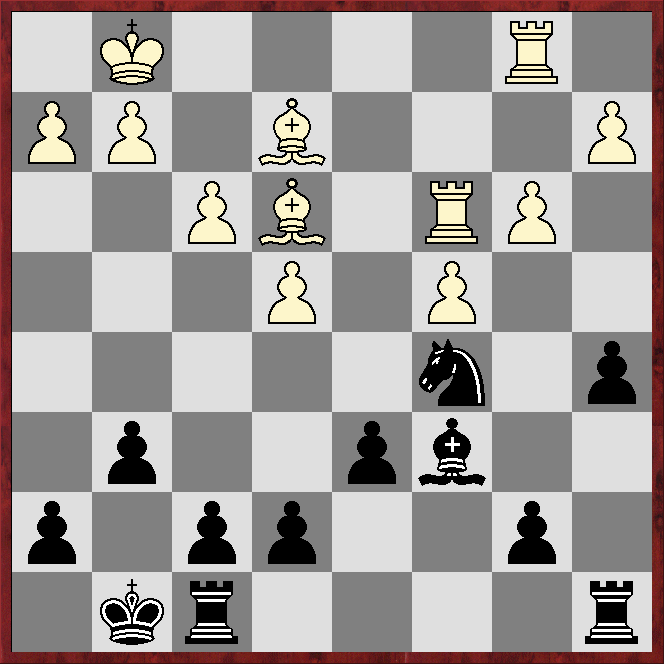
How would you assess this queenless middlegame?
*****
*****
*****
*****
*****
White has more space and the bishop-pair, although the latter factor is tempered by there being 14 pawns on the board, with all but one white pawn on the same-colour squares as White's light-square bishop. The Black knight is well-posted, for now - it faces being evicted by White playing a3 and b4. Dragon1 gives White a slight edge, but Stockfish17 calls the game equal.
19...f5?
This novelty is misdirected. Better are the known moves 19...Ne6 and 19...b6, but two other known moves - 19...Rfc8? and 19...Rfb8? - are mistakes because of the reply 20.e5.
20.exf5?!
This is good enough for an advantage, but 20.e5 is stronger, eg 20...f4 (20...dxe5?? 21.Bxc5) 21.Bf2 Rfe8 22.exd6 exd6 23.Bf1, when the isolated d pawn is a serious weakness.
20...Rxf5 21.Bxc5?!
White should almost certainly not give up the better white bishop.
21...Rxc5
The engines slightly prefer 21...dxc5!?
22.Re3 Kf7 23.f4 b6 24.Re1 e5
The engines prefer passive-looking defence with 24...Re8 or 24...Ra7.
25.fxe5
The engines give White a slight edge (Dragon1) or the better part of equality (Stockfish17) after 25.Rf1.
25...dxe5
The pawn is isolated, but passed. However the engines prefer 25...Rxe5!?
26.a3 e4 27.Bd1 Re5 28.Bc2 Rae8 29.Rd1 Kf6 30.g3!? g5 31.g4 Kg7!? 32.Rd6 R5e6 33.Rd1 Rf8
How should White proceed?
*****
*****
*****
*****
*****
34.Rde1?!
The engines strongly dislike this, reckoning 34.b4 maintains equality (Stockfish17 is also fine with 34.h3, but Dragon1 reckons it leaves Black with a slight edge).
34...Rf4 35.h3
This looks natural, but the engines prefer 35.Bd1.
35...Kg6
The engines give 35...Kf6!? as much stronger, eg 36.Bd1 Ke5 37.Be2 Kd4 38.Bf1 a4, when suddenly White's queenside is vulnerable.
Going back to the last diagram, after the suggested 34.b4 there might come 34...axb4 35.axb4 Rf4, but 36.h3 is now fine, presumably because there is little chance of the black king attacking White's queenside.
This is really quite subtle stuff, and I do not suppose even a small fraction of it crossed either player's mind.
36.R1e2?!
The engines much prefer 36.b4 or 36.Rd1.
36...h5
They again like ...Kf6, and if 37.Rd2, then 37...Ke5, with ...Rd6 to come so the black king can gain access to the queenside.
37.gxh5+ Kxh5 38.Rg2?!
The engines suggest 38.Rd2, or 38.Bd1 followed by Rd2.
38...Rf3?
The engines reckon taking the open d file with 38...Rd6 is strong.
39.Bd1 Rd6 40.Bxf3+ Kxf3 41.Rf2
Possibly better is 41.Rg3, hoping to give back the exchange in return for the f pawn. However 41...Rd1+ 42.Kf2 Rd2+ 43.Kf1 a4!? (43...Rd1+? 44.Re1 Rd3 45.Re5) 44.bxa4 Ra2 seems to give enough counterplay.
41...g4 42.hxg4+ Kxg4
Now the f pawn is fully protected, and the position is completely equal, according to the engines, but tricky
*****
*****
*****
*****
*****
43.Re7 Rg6?
This lets White threaten to activate his king. Instead both 43...Kf4 and 43...Kg3 keep a lid on the position, while also holding are moves such as 43...Bd7 and 43...Rd1+ (meeting 44.Re1 with 44...Rd2).
White to play and (probably) win
*****
*****
*****
*****
*****
44.Kh2
After 44.Rh2! the only way to stop White's king getting active with 45.Kf2 is 44...Kg3, but the engines reckon 45.Reh7! wins, eg 45...Rd6 46.R2h3+ Kf4 47.R3h6!  Rd1+ 48.Kf2 Rd2+ 49.Ke1 Re2+ 50.Kf1 Be4 51.Re7 Re3 52.Rh4+ Kf5 53.Rf7+ Ke6 54.Rf8 Ke7 55.Rb8 etc.
This is a difficult line to foresee, and White has to find a lot of good moves, eg 47.R7h6, instead of 47.R3h6!, does not win, eg 47... Rd1+ 48.Kf2 Rd2+ 49.Ke1 Re2+ 50.Kf1 Be4 reaches a similar position, but 51.Re6, instead of 51.Re7, can be met by 51...Bf5 52.Rf6 Rb2, with sufficient counterplay, while the alternative 51.Rxb6, which at first might be thought an improvement, can be met by, among other moves, 51...Ke3, eg 52.Rd6 (52.c5? Rc2 53.Kg1 Bf5 54.Rg3 Rc1+ 55.Kh2 Kf4 wins for Black) Rf2+ 53.Kg1 Rg2+ 54.Kf1 (not 54.Kh1?? Rg4 with ...Ke2 and f2 etc to come) Rf2+ etc.
44...Rh6+ 45.Kg1 Rg6?
Giving Black another chance to play Rh2.
46.Kh2 Rh6+ ½–½

Tuesday, 1 July 2025

Bischofsgrün Round Five

I WAS upfloated.

Spanton (1954) - Rüdiger Schönrock (1884)
Petrov
1.e4 e5 2.Nf3 Nf6 3.Nxe5 d6 4.Nf3 Nxe4 5.d3!? Nf6 6.d4 Be7!?
More popular in ChessBase's 2025 Mega database is 6...d5, transposing into the Exchange Variation of the French.
7.Bd3 Bg4 8.h3 Bh5 9.0-0 0-0
Now both sides have castled, how would you assess the position?
*****
*****
*****
*****
*****
White has more space in the centre, giving a slight edge, according to Stockfish17 and Dragon1.
10.c4 Nc6 11.Be3 Nb4!? 12.Be2 d5!?
After 12...Bg6 13.Na3, Black may be for choice, but better is the engines' 13.Ne1!?, and also better, as RS pointed out in the postmortem, is 13.Nh4. My planned 13.Nc3!? Nc2 14.Rc1 Nxe3 15.fxe3 loses the bishop-pair but strengthens White's centre, and also seems playable.
13.a3 Nc6 14.Nc3 dxc4!?
How should White respond? 
*****
*****
*****
*****
*****
15.d5!?
The engines dislike this, preferring 15.g4!? Bg6 16.Bxc4, claiming a slight edge for White. Also reasonable is 15.Bxc4 as 15...Bxf3 16.Qxf3 Nxd4 17.Qxb7 gives White at least a slight edge, according to the engines. However they reckon Black should meet 15.Bxc4 by getting on with development with 15...Qd7, giving what they reckon are equal chances.
15...Na5
The engines narrowly prefer this over 15...Bxf3 16.Qxf3 Ne5.
16.g4!?
The engines fluctuate between the text and 16.Qa4.
16...Bg6 17.Ne5?!
This is strongly disliked by the engines. They suggest 17.Qa4 b6 18.Bxc4, claiming equality.
17...Bd6 18.Nxc4?
Winning back the pawn, but allowing Black to exchange his offside knight. The engines give 18.Nxg6, but much prefer Black.
18...Nxc4
Even stronger seems to be the engines' 18...Nxg4!?, eg 19.hxg4 Nxc4 20.Bxc4 Qh4. Both 19.Nxa5 and 19.Nxd6 are probably better tries, but in both cases 19...Nxe3 looks to be winning.
19.Bxc4 Ne4 20.Nxe4 Bxe4 21.Qd4?!
Probably better is 21.f3, intending 22.Qd2, or immediately 21.Qd2, with the possibility of f3 to come.
21...f5!?
Protecting the light-square bishop and preparing to bring the king's rook into the attack against an increasingly vulnerable-looking white king.
How should White proceed?
*****
*****
*****
*****
*****
22.g5
This seems best. Definitely bad is 22.f3? as Black has 22...Qh4!, while 22.gxf5? can also be met by 22...Qh4.
22...f4
The engines' 22...Qe8 may be even stronger.
23.Qxe4
Black to play and win
*****
*****
*****
*****
*****
23...Qxg5+?!
This looks promising, but Black has a defence, whereas the simple 23...fxe3 leaves White in insurmountable difficulties, according to the engines, eg 24.Qxe3? Rf4! puts White's bishop and g pawn en prise, and after, say, 25.Rac1 Qxg5+ 26.Qg3 Qf6 27.Qe3 Kh8! (keeping queens on the board) White's position collapses. A better try is 24.f4, but the engines' 24...Qe8! is strong, eg 25.Qe6+ Kh8 26.Qxe8 Raxe8 27.Be2 Bxf4 gives Black a pawn advantage, and with more White weaknesses to target.
24.Qg2 Qxg2+
I was worried about 24...Qe5 25.Bd2 f3? 26.Qg3 Qd4?, missing 27.Bc3!, when White remains a piece up.
25.Kxg2 fxe3 26.fxe3 Rae8 ½–½
ADDENDUM (7/7/25): my original analysis around moves 18-19 was seriously flawed, but has now been improved.

Monday, 30 June 2025

Bischofsgrün Round Four

Frank Wagner (1881) - Spanton (1954)
London System
1.d4 d5 2.Nf3 e6 3.Bf4 Bd6 4.e3
Most popular by a long margin in ChessBase's 2025 Mega database is 4.Bg3, but Stockfish17 and Dragon1 fluctuate between the text and 4.Bxd6.
4...Nf6
The main line in Mega25 runs 4...Bxf4 5.exf4 Qd6 6.Qd2 Nf6, when the engines reckon 7.Nc3 gives White a slight edge.
5.Nbd2 b6 6.c3 0-0 7.Ne5!? c5 8.Bd3
How should Black proceed?
*****
*****
*****
*****
*****
8...c4?!
There are positions where ...c4 with tempo is good, and positions where ...c4 with tempo is frowned on as a club-player's move. Here the latter would seem the correct verdict - at least the move is strongly disliked by the engines. They favour the most popular move in Mega25, 8...Ba6, and 8...Qc7.
9.Bc2 Bb7 10.0-0
Now both sides have castled, how would you assess the position?
*****
*****
*****
*****
*****
The main difference between the two sides, in my opinion, is that White it is much better placed than Black for play on the kingside, particularly when the respective light-square bishops are compared. The engines give White the upper hand.
10...b5 11.Qf3!
The engines agree this is better than 11.Bg5, and much better than 11.Ndf3.
11...Nc6 12.Qg3
Even stronger, according to the engines, is 12.Qh3.
What is White's main threat, and how should it be met?
*****
*****
*****
*****
*****
If it were White to move, 13.Bh6 would give an advantage, although Black avoids losing material by replying 13...Ne8. Instead 13.Nxc6! wins a piece, eg 13...Bxf4 14.Nxd8 Bxg3 15.Nxb7.
12...Ne7?!
I rejected 12...Nh5 because of 13.Bxh7+ Kxh7 14.Qh3 g6 15.g4, but the engines claim 15...Nxe5 equalises, eg 16.dxe5 f5! 17.gxh5? g5! 18.Qg2!? Rg8 19.Bg3 Bc5, after which Black is a pawn down but has a strong kingside attack. Better is 17.exd6 fxg4 18.Qxg4, but after 18...Nxf4 19.exf4 Qxd6 Black is at least equal, according to the engines.
What should White play?
*****
*****
*****
*****
*****
13.Qf3
13.Nxf7! wins a pawn, eg 13...Rxf7 14.Bxd6 Nf5 15.Bxf5, or 13...Bxf4 14.Nxd8 Bxg3 15.Nxb7.
13...Qc7 14.Qh3
FW offered a draw.
How would you assess this middlegame?
*****
*****
*****
*****
*****
White's kingside attacking chances give at least the upper hand, according to the engines.
14...Ng6?
The engines reckon only 14...h6 prevents White gaining a winning advantage.
White to play and snaffle two pawns
*****
*****
*****
*****
*****
15.Nxg6?!
White is slightly better after this, but winning is 15.Bxg6! hxg6 16.Nxg6! fxg6 17.Qxe6+ etc.
15...hxg6 16.Bxd6
Not 16.Bxg6??, trying to enter the line in the previous note, as Black has the simple reply16...Bxf4.
16...Qxd6 17.Nf3 Nh7?
Preventing 18.Ng5, but that was hardly much of a threat as the f6 knight covers h7. Better is using the respite Black has gained from White's kingside pressure to get on with counterplay on the queenside by playing 17...b4.
18.Qg4
The engines reckon 18.Ne5 is even stronger, the idea being to follow up with f4 and g4.
18...Qe7?!
Again the engines prefer ...b4.
19.h4 a5
The engines suggest ...Nf6, either immediately or after ...Bc6.
20.h5!? Nf6
The engines recommend sacrificing a pawn, at least temporarily, by 20...f5!? 21.Qxg6 Rf6 22.Qg3 Rh6, albeit giving White the upper hand.
21.Qg5
Possibly even stronger is the engines' 21.Qh4 gxh5 22.g4.
21...gxh5 22.g3?!
Probably too slow. The engines like 22.Ne5 or 22.g4.
22...Rfe8 23.Kg2 Ne4?
Correct is 23...g6, and if 24.Rh1, then 24...Ne4, while 24.Qh6? Ng4 leaves Black on top, according to the engines.
24.Qxh5
White has regained the sacrificed pawn, and has a strong attack
*****
*****
*****
*****
*****
24...g6 25.Qh6 Qf8 26.Qh4 Kg7??
Black should probably try 26...Qg7 or 26...f6, or even 26...Qe7, hoping for a draw by repetition after 27.Qh6 Qf8, but Black can avoid this with 28.Qh3. The text leaves Black in a hopeless position.
27.Rh1 Qh8 28.Qf4 Qg8 29.Bxe4 dxe4 30.Qh6+ Kf6 31.Qg5+ Kg7
Now 32.Ne5, threatening 33.Nd7, followed by 34.Qf6#, and 33.Rh6, followed by 33.Rxg6+!, is so strong that the engines' top choice is offering the bishop by 33...Bc6!?
Instead the game finished:
32.Qh6+ Kf6 ½–½

Sunday, 29 June 2025

Bischofsgrün Round Three

FACED a Fide Master.

Spanton (1954) - Dieter Seyb (2137)
Nimzowitsch Defence/Alekhine Defence
1.e4 Nc6 2.Nf3 Nf6!?
There are 1,463 examples of this move in ChessBase's 2025 Mega database.
3.e5 Nd5 4.d4
The game began as a Nimzowitsch Defence, but has transposed to a sideline of Alekhine's Defence (333 games reach this position in Mega25), although it is not, as ChessBase calls it, a Four Pawns Attack.
4...d6
Now we have reached a popular main line of the Alekhine, with 1,980 examples in Mega25
*****
*****
*****
*****
*****
5.c4 Nb6 6.exd6 exd6 7.Nc3 Be7 8.Be3 Bg4
This is the commonest continuation in Mega25, but Stockfish17 and Dragon1 are not keen, preferring 8...0-0 or 8...Bf6!?
9.h3 Bh5 10. b3 Bf6!?
The engines strongly dislike this, preferring 10...0-0 or 10...a5.
How should White try to take advantage of Black's last move?
*****
*****
*****
*****
*****
11.Be2
The engines give 11.g4!? Bg6 12.g5!? Be7 13.h4, claiming White has at least the upper hand (Dragon1)  or a positionally won game (Stockfish17).
11...d5?!
Trying to grab a fair share of the centre, but the result is Black is left on the back foot.
12.c5 Nc8
Not 12...Nd7? 13.Nxd5.
13.0-0 0-0
Now both sides have castled, how would you assess the position?
*****
*****
*****
*****
*****
White has a lead in development and more space on the queenside, giving White the upper hand, according to the engines.
14.Rc1 h6 15.Re1 N8e7 16.g4!? Bg6 17.h4!?
How should Black respond to the threat to trap the f6 bishop?
*****
*****
*****
*****
*****
17...Qd7!?
The engines reckon this is much better than 17...Nc8 18.g5 Be7 19.Bf4!?, when they give White a winning advantage.
18.g5 Qg4+ 19.Kh2 Bf5?
A better way to give up a piece, according to the engines, is 19...hxg5 20.hxg5 Qh5+ 21.Kg2 Qg4+ 22.Kh1 Qh3+ 23.Nh2 Bxd4, although they agree White is well on top.
20.gxf6 Qh3+ 21.Kg1 gxf6 22.Nh2
Best, according to the engines, is 22.Bf4 or 22.Bf1, but not 22.Bxh6? Kh8 23.Bxf8? (better is 23.Bf1 Rg8+ 24.Bg5, albeit Black has at least an edge after 24...Qg4+ 25.Bg2 fxg5) Rxf8, when Black has a winning attack.
22...Kh7 23.Kh1 Rg8 24.Bf3
This seems better than 24.Rg1 Rxg1+ 25.Qxg1 Rg8.
24...Qxh4
Now that Black has a second pawn for his missing dark-square bishop, how would you assess the position?
*****
*****
*****
*****
*****
The position remains sharp, and the white king is somewhat less safe than its black counterpart, but White is winning, according to the engines.
25.Qd2
The engines also like 25.Nxd5!?, continuing 25...Nxd5 26.Bxd5 Rad8 27.Bxc6!? bxc6 28.f3!?, but it looks very risky.
25...Nb4 26.Rg1 Ng6!?
The engines do not like this.
27.Bg4 Bxg4 28.Rxg4 Qh5 29.Rcg1 Qf5 30.R1g3!?
This is Stockfish17's second choice, behind 30.Ne2. Dragon1 also likes 30.Ne2, and 30.Bxh6!?
30...h5 31.Rh3 Rge8 32.Rgg3 h4 33.Rf3 Qe6 34.a3 Nc6 35.Qd3 Kg7 36.Qf5 Nce7 37.Qxe6!? fxe6
Black's pawn-formation has been improved, but with queens off the board there is less likelihood of a fatal accident in the vicinity of the white king (or the black king for that matter)
*****
*****
*****
*****
*****
38.Ng4 Nf5? 39.Ne2?
Missing the simple win of a pawn by 39.Nxd5.
39...b6 40.b4
The engines suggest keeping lines closed with 40.c6!?, and if 40...Nge7, then 41.Nf4 Kf7 (41...Nxc6 42.Nxe6+!) 42.Nh5.
40...bxc5 41.bxc5
Here they prefer 41.dxc5!?
41...Rab8 42.Nf4 Nxf4 43.Rxf4?!
Probably better is 43.Bxf4!?, and if 43...Nxd4?!, then 44.Bh6+ and 45.Rxf6(+).
43...Kg6 44.Bd2 Rb1+ 45.Kg2 Rd1 46.Bc3 Kg5
What should White play?
*****
*****
*****
*****
*****
47.Rhf3?
The engines give 47.Rxf5+!? exf5 (47...Kxf5?? 48.Ne3+ and 49.Nxd1) 48.Ne3 Rd3 49.Nxd5 Rxh3 50.Kxh3, when they reckon White's bishop and knight are worth much more than Black's rook and (doubled) pawn. Also better than the text is 47.Ne3 Kxf4 (47...Rd3?? 48.Rg4+ Kh5 49.Nxf5 Kxg4 50.Nh6+ and 51.Rxd3) 48.Nxd1.
47...h3+! 48.Kh2
Forced, as 48.Kxh3?? loses to 48...Rh8+ 49.Kg2 Nh4+ etc.
48...Nh4 49.Nxf6 Nxf3+ 50.Rxf3
How should Black proceed?
*****
*****
*****
*****
*****
50...Re7?
Even worse is 50...Rf8?? 51.Nh7+, but the engines give 50...Rb8, claiming complete equality.
How should White proceed?
*****
*****
*****
*****
*****
51.Ng8
Best according to the engines, is 51.Ba5!? (they also like 51.c6!?), the idea being 51...Rf7, which they reckon is Black's best reply, can be met by 52.Ne4+!, and if 51...Rxd4, then 52.Bc3! followed by 54.Nxd5!
51...Rh7
Black loses the rook after 51...Rg7?? 52.Rg3+.
52.Rg3+
Possibly better is the engines' 52.Nf6! Rf7 53.Ne4+! Kg6 54.Nd2.
52...Kf5 53.Rf3+ Kg6 54.Rf6+??
Better is 54.c6, intending Bb4 to rescue the knight (Black cannot attack the knight with 54...Kg7?? as it simply escapes with 55.Nf6 or 55.Ne7.
54...Kg7 55.Rxe6 Kxg8
White has no compensation for the exchange, and in an ending with lots of open lines for the rooks, and weak pawns for the rooks to target
*****
*****
*****
*****
*****
56.Rg6+ Kf7 57.Rg4 Rd3 58.Rg3?!
Hastening the finish.
58...Rxg3 59.fxg3 Kg6 60.Bd2 Kf5 61.Bf4 c6 62.a4 Kg4 63.a5 a6 64.Bd6 Rb7 0-1
This ended my seven-game unbeaten streak.