Showing posts with label Leicester. Show all posts

Friday, 4 August 2023

Who Would Have Thought It?

MICHAEL Adams (2761 ECF/2666 Fide) was the strong favourite for the nine-round British Championship at Leicester, and he duly obliged by finishing on 7.5 points, 1.5 ahead of the other titled players.
But he did not finish 1.5 ahead of the whole field of 64, as in clear second on 6.5 was Hampshire's Steven A Jones (2259 ECF/2175 Fide).
The two met in round one in what at the time was widely thought of as a routine mis-match that occurs at the start of swiss tournaments.
However the game proved to be the decisive encounter of the event, and Adams did not have it all his own way - indeed Jones arguably had a winning advantage in the middlegame

Adams - Jones
Sicilian Bb5(+)
1.e4 c5 2.Nf3 Nc6 3.Bb5 Nf6!?
This move, which is fourth in popularity behind 3...d6, 3...e6 and especially 3...g6, only goes back to 1936 in ChessBase's 2023 Mega database.
4.Nc3 Qc7 5.d3!?
The mainline in Mega23 runs 5.0-0 Nd4 6.Re1 a6 7.Bf1 with a slight edge for White, according to Stockfish16 and Komodo14.1.
5...d6 6.0-0 e6
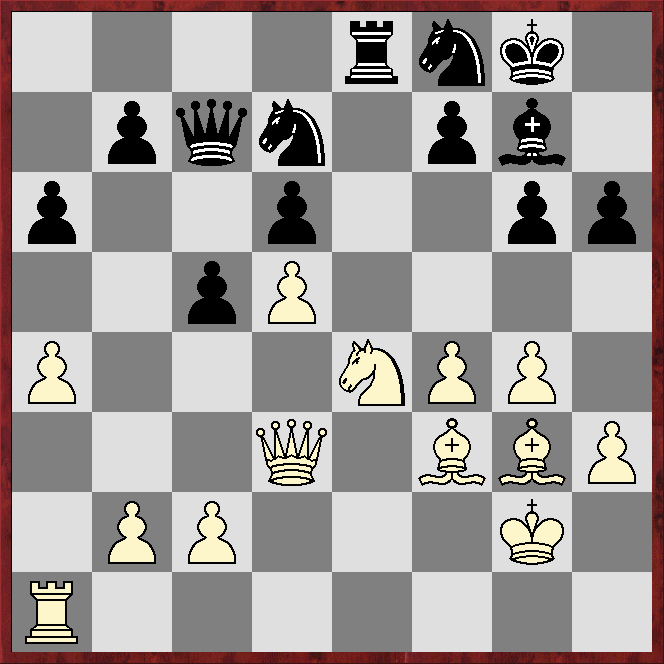
How should White proceed?
*****
*****
*****
*****
*****
7.Bxc6+!?
Adams played this unprovoked surrender of the bishop-pair the previous two times he reached the diagrammed position in Mega23. According to commentary by Russian grandmaster Ernesto Inarkiev, who also later took up the move, it is a "direct attempt to use the development advantage by actions in the centre."
7...Qxc6 8.Bg5!?
In his previous games, both wins against 2550+ players, Adams played 8.Bf4 and 8.e5. The text is preferred by the engines.
8...Be7 9.e5 dxe5 10.Nxe5 Qc7 11.Re1 0-0
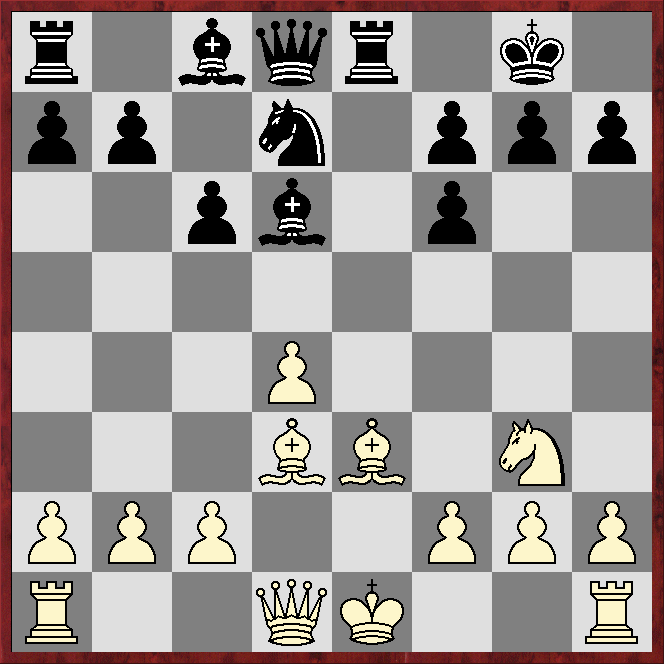
Now both players have castled, how would you assess the coming middlegame?
*****
*****
*****
*****
*****
Black has the bishop-pair but White has a small lead in development - four pieces in play, including a knight that has reached the fifth rank, against Black's three pieces in play. The engines reckon White has a tiny pull.
12.Qf3 Nd7!?
White hopes to generate a kingside attack, so exchanges should help Black's defence even if that means the bishop-pair goes.
13.Nxd7 Qxd7
Also possible is 13...Bxd7!? as 14.Bxe7 is met by 14...Bc6 and 15...Qxe7. However the engines reckon White may be better off in this line playing 14.Nd5!?
14.Bxe7 Qxe7 15.Re3 Qc7 16.Rae1 Bd7 17.Qh5 b6
Fiddling while Rome burns? Not according to the engines - they reckon this is Black's best continuation.
18.Ne4 f6!?
Not 18...h6? 19.Nf6+!
19.Rh3 h6 20.Rg3 Bc6!?
Setting a little trap.
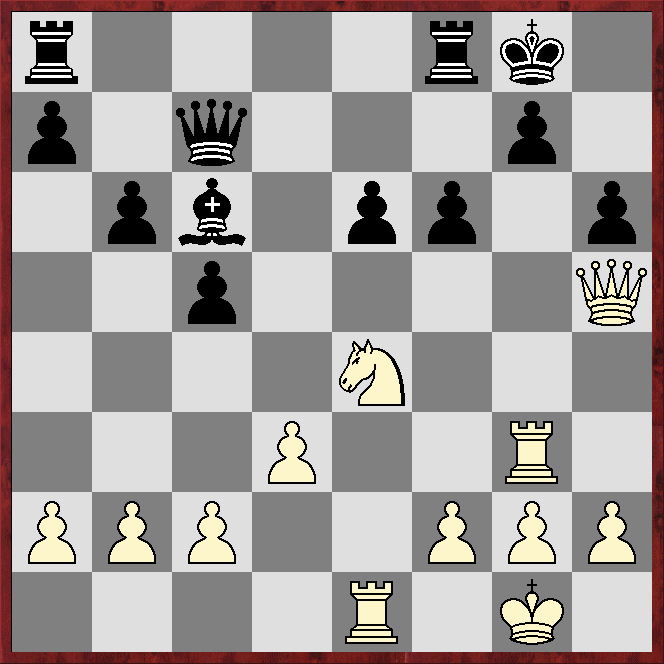
What should White play?
*****
*****
*****
*****
*****
21.h3
Not 21.Qxh6?? Qxg3 etc.
21...Rae8 22.Rg7
Now the threat of Qxh6 is real.
22...Kh7 23.Re3 Re7
How should White continue the attack?
*****
*****
*****
*****
*****
24.Rgg3?!
The engines reckon White had to play 24.Rf3!?, the point being 24...Be8? fails to 25.Nxf6+! Rxf6 (forced) 26.Rfxf6, after which 26...Bxg6 27.Qxg6+ Kg8 28.Rxe6 leaves White two pawns up. Instead Black should probably exchange minor pieces, with what the engines reckon is an equal position.
24...Be8 25.Qh4
Black to play and gain at least the upper hand, according to the engines
*****
*****
*****
*****
*****
25...g5?
SJ must have missed White's reply, or more likely misjudged the strength of it. Instead 25...e5 is winning (Stockfish16) or gains the upper hand (Komodo14.1), eg 26.Nc3 Bc6 27.Re1 f5 with an initiative for Black. Other moves, including 25...Rd7 and 25...Qe5, also seem to give an edge.
26.Rxg5! fxg5 27.Nxg5+ Kg8 28.Nxe6 Rxe6 29.Rxe6 h5
The engines reckon Black's bishop balances out White's three extra pawns, but Black faces the practical problem (for a human, at least) of having a very exposed king 
*****
*****
*****
*****
*****
30.Qe4 Bf7 31.Rh6 Be8?
31...Re8 gives complete equality, according to the engines.
The game finished:
32.Qd5+ Rf7 33.Re6 Bd7 34.Rg6+ Kf8 35.Qg5+ Rf5 36.Rg8+ Kf7 37.Rg7+ Ke6 38.Qe7+ 1-0
It is mate in four, viz 38...Kd5 39.Qe4+ Kd6 40.Rg6+ etc.

Thursday, 3 August 2023

Oh Calamity!

TWO proverbs that come to my mind quite often are, "Worse things happen at sea," and "There's always someone worse off."
The latter in particular was brought home to me by the drama that unfolded in the last two rounds of the British 65+ championship at Leicester.
Favourite in the 52-player event was Fide master Terry Chapman, whose 2248 rating put him more than 100 elo ahead of everyone else.
I was not paying much attention to his games, but he was a point clear of the field when he reached five out of five, a score that included a round-five win against his nearest rival in rating terms, Scottish Fide master Philip Giulian (2141).
Then came round six.

Alan Punnett (2051) - Terry Chapman (FM 2248)
Caro-Kann Tartakower
1.e4 c6 2.d4 d5 3.Nc3 dxe4 4.Nxe4 Nf6 5.Nxf6+ exf6!?
This, arguably anti-positional, recapture is all the rage although it dates back in master play to at least 1898.
6.Be3 Bd6 7.Bd3 Nd7 8.Ne2 0-0
German grandmaster Vincent Keymer has twice played 8...f5!?, which is also the choice of Stockfish16 and Komodo14.1.
9.Ng3 Re8
How should White proceed?
*****
*****
*****
*****
*****
To a certain extent the pawn-structure dictates the players' overall strategies.
White's potential queenside passer makes most endgames an attractive proposition, so it is often natural to seek exchanges.
Black's play is perhaps a little more subtle. If both sides castle short, which they usually do, Black's king will have more pawns protecting it. Furthermore Black may be better placed to push pawns on the kingside, possibly as part of a pawn-storm or, at least initially, to drop the knight in on e4 (after playing ...f5).
I presume it was such general considerations that led AP in this game to play ...
10.Nf5!?
... but it is a move the engines are not keen on. They suggest 10.0-0, 10.c3 or 10.Qd2.
10...Nf8?!
This gives up the bishop-pair. Not only that, but the dark-square bishop is often Black's most potent piece in the early going of the Tartakower Variation.
After 10...Bc7 the white knight will get hit by ...g6, eg 11.0-0 g6 12.Ng3 (12.Nh6+ Kg7 favours Black, according to the engines) f5 13.Qd2 Nf6 with what seems a perfectly reasonable position. The engines reckon 11.Qg4 is nothing to worry about after 11...g6 12.Nh6+ Kf8, with the threat of ...Ne5 or ...Nc5 to come.
11.Nxd6 Qxd6
TC may have thought the four tempi spent by the knight in going from g1 to e2 to g3 and f5, and then exchanging itself in a way that lets Black recapture with a developing move, is too high a price for White to pay, but the engines disagree.
12.0-0 a5 13.c4 Be6 14.Qc2 Red8 15.Rfd1 Qc7 16.Rac1 g6
Now the middlegame is well under way, how would you assess the position?
*****
*****
*****
*****
*****
We are a long way from any ending, and White's bishop-pair is not (yet) a dominant force. On the other hand there is no sign of a Black kingside attack, and is not clear any such attack would be effective, even if it came, as Black's pieces are not well-coordinated for such action and Black will miss his dark-square bishop. Meanwhile White has more space in the centre and the better pawn-structure. The engines reckon White has a positionally won game.
17.Qe2 Qe7 18.Qf3 h5 19.h3 Rd6?
This loses the exchange. The engines suggest 19...a4 or 19...Nh7, but have White on top.
20.d5 cxd5 21.Bc5 Rad8?!
The engines prefer 21...dxc4 22.Bxd6 Qxd6, although 23.Bxg6 Qe5 24.Bxh5 leaves White the exchange up and with much the safer king.
22.Bxd6?!
Much stronger is 22.cxd5 Bxd5 23.Qxd5 Rxd5 24.Bxe7, winning a piece.
22...Rxd6 23.Re1 d4
Black has a passed pawn for the exchange - if he had the bishop-pair as well, he might be in business
*****
*****
*****
*****
*****
24.Be4 Rb6?!
Almost certainly better is 24...Rd7, keeping an eye on d4 as well as protecting b7.
25.b3 Nd7 26.Qd3 Qa3?!
Exchanging pawn captures on d4 and a2 is probably not a good deal, especially as the fall of the d4 pawn exposes the f6 one.
27.Qxd4 Qxa2 28.Bd5 Rd6 29.Qc3 Nc5!?
Not much of an improvement, if any at all, is the engines' 29...Qa3 30.Bxe6 fxe6 31.c5 Rc6 32.Qd4 Ne5 33.Qd8+ Kg7 34.b4!? Nf7 35.Qd7 axb4 36.Qxb7, after which White's passed pawn is the more dangerous.
30.Bxe6 Rxe6 31.Rxe6 Nxe6 32.Ra1 Qe2 33.Qxf6 Qd2 34.Qe5 b6 35.Qb8+
Black has to either give up another pawn or let queens come off
*****
*****
*****
*****
*****
The game saw:
35...Qd8 36.Qxd8+ Nxd8 37.Rd1 (1-0, 49 moves).

Of course anyone can lose to a player rated about 200 points lower, as a cursory look at almost any open tournament will show.
The Calamity in my title refers not to the game above. but to what happened the next day in the seventh and final round.
On top board Punnett had black against Sheila Jackson. Both were on five points, were roughly equally rated and duly drew.
Chapman was downfloated with white against David Fryer, who was enjoying a very good tournament, having gained 36.6 elo, but whose 1880 rating was unlikely to have a Fide master quaking in his boots.
The round started at 10:00, but the default time of 30 minutes had elapsed by eight minutes, an arbiter told me later, when Chapman arrived.
Apparently his watch had stopped, and by the time he noticed the correct time it was too late.
The result was the 2023 65+ championship was shared by the other three players mentioned above, all of whom ended on 5.5.

Tuesday, 1 August 2023

So What Went Wrong?

ON the face of it my performance in the British 65+ championship was far from a disaster.
Six of my seven opponents had Fide ratings, their average being 1999, which is well above my Fide of 1800.
My performance against them was 1932, which is also well above my Fide rating. So far so good.
Six of my opponents also had ECF ratings, their average being 2008, which is a fair bit above my ECF of 1941.
My performance rating against them was 1808, which is well below my ECF rating.
Averaging the results of the two rating systems, I slightly outperformed my expected score.
But after three rounds the picture was very different as I had won two games with black and drawn the other with white.
Then came four losses on the trot - and what losses they were.

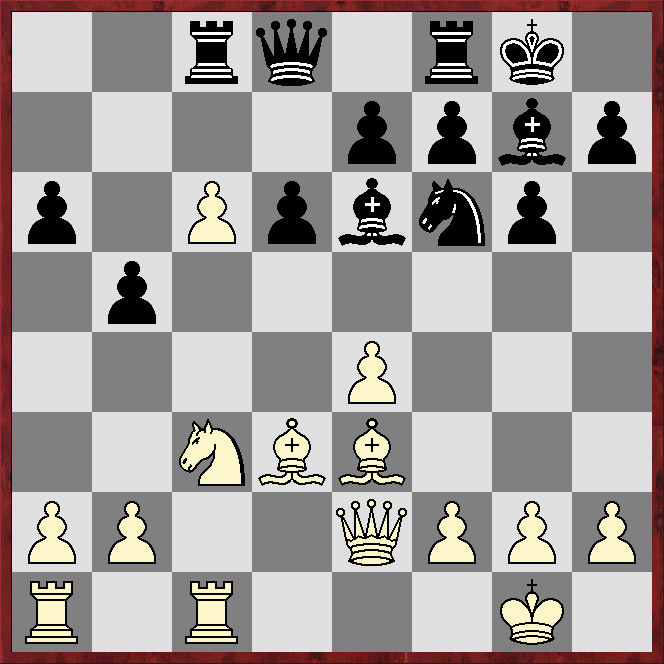
In round four I reached the following position with white against Sheila Jackson (2118 ECF/2039 Fide), who went on to share first place.
I thought I was doing quite well here thanks to pressure down the f file, and with Black having a bad bishop
My positional judgment was probably wrong - the game is equal, according to Stockfish16 and Komodo14.1.
But it certainly was not equal after the horrendous 22.Kb1??, which naturally was met by 22...Qxd1+.

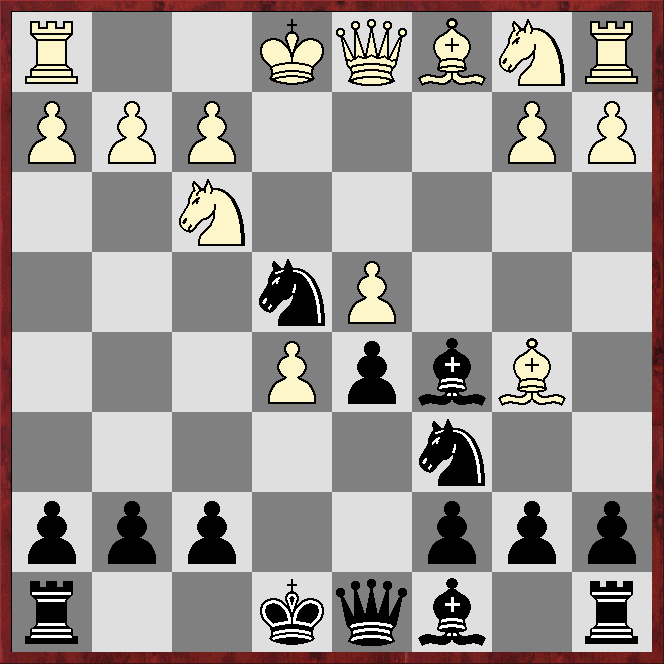
In round five I reached the following position with black against Paul Hutchinson (2043 ECF/1996 Fide).
Black has a crushing advantage -  about +7.3 according to Stockfish16;  about +12.4 according to Komodo14.1
I continued 37...Rc5??, only to lose my knight to 38.Qh7+ and 39.Qxd3.

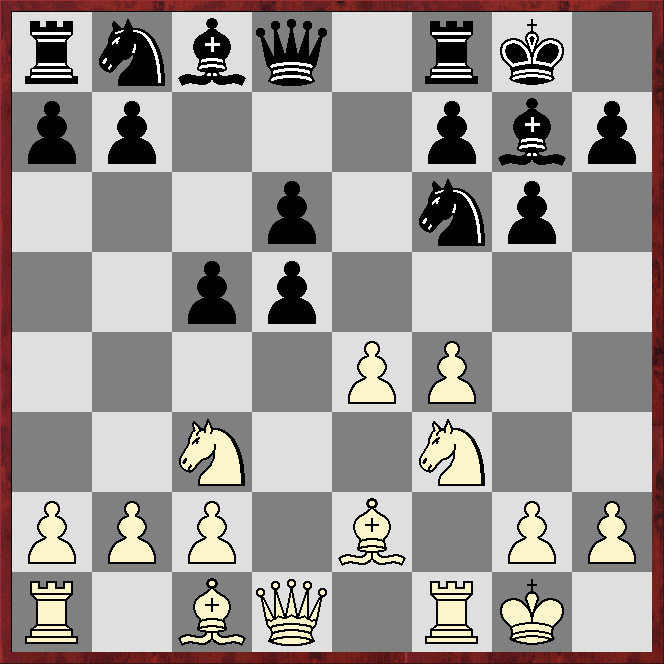
In round six I reached the following position with white against Andrew Morley (2114 ECF/2089 Fide).
After 17.a4 White has a slight edge, or at least the better side of equality, according to the engines
Instead I lost my head and played 17.Bxb5?? axb5 18.Qxb5.
After the further moves 18...Qc7 19.Nd5 Bxd5 20.exd5 Rb8 21.Qc4 Qc5 (even stronger is 21...Nxd5!? 22.Qxd5 Bxb2, according to the engines) I realised my sacrifice had been easily refuted.

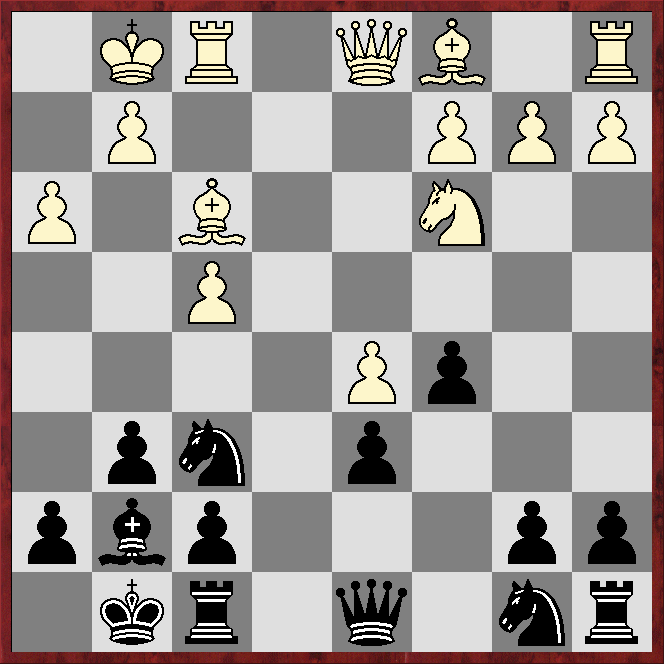
In round seven I reached the following position with black against Ray Burgess (1924 ECF).
Black has at least the better side of equality after 21...Ne6, according to the engines, although the position is far from clear
There was nothing unclear about the game continuation of 21...Qe5?? 22.Rb1, after which Black must lose a knight for inadequate compensation.
I considered the correct move, 21...Ne6, but rejected it because of 22.e4?, but then 22...Qe5 wins, eg 23.Nb3 Rac8 24.Rd1 Nef4, after which the engines reckon Black's advantage is worth more than a rook.

What these four losses have in common is a move by me that earns two question marks - something I do not give out lightly.
So what causes such blunders?
The consensus in improvement books I have read is oversights like 22.Kb1?? and 37...Rc5?? are usually a result of tiredness.
Was I tired?
Well I certainly was not overdoing the nightlife - the last time I had an alcoholic drink was June 5, long before arriving in Leicester.
True, most days I was getting up at about 05:30, and going down to breakfast at the Holiday Inn as soon as the restaurant opened at 06:30.
After breakfast I would walk into Leicester's old town and have a couple of coffees while going through my emails and generally surfing the internet on my smartphone.
Come about 09:00 and I was feeling hungry again, so I would pop into Tesco or Marks & Spencer, buy some groceries and head back to my room for an early - very early - lunch between 09:30 and 10:00.
The rest of the morning I would spend on my computer, before having 20-30 minutes shuteye, and then heading to the tournament room for the 14:30 start.
The final round began at 10:00, so there was no time for an early lunch, and yet I did not feel as famished as, bearing in mind the routine I had adopted, I feared I would.
I think the answer to what was going on is that I was not getting hungry at around 09:00 - rather I was getting tired, and was mistaking tiredness for hunger.
And I was making my tiredness worse - much worse - by spending most of the day before each round staring at the screen on my phone or at the screen on my laptop, activities which are known to make people mentally tired.
If I am right about what caused the disappointing way I lost four games in a row, the answer is, thankfully, obvious.
Rather than making myself mentally tired before I sit down to play a game that requires mental concentration, I should rest my brain.
That does not mean doing nothing all morning. Instead I intend taking a leaf out of Mikhail Botvinnik's book and go for invigorating walks.
My next tournament, again a 65+ event, is later this month in the CzechTour's annual Olomouc festival.
I will test my new regimen there ...

Monday, 31 July 2023

Summing Up Leicester

MY score in the British 65+ championship of +2=1-4 gained 20.2 Fide elo but lost about 9.8* ECF elo.
*My round-three opponent did not have an ECF rating so I have used his Fide rating to calculate my ECF performance.

Sunday, 30 July 2023

British 65+ Round Seven

Ray Burgess (1924 ECF*) - Spanton (1941 ECF/1800 Fide)
London System
1.d4 d5 2.Nf3 Nc6 3.Bf4 Bg4 4.e3 e6 5.Be2 Bd6 6.Bg3 h5!?
The mainline in ChessBase's 2023 Mega database runs 6...Nge7 (6...Nf6 is also popular) 7.Nbd2 0-0 8.0-0 with a slight edge for White, according to Stockfish16 and Komodo14.1.
How should White respond?
*****
*****
*****
*****
*****
7.Nbd2
Carrying on with normal London System development seems perfectly reasonable.
7...h4 8.Bxd6 cxd6!? 9.h3 Bf5 10.c3 Nf6 11.Qa4 Ne4 12.c4 dxc4
This is one of the points of 8...cxd6!? - when White breaks with c4 Black can capture and still have as many central pawns as White.
13.Bxc4 a6 14.d5?!
White should probably withdraw the queen or the bishop.
14...Nc5 15.Qa3 exd5 16.Bxd5 Nb4
How should White meet Black's triple-threat of a forking check on c2, a check on d3 and the win of a bishop?
*****
*****
*****
*****
*****
17.Nd4
White could also calmly castle, but 17.0-0!? Nxd5 18.e4 Bxh3!? 19.exd5 Bf5 seems to leave White with insufficient compensation for a pawn, eg 20.Rfe1+ can be met by 20...Kf8, after which the black king is probably safe enough.
17...Qf6
The engines reckon 17...a5!? gives Black the upper hand.
18.Bf3 Nbd3+
Not 18...Qxd4? 19.exd4 Nc2+ 20.Kd1 Nxa3 21.dxc5, but possibly better is 18...Ncd3+ and if, as in the game, 19.Kf1 0-0 20.Nxf5+ Qxf5, White does not have the game's 21.b4.
19.Kf1 0-0 20.Nxf5 Qxf5 21.b4
How should Black proceed?
*****
*****
*****
*****
*****
21...Qe5?
Black may have a slight edge after 21...Ne6, and if 22.e4? then 22...Qe5, eg 23.Nb3 Rac8 24.Rd1 Nfe4 with what the engines reckon is a wining position. They suggest 22.Ne4 but agree 22...d5 may give Black a small pull.
22.Rb1 Nxf2 23.Kxf2 Qg3+ 24.Ke2 Ne6 25.Ne4 Qg6 26.Rhd1 Rad8 27.Rb2 Rfe8 28.Kf1!?
A simple solution - the white king is now safe, and Black is bishop-for-pawn down. The game went on another 27 moves but White was always winning.
*No Fide rating.

Saturday, 29 July 2023

British 65+ Round Six

Spanton (1941 ECF/1800 Fide) - Andrew Morley (2114 ECF/2089 Fide)
Sicilian Bb5(+)
1.e4 c5 2.Nf3 Nc6 3.Bb5 g6 4.c3 Nf6 5.Qe2 Bg7 6.d4 cxd4 7.cxd4 0-0!?
Provocative. White usually plays 7...d5.
How should White proceed?
*****
*****
*****
*****
*****
8.d5
This has been played by Mateusz Bartel (2653) and Levon Aronian (2773), easily the strongest players to reach the position in ChessBase's 2023 Mega database, but Stockfish16 and Komodo14.1 prefer 8.0-0 and 8.Nc3.
8...Nb8
The engines slightly prefer 8...a6, when they reckon only 9.Bd3 keeps the game equal.
9.Nc3 d6 10.0-0 a6 11.Bd3 b5!?
Expanding, but without the tempo that would have been gained if the white light-square bishop were on a4 or c4.
12.Be3 Nbd7 13.Nd4 Ne5 14.Nc6!? Nxc6 15.dxc6
Is the c pawn strong or weak?
*****
*****
*****
*****
*****
It is hard to tell. Even the engines cannot agree - Komodo14.1 gives White a slight edge; Stockfish16 calls the position equal.
15...Be6 16.Rfc1 Rc8
What should White play?
*****
*****
*****
*****
*****
17.Bxb5??
Completely misevaluating White's compensation. The engines give 17.a4 Rxc6 (not 17...b4? 18.Nd1 a5 19.Ba6) 18.axb5 axb5 19.Bxb5. disagreeing, as before, over whether White stands better or the position is equal.
17...axb5 18.Qxb5 Qc7 19.Nd5 Bxd5 20.exd5 Rb8 21.Qc4 Qa5
The engines point out 21...Nxd5!? 22.Qxd5 Bxb2.
22.Rd1?
The position is a lot trickier after 22.c7 Rbc8 23.b4!?, eg 23...Qxd5 24.b5 is equal, according to the engines. They give 23...Qa8, reckoning Black is on top.
22...Rxb2 23.Bd4 Rb4 24.Qc2 Nxd5 25.Bxg7+ Kxg7 26.Rab1 Rxb1 27.Rxb1 Qc3 (0-1, 35 moves)

Leicester 2

LEICESTER previously hosted the British chess championships in 1960, when the main event was won by Jonathan Penrose for the third year running. He would go on to win the British title a further seven times.
A reminder Leicester is home to top sports teams, plus Leicester City in the Football League Championship

Friday, 28 July 2023

British 65+ Round Five

Paul Hutchinson (2043 ECF/1996 Fide) - Spanton (1941 ECF/1800 Fide)
New London
1.d4 d5 2.Bf4 e6 3.e3 Bd6 4.Bg3 Nf6 5.Nf3 b6
Castling is the main move by a huge margin in ChessBase's 2023 Mega database.
6.Bd3 Bb7
Stockfish16 and Komodo14.1 prefer controlling e4 rather than aiming for an exchange of light-square bishops with 6...Ba6!?
7.Nbd2 Nbd7 8.Ne5!?
There are 15 games with this move in Mega23. It scores 53%, compared with 445 for the 25 examples of  8.c3.
How should Black respond?
*****
*****
*****
*****
*****
8...Bxe5!?
A rule-of-thumb has it that when you have a bad bishop, in this case Black's light-squared one, you should not swop off the other bishop. The engines reckon the game is equal after 8...0-0 or 8...Ne4!?
9.dxe5 Ne4 10.Bxe4!?
This was played in both Mega23 games to reach the position. The engines marginally prefer 10.Nxe4.
10...dxe4 11.Qg4
This is why whites have captured with the bishop - two black pawns are en prise.
11....Qe7
The engines prefer 11...Rg8!?, and if 12.Nxe4 then 12...h5 13.Qf4 g5 14.Qf3 Kf8!?, claiming Black is at least equal.
After 11...Qe7, what should White play?
*****
*****
*****
*****
*****
12.0-0-0?
Maximilian Berchtenbreiter (2384) - Alexander Bertagnolli (2343), Austrian Team Championship 2016, went 12.Bh4 f5 13.exf6 gxf6 14.0-0-0 with maybe a slight edge for White, according to the engines (1-0, 41 moves).
The engines like 12.Qxg7!? 0-0-0 13.Qh6, claiming at least a slight edge for White, although I do not believe many human players would want to grab a pawn in such a way. However, it is certainly better than the text as after ...
12...h5 13.Qh3 0-0-0
... Black is winning (13...g5 was also strong).
14.f4 exf3 15.Nxf3 g5 16.Nd4
The engines prefer 16.Rd4!?,  the point being 16...g4?! lets White avoid the worst with 17.Qh4. However the simple 16...Rde8 leaves Black well on top.
16...h4 17.Be1 Nxe5
Not only winning a pawn, but threatening the devastating ...g4.
18.e4 c5 19.Qa3
Pinning the c5 pawn, but the relief is only temporary.
19...Qc7 20.Ne2 Rxd1+ 21.Kxd1 Rd8+ 22.Kc1 Bxe4 23.Qe3
There is nothing better, according to the engines.
23...Bxg2 24.Rg1 Qd6
Extracting the bishop with 24...Bc6 is possible as 25.Rxg5?! runs into 25...Nf3.
25.Nc3
It only gets worse for White after 25.Bc3?! Nf3.
25...Bf3
Renewing the threat of a back-rank mate.
26.b3 f6 27.Rf1 Qc6 28.a4 Kb7 29.Kb2 a5 30.Nb1
Possibly not the best, but the state of White's position can be gauged from the fact Stockfish16, at least for a while, wants White to play 30.Bxh4!?
30...c4 31.Bc3 cxb3 32.cxb3 Rd3 33.Qc1
Not 33.Qf2? Rxc3! 34.Nxc3 Nd3+ etc.
33...Rd5 34.Qe3 g4!? 35.Qh6 Nd3+ 36.Ka1 e5 37.Qxh4 Rc5??
Both 37...Nc5 and 37...Rd7 leave Black the equivalent of being more than a rook up (more than two rooks, according to Komodo14.1).
38.Qh7+ Qc7 39.Qxd3
How would you assess this late-middlegame?
*****
*****
*****
*****
*****
Black has two pawns for a knight, and the slightly safer king in a middlegame with opposite-coloured bishops, the latter usually favouring whoever can get the initiative. The engines give White a slight edge.
39...e4 40.Qd4!? f5
It may be better to throw caution to the winds and grab the h pawn, but best, according to the engines, is defending f6 with 40...Rc6, although they prefer White.
41.Bd2?!
The engines reckon White is much better after 41.Bb2, which unties the white queen and knight.
41...Qf7?
Black equalises with 41...f4, with ...e3 to come, according to the engines.
42.Nc3!?
The engines reckon 42.Rc3 is even stronger.
42...Qxb3
There is nothing better.
White to play and win
*****
*****
*****
*****
*****
43.Nb5?
White wins with 43.Qxc5! bxc5 44.Rb1 etc. Also strong is 43.Rb1.
Black to play and draw
*****
*****
*****
*****
*****
43...Qe6?
Better is 43...Ka6!?, but completely equalising, according to the engines, is 43...e3!, eg 44.Qd7+ Kb8, after which White has to take a draw by perpetual check, or 44.Bxe3 Rxb5!, after which again White has to take a draw by perpetual check as 45.axb5?? loses to 45...Qa3+ 46.Kb1 Be4+.
After the text the white bishop comes decisively into the attack.
44.Qg7+ Kc8 45.Bf4 Rc2 46.Nd6+ 1-0

Clocking In

CLOCK towers are out of fashion in these days when owning a timepiece is no longer regarded as a luxury.
But there was a time when household clocks, let alone personal watches, were rare.
Many progressive cities and towns, especially those with active business communities, built centrally placed clock towers in the 18th and 19th centuries.
Some were simple affairs, merely containing bells that were rung at key times, for example to call people to work.
But towers with working clocks were considered the ideal, becoming symbols of civic pride as well as letting people know the time of day.
Leicester's example, officially called the Haymarket Memorial Clock Tower, is slightly unusual in that it was conceived as a way to improve an area.
Leicester's clock tower ... smart as well as practical
What is now a relatively open space, forming a junction for five major streets, used to be occupied by an agricultural market and assembly rooms, the latter being divided into shops in 1805.
The shops came to be seen as a bit of an eyesore, and other businesses claimed they were an obstruction to Leicester's increasing commercial activity.
A campaign succeeded in 1862 in having the shops demolished, and within a few years the market was moved, leaving a wide open area that, perhaps ironically, businesses complained was difficult for people to cross because of increased traffic.
Rumours of a clock tower, or something similar, planned for another part of Leicester led to a subscription being started, with some £872 - worth about £600,000* today - raised in a year.
A further £1,200 was contributed by Leicester Corporation, and the clock tower was built in 1868 as the centre of a pedestrian island that in the early 1900s was flanked by tram lines.
The Memorial part of the clock tower's name refers to its statues of local worthies, mostly long-forgotten wool merchants but including Simon de Montfort, who today is best-known, if known at all, for leading baronial opposition to Henry III, but in the 13th century was noted as a Jew-persecutor.
Leicester City Council extensively renovated the site in the early 21st century, and it now forms the centre of a largely pedestrianised precinct.
*Using MeasuringWorth's average earnings index.

Thursday, 27 July 2023

British 65+ Round Four

Spanton (1941 ECF/1800 Fide) - Sheila Jackson (2118 ECF/2039 Fide)
King's Indian Attack
1.e4 c5 2.Nf3 e6 3.d3 d5 4.Qe2!?
There are 731 examples of this move in ChessBase's 2023 Mega database, where it scores 60%, which is 10 percentage points more than the 3,229 games with 4.Nbd2.
4...d4!?
This is sixth-most popular in Mega23.
How should White respond?
*****
*****
*****
*****
*****
5.g3
This is much more common than 5.e5!?, although Stockfsh16 and Komodo14.1 reckon the two moves are of roughly equal value.
5...Nc6 6.Bg2
Here the engines much prefer 6.e5!?, which scores 71% in Mega23 - 18 percentage points more than the text.
6...e5 7.Nbd2 be7 8.Nc4 Bf6!?
A peculiar square for a bishop, but the engines are not too unhappy with it.
9.a4 Be6 10.b3 h6 11.Ba3 b6 12.h4 Qd7 13.Qd2 Nge7 14.Ng1!? g6 15.Bh3 Nc8 16.Qe2!?
Admitting 13.Qd2 got White nowhere, but such loss of time is not significant in this closed position.
16...Nd6 17.Nxd6+ Qxd6 18.Bxe6 Qxe6
Now two pairs of minor pieces have come off the board, how would you assess the position?
*****
*****
*****
*****
*****
Black has a bad bishop, but White's bishop, although technically good in that most white pawns are on light squares, has little scope. Black has more space in the centre, and Komodo14.1 reckons Black has a tiny pull, although Stockfish16 calls the game completely equal.
19.f4 h5 20.0-0-0!?
Stockfish16 strongly dislikes this, preferring 20.Bc1, but Komdo14.1 reckons the two moves are of approximately equal value.
20...Qg4
Sotckfish16 gives something like (its evaluations of various moves change frequently) 20..a6!? 21.Rf1 Be7 22.f5 Qd7 23.g4 c4!? 24.Bxe7 Qxe7 25.bxc4 gxf5 26.exf5 Qa3+ 27.Kd1 Qxa4, after which both engines agree Black has at least a slight edge. However there were many alternatives for both sides along the way.
21.Qf2 Bg7
White to play and lose
*****
*****
*****
*****
*****
22.Kb1?? Qxd1+ 0-1

The Old New Work

STANDING in splendid isolation alongside Leicester ringroad is Newarke Gateway, built more than 600 years ago.
Back then it was part of walling erected around The New Work religious area of the town.
Its name was corrupted to Newarke, and it became more commonly known as The Magazine after it was used for storing weapons in the English Civil War.
Today it is more of a curiosity than serving any practical purpose, but is impressive nonetheless.
Newarke - standing strong for 600+ years

Wednesday, 26 July 2023

British 65+ Round Three

Tim Harding (1928 Fide*) - Spanton (1941 ECF/1800 Fide)
Scotch Gambit/Giuoco Piano
1.e4 e5 2.Nf3 Nc6 3.d4 exd4 4.Bc4!?
There are 31,890 examples of this move in ChessBase's 2023 Mega database, where it scores 57% - two percentage points higher than the more popular 4.Nxd4.
4...Bc5!?
Black scores 45% with this in Mega23 - four percentage points lower than with the main move 4...Nf6, which reaches a position that also arises from the Two Knights Defence.
5.c3 Nf6
Very risky is 5...dxc3!? 6.Bxf7+! Kxf7 7.Qd5+, after which White regains at least the sacrificed bishop, eg 7...Ke8 8.Qh5+ Kf8 9.Qxc5+ d6 10.Qxc3 with clearly the better game.
The position after 5...Nf6 frequently arises from the Giuoco Piano via the move-order 1.e4 e5 2.Nf3 Nc6 3.Bc4 Bc5 4.c3 Nf6 5.d4 exd4
*****
*****
*****
*****
*****
*****
6.e5!?
Stockfish16 and Komodo14.1 prefer this marginally - very marginally in the case of the former - over the much more common 6.cxd4.
6...d5
As is well-known, ...d5 is often the best reply in open games when White thrusts with e5.
7.Bb5
Trendy at the elite level in recent years has been 7.Be2!?, although the engines reckon 7...Ne4 is a complete equaliser. Not popular at the top is 7.exf6!? dxc4 8.fxg7 Rg8, which at first glance may look promising for White, but practice strongly favours Black.
7...Ne4 8.cxd4
There are 3,706 games with this position in Mega23
*****
*****
*****
*****
*****
8...Bb6
This is the mainline in modern times, although grandmasters also play 8...Be7 and especially 8...Bb4+. After the latter White usually offers the bishop-pair with 9.Bd2!?, when 9...Nxd2 10.Nbxd2 0-0 11.0-0 leaves White slightly better, according to Komodo14.1, although Stockfish16 is less sure.
9.Be3!?
More popular are 9.0-0 and especially 9.Nc3.
9...0-0 10.Nc3 Nxc3!?
Komodo14.1 likes this relatively rare continuation, but Stockfish16 prefers the main move 10....Bg4 or 10...f5.
11.bxc3 Ne7!?
Avoiding doubled pawns and preparing to contest the b1-h7 diagonal. The engines prefer attacking the white centre with 11...f6.
12.Bd3 Bf5 13.0-0 Qd7 14.Rb1!?
This useful-looking developing move may be a novelty. Several high-level games have seen 14.Nh4 Bxd3 15.Qxd3 f5, with advantage to White, according to the engines.
14...c6
The engines suggest 14...Rac8!? with the idea of breaking with ...c5.
15.Bg5 Bxd3 16.Qxd3 h6 17.Bc1
The engines reckon White should take the chance to swop off the bad dark-square bishop.
17...Ng6 18.h3 Bd8?!
This is probably too slow. The engines advocate 18...Rac8, again with the idea of trying to get in ...c5.
19.Nh2
White's unchallenged central space advantage, in a position in which the centre is unlikely to open soon, means he has time to launch a kingside attack.
How should Black respond?
*****
*****
*****
*****
*****
19...b5
Freeing Black's pieces from having to defend the b pawn. The engines prefer sacrificing it with 19...Nh4 20.f4 Qf5!? After 21.Qxf5 Nxf5 22.Ba3 Re8 23.Rxb7 the black knight is active, but that is not sufficient compensation. If instead of giving up a pawn, Black tries 20...Nf5, White has 21.g4 and 22.f5 with promising play.
20.f4 f5 21.exf6 Rxf6 22.Ng4 Rf5 23.Ne3 Rf6
Not 23...Nxf4? 24.Qxf5 Ne2+ as Black gets nowhere enough for a rook after either 25.Kf2!? or 25.Kh2.
24.Ng4 Rf5 25.Ne3 Rf6
Should White take the draw or play on?
*****
*****
*****
*****
*****
26.f5
White is winning, according to the engines.
26...Ne7
After 26...Nh4?! White can go after the knight immediately with 27.g3 Qd6 28.Ng4, but even stronger, according to the engines, is to first play 27.Bd2.
27.Ng4?!
This seems to let most of White's advantage slip. Best, according to the engines, is 27.Ba3!?, eg 27...h5 28.Rbe1 Nc8 29.g4 Rf7 30.gxh5!? Be7 31.Bc5 Nd6 32.Bxd6 Bxd6 33.Ng4 Raf8 34.f6 with a very strong attack.
27...Rxf5 28.Bxh6!? Bc7
Very bad is 28...gxh6?? 29.Nxh6+ and Nxf5(+). Black is also in trouble after 28...Rxf1+? 29.Rxf1 as in effect Black's active king's rook has been swopped for White's inactive queen's rook.
29.Rbe1 Raf8 30.Bc1 Rxf1+ 31.Rxf1 Rxf1+ 32.Kxf1!?
The engines reckon this is playable, but the king was safer where it was.
32...Nf5 33.Qf3?!
Probably better is 33.Ne5!?, or continuing to run to the queenside with 33.Ke1!?
33...Ng3+ 34.Ke1
It is perhaps too late to go back as 34.Kg1 can be met by 34...Qe6, eg 35.Bd2 Qg6 36.Qe3 Qb1+ 37.Qe1 Qf5!? 38.Nf2 Bd6 with continuing pressure.
34...Qe7+ 35.Qe3
The engines suggest 35.Kd1, but with a slight edge for Black (and with practical difficulties thanks to the exposed white king).
35...Ne4 36.Kd1 b4 37.cxb4?
This loses. White has to play 37.Kc2!?, according to the engines, but a tough defensive task lies ahead as White seems to have no counterplay.
37...Qxb4 38.a3?!
Best, according to the engines, is giving up the a pawn with 38.Qd3!? Qa4+ 39.Ke2 (39.Qb3 Qxd4+) Qxa2+ 40.Kf3, but Black is winning.
38...Qa4+ 39.Ke2
39.Ke1 Ba5+ is not an improvement.
39...Qc4+ 40.Kf3
Slightly better is 40.Kd1, but 40...Bd8!, among other moves, is deeply unpleasant.
40...Qf1+ 41.Nf2 Bg3 0-1
*No ECF rating.

Orthodox Defence

MODERN Leicester is well-known for being multi-cultural, but just how multi was brought home to me when I saw a sign in the city centre for a Serbian Orthodox Church.
The sign behind protective church railings
St George's was built from 1823-7 as an Anglican place of worship, but was taken over by members of the Serbian Orthodox confession in the 1980s.
It was renamed (slightly) as St George The Great Martyr, and the church's feast day moved from April 23 to May 6 to reflect the Gregorian calendar instead of the older Julian version.
The approach is very much what one might expect from a church built in the early 1800s

Hard to tell whether these are genuine gargoyles (decorative waterspouts) or merely grotesques (decorative carvings with no functional purpose)

Tuesday, 25 July 2023

British 65+ Round Two

Spanton (1941 ECF/1800 Fide) - Roger de Coverly (2006 ECF/1955 Fide)
Pirc
1.d4 Nf6 2.Nc3 g6 3.e4 d6 4.f4 Bg7 5.Nf3 0-0 6.Be2
The mainline in ChessBase's 2023 Mega database runs 6.Bd3 Nc6 7.0-0 Bg4 8.Be3 e5 9.fxe5 dxe5 10.d5 Nd4 with complete equality, according to Stockfish16 and Komodo14.1, but there are many almost-equally popular alternatives along the way.
6...c5 7.d5
Normal is 7.dxc5 Qa5 8.0-0 Qxc5+ 9.Kh1 with a slight edge for White, according to Stockfish16, although Komodo14.1 reckons the position is equal. One point is 9...Ng4?! runs into 10.Nd5, when 10...Nf2+?? 11.Rxf2 Qxf2 loses to 12.Be3.
7...e6 8.0-0 exd5
How should White proceed?
*****
*****
*****
*****
*****
9.exd5
Black is better after this, according to the engines, which suggest 9.e5!?, first played, apparently, in 1981, although the chess world seemingly did not pick up on the idea - 14 years pass in Mega23 before it appears again.
9...Bg4
Black is at least slightly better after 9...Na6 or 9...Re8, according to the engines.
10.h3 Bxf3 11.Bxf3
How would you assess this late-opening position?
*****
*****
*****
*****
*****
White has the bishop-pair and more space in the centre, but the centre is less open than bishops like. Stockfish16 gives White a slight edge; Komodo14.1 reckons the game is equal.
11...a6 12.a4 Nbd7 13.Be3 Re8 14.Bf2 Qc7 15.Re1 Rxe1+ 16.Qxe1 Re8 17.Qf1 Qb8
Presumably hoping to get in ...b5. The engines prefer 17...Qb6!?
18.g4!? h6 19.Kg2 Nf8 20.Qd3 Qc8 21.Bg3 N6d7 22.Ne4 Qc7
What should White play?
*****
*****
*****
*****
*****
23.c3
The engines reckon White should immediately go for kingside play with 23.Rf1!?, meeting 23...Bxb2 with 24.c3 with obvious compensation for a pawn.
23...c4
Vacating the c5 square for a knight is a typical idea in this type of position. Sometimes it is played as a sacrifice, but here it has the added bonus of establishing outposts at d3 and b3.
24.Qc2 Nc5 25.Nxc5 Qxc5 26.Bf2 Qc7 27.Qd2 Nd7 28.Bd4?!
Giving up the bishop-pair and allowing Black to emerge with much the better minor piece. The engines reckon 28.Re1 is at least equal.
28...Bxd4
As RdC pointed out in the postmortem, 28...Nc5 is possible as 29.Bxg7?! can be met by the zwischenzug 29...Nb3!, when 30.Qf2 Kxg7! leaves White under a lot of pressure as the white position is decidedly loose. But note that 30...Nxa1?! 31.Bf6 gives White a lot of compensation for an exchange. RdC rejected the whole line because of 29.Bxc5, after which Black will struggle to make progress.
29.Qxd4
The engines are unsure, but possibly better is 29.cxd4!?, taking away the c5 square from the knight.
29...Qc5 30.Rd1 b5 31.Kf2?
The engines reckon White has to play 31.axb5, albeit preferring Black.
31...Qxd4+
Even stronger, it seems, is 31...bxa4!?, not so much because it wins a pawn, I believe, but because of the weakness of b2, eg 32.Rd2 Qxd4+ 33.Rxd4 Nc5 34.Rxc4 Rb8, or 32.Be2 Qb5!? 33.Rd2 Nc5! 34.Bxc4 Qb6 35.Bd3 (or 35.Kf3 Re4) Nxd3+ 36.Rxd3 Qxb2+ 37.Rd2 Qb1 etc.
32.Rxd4
Capturing with the pawn deserved, as at move 29, serious consideration.
32...Nc5 33.axb5
How should Black continue?
*****
*****
*****
*****
*****
33...axb5
We both thought 33...Nd3+ 34.Rxd3!? cxd3 35.bxa6 was promising for White. The engines disagree, but reckon 34.Kg3 axb5 35.b3 leaves White only slightly worse.
34.Be2 Ra8 35.Ke3
Not 35.Rd2?? Ne4+.
35...Ra2 36.Rd2 Na4
This looks natural, but White has a drawing resource. Best, according to the engines, is 36...g5!?, eg 37.fxg5 hxg5 38.Bd1 Kg7 39.Rf2 Ra1 40.Rd2 Rb1, after which White is horribly tied up.
37.Bd1 Rxb2?!
This only draws, as the engines realise apparently instantly. They suggest 37...Nc5 with continued probing.
38.Bxa4 Rxd2 39.Kxd2 bxa4
Black has won a pawn, but White has saved the game
*****
*****
*****
*****
*****
40.Kc2 g5 41.fxg5 hxg5 42.Kb2 Kg7 43.Ka3 Kf6 44.Kxa4 Ke5 45.Kb5 Kxd5
Black is still a pawn up, but only temporarily.
The game finished:
46.Kb4 Ke5 47.Kxc4 d5+ 48.Kc5 f6 49.Kc6 Ke6 ½–½

Saint Mary De Castro

NEXT to where Leicester Castle stood, and within the boundary of what was the castle's bailey (defensive enclosure), lies the church of St Mary de Castro.
Its name signifies, in Latin, that it was "of the castle," as opposed to a nearby abbey, St Mary de Pratis, or "of the meadow."
Consecrated in 1107 and greatly expanded less than 60 years later, St Mary de Castro probably began as a church after being converted from an already established college 
Canterbury Tales author Geoffrey Chaucer is believed to have wed Philippa Roet, a lady-in-waiting to Edward III's wife Philippa of Hainault, in the church in 1366.
Four-year-old Henry VI was knighted here in 1426 while the so-called Parliament of Bats - attendees were banned from carrying swords, and so armed themselves with stout wooden sticks - was held in the Great Hall of the castle.
As this photo by NotFromUtrecht on Wikipedia shows, the church had a spire until it was declared unsafe and was demolished in 2014

Monday, 24 July 2023

British 65+ Round One

Ian G Kelly (1841 ECF/1987 Fide) - Spanton (1941 ECF/1800 Fide)
English
1.Nf3 Nc6!? 2.c4 e5 3.Nc3 g6 4.g3 Bg7 5.Bg2 d6 6.0-0 Nge7 7.a3 a5
This might seem like a fairly standard position from the English, but it occurs only five times in ChessBase's 2023 Mega database
*****
*****
*****
*****
*****
8.d4!?
IK afterwards said he was following a game of Tony Miles', but he almost certainly got his positions mixed. Stockfish16 and Komodo14.1 suggest 8.Rb1, 8.d3 and 8.e3, all of which have been played.
8...Nxd4 9.Nxd4 exd4 10.Nb5 Nc6 11.e3!?
Offering to make the pawn-sacrifice permanent.
The engines suggest 11.Bg5!?, when 11...f6 weakens the black kingside, while 11...Qd7 leads to complicated play, eg 12.Bh3!? Qxh3!? (12...f5 is possible, but weakening) 12.Nxc7+ Kf8 13.Nxa8 h5!? with a very unclear position.
How should Black respond to White's offer? 
*****
*****
*****
*****
*****
11...d3!?
Returning the pawn but making it difficult for White to develop his queen's bishop.
11...dxe3 12.Bxe3 0-0 (almost certainly not 12...Bxb2?! 13.Bh6) 13.c5 gives White promising compensation, but the engines reckon is playable.
12.Qxd3 0-0 13.Rd1?!
This looks natural but fails to take into account the weakness of the c4 pawn. The engines suggest 13.f4 or 13.Qc2, although Stockfish16 gives Black a slight edge after either move.
13...Ne5 14.Qe2
The engines prefer 14.Qe4 or 14.Qc2.
14...Be6
Even stronger, according to the engines, is 14...Bg4 15.f3 Be6.
15.Rd4 Nc6 16.Rd2 Ne5 17.Bd5?!
If 17.Rd4 I was considering playing on with  a pawn offer of my own, namely 17...Qe7!? The engines reckon Black has more than enough compensation after, for example, 18.Bxb7 Rxb8 19.Bg2 c6 20.Nc3 Rfc8. Another try is 17...c6!?, when both 18.Nxd6 and 18.Rxd6 can be met by 18...Qe7.
The engines reckon best is the passive 17.Rc2, but they prefer Black.
17...c6 18.Bxe6 fxe6 19.f4
White can save the knight and cover the f3 square with 19.Nd4, but the engines reckon both 19...Qf6 and 19...Qe7 leave Black well on top.
19...cxb5 20.fxe5 Bxe5 21.cxb5 Qg5
What should White play?
*****
*****
*****
*****
*****
22.e4?
Missing the main threat contained in my last move. The engines suggest covering the back rank with 22.Rd1.
22...Bxg3! 23.Kh1?!
Not 23.hxg3? Qxg3+ 24.Qg2 Qe1+ 25.Kh2 Rf4 etc, nor 23.Qg2? Qe3+ 24.Kh1 Qe1+ etc, but probably best is 23.Rd1 Bf4+ 24.Kd1 Qh4, although Black emerges a pawn up and with much the safer king.
23...Rf2 24.Qxf2 Bxf2 25.Rxf2 Qxb5
How would you assess this late middlegame?
*****
*****
*****
*****
*****
White's extra rook and bishop are no match for Black's queen and two pawns. The engines reckon Black is the equivalent of more than a rook ahead.
26.Bh6 Qh5 27.Bd2 Qe5
Somewhat greedily going after another pawn. Much simpler is 27...Rf8.
28.Re1 Qxb2 29.Ref1 Qxa3 30.Bh6
White threatens mate in two - there is only one defence, but it is enough
*****
*****
*****
*****
*****
30...d5 31.exd5 exd5 32.Rf7 Re8 33.Rg7+ Kg8 34.Rgf7 Qb4 35.Rf8+!?
The bishop-v-pawns ending arising after this is lost for White, but perhaps it is the best try.
35...Rxf8 36.Rxf8+ Qxf8 37.Bxf8 Kg8 38.Ba3 Kf7 39.Kg2 Ke6 40.Kf3 Kf5 41.Bc5 b5 42.h3 g5 43.Ke3 h5 44.Kf3 b4 45.Ke3 g4 46.hxg4+ hxg4 47.Bd6
The bishop cannot cope with four pawns - indeed, of all Black's possible moves, only 47...g3?? fails to win 
*****
*****
*****
*****
*****
47...b3
Bizarrely, the top move given by the Syzygy endgame tablebase is 47...a4!?, and if 48.Bxb4 then an only-move, 48...g3 wins, but I doubt if any human would play that way.
The game finished:
48.Ba3 g3 49.Kf3 g2 50.Kxg2 Ke4 51.Kf2 Kd3 52.Kf3 Kc3 53.Ke3 d4+ 54.Ke2 Kc2 55.Ke1 d3 0-1