Showing posts with label Stockfish16. Show all posts

Thursday, 5 October 2023

Refuting The King's Gambit VI

AND what of Boris Spassky?
Fischer's Bust of 1961 did not put him off playing the opening - indeed, including simultaneous exhibitions, Spassky was still playing the King's Gambit 45 years later, when he scored +5=1-0 at a 2006 San Francisco simul.
Overall, eight opponents tried Fischer's recommended 3...d6, including four at one Reno simul in 2004.
Presumably those players had prepared the 'refutation' between themselves, but if so it did them no good - they all lost, including one game ending in checkmate on move 12.
At a more serious level Spassky first faced 3...d6 in the Hungary-Russia match of 1967.

Spassky - Lajos Portisch
1.e4 e5 2.f4 exf4 3.Nf3 d6 4.Bc4 h6 5.d4 g5
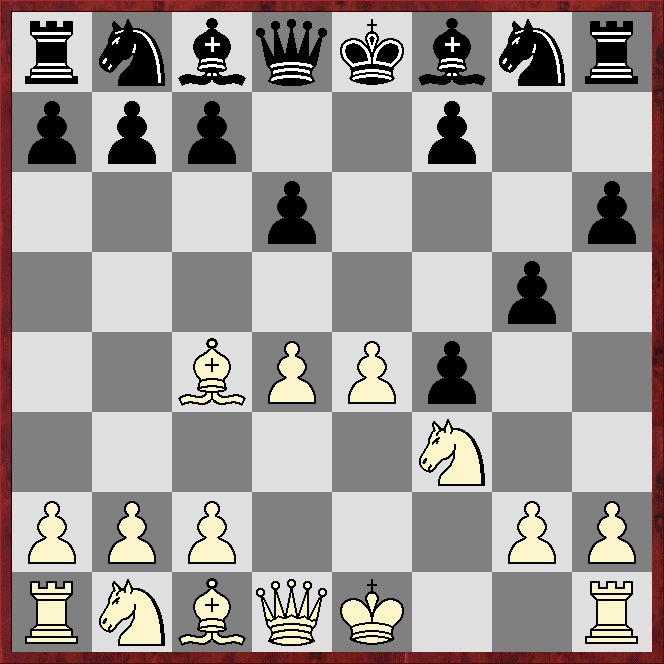
So far, all as in the article, at which point Fischer only covered 6.0-0
*****
*****
*****
*****
*****
6.g3!?
Seeking to undermine the black kingside pawn-chain.
How should Black respond?
*****
*****
*****
*****
*****
6...Nc6!?
The most popular continuation in ChessBase's 2023 Mega database is 6...g4 7.Nh4 f3, although Stockfish16 and Komodo14.1 reckon Harmen Jonkman's 8.Nc3 comes close to equalising (the engines do not approve of the King's Gambit). Alexander Beliavsky played 6...fxg3 in beating a 2215 in 1978, but the engines like that even less. They agree with Portisch's choice, but also like Larry Evans' 6...Bg7 (played in a US Open before Fischer wrote his Bust, the position being reached by a different move-order).
7.gxf4?!
A strange move for a grandmaster to make. Did Spassky really miss Portisch's reply? Probably not, but maybe he misjudged the strength of it. The position is anyway difficult for White, eg 7.0-0 transposes to a relatively well-known position where White scores very poorly. Perhaps best is the engines' 7.Nc3.
7...g4 8.Ng1 Qh4+ 9.Kf1 Nf6 10.Nc3 g3 11.Kg2?!
The engines reckon 11.Qe2 and 11.Qd2!? are much better.
11...gxh2 12.Rxh2 Rg8+ 13.Kh1
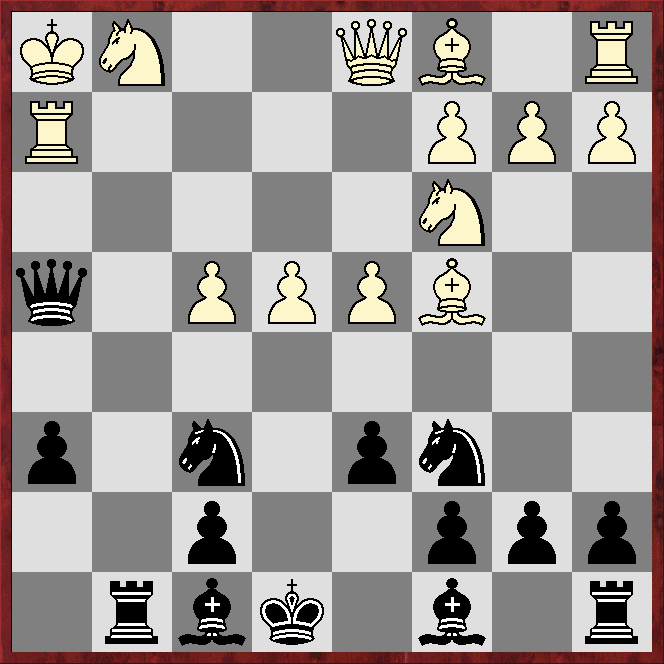
How should Black proceed?
*****
*****
*****
*****
*****
13...Qxh2+!?
Black has a large advantage after this, according to the engines, but they reckon even stronger is 13...Qg3!? with the simple threat of ...Ng4. After 14.Be2 Black can switch to 14...Bg4, again with ...Ng4 to come.
14.Kxh2 Ng4+ 15.Qxg4
The queen is doomed anyway. But after ...
15...Bxg4
... White has no compensation for the exchange. However Spassky gradually outplayed Portisch, winning the bishop-pair and slowly improving his position, eventually gaining the full point. Nevertheless the opening was a success for the 'refutation'.

Seven years later Spassky again faced the Bust.
Spassky - Axel Ornstein
Soviet Union - Sweden, Olympiad (Nice, France) 1974
1.e4 e5 2.f4 exf4 3.Nf3 d6 4.Bc4 h6 5.d4 g5 6.0-0
This is easily the main move in Mega23, although it is not liked by the engines.
6...Bg7 7.c3 Nc6 8.g3
Again Spassky seeks to undermine the black kingside pawn-chain, but the engines are not impressed. Stockfish16 suggests Steinitz's 8.Qb3!?, while Komodo14.1 likes 8.Qa4!?, which goes back to an 1839 simul by Alexander McDonnell.
8...g4?!
The wrong idea, according to the engines, which much prefer 8...fxg3 and 8...Bh3.
9.Nh4 f3
Black is a protected passed-pawn up, but the white king is much safer than in the previous game
*****
*****
*****
*****
*****
10.Nd2 Bf6 11.Ndxf3!?
All four games in Mega23 to reach the position saw this capture, but the engines reckon much stronger is 11.Nhxf3!?, which is counterintuitive since the king's knight is nearer the black king, and the queen's knight obstructs the queen's bishop. After 11.Nhxf3!? the engines reckon best play runs 11...gxf3 12.Qxf3 Bh3 13.Rf2 Qd7 14.e5, which frees the e4 square for the white queen's knight. Black can prevent it getting there with 14...Bg4, when best seems to be 15.Qe4. Black is then forced to play 15...dxe5, after which the engines give 16.Nb3!? with what they reckon is strong compensation for a knight.
11...gxf3 12.Qxf3 Bh3 13.Qh5!?
Also possible, as in the previous note, is 13.Rf2. But on 13...Qd7 the continuation 14.e5?! no longer has much point as Ne4 is not threatened.
13...Qd7 14.Rf4 0-0-0 15.Nf3?!
Probably better is 15.Nf5.
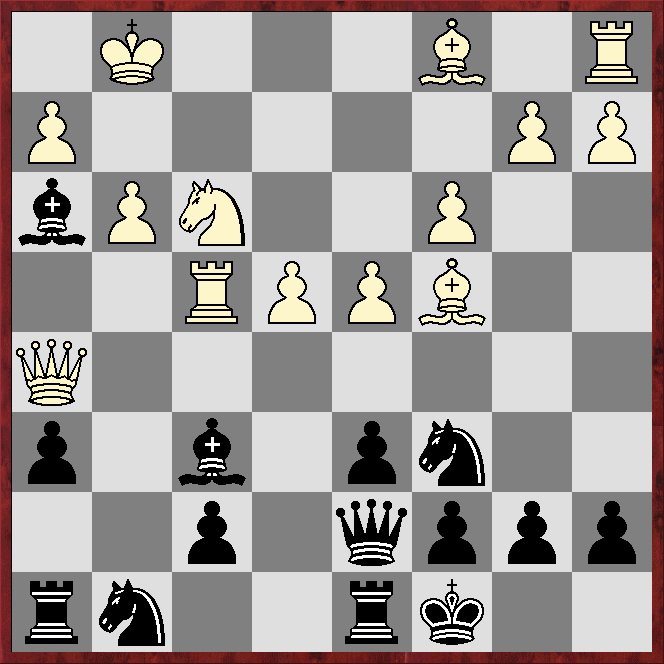
What should Black play?
*****
*****
*****
*****
*****
15...Ne5!
Giving back the knight in order to engineer exchanges and emerge the exchange up.
16.dxe5 dxe5 17.Rf5 Bxf5 18.Qxf5
Not 18.exf5? as 18...Qd1+ gives Black a very strong attack.
18...Qxf5 19.exf5
Spassky has even less compensation for the exchange than in the previous game, but battled on and salvaged a half-point when Ornstein missed a winning continuation on move 71

Next up with the Bust was reigning world champion Anatoly Karpov in the final of a made-for-TV tournament.
Spassky (2625) - Karpov (2720)
'World Cup' (Hamburg) 1982
1.e4 e5 2.f4 exf4 3.Nf3 d6 4.Bc4 h6 5.d4 g5 6.0-0 Bg7 7.g3!?
Not bothering with the the centre-strengthening 7.c3 and instead accelerating his kingside counterplay, but again the engines are unimpressed.
7...g4?!
And again the engines reckon this is the wrong idea, claiming Black has at least the upper hand after 7...Bh3 or 7...Nc6.
8.Nh4 f3 9.Nc3!?
Spassky tries to use the absence of c3 to speed his development. Previous games to reach the position, going back to 1850, saw 9.c3.
9...Nc6 10.Be3 Nf6 11.Qd2 Nxe4!? 12.Nxe4 d5 13.Nc3 dxc4 14.Rae1 0-0
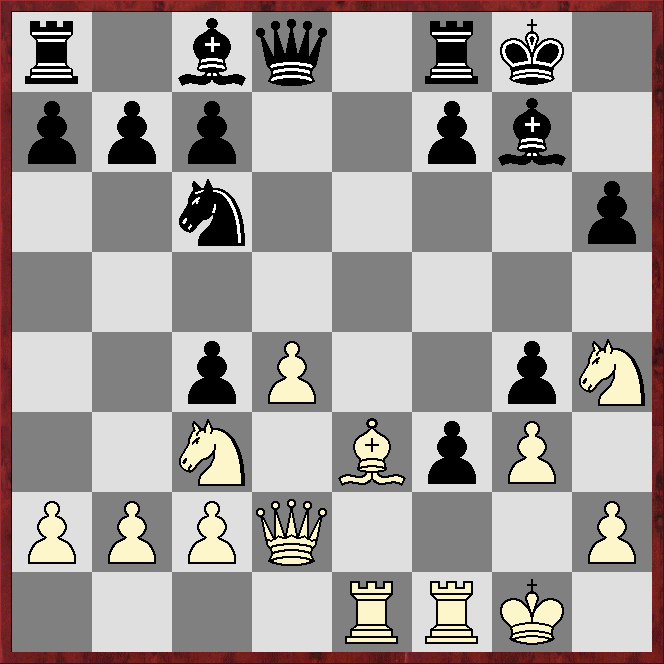
Now both players have castled - a far-from-common occurrence in these lines - how would you assess the position?
*****
*****
*****
*****
*****
Black is two pawns up, for the moment, and has a protected passed pawn, but also has doubled pawns. Black also has the bishop-pair, but White has a lead in development and the safer-looking king. The engines reckon the position is completely equal.
15.Ne5 Ne7 16.Bxh6 Ng6 17.Nxg6 fxg6 18.Bxg7 Kxg7 19.Qd4+ Qf6 20.Re7+ Kg8 21.Qxf6 Rxf6 22.Rxc7 Bf5 23.Rxc4 Rxe8
Spassky has used his development advantage to go a pawn up and deprive Black of the bishop-pair, but Karpov has completed development and reached a position where king safety is not a paramount concern, and probably has the better minor piece
The rest of the game was marred by extraordinary blunders on both sides, with Spassky eventually winning.

CONCLUSIONS
These games seem to show five things.
1. Fischer's Bust gives Black an edge. But whether that counts as a refutation depends on whether Black gaining an advantage in the opening 'refutes' White's play or is merely good news for Black.
2. Modern engines are not just critical of common individual moves, but dislike plans that have become well-established over the years.
3. Play is very complicated with much needing to be considered both tactically and positionally.
4. The player more familiar with the arising positions will probably have a considerable practical advantage.
5. Much remains to be learned about what has become known as the Fischer Variation of King's Gambit, but that may also be true of the King's Gambit as a whole.

Wednesday, 4 October 2023

Refuting The King's Gambit V

IN 1964 Fischer went on a simul-and-lecture tour of North America.
Early on, in Chicago, he essayed the King's Gambit, but this time played 3.Nf3 instead of his usual 3.Bc4, and found himself facing his own Bust.

Fischer - Kenneth Mott-Smith
Chicago (simul) 1964
King's Gambit
1.e4 e5 2.f4 exf4 3.Nf3 d6 4.d4!?
This is the move that Fischer had said in his article for The American Chess Quarterly would transpose into 4.Bc4 lines.
4...g5 5.Bc4!?
Joe Gallagher in Winning With The King's Gambit (Batsford 1992) called this illogical, explaining: "If White wants to play this he should play it on the fourth move, as then Black is forced to play ...h6." Gallagher mainly covers 5.h4, which was dismissed by Fischer in a note to 4.Bc4.
5...h6!?
This is by no means forced, but it may well be that Mott-Smith was determined to play Fischer's 'refutation'.
This position was considered important enough to merit a diagram in the Quarterly article
*****
*****
*****
*****
*****
6.0-0 Bg7 7.c3 Ne2!?
As I mentioned here, Fischer devoted most of his attention in the article to the known move 7...Nc6, but in a note annotated the text with "(!)" and said he felt it was best.
8.g3 Ng6!?
Preparation or memory slip (Fischer in his Bust article had only covered 8...d5!?, to which he awarded an exclamation mark)? I have not been able to discover much about Mott-Smith, except that he was a lawyer who represented the US in a cable match against Britain, and beat Emanuel Lasker and Alexander Alekhine in simuls in the mid-1920s.
9.Qb3?!
Stockfish16 and Komodo14.1 reckon 9.Ne1!? more-or-less equalises.
9...0-0
Fischer had written that the point of ...Ne2 is to strive to castle kingside, which is what Black has now achieved. If White had played the engines' 9.Ne1!?, then 9...0-0 could be answered with 10.gxf4, regaining White's sacrificed pawn.
10.gxf4 gxf4
Black's extra pawn is doubled and isolated, but it does a useful job in obstructing White's dark-square bishop
*****
*****
*****
*****
*****
11.Kh1 Nc6 12.Qc2 Nce7!? 13.Nbd2 Be6
Making this possible was the point of 12...Nce7!?, but the engines prefer 13...d5.
14.Rg1 Bxc4 15.Nxc4 d5 16.Nce5 dxe4 17.Qxe4 Qd5 18.Qxd5 Nxd5 19.Nxg6 fxg6 20.Rxg6
Who stands better after this flurry of exchanges?
*****
*****
*****
*****
*****
The engines reckon the position is completely equal, but that does not mean it is drawish. Black has the better bishop and a passed pawn, but White has a farside pawn-majority and fewer pawn-islands, so it will be a battle of trying to use one's own advantages while seeking to exploit the opponent's weaknesses.
20...Kh7 21.Rg2 Rae8 22.Bd2 Ne3 23.Re2 Nc4 24.Rae1 Rxe2 25.Rxe2 Nxd2!?
Presumably expecting the surviving bishop to work better with a rook than the surviving knight will, but the engines reckon Black should capture on b2, or play 25...c5!? and meet 26.dxc5 by capturing on b2.
26.Nxd2 Rf6!?
The engines are not keen on this either, one suggestion being 26...Rg8!? to deter Kg2. If White replies 27.Re4, hoping to induce 27...Rf8, and so allow 28.Kg2, possible is 27...Bf6!?, the idea being 28.Rxe4 Bg5, when 29.Rf2?? loses to 29...Be3, so White has to play 29.Rf7+ Kg6 30.Rf2, but then 30...Bxd2 31.Rxd2 Kf5 gives Black a much more-active king.
27.Nf3?!
Probably better is activating the king with 27.Kg2.
27...Bf8?!
The engines agree 27...Ra6 28.a3 Kg6 keeps any Black disadvantage to a minimum.
28.Re8 a5 29.b3!?
The engines suggest immediately activating the white king.
29...Bd6 30.c4 b6
How would you assess this ending?
*****
*****
*****
*****
*****
Black has the generally better piece for cooperation with a rook, but the bishop is somewhat restricted by the f pawn, which is a passer but is blockaded by the knight. White has a farside pawn-majority, but getting it successfully moving does not look easy. Komodo14.1 gives White a slight edge, but Stockfish16 calls the position equal.
31.Kg2 Kg6 32.Kf2 Kf5 33.h3 Rf8 34.Nh4+ Kg5 35.Rxf8+ Bxf8
How would you assess this bishop-v-knight ending?
*****
*****
*****
*****
*****
Rival pawn-majorities favour a bishop, but the bishop is not very good - every black pawn is on a dark square. The engines reckon the position is completely equal.
36.Ng2 Bg7 37.d5 Be5 38.Kf3 Kf5 39.Ne1 Bc3 40.Nd3 Be5 41.a3
Exchanging minor pieces is also equal, according to the engines.
41...Bd6 42.b4 axb4 43.axb4 Be7 44.c5 bxc5 45.bxc5
Black to play and draw
*****
*****
*****
*****
*****
45...Bg5?
Black seems to have three drawing moves but, perversely, defending the threatened f pawn is not one of them.
A) 45...h5!? 46.Nxf4 Bxc5 47.Nxh5 is a tablebase draw.
B) 45...Bf6!? 46.Nxf4 Ke5 is also a draw, according to the engines.
C) 45...Bf8!? is not so clearcut. Komodo14.1 reckons 46.d6!? is promising for White, but 46...Ke6 47.dxc7 Kd7 48.Kxf4, although liked by Komodo14.1, is shown by the Syzygy endgame tablebase to be drawn.
White to play and win
*****
*****
*****
*****
*****
46.Nb4?
The engines show 46.c6 wins, although the winning method is not simple. The threat is 47.d6, and if Black stops that with 46...Be7, then 47.Nxf4 means the white queenside pawns cannot be touched, and so Black is helpless, eg 47...Bd6 (47...Ke5? 48.Ng6+) 48.Nd3 Be7 49.Ke3 Bd6 50.Kd4 Bh2 51.Nc5 Kf6 52.Ke4 Bd6 53.Ne6 Bh2 54.Nd4 h5 55.Nf5 Kf7 56.h4 Kf8 (56.Kf6 d6! 57.cxd6 Kd5!) 57.Kf3! Kf7 58.d6!
46...Be7?
Both 46...Ke5 and 46...Bd8 are completely equal, according to the engines, and 46...Bh4!? also probably draws, but the active text should lose.
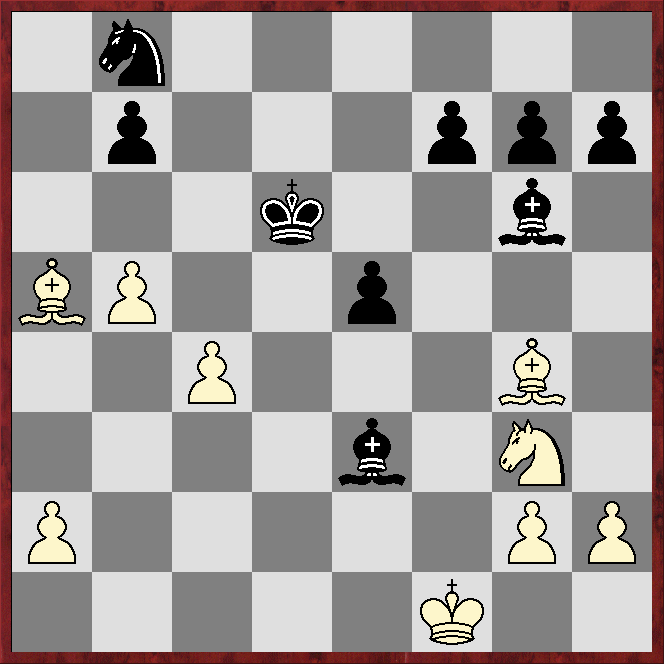
47.Na6?
Winning is 47.d6 cxd6 48.c6, eg 48...Bd8 49.Nd5 Kg5! 50.Nxf4!, or 48...Ke6 49.Nd5.
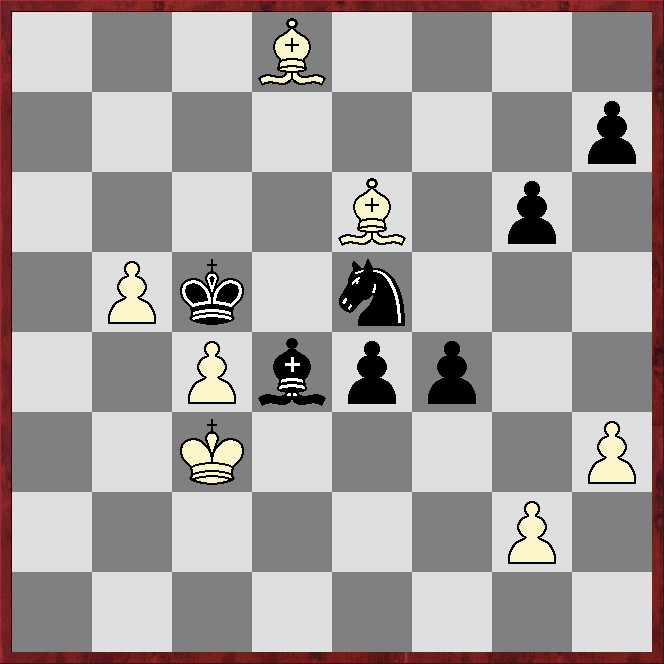
Black to play and draw
*****
*****
*****
*****
*****
47...Ke5?
The engines show Black holds with 47...Bd8.
48.d6! cxd6 49.c6 Bd8 50.c7 Bxc7 51.Nxc7 d5
White to play and win
*****
*****
*****
*****
*****
52.Na6!
If 52.Nb5, 52.h4 or 52.Ne8, then 52...d4 draws.
52...Kf5
If 52...d4 then 53.Nb4 or 53.Nc5.
The game finished:
53.Nb4 d4 54.Nd3 Kg5 55.Nxf4 Kh4 56.Kg2 h5 57.Kh2 1-0

Tuesday, 3 October 2023

Refuting The King's Gambit IV

NOT withstanding his Bust of the King's Gambit in The American Chess Quarterly, Fischer had a surprise in store two years later when he faced Larry Evans, one of the driving forces behind the magazine.

Fischer - Evans
US Championship (New York) 1963
King's Gambit
1.e4 e5 2.f4!? exf4 3.Bc4!?
Fischer's choice of the Bishop's version of the King's Gambit over the much-more popular Knight's could hardly have been predicted by Evans, who responded with the principled:
3...Qh4+
The point of White's beginnerish-looking play is that after ...
4.Kf1
... White will gain time hitting the black queen.
4...d6 5.Nc3!?
According to Viktor Bologan in Bologan's Black Weapons In The Open Games (New In Chess 2014), "Fischer was not satisfied with this move, mostly because he was caught by surprise when Black answered with ..."
5...Be6
... which Bologan awards an exclamation mark.
Unfortunately Bologan does not explain how Fischer would have varied, and the latter's games in ChessBase's 2023 Mega database are no help as subsequent opponents did not play the queen check. Perhaps Fischer would have played the natural 5.Nf3, when the main move in ChessBase's 2023 Mega database, 5...Qh5, is disliked by Stockfish16 and Komodo14.1 on account of 6.Nc3, eg 6...Be6 7.Be2 Nf6 8.d4 with an unclear position.
6.Qe2 c6!?
This may be a tad slow. The engines reckon Black should develop a knight, eg 6...Nd7, and if 7.Nb5, perhaps the move Evans was worried about, then 7...0-0-0!?, when 8.Nxa7+ Kb8 9.Nb5 Ngf6 leaves Black powerfully ahead in development and equal on material.
7.Nf3 Qe7 8.d4 Bxc4 9.Qxc4 g5!?
The engines agree with 9...g5!?, which is about opening a diagonal for the black bishop as much as holding on to the f4 pawn
*****
*****
*****
*****
*****
10.e5
Hoping to open lines to exploit White's lead in development and the awkward line-up of the black monarchs on the e file.
10...d5
Keeping lines closed, and doing it with tempo on the white queen.
11.Qd3
The engines prefer 11.Qb3!?
11...Na6 12.Ne2!? Nb4 13.Qd1 0-0-0 14.c3 Na6
How should White proceed?
*****
*****
*****
*****
*****
15.h4!?
Playing on the side where your king has its address is usually frowned on, but Fischer, I presume, wanted to get at Black's awkward pawn-structure before Black could complete development and be better placed to defend it.
15...g4 16.Nh2 h5 17.Nxf4 Qxh4?
Temporarily winning a pawn, but the engines prefer 17...Qd7!?
18.Kg1
Freeing a square for the h2 knight, and protecting the king's rook.
18...Nh6 19.Nf1 Qe7 20.Nxh5
White has won his pawn back and threatens to go a pawn up.
20...Rg8 21.Nfg3 Rg6?!
The rook is a target here. The engines suggest 21...c5 or 21...Qe6.
22.Nf4 Rg5 23.Be3 Nc7?!
The engines suggest 23...f6.
24.Qd2 Rg8
Again the engines suggest ...f6, but it seems Black is losing material no matter what, eg 24...f6 25.exf6 Qxf6 26.Nfh5.
25.Nfe2
After a series of what seem sub-optimal moves, Black is losing  a piece.
25...f6 26.exf6 Qxf6 27.Bxh6 (1-0, 36 moves)

Monday, 2 October 2023

Refuting The King's Gambit III

FISCHER'S response to his defeat by Boris Spassky led to one of the most famous articles in chess history.
I have told something of the background to the article's publication, in the first issue of The American Chess Quarterly, in this post.
Fischer begins the article by complaining that modern annotators treat the opening with "kid gloves," analysing it "romantically - not scientifically."
He acknowledges the gambit is "making a comeback with the younger Soviet masters," but says Spassky admitted it gives White little, "but he plays it because neither does the Ruy Lopez nor the Giuoco Piano." 
Fischer dismisses lines in which Black declines the gambit, stating "the refutation of any gambit begins with accepting it."
His solution, after the moves 1.e4 e5 2.f4 exf4 3.Nf3, is to reject his choice against Spassky of  3...g5, which he condemns as "inexact because it gives White drawing chances in the ensuing ending ... where Black's extra pawn is neutralised by White's stranglehold on the dark squares, especially f4."*
[The phrase "ensuing ending" is a little odd, considering his encounter with Spassky never reached the endgame - Fischer resigned with each player still possessing a queen, a pair of rooks and a minor piece.]
Instead of 3...g5, Fischer recommends 3...d6, which he awards an exclamation mark, calling it "a high-class 'waiting move'."
Today 3...d6 is second in popularity to 3...g5, but before 1961, the date of the article's publication, 3...d6 also trailed 3...d5, 3...Be7 and 3...Nf6.
Fischer regarded 4.Bc4 as White's proper response, reckoning 4.d4 transposes.
However, this is far from obvious, and in Winning With The King's Gambit (Batsford 1992), Joe Gallagher cites the latter move as "clearly the most critical," while conceding "the plan of Bc4 followed by d3 is also interesting."
Fischer recommended meeting 4.Bc4 with 4...h6, which, like 3...d6, he awarded an exclamation mark, calling it the Berlin Defence Deferred, although today it is more-or-less universally known as the Fischer Defence.
He did not mention Gallagher's suggested 5.d3, instead continuing 5.d4 g5 6.0-0 Bg7 7.c3, claiming the last move is "necessary to protect the d pawn."
Quite a few alternatives have been missed along the way, and it is not even clear 7.c3 is "necessary," eg Stockfish16 for a long time prefers 7.Nc3 and 7.h4, although it does eventually list 7.c3 among its top two moves, at least for a while (Komodo14.1, however, agrees with Fischer's choice).
Position after 7.c3
*****
*****
*****
*****
*****
Fischer then looks in some detail at 7...Nc6, citing authority for it being best, but adds in a note that he believes 7...Ne7 is best, annotating it with (!), adding "there is no reason why Black should not strive to castle kingside."
He continues with the sample line 8.g3 d5 (Fischer gives this an exclamation mark) 9.exd5 fxg3 10.hxg3 0-0 11.Qb3? Qd6 12.Kg2 Nf5 and "wins."
Unfortunately, as indicated, this analysis has a major flaw in it. The engines prefer, among other moves, 11.Nbd2, one point being 11...Qd6?! is now ineffective thanks to 12.Ne4.
Considering the article is so famous, it is short of detailed analysis. Rather, the sentiment behind it, and Fischer's eye for a catchy phrase, including the payoff: "Of course White can always play differently, in which case he merely loses differently," has helped keep it in the public eye.
*I have algebraicised the moves and quotes from the article.

Sunday, 1 October 2023

Refuting The King's Gambit II

BEFORE looking at Fischer's Bust, it makes sense to first look at why he felt a need to write the article.

Boris Spassky - Robert Fischer
Mar del Plata (Argentina) 1960
King's Gambit
1.e4 e5 2.f4
This was not a surprise to the American. Spassky had played the King's Gambit three times at the recently concluded 27th Soviet championship, scoring +2=1-0 in an otherwise disappointing tournament - his score of +5=10-4 left Spassky four points behind winner Victor Korchnoi.
2...exf4 3.Nf3 g5
A principled reply, and a successful one in that there are 4,220 examples of the move in ChessBase's 2023 Mega database, with Black scoring 50%.
4.h4
This goes back to at least 1620 analysis by Gioachino Greco.
4...g4 5.Ne5 Nf6
Holding on to the g4 pawn with 5...h5 is quite popular. Greco's original analysis continued "6.Bc4 Nh6 7.d4 Be7 8.Bxf4 Bxh4+ 9.g3 Bg5 10.Rxh5 Bxf4 11.gxf4 d6[this probably should have been played at move seven] 12.Nxg4 Bxg4 13.Qxg4 Nxg4 14.Rxh8+ Ke7 15.Rxd8 Kxd8 16.Bxf7" with a two-pawn advantage for White.
6.d4 d6 7.Nd3 Nxe4 8.Bxf4 Bg7
What does White have for a pawn, now the initial tactical foray is over?
*****
*****
*****
*****
*****
Not a lot, would seem to be the answer, unless having a d pawn on the fourth rank against a d pawn on the third is significant. Stockfish16 and Komodo14.1 give Black the upper hand.
9.Nc3
Fischer criticised this, giving it a question mark in My 60 Memorable Games, and suggesting 9.c3. The engines prefer the text.
9...Nxc3 10.bxc3 c5!?
Vigorously attacking the white centre. Paul Keres suggested castling, which is marginally preferred by the engines.
11.Be2!? cxd4 12.0-0 Nc6 13.Bxg4 0-0
Now both sides have castled, how would you assess the position?
*****
*****
*****
*****
*****
Komodo14.1 still gives Black the upper hand, but Stockfish16, perhaps influenced by White's lead in development, reckons White is only slightly worse.
Spassky now makes an interesting decision, that at first sight seems anti-positional.
*****
*****
*****
*****
*****
14.Bxc8!?
Exchanging a developed piece for an undeveloped piece, and developing the black queen's rook into the bargain. Stockfish16 likes the move, but Komodo14.1 is at first unimpressed, although the move comes to be it's second choice (behind 14.Bg5).
14...Rxc8 15.Qg4
This is Spassky's idea. By exchanging bishops he cleared a line for the white queen to immediately pressurise the black king's position. Fischer could have prevented this with 14...Qxc8!?, but then 15.Qh5 and 15.Qf3 perform a similar function for White.
15...f5
An anonymous ChessBase annotator in Mega23 claims 15...Kh8 is better, which was also Fischer's verdict in My 60 Memorable Games, but the engines prefer the text.
16.Qg3 dxc3!?
Greedy? Not according to the engines.
17.Rae1!?
Getting the final white piece into play. Alternatively 17.Bxd6 gets a pawn back, but is perhaps not in the spirit of the gambit. The problem is 17...Rf6 comes with a tempo that, as ChessBase points out, enables 18...Rg6, again with tempo.
17...Kh8
This has been criticised (17...Qd7 has been put forward as an improvement) but looks reasonable and rather sensible.
18.Kh1
ChessBase goes so far as to give this a question mark, which seems a bit strong. The anonymous annotator suggests 18.Bxd6, but does not mention the engines' reply, 18...Bd4+. After 19.Kh1 Rg8 White is under pressure and still a pawn down, but the engines agree this is objectively better than the text.
18...Rg8 19.Bxd6!? Bf8!?
Also interesting are 19...Bh6 and 19...Bd4, but the text may be best.
20.Be5+ Nxe5 21.Qxe5+ Rg7!?
Somewhat counterintuitive, but the engines marginally prefer it over 21...Bg7.
22.Rxf5 Qxh4+ 23.Kg1 Qg4
ChessBase gives this a question mark, citing Spassky as praising 23...Qg3. The engines prefer Fischer's choice.
24.Rf2!?
This looks retrograde and slightly awkward, bearing in mind Black has a bishop operating on the dark squares, but Spassky is saving the queen's rook for hitting the black queen.
24...Be7 25.Re4 Qg5
Fischer said he should have taken a draw by repetition with 25...Qd1+ 26.Re1 Qg4 27.Re4 Qd1+ etc. However the engines reckon White can play on with the pawn sacrifice 26.Rf1!? Qxc2 (forced) 27.Rg4 Rcg8, although then White probably has nothing better than taking a draw by repetition with 28.Rxg7 Rxg7 29.Qb8+ Rg8 30.Qe5+ etc. If 26.Kh2, Fischer gives 26...Rc6 27.Qb8+ Rg8 28.Qe5+ with another draw by repetition.
26.Qd4
How should Black proceed?
*****
*****
*****
*****
*****
26...Rf8?
"Overlooking White's real threat," was Fischer's comment. Black's advantage has eroded, according to the engines, but they reckon Black would be equal after 26...Rcg8, among other moves.
White to play and win
*****
*****
*****
*****
*****
27.Re5!?
A simple enough move, but Black's pieces are not supporting each other, and there seems no adequate reply.
27...Rd8
Certainly 27...Qh4? 28.Rxf8+ is no improvement, while 27...Qg4 28.Qxg4 Rxg4 29.Rxe7 also loses a piece for Black.
The game finished:
28.Qe4 Qh4 29.Rf4 1-0

Friday, 25 August 2023

Northumbria Round Three

Faced a Spanish junior (born 2010)

Spanton (1858 Fide/1919 ECF) - Nicholas Kowalski Rubiales (1694 Fide/1708 ECF)
Philidor
1.e4 d6 2.d4 Nf6 3.Nc3 Nbd7 4.f4 e5 5.Nf3
Considered harmless is 5.fxe5 dxe5 6.dxe5 Nxe5 7.Qxd8+, as after 7...Kxd8 the black king is not in danger.
5...exd4 6.Qxd4
The queen is not easily harassed here, so the text is much more popular than 6.Nxd4.
6...c6 7.Be2
Normal is 7.Be3, one point being 7...Ng4 can be met by 8.Bg1.
How should Black proceed?
*****
*****
*****
*****
*****
7...Qb6
Stockfish16 and Komodo14.1 reckon Black equalises with 7...d5!?, eg 8.exd5 Bc5 9.Qd3 Nd5 10.Nxd5 cxd5, when 11.Qxd5!? is risky in view of 11...Qa5+, eg 12.Qd2 Qb6! with obvious compensation.
8.Qxb6 Nxb6?!
Probably better is 8...axb6, the half-open a file, and the fact the a pawn now covers two squares instead of one, being more than enough compensation for doubled pawns.
9.a4 Bg4 10.a5 Nbd7 11.h3 Bxf3 12.Bxf3
White's bishop-pair and extra space are positionally winning (Stockfish16), or at least give the upper hand (Komodo14.1)
*****
*****
*****
*****
*****
12...g6?!
Since the dark-square bishop needs to defend the weak d pawn, the text is almost certainly a waste of time and weakening.
13.Be3 Be7?!
Black probably needs to play 13...a6.
14.0-0?!
Much stronger is 14.a6, eg 14...b6 runs into 15.e5.
14...0-0?!
Again ...a6 is probably necessary.
15.Rad1
Still good is a6, but the text is also positionally winning, according to the engines.
15...a6 16.g4 Ne8 17.Na4 Bd8 18.b4 Bc7 19.c4 Rd8 20.Rd3
Even stronger is 20.c5, eg 20...dxc5 21.Nxc5 Nxc5 22.Rxd8 Bxd8 23.Bxc5, winning the exchange. One suggestion of the engines is 20...g5!? 21.fxg5 Ne5, but they agree White is winning.
20...Nef6 21.Rfd1!? Rfd8 22.c5
This is strong, but best seems to be the engines' 22.Bb6!?, eg 22...Bxb6+ 23.axb6 Nxe4 24.Bxe4 Rxe4 25.Rxd6, or 22...Nxb6 23.axb6 Bb8 24.Nc5 Re7 25.e5 Ne8 26.Ne4.
22...Nxe4 23.cxd6 Nxd6 24.Kf2?
Black cannot avoid losing significant material after the engines' 24.Bf2.
24...Nf8?
The engines reckon 24...Nc4 and 24...Nf6 equalise.
25.Nc5?
Easily winning is 25.Bb6.
25...Ne6?!
The engines reckon 25...Nc4 and 25...h6 keep Black's disadvantage to a minimum.
26.Nxb7??
White is much better after 26.Nxe6 Rxe6 27.f5.
26...Nxc7 27.Bxc6 Rxd3 28.Rxd3 Rb8
Even stronger is 28...Rd8!
29.Rd7
What should Black play?
*****
*****
*****
*****
*****
29...Nbd8
Probably better is the engines' 29...Nd6!?
30.f5 Nxc6?!
Probably better are 30...Bf4 and 30...Rxb4!?
31.fxe6 Be5?!
Not 31...Be8?? as 32.exf7+ mates, but Black should probably have given the piece back by 31...fxe6 32.Rxc7, when 32...Nxb4 leaves Black a pawn up, but White has the better pieces.
32.exf7+ Kh8 33.Bc5
The engines prefer putting the king on a light square, for example 33.Ke2!?
33...Bg7 34.Rc7?
Better is 34.Rd6 Ne5 35.Rxa6. After 35...Nxf7? 36.Rb6 the white queenside pawns are too strong, so Black has to play 35...Nd3+ and 35...Nxc5, when the engines reckon White has just a slight edge.
34...Bd4+ 35.Bxd4 Nxd4 36.Re7?!
White is equal after 36.Ke3 or 36.Rb7!?, according to the engines.
36...Rf8 37.Ra7 Nc6 38.Rxa6 Rxf7+ 39.Ke2 Nxb4 40.Rb6 Nd5 41.Rd6?!
There are more drawing chances, according to the engines, with 41.Rb8+ Kg7 42.a6.
41...Nf4+ 42.Kd2 Nxh3 43.a6 Kg7 44.Rb6 Kh6 45.Rb7 Rf2+ 46.Ke3 Ra2 47.a7 Rc3+ 48.Kd4 Nf2 49.g5+ Kxg5 50.Rxh7
Black to play and win
*****
*****
*****
*****
*****
50...Kg4
The engines give the only winning move as 50...Ra5!
51.Kc5 Ne4+ 52.Kb6 g5
White to play and draw
*****
*****
*****
*****
*****
53.Kb7??
The obvious 53.Rh8 is one of several moves that draw.
53...Nd6+ 54.Kb8
Or 54.Kc6 Nb8 etc, while 54.Ka8, hoping for stalemate, loses to 54...Rc3.
54...Rb3+ 55.Kc7 Nb5+ 56.Kc6 Nxa7 57.Rxa7 Rd3 58.Rg7 Kh4 59.Kc5 g4 60.Kc4 Rd8 0-1

Northumbria Round Two

Faced  a junior (born 2008).

Olga Latypova (1542 Fide/1819 ECF) - Spanton (1858 Fide/1919 ECF)
Sicilian Maróczy Bind
1.e4 c5 2.Nf3 g6 3.d4 cxd4 4.Nxd4 Nc6 5.c4 Bg7 6.Be3 Nf6 7.Nc3 d6 8.Be2 0-0 9.0-0 Bd7
There are 13,456 games with this position in ChessBase's 2023 Mega database
*****
*****
*****
*****
*****
10.f3
Géza Maróczy played 10.h3 in a 1906 game, the same move as had been played against him two years earlier by Rudolf Swiderski in the first known example of the Bind (it was named after Maróczy because of his advocation of c4 in Sicilian-like structures).
10...Nxd4 11.Bxd4 Bc6
This is fine - indeed it is the main move in Mega23 - but one of the points of ...Bc6 is to oblige White to reply f3, slowing down any White kingside attack. Stockfish16 and Komodo14.1 suggest, among other moves, 11...Nh5!?, the point being White should normally be reluctant to give up the dark-square bishop in Maróczy Bind structures even if in doing so the black fianchettoed bishop is exchanged. If White avoids the exchange with 12.Be3, then 12...Bxc3!? is interesting. However, ...Bc6 is not played just to put pressure on e4, but also to clear a square for the black king's knight to reroute to c5.
12.Be3 Nd7 13.Qd2 Nc5 14.Rfd1
Possible is 14.b4!? as 14...Na4 can be met by 15.Nxa4, when Black has to reply 15...Bxa4, allowing, for example, 16.Rac1, as 15...Bxa1? is hit by 16.b5, as in Dana Reizniece-Ozola (2312) - Margeir Pétursson (2487), Pühajärve (Estonia) Rapid 2018 (1-0, 51 moves).
14...a5 15.Qc2 Qb6 16.Rab1 a4 17.Kf2?!
There are probably too many pieces on the board to bring the king forward like this, especially as it is now on the same file as a black rook.
17...f5 18.exf5 Rxf5 19.Nd5 Bxd5 20.Rxd5 Rxd5 21.cxd5 Rc8 22.b4!?
Black is forced to capture, and so the white rook comes into play.
22..axb3 23.Rxb3 Qc7 24.Rb5 Qd7 25.Qb1 Rc7 26.Ra5 Be5 27.Bb5 Qd8 28.Ra7 e6!?
It is risky opening lines when the opponent has the bishop-pair.
29.g3 exd5 30.Qd1 d4 31.Bxd4 Qf6?
Better is 31...Bxd4+ 32.Qxd4 and either 32...Ne6 or 32...d5. Stockfish16 reckons that is equal, but Komodo14.1 prefers White.
32.Bc4+?
Missing the win of a pawn by 32.Bxc5 dxc5 33.Qd5+ and Rxb7. The engines reckon it is better to give up the b pawn by 32...Rxc5, but White is on top.
32...Kg7?
The game is completely equal after 32...Ne6, according to the engines.
33.Bxc5
Even stronger, according to the engines, is 33.Be3!?, when the threat of Qd5 is hard to meet. Best play may be 33...Ne4+ 34.Kg2 Nc3 35.Qd3, after which the black knight is awkwardly placed, and Black has the less-safe king.
33...dxc5 34.Qd5 Bd4+ 35.Kg2 Qb6 36.Ra8 Qb2+ 37.Kh3 Qg1 38.Qg8+ Kh6 39.Qf8+ Qg7?!
Completely equal is 39...Rg7, according to the engines.
40.Qf4+ g5 41.Qd6+ Qg6 42.Qxg6+?!
White has the upper hand, according to the engines, after 42.Rd8 Qxd6 (forced) 43.Rxd6+ Kg7 44.a4.
42...Kxg6 43.Rg8+ Kf6 44.Kg2 Bd4 45.Rf8+ Ke5 46.Re8+
OL offered a draw in my time (just).
Most of the rest of the game is the story of me overpressing in an equal - at best - position while my opponent is more-or-less on the increment
*****
*****
*****
*****
*****
46...Kd6 47.Re6+ Kd7 48.Rh6 Ke8 49.Be6+
White is at least slightly better after 49.h4, according to the engines.
49...Kb8 50.Bf5 Re7 51.Bd3 Re3 52.Bc4 Rc3 53.Bd5 Rc2+ 54.Kf1!?
Arguably more ambitious is 54.Kh3, although Stockfish16 reckons both moves give complete equality. However Komodo14.1 at first reckons Black has a slight edge after the text, but eventually switches to equality.
54...b5 55.Rxh7 b4 56.Re7!?
The natural 56.h4 is rated only marginally better by the engines.
56...Rxh2 57.Re8+ Kc7 58.Rg8 Ke6 59.Rxg5 Rh1+ 60.Ke2 Be5?!
The engines reckon 60...Rh2+ and 60...Bf6 give equality.
How should White proceed?
*****
*****
*****
*****
*****
61.f4?!
Preserving the bishop gives White at least a slight edge, according to the engines.
61...Rh2+ 62.Kd3 Bc3?
Continuing to look for traps, but now the engines reckon White is winning. Correct is 62...Kxd5.
63.Bb3 Rd2+ 64.Kc4 Bd4 65.Rg6+ Ke7 66.g4 Be3 67.f5 Bd4 68.g5 Rg2 69.Re6+?!
White seems to be still winning after this, but much stronger is 69.f6+.
69...Kf8 70.g6?
Black has a draw after this, while 70.Rg6 looks good, eg 70...Be3 71.Rc6! Rxg5 72.Kd3 Bd4 73.f6 (threatening 74.Rc8#) Re5 74.Be6, after which Black has to give up the exchange.
Black to play and draw
*****
*****
*****
*****
*****
70...Rg4?
I offered a draw, but I should have played 70...Rf2, which does draw as White cannot save the f pawn.
71.Kb5 Rf4
White to play and win
*****
*****
*****
*****
*****
72.f6?
Winning is 72.Bc2, eg 72...Rf2 73.Be4 Rxa2 74.f6 Ra7 75.Bd5 etc.
72...Bxf6!? 73.Kxc5 Kg7 74.Re2
OL offered a draw in my time.
74...Kxg6 75.Bc2+ Kg7 76.Re4 ½–½

Thursday, 24 August 2023

Northumbria Round One

FACED a teen (born 2004).

Spanton (1858 Fide/1919 ECF) - Owen Crawford (no Fide/1740 ECF)
Veresov
1.Nc3 Nf6 2.d4 d5 3.Bg5 g6!?
This is only the seventh commonest continuation in ChessBase's 2023 Mega database, which is slightly surprising when one considers how popular kingside fianchetto systems are against 1.d4.
4.Qd2 Bg7 5.Bh6 Bxh6 6.Qxh6 c5 7.dxc5!? Qa5 8.0-0-0!? Qxc5 9.e3
How should Black proceed?
*****
*****
*****
*****
*****
9...a6!?
This apparent novelty - known moves are 9...Nc6 and 9...Bg4 - is the top choice of Stockfish16 and Komodo14.1.
10.Nf3 Bg4 11.Be2 Nbd7 12.h3 Bxf3 13.Bxf3 Rc8?
Over optimistic. The obvious 13...e6 is better, as is 13...Nb6,
How should White continue?
*****
*****
*****
*****
*****
14.Rd2?
Naturally not 14.Nxd5?? Qxc2#, but 14.Bxd5 safely wins a pawn. I rejected it because of 14...b5, missing that 15.Rd2, among other moves, is fine as 15...b4?! can be met by either 16.Ne4 or 16.Na4.
14...Qa5 15.Kb1 Ne5
What should White play?
*****
*****
*****
*****
*****
16.Rhd1?
This would have been the best reply to 15...Nc5?, but here it is disastrous. The engines reckon the game is equal after both 16.Rd4 and 16.Rxd5!?
How can Black punish White's error?
*****
*****
*****
*****
*****
16...Rxc3!
This is winning, according to the engines.
17.Rxd5!
The best try. After 17.Bxd5 Rc8 Black is piece-for-pawn up.
17...Nxd5?
The simple 17...Rc5 is much better. White can keep the game going with either 18.Rd8+!? Qxd8 19.Rxd8+ Kxd8 20.Bxb7, or 18.Rxc5 Qxc5 19.Bxb7, but in both cases Black's material advantage should tell.
18.Bxd5?
After 18.Qg7 Rf8 19.Qxe5 Rc8 20.Rxd5 White is the exchange down, but has a pawn and superior coordination.
18...Rd3!?
This may be better - the engines disagree - than the simple 18...Rc5.
19.cxd3 Qxd5
Black has emerged from the complications up a knight for a pawn, and White is doomed once the black rook gets into play
*****
*****
*****
*****
*****
20.Qg7 Rf8 21.e4
No improvement is 21.Qxh7 Qxg2.
21...Qb5 22.f4 Nc6 23.Qc3 Qa4 24.Rc1 Kd7 25.Qg7 Rc8!
White has found a way to quickly get the rook into play.
26.Qxf7
This sets up a beautiful finish, but White was lost anyway.
Black to play and finish in style
*****
*****
*****
*****
*****
26...Nb4! 27.Rxc8 Qd1+ 28.Rc1 Qd3+ 29.Ka1 Nc2+ 0-1

Saturday, 19 August 2023

Olomouc 65+ Round Nine

FACED a Czech in today's final round.

Václav Lexa (1767) - Spanton (1858)
QGD 4...c5
1.d4 d5 2.c4 e6 3.Nc3 Nf6 4.Bg5 c5!? 5.cxd5 cxd4
The move 4...c5!? is often called the Dutch-Peruvian Gambit, with 5...cxd4 starting the Dutch branch and 5...Qb6 the Peruvian one.
6.Qxd4 Be7 7.e3!?
The mainline in ChessBase's 2023 Mega database runs 7.e4 Nc6 8.Qd2 and either 8...Nxe4!? or 8...Nxd5!?, in each case with sharp play.
7...exd5 8.Nf3
Not 8.Bxf6 Bxf6 9.Qxd5?? Bxc3+ etc.
8...0-0!?
Holding back on ...Nc6 in order to leave White in a quandary over where to develop the light-square bishop.
How should White proceed?
*****
*****
*****
*****
*****
9.Ne5?!
Usual is 9.Be2.
9...Nc6
Ferenc Vándor (2004) - István Horváth (2202), Hungarian Team Championship 2006, featured the strange 9...Bf5?! 10.Bd3?! (10.Bxf6 is more to the point), after which 10...Bxd3 11.Qxd3 Nc6 12.Nxc6 bxc6 13.0-0 h6 14.Bh4 resulted in a premature draw.
10.Nxc6 bxc6 11.Bd3 c5 12.Qf4?!
Stockfish16 and Komodo14.1 prefer 12.Qh4 or 12.Qa4.
While I pondered my next move, VL offered a draw.
12...h6
Black's advantage is even bigger, according to the engines, after 12...Nh5, when 13.Bxe7 Nxf4 14.Bxd8 Nxd3+ leaves White in big trouble (15.Ke2 Ba6). Less worse for Black seems to be 13.Qh4 (or 13.Qf3) Bxg5 14.Qxh5, but 14...g6 followed by 15...d4 leaves Black well on top.
13.Bxf6
Not 15.Bxh6? Ng4!
13...Bxf6
What should White play?
*****
*****
*****
*****
*****
14.Nxd5?
Imaginative but incorrect. The engines give 14.0-0 or 14.Qf3, but with at least a slight edge for Black.
14...Qxd5 15.Be4 Qd8 16.Bxa8 Qa5+ 17.b4
Or 17.Ke2 Ba6+ 18.Kf3 Rxa8, when the bishop-pair and Black's attacking chances against the exposed white king are much more than enough for rook and pawn. Even worse is 17.Kd1? Rd8+ 18.Kc1?? (18.Ke2 is better, but then comes 18...Ba6+ and 19...Rxa8) Qd2+ 19.Kb1 Qxb2#. The engines marginally prefer 17.Kf1, but 17...Ba6+ 18.Kg1 Rxa8 is again very good for Black.
17...Bc3+ 18.Ke2 Ba6+ 19.Kf3 cxb4 20.Be4?!
Both 20.Bc6!? and 20.Qe4 are slightly better, according to the engines.
20...f5!
This is better than simply winning back the exchange.
21.Bc6
Or 21.Bc2 Qd5+ 22.Kg3 g5 etc.
21...Be5 22.Qh4 g5 0-1

Friday, 18 August 2023

Olomouc 65+ Round Eight

FACED a Czech today.

Spanton (1858) - Alois Bartoš (1884)
Veresov
1.d4 Nf6 2.Nc3 d5 4.Bg5 c5 5.e4!?
This aggressive continuation is nowhere near as popular as 5.e3 and especially 5.Bxf6, but dates back to at least a 1934 game of Kurt Richter, after whom the opening is sometimes named.
4...Nxe4 5.Nxe4 dxe4 6.dxc5!?
Strong players have tended to prefer 6.d5, in Albin Countergambit-style, but Stockfish16 and Komodo14.1 like the text.
6...Qa5+ 7.Qd2 Qxd2+!?
The engines slightly prefer this to grabbing a pawn with 7...Qxc5, when they reckon White has sufficient compensation.
8.Bxd2 e5 9.b4  10.c3 Bf5
The engines prefer 10...Nc6 or 10...Be6, apparently wanting to leave the f5 square for the black f pawn.
11.Ne2
And they dislike this because Black can reply 11...Be6, meeting 12.Ng3 with 12...f5, so instead they suggest 11.Bc4.
11...Be7 12.Ng3 Bg6 13.Bb5+ Nc6 14.0-0 0-0
With both sides castled, how would you assess the position?
*****
*****
*****
*****
*****
Material is level, both sides have doubled pawns and both sides have a pawn-majority with two extra pawns (4-2 on the queenside for White; 5-3 on the kingside for Black). The engines reckon the position is equal.
15.Rfd1 Rfd8 16.Bc4?!
Probably better is 16.a4.
16...Rd7
The engines point out Black can get rid of his doubled pawns with 16...e3!, one point being 17.fxe3? runs into 17...Bc2 or, possibly even better, 17...axb4 18.cxb4 Bc2. White can play 17.Bxe3, but 17...axb4 18.cxb4 Nxb4 favours Black, or 17.Be1, but then 17...exf2+ 18.Kxf2 axb4 19.cxb4 Nd4 gives Black at least a slight edge, according to the engines.
17.Be1 Rad8 18.Rxd7 Rxd7 19.Bb5 Kf8 20.Ba4 Rd8 21.Rd1 Raxd1 22.Bxd1 Ke8
How should White proceed?
*****
*****
*****
*****
*****
23.b5?!
A little combination to undouble White's c pawns, but it frees Black's game, and at the end of the combination Black gets rid of his doubled pawns. Almost certainly better is 23.Bg4.
23...Nb8 24.c4 Bxc5 25.Bxa5 e3 26.fxe3 Bxe3 27.Kf1 Kd7?!
Black should probably bring the knight back into play with 27...Nd7.
28.Bg4+ Kd6
The engines prefer retreating with 28...Ke7!?
What should White play?
*****
*****
*****
*****
*****
29.Nf5+
This wins the bishop-pair, but the engines much prefer 29.Bf5!?, when 29...Bxf5?? loses a piece to 30.Nxf5+, and 29...Kc5?? loses a piece to 30.Bc7. Best, according to Stockfish16, is 29...b6 30.Bb4+ Bc5. Komodo14.1 also likes that line, and 30.Ne4+. In both cases White has an initiative, while after ...
29...Bxf5 30.Bxf5 g6 31.Bd3 Nd7
... Black's strong king seems to compensate for the bishop-pair.
32.Ke2 Bg1 33.h3 Kc5 34.a3 f5 35.Kd2 e5 36.Be2 b6 37.Bb4+ Kd4 38.a4 f4 39.a5 bxa5 40.Bxa5 Kc5 41.Kc3 Bf2 42.Bb4+ Kb6 43.Be7 Be3 44.Bg5 Kc5 45.Bg4 Ne5 46.Be7+ Kb6 47.Bd8+ Kc5 48.Be6 Bd4+
How should White continue?
*****
*****
*****
*****
*****
49.Kd2?
Drawing is 49.Kb3, and possibly 49.Kc2!?, as I will explain later.
49...Nxc4+ 50.Bxc4 Kxc4 51.b6 Kb5
If the white king were on c2 instead of d2, White could play 52.Bc7, winning the f pawn with good drawing chances (Stockfish16 reckons the position is equal, although Komodo14.1's evaluation of the upper hand for Black may be nearer the mark, at least in practical play).
52.b7
If 52.Bc7? then 52...Be3+ followed by 53...Kc6 wins.
52...Be5 53.Bf6 Bb8 54.Kc3 Kc6
The engines' 54...Kc5!? is probably even stronger, eg 55.Bg5 Be5+ 56.Kd2 Kc6 etc.
55.Kd4 e3 56.Kd3 Kxb7 57.g3 fxg3 58.Kxe3 Kc6 59.Kf3 Kd5 60.Bh4 Ke6 61.Bxg3?
The pawn-ending is trivially lost. Komodo14.1 reckons Black is also winning if the bishops stay on, but Stockfish16 reckons in that case Black only has a slight edge. What suggests it may indeed be drawn is that the engines' evaluations are exactly the same after most White moves, eg 61.Kg2, 61.Bd8 and 61.Bg5 (+2.2 for Black, according to Komodo14.1; +0.75, according to Stockfish16), which is often the sign of a position where a material advantage cannot be converted into a win with best play.
61...Bxg3 62.Kxg3 Kf5
Also winning is 62...Ke5, but pushing either pawn would only draw (Syzygy endgame tablebase).
63.h4 h6 64.Kf3 h5 65.Kg3 Ke4 0-1

Thursday, 17 August 2023

Olomouc 65+ Round Seven

UPFLOATED against a Czech Fide master today.

Vlastimil Sejkora (2139) - Spanton (1858)
Spanish Berlin
1.e4 e5 2.Nf3 Nc6 3.Bb5 Nf6 4.0-0 Nxe4 5.Qe2!?
This is much less popular than the recently fashionable 5.Re1 and than the main move 5.d4, but has been played by leading grandmasters.
5...Nd6 6.Bxc6 dxc6 7.Qxe5+
ChessBase's 2023 Mega database has 291 games with this position - how should Black proceed?
*****
*****
*****
*****
*****
7...Qe7
This is easily the commonest reply, and is the choice of Stockfish16 and Komodo14.1, but 7...Be6 and 7...Be7!? have also been played.
8.Qa5 Qd8!? 9.Re1+ Be7 10.d3 0-0
Now both sides have castled, how would you assess the position?
*****
*****
*****
*****
*****
The engines reckon White's lead in development is balanced by Black's bishop-pair.
11.Bf4
This may be a novelty. Zoltán Varga (2518) - József Pintér (2581), Hungarian Championship (Lillafüred) 1999, went 11.Bg5!? Bxg5 12.Qxg5 Qxg5 13.Nxg5 Nf5 14.Nf3 Be6, after which Black no longer had the bishop-pair but had caught up in development. The position is equal (but 1-0, 60 moves).
11...b6 12.Qd2 Bb7 13.Nc3 c5 14.Ne5!?
The engines prefer 14.Ne4, although they accept the position is equal after, say, 14...Nxe4 15.dxe4 Qxd2 16.Nxd2 Rad8 17.Nc4 Rd4.
14...g5!?
The engines reckon Black is at least slightly better after 14...Nf5.
15.Bg3 f6 16.Ng4 f5
How should White respond to Black's pawn-storm?
*****
*****
*****
*****
*****
17.Qe2!
Black is better after 17.Bxd6.
17...fxg4 18.Qxe7 Re8
White is better after 18...Qxe7?! 19.Rxe7.
19.Qxd8 Rxd8 20.Bxd6!?
The engines like this, either immediately or preceded by an exchange of rooks.
20...cxd6 21.Nb5 Rxe1+
The engines point out also possible is 21...Bc6!? as 22.Nxa7 runs into 22...Bd7, when they reckon best play goes 23.a4 Bxa4!? with a slight edge for Black.
22.Rxe1 a6 23.Re7
How should Black meet White's invasion of the seventh?
*****
*****
*****
*****
*****
23...Bc6?
The engines give two lines as maintaining equality: 23...axb5 24.Rxb7 Ra7 25.a3 b4 and 23...Bxg2 24.Nxd6 Rxd6 25.Kxg2 a5.
24.Nc7
Stronger, according to the engines, is 24.Nc3!?, a sample line running 24...h5 25.Rc7 Ba8 26.Ra7 a5 27.Nd1!? d5 28.Ne3, when they claim White has the upper hand.
24...Rd7?
The engines reckon Black holds with quiet pawn moves, eg 24...g6 and 24...a5.
White to play and gain a winning advantage
*****
*****
*****
*****
*****
25.Rxd7
This is good, but even stronger, as I saw just as VS moved, is 25.Nd5!, when Black has nothing better than 25...Kf8 (25...Rxe7?? 26.Nxe7+ wins the bishop) 26.Rxd7 Bxd7, after which 27.Nxb6 wins a sound pawn, and Black has the better remaining pawn-structure.
25...Bxd7 26.Nd5?
It was much better to take the a6 pawn as the knight cannot be trapped.
26...Be6 27.Nxb6 Bxa2 28.c3 Bb1 29.d4 cxd4 30.cxd4 Kf7 31.Nc4 Ke6 32.Ne3 h5 33.Kf1 Bd3+ 34.Ke1 Kd7 35.Kd2 Be4
What gives White the best chance of an advantage?
*****
*****
*****
*****
*****
36.d5!?
This looks counterintuitive in that the pawn becomes a target for the bishop, but the gain of space seems more important. Even so the engines reckon White has only a tiny edge.
36...Kc7 37.Kc3 Kd7 38.Kd4 Bg6 39.Nc4 Kc7 40.Nd2 Kb6 41.f3!?
Another slightly counterintuitive move in that it lets Black get rid of doubled pawns, but it gives White more space to operate in, and again is liked by the engines.
41...gxf3 42.Nxf3
Stockfish16 now gives White a slight edge, although Komodo14.1 disagrees.
42...g4 43.Nd2 Bh7 44.g3 Bg6 45.Nc4+ Kc7 46.Ke3 Be8 47.Kd4
Not 47.Kf4 Bf7 48.Ne3? Kb6 etc.
47...Bg6 48.Ne3 Kb6 49.Kc4 Be4 50.Kb4 Bd3 51.Kc3 Bg6 52.Kd4 Kc7 53.Ng2 Bf7 54.Nf4 Kb6 55.Kc4 Kc7 56.Nd3 Be8 57.Nb4 Kb6 58.Kd4 Bd7 59.Na2 Be8 60.Nc1 Bg6 61.Nb3 Kb5 62.Nd2 Kb6
Not 62...Kb4? 63.Nc4 Kb3 64.Nxd6 Kxb2, after which the white passed pawn is too strong, despite Black having what is normally the better minor piece for dealing with rival passers.
63.Nc4+ Kc7 64.b4 Be8 65.Ne3 Bg6 66.Kc4 Kb6 67.Kd4 Kc7 68.Ng2 Kb6 ½–½