Showing posts with label Altea. Show all posts

Sunday, 9 November 2025

Church On The Hill

In the distance, looking from my hotel balcony, the outline of a church can just be seen

It is the Virgen del Consuelo, or Virgin of the Consolation, and goes back to the early 1600s, although most of what can be seen today dates to the late 1800s and early 1900s.
There is quite a climb to get to the church, which is on a hill in Altea old town, but the predominantly blue-tiled upper dome is a well-known local landmark 

Friday, 29 November 2024

How Much Is 100 Euros Worth?

YOU may recall I won a 100-euro rating prize at the Cap Negret 65+ seniors earlier this month, but commented that a big chunk of it would be eaten up by Spain's withholding tax on prize money. Yesterday my current account was boosted by £61.12.

Tuesday, 26 November 2024

Lessons From Altea VIII: A Touch Of The Tartakowers

SAVEILLY Tartakower is possibly better known for his chess witticisms than for his games, an observation that is meant as a compliment to his sense of humour, rather than an insult to his abilities over the board.
One of his better-known aphorisms is one he liked to give while on a lecture tour of Europe after World War Two.
He regaled audiences with stories behind the tournaments he had won, the great players he had beaten, and the opening innovations he had devised.
Just when it seemed Tartakower was somewhat over-egging his boasts, he would add words to the effect: "My one regret in chess is that I never managed to defeat a fully healthy opponent."*
I was reminded of the story after my round-nine loss at the Cap Negret 65+ seniors.
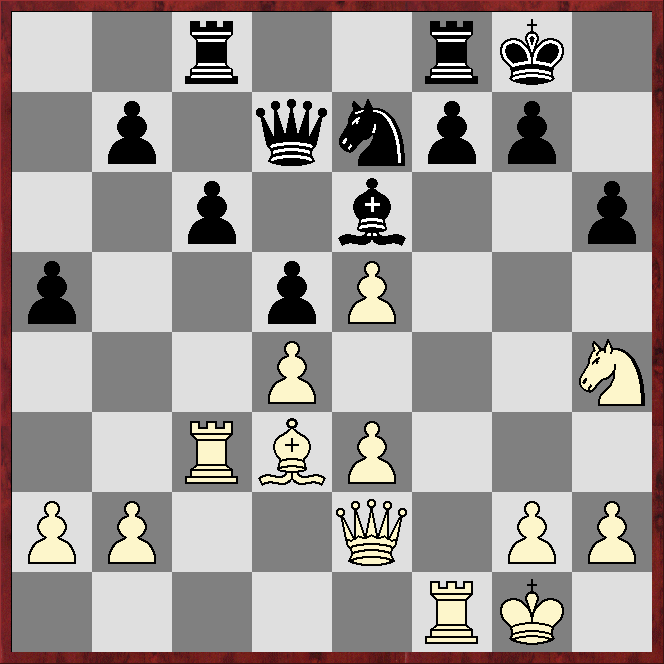
I was winning for much of the game, eventually reaching the following position.
How should White proceed?
*****
*****
*****
*****
*****
During the game I had, for the first time in the tournament, felt tired enough to eat an energy bar while play was going on.
I should explain I like to have energy bars handy for just such a situation, especially when rounds start at the awkward-for-eating time of 16:30.
The fact that this was the first occasion in the tournament I had resorted to such an energy boost suggests I had been in reasonable physical shape.
But by round nine my exertions were clearly catching up with me, which is my only explanation for uncorking the horrific blunder 35.Nxh7??
Having played the move, I even got up from the table and went to see how a rival for a rating prize was doing on top board.
After sitting back down, I still did not realise anything was amiss, until my opponent, probably as stunned as I was about to be, played 35...Rxh7, prompting my resignation.
LESSON: you cannot expect to play your best chess when, for whatever reason, you are under the weather.
*I cannot recall where I first came across this account of Tartakower's lecture tour, and a search of the internet has not helped, except to show that the witticism has also been attributed to other players.

Monday, 25 November 2024

Lessons From Altea VII: The Great Equaliser

YOU may think the Giuoco Piano and the Sicilian have little in common, apart from both arising after 1.e4, and of course in many ways that is correct.
But my round-eight game at the Cap Negret 65+ seniors illustrates what I believe is a strong connection, at least from a conceptual view.
The game began 1...e5 2.Nf3 Nc6 3.Bc4 Bc5 4.c3 Nf6 5.d3 a6!? 6.Nbd2 0-0 7.0-0.
How should Black proceed?
*****
*****
*****
*****
*****
In the Sicilian it is often remarked that if Black can successfully play ...d5, Black's game will be at least equal, and may well be better.
But Black had better get it right - a premature ...d5 often leaves Black's game in great difficulties.
The same applies, I believe, in the Giuoco Piano, which is why in the diagrammed position I was keen to be able to play 7...d5!?
Although the move has been played by grandmasters, it is not liked by Stockfish17 or Dragon1, and after it White scores an excellent 66% in ChessBase's 2025 Mega database.
Black is by no means lost, but Black's game is tricky to play, as the continuation of 8.exd5 Nxd5 9.Re1 f6? 10.d4 Bb6 11.dxe5 showed, my position being in ruins, or at least badly compromised.
LESSON: in the Giuoco Piano, as in the Sicilian, ...d5 is a powerful weapon, but it must be timed correctly.

Sunday, 24 November 2024

Lessons From Altea VI: That Old Familiar Feeling

In round seven of the Cap Negret 65+ seniors, against Belgian Fide master Johan Goormachtigh (2173), I played a new opening - new to me, that is - over the board for the first time.

The game began 1.d4 d5 2.Nf3 e6 3.c4 Nf6 4.Nc3 Bb4, the starting point of the Ragozin Variation of the Queen's Gambit Declined.
Previously I had mostly played 4...Be7 and especially 4...c5, but decided to try something new after picking up an old ChessBase DVD on the Ragozin as a "material" prize at a tournament - cannot recall which one - earlier this year.
In preparing for the game I had seen that Goormachtigh usually meets the Ragozin with the main reply, 5.Bg5, although he also once played 5.Qa4+.
Against me he chose 5.cxd5, which is second-most popular in ChessBase's 2025 Mega database, and has been the main weapon of Garry Kasparov (you may not be surprised to learn Magnus Carlsen has played all three moves, and 5.e3 and 5.Qb3).
I replied 5...exd5, and the game continued 6.Bf4!?, which is the top choice of Dragon1, marginally ahead of the commoner 6.Bg5. Stockfish17 fluctuates between the two moves, and also likes 6.Qa4+.
After the further 6...0-0 7.e3 the game reached an instructive point.
How should Black proceed?
*****
*****
*****
*****
*****
Drawing on my experience of the Exchange Variation of the QGD, especially from the black side, I played 7...c6.
The move appears 26 times in Mega25, is perfectly reasonable and has been played by grandmasters.
The resulting pawn-structure is immediately reminiscent of the QGD Exchange, and indeed can arise from that variation, as is shown by the fact that the position after 7...c6 occurs, thanks to transpositions, 37 times in Mega25.
However, I discovered after the game that the most popular move in the diagrammed position is 7...c5!?, which I immediately recognised as a typical idea in the Ragozin.
During the game I was put off 7...c5!? by the reply 8.dxc5, which turns out to be the mainline in Mega25.
But the engines continue 8...Qa5 9.Be5 Nfd7!?, claiming equality, one line running 10.Bd6 Rd8 11.Rc1 Nxc5 12.Be7 Nd3+!? 13.Bxd3 Bxe7 14.h3 Nc6 15.0-0 Rb8!?
Summing up, then, my understanding post-game is that 7...c5!? is possible, and indeed may be the best move in the position, because White is not exerting as much pressure on the black centre as would be the case, for example, if the white dark-square bishop were on g5.
True, I should have been able to work this out over the board, and so not dismiss 7...c5!? so lightly.
But I am sure a greater familiarity with the ideas of the Ragozin would have made 7...c5!? much easier to find or, rather, having found it, to actually play it.
LESSON: contrary to the old proverb, in chess at least familiarity breeds contentment.

Saturday, 23 November 2024

Lessons From Altea V: Follow Through

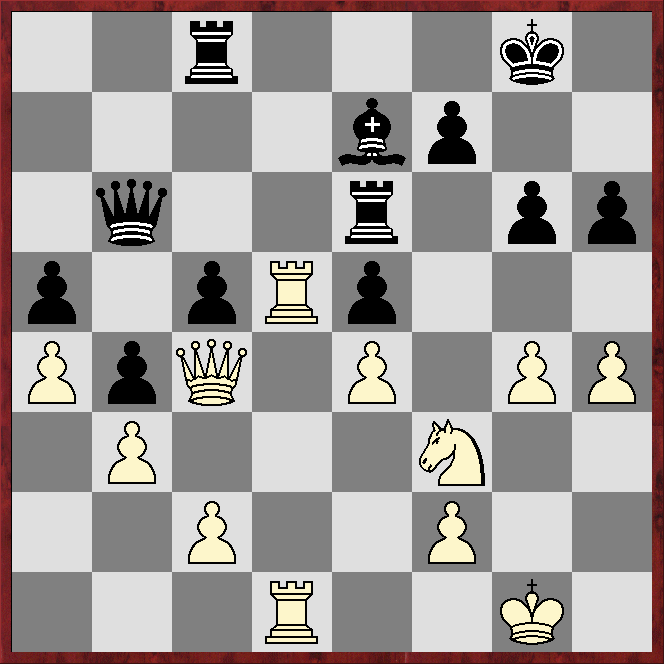
HERE is a position from my round-six game at the Cap Negret 65+ seniors.
Black has just played 18...Ra8-c8, the idea obviously being to seek counterplay down the c file before White's kingside attack hits home
*****
*****
*****
*****
*****
The game continued 19.Bb1! g6 20.Rf6 Kg7?! (Stockfish17 and Dragon1 much prefer 20...c5!?) 21.Rc1 Ng8 (the engines fluctuate between this and 21...c5!?, but come to marginally prefer the latter) 22.Rcf1!? Nxf6 23.Rxf6? (23.exf6+ wins, according to the engines) Rg8? (Black probably has a slight edge after 32...c5, according to the engines) 24.Qf2 (missing 24.Nxg6!) Kh7 (Dragon1 prefers 24...c5, but Stockfish17 rates the two moves equally) 25.Qf4 Rg7 26.Nf3?! Rh8?! (the engines reckon 26...c5 gives at least the upper hand) 27.Nh4?! Qe8 (27...c5!? gives the upper hand, according to the engines) 28.g4?! Kg8 (Dragon1 prefers 28...c5!?, but Stockfish17 disagrees) 29.Qf3 b6 (29...c5!? is much preferred by the engines, and also 29...Qc8) 30.h3 Qe7 (again ...c5 is preferred).
Position after 30...Qe7
*****
*****
*****
*****
*****
From move 20 to move 30 the engines reckon Black'had up to nine chances to play ...c5 with good effect, but not one of those opportunities was taken even though the move is a logical follow-up to Black's 18th (..Rac8 makes no sense without ...c5 to come).
White is slightly better after 30...Qe7, despite being the exchange down, according to the engines, and went on to win, although only after mutual errors.
LESSON: chess is largely a logical game, and sometimes if A is played, then B had better follow.

Thursday, 21 November 2024

Lessons From Altea IV: No Going Back

THE following position was reached in my round-five game at the Cap Negret 65+ seniors.
Black has just castled
*****
*****
*****
*****
*****
*****
*****
*****
Stockfish17 and Dragon1 reckon the position is equal.
But it was equal no longer after White played 12.c4?!, which was met by 12...Nf5, winning a pawn.
White would be OK if 13.c3 were playable, but of course pawns cannot move backwards.
Indeed every pawn move is an example of an irreversible move, another well-known one being castling.
LESSON: be extra careful with irreversible moves, especially in sharp middlegame positions.

Tuesday, 19 November 2024

Lessons From Altea III: Ratingitis

AFTER taking a half-point bye in round three of the Cap Negret 65+ seniors, the following position was reached in my round-four game:
Black has just played 29...Bf6-e7!?
*****
*****
*****
*****
*****
US Fide master James Schuyler wrote the thought-provoking book, Your Opponent Is Overrated (Everyman, 2016).
Part of his thesis was that it is wrong to show too much respect for the player sitting opposite.
"We have a fallible opponent. He is messing up every game," Schuyler explained in the book's introduction.
"Even when he stumbles upon the right moves, it's often for the wrong reasons. I'd even go so far as to say he's overrated."
But there are two sides to this coin, and it is just as easy to fail to show your opponent enough respect.
In my round-four game Black had been under the cosh for much of the game, with Stockfish17 and Dragon1 reckoning White has a winning advantage in the diagram.
Furthermore, my ratings, Fide and ECF, were a fair bit higher than my opponent's, so I had few qualms about snaffling the e5 pawn with 30.Rxe5?! Rxe5 31.Nxe5, when White has won a pawn and threatens a devastating capture on f7.
What I missed is that after 31...Qf6 Black has protected f7 and is attacking both the undefended h4 pawn and the undefended knight.
True, I maintained an advantage with 32.Rd5!, but the advantage was much less than it would have been had I played the engines' suggestions of 30.Kg2 or 30.R1d3.
There can be little doubt that against a stronger opponent I would not have been so quick to dismiss 29...Be7!? as a mistake.
LESSON: arrogance in chess is as much a sin as undue deference.

Monday, 18 November 2024

Lessons From Altea II: Logical Thinking

THE following simple endgame position was reached in my round-two game at the Cap Negret 65+ seniors.
Black to play and win
*****
*****
*****
*****
*****
*****
*****
The game saw 67...g3?, which threatens mate on the move, but that is easily thwarted by 68.Rb1, after which there is no way for Black to make progress.
Returning to the diagrammed position, it should be obvious there are two plausible ways for Black to win.
One is by checkmate, based on the white king's restricted location on the back rank; the second is by promoting the pawn.
Since the first method cannot be realistically realised, Black must go for the alternative.
Once that has been settled, it becomes a matter of how the second way is to be attempted.
Clearly the white king has to be evicted from the queening square, and when Black has understood that, the correct move screams out from the position.
After 67...Ra1+, White's reply, 68.Kf2, is forced. Then Black's most obvious continuation, 68...g3+, can quickly be recognised as very strong.
It is not necessary to see Black has checkmate in a little over 20 moves (21, according to Stockfish17; 22, according to Dragon1!).
LESSON: at a simple level this is an example of how logical planning leads to finding the winning move, whereas moving does not necessarily lead to finding the winning plan.

Sunday, 17 November 2024

Lessons From Altea: Double Trouble

MY round-one game at the Cap Negret 65+ seniors reached the following position after 13 moves.
Black has just played 13...Nf6-h5!?
*****
*****
*****
*****
*****
*****
*****
*****
My opponent decided (rightly) that 14...Nf4 is not much of a threat, and so played 14.exd5?
What he missed is that Black has the exchange-winning 14...Ng3!
In other words, 13...Nh5 contained two threats, and, as Lev Psakhis is quoted as saying by Jonathan Rowson in Chess For Zebras (Gambit, 2005): "Good moves usually have at least two ideas."
LESSON: don't stop looking for danger just because you have spotted, and correctly discounted, a threat posed by the opponent's last move - the move may contain more than one threat.

Saturday, 16 November 2024

Summing Up Cap Negret

MY score in the 65+ seniors of +3=4-1 (I also took a half-point bye) gained 2.6 Fide elo.
I won the third prize for those rated 1901-2100, which means I should receive 100 euros, minus Spain's withholding tax, which I understand is not insignificant.

Friday, 15 November 2024

Cap Negret Round Nine

Spanton (2009) - Cesar Camisón Zornoza (1895)
1.Nc3/Liberated Bishop
1.Nc3 d5 2.d4 Bf5!?
A Liberated Bishop approach has much more going for it when White cannot react with queenside pressure by playing c4, Nc3 and Qb3. The text scores an excellent 52% in ChessBase's 2024 Mega database.
3.f3!? e6
The mainline in Mega24 runs 3...Nf6 4.Bg5 Nbd7 5.Nxd5!? Nxd5 6.e4 h6!? 7.Bh4 Ne3?! 8.Qd3 Nxf1 9.exf5 Nxh2?! 10.Rxh2, with the upper hand for White, according to Stcokfish17 and Dragon1, but they are unimpressed with many of the moves in this sequence.
4.e4 dxe4 5.fxe4 Bg6
Not 5...Qh4+?? 6.g3 etc.
6.Nf3 Bb4 7.Bd3 Nc6
This is the main continuation in Mega24. The engines fluctuate between the text, 7...Ne7, 7...Nd7, 7...c5 and 7...Nf6.
8.a3 Bxc3+
The engines prefer 8...Ba5.
9.bxc3 Nge7
The pawn-formation somewhat resembles a French Winawer, and with the black light-square bishop outside of the pawn-chain, but Black has no pawn-pressure on the white centre
*****
*****
*****
*****
*****
10.0-0 a6?!
This seems to be a novelty, and probably not a good one. The known move is castling.
11.a4 Qd7 12.Ba3 f6!?
The engines are OK with this, albeit they reckon White is positionally winning.
13.Qe2 Bf7 14.Rab1 Nd8 15.Ra1
The engines suggest getting on with it on the kingside with e5, Nh4 or Qf2.
15...0-0 16.c4 Re8 17.c3
Stronger is 17.e5 f5 and now 18.c3, according to the engines.
17...Ng6 18.g3 Qxa4?!
The engines reckon a better way to grab the pawn is 18...e5 19.d5 Qxa4.
19.e5 Qd7
Possibly slightly better is 19...f5, but 20.h4 is good.
20.exf6 gxf6 21.Nd2 f5 22.Nf3 Nc6 23.Ng5 Rad8!?
Not just developing, but also setting up a possible sacrifice on d4.
24.Qh5 Nf8 25.Qh6 Bg6 26.Rae1
How should Black proceed?
*****
*****
*****
*****
*****
26...Ne7
Dragon1 agrees with this, but Stockfish17 prefers 26...Nxd4!?, continuing 17.Bxf8!? Rxf8 18.Re3, when Black is two pawns up, but both engines reckon White is winning.
27.d5!?
Trying to open kingside lines with 27.g4!? may be better.
27...exd5 28.cxd5?
The engines reckon 28.h4 gives a large advantage.
28...Qxd5?
The wrong capture. Instead 28...Nxd5 29.Bc4 c6 equalises (Dragon1) or leaves White with only a slight edge (Stockfish17).
How should White proceed?
*****
*****
*****
*****
*****
29.Rd1?
White has a winning advantage after the engines' 29.Nxh7! (29.Rxe7!? probably transposes) Bxh7 30.Rxe7 Rxe7 31.Bxe7 Qxd3 32.Qg5+ Bg6 33.Bxd8, when Black has a pawn for the exchange, but the black king is much weaker.
29...Qb3
Best may be 29...c5!?, although the engines reckon White has at least full compensation for being two pawns down.
30.Bxe7 Rxe7 31.Bc4+ Qxc4 32.Rxd8 Qc5+ 33.Kg2
Possibly better is 33.Rf2!? Re1+ 34.Kg2.
33...Qc6+?
The engines reckon White is at best only slightly better after 33...Re2+ 34.Kh3 Qe7.
34.Kh3?
White has a won game after 34.Nf3, according to the engines.
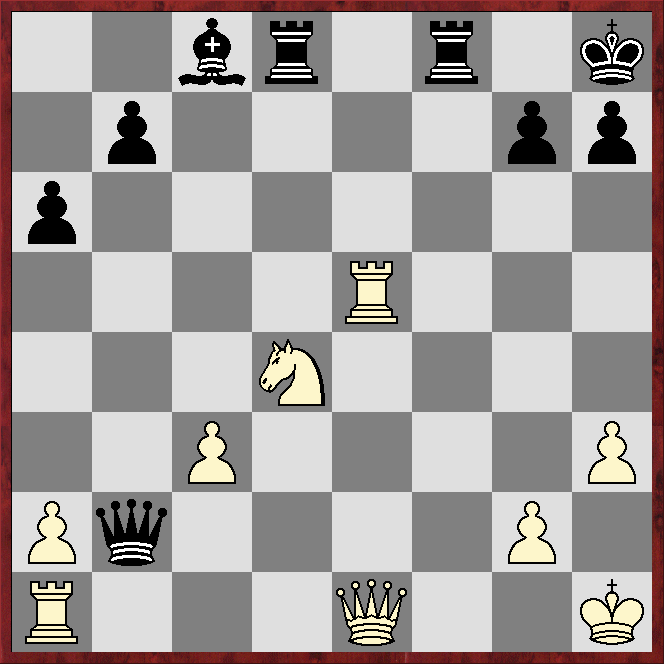
34...Qf6?!
Almost certainly better is 34...Re8.
What should White play?
*****
*****
*****
*****
*****
35.Nxh7??
Both 35.Nf3 and 35.Rb8 give the upper hand, according to the engines.
35...Rxh7 0-1

Port Of Call

THE Alicante tram system includes a line running just over 55 miles from the city of Alicante to the port of Dénia.
There is a stop at Cap Negret, which makes a trip to the port very manageable before the normal tournament start time of 14:30.
Unfortunately there is currently a bus-replacement service for part of the journey, but it is still worth the effort.
Sardine(?) with innards made from junk hauled out of Dénia harbour 

Thursday, 14 November 2024

Cap Negret Round Eight

I WAS upfloated for the second time in the tournament, landing on top board against the top seed, a Dane, who was a point ahead of me, and me with a second black in a row!

Mogens Thuesen (2174) - Spanton (2009)
Giuoco Piano
1.e4 e5 2.Nf3 Nf6 3.Bc4 Bc5 4.c3 Nf6 5.d3 a6!?
This is a popular alternative to the mainline in ChessBase's 2024 Mega database, which runs 5...d6 6.0-0 0-0 7.Bb3!? a6!? 8.Nbd2 Ba7!? 9.h3 h6, with an equal position, according to Stockfish17, although Dragon1 gives White an edge.
6.Nbd2 0-0 7.0-0
Both sides having castled, how would you assess the position?
*****
*****
*****
*****
*****
Neither side has any weaknesses, and the engines reckon the game is equal.
7...d5!?
Normal is 7...d6. If Black can get away with playing the text, Black should be at least equal, but the move is loosening.
8.exd5 Nxd5 9.Re1
This is Stockfish17's choice. Dragon1 prefers 9.Ne4.
9...f6?
Apparently a novelty, and not a good one. The engines suggest 9...Nf6, or 9...b5 10.Bb3 Nf6.
10.d4 Bb6 11.dxe5 fxe5?
Better is 11...Nxe5 12.Nxe5 fxe5, but the engines reckon White has at least the upper hand after both 13.Ne4 and 13.Rxe5!?, eg 13.Rxe5!? Bxf2+ 14.Kh1 c6 15.Ne4 Bh4 16.Be3 with an initiative.
12.Ne4
Not 13.Nxe5?? Bxf2+ etc.
12...Ne7
Even worse is 12...Be6? as White wins by moving either knight to g5.
13.Bg5 c6 14.Bxe7
Even stronger, according to the engines, is 14.Nxe5.
14...Qxe7 15.Bxd5+ cxd5 16.Qxd5 Kh8 17.Neg5?
White has the upper hand after this, according to the engines, but there are much better moves, including the simple 17.Qxe5.
17...Bxf2+! 18.Kxf2 Qxg5
Black has got the pawn back, at least temporarily, but e5 is weak
*****
*****
*****
*****
*****
19.Rxe5?!
This might be enough for an edge, but the engines reckon White should get the king to safety first with 19.Kg1, picking up the pawn next move, eg 19...Qf6 20.Nxe5, one point being 20...Qb6+ seems well met by 21.Qd4!?, when 21...Qxb2?! looks to be asking for trouble, one line running 22.Nc4!? Qb5 23.Nd6 Qh5 24.Re7 with strong pressure.
19...Qg6 20.Kg1 Bg4 21.Nd4!
The engines agree this is best, even though it takes a piece away from defence of the king.
21...Qf6?!
Almost certainly better is the engines' manoeuvre 21...Qb6!? 22.b3 Qf6, when 23.h3 (this is the best move, according to them, as also is the case in the game) Rac8! comes very close to equalising, since 24.hxg4 allows a perpetual with 24...Qf2+ 25.Kh2 Qh4+ etc.
22.h3!?
Black equalises after 22.Ree1?! Qf2+ 23.Kh1 Qxb2, according to the engines.
22...Qf2+ 23.Kh1
The engines prefer 23.Kh2!? Qxb2 24.Rae1!?, claiming at least the upper hand for White.
23...Rad8!
The engines agree getting the last piece into play is more important than grabbing the b2 pawn, after which 24.Rae1 looks strong.
24.Qe4
White can  take a second pawn with 24.Qxb7!?, according to the engines, when 24...Rb8? 25.Qe4 leaves White well on top, but  24...Bc8 is not so clear.
24...Qxb2 25.Qe1
The engines reckon the text, 25.Rb1 and 25.Re1 all give complete equality.
25...Bc8
White has two isolated pawns, but the knight is strong, and the black king is probably no safer than the white one
*****
*****
*****
*****
*****
26.a4 Qb6 27.Qg3!? Qd6 28.Rae1 Bd7 29.Qh4 Qf6 30.Qg3 Qf4 31.Qxf4 Rxf4 32.Rd5 Rff8 33.Re7!? Bxa4 34.Rg5 Rd7 35.Rgxg7 Rxe7 36.Rxe7
How would you assess this rook-and-minor-piece ending?
*****
*****
*****
*****
*****
Black has a protected passed pawn that is on the farside from the kings, and has what is usually the better minor piece for cooperating with a rook. But White's rook is much more active, and the knight is well-placed. The engines reckon the position is equal.
36...Rc8 37.Rxb7 Rxc3 38.Ne6 h3
Possible is 38...Rxh3+!? as 39.gxh3 loses to 39...Bc6, but White has 39.Kg1!, eg 39...Rg3 40.Rb8+ Rg8 41.Rb6 Bb5 42.Nc7 etc.
39.Ra7 Bb5 40.Nc7 Rc6 41.Kh2!?
A draw is all but inevitable after 41.Nxb5.
41...Bc4 42.g4 a5!? 43.Ne8?!
Other moves are probably better, including activating the king with 43.Kg3.
43...Ra6 44.Rc7
The minor-piece ending after 44.Rxa6? is almost certainly winning for Black.
How should Black proceed?
*****
*****
*****
*****
*****
44...Bb5
Best, according to the engines, is 44...Bg8!?, after which they reckon Black is at least slightly better.
45.Rc8 Bxe8
Not 45...Kh7 46.Rc7+ Kg6?? 47.Rg7#.
46.Rxe8+ Kg7 47.Re3 a4 48.Ra3 Kf6 49.Kg3 Ke5 50.Kh4 Kd4 51.Kh5 Kc4 52.h4 Kb4 53.Ra1 Kb3 54.g5 hxg5
Not 54...Kb2?? 55.Rxa4 Rax4 56.g6, which wins for White.
55.hxg5 Kb2 56.Rax4 Rxa4 57.g6 Kc3 58.g7 Ra8 ½–½

One Street In Old Altea


Wednesday, 13 November 2024

Cap Negret Round Seven

FACED a Belgian Fide master.

Johan Goormachtigh (2173) - Spanton (2009)
QGD Ragozin
1.d4 d5 2.Nf3 e6 3.c4 Nf6 4.Nc3 Bb4 5.cxd5
This is second in popularity to 5.Bg5.
5...exd5 6.Bf4!?
The mainline in ChessBase's 2024 Mega database runs 6.Bg5 h6 7.Bh4 g5!? 8.Bg3 Ne4 9.Nd2!? Nxg3 10.hxg3 c6, with a slight edge for White, according to Dragon1, although Stockfish17 is less sure. Note that 9...Nxc3 10.bxc3 Bxc3 11.Rc1 seems to give White good compensation for a pawn.
6...0-0 7.e3 c6
This may be a little passive. Most popular in Mega24 is 7...c5!?
The position looks like a mainline Exchange Variation of the Queen's Gambit Declined, but with the black dark-square bishop on b4 instead of e7, and the white dark-square bishop on f4 instead of g5 
*****
*****
*****
*****
*****
It is difficult to say whom the changes benefit. The engines reckon White is slightly better in the diagrammed position, but they also reckon White is slightly better in the analogous position from the Exchange Variation.
8.Bd3 Nbd7 9.0-0 Re8 10.Qc2 Nf8 11.h3 Ne6 12.Bg3!?
This may be a novelty. The known move is 12.Bh2.
12...g6!?
A familiar idea from the Exchange Variation. One possible follow-up is ...Ng7 and ...Bf5 to swop light-square bishops.
13.a3
Where should the attacked bishop go?
*****
*****
*****
*****
*****
13...Be7
The engines prefer 13...Bd6 or 13...Bf8.
14.b4 a6 15.Na4 Ng7 16.Nc5 Nfh5 17.Bh2 Bd6 18.Ne5 Qe7 19.a4 f6?!
The engines reckon White is only slightly better after 19...Nf6.
20.Nf3 Bxh2+ 21.Kxh2 Ne6 22.b5 Nxc5 23.Qxc5 Qxc5 24.dxc5 axb5 25.axb5 Bd7
After a flurry of exchanges, White's Minority Attack has made progress, but how should White proceed?
*****
*****
*****
*****
*****
26.Nd4
This is Dragon1's top choice, whereas Stockfish17 prefers 26.b6.
26...Ng7 27.Rfb1
But here the engines agree 27.b6 is best.
27...Ne6
The engines like 27...Rxa1!? 28.Rxa1 cxb5!?, claiming White at best has a slight edge.
28.Rxa8
The engines reckon 28.Nxe6 Bxe6 29.b6 gives at least a slight edge.
28...Rxa8 29.bxc6 bxc6 30.Nxe6 Bxe6 31.Rb6 Bd7 32.Ba6 Bc8?!
Probably better is 32...Kf7, and if 33.Bb7, then 33...Rb8.
33.Bxc8 Rxc8
How would you assess this rook-and-pawn ending?
*****
*****
*****
*****
*****
White has an active rook versus a passive one. Dragon1 reckons that gives the upper hand, but Stockfish17 calls the position completely equal.
34.Rb7 h5 35.Kg3 Re8!?
The rook will be less passive on e6.
36.Rc7 Re6 37.Kf4 Re4+ 38.Kf3 Re6 39.Ke2!?
The only way to try to make progress.
39...d4 40.e4!? f5!?
Dragon1 strongly dislikes this, but Stockfish17 is fine with it.
41.Kd3 fxe4+ 42.Kxd4
How should Black continue?
*****
*****
*****
*****
*****
42...Rf6?!
Both 42...h4 and 42...g5 give complete equality, according to Stockfish17, although Dragon1 reckons White in each case is slightly better.
What should White play?
*****
*****
*****
*****
*****
43.Kxe4
Stockfish17 reckons 43.g4!? is winning, eg 43...Rxf2 44.Rxc6 Kf7 45.g5!? Rf3 46.Kxe4 Rxh3 47.Rf6+ Kg7 48.c6. For much of the line, Dragon1 reckons the position is equal, but it comes to give White the upper hand.
43...Rxf2 44.Rxc6 Rxg2 45.Rf6 Kg7 46.Rf3 Rc2 47.Kd5 g5 48.c6 Kg6 49.Rf8 Rc3 50.Kd6 Rxh3 51.c7 Rc3 52.c8=Q Rxc8 53.Rxc8
How would you assess this rook-versus-pawns ending?
*****
*****
*****
*****
*****
Endgame tablebases show the position is drawn, but Black has to start with three only-moves.
53...Kf5!
The white king has to be shouldered away.
54.Kd5 h4!
Other moves lose, eg advancing the king now fails, one line running 54...Kf4 55.Rc4+! Kf3 56.Ke5 h4 57.Kf5 h3 58.Rc3+! Kg2 59.Kg4! h2 60.Rc2+ Kg1 61.Kg3 h1=N+ (the only hope - but White has a winning reply) 62.Kf3! g4+ 63.Kxg4 Nf2+ 64.Kf3 Nd3 65.Rd2 Ne5+ 66.Kf4! Nc4 67.Rd4 (other moves also win) Nb2 68.Kf3 Kf1 69.Rd2 etc.
55.Rf8+ Kg4
The third only-move on the trot, but this one is obvious.
56.Ke4 h3 57.Rh8 Kg3 58.Kf5 g4 59.Kg5 h2 ½–½

Storm Clouds Gather


Threatening weather - it never materialised, but showers are forecast for later in the week

Tuesday, 12 November 2024

Cap Negret Round Six

FACED a player from Bexhill, East Sussex.

Spanton (2009) - Andrew Fleming (1900)
Spanish Classical
1.e4 e5 2.Nf3 Nc6 3.Bb5 Bc5 4.c3 Nge7!?
This has been played by Magnus Carlsen, but the mainline in ChessBase's 2024 Mega database runs 4...Nf6 5.0-0 0-0 6.d4 Bb6 7.Bg5, with a slight edge for White, according to Stockfish17 and Dragon1.
5.d4 exd4 6.cxd4 Bb4+ 7.Nc3
This is the most popular continuation in Mega24, but many very strong players, including Lasker, Alekhine, Tal and Anand, have played 7.Bd2!?
7...d5 8.e5 h6!?
More common are 8...Bg4 and especially 8...0-0.
9.0-0 0-0
Now both sides have castled, how would you assess the position?
*****
*****
*****
*****
*****
The main imbalance is White's central/kingside space advantage, and that is enough for at least a slight edge, according to the engines.
10.Be3!?
This may be a novelty. Known moves are 10.Ne1!?, 10.a3 and 10.h3.
10...Nf5
The engines suggest 10...f6, albeit preferring White.
11.Rc1 Nce7!? 12.Qa4!? Nxe3 13.fxe3 Bxc3 14.Rxc3 c6 15.Bd3 Be6!?
This seems a little passive. The engines again suggest ...f6.
16.Qc2 a5 17.Nh4 Qd7 18.Qe2!? Rac8!?
Black can activate the bishop with tempo by 18...Bg4, when I intended 19.Qe1, hoping to later win back the tempo by attacking the bishop.
19.Bb1!
The engines agree this is best, the idea being to set up a bishop-queen battery on the b1-h7 diagonal.
19...g6 20.Rf6 Kg7?!
This is the engines' second choice, but they much prefer 20...c5.
21.Rc1 Ng8 22.Rcf1!?
A positional exchange sacrifice, but even stronger, according to the engines, is 22.Rf4!?, and if 22...g5?, then 23.Qd3. The engines reckon Black should instead play something like 22...c5, but agree 23.Rcf1 leaves White well on top.
22...Nxf6 23.Rxf6?
This throws away all of White's advantage, according to the engines, which reckon 23.exf6+ wins.
23...Rg8?
Black may even have a slight edge after 23...c5, according to the engines.
White to play and gain a winning advantage
*****
*****
*****
*****
*****
24.Qf2
The engines give 24.Nxg6! fxg6 25.Rxg6+ Kf8 (25.Kf7 comes to the same thing) 26.Qf3+ Ke8 27.Qf6, when Black has no defence as 27...Bf7? loses to 28.Rxg8+ Bxg8 29.Bg6+ Bf7 30.e6.
24...Kh7 25.Qf4 Rg7
The engines reckon White has full compensation for the exchange, but no more
*****
*****
*****
*****
*****
26.Nf3?!
Several moves seem to keep the balance, including 26.h3, 26.Bd3 and 26.Nf5!?, eg 26.Nf5!? gxf5 27.Rxh6+ Kg8 28.Qh4 Kf8 29.Rh8+ Rg8 30.Qh6+ Ke7 31.Qf6+ Kg8 etc.
26...Rh8?!
With the pressure abated, Black definitely had time for 26...c5, with a large advantage, according to the engines.
27.Nh4?!
Clearly I had lost the thread of the game. The engines reckon 27.h4 gives at least a slight edge.
27...Qe8
The engines still like ...c5.
28.g4?!
The engines suggest 28.Nf3!?
28...Kg8 29.Qf3 b6
Both 29...c5 and 29...Qc8 give the upper hand, according to the engines.
30.h3 Qe7 31.Ng2 g5!?
The engines agree this was important to stop Nf4.
How should White proceed?
*****
*****
*****
*****
*****
32.e4?
Opening a second front, but the move gives Black time to free his game with 32...Rg6, after which the engines reckon White's compensation for the exchange has vanished.
32...Qd7?
Missing the chance. Now the position is completely equal again, according to the engines.
33.exd5 Bxd5?
The other two recaptures are much better.
White to play and gain a winning advantage
*****
*****
*****
*****
*****
34.Be4?
The engines give 34.Rd6! Bxf3 35.Rxd7, when Black has no answer to the threat of Rd8+, and if 34...Qe7, then, as in the game, 35.Qc3, with Ne3 to follow. Also better than the text is the immediate 34.Qc3.
34...Be6?
Correct, thanks to the pin on White's bishop, is 34...Rg6.
35.Qc3 Bd5?
Black is in big trouble anyway, but this makes matters worse. Perhaps Black should have gone for counterplay with 35...h5!?, but 36.Bxc8, with d5 and/or Ne3 to come, is very good for White.
36.Rd6 Qe7 37.Bxd5 cxd5 38.Ne3!
This is much better than immediately grabbing the loose d pawn.
38...Rg6 39.Nxd5 Qf8 40.Nf6+ Kg7 41.Rxb6!?
Other moves also win - Black's rooks are helpless to intervene.
41...Qc8 42.Rc6 Qa8 43.Nh5+ Kh7 44.Rxg6!?
This forces checkmate.
44...Rc8!?
Or 44...fxg6 45.Qc7+ Kg8 46.Qg7#, or 44...Kxg6 45.Qd3+ f5 46.Qxf5#.
45.Rg7+ Kh8 46.Qd3 1-0

Rise & Shine

View from my balcony of early-morning sun on the Bernia mountains

Monday, 11 November 2024

Cap Negret Round Five

I WAS upfloated.

Santiago Alfonso Abrego (1804) - Spanton (2009)
Spanish Berlin
1.e4 e5 2.Nf3 Nc6 3.Bb5 Nf6 4.0-0 Nxe4 5.d4 a6!?
Much more popular are 5...Be7 and especially 5...Nd6.
How should White respond?
*****
*****
*****
*****
*****
6.Bxc6
This keeps the game in independent lines, whereas 6.Ba4 transposes to the Open Defence. Stockfish17 prefers the text, but Dragon1 at first prefers retreating the bishop, although it soon comes to agree capturing is best.
6...dxc6 7.Re1!?
This scores 18 percentage points better in ChessBase's 2024 Mega database than the more popular 7.Qe2, after which the mainline continues 7...Bf5 8.dxe5, when the engines reckon 8...Be7 gives Black at least equality.
7...Bf5?
The knight should be withdrawn, probably to f6.
White to play and gain a winning advantage
*****
*****
*****
*****
*****
8.Nxe5
The engines agree this is good enough for an edge, but White has stronger in 8.g4!? and 8.Qd3!?, eg 8.g4!? Bg6 9.Nxe5 Qf6 10.Qe2, or 8.Qd3!? Nd6 9.Rxe5+ Be6 10.Bg5 Be7 11.Nc3 Bxg5 12.Nxg5 Qf6 13.Rae1.
8...Be7!?
This seems to be a novelty. Known moves are 8...Bd6? (played by, among others, a 2313), 8...Qd5? and 8...f6?
9.Qf3
The engines suggest 9.g4!? Nxf2! 10.Kxf2 Bh4+ 11.Kg2!? Bxe1 12.gxf5, with a messy position they reckon is at least slightly better for White.
9...Nd6 10.Bf4
What should Black play?
*****
*****
*****
*****
*****
10...Be6
I rejected 10...0-0!? because of 11.Nxc6!? bxc6 12.Bxd6 and 13.Qxf5. However Stockfish17 reckons Black has decent compensation for a pawn, whichever way Black captures on d6. Dragon1 is less sure.
11.Nd2 0-0 12.c4?!
This weakens the d pawn. The engines suggest 12.Nd3, 12.c3 or 12.a4, with equal chances, presumably believing White's lead in development and better pawn-structure match Black's bishop-pair.
12...Nf5!?
It can be dangerous going after a pawn when behind in development, but here it seems sound.
13.Rad1?!
Probably better is 13.Nb3 Nxd4 14.Nxd4 Qxd4 and either 15.Qg3!? or 15.b3, when the engines agree Black has an edge, but White has threats.
13...Nxd4 14.Qc3
Stockfish17 fluctuates between this and 14.Qg3, but Dragon1 comes to definitely prefer the text. After 14.Qg3 Nf5 15.Qb3 Qc8 Black's position looks suspect, but the engines give Black the upper hand.
14...c5
How should White proceed?
*****
*****
*****
*****
*****
15.Nef3
Not 15.Nb3? Ne2+!, but possibly better is 15.Kh1!?, when 16.Nb3 is a threat.
15...Bg4!?
Black remains well behind in development, but Black moves with already developed pieces are creating concrete threats that have to be met.
16.Kh1?!
This seems less good now. Probably better is 16.Kf1, although the engines reckon 16...Ne6!? leaves Black well on top.
16...Bf6 17.Ne4?
The engines give 17.Qd3 or 17.Qc1, but agree Black is winning.
17...Nxf3!
The only convincing move, but plenty good enough.
18.Rxd8 Bxc3 19.Rxa8 Rxa8 20.Nxc3
Rook moves can be met by 20...Be5.
20...Nxe1
The game finished:
21.Bxc7 Nd3 22.h3 Be6 23.b3 Nf2+ 24.Kg1 Nd3 25.Kf1
Judging by his body language, it was only at this point that SAA realised he was a rook down.
0-1