Showing posts with label Cecil Purdy. Show all posts

Sunday, 1 February 2026

Lessons From Mariánské Lázně V

AT every move it is vital to perform a simple blunder-check.
Mine takes the form of a mantra, Captures-Checks-Hangers-Threats, which is adapted from the teachings of first world correspondence champion Cecil Purdy.
In other words, I quickly examine every possible capture and every possible check, followed by looking for hangers, ie pieces and pawns that are not protected by other pieces are pawns, and finally I search for threats, eg moves that attack a queen or other valuable pieces,
More often than not, this takes less time to carry out than it takes to type (especially if, like me, you type with one finger on each hand).
Unfortunately, in the heat of battle, it is easy to forget to blunder-check.
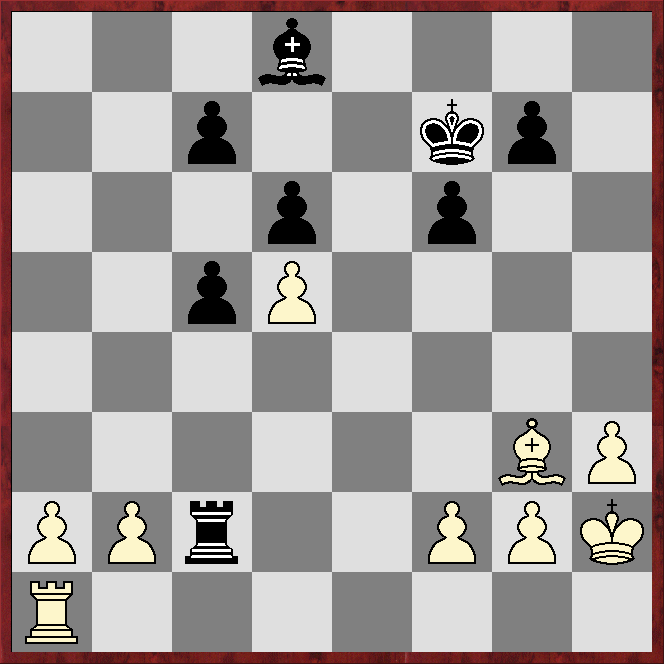
That is what happened in the following position from my round-five game, where I had white against Russia's Sergei V Ivanov (2029).
Black has just avoided the loss of the exchange by playing 20...Rf6-f5
*****
*****
*****
*****
*****
White has a promising sacrifice in 21.Nxg7!?, which equalises, according to Dragon1, although Stockfish17.1 rates the move less highly.
Instead I played 21.g4?, almost without thought, as I had expected Black's last move, and had pre-planned my reply.
But if I had carried out my mantra, Captures-Checks-Hangers-Threats, I would surely have recognised the danger of my opponent replying 21...Rxh5!
After 22.gxh5 Qxh3 Black has a pawn, the bishop-pair and a strong attack - much more than enough for an exchange, according to Stockfish17.1 and Dragon1.
LESSON: forget to blunder-check at your peril!

Sunday, 7 September 2025

Miniatures 5

IN this occasional series I am going through my decisive games of 20 moves or fewer.

Geoffrey Stearn (158? BCF)- Spanton (ungraded)
Sutton Easter 1989
Bishop's Opening
1.e4 e5 2.Bc4 Nf6 3.Nf3!?
As I was to discover over the coming months, this move is typical of GS's aggressive style, and my lifetime score against him is +0=0-5.
3...Nxe4
Principled, but not prudent.
4.Nc3!?
Continuing the gambit theme. Stockfish17 and Dragon1 want White to play 4.Nxe5, or 4.d3 and then Nxe5.
4...Nxc3
Again, principled, but not prudent.
5.dxc3
The engines give Black at least a slight edge
*****
*****
*****
*****
*****
5...d5?
Most popular, and best, according to the engines, is 5...f6!?
6.Bxd5 Nc6?
The engines want Black to prioritise getting the king to safety with 6...Be7!?, although 7.Nxe5 leaves White a pawn up.
7.Bxc6+
Even stronger seems to be 7.Ng5!?
7...bxc6 8.Qxd8+ Kxd8 9.Nxe5 Ke8 10.Be3 Bd6!?
The engines disapprove of holding on to the c6 pawn.
11.Nxc6 Bb7 12.Nd4 Bxg2!? 13.Rg1 Be4 14.h4
Not 14.Rxg7? Bg6 etc.
14...Rb8 15.0-0-0 a5 16.f3 Bg6 17.Rg5 a4 18.a3 f6 19.Ra5 Kf7?? 20.h5 1-0
LESSON: this game illustrates the advice of Cecil Purdy, the first world correspondence champion, who  warned that neglecting development in the opening for the sake of an advantage in an endgame that may never arise (in other words, grabbing a pawn early on) is not a "paying proposition."

Wednesday, 26 March 2025

Bad Wörishofen Round Six

Spanton (1911) - Bernhard Vonach (1836)
Spanish Exchange
1.e4 e5 2.Nf3 Nc6 3.Bb5 a6 4.Bxc6 bxc6!?
The other recapture is much more popular, but the text has been played by grandmasters
*****
*****
*****
*****
*****
*****
*****
5.Nc3!?
This is fourth-most popular in ChessBase's 2025 Mega database, behind 5.d4, 5.Nxe5!? and especially 5.0-0.
5...d6
Stockfish17 and Dragon1 like the rare 5...Qf6!?, albeit reckoning White is slightly better.
6.d4 exd4
How should White recapture?
*****
*****
*****
*****
*****
7.Nxd4
The engines prefer the less popular 7.Qxd4!?
7...c5!?
One of first-world-correspondence-champion Cecil Purdy's aphorisms - I do not have the reference to hand - is that it usually pays to advance the front member of a pawn-duo, and here the move is the top choice of Stockfish17, although Dragon1 prefers 7...Ne7!?
8.Nf3
The engines suggest an apparent-novelty, 8.Nc6!? meeting 8...Qd7 with 9.Na5 (not 9.Qd5?? Nf6).
8...Bg4!?
The position after 8.Nf3 is reached six times in Mega25, with six different moves played. The engines do not like the text. 
9.h3 Bh5?
The bishop should retreat along the h3-c8 diagonal (even 9...Bxf3?! is better than the text).
10.0-0?!
White has at least the upper hand after this, according to the engines, but stronger is 10.Qd5 Nf6 (10...Bxf3? 11.Qc6+ Ke7 12.Nd5+ Ke6 13.Nxc7+ etc) 11.Qc6+ Nd7 (11...Ke7? 12.Bg5, with Nd5+ to come) 12.g4 (other moves are also good) Bg6 13.Nd5 Ra7 14.Bg6 f6 15.e5!? fxg5 16.e6, with a large advantage, according to the engines.
10...Bxf3?!
The engines suggest 10...Be7 or 10...Ne7!?
11.Qxf3 Qf6?
Hoping to relieve pressure by getting queens off, but the black queen becomes a target on f6 in a way that the white queen does not on f3.
12.Qe2
The engines reckon even stronger is 12.Bf4, with Nd5 or e5 to come.
12...Qd8?!
Black should probably cover the d5 square with ...Ne7 or ...c6.
13.Rd1!?
This seems best as it makes the pawn-push e5 strong.
13...Ne7 14.Be3
Despite Black's last move, 14.e5!? is still best, the idea being to meet 14...d5 by 15.Nxd5! Nxd5 16.c4 c6 17.cxd5 cxd5 18.e6, with a large advantage, according to the engines.
14...Qb8 15.Qd2
The text threatens 16.Bxc5! as 16...dxc5?? allows mate in one, but the engines still like pushing the e pawn.
15...Qb6 16.Bg5 f6 17.Nd5 Qc6
This is probably better than 17...Nxd5 18.Qxd5.
18.Bh4 Nxd5
The engines fluctuate between the text, 18...Ng6 and 18...Kf7!?
19.cxd5 Qd7 20.Re1+ Be7 21.Qe3
21.Re6 allows time for 21...0-0.
21...Kf7!? 22.Re2 Rae8 23.Qd3
How should Black proceed?
*****
*****
*****
*****
*****
23...Bd8!
The best move in a difficult position, according to the engines. After 23...Qb5?! (protecting the a6 pawn) 24.c4 Qd7 24.Rae1 Black is in big trouble, eg 24...g6 25.Re6 Bd8 26.Qe3 Rhf8 27.g4 with continuing intense pressure.
24.Qxa6 Rxe2!?
Possibly better is activating the queen with 24...Qf5.
25.Qxe2 Re8 26.Qd3 Qa4 27.Qxh7!?
This is good but perhaps 27.c4, protecting d5 and cutting the black queen off from the kingside, is simpler.
27...Re4!?
This wins back a pawn since White cannot save both the bishop and c2.
28.Bg3 Qxc2 29.Kh2!?
This is best (Black threatened, among other things, to win the white queen with 29...Re1+ etc).
29...Re2
White to play and maintain a winning advantage
*****
*****
*****
*****
*****
30.Qxc2?
This throws away almost all of White's advantage, whereas 30.Qh5+ Kg8 31.a4 Qxb2 32.Rb1! Qxb1 (forced) 33.Qxe2 wins easily, eg 33...Kf8 34.a5 Qa1 35.Qb5 c4 36.a6 c3 37.Bf4 c2 38.Qc6 leaves Black helpless.
30...Rxc2
BV thought for a few seconds after making this move, and then offered a draw.
How would you assess this rook-and-bishop ending?
*****
*****
*****
*****
*****
White is, at least temporarily, a pawn up, and has the better bishop, but Black's rook is very active, and Black will be able to free his queenside pawns by playing ...Ke7-d7 and ...c6. The engines at first reckon White has the better part of equality, but Dragon1 comes to call the position completely equal, and Stockfish17 very nearly does.
31.a4!? Rxb2 32.a5 Rb7 33.f4!?
The engines at first do not like this, but Stockfich17 comes to regard it as fine. Dragon1 slightly prefers 33.a6 Ra7 and 34.Bf4 or 34.h4.
33...Ke7 34.Be1!?
Again a move that the engines do not like at first, but it comes to be Dragon1's top choice, at least for a while.
34...Kd7 35.f5?
But the engines strongly dislike this, preferring 35.g4 or 35.h4!?, eg 35.g4 c6 36.dxc6+ Kxc6 37.h4 d5 38.g5 fxg5 39.fxg5 d4 40.a6 Ra7 41.Kg3, reckoning the position is equal, although it would still be difficult (for humans) to play.
The difference between the text and the engines' suggestions at move 35 is, I believe, that the text leaves White needing an extra tempo to create a kingside passed pawn.
35...c6 36.dxc6+ Kxc6 37.g4 d5 38.Kg2 d4 39.Kf3 Kd5!?
This allows the black rook to be trapped, but the resulting position is still winning for Black.
40.a6 Ra7 41.Bg3!?
This seems to be objectively inferior to, for example, 41.h4, but it complicates matters, whereas after 41.h4 c4 Black's winning plan is a lot more straightforward.
41...c4 42.Bb8 Ra8 43.a7
Black is effectively the exchange down, but Black's advantage is roughly the equivalent of being a rook up, according to the engines
*****
*****
*****
*****
*****
43...Bb6 44.h4 d3 45.g5 c3 46.gxf6 gxf6 47.h5 Kc4 48.h6 Bxa7!
This piece sacrifice is the only way to win as 48...d2 is met by 49.Ke2, and 48...c2 by 49.Bf4.
49.Bxa7
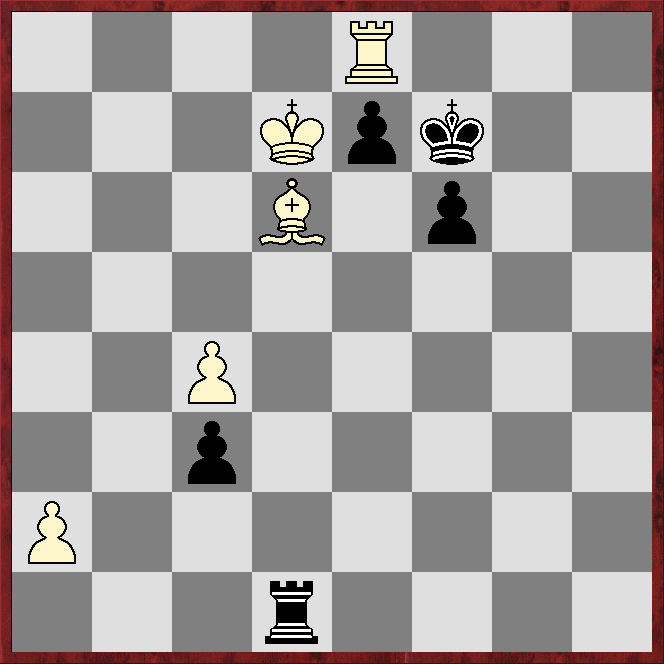
Black to play and win
*****
*****
*****
*****
*****
49...d2?
White has no answer to 49...c2.
50.Ke2 Re8+ 51.Be3 Kb3 52.h7 Kc2 53.Rd1
Black to play and draw
*****
*****
*****
*****
*****
53...Rh8?
Three moves draw: 53...Rd8, 53...Kb3 and 53...Rxe3+!?
54.Bxd2!?
Another bishop sacrifice, but there is nothing difficult about this one.
54...Rxh7
Or 54...cxd2 55.Rxd2+ Kc3 56.Rd7 etc.
55.Rc1+ Kb2 56.Rxc3 Rh2+ 57.Kd3 Rh3+ 58.Kc4 Rh4+ 59.Kd5 Rh2 60.Rd3 Kc2 61.Rd4!? 1-0

Tuesday, 17 December 2024

Coulsdon Round Five

DOUBLE-upfloated against a junior (born 2005).

Henry Adams (2119 ECF/1991 Fide) - Spanton (1965 ECF/2012 Fide)
Catalan
1.d4 d5 2.Nf3 e6 3.g3 c5 4.Bg2 Nc6 5.0-0 Nf6 6.c4 dxc4
This position occurs 7,246 times in ChessBase's 2025 Mega database
*****
*****
*****
*****
*****
7.Qa4
This is the commonest continuation in Mega25, but Stockfish17 and Dragon1 prefer 7.Ne5!? or 7.dxc5!?
7...Bd7 8.dxc5!? Bxc5 9.Qxc4
How should Black proceed?
*****
*****
*****
*****
*****
9...Qe7!?
The engines prefer 9...Be7 or 9...Bb6, which brings to mind advice from chess writer and first world correspondence champion, Cecil Purdy: if a piece is attacked, don't defend it - move it.
10.Nc3
The engines reckon 10.Bg5!? gives a slight edge.
10...Rc8?!
Black maintains equality with 10...h6!?, according to the engines.
11.Bg5 Bb6?
Much better, according to the engines, are 11...0-0 and 11...h6!?, even though both moves can be met by 12.Bxf6, when 12...gxf6 is forced.
12.Qh4
Black is losing
*****
*****
*****
*****
*****
12...Qc5?!
Best may be 12...Bd8!?
13.Bxf6 gxf6 14.Ne4!
This is even stronger than 14.Qxf6.
14...Qe7 15.Nxf6+ Kf8??
Better, but still horrible, is 15...Kd8 16.Rfd1 Rc7.
16.Qh6#

Tuesday, 10 September 2024

Lessons From Torquay III: Use A Mantra

AUSTRALIAN international master, and first world correspondence champion, Cecil Purdy wrote many instructional articles aimed at club players.
One of his favourite themes was how to avoid mistakes - not only those of commission, ie making bad moves, but also those of omission, ie failing to exploit opponents' mistakes.
I mention this because if I had followed his advice I would not have missed the huge winning chance that arose in my round-three game.
Black has just played 32...Ng4-e5?
*****
*****
*****
*****
*****
It is easy to find White's winning move when given a position in which you are told the opponent has just made a mistake.
True, after 33.Rxe5!, Black can, instead of allowing 33...Kxe5 34.Nf3+ etc, try 33...Bxd4, but it does no good as White has 34.Rxd5+.
Purdy's advice was to use a mantra at every move, which makes missing such opportunities difficult, even for a rabbit.
His original mantra was a little long-winded, but he later simplified it, and I have adopted a simple version of my own, which is to be used every time the opponent moves.
Step One: work out the basic idea(s) behind the opponent's move. This is normally fairly obvious - it develops a piece, attacks an enemy piece, gains space, removes a piece from danger, etc.
Step Two: use the mantra CAPTURES CHECKS HANGERS THREATS.
First I look at every possible capture I can make, no matter how absurd at first glance. Most of these can be dismissed at once, but some will deserve further consideration.
Next I look at every possible check, assuming there are any, and again most of these will be of no consequence.
Then I look for hangers, ie enemy pieces and pawns that are unprotected, and so are 'hanging'. Two hangers can mean there are double-attacks available, and even one hanger can make for a tempo-gaining manoeuvre.
Finally I look  for threats, by which I basically mean possibilities for my pawns and pieces to attack higher-value enemy pieces.
Then I repeat the process for my opponent, ie I look at the opponent's possible CAPTURES CHECKS HANGERS THREATS.
All this takes quite some time to write down, but is usually much quicker to perform.
Step Three: I go through the normal process of selecting my move (the mantra may already have discovered a necessary or desirable move).
Step Four: I visualise the position after my intended move, and repeat the mantra for my opponent in the new position.
So what went wrong in the diagrammed position?
Well, it is is easy to get lazy and dispense with the mantra, especially when your position is already good.
And it is easy to forget the mantra in the heat of battle or, perhaps more pardonably, when short of time.
LESSON: adopt some sort of mantra for finding and avoiding mistakes, and use it!

Friday, 1 January 2021

Garry Kasparov's Forgotten Weapon Against The Queen's Gambit (part four)

KASPAROV won his 1983 candidates quarter-final against Alexander Beliavsky by the score of +4=4-1.
His next event, five months later, was a tournament in Yugoslavia, where in round one he was drawn against the Damascus-born American grandmaster Yasser Seirawan.
Seirawan (2600) - Kasparov (2690)
Nikšić 1983
1.d4 d5 2.c4 e6 3.Nc3 c5 4.cxd5
Not everyone always wants to challenge Black in the main lines - even such greats as Karpov, Kasparov and Carlsen are among those who have played 4.e3. The most popular continuation then is 4...Nf6 5.Nf3 Nc6 6.a3!? a6!? 7.dxc5 Bxc5 8.b4 Ba7 9.Bb2 0-0, reaching a position that the analysis engines Stockfish12 and Komodo11.01 reckon slightly favours White.
Another popular choice is 4.Nf3, although this usually transposes to the game continuation via 4...Nc6 5.cxd5 exd5.
4...exd5 5.Nf3
White can grab a pawn with the somewhat underrated 5.dxc5!?, but then comes 5...d4 6.Na4!? (this is much less popular than 6.Ne4 in ChessBase's 2020 Mega database, but scores 15 percentage points better) b5!? (this sharp response is the only move stopping White from getting an advantage, according to the engines) 7.cxb6 axb6 8.b3, and now the engines reckon the little-played 8...b5!? 9.Nb2 Bb4+ gives Black a slight edge, despite being a pawn down. A possible improvement for White is 8.e3!? (marked as a blunder in Play The Tarrasch by Shamkovich & Schiller) Bb4+ 9.Bd2 Bxd2+ 10.Qxd2 (Shamkowich & Schiller may have missed that this recapture is possible) Rxa4 11.Bb5+ Bd7 12.Bxa4 Bxa4 with an unclear position that the engines reckon is dynamically balanced.
Instead of grabbing a pawn, White can sacrifice one with Frank Marshall's 5.e4!?, when the main continuation is 5...dxe4 6.d5 (Marshall first played 6.Bb5+!? but later switched to 6.d5) Nf6 7.Bg5 Be7 8.Bb5+. Black then usually plays 8...Kf8?!, but White has tremendous compensation for a pawn. The engines prefer 8...Bd7 9.d6!? (fear of this move seems to account for the popularity of 8...Kf8?!) Bxb5! 10.Nxb5 (10.dxe7 Qxd1+ 11.Rxd1 Bd3!) Qa5+ 11.Nc3 h6 12.Bh4 Bd8, when Stockfish12 prefers Black but Komodo11.01 reckons White has full compensation for a pawn. Instead of 6...Nf6, Black can try Dawid Janowski's 6...f5!?, which is recommended by Shamkowich & Schiller. The commonest continuation is 7.Bf4 Bd6, when White's best may be 8.Nh3, but 8...Nf6!? (better than Tarrasch's 8...a6, according to the engines) seems to leave White with not enough compensation for a pawn.
Although 5.Nf3 is overwhelmingly the most popular move, some of these other continuations illustrate how sharp the Tarrasch Defence can become at an early stage.
5...Nc6 6.g3 Nf6 7.Bg2 Be7 8.0-0 0-0 9.Bg5 cxd4 10.Nxd4 h6 11.Bxf6!?
This "does not make much sense," according to Shamkowich & Schiller, but has been played by Efim Geller and Oleg Romanishin, as well as by Seirawan (three times in 1983).
11...Bxf6 12.Nb3!?
Two other continuations are more popular, but neither 12.e3 Nxd4 13.exd4 Be6 nor 12.Nxc6 bxc6 13.Rc1 Re8 seems to give White anything.
12...d4
Pushing the d pawn is thematic in IQP positions, but it is not the only move here.
The earlier game Seirawan (2600) - Murray Chandler (2500), OHRA (Netherlands) 1983, saw 12...Be6!? 13.Rc1 (13.Nxd5 Bxb2 14.Rb1 Ba3 is roughly equal, according to the engines) Rc8!? 14.Nc5 Qe7 15.Nd3 Rfd8 16.Nf4 with maybe a slight edge for White, according to the engines (½–½, 68 moves).
At the same tournament, Seirawan (2600) - Eric Lobron (2515) went 12...Bg4!? 13.Bxd5 Bxc3 14.bxc3 Qf6 15.Qc2 Rac8, when the engines reckon Black does not quite have enough compensation for a pawn (but 0-1, 24 moves).
13.Ne4 Be7 14.Rc1 Qb6 15.Nec5 Rfd8 16.Rc4
The engines prefer 16.Qd3 Bxc5!? 17.Nxc5!? Qxb2 18.Rb1 Qxa2 19.Nxb7 Bxb7 20.Rxb7 Rac8, when they reckon White has compensation for a pawn, but no more.
16...Bxc5
The engines reckon 16...a5 gives Black a slight edge.
17.Nxc5
17.Rxc5 Be6 is slightly better for Black.
17...Qxb2 18.Qc2 Qxc2 19.Rxc2
White is a pawn down but his pressure against Black's queenside gives him equal chances, according to Komodo11.01, although Stockfish12 prefers Black.
19...Rb8 20.Rb2
Milorad Knežević (2425) - Milan Draško (2460), Yugoslav Championship (Budva) 1986, went 20.Nxb7 Bxb7 21.Bxc6 Bxc6 22.Rxc6 Rb2 with a slight edge to Black.
20...Rd6 21.Rd1 b6 22.Nb3 Bb7 23.Rbd2 Rbd8 24.Kf1 Ba6 25.Bxc6 Rxc6 26.Nxd4 Rc5 27.Nb3 Rxd2 28.Rxd2 Rc7
How would you assess this ending?
*****
*****
*****
*****
*****
Black has bishop versus knight on an open board with rival pawn-majorities, a queenside pawn-majority and the better minor piece for cooperating with a rook ... but the position is almost dead-equal, according to the engines.
29.Rd8+ Kh7 30.Ke1 Bc4 31.Kd2 g6!? 32.Nc1 Kg7 33.a3 Kf6 34.e3!?
Kasparov called this dubious but it seems it is OK if followed up correctly. However, White has an easier time of it after the engines' 34.Nd3.
34...Ke7 35.Rd4 Rd7!?
Although rook and bishop usually work together better than rook and knight, and there is no reason to think this position is an exception, Kasparov decides bishop-versus-knight with rival pawn-majorities (and no rooks) gives better winning chances.
36.Kc3 Rxd4 37.Kxd4 b5
The bishop is maintained on c4, from where it dominates the knight.
38.Nd3!?
This is Stockfish12's choice, but Komodo11.01 reckons it is the losing move.
38...Bxd3!?
Although a bishop is usually better than a knight on an open board with rival pawn-majorities, and there is no reason to think this position is an exception, Kasparov decides he has better winning chances in the pawn ending.
What makes this ending remarkable is that Kasparov goes against accepted wisdom on two major occasions - i) swopping rooks, ii) swopping minor pieces - in order to win, although it has to be said he gets a big assist from his opponent.
39.Kxd3 Kd6 40.e4?
Kasparov called this a blunder, and it does seem this is the real losing move. Drawing, according to Stockfish12, is 40.Kd4, which conforms with first world correspondence champion Cecil Purdy's rule-of-thumb that in an ending you should get your pieces to their best possible squares before advancing pawns. Komodo11.01, however, reckons for a long time that 40.Kd4 is also losing. But after the engines' joint-continuation 40...f5 41.e4 fxe4 42.Kxe4 Kc5 43.g4 a5 44.f4 they agree the ending is drawn.
40...g5!?
Kasparov gave this an exclamation mark, but the engines reckon 40...Kc5 also wins.
41.f4 gxf4 42.gxf4 Kc5 43.Kc3 a5 44.Kd3
If 44.e5 then 44...Kd5.
44...h5
Also winning is 44...b4.
45.h4 b4 46.a4
Equally hopeless is 46.axb4+ axb4, eg 46.f5 f6 47.e5 fxe5 48.f6 Kd6 49.Kc4 Ke6 50.Kxb4 Kxf6 51.Kc4 Kf5 52.Kd3 Kg4 53.Ke4 Kxh4 54.Kxe5 Kg3 etc.
46...f6 47.f5 Kc6 48.Kc4 Kc7 49.Kd3
Or 49.Kd4 Kd6.
49...Kd7
Black takes the distant opposition.
50.Ke3
Or 50.Kc4 Kc6, which is the same position as after 48.Kc4 but with White to move rather than Black.
50...Kc6 51.Kd3
If 51.Kd4 then 51...Kd6 52.Kd3 Ke5 53.Ke3 b3 etc.
51...Kc5 52.Ke3
Or 52.e5 fxe5 53.f6 Kd6.
52...b3 53.Kd3 Kb4 54.e5 Ka3 0-1

Thursday, 1 October 2020

Morphing The French XVI

MY first attempt at correspondence chess to play against the French Defence in the style of Paul Morphy.
The game ended yesterday.
Spanton (England - 2260) - Emmanuel Quanzaah (Africa - 2092)
Carlos Flores Gutiérrez Team Tournament
Semi-Final Group 4, Board 3
French Exchange
1.e4 e6 2.d4 d5 3.exd5 exd5 4.Nf3 Bd6 5.Bd3 Ne7
This move is given an exclamation mark in Action Chess - Purdy's 24 Hours Opening Repertoire. Cecil Purdy, the first world correspondence champion, claimed "the reason Morphy obtained superior positions (in the Exchange Variation of the French) was that his opponents continued symmetrically." He recommended a set-up used by EQ here, saying Black's fifth move "has two advantages: i) Bg5 by White will not pin (because of ...f6 in reply); ii) White's aggressive Bd3 can be challenged afterwards by ...Bf5 (supported by the knight on e7)."
6.0-0 Nbc6 7.Re1 Bg4 8.c3
Getting on with development with 8.Be3 is arguably more Morphy-like, and is playable as 8...Nb4 9.Be2 Bf5 can be met by 9.Na3. But e3 does not seem a great square for the dark-square bishop as it blocks the action of the king's rook and will likely become a target for the black king's knight and/or f pawn.
8...Qd7 9.Nbd2 f6!?
ChessBase's 2020 Mega database has 470 games with the move 9...0-0-0, but the text, which seems to have been first played at master level by Rubinstein in 1914, has its modern followers, including Morozevich.
10.Nf1!?
I think this is a small improvement on 10.b4, which I played in Spanton (1900) - Ieysaa Bin-Suhayl (2208), Crewe 2019, anticipating long castling by Black. But my opponent replied 10...0-0 and went on to outplay me, a key point of the game being the hole at c4. Having said that, 10.b4 is the most-popular move in Mega20 and has been played by Leko, who drew against Morozevich.
10...0-0 11.Ng3 Bxg3!?
Giving up the bishop-pair like this surprised me, but it has been played before. However, grandmaster Salvador Gabriel del Rio de Angelis preferred 11...f5 in a 2019 game, although he could only draw with a 2257.
12.hxg3 Rfe8 13.b3
13.Qb3 was played two years ago by a 1994. The text, which may be a novelty, guards the c4 square, supports a possible later advance of the c pawn and opens a second diagonal for White's dark-square bishop.
13...Bf5 14.Be2
The analysis engine Stockfish11 prefers 14.a4, but I thought it was worth spending a tempo to preserve the bishop-pair.
14...Nc8
The knight heads for d6 and possibly e4.
15.Nh4 Be6 16.Ba3 Nd6 17.Qc2
Both players have connected rooks, and it can be fairly said the opening phase of the game is over. Space is equal, and both sides have slightly compromised kingsides, so I guess the main question is whether White's bishop-pair confers a significant advantage.
17...Re7
Possible is 17...Ne4!?, but then 18.Bd3 f5 would do Black's bishop no favours.
18.Bd3 g6 19.Re3
There does not seem to be a fruitful way to sac on g6.
19...Bf7!?
This is the choice of Komodo11.01, but is not liked by Stockfish11.
20.Rf3 Kg7 21.g4!
A sharp move that starts to exert pressure on Black's position.
21...Nd8
Not 21...Qxg4? 22.Bxd6 cxd6 23.Nf5+!
22.Rg3
Manoeuvring with rooks away from the baseline on a crowded board in the middlegame can be a mistake, but the rook seems perfectly safe on a dark square eyeing the black king.
22...Ne6 23.Rf1
23.f5+!? gxf5 24.gxf5+ Ng5 25.f4 h6 26.fxg5 hxg5 is equal, according to the engines.
23...Ng5
White has a pleasant edge after 23...Nf4 24.g5 fxg5 25.Rxg5 Nxd3 26.Qxd3, according to the engines.
24.Nf3 Nxf3+ 25.gxf3 a5 26.Qc1
Eyeing the weak h6 square.
26...Be6?!
The engines reckon Black should shore up his kingside with a move such as 26...Rh8, although they still prefer White. Instead EQ goes for queenside counterplay.
27.Kg2 a4 28.Rh1 Kg8 29.c4 Rg7 30.Bb4 axb3 31.axb3 Re8 32.c5!?
Closing the position somewhat, but gaining space and so leaving Black a little short of squares for his pieces on the kingside. Meanwhile the dark-square bishop can find work to do on c1-h6 diagonal.
32...Nf7 33.Bd2 c6 34.b4 Qd8 35.Rgh3 Qd7!?
Black's queenside counterplay has come to nothing, and it may be he has nothing better than to wait to see what White tries.
36.Rh4 Ra8 37.Qb1 Qe7 38.Qc1 Qd7
Black offered a draw. I thought this was a bit cheeky, considering the engines greatly prefer White. But at the same time I could not find a clear way to break through, although there is no danger in my continuing to probe in the Micawberish hope that something will turn up.
39.Re1 g5!?
Stockfish11 likes this, although Komodo11.01 prefers the also-committal 39...h5.
40.Rh2 h5!? 41.Qc2
Not 41.Rxh5? Bxg4. Black also seems fine after 41.gxh5?! Bf5.
41...h4
Black has neutralised any immediate danger down the h file, but his king's position looks draughty and he could become vulnerable to the pawn-lever f4.
42.Rhh1 Rf8 43.b5!?
Switching play to the queenside. White's pieces are better coordinated for such a switch. However the engines prefer more manoeuvring on the kingside, one line running 43.Re3 Nd8 44.Rhe1 f5 45.Bxf5 Bxf5 46.gxf5 Rxf5 47.Re7 Rxe7 48.Rxe7 Qxe7 49.Qxf5 Nf7 50.Qg6+ Kf8 51.Be3 Ke8 52.Kh3 Qd7+ 53.Kg2 Qe7, when they reckon White maintains a good edge (+0.72: Stockfish11; +0.52: Komodo11.01), but I could see no way of making meaningful progress.
43...Nd8 44.Ba5 Re7 45.Qc3 Rfe8 46.Bc2
Preparing a return to kingside play with Qd3.
46...cxb5!?
This is the engines' choice.
47.Bxd8!
Giving up the bishop-pair, but the knight was a good piece for Black. Certainly there is no doubt who has the remaining better minor-piece.
47...Qxd8 48.Qd3 Bd7
White restores material equality in the event of 48...Rg7!? 49.Qxb5, after which the b7 pawn is a chronic weakness.
49.Qg6+ Rg7 50.Rxe8+ Bxe8 51.Qh6 Bd7 52.Ra1 Qf8 53.Ra7 Be8

How should White proceed?
54.f4!
The key move, which naturally the engines, or at least Stockfish11, saw from afar.
54...gxf4
This seems forced, eg 54...Bc6? fails to 55.fxg5 fxg5 56.Bf5.
55.Kh2 Re7 56.Qxh4
Also promising is 56.Qxf4.
56...b4 57.Ra8 b3 58.Bg6
Not 58.Bxb3?? Rh7.
58...b2 59.Kg2 Rg7 60.Bf5 Re7 61.Kf3!?
The engines prefer 61.Rb8, but there are lines in which the black queen gets to buzz around the white king, and I was not confident of ruling out a perpetual. After the text, best play seems to lead to a more-or-less forced exchange of queens, after which White should be able to grind out a win a pawn up (Black is a pawn up in the short term, but all five black pawns are isolated and weak).
61...Qg7 62.Qh5 Qf7 63.Qh1
63.Qxf7+?! Kxf7 dissipates much of White's advantage.
63...Qg7 64.Kxf4 Qh8
This is best, according to the engines, but it is what I wanted.
65.Qxh8+ Kxh8 66.Ra3 Bc6 67.Rb3 Re2 68.Kf3 Re8 69.Rxb2
White is a pawn up and all the white pieces are more active than their black counterparts. In addition, Black's pawns are weak, so White should win comfortably.
The game finished:
69...Ra8 70.g5 fxg5 71.Kg4 Ra4 72.Rd2 Kg7 73.Kxg5 Ra1 74.Be6 Re1 75.Kf5 Rh1 76.Ke5 Rh5+ 77.Kd6 Kf6 78.Rd3 Rh4 79.Bxd5 Bxd5 80.Kxd5 Rh7 81.Kd6 1-0