Showing posts with label Bird's Opening. Show all posts

Monday, 2 March 2026

Openings From Weimar IV

IN round four I was Black against Ralf Schober (2070), who chose Bird's Opening.
Wikipedia reckons "White's strategic ideas involve control of the e5-square, offering good attacking chances at the expense of slightly weakening" the kingside.
What the article does not mention is the move Bb5(+), which is a common idea in the Bird, especially when Black has played an early ...d5
Often the idea is to exchange the bishop for the black queen's knight, doubling Black's c pawns and increasing White's control of the e5 square.
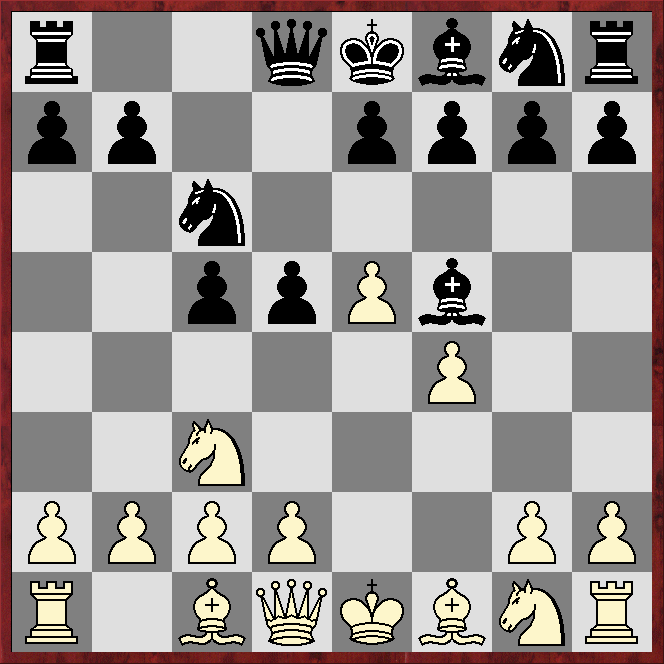
Our game began 1.f4 c5 2.Nf3 d5 3.e3 g6.
This position occurs 430 times in ChessBase's 2026 Mega database
*****
*****
*****
*****
*****
Three continuations feature more than 100 times: d4, Be2 and Bb5+.
Capablanca chose our game-continuation, 4.Bb5+, when he reached the position at New York 1931, even though Black has not committed the queen's knight.
The move is also the top choice of Stockfish17.1 and Dragon1, so it clearly has something going for it.
I replied 4...Bd7, and the game continued 5.Qe2 Nc6 6.Bxc6 Bxc6, after which White has increased control of e5, but has given up the bishop-pair without weakening Black's pawn-structure.
Black is slightly better, according to the engines
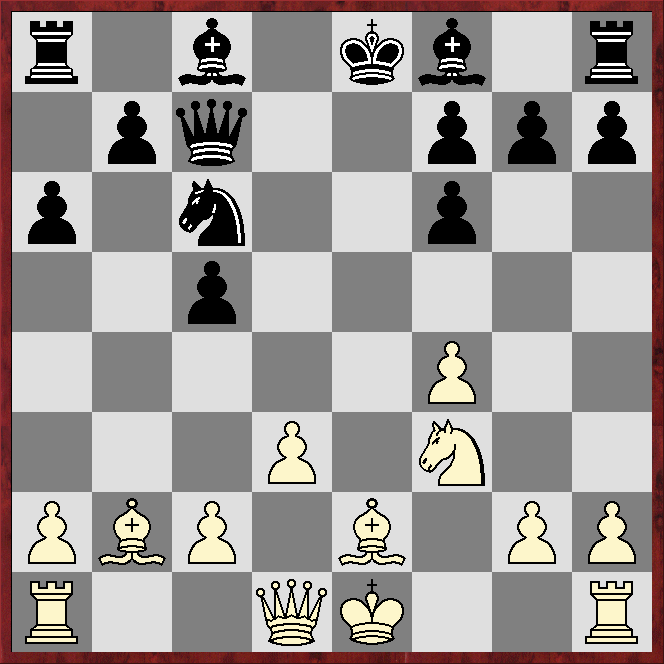
José Capablanca - Isador Turover, New York 1924, also featured 4...Bd7, but Capablanca answered 5.Bxd7+, which the engines reckon is slightly better than Qe2.
Nevertheless, after the further moves 5...Nxd7 6.Nc3 e6 7.e4 d4 8.Ne2 Ngf6 9.Ng3 h5, Black was slightly better, according to the engines, although White went on to win.
A lot of these moves seem counter-intuitive, at least to me, which may just show gaps in my chess understanding, but I suspect also point to the ideas-richness of chess.

Wednesday, 18 February 2026

Weimar Round Four

Ralf Schober (2070) - Spanton (1939)
Bird
1.f4 c5 2.Nf3 d5 3.e3 g6 4.Bb5+!?
This is the top choice of Stockfish17.1 and Dragon1.
4...Bd7
The engines like 4...Nd7!?, although Dragon1 comes to marginally prefer the text.
5.Qe2 Nc6 6.Bxc6!?
This may be a novelty. Only castling is in ChessBase's 2026 Mega database.
6...Bxc6 7.Ne5 Qc7 8.b3 Bg7 9.Bb2 Nh6 10.0-0 0-0
With both sides having castled, how would you assess the position?
*****
*****
*****
*****
*****
White has more kingside space; Black enjoys more space on the central/queenside. White has a well-posted knight at e5, but Black's bishop-pair is a genuine asset as the knight is pinned, and so cannot simply chop on c6. The engines give Black a slight edge.
11.d3 f6?!
But this breaks the pin, and so gives up the bishop-pair - probably too high a price to pay for evicting the knight. The engines suggest 11...Nf5, 11...b5 or 11...Rad8, in each case preserving the bishops.
12.Nxc6 Qxc6 13.Nd2 Rae8
White has a slight edge after 13...e5 14.fxe5 fxe5 15.e4, according to the engines.
14.e4 e5
The engines reckon it is better to advance the e pawn only one square as, after the text, Black gets an isolated king's pawn.
15.fxe5 fxe5 16.Rxf8+ Rxf8 17.exd5 Qxd5
Black has a central isolani, which also means an extra pawn-island, and a bad bishop
*****
*****
*****
*****
*****
18.Re1 Re8 19.Qe4 Qxe4 20.Nxe4 b6 21.Nd6 Re7 22.Nc4 Nf7
All black pieces, arguably including the king, are less active than their white counterparts, but the e pawn is not in imminent danger of being captured, which is why the engines give White no more than a slight edge 
*****
*****
*****
*****
*****
23.a4 Re6 24.Kf1 Kf8 25.Ba3 Ke8 26.Re2 Kd7 27.Bb2 Kc6 28.h3 Kd5
The black king has been fully activated, helping to overprotect e5, while the white king has hardly moved, leading Stockfish17.1 to call the game equal, although Dragon1 still gives White a slight edge
*****
*****
*****
*****
*****
29.Rf2!?
Positions with a central isolani are usually easier to defend without heavy pieces on the board, but RS could presumably find no other way to try to make progress.
29...Rf6 30.Ne3+ Ke6 31.c4!?
The engines are happy with this. It makes d3 backward, but creates a potential outpost at d5.
31...Rxf2+ 32.Kxf2 h5 33.Nd5 Kd6 34.Nc3 Kc6
Not 34...Ke6? 35.Nb5 a6 36.Nc7+, or 35...a5 36.Nc7+ Kd7 37.Kc7 Ne7+, with White in each case winning at least a pawn.
35.Ne4 Kd7 36.Kf3 Nd8!?
This and 36...a5!? are the engines' top choices, but 36...Nd6!? may also be playable, although Dragon1 is doubtful.
37.Bc3 Ne6 38.g3 Kc6 39.h4 Kd7 40.Ke3 Bh6+ 41.Kf2 Bg7 42.Kf3
The white king's triangulation has brought about the same position as after 39...Kd7, but this time with Black, rather than White, to move. However, that makes no significant difference.
42...Kc6 43.Nf2
How should Black proceed?
*****
*****
*****
*****
*****
43...Kd6
Not 43...e4+? 44.Nxe4 Bxc3 45.Nxc3 Nd4+ as 46.Kf4 Nxb3 47.Kg5 wins easily for White.
44.Ke4 Nf8 45.b4!? Nd7!?
Dragon1 strongly dislikes this. Stockfish17.1 is not so sure, but the engines agree that better is 45...cxb4!? 46.Bxb4 Kc6! 47.Bxf8 Bxf8 as 48.Kxe5 Bd6+ 49.Kf6 Bxg3 50.Ne4 Bxh4 51.Kxg6 is completely equal. But note that the natural-looking 46...Ke6? loses to 47.Nh3!, eg 47...Nh7 (47...Nd7? 48.Ng5+ Kf6 49.Kd5) 48.Ng5+ Nxg5 49.hxg5 Bh8 50.Bf8 Kd7 51.a5! bxa5 52.Kd5 a4 53.c5! Kc7!? 54.c6!? Kc8 55.Ba3 Kd8 56.Ke6 Kc7 57.Kf7 Kxc6 58.Kxg6 Kd5 59.Bb2 Kc5 60.Kh7 e4 61.Bxh8 exd3 62.Bc3 a3 63.g6 a2 64.g7 d2 65.Bxd2 a1=Q, after which, despite queening first, Black has no perpetual, and cannot pick up the loose bishop, and so is lost - a long line, with several hard-to-spot moves, but the engines show much of it is more-or-less forcing.
46.b5 Nf6+ 47.Ke3 Bh6+ 48.Kf3 Ke6 49.a5
How should Black continue?
*****
*****
*****
*****
*****
49...bxa5!?
Possibly best is 49...Bf8, despite this allowing 50.a6, after which Black has to watch out for White sacrificing on c5 or b6 to get the a pawn home.
50.Bxa5
How big is White's advantage?
*****
*****
*****
*****
*****
Dragon1 gives White the upper hand, but it reckons both of Black's most plausible moves, 50...Bf8 and 50...Kd7, leave White exactly 0.75 ahead, which in endings can be a sign that the position should be drawn with best play. Stockfish17.1 gives White a slight edge, which tends to confirm that the game is holdable.
50...Bf8 51.Ne4!?
How should Black respond?
*****
*****
*****
*****
*****
51...Nxe4!
This is best, according to Stockfish17.1, despite giving White a good-v-bad bishop ending. Dragon1 reckons 51...Bd6 is equally good, but Stockfish17.1 disagrees.
52.Kxe4
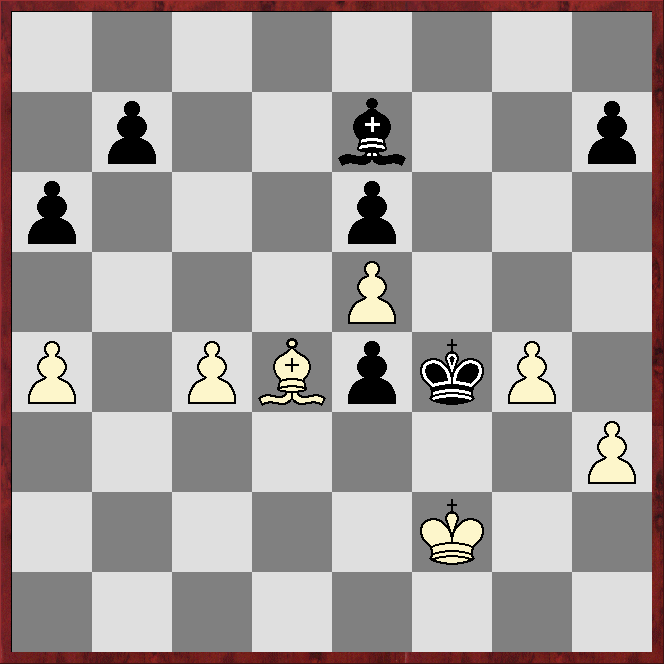
The key to the ending is whether Black can avoid falling into a zugzwang that either loses a pawn or lets the white king in at d5 
*****
*****
*****
*****
*****
52...Bd6 53.Bd8 Bb8 54.Bg5 Bd6 55.Bh6 Be7 56.Bd2 Bd8 57.Be3 Be7
An only-move as 57...Bb6? loses to 58.Bf2 Kd6 59.g4! hxg4 60.Bg3 Ke6 61.Bxe5, eg 61...Bd8 62.Bg3 Bf6 63.Kf4 be7 64.Kxg4, after which Black is a pawn down and still has weaknesses.
58.Bh6 Bd6 59.Bg7 Bc7 60.Bf8 Bd6
Another only-move as 60...Bb6? loses to triangulation, eg  61.Ke3 Kf5 62.Bd6 Ke6 63.Bb8 Kf5 64.Kf3 Ke6 65.Ke4 and 66.Bxe5(+), and if 61...Kf7, then 62.Bd6 Ke6 63.Bb8 wins in the same way.
61.Bh6
Or 61.Bxd6 Kxd6, when the pawn ending is also drawn.
61...Bc7 62.Be3 Bd6 63.Bd2 Bc7 64.Bc3 Bd6 65.Ba5 Bb8 66.Bd8 Bd6 67.Ba5 ½–½

Saturday, 8 November 2025

Cap Negret Round One

Manuel Lozano Marqués (1635) - Spanton (1896)
Bird
1.f4 c5 2.Nf3 d5 3.d4!?
A rare continuation. The main move is 3.e3.
How should Black respond?
*****
*****
*****
*****
*****
3...cxd4
Also popular is 3...e6, but Stockfish17.1 and Dragon1 prefer the text.
4.Nxd4
Stockfish17.1 suggests the apparently unplayed gambit 4.c3!?
4...Nc6 5.Nc3 e5!?
Probably a novelty. The known move is 5...Nf6.
6.Nxc6 bxc6 7.fxe5 d4!?
Major alternatives are 7...Bc5 and 7...Bb4.
8.Ne4 Qd5
Perhaps 8...Qa5+ is better, when the engines fluctuate between 9.Qd2!? and 9.c3!?
9.Nd6+ Bxd6 10.cxd6 Nf6!? 11.e3 Bg4?
The engines suggest 11...0-0 12.Qxd4 Qxd4 13.exd4 Re8+, albeit agreeing Black does not have enough for two pawns.
12.Qxd4 Qxd4 13.exd4 0-0 14.Bd3 Rfe8+
How would you assess this queenless middlegame?
*****
*****
*****
*****
*****
Black has a large lead in development, and one of White's extra pawns is doubled and almost certain to fall. However, White will have little difficulty getting his pieces into play, thus catching up on development, and should emerge a sound pawn up, and with a 4-2 farside pawn-majority. The engines reckon White is winning.
15.Kf2
Even stronger, according to the engines, is 15.Kf1!?
15...Ne4+ 16.Bxe4 Rxe4 17.Be3
The engines cannot agree on the best continuation, but one interesting line given by Stockfish17.1 runs 17.c4!? Rxd4 18.c5.
17...Rd8 18.Rhe1 Rxd6 19.c3 f5?!
White is at best only slightly better after 19...Rf6+ 20.Kg1 Rfe6, according to the engines.
20.Rde6 21.Rxe4 fxe4!?
The engines prefer 21...Rxe4, but agree 22.Re1!? wins, despite Black being able to swop off into an opposite-coloured bishops ending.
22.Re1 Kf7 23.b4
The engines prefer 23.c4.
23...Ke7
The engines reckon 23...Rf6+!? gives good drawing chances, eg 24.Ke3 Be6!? 25.a4 a6!? 26.Kxe4 Bc4!?, although White's two extra pawns are always going to be threatening.
24.a4 a6 25.c4 Kd7
How should White proceed?
*****
*****
*****
*****
*****
26.b5?!
This may be premature. The engines suggest a consolidating move such as 26.Ke3 or 26.Rb1.
26...axb5 27.axb5 cxb5 28.cxb5 Bf5 29.Ke3
Not 29.Rb1?? e3+ etc.
29...Rb6 30.Rb1 Kd6?!
The engines give 30...Be6!?, the point being 31.Kxe4 Bc4 should be fine for Black. Instead, the engines suggest 31.Ba5 Rb7 32.b6, claiming at least the upper hand for White.
31.Bb4+ Kd5 32.Bc5 Rb7 33.Rb4
Even stronger is 33.b6 or 33.Rf1, according to the engines.
33...g5?!
Best seems to be 33...Bd7 34.b6 Bc6, when the engines agree White has a large advantage - winning, according to Dragon1 - but the position may well be drawn (Dragon1's top two moves, 35.Rb1 and 35.Rb3, have for a long time an identical evaluation of +1.52, changing later to +1.46, often a sign that a position, although claimed to be winning, is really drawn ... with correct play).
34.b6 Bc8 35.Ra4 Rf7 36.Ra7?!
Best may be 36.Ra8 Bb7 37.Rg8, when Black is losing another pawn.
36...Bb7 37.Ra2 Ke6 38.Ra7 h5 39.Ra2 g4 40.Rf2!?
The win has gone, anyway, and this confirms that, but it may be my opponent wanted to exchange rooks out of worry I might be able to conjure up winning chances for Black on the kingside.
40...Rxf2 41.Kxf2 e3+ 42.Kxe3 Bxg2 43.Kf2 Bc6 44.Kg3 Kf5 45.Kh4 Bf3!? 46.Bd6
Not 46.Kxh4?? g3+ etc.
46...Ke6 47.Be5
MLM offered a draw in my time.
47...Kd7
Not 47...Kd5?? 48.b7 etc.
48.Kg3 Kc6 49.Bc7 Kb7 ½–½

Friday, 25 July 2025

Bad Bertrich Round Eight

Horst Prüsse (2017) - Spanton (1946)
Bird/Sicilian 2.f4
1.f4 c5 2.e4 d5!?
This position used to arise very often in the Sicilian when White was trying to play a Grand Prix Attack via the move-order 1.e4 2.c5 2.f4. Nowadays, thanks to 2...d5!?, White usually sets about getting a GPA with 1.e4 c5 2.Nc3 and 3.f4.
How should White proceed?
*****
*****
*****
*****
*****
3.e5
The main line in ChessBase's 2025 Mega database runs 3.exd5 Nf6 4.Bb5+ Bd7 5.Bxd7+ (5.Bc4 b5) Qxd7 6.c4 e6 7.Qe2 Bd6!? 8.d3 0-0 9.dxe6 fxe6, when Stockfish17 and Dragon1 reckon Black has more than enough for a pawn.
3...Nc6 4.Nc3 Bf5!?
How should White respond to this development of the black queen's bishop?
*****
*****
*****
*****
*****
5.d3
There are no games in Mega25 with 5.g4!?, which the engines reckon should be met with 5...Be6!?
5...h5 6.Be2 h4!? 7.Bg4!? Nh6 8.Bxf5 Nxf5
The square f5 is at least as good an outpost for a knight as for a bishop.
9.Nf3 e6 10.Ng5?!
The engines strongly dislike this.
10...Be7 11.Nh3
Clearly 11.Nf3 would simply represent a serious loss of time, but 11.0-0!? is possible, the point being that after 11...Bxg5 12.fxg5 the capture 12...Nxe5?! is met by 13.Qe1, when White has good compensation for a pawn.
11...f6!? 12.Qg4!? Ncd4 13.Qg6+
This looks natural, but the engines prefer 13.Qd1, or 13.exf6 gxf6 14.Qd1, albeit reckoning Black is on top.
13...Kd7 14.0-0!?
Offering a pawn to get the king to safety in a sharp position looks a reasonable practical decision, but there is a problem.
14...Nxc2 15.Rb1 Qe8! 16.Qg4!?
If queens come off, the uncastled black king no longer has difficulties.
How should Black proceed?
*****
*****
*****
*****
*****
16...Nce3
Winning the exchange, but Stockfish17 prefers forcing queens off with 16...Qh5!?, which has a more-human feel to it! Dragon1 agrees with its fellow engine, but to a smaller degree.
17.Bxe3 Nxe3 18.Qe2 Nxf1 19.Rxf1
Now the smoke has, as it were, cleared, how would you assess the position?
*****
*****
*****
*****
*****
Black is the pawn and an exchange up, but it does not appear easy to safely open files for black rooks to operate on. White has much the safer king and a lead in development. Nevertheless the engines reckon Black is winning - up the equivalent of more than a minor piece.
19...d4
The engines prefer 19...fxe5!? or 19...f5.
20.exf6 gxf6 21.Ne4 Rc8 22.Rc1 Qh5!
This is the engines' top choice. One idea is to centralise the queen, even at the expense of a pawn.
23.Qc2 Qd5 24.Qa4+ Kd8
Possibly even stronger is 24...Kc7!?, when 25.b4 c4!? 26.Rxc4+ Kb8 gets a pair of rooks off the board - nearly always a good thing for the player an exchange up. But perhaps the simplest solution is 24...Qc6!?
25.Qxa7 c4
The engines prefer 25...Kd7!? or 25...Rg8.
26.Qb6+
They give best as 26.f5!?, eg 26...Qxf5 27.Qxb7 Qe5 28.Nhf2 with complicated play, but they agree Black is still winning.
26...Ke8 27.Nhf2?!
The engines much prefer 27.f5.
27...f5 28.Ng5 Bxg5 29.fxg5 Rg8 30.Nh3 Qe5
Best, according to the engines, is 30...Kd7!?
31.Kf1 Kf7!?
Offering a pawn with check to get the king to relative safety.
How should White continue?
*****
*****
*****
*****
*****
32.Re1!?
The engines give 32.Qxb7+ Rc7 33.Qf3, but after 33...cxd3 34.Re1 Qb5! 35.Qh5+ Ke7 Black's attack is at least as dangerous as White's, and Black remains the exchange up.
Black to keep a winning position with an only-move
*****
*****
*****
*****
*****
32...Rc6!
Insisting on giving up the b pawn. After 32...Qd5 33.Nf4 White is at least equal, and may have a slight edge (Stockfish17) or even the upper hand (Dragon1) - the position is complicated, but it is very much White who is attacking.
33.Qxb7+ Qc7 34.Qxc7+
There seems nothing better, but the black king no longer faces mating threats.
34...Rxc7
How would you assess this ending?
*****
*****
*****
*****
*****
White has a pawn for the exchange, but g5 is weak and Black has good files for the rooks. The engines reckon Black is up the equivalent of a minor piece (Stockfish17) or almost a rook (Dragon1).
35.dxc4
35.Nf4 can be successfully met by 35...c3 or 35...dxc3.
35...Rxc4 36.Nf4 Re8 37.Nd3 Rc2 38.Ne5+ Kg7 39.Rd1 Rd8 40.Nd3 Rd6 41.a4 Rc4
Not 41...Ra6?? 42.Nb4 etc.
42.a5 Ra4 43.b4 Kg6 44.Ne5+ Kg7
Not 44...Kxg5?? Nf7+ and 45...Nxd6.
45.Nc4
If 45.Nd3, then 45...Ra3 is good.
45...Rd8!? 46.Rb1 d3 47.Ke1 Rd4 48.Ne5?
Obviously bad, but Black's advantage has anyway grown to the equivalent of a little more than a rook (Stockfish17) or even almost the equivalent of a rook and a minor piece (Dragon1).
48...Re4+ 0-1

Monday, 6 January 2025

Correspondence Quickie

I PLAY a few games a year of correspondence chess, mainly for various England teams, at the Fide-recognised International Correspondence Chess Federation.
The vast majority end in draws, a natural consequence of modern engines, but occasionally a game escapes such a fate, or is interesting for other reasons.
The following is from a non-team event.

Malcolm Jones (1382) - Spanton (2325)
PJB (Phillip J Beckett) Celebration
Bird's Opening
1.f4 Nf6 2.Nf3 d5 3.c4!?
By no means a common continuation - just 35 games reach this position in ChessBase's 2025 Mega database.
How should Black respond?
*****
*****
*****
*****
*****
3...d4!?
3...c6 and especially 3...e6 are more popular in Mega25.
4.d3 Nc6!?
Perhaps a novelty. The engines prefer it over the previously played 4...c5.
5.e3
But now the game has transposed into a known position.
5...e5!? 6.fxe5 Ng4 7.exd4!?
The engines agree this improves on the known 7.e4?, when 7...Bb4+ 8.Bd2 Ne3 gave Black a large advantage in Marc Snuverink (1804) - Stefan Tabak (2168), Hoogeveen (Netherlands) 2021 (0-1, 18 moves).
7...Nxd4 8.h3?
Better are 8.Nc3 and 8.Bb4, although the engines agree Black has more than enough for a pawn.
What should Black play?
*****
*****
*****
*****
*****
8...Nxe5!
Sharpest and best, whereas 8...Nxf3+?! 9.Qxf3 means White is over the worst.
9.Nxe5?!
Courting disaster, but 9.Nxd4 Qxd4 is also winning for Black, according to the engines.
9...Qh4+ 10.Kd2 Qf4+ 11.Kc3 Qxe5+ 12.Kd2 g6!? 13.Qe1!?
There seems nothing better.
13...Bh6+ 14.Kd1 Qxe1+ 15.Kxe1 Bxc1 (0-1, 30 moves)

Saturday, 3 August 2024

Hull 65+ Round Six

Stellio Jerome (1580 ECF/1665 Fide) - Spanton (1919 ECF/1928 Fide)
Bird
1.f4 Nf6 2.Nf3 d5 3.e3 c5 4.Be2 Nc6 5.d3 Qc7 6.Nc3 a6!?
This may be a novelty. Known moves are 6...e5 and 6...d4.
7.e4 d4 8.e5?
White had to move the attacked knight.
8...dxc3 9.exf6 cxb2 10.Bxb2 exf6
How should White proceed?
*****
*****
*****
*****
*****
11.0-0!?
Stockfish16.1 and Dragon1 agree the text and 11.Nd2 are marginally better than 11.g3, but reckon White is losing.
11...Qxf4 12.Bc1?!
Undeveloping is unlikely to be the right continuation when two pawns down.
12...Qc7 13.d4!?
The engines are quite happy with this, which only shows how bad White's position is.
13...cxd4 14.Nxd4?? Nxd4 15.Qxd4?? Bc5 0-1

Saturday, 23 September 2023

World Senior Teams Round Five

Ferdinand Strobel (Austria 1 - FM 1952) - Spanton (England 2 - 1850)
Board Four
Bird's Opening
1.f4 c5 2.Nf3 g6 3.e3 Bg7 4.d4!?
This was played by Savielly Tartakower in the stem game at Berlin 1920, and continues to be popular, but the main move in ChessBase's 2023 Mega database is 4.Be2.
4...cxd4 5.exd4 Nf6
Tartakower's opponent, Paul Leonhardt, preferred 5...d6, and the game continued 6.Bd3 Qb6!? 7.c3 Nh6!? 8.0-0 0-0 9.Kh1 Bf5 10.Bxf5 gxf5!? 11.Qe1 with maybe a slight edge for White, according to Stockfish16 and Komodo14.1, although their evaluations fluctuate (1-0, 50 moves).
6.Bd3 Nc6 7.c3 d5 8.0-0 0-0
There are 87 games with this position in Mega23 - who stands better?
*****
*****
*****
*****
*****
White has more kingside space, thanks to the pawn at f4, but that pawn is helping make the white dark-square bishop bad. Black has the long-term plan of a queenside Minority Attack, but in the short-term White can hope to generate kingside attacking chances. The engines reckon the position is equal.
9.Qe1
More popular in Mega23 are 9.Ne5 and particularly 9.Nbd2.
9...Bf5!?
The engines quite like this. The point is that, as in the Tartakower-Leonhardt game, after ...
10.Bxf5 gxf5
... Black has control of e4 and has shut in White's remaining bishop. On the other hand Black's kingside pawn-structure has been broken up.
11.Ne5 e6 12.Nd2 Qe7 13.b3 Nxe5!?
The engines reckon Black is at least equal after 13...Rfc8.
14.dxe5!?
The engines prefer 14.fxe5 Ne4 15.Nxe4, when Black is in big trouble after 15...fxe4? 16.Qg3 (or 16.a4). Instead they reckon 15...dxe4 may give White a slight edge.
14...Qc5+ 15.Qf2?
White had to play 15.Kh1.
How should Black proceed?
*****
*****
*****
*****
*****
15...Qxf2+
This is enough for a slight edge, but winning is 15...Qxc3! I rejected it because of 16.exf6?! Qxa1? 17.fxg7, which after 17...Rfc8 is completely equal, according to the engines. I missed that Black has 16...Bxf6!, threatening to win the white queen with 17...Bd4. After 17.Nf3 Qxa1 18.Ba3 Qc3! (only move) 19.Rc1 Qd3 20.Bxf8 Kxf8 the position is still quite sharp, but Black is two pawns up and should win, according to the engines.
16.Rxf2 Ne4 17.Nxe4 fxe4 18.Be3 f6 19.Bd4 fxe5 20.fxe5 Rxf2 21.Kxf2 Rf8+ 22.Ke2 a6
After a flurry of exchanges, the game has reached a rook-and-bishop ending - how would you assess it?
*****
*****
*****
*****
*****
The white e pawn is weak but White has a 2-1 kingside pawn-majority and can create active play in the centre with 23.c4, or 23.Rd1 with c4 to come. White also has the more-active king, and these factors combine to offset Black's protected passed pawn, according to the engines, which reckon the position is completely equal.
23.Rf1?
But this causes White problems.
23...Rxf1 24.Kxf1 Kf7
Restraining White's queenside by 24...b5?! allows complete equality with 25.Kf2, according to the engines.
25.c4
Probably not 25.g4?! as then Black does have time for 25...b5.
25...Kg6 26.g4 dxc4
Not 26...Kg5 27.h3 Kf4? as White wins with 28.cxd5, eg 28...exd5 29.e6 Bf8 30.Bf6.
27.bxc4 Kg5 28.h3 Kf4 29.Kf2 Bf8
Not 29...Bxe5?? 30.Be3#.
30.a4 Be7
How can White save the game?
*****
*****
*****
*****
*****
31.Be3+! Kxe5 32.Kg3
The point of White's positional pawn sacrifice: White gets to activate his kingside majority.
32...Bb4 33.Kh4?
Correct is 33.h4 or 33.Kf2.
33...Kf6?
The engines show there were two winning moves: 33...Be1+ and 33...b6!? After 33...Be1+ 34.Kg5 Black has 34...Bg3!, eg 35.h4 h6+! 36.Kxh6 Bf4 etc, while 33...b6!? threatens 34...Bc5, and if 34.Bxb6 Black has 34...Kf4 etc.
After the text the game virtually never varies from complete equality.
34.Kh5 Bf8 35.h4 e5 36.Bb6 Ke6 37.Be3 Kf7 38.g5 Bb4 39.Kh6 Kg8 40.g6 Bf8+
Not 40...hxg6?? as the white h pawn is too strong.
41.Kg5 Be7+ 42.Kf5 hxg6+ 43.Kxg6 Bxh4 44.Kf5 Bg3 45.Kxe4 Kf7 46.Kd5 Ke7 47.Bc5+ Kd7 48.Bd6 Bh2 49.Bb8
Also drawing is 49.Bxe5.
49...Bf4 50.Bd6 Bh2 ½–½
FULL TEAM RESULT (England 2 had white on odd boards)
John M Quinn (2077) ½–½ Hans Singer (FM 2144)
Geoffrey H James (2082) 1-0 Lambert Danner (1967)
Brian Valentine (1907) 0-1 Wolfgang Weinwurm (2049)
Tim Spanton (1850) ½–½ Ferdinand Strobel (FM 1952)
Match drawn 2-2.

Monday, 31 January 2022

A Gem From Saturday

HERE is Kent U2050 captain Tim Gluckman's game on board eight (of 16) at Essex.
His notes are in italics.

Matthew H Shaw (1955) - Gluckman (1869)
SCCU U2050
Bird
1.f4 d5 2.Nf3 g6 3.g3 Bg7 4.Bg2 c6 5.0-0 Qb6+
This early development of the queen is the most-popular move in ChessBase's 2022 Mega database.
6.d4!?
And this slightly strange-looking reply is much more popular than 6.e3 or 6.Kh1 (6.Rh2?! does not occur in Mega22).
6...Nf6 7.Ne5!?
This apparent-novelty, albeit transposing to a known position, is the top choice for a while of the analysis engine Komodo12.1.1, although it comes to prefer Stockfish14.1's 7.c4.
7...h5!?
Hinting at, but not committing to, castling long, against which White takes immediate measures.
8.c4 Be6 9.Nc3!? h4
White gets plenty of compensation for a pawn after 9...dxc4 10.Na4 and 11.Nc5, according to the engines.
10.Na4
An idea after …h4 is for White play g4 to seal up the h file, which is Black’s main hope of counterplay. Black must hold the pawn on d5 at all costs because if that is lost White will form a huge centre with pawns on c4, d4, e4 and f4, which will allow White to win the game in robot mode.
10...Qd8 11.Nc5 Bf5!?
An interesting positional pawn sacrifice. Certainly the black position looks rather passive after 11...Bc8
12.Nxb7 Qc8
How should White proceed?
*****
*****
*****
*****
*****
13.Qb3
This is Komodo12.1.1's top choice, at least for a while, although Stockfish14.1 strongly prefers 13.g4!? Bxg4 14.Na5!? h3 15.Bh1, claiming a large advantage for White (Komodo12.1.1 disagrees). The conservative 13.Nc5 also seems very reasonable.
13...hxg3 14.hxg3 Bh3
The point of the pawn sacrifice. Now Black will have at least some counterplay based on the h file.
15.Nc5 Bg2 16.Kxg2 Qh3+ 17.Kf2
How should Black proceed?
*****
*****
*****
*****
*****
17...Nbd7
I fantasised for a while with ideas based around Ng4 and Bxd4+, forking king and the knight on c5. However, Black is one tempo short and White’s piece-coordination with, e.g. e3 or Be3. [TH's annotation seems truncated here] The main weakness for Black is the lame queenside. White threatens to play Qb3 [Qb7 presumably] so instead of pursuing chimeras of attack, I decided to develop.
The engines point out after 17...Ng4+!? that 18.Nxg4? is good for Black thanks to 18...Qxg4 (rather than 18...Bxd4+?? 19.Be3), when Black has a strong attack thanks to the twin threats of ...Rh2+ and ...Bxd4+. But White can instead play 18.Ke1, emerging a pawn up with Black's attack seemingly out of steam.
18.Qb7?
I expected all the knights coming off and switching to a quieter position in which White is a pawn up but Black should have some counterplay based on the exposed position of the white king.
The engines give 18.Ncxd7 Nxd7 19.cxd5!?, when Black is hard-pressed to find a decent reply, eg 19...cxd5 20.Qxd5 Qh2+ 21.Ke1 Qxg3+ 22.Kd1 0-0 23.Nxd7 Rfd8 24.f5! leaves White with a very strong attack. Best may be 19...Rb8 20.Qf3 cxd5 21.Qxd5 Qh2+, but 22.Qg2 seems to hold everything together for White, who emerges two pawns up, albeit in a position with practical chances for Black, who has the safer king.
18...Nb6
Even stronger seems to be the engines' 18...Rd8!?, when it is White's turn to have difficulties finding a decent continuation, eg Stockfish14.1's 19.Qxc6 runs into 19...Ng4+ when 20.Ke1 (20.Nxg4? Qxg4 is even worse) does not work thanks to 20...Bxe5 21.fxe5 Qxg3+ with a strong attack for a pawn. Komodo12.1.1 suggests 19.Ncxd7 but then 19...Ne4+! 20.Ke1 Qg2! threatens a quick mate, so White has to play 21.Qb3, when 21...Nxg3 22.Qf3 (only move) Qxf1+ 23.Qxf1 Nxf1 24.Kxf1 dxc4 leaves material approximately equal but with the black pieces much better coordinated.
19.Qxc6+ Kf8
As usual I have succeeded only in creating a total mess.
The engines reckon the position is equal but precariously balanced, so much so that White has to find an only-move to stay in the game
*****
*****
*****
*****
*****
20.Be3!
Nothing else will do, it seems, certainly not 20.Ncd7+?? Nfxd7 21.Nxd7+ Qxd7, while the plausible 20.Ke1!? is probably best met by 20...Qg2+!? If then 21.cxd5 White is temporarily three pawns up but appears to be in trouble, eg 21...Rc8 22.Qb5 Qxg3+ 23.Kd1 Qg2 24.Re1 (24.Ke1?! Nfxd5 is not an improvement) Rh1 25.Bd2 Rxe1+ 26.Bxe1 Nfxd5, when Black has recovered two of the pawns and still has a big attack.
20...Rc8 21.Qb7
The engines reckon White had to play 21.Rh1!, when 21...Qxh1 22.Rxh1 Ng4+! 23.Nxg4 Rxc6 24.cxd5 Nxd5 is still precariously balanced.
Black to play and win
*****
*****
*****
*****
*****
21...Rxc5! 22.dxc5 Ne4+ 23.Ke1 Bxe5
This the point of the exchange sac on move 21. I have finally created luft for the king, which had been crippled by threats of a back-rank mate.
24.cxb6 Qxg3+ 25.Bf2 Bc3+!
A pseudo sac leading to mate in two if accepted.
26.Kd1 Nxf2+ 27.Kc2 Qe3 28.Qxd5
This allows a mating sequence, but 28.bxc3 Qxe2+ 29.Kb3 Qxc4+ 30.Kc2 Qd3+ 31.Kb3 Qb5+ 32.Kc2 Ng4 is overwhelming.
28...Qe2+ 29.Kxc3 Rh3+ 30.Kb4 Qxb2+ 0-1

Monday, 31 May 2021

Beat The ... Bird

IN this series I am looking at the statistically best way to play against popular opening lines.
The numbers are drawn from the 2021 edition of ChessBase's Mega database, ignoring, where possible, those results that include very few games and so are statistically insignificant.

Bird's Opening: 1.f4 is rare among the elite but popular with club players who hope to get their opponents out of book as soon as possible.
Black has many possible replies, but of those moves in Mega21 that occur at least 200 times, the most successful statistically by a long way is 1...g6, which scores 58%.
One significant point in its favour is that discourages White from following up with an early b3 (some whites would love to play 1.b3 followed by a quick f4 to clamp down on the e5 square, but are put off by the possibility of 1.b3 being met by 1...e5, which is indeed Black's commonest response).
Position after 1...g6
White has three reasonably-common continuations.

A) 2.Nf3 (2,972 games)
After 2...d5!? (Black often avoids playing 1...d5 because it can be met by 2.b3, but with 1...g6 discouraging b3, then the move ...d5 becomes desirable) the line splits.
A1 3.e3 Bg7, after which the line splits again.
A1.1 4.Be2 c5 5.0-0 Nc6, when A1.1a 6.d3 Nf6 (this and 6...Nh6 are equally successful, but Stockfish13 and Komodo12.1.1 much prefer ...Nf6) 7.Qe1 0-0 8.Qh4 b6!? 9.Nbd2 Ba6 scores 79% for Black, albeit from a small sample, and A1.1b 6.d4 Nf6 7.c3 0-0 8.Ne5 Qc7 scores 70% for Black, albeit from a small sample.
A1.2 4.d4 Nh6!?, when A1.2a 5.Bd3 0-0 6.0-0 c5 7.c3 Qc7 scores 87% for Black and A1.2b 5.c4 dxc4!? 6.Bxc4 0-0 also scores 87% for Black, albeit from a small sample.
A1.3 4.Nc3 Nh6!? 5.b3 0-0 6.Bb2 d5 scores 75% for Black, albeit from a small sample.
A1.4 4.c4 Nf6, when A1.4a 5.Nc3 0-0 6.d4 c6 7.Bd3 c5!? scores 80% for Black, albeit from a small sample, and A1.4b 5.cxd5 Nxd5 6.Nc3 0-0 7.Bc4 Nb6 scores 71% for Black, albeit from a small sample.
A2 3.g3 Bg7 4.Bg2 Nh6!?, after which the line splits again.
A2.1 5.0-0 0-0 6.d3 d4!? 7.c3 c5 8.e4 dxe3 9.Bxe3 Qc7 scores 58% for Black.
A2.2 5.d3 d4!? 6.c3 c5 7.e4 dxe3 8.Bxe3 Nd7 scores 79% for Black, albeit from a small sample.

B) 2.e4 (403 games)
After 2...d5!? the line splits.
B1 3.e5 c5 4.Nf3 Nc6 5.c3 Nh6!? scores 80% for Black, albeit from a small sample.
B2 3.exd5 Qxd5 4.Nc3 reaches a position in Mega21 in which Black scores 75% with both 4...Qa5 and 4...Qd6, albeit from small samples.

C) 2.g3 (95 games)
After 2...d5!? the line splits.
C1 3.Bg2 Bg7 4.Nf3 is a transposition to A2.
C2 3.Nf3 Bg7 4.Bg2 is also a transposition to A2.