Showing posts with label SCCU. Show all posts

Sunday, 8 March 2026

County Chess

PLAYED on board 15 (of 16) for Kent versus Middlesex in the Southern Counties championship yesterday afternoon.

Ian Calvert (1942) - Spanton (1914)
1.b3
1.b3 d5 2.Bb2 Nf6 3.Nf3 Bf5 4.c4!?
More popular in ChessBase's 2026 Mega database are 4.Nh4!?, 4.d3, 4.g3 and especially 4.e3.
4...e6 5.g3 Nbd7 6.Bg2 Bd6!? 7.0-0 0-0
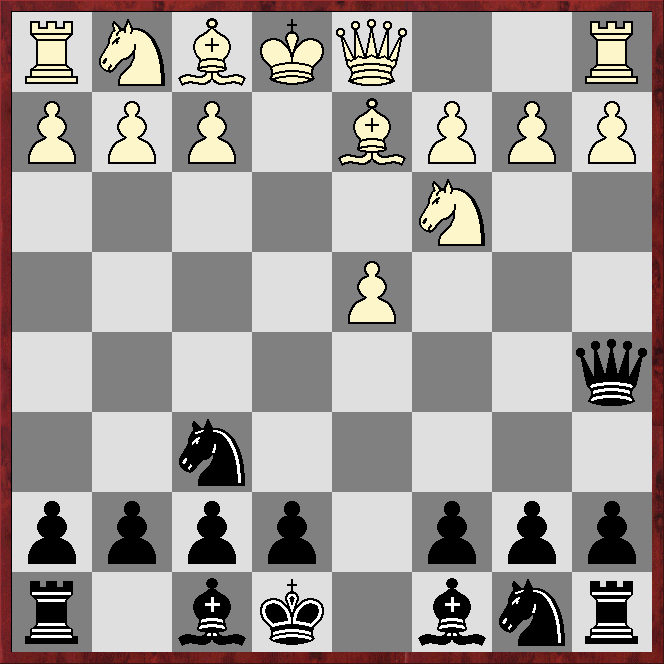
Now both sides have castled, how would you assess the position?
*****
*****
*****
*****
*****
It is early days in what looks like being a long positional struggle, but Stockfish17.1 and Dragon1 reckon White has at least the better part of equality.
8.d3 Re8 9.Nbd2 c6 10.Qc2!?
This is the third time against IC I have had the position after 9...c6. The previous two games, in 2002 and 2008, featured 10.a3, and were drawn in 28 and 30 moves respectively.
The engines suggest 10.e4!?, which is possible thanks to the unprotected state of Black's dark-square bishop, eg 10...dxe4 11.dxe4 Nxe4?? loses a piece to 12.Nxe4.
10...e5 11.e4 Bg6 12.Nh4!? d4 13.Nxg6 hxg6
Stockfish17.1 marginally prefers 13...fxg6!?, and Dragon1 comes to more-or-less agree.
14.Nf3
This may be a novelty, and at any rate is an improvement on Gerhard Völpel (2070) - Dierk Schröder (1841), Mecklenburg Seniors Championship (Plau am See) 2001, which went 14.f4? Ng4 15.fxe5 Ne3 16.Qb1 Bxe5, with a large advantage for Black, although the game was agreed drawn three moves later.
14...a5 15.Bc1!?
The engines like this, along with 15.a3.
15...Nc5 16.Bd2 Qe7 17.Rfb1!? Ra7 18.a3 Rea8 19.Bf1 Ncd7 20.Qb2 b5 21.cxb5 cxb5
How should White proceed?
*****
*****
*****
*****
*****
22.a4?!
The engines are not keen on this, preferring 22.h4!? or 22.Rc1.
22...b4 23.Bg5?!
This is probably the wrong idea too. After 23.Rc1 Nc5 White is no more than slightly worse, according to the engines.
23...Rc7 24.Rc1 Rac8
The engines reckon 24...Rc3!? is even stronger.
25.Rxc7 Rxc7 26.Rc1 Rc3 27.Bd2
How should Black proceed?
*****
*****
*****
*****
*****
27...Nb8!?
The engines for quite some time much prefer 27...Nc5, but the text comes to be Dragon1's top choice, at least for a while. Either way, the sacrifice of the exchange is sound.
28.Bxc3
Accepting the exchange, either immediately or over the next few moves, seems almost forced, eg the engines come to agree that 28.Bh3!? is the best continuation, but after 28...Na6 reckon White should continue 29.Bxc3.
28...bxc3 29.Qb1
Black has no material compensation for the exchange, but has more than enough positionally, thanks to having an advanced and protected passed pawn, extra space and an outpost at b4
*****
*****
*****
*****
*****
29...Ba3 30.Rd1 Qc5 31.Ne1 Na6 32.Nc2 Bb2 33.Be2 Qb6 34.Na1?!
Almost certainly better is the engines' 34.Rf1!?, but they agree Black is winning.
34...Nd7
There is nothing wrong with 34...Bxa1 35.Qxa1 Qxb3, eg 36.Rb1 can be met by 36...Qc2 and 37...Nb4.
35.Rf1 Nc5 36.Bd1?!
Now Black gets to win the d3 pawn, while still menacing the backward b pawn.
36...Bxa1 37.Qxa1 Nxd3 38.Be2 Nab4 39.Rd1 Nc5 40.Bc4!?
The e4 pawn cannot realistically be saved, eg 40.Bf3 c2.
40...Nxe4 41.Re1!?
This sets a sort of trap that does not save Black, but complicates matters.
41...Nc2 42.Qb1 Nxe1 43.Qxe4
This is the point - the knight cannot escape
*****
*****
*****
*****
*****
43...Qb4
This wins, but more forcing is 43...c2 44.Qxe1 Qb4, which transposes to the game (but in the game, Black gets another option).
What should White try?
*****
*****
*****
*****
*****
44.Qxe1
Perhaps it is a matter of taste, as all moves lose, but the engines' 44.f4!? gives Black a chance to go wrong, eg 44...c2? 45.Qa8+ Kh7 46.Bxf7 leaves Black having to bail out with a draw by perpetual after 46...Nf3+ 47.Kg2 Qd2+ 48.Kxf3 Qd3+. Black could vary with 45...Qf8, but 46.Bxf7+ Kxf7 47.Qd5+ leaves White with a draw by perpetual. Note that the key points about 44.f4!? are, firstly, that it attacks e5, and, secondly, that it takes away the g5 square from Black's king, which is why the immediate 44.Qa8+ fails to 44...Qf8 45.Bxf7+ Kxf7 46.Qd5+ Kf6. However, 44.f4!? does not save Black - the engines show both 44...Qe7 and 44...Nf3+!? win. Note that 44.Qxe5? is instantly hopeless after 44...Nf3+.
44...c2
Transposing to the line given in the note to Black's 43rd move.
45.Qc1 Qc3 46.Kg2 e4 47.Bd5
Or 47.Bxf7+!? Kxf7 48.Qf4+ Kg8.
47...Qf3+ 48.Kh3 Qd1 49.Qf4 Qh5+ 50.Kg2 Qf3+ 0-1
Middlesex won the match 8-5-7.5.

Sunday, 1 March 2026

County Chess

PLAYED on board six (of 16) for Kent at Essex in the Southern Counties' U2050 championship yesterday afternoon.

John Moore (1978) - Spanton (1928)
Sicilian Closed
1.e4 c5 2.Nc3 g6!? 3.g3 Bg7 4.Bg2 Nc6 5.d3 d6 6.f4 e6 7.Nf3 Nge7 8.0-0 0-0
This tabiya from the Closed Variation of the Sicilian Defence occurs 10,595 times in ChessBase's 2026 Mega database, with White scoring a disappointing 45%, albeit with a performance 15 elo above the white players' average rating
*****
*****
*****
*****
*****
9.Be3 Nd4 10.e5!?
Moore (2050) - Spanton (2030), SCCU Essex-v-Sussex 2007, went 10.Rb1 Rb8 11.Ne2 Nec6 12.c3 Nxf3+ 13.Bxf3 Bd7 14.d4 cxd4 15.Nxd4!? a6 16.Qd2 Qc7 17.Rbd1, with a slight edge for White, according to Stockfish17.1 and Dragon1 (1-0, 45 moves).
The text is a sharp pseudo-sacrifice.
10...Nef5
There are 22 games in Mega26 with 10...Nxf3+ 11.Qxf3 dxe5 12.fxe5 Bxe5, but White gets the pawn back immediately with 13.Bxc5.
11.Bf2 Nxf3+ 12.Qxf3 Nd4 13.Qd1
How should Black proceed?
*****
*****
*****
*****
*****
13...d5
Richard Palliser in Starting Out: Closed Sicilian (Everyman 2006) awards 13...dxe5 an exclamation mark, saying Black should accept what is now a genuine sacrifice. After 14.fxe5 Bxe5 15.Ne4 White was scoring 60% in the 2005 version of Mega - and is also scoring 60% in the 2026 edition.
14.Qd2 Bd7 15.Nd1 Qc7!?
This may be a novelty. Known moves are 15...b6  and 15...Qe7.
16.c3 Nf5 17.g4 Ne7 18.d4
The engines like 18.Bg3, freeing the f2 square for White's knight.
18...cxd4
The engines agree this is better than 18...c4?, which they reckon is positionally losing, but they want Black to take immediate kingside action with 18...f5 or 18...f6.
19.cxd4 Rac8 20.Ne3 Bb5 21.Rfc1 Qb6 22.Rxc8!?
This is Dragon1's top choice, at least for a while; Stockfish17.1 prefers 22.Rc3 or 22.Re1!?
22...Rxc8 23.Bh4
The engines like rerouting the white knight to c3 via d1.
The point of the text is that after ...
23...Nc6
... the remaining white rook can be developed to the open file.
24.Rc1 Re8
But now d4 is under pressure.
25.Rd1
The engines are unsure whether to prefer this or 25.Nc2.
25...Bf8
How should White proceed?
*****
*****
*****
*****
*****
26.a3?
White should probably play 26.Kh2 or 26.Bf2, albeit the engines agree Black is at least equal.
26...Nxd4!?
This may be a tad better than 26...Ba4, but both moves win the d4 pawn.
27.Bf2 Ne2+ 28.Kh1 Qd8??
This turns a winning position into a losing one, or at least one in which White has the upper hand. The simple 28...Qa6 leaves Black the equivalent of about a minor piece ahead, according to the engines.
29.Bf1 Ba4
Best, since 29...d4? 30.Bxe2 Bxe2?! 31.Qxe2 leaves Black knight-for-pawn down, as the d pawn is pinned. Probably better is 30...Ba4, but 31.Qxd4 Bxd1 32.Nxd1 leaves Black down rook for bishop-and-knight, and with White having the bishop-pair. Black could also try 30...Bc6+, but 31.Ng2 again leaves Black knight-for-pawn down.
30.Bxe2 Bxd1 31.Nxd1!?
The engines agree this is the best way to recapture.
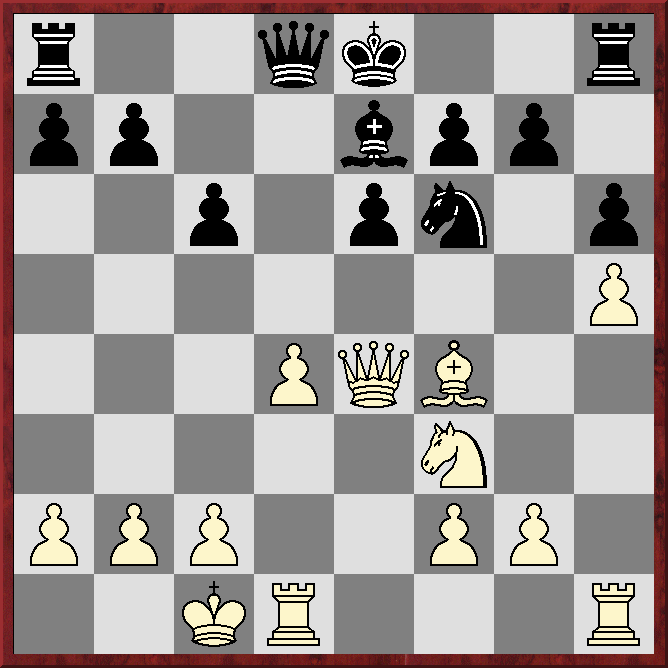
Now the dust has settled, as it were, how would you assess the position?
*****
*****
*****
*****
*****
White has bishop and knight for rook and pawn. This is a material advantage, even if that is not the case under the traditional 9:5:3:3:1 points system. In addition, White has the bishop-pair. But the advantages do not all lie with White. The black king is less exposed, and Black's extra pawn is a protected passer, albeit still in Black's side of the board. Dragon1 reckons White is winning, but Stockfish17.1 gives White 'only' the upper hand.
31...Qc7 32.Nc3
32.Qc3?! contests the open file, but an exchange of queens, while slightly favouring the bishops as being the only remaining pieces with long-range diagonal power, favours the rook even more as rooks are usually at their best in endings.
32...Rc8
Threatening 33...Bxa3!
33.Bd4 a6?!
Probably too slow. The immediate 33...Bc5, seeking to get rid of White's bishop-pair, is possible, as 34.Nb5 can be met by 34...Qb6. The engines also suggest 33...b5!?, the idea being to meet 34.Nxb5 with 34...Qc2 35.Qxc2 Rxc2 36.Bf1 Rd2 37.Bxa7 Rxb2, and 34.Bxb5 with 34...Bc5 35.Ba6 Bxd4!? 36.Qxd4 (36.Bxa8 Qc4!) Rb8, although in both cases the engines reckon White ends with at least a slight edge.
34.Kg2
After playing 33...a6?!, I feared 34.f5!, when 34...Bc5 can be met by 35.f6!, although 35...Kh8 keeps the game going.
34...Bc5 35.Kf2?!
White cannot maintain the bishop-pair, but probably better is 35.Bxc5 Qxc5 36.Bd3, when the engines claim the upper hand for White.
35...Qb6 36.Bxc5 Qxc5+ 37.Kg2 d4?!
The position is completely equal after 37...b5, according to the engines.
The problem with the text is that after ...
38.Ne4 Qc2?!
... White has ...
39.Bd3
This would also have been the answer to the probably better 38...Qc1!?
39...Qxd2+ 40.Nxd2 Rc1
How would you assess this ending?
*****
*****
*****
*****
*****
The black rook is the best piece on the board, but it is no match for two minor pieces, especially as White has the more active king, and Black's extra pawn, although passed, is unprotected. However, imbalanced positions can be tricky to play, and, while the engines start by claiming White is winning, Dragon1 comes to be less sure.
41.Kf2 Rd1 42.Ke2 Rg1 43.Be4 Rxg4?!
The engines come to much prefer 43...b5 or 43...b6.
44.Kf3?!
They reckon this loses much of White's advantage, which would be preserved by 44.Bxb7.
44...Rg1
44...h5!? might be better, the idea being to meet 45.Bxb7 with 45...Rh4, when 46.Kg3 Rg4+ 47.Kf3 Rh4 is a repetition, so the engines suggest 46.Ke2!? Rxh2+ 47.Kd3, with an unclear position, but one that seems good for White.
45.Kf2?
Definitely better is 45.Bxb7, eg 45...Rh1 46.Bxa6 Rxh2 47.Nc4, when the b pawn seems a lot quicker than the h pawn.
45...Rc1 46.Ke2
Or 46.Bxb7 Rc2 47.Ke2 Rxb2 48.Bxa6 Ra2, with complete equality, according to the engines.
46...b6 47.Nb3
Stockfish17.1 claims 47.Kd3 may give White a slight edge, or the better part of equality; Dragon1 disagrees.
What should Black play?
*****
*****
*****
*****
*****
47...d3+!?
This pawn sacrifice, with both an interference motif and a diversion motif, is at first warmly greeted by the engines, but Dragon1 comes to see it as 'only' giving Black a slight edge, while Stockfish17.1 eventually concludes that the position is completely equal.
48.Kxd3
The king interferes with the bishop's coverage of b1, but the text is almost certainly better than 48.Bxd3?!, when the bishop is diverted from its coverage of h1. Then 48...Rh1 is strong, eg 49.Nd2 Rxh2 50.Ke3 a5, followed by pushing the h pawn.
48...Rb1 49.Kc2
This may appear to gain a a tempo on the rook, but does not really, whereas 49.Kc3! means Black will not be able to later capture on h2 with check, or play ...Rf2+ and then capture on h2. The point will become clearer as the game continues.
49...Rf1 50.Nd2
If the white king were on c3, White could play 50.Bd3 Rxf4 51.Bxa6, with good drawing chances, although Dragon1 is less sure about this than Stockfish17.1. Because the white king is on c2, the same line could continue 51...Rf2+ 52.Kc3 Rxh2, when Black is a vital tempo up, and, the engines agree, that makes Black's position easily winning.
50...Rxf4 51.Kd3 Rf2 52.h4 Rh2 53.b4 Rxh4
Black now has three pawns and a rook for bishop and knight, with an advantage the engines reckon is worth more than a minor piece
*****
*****
*****
*****
*****
54.Nf3 Rh1 55.a4 Ra1 56.Bc6 h6 57.Bd7 g5 58.Nd4 g4 59.a5?!
This loses a pawn, but does not greatly affect the engines' evaluation of the position.
59...bxa5 60.bxa5 Rxa5 61.Ke4 g3 62.Nf3 Kg7 63.Bc6 Rc5 64.Bb7 a5 65.Kf2 g2 66.Kg3 g1=Q+ 67.Nxg1 Rxe5 68.Nf3 Rb5 69.Bc6 Rb4 70.Nd2 a4 71.Be4 0-1 (Time)
Essex won the match 10-6.

Sunday, 2 March 2025

County Chess

PLAYED on board four (of 16) for Kent against Essex in the Southern Counties U2050 championship.

Spanton (1979) - Paul Williamson (1935)
Scandinavian
1.e4 d5 2.exd5 Qxd5 3.Nc3 Qa5 4.d4 Nf6 5.Bd2!?
This is third-most popular in ChessBase's 2025 Mega database, behind 5.Bc4 and especially 5.Nf3.
How should Black respond?
*****
*****
*****
*****
*****
5...c6
Black can win a pawn with 5...Qb6 6.Nf3 Qxb2?, but after 7.Rb1 Qa3 8.Nb5 etc White is winning comfortably.
6.Bc4 Qc7 7.Nf3 Bg4 8.h3 Bxf3!? 9.Qxf3 e6
Black has given up the bishop-pair, has less space in the centre and is behind on development, but has no weaknesses
*****
*****
*****
*****
*****
Stockfish17 and Dragon1 reckon White has the upper hand.
10.0-0-0 Nbd7 11.Rhe1 0-0-0 12.Kb1?!
Despite White's advantages, the position is more critical for White than might appear at first glance, the point being White has two hangers on the fourth rank, ie two unprotected units. Better is 12.Bb3.
12...Nb6 13.Bf4
The engines suggest sacrificing the d pawn with 13.Bb3!? Rxd4, followed by either 14.Ne2 or 14.g4.
13...Bd6 14.Bxd6 Rxd6 15.Bb3 Nbd5!?
Probably a novelty. All four games to reach the position in Mega25 saw 15...Rhd8.
16.Nxd5
The engines suggest 16.Ne2 or 16.Na4.
16...cxd5!?
Setting up the possibility of a queenside minority attack.
17.Qg3 Rg8
After 17...g6?! 18.Qe5 Qe7 White gains at least a slight advantage with 19.c4, according to the engines.
18.f3 b5!? 19.Re3 Rc6 20.Qxc7+
Keeping queens on may be better. After the text White has the usually superior team of rook(s) and bishop versus rook(s) and knight. But there are 14 pawns on the board, which generally favours the knight. And with queens still present, the black king's situation would look a little draughty.
20...Kxc7 21.g4!? g6 22.Rdd3 Nd7 23.Rc3 Nb6 24.Rxc6+ Kxc6 25.c3 Kd6 26.Re2 h5 27.Rf2
The engines prefer 27.g4, meeting 27...f6!? with 28.f4.
27...Ke7 28.Kc2?
It seems it was necessary to stop Black's rook coming down the h file, and therefore the engines again like g4.
28...Rh8?!
Black is winning after 28...hxg4, according to the engines, eg 29.fxg4 Rh8 30.Rf3 f5 31.gxf5 exf5, when Black's 2-1 kingside majority is strong, or 29.hxg4 Rh8 30.Kd3 Rh1 31.Re2 Ra1 32.a3 a4 33.Bc2 Nc4+ etc.
29.Kd3?
29.g5 was an absolute must.
29...hxg4 30.hxg4 Rh3?!
Much better is 30...Rh1, eg 31.Ke2 Rb1 32.Kd3 a5 33.a3 Kf6 34.Kc2 Rh1 35.Kd3 a4 36.Bc2 Ra1 etc.
31.Ke3?!
The engines suggest 31.Bd1, but 31...Rh1 32.Be2 Nc4 33.b3 Na3 looks promising, although White is holding on for the moment.
31...g5?!
The engines agree 31...Rh1 is winning.
32.Ke2 Rh1 33.Rf1 Rh2+
The engines reckon Black should keep rooks on and start playing on the queenside with ...a5.
34.Rf2 Rh1 35.Rf1 ½–½
Essex won the match 9.5-6.5.

Sunday, 3 November 2024

County Chess

PLAYED on board five (of 16) for Kent at Surrey in the Southern Counties Chess Union's U2050 championship yesterday.

John Foley (1996) - Spanton (1955)
London System
1.d4 d5 2.Nf3 Nc6 3.Bf4 Bg4 4.e3 e6 5.h3 Nh5 6.c4 Bd6 7.Bxd6 Qxd6 8.cxd5 exd5 9.Nc3 Nf6 10.Be2 0-0 11.0-0
Now both sides have castled, how would you assess the position?
*****
*****
*****
*****
*****
From the pawn-formation it might be thought the opening was an Exchange Variation of the Queen's Gambit Declined. The engines reckon White has a slight edge (Dragon1) or at least the better side of equality (Stockfish17).
11...Ne4 12.Rc1 a6 13.a3
The engines reckon White has at least a slight edge after 13.Nxe4 dxe4 14.Nd2 Bze2 15.Qxe2.
13...Nxc3 14.Rxc3 Ne7 15.Ne5 Bxe2 16.Qxe2 c6 17.b4
White starts the famous Minority Attack.
17...Rfe8 18.Rfb1 Nf5 19.Qf3 Qe6 20.a4 Nd6 21.Nd3 Nc4 22.Qe2 Qf5 
How should White proceed?
*****
*****
*****
*****
*****
23.b5?
Premature. The engines suggest 23.Qg4!?, claiming equal chances.
23...axb5 24.axb5
What should Black play?
*****
*****
*****
*****
*****
24...Re6?
Missing the win of a pawn by 24...Na3 etc.
25.bxc6 bxc6 26.Rcb3 h6 27.Nc5 Rg6?
Aggressive, but now White gets the back rank, which is much more dangerous.
28.Rb8+ Rxb8 29.Rxb8+ Kh7 30.Qd3!
The engines agree this is best.
30...Qg5?
Not 30...Qxh3?? 31.Qxg6+ etc, but better is 30...Qxd3, although the engines reckon White is winning after 31.Nxd3, when the c pawn is very weak, eg 31...Na5 32.Ne5 Rf6 33.Ra8 Nb7 34.Ra7 Nd8 35.Rd7 Ne6 36.Nxc6. The engines suggest 31...Rf6, but agree 32.Nb4 Kg6 33.Rc8 Na5 34.Nd3 Nc4 35.g4 gives White a winning advantage, although no material has yet fallen.
31.g3
White threatens ...Nd7-f8#.
How should Black meet the threat?
*****
*****
*****
*****
*****
31...Qe7
This is the best Black has, but is still losing.
32.h4 f5?!
Objectively better is 32...h5, despite the simple pawn-winning reply 33.Qf5.
33.Qxf5 Nxe3!?
Desperation.
How should White reply?
*****
*****
*****
*****
*****
34.Qd3
Other moves also win, eg 34.Qc8 Rxg3+ (34...Rd6 35.h5) 35.fxg3 Qf7 36.Qf8, or 34.fxe3 Qxe3+ 35.Kf1 Qxg3 (35...Qc1+ 36.Kg2 Qd2+ 37.Qf2) 36.Nd7 Qg2+ 37.Ke1 Qg1+ 38.Ke2 Qg2+ 39.Kd1, when the checks eventually run out.
34...Ng4 35.Kf1?!
This may be enough to win, but much stronger are moves such as 35.Kg2, and especially the engines' 35.Nd7!, the point being 35...Qxd7 (35...Qe1+ 36.Qf1) is met by 36.h5.
35...Qf6?
Now White is definitely winning. Correct is 35...Qf7, reserving the f6 square for the knight (to prevent h5), while covering the d7 square.
36.f4 Qf5!?
Imaginative, but still losing.
37.Qxf5 Ne3+ 38.Kf2 Nxf5 39.Nd7 Rd6!
The engines prefer three other moves, but they make the win easy, ie 39...Rxg3 40.Rf8 etc; 39...h5 40.Nf8+ Kh6 41.Nxg6; 39...Rf6!? 40.Nxf6+. The text may be objectively worse, at least as far as engines are concerned, but the winning path is narrower.
40.Nf8+ Kg8
White to play and win
*****
*****
*****
*****
*****
41.h5?
This lets Black equalise. The engines give White a slight edge after 41.Ng6+ (or 41.Nd7+) Kf7 42.Ne5+, but their 41.g4! wins the knight, eg 41...Nxd4 42.Ne6+ etc, or 41...Nxh4 42.Ng6+ etc, or 41...Ne7 42.Ng6+ Kf7 43.Ne5+ Ke6 44.Re8 g6 (44...c5 45.f5+ Kf6 46.Rf8#) 45.Nxg6 Kf6 46.Nxe7 47.Nf5.
41...Kf7 42.Ng6 Nxd4
Black has won a pawn, but White has the draw in hand
*****
*****
*****
*****
*****
43.Ne5+ Ke6 44.g4 c5 45.Re8+
Or 45.Rb7 Ra6 46.Rxg7 Ra2+, with complete equality, according to the engines, although both sides have the option to play on.
45...Kf6 46.Rf8+ Ke6
Only White has winning chances after 46...Kf7?! 47.Rf7+ and 48.Rxg7.
47.Re8+ Kf6 48.Rf8+ Ke6 49.Re8+ ½–½
Surrey won the match 10-5-5.5.

Sunday, 3 March 2024

County Chess

PLAYED on board six (of 16) for Kent at Essex in the U2050 section of the Southern Counties Chess Union's championships yesterday.

Spanton (1910) - Peter Jaszkiwskyi (1965)
French Exchange
1.e4 e6 2.d4 d5 3.exd5 exd5 4.Nf3 Bd6 5.c4 c6 6.Nc3 Ne7!?
The idea of this popular continuation is two-fold: to avoid a pin by Bg5 (it can be met by ...f6!?) and to prepare to swop light-square bishops if White's is developed to the active d3 square
*****
*****
*****
*****
*****
7.c5!?
Stockfish16 prefers the commoner 7.Bd3, but Komodo14.1 likes the text.
7...Bc7 8.Bd3 Bf5 9.0-0 0-0 10.Re1 Bxd3 11.Qxd3 Ng6 12.Bg5 f6!?
The engines prefer 12...Qc8 or 12...Qd7.
13.Bd2 Nd7
How should White proceed?
*****
*****
*****
*****
*****
14.Qf5!?
This seems to be a novelty. Mátyás Palczert (2290) - Alexei Terzi (2272), Chess.com Blitz 2022, went 14.h4 Re8 15.h5 Ngf8 16.Nh4 b6?! 17.b4 a5? 18.b5 bxc5 19.bxc6 c4, with a winning advantage for White, according to the engines, although in the game the blunder 20.cxd7?? was met by 20...Rxe1+ 21.Rxe1 cxd3, and Black went on to win in 102 moves, albeit apparently on time in an ending of bare rook against bare bishop.
14...Re8 15.b4
I looked at, but did not believe, 15.Nxd5!? cxd5 16.Qxd5+. However the engines reckon it gives White a large advantage.
15...a6 16.a4
The engines still want to sac on d5.
16...Ndf8 17.Rxe8 Qxe8 18.Re1 Qd7 19.Qxd7 Nxd7 20.b5 axb5 21.axb5 Kf7 22.g3 Ra3 23.b6 Bb8
How would you assess this late-middlegame?
*****
*****
*****
*****
*****
White has more space, and the black bishop is immobilised, but the black rook is active and the white bishop is bad. However, perhaps the main reason the engines reckon the game is equal is that it proves very difficult for White to break into the Black position.
24.Kg2 h6 25.Re3
Threatening 26.Nxd5!
25...Ra1 26.h4 f5 27.Re1 Ra3 28.Ng1
I feared 28.h5!? would leave the white h pawn vulnerable. However Stockfish16 reckons the move gives White the upper hand, although Komodo14.1 rates the position as at best slightly better for White.
28...Nf6 29.Nge2 Ne4 30.Nxe4 fxe4 31.Bc3 Ra2 32.Kf1 Kf6 33.Ra1 Rxa1+ 34.Bxa1 Kf5 35.Kg2 Kg4 36.Bc3 Nf8
Not 36...Ne7? as, after 37.Nc1, the black knight cannot protect b7 in time, and the continuation 37...Nf5 38.Nb3 e3? loses to 39.f3+ Kh5 40.g4+.
37.Bd2 Ne6 38.Be3 Nd8 39.Nc1 Ne6 40.Nb3 Nd8 41.Na5 g5 42.hxg5 hxg5 43.Bd2
Black to play and draw
*****
*****
*****
*****
*****
43...Kh5
But not 43...Kf5? as White penetrates the black position after 44.Kh3.
44.f3 exf3+ 45.Kxf3 g4+ 46.Kf2
Black can only move the king, but that is enough to hold the draw
*****
*****
*****
*****
*****
46...Kg6 47.Be1 Kf5 48.Ke3 Kg6 49.Bf2 Kf5 50.Kd3 Ke6 51.Nb3
A last try, but of course this frees the black knight.
51...Kf5 52.Nd2 Ne6 53.Nf1 Kg5 54.Be3+ Kf5 55.Bh6 Kg6 56.Be3 Ng7 57.Bf2 Nf5 58.Ne3 Nxe3
Or 58...Nxg3 59.Bxg3 Bxg3 60.Nxg4, also with complete equality, according to the engines. But not 58...Bxg3? 59.Bxg3 Nxg3 60.Nxg4, eg 60...Kf5 61.Nf5 and 62.Nxc6!
59.Kxe3 Kf5 60.Be1 Kg6 61.Kf2 Kf5 62.Ke3 Kg6 63.Bf2 ½–½
Essex won the match 11-5.

Sunday, 18 February 2024

County Chess

PLAYED on board eight (of 16) for Kent against Surrey in the U2050 section of the Southern Counties Chess Union's championships yesterday.

Spanton (1916) - David Jones (1863)
Sicilian Bb5(+)
This game ended a streak of five blacks in a row (and seven blacks in my last eight games).
1.e4 c5 2.Nf3 Nc6 3.Bb5 g6 4.c3 Bg7 5.d4 cxd4 6.cxd4 d5?
The main move in ChessBase's 2024 Mega database is 6...Qb6!?
7.exd5 Qxd5 8.Nc3 Qd8
Black is in big trouble, but perhaps best is 8...Qd6, when Spanton (1858) - Jiří Groh (2004), Czech 65+ Championship (Olomouc) 2023, continued 9.d5 a6 10.Ba4 Bxc3+ 11.bxc3 b5 12.dxc6 bxa5 13.Qxa4, after which White has at least the upper hand, according to Stockfish16 and Komodo14.1 (1-0, 74 moves).
9.d5 Bxc3+ 10.bxc3 Qa5
How should White proceed?
*****
*****
*****
*****
*****
11.Qa4!?
Offering a pawn and a rook. Other moves also win, eg 11.Ba4 (Stockfish16) and 11.Rb1 (Komodo14.1).
11...Qxc3+ 12.Ke2
The key follow-up that justifies 11.Qa4!?
12...Bd7
Neuris Delgado Ramírez (2615) - Virginia Lagrange Reis (1927), Barreirinhas (Brazil) 2015, went 12...Qxa113.dxc6 bxc6 14.Bxc6+ Bd7 15.Bxd7+ Kd8 16.Bd2 Qb2 17.Rb1 1-0.
13.Bd2 Qc5 14.dxc6 bxc6 15.Bd3 f5?!
Probably objectively better is 15...Nf6, but even then the engines reckon Black is the equivalent of at least a minor piece down.
16.Rac1 Qd6 17.Rhe1 Nf6 18.Bf4 Qe6+?! 19.Kf1 Qf7 20.Ne5 1-0
The match was drawn 8-8.

Sunday, 28 January 2024

County Chess

PLAYED on board eight (of 16) for Kent at Middlesex in the Southern Counties U2050 championship yesterday.

Xavier Cowan (1931) - Spanton (1884)
QGD Normal Position
1.d4 d5 2.c4 e6 3.Nc3 Nf6 4.Nf3 c5 5.e3!?
Today the commonest continuation is 5.cxd5, but the text, which goes back to at least 1843, used to be the mainline and is more sophisticated than its reputation might imply.
5...Nc6 6.a3 a6 7.dxc5 Bxc5 8.b4 Ba7 9.Bb2
This position occurs 617 times in ChessBase's 2024 Mega database
*****
*****
*****
*****
*****
9...d4?!
This has been played by international masters and at least one grandmaster, but is almost certainly premature. The mainline in Mega24 runs 9...0-0 10.Qc2 Qe7 11.Rd1 Rd8 12.Be2 dxc4 (12...d4 is also quite popular) 13.Rxd8+ Nxd8!? 14.Bxc4 b5, with an equal position, according to Stockfish16 and Komodo14.1.
10.exd4 Nxd4 11.Nxd4
The engines reckon 11.c5!? gives White a positionally won game.
11...Qxd4!?
This seems to be a novelty. The engines prefer the known move 11...Bxd4.
12.c5!? Qg4?
The engines reckon this is a serious mistake, much preferring 12...Qxd1+.
13.Qxg4 Nxg4 14.Ne4 0-0 15.h3 Nh6 16.Nd6
The white knight has a commanding outpost, and meanwhile Black has problems coordinating pieces
*****
*****
*****
*****
*****
16...Nf5!? 17.Nxc8!?
Grabbing the bishop-pair on such an open board is almost certainly better than damaging Black's pawn-majority.
17...Raxc8 18.Bd3 Rfd8 19.Rd1 Ne7 20.0-0 Re8?
I picked up the rook intending to play 20...Rd7?, remembering in time White has Bxh7+! Having touched the rook, there is no better square than e8, but Black is losing. After the superior 20...Nd5 White 'only' has the upper hand, according to the engines.
21.Be4 Nc6?
Immediately giving up a pawn with 21...Nd5! is better.
22.Rd7 Bb8 23.Rxb7 Red8 24.Rb6 Nd4 25.Bxd4 Rxd4 26.Bb7 Rcd8 27.Rxa6 Rd1!?
Black's only hope is for a blunder - even an opposite-coloured bishop ending would almost certainly be lost.
28.g3 Be5 29.Rxd1 Rxd1+ 30.Kg2 Kf8 31.Ra8+ Ke7 32.Bc6 Rd2 33.Ra7+ Kf6 34.Be8 Bd4 35.Rxf7+ Ke5 36.Bc6 Rd3? 37.f4#
Middlesex won the match 9-7.

Sunday, 6 March 2022

County Chess

PLAYED for Kent yesterday away to Middlesex in the U2050 section of the Southern Counties Chess Union county championships.

Gaston Franco (2022) - Spanton (2016)
Board Two (of 16)
Spanish Berlin/Open
1.e4 e5 2.Nf3 Nc6 3.Bb5 Nf6 4.0-0 Nxe4 5.d4 a6!?
Magnus Carlsen has tried this alternative to the mainline 5...Nd6, and he has also played another popular choice, 5...Be7.
6.Ba4
6.Bxc6 keeps the game in Berlin lines. After the text the game soon reaches the chief starting point of the Open Variation of the Spanish.
6...b5 7.Bb3 d5 8.dxe5 Be6 9.c3 Be7
The sharp 9...Bc5 is more popular in ChessBase's 2022 Mega database, scoring 49% against 43% for the text.
10.Bf4!?
Six other moves are more popular in Mega22, but the text has also attracted grandmasters.
How should Black respond?
*****
*****
*****
*****
*****
10...g5?!
Stockfish14.1 and Komodo12.1.1 prefer the main move in Mega22, 10...0-0, continuing 11.Nd4 Qd7 12.Bc2, rating the position as equal.
How should White reply?
*****
*****
*****
*****
*****
11.Bg3?!
Almost certainly better is 11.Be3, the point being 11...g4 12.Nd4 Nxe5 wins a pawn but after the engines' 13.Nd2!? (all four games in Mega22 saw 13.Nxe6) Black is lagging in development and does not have a safe haven for the king.
How should Black proceed?
*****
*****
*****
*****
*****
11...g4?!
Black seems to get excellent chances after 11...h5, eg 12.h3 g4 13.Nd4 Nxd4 14.cxd4 gxh3, when Black has won a pawn and it is the white king that seems more in danger.
12.Nd4 Nxd4
Possible is 12...Nxg3!?, and it might be stronger, eg 13.Nxc6 Qd7 14.hxg3 Qxc6.
13.cxd4 h5 14.Nc3 Nxg3 15.fxg3!?
It seems to make sense to get the king's rook into play, and to keep the h file closed longer than would be the case after 15.hxg3.
15...h4 16.Ne2 Bg5
The engines suggest 16...hxg3 17.Nxg3 Bf8!?
17.Qd3 hxg3 18.Qxg3 Qe7 19.Nf4 0-0-0 20.Rac1 Rh7 21.Rc5
What should Black play?
*****
*****
*****
*****
*****
21...Rdh8?
The only good continuation, according to the engines, is 21...Bxf4 22.Qxf4 Rdh8 with what they reckon is dead-eye equality. I rejected it because I was reluctant to give up my good bishop.
What should White play?
*****
*****
*****
*****
*****
22.Rfc1?
Black is fine after this. White is winning after 22.Nxd5 Bxd5 23.Bxd5, when Black is a pawn down and about to lose a second one to Qxg4(+) or Rxf7 (Qa3 is also a strong threat).
How should Black continue?
*****
*****
*****
*****
*****
22...Rxh2?
Still good is ...Bxf4, but probably even better is stepping aside with 22...Kb8! If 23.Rxc7 then 23...Qb4 is very good for Black thanks to the twin threats of 24...Rxh2 and 24...Qxd4+. Best, according to the engines, is 23.Nxe6!?, when 23...Bxc1? loses to 24.Nxc7, so best seems to be 23...fxe6 24.Rxc7 Qb4 25.Rxh7 Rxh7!? (better than 25...Qxd4+ 26.Qf2 Qxf2+ 27.Kxf2 Rxh7 28.Rc6, according to the engines) 26.Rd1, when Black's activity gives good compensation for a pawn, eg 28...Qf8! 29.Rf1 Qh6, after which White can hold as long as he spots the threat 30...Be3+ 31.Kh2 Bf2!!
23.Rxc7+ Qxc7 24.Rxc7+ Kxc7 25.Qc3+ Kb8!? 26.Nxd5
Black to play and draw (probably)
*****
*****
*****
*****
*****
26...Bxd5?
Black has to play 26...Rh1+, probably meeting 27.Kf2 with Stockfish14.1.1's 27...g3+!? 28.Kxg3 R(either)h3+!? (Komodo12.1.1's 28...Bxd5 also gives drawing chances) 29.gxh3 Rxh3+ 30.Kf2 Rxc3 31.bxc3 Bxd5 with what seems to be a drawn opposite-coloured-bishops ending.
27.Bxd5 g3?!
Probably better, but still losing, is 27...Rh1+ 28.Kf2 Rc1.
28.Kf1 Rh1+ 29.Ke2 Rc8 30.Qxg3 Bh4 31.Qf4 Rcc1 32.Bf3 Rcd1 33.g3 Rhe1+ 34.Kf2 Rf1+ 35.Kg2 Rg1+ 36.Kh3 Bxg3 37.Qe4 1-0
Middlesex won the match 9-6.

Sunday, 20 February 2022

New Kent Venue

PLAYED for Kent against Surrey in the U2050 section of the Southern Counties Chess Union's championships yesterday at Kent's new home venue, a spacious Catholic church-hall in St Mary Cray, near Orpington

Philip M Stimpson (2021) - Spanton (2040)
Board Three (of 16)
Jobava-Prié
1.d4 d5 2.Nc3 e6
Offering a French but ruling out, at least for the moment, a Veresov. PM chooses to make the opening a Jobava-Prié.
3.Bf4 Bd6 4.e3 Nf6 5.Nf3 Nbd7!?
The most-popular continuations in ChessBase's 2022 Mega database are 5...0-0 and 5...Bxf4 6.exf4 0-0.
6.Ne5!?
Played at a time when Black can hardly reply ...Bxe5.
6...Bb4!?
Moving the bishop for a second time, but the white king's knight has also moved twice and can now be captured by the black queen's knight.
7.a3 Bxc3+ 8.bxc3 Ne4 9.Qd3
Komodo12.1.1 suggests sacrificing a pawn by 9.f3!?, meeting 9...Nxc3 by 10.Qd2 Na4 11.c4, gaining an initiative.
9...Nxe5
9...Qh4 10.Bg3 Nxg3 possibly favours Black, but 10.g3 Qe7 11.Nxd7 Bxd7 12.c4 is equal, according to Komodo12.1.1 and Stockfish14.1.
10.Bxe5 f6 11.Bg3 h5
The engines prefer 11...c5!?, claiming a slight edge for Black.
12.f3 Nd6
Also possible is 12...h4, when White has several roughly-equal responses including 13.fxe4, 13.Bxh4 and 13.Bxf4, the last coming to be the engines' favourite, albeit by a small margin.
13.Qg6+ Kf8 14.Bf4 Qe7
Black has lost castling rights, but it is not easy for White to get at the black king.
15.Rb1 b6 16.h4 Bd7 17.Bd3 e5 18.dxe5 fxe5 19.Bg5 Qf7 20.Rf1?!
The engines reckon White should castle or exchange queens.
How should Black proceed?
*****
*****
*****
*****
*****
20...Qxg6
I looked at, but not well enough, 20...Qg8!, the idea being to trap the white queen. I cannot recall why I rejected it, but the engines reckon best-play runs 21.f4 e4 22.f5 exd3 23.f6 Nf7 24.Rb4 gxf6 25.Qxf6 Qg7 26.Qe7+ Kg8 27.Qxd7 Qxc3+ 28.Kf2 dxc2, which they calculate gives Black the upper hand, albeit in a messy position. White looks to have no reasonable alternative to giving up the light-square bishop, so ...Qg8 seems strong.
21.Bxg6 Bf5?!
Almost certainly better is 21...Be8, with at least equality.
22.Bxf5 Nxf5
How should White proceed?
*****
*****
*****
*****
*****
23.g4
I had spent a lot of time, at move 21, looking at 23.e4 Ng3 24.Rf2 dxe4 25.fxe4+, concluding Black has nothing to fear. That seems correct, but the engines give 23.Rd1 c6 24.e4, when 24...Ng3 25.Rg1! dxe4 26.Kf2 Nf5 27.fxe4 leaves Black badly uncoordinated and with White poised to invade the seventh rank.
23...Nd6 24.Rd1
What should Black play?
*****
*****
*****
*****
*****
24...Nb5?
The engines reckon Black is equal after both 24...c6 and 24...Kf7!?, eg 24...c6 25.e4 Kf7 26.exd5 cxd5, when the natural-looking 27.Rxd5?! runs into 27...Ke6 28.Rd3 hxg4 29.fxg4 Rac8, after which White is a pawn up but has more weaknesses and it is Black who is better coordinated. The engines reckon that for equality White needs to play 27.f4, eg 27...Ne4 28.fxe5+ Ke6 29.c4 dxc4 30.Bf4 Rad8 31.Rxd8 Rxd8 32.gxh5, when White is nominally a pawn up but Black has lots of activity.
The somewhat surprising 24...Kf7!? also seems fine for Black, one point being 25.Rxd5?! probably favours Black, eg 25..Ke6 26.e4 hxg4 etc.
After the text White invades the black position, and the black pieces lack almost any coordination.
25.Rxd5 Nxa3 26.Rxe5 Re8
Certainly not 26...Nxc2+?? 27.Kd2 Na3 28.Be7+ and 28.Bxa3.
27.Rxe8+?!
Almost certainly better is setting up an invasion of the seventh rank after 27.Rd5, eg 27...Nc4 28.Ke2, after which it seems impossible to find a good move for Black.
27...Kxe8 28.Kd2
The engines prefer 28.Ke2!, one point being 28...Nxc2? is met by 29.Rd1.
The problem with the text is that after ...
28...hxg4 29.fxg4 Nc4+
... White is more-or-less obliged anyway to play:
30.Ke2
White may well still be better as rook and bishop usually outplay rook and knight, especially with rival pawn-majorities. White also has an extra pawn, but it is doubled and Black's passed pawn is dangerous. Stockfish14.1 reckons White is winning, but Komodo12.1.1 gives White only a slight edge.
30...Rf8?!
Probably better is 30...a5.
What should White play?
*****
*****
*****
*****
*****
31.Bf4
31.Rxf8+!? gives up the advantage of rook-and-bishop v rook-and-knight, but gains a different advantage, that of a minor-piece ending in which the bishop is better than the knight thanks to there being rival pawn-majorities. However Black's ability to create a protected passed pawn makes the position less clear.
Best seems to be 31.Rd1!? Ne5 32.Rd4, when the engines reckon Black needs to play 32...Kf7 33.Rf4+ Kg8, but then White has 34.Ra4 with very good chances.
31...Rf7
Komodo12.1.1 reckons 31...Kd7!? equalises; Stockfish14.1. disagrees.
32.h5 Rd7 33.Rd1
Also good is 33.g5!? as 33...Rd2+ is not to be feared since, after 34.Kf3, Black can hardly play 34...Rxc2? in view of 35.h6 etc.
33...Rxd1 34.Kxd1 a5
White seems to be winning whatever is played, but at least the a pawn gives counterplay.
35.Kc1 c6 36.g5 a4 37.h6 gxh6 38.gxh6 Kf7
White to play and win
*****
*****
*****
*****
*****
39.Kb1?
White wins easily with 39.e4 as Black cannot stop both white passed pawns.
39...Nd2+ 40.Ka2 Ne4?!
This may draw, but simplest is 40...b5, and if 41.Ka3 then 41...Nc4+ forces 42.Ka2 Nd2 etc as 42.Kb4? loses to 42...c5+!
41.Ka3 b5 42.c4 Nf6?
42...Nd2 43.cxb5 cxb5 44.Kb4 Kg6 holds the balance, according to Stockfish14.1 although Komodo12.1.1 gives White the upper hand. The same position is reached after 42...Kg6 43.Kb4 Nd2 44.cxb5 cxb5.
43.cxb5 cxb5 44.c4?
Black still faces a tricky defence after the text, but much better is 44.Be5.
44...bxc4 45.Kxa4
More challenging is 45.Be5! Nh7 46.Kxa4, although 46...Ke6 gives a tablebase draw.
45...Nd5 46.Bg5
Black to play and draw
*****
*****
*****
*****
*****
46....Kg6!
The endgame tablebase Syzygy shows the plausible 46...Nc3+ 47.Kb4 Ne4 loses to 48.Be7!, eg 48...Nd2 49.Kc3 Ne4+ 50.Kd4! (50.Kxc4 Kxe7=) Nd2 51.Bb4 Nf3+ 52.Kc3! (52.Kxc4 Ne5+ and 53...Ng4=) Ne5 53.Bd6 Ng4 54.Bf4, when the c pawn finally falls.
47.Ka3 Nc7
47...Nc3 also draws, but not 47...Kxg6?? 48.h7 etc.
48.e4 Nb5+ 49.Kb4 Nd6 50.e5 Nf7
Not 50...Ne4?, eg 51.Bf4 c3 (51...Nf2 52.Kxc4) 52.e6 etc.
51.h7
If 51.Bf4 then simply 51...Nxe5.
51...Kxh7 52.e6 Nd6 53.Kc5 Nf5 54.Kxc4 Kg8 55.Kd5 Kf8 56.Ke5 Ne7
Not 56...Ng7?? 57.Bh6 Kg8 58.Bxg7 Kxg7 59.Kd6 etc.
57.Kd6 Nf5+
An amusing finish is 57...Ke8 58.Bxe7 stalemate. After the text Komodo12.1.1 rather bizarrely gives White the upper hand.
58.Kd7 Kg7 59.Bc1 Kf8 60.Ba3+ Kg7 61.Be7
Hoping for 61...Nd4?? 62.Bf8+ etc.
61...Kf6 ½–½
Surrey won the match 8.5-7.5.

Monday, 31 January 2022

A Gem From Saturday

HERE is Kent U2050 captain Tim Gluckman's game on board eight (of 16) at Essex.
His notes are in italics.

Matthew H Shaw (1955) - Gluckman (1869)
SCCU U2050
Bird
1.f4 d5 2.Nf3 g6 3.g3 Bg7 4.Bg2 c6 5.0-0 Qb6+
This early development of the queen is the most-popular move in ChessBase's 2022 Mega database.
6.d4!?
And this slightly strange-looking reply is much more popular than 6.e3 or 6.Kh1 (6.Rh2?! does not occur in Mega22).
6...Nf6 7.Ne5!?
This apparent-novelty, albeit transposing to a known position, is the top choice for a while of the analysis engine Komodo12.1.1, although it comes to prefer Stockfish14.1's 7.c4.
7...h5!?
Hinting at, but not committing to, castling long, against which White takes immediate measures.
8.c4 Be6 9.Nc3!? h4
White gets plenty of compensation for a pawn after 9...dxc4 10.Na4 and 11.Nc5, according to the engines.
10.Na4
An idea after …h4 is for White play g4 to seal up the h file, which is Black’s main hope of counterplay. Black must hold the pawn on d5 at all costs because if that is lost White will form a huge centre with pawns on c4, d4, e4 and f4, which will allow White to win the game in robot mode.
10...Qd8 11.Nc5 Bf5!?
An interesting positional pawn sacrifice. Certainly the black position looks rather passive after 11...Bc8
12.Nxb7 Qc8
How should White proceed?
*****
*****
*****
*****
*****
13.Qb3
This is Komodo12.1.1's top choice, at least for a while, although Stockfish14.1 strongly prefers 13.g4!? Bxg4 14.Na5!? h3 15.Bh1, claiming a large advantage for White (Komodo12.1.1 disagrees). The conservative 13.Nc5 also seems very reasonable.
13...hxg3 14.hxg3 Bh3
The point of the pawn sacrifice. Now Black will have at least some counterplay based on the h file.
15.Nc5 Bg2 16.Kxg2 Qh3+ 17.Kf2
How should Black proceed?
*****
*****
*****
*****
*****
17...Nbd7
I fantasised for a while with ideas based around Ng4 and Bxd4+, forking king and the knight on c5. However, Black is one tempo short and White’s piece-coordination with, e.g. e3 or Be3. [TH's annotation seems truncated here] The main weakness for Black is the lame queenside. White threatens to play Qb3 [Qb7 presumably] so instead of pursuing chimeras of attack, I decided to develop.
The engines point out after 17...Ng4+!? that 18.Nxg4? is good for Black thanks to 18...Qxg4 (rather than 18...Bxd4+?? 19.Be3), when Black has a strong attack thanks to the twin threats of ...Rh2+ and ...Bxd4+. But White can instead play 18.Ke1, emerging a pawn up with Black's attack seemingly out of steam.
18.Qb7?
I expected all the knights coming off and switching to a quieter position in which White is a pawn up but Black should have some counterplay based on the exposed position of the white king.
The engines give 18.Ncxd7 Nxd7 19.cxd5!?, when Black is hard-pressed to find a decent reply, eg 19...cxd5 20.Qxd5 Qh2+ 21.Ke1 Qxg3+ 22.Kd1 0-0 23.Nxd7 Rfd8 24.f5! leaves White with a very strong attack. Best may be 19...Rb8 20.Qf3 cxd5 21.Qxd5 Qh2+, but 22.Qg2 seems to hold everything together for White, who emerges two pawns up, albeit in a position with practical chances for Black, who has the safer king.
18...Nb6
Even stronger seems to be the engines' 18...Rd8!?, when it is White's turn to have difficulties finding a decent continuation, eg Stockfish14.1's 19.Qxc6 runs into 19...Ng4+ when 20.Ke1 (20.Nxg4? Qxg4 is even worse) does not work thanks to 20...Bxe5 21.fxe5 Qxg3+ with a strong attack for a pawn. Komodo12.1.1 suggests 19.Ncxd7 but then 19...Ne4+! 20.Ke1 Qg2! threatens a quick mate, so White has to play 21.Qb3, when 21...Nxg3 22.Qf3 (only move) Qxf1+ 23.Qxf1 Nxf1 24.Kxf1 dxc4 leaves material approximately equal but with the black pieces much better coordinated.
19.Qxc6+ Kf8
As usual I have succeeded only in creating a total mess.
The engines reckon the position is equal but precariously balanced, so much so that White has to find an only-move to stay in the game
*****
*****
*****
*****
*****
20.Be3!
Nothing else will do, it seems, certainly not 20.Ncd7+?? Nfxd7 21.Nxd7+ Qxd7, while the plausible 20.Ke1!? is probably best met by 20...Qg2+!? If then 21.cxd5 White is temporarily three pawns up but appears to be in trouble, eg 21...Rc8 22.Qb5 Qxg3+ 23.Kd1 Qg2 24.Re1 (24.Ke1?! Nfxd5 is not an improvement) Rh1 25.Bd2 Rxe1+ 26.Bxe1 Nfxd5, when Black has recovered two of the pawns and still has a big attack.
20...Rc8 21.Qb7
The engines reckon White had to play 21.Rh1!, when 21...Qxh1 22.Rxh1 Ng4+! 23.Nxg4 Rxc6 24.cxd5 Nxd5 is still precariously balanced.
Black to play and win
*****
*****
*****
*****
*****
21...Rxc5! 22.dxc5 Ne4+ 23.Ke1 Bxe5
This the point of the exchange sac on move 21. I have finally created luft for the king, which had been crippled by threats of a back-rank mate.
24.cxb6 Qxg3+ 25.Bf2 Bc3+!
A pseudo sac leading to mate in two if accepted.
26.Kd1 Nxf2+ 27.Kc2 Qe3 28.Qxd5
This allows a mating sequence, but 28.bxc3 Qxe2+ 29.Kb3 Qxc4+ 30.Kc2 Qd3+ 31.Kb3 Qb5+ 32.Kc2 Ng4 is overwhelming.
28...Qe2+ 29.Kxc3 Rh3+ 30.Kb4 Qxb2+ 0-1

Sunday, 30 January 2022

Kent Debut

RECENTLY Tim Gluckman, captain of Kent U2050, asked if I would like to play for his team as my membership of Hastings & St Leonards, who are in the Kent League, makes me eligible.
I was happy to agree, not least because Sussex, my previous county, only have one out of a possible five sides in the Southern Counties Chess Union championships.
I made my debut for Kent U2050 yesterday on board three away to Essex.

Spanton (2042 ECF) - Roman Ismailov (1982 ECF)
Caro-Kann Classical
1.Nc3 d5 2.d4 c6 3.e4 dxe4 4.Nxe4 Bf5 5.Ng3 Bg6 6.Nf3
More popular is 6.h4, but the two moves often transpose.
6...Nd7 7.h4 h6 8.h5 Bh7 9.Bd3 Bxd3 10.Qxd3 Ngf6
Here 10...e6 is more popular, but again transpositions are frequent.
11.Bf4
More common in ChessBase's 2022 Mega database is 11.Bd2.
11...e6 12.0-0-0
Komodo12.1.1 narrowly prefers the much-less popular 12.0-0!?
12...Be7 13.Ne4 Nxe4 14.Qxe4 Nf6
How should White proceed?
*****
*****
*****
*****
*****
15.Qe2!?
This involves a positional pawn sacrifice, and is the most popular move in Mega22. More solid is 15.Qd3, when 15...Qa5 16.Kb1 Nxh5?? fails to 17.Bd2.
15...Qa5 16.Kb1 Nxh5!?
Komodo12.1.1 and Stockfish14.1 prefer 16..Qb5.
17.Bd2 Qf5
Dmitry Jakovenko (2691) - Victor Bologan (2658), Corus B (Wijk aan Zee, Netherlands) 2007, saw 17...Qd5!? 18.Ne5 Nf6 19.f3 b5 20.g4 Rf8!? 21.Bf4 b4, when the game was prematurely agreed drawn in a position probably favouring White.
18.Ne5 Nf4
18...Nf6? 19.Rde1 gave White a large advantage, according to the engines, in Robin Swinkels (2422) - Jonathan Grant (2283), EU Championship (Drseden) 2007, and Swinkels went on to win on move 33.
19.Bxf4!
All three games in Mega22 to reach the position after 18...Nf4 saw 20.Qf3 Nd5, when Black is equal, according to the engines, and would have at least a slight edge after 20...Ng6, they reckon.
19...Qxf4 20.Rh3 Bf6 21.g3 Qf5
What should White play?
*****
*****
*****
*****
*****
22.g4?
Much better is 22.Rh5, when RI reckoned he intended 22...Qh7, claiming Black would be better. However the engines give 23.d5! with a strong initiative, eg 23...Bxe5 24.Rxe5 etc or 23...cxd5 24.Qb5+ etc. A possible improvement is the engines' 22...g5, but 23.f4 seems strong, eg 23...Qh7 24.d5 Bxe5 25.d6 or 24.Rdh1 gxf4 25.d5, although these lines are less clear.
22...Qf4 23.Rb3?!
White has full compensation for a pawn after 23.Rf3, according to the engines.
How should Black proceed?
*****
*****
*****
*****
*****
23...b6?
RI explained in the postmortem he meant to play 23...Rb8, the point being 24.Nxc6?? loses the knight to 24...bxc6 as the black queen defends the black queen's rook. Instead White should reply 24.Rf3 with good compensation for a pawn, according to the engines, which reckon best is 23...Bxe5 24.dxe5 with at least equality after 24...b5 or 24...0-0!?
24.Nxc6
Even stronger seems to be the engines' 24.Rf3!? Qh2 25.Qe4.
24...0-0 25.Ne5?
The engines much prefer 25.Re3 or 25.c4.
25...Rfd8
Very good for Black is 25...Bxe5!? 26.dxe5 Rfd8, according to the engines.
26.Rf3 Qh2 27.Rfd3
The engines prefer 27.Re3 so as to meet 27...Bxe5 with 28.Rxe5.
27...Rac8 ½–½
White, if anyone, is slightly better after 28.Re3, according to the engines.
Essex won the match 9.5-6.5.