Showing posts with label Caro-Kann Classical. Show all posts

Tuesday, 12 August 2025

Lessons From Liverpool: Ambition

MY round-two game against a Welsh Fide master followed mainline theory in the Classical Variation of the Caro-Kann, but by move 24 both players were on their own.
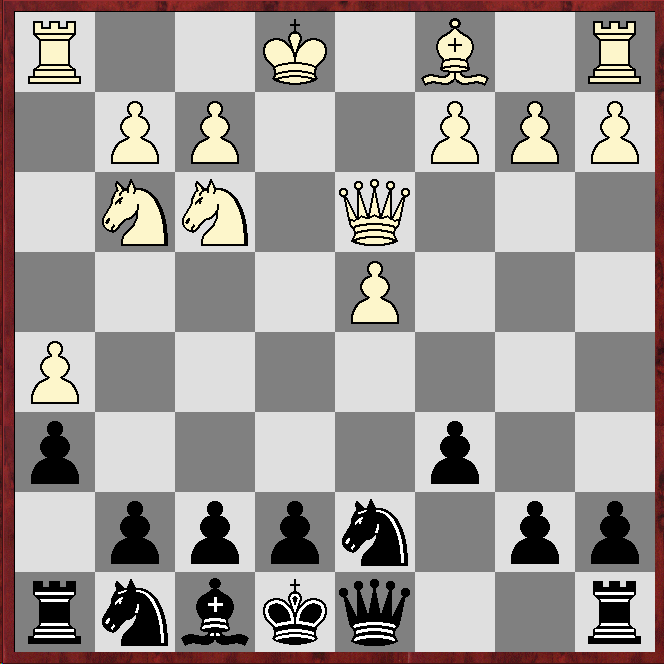
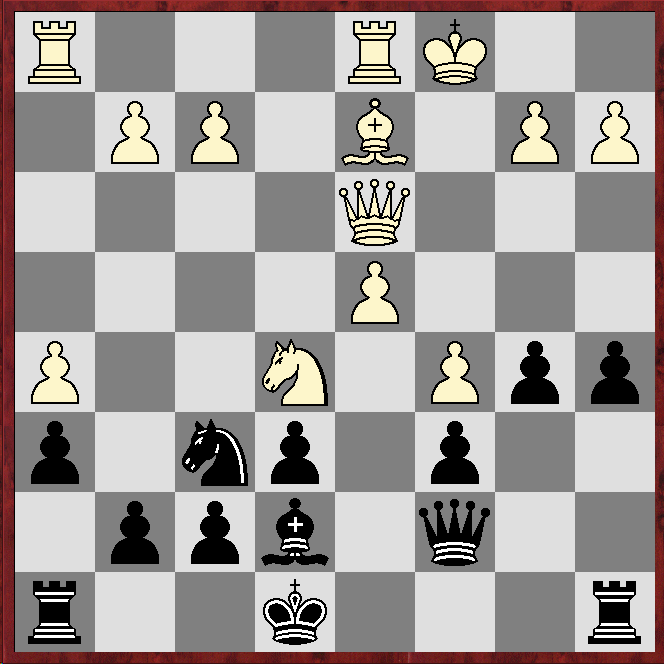
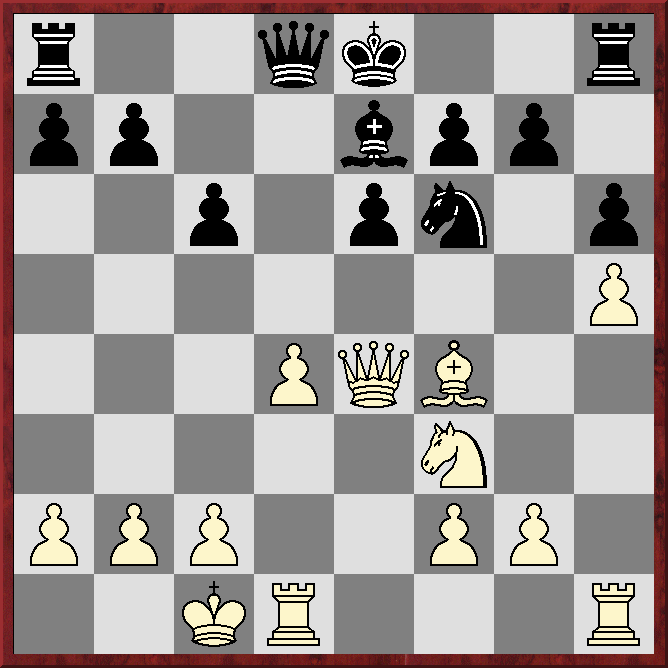
Black has just played 23...Ra8-c8 in Spanton (1947 ECF/1982 Fide) - Peter Varley (no ECF/2117 Fide)
*****
*****
*****
*****
*****
White's pawn-structure is inflexible, but the e3-c5 chain does a good job restricting the bishop, which otherwise would combine well with the black rooks.
White has two targets - the backward c pawn and the f pawn on a half-open file.
I chose to concentrate on the latter, starting with 24.Rhf1, which is a solid approach in that Black is obliged to take precautions for the f pawn's safety.
But Stockfish17 and Dragon1 much prefer queenside play with 24.a4!?, which starts to try to get at c6 from the flank.
Indeed, given long enough to consider the position, the engines at times come to view the game as positionally won for White, although they fluctuate between that evaluation and awarding White 'only' the upper hand.
My move led to a draw just 11 moves later, which is a good result for a 1982 against a 2117, particularly as Varley went on to claim outright third in the tournament, gaining 20.6 elo and finishing eight places above his seeding.
And it could be argued that while 24.a4!? may be the better move, it does not restrict Black as much as my choice does, and so was, in a practical sense, the riskier play when outrated by 135 elo.
But knowing what I know now, I would play 24.a4!? if the position ever arose in one of my games again.
LESSON: good results are nice, but excellent results require ambitious play.

Tuesday, 5 August 2025

British 65+ Championship Round Two

FACED a Welsh Fide master.

Spanton (1982) - Peter Varley (2117)
Caro-Kann Classical
1.e4 c6 2.d4 d5 3.Nc3 dxe4 4.Nxe4 Bf5
This has almost become a sideline since the rise of 4...Nf6 5.Nxf6+ exf6.
5.Ng3 Bg6 6.Nf3 Bg6 7.h4 h6 8.h5 Bh7 9.Bd3 Bxd3 10.Qxd3 e6
This tabiya occurs 15,337 times in ChessBase's 2025 Mega database
*****
*****
*****
*****
*****
11.Bd2
11.Bf4 has been touted as more accurate, although I have never understood why.
11...Ngf6 12.0-0-0 Be7 13.Ne4!?
Slightly more popular in Mega25 is 13.Kb1.
13...Nxe4 14.Qxe4 Nf6 15.Qe2 Qd5 16.c4 Qe4 17.Qxe4 Nxe4 18.Be3 Nd6!?
The main line in Mega25 runs 18...0-0 19.Ne5 Rfd8 20.g4, when Stockfish17 and Dragon1 reckon White has at least a slight edge.
The engines suggest 18...f5!?, when the main line runs 19.Nd2 Nxd2 20.Rxd2, the engines claiming Black is equal.
19.b3 b5!? 20.c5 Nf5 21.g4!? Nxe3 22.fxe3 0-0
Now both sides have castled, how would you assess the position?
*****
*****
*****
*****
*****
Black has the minor piece that usually cooperates better with rooks, but there is a lot of pawns on the board, restricting the action of long-range pieces. In particular the white pawn-chain e3-c5, although a target for the bishop, for the moment at least blocks the bishop's freedom of play, and c6 is weaker than e3. The engines give White the upper hand.
23.Ne5 Rac8
The engines suggest 23...Rfc8!?, and if 24.Rhf1 then 24...Bf6!?, the point being 25.Nd7?! runs into 25...Bg5, when Black is at least equal, not least because 26.Rde1?? loses to 26...f6, trapping the knight.
24.Rhf1
Possibly stronger is 24.a4!? with queenside play.
24...Bg5 25.Rde1 Rc7 26.Kc2 Bf6 27.Nd3
The engines suggest 27.Nf3 or 27.Rd1.
27...Rd8 28.Rf3 a5 29.a3 Rcd7 30.Ref1 e5!?
How should White respond?
*****
*****
*****
*****
*****
31.Nxe5
On 31.dxe5 there seem to be several equalising lines, eg 31...Bg5 32.Rd1 Rd5 33.b4 axb4 34.axb4 Ra8 35.Kb3, when the engines reckon Black has full compensation for a pawn.
31...Bxe5 32.dxe5 Rd2+ 33.Kc1 Ra2 34.Rxf7 Rdd2 35.e6 Rac2+ ½–½

Monday, 19 February 2024

Cambridge Round One

Spanton (1916 ECF/1766 Fide) - Norman Hutchinson (1979 ECF/1962 Fide)
Caro-Kann Classical
1.e4 c6 2.d4 d5 3.Nc3 dxe4 4.Nxe4 Bf5 5.Ng3 Bg6 6.Nf3 Nd7 7.h4 h6 8.h5 Bh7 9.Bd3 Bxd3 10.Qxd3
There are 23,714 examples of this position in Chessbase's 2024 Mega database
*****
*****
*****
*****
*****
*****
10...e6 11.Bf4 Qa5+ 12.Bd2 Bb4 13.c3 Be7 14.c4 Qc7 15.0-0-0 Ngf6 16.Ne4 b5 17.c5!?
Giving up the d5 square, but keeping lines closed on the queenside and hoping to later use the d6 square.
17...a5 18.Nxf6+
This may be a novelty. Susanto Megaranto (2492) - Mohammed Al-Sayed (2486), Asia Classical (Doha, Qatar) 2006, went 18.Kb1 a4 19.Nxf6+ Nxf6 20.Ne5 Nd5, with an equal game, according to Stockfish16 and Komodo14.1 (½–½, 67 moves).
18...Nxf6 19.Ne5!?
How should Black respond?
*****
*****
*****
*****
*****
19...Rd8?!
The engines reckon best-play runs 19...Bxc5 20.Ng6 fxg6 21.Qxg6+ Qf7 22.dxc5 0-0 with equality.
20.Qg3 Rxd4?!
The engines are not keen on this, but cannot decide what is best, suggestions including 20...Rf8!?, 20...Rg8, 20...Bf8 and 20...Rh7.
21.Qxg7
Almost certainly better is the engines' 21.Bxa5!? Rxd1+ 22.Rxd1, when 22...Qxa5? fails to 23.Nxc6. Instead Black should perhaps play 22...Qb8, but the engines reckon White is winning, eg 23.Nxc6 Qxg3 24.fxg3 with strong queenside play.
21...Rh7
The engines prefer 21...Rf8!?, claiming complete equality, eg 22.Rhe1 Rd5 23.Ng4 Nxh5 24.Qxh6 Rg8 25.f3 Qg3, but the position remains sharp.
22.Qg3 Nd7?
Probably best is the engines' 22...Bxc5 23.Bc3 Rxd1+ 24.Rxd1 Be7, although they reckon White has more than enough compensation for a pawn.
White to play and gain a winning advantage
*****
*****
*****
*****
*****
23.Nxd7?
I rejected 23.Qg8+ because of 23...Nf8, but the engines reckon 24.Bc3! wins, eg 24...Rd5 25.Rxd5 cxd5 26.Kb1! Qxc5 27.Ng6! fxg6 28.hxg6. Possibly even stronger is their other main line, 23.Bc3! Qxe5 24.Qg8+ Bf8 25.Bxd4 Qg5+ 26.Qxg5 hxg5 27.g4 Nxc5 28.Bxc5 Bxc5 29.Rd2, when Black does not seem to have enough for the exchange.
23...Qxg3 24.fxg3 Rxd7 25.Bxa5 Rxd1+ 26.Rxd1 Rg7
Black is temporarily a pawn down, but that will not last, and the ending is easier for Black to play
*****
*****
*****
*****
*****
27.Bd2 Rxg3 28.Bxh6 Rxg2
How should White continue?
*****
*****
*****
*****
*****
29.Bf4?!
The engines reckon 29.Rh1! just about holds, but they also reckon 29.Rd2!? is better than the text.
29...Rg4 30.Bd6 Bg5+
Also strong is 30...Rc4+ 31.Kb1 Bxd6 as 32.cxd6? Rh4 is hopeless, but 32.Rxd6 Rxc5 33.h6 Ke7 34.h7! Rh5 35.Rxc6 Rxh7 36.Rc5 b4 is also very difficult for White, eg 37.Rc4 b3! 38.axb3 Kd6, when Black's connected passers are much better than White's doubled isolanis.
31.Kc2 Rh4
The engines' 31...Rc4+! obliges White to block the third rank with 32.Kb3 or 32.Kd3, reducing White's counterplay, while they reckon even worse is 32.Kb1?!
32.Rd3 Rxh5 33.Ra3 f5 34.Ra8+?!
Probably better is immediately going after the c6 pawn with 34.Ra6.
34...Kf7 35.Rf8+ Kg7 36.Re8 f4!?
This wins, according to the engines.
37.Rxe6 Rh2+ 38.Kd3
Black to play and win
*****
*****
*****
*****
*****
38...Kf7?
Also insufficient, it seems, is 38...Rxb2?! 39.Be5+ Kf7 40.Rxc6 Rxa2 as White has 41.Rb6, but winning is 38...Rh3+ as the f pawn cannot be stopped.
39.Re2
Stockfish16 reckons 39.Bxf4!? Bxf4 40.Rxc6 is also completely equal, but Komodo14.1 gives Black a slight edge.
39...Rh3+ 40.Ke4 Re3+!? 41.Rxe3 fxe3 42.Kd3 Ke6 43.b3
Other moves also draw, eg 43.a3 e2!? 44.Kxe2 Bc1 45.b3 Bxa3 46.Kd3 Kd5 47.Kc3 Bxc5 48.Bxc5 Kxc5 49.b4+ with a drawn pawn-ending.
43...b4 44.Bf8 Kd5 45.Bd6 Bh6 ½–½

Tuesday, 8 August 2023

Olomouc Highlights III

IT was in the last round of the 2014 Olomouc open that I first played Jiří Navrátil (the one born in 1966, that is - Fide has three other players with the same name).

Spanton (1976) - Navrátil (2087)
Veresov/Liberated Bishop
1.d4 d5 2.Nc3 Bf5 3.Bg4!?
With the black light-square bishop on f5, it probably makes sense to go after it with 3.f3, or go for a Jobava-Prié setup with 3.Bf4.
3...c6!?
This is the most popular move in ChessBase's 2023 Mega database, with 134 examples, ahead of the 116 examples of 3...h6. Perhaps surprisingly there are only 25 games with 3...f6.
4.e3 Nd7 5.Nf3 Ngf6 6.Bd3 Bg6 7.0-0
Kurt Richter, after whom the Veresov Opening is often also named, played 7.Qe2 in a game at the 1930 Olympiad.. But if he was thinking of castling long, he thought better of it after 7...Qb6, preferring 8.Rb1 Bh5 9.0-0.
7...e6 8.Ne5 Be7
How should White proceed?
*****
*****
*****
*****
*****
9.Nxg6!?
White gains the bishop-pair, but castling kingside and then half-opening the h file for the black king's rook is risky.
9...hxg6 10.Bf4!?
Stockfish16 and Komodo14.1 do not like this, although they do not agree on what White should play.
10...Nb6 11.a4 Bd6 12.Qf3 Qc7 13.Rfe1 a5 14.Ne2 0-0-0!?
Now the players have castled on opposite sides, how would you assess the middlegame?
*****
*****
*****
*****
*****
Neither king is immediately endangered, but neither is completely safe. Meanwhile White's bishop-pair is unlikely to be a factor, and is unlikely to exist much longer. The engines reckon the position is equal.
15.c3 g5 16.Bxd6 Qxd6 17.Qg3 Qxg3 ½–½
A strange time for a higher-rated player to be offering a draw, but perhaps it had something to do with this being the last round.

Two years later we again met in the Olomouc open, this time in the fifth round.
Spanton (1923) - Navrátil (2056)
Caro-Kann Classical
1.d4 d5 2.Nc3
Presumably I was satisfied with how the opening went in our previous game, but now JN varies.
2...c6!? 3.e4
I am fairly sure I knew my opponent normally met 1.e4 by playing the Sicilian, so it seemed sensible to switch to an e-pawn opening, namely the Caro-Kann, with which he might well be unfamiliar.
3...dxe4 4.Nxe4 Bf5
JN offered a draw, perhaps confirming my hope he was on unfamiliar ground.
5.Ng3 Bg6 6.Nf3 e6!?
The main continuation is 6...Nd7, but the text is also popular.
7.Ne5 Nd7 8.Nxg6
Winning the bishop-pair, much as in our previous encounter, but with a big difference - I have not castled.
8...hxg6 9.Bd3 Ngf6 10.c3 Qc7 11.Qf3 Bd6 12.Bg5
My notes show a game on an adjacent board reached the same position, but continued 12.h3.
What should Black play?
*****
*****
*****
*****
*****
12...Nh5!?
The engines strongly dislike this, preferring 12...c5, 12...Qb6 or 12...e5!?
13.Ne4 Be7!? 14.Bxe7 Kxe7 15.g3
More-or-less ensuring the black king's knight will have to spend a tempo going back to f6.
15...Qa5!? 16.h4 Qd5 17.0-0-0!?
Can Black safely grab the a2 pawn?
*****
*****
*****
*****
*****
17...Nhf6
This is the engines' second choice, behind 17...Qxa2!?, although after the latter is executed on the screen their evaluations fluctuate quite a bit. One line runs 18.Ng5 Nhf6 19.Rhe1 Rhe8 20.Kc2 Kf8 21.Ne4, when White has full compensation for a pawn, according to the engines.
18.Rhe1!?
Renewing the offer, but the engines reckon White is at least slightly better after 18.Kb1.
18...Nxe4
The engines again prefer immediately capturing the a2 pawn.
19.Bxe4 Qxa2 20.d5!? cxd5 21.Bxd5
The engines reckon Black has only one good continuation
*****
*****
*****
*****
*****
21...Qa5?
This is the worst of the four plausible queen moves, according to the engines. They give 21...Qa1+ 22.Kc2 Qa4+ 23.Kb1, after which they reckon White has a slight edge.
22.Bxb7
Missing 22.Bxe6!! fxe6 23.Rxd7+! Kxd7 24.Qcb7+ with a winning attack, eg 24...Kd6 25.Rd1+ Ke5 26.Qxg7+ Kf5 27.g4+ Kf4 28.Qd4+ Kf3 29.Qd3+ Kxg4 30.Rg1+ Kf4 31.Qd4+ Kf5 32.Rg5#.
22...Rad8 23.Qg4?
The engines reckon White may be slightly better after 23.Qc6.
23...Ne5?
Black is much better after 23...Rb8 as, if the bishop moves, Black has 24...Qa1+ followed by capturing on b2. If 24.Qf3, then 24...Nc5 wins. Perhaps best is the engines' 24.Qd4!? Rxb7 25.Rxe6+ fxe6 26.Qxg7+ Ke8! 27.Qxh8+, but after 27...Nf8 White does not have enough for a knight.
24.Qd4 Rxd1+ 25.Rxd1 Rd8 26.Rxd8 Kxd8 27.Qd4+ Ke7 28.f4 Nd7 29.Bc6 Nf6
How would you assess this ending?
*****
*****
*****
*****
*****
It is fairly well-known that queen and knight often make a better partnership than queen and bishop, but here the most important factor may be that neither king is very safe. Meanwhile White has a protected passed pawn, although it is unlikely to move far, if at all, while queens remain on the board. The engines reckon the position is equal.
30.g4!? Qb6!?
Both the text and 30...Nxg4 31.Qd7+ Kf6 32.Qd4+ are completely equal, according to the engines.
31.Qxb6 axb6
Is the position really still completely equal?
*****
*****
*****
*****
*****
It seems so, or at least the engines reckon it is. Ture, White no longer has a passed pawn, but rival pawn-majorities nearly always favour a bishop over a knight, and I cannot see why that is not the case here.
32.Bf3 Kd6 33.Kd2 Nd5!?
This is Stockfish16's top choice. Komodo14.1 at first condemns the move, but comes to agree the position remains completely equal.
34.Bxd5 Kxd5
Komodo14.1 prefers 34...exd5!?, but Stockfish16 reckons both moves keep the game level.
35.Kd3 e5 36.c4+ Kd6 37.fxe5+ Kxe5 38.b4
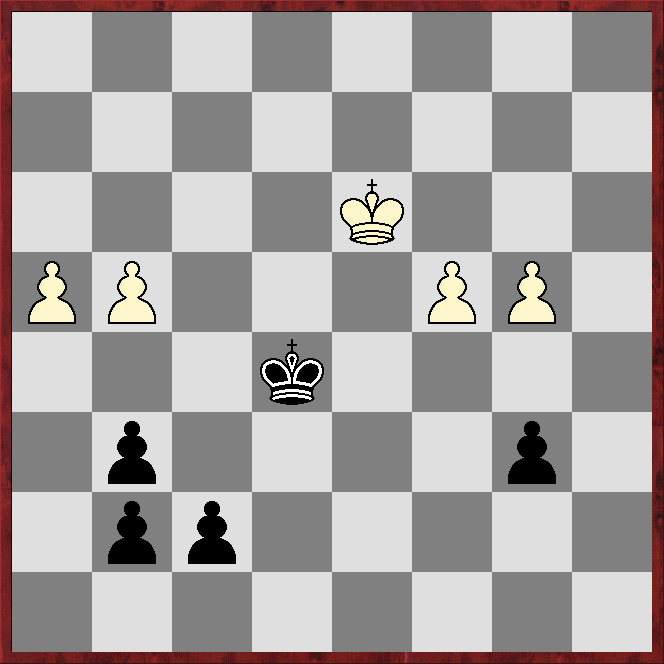
Black to play and draw
*****
*****
*****
*****
38...f6?
It seems Black had four drawing moves: 38...f5, 38...Ke6, 38...Kd6 and 38...Kf6. I expected 38...f5, eg 39.gxf5 gxf5, after which the two pawn-majorities cancel out each other.
White to play and win
*****
*****
*****
*****
*****
39.Ke3
It is that simple.
39...Ke6
After 39...f5 40.gxf5 gxf5 White wins with 41.h5!, eg 41...f4+ 42.Kf3 Kd4 43.Kxf4 Kxc4 44.Kg5 Kxb4 45.Kg6 Ka3 46.Kxg7 b5 47.h6, after which White gets a winning queen-v-pawn ending.
40.Kf4 Kd6 41.h5 f5
Or 41...gxh5 42.gxh5 Ke6 43.c5 etc.
42.hxg6 fxg4 43.Kxg4 Ke5 44.c5 bxc5 45.bxc5 1-0

The following year we met in round five of another CzechTour event, the Highlands Open in Třebíč, but with colours reversed..
Navrátil (2013) - Spanton (1858)
London System
1.d4 d5 2.Nf3 e6 3.c3!?
This may simply have been to get me out of book, but it has been played by grandmasters - indeed there are 1,123 examples of the move in Mega23.
3...Nc6!?
This scores just 28% in Mega23.
4.Bf4 Bd6 5.e3!?
This is the engines' top choice.
5...Nf6
The game has transposed to a position occurring 224 times in Mega23.
6.Nbd2 Nh5!?
This was probably a novelty, and apparently has not been repeated since - at least this game is the only example in Mega23.
7.g3!? Nxf4 8.exf4!? Qe7 9.Bd3 f6 10.Qe2 e5 11.fxe5 fxe5 12.Bb5?!
White should probably continue exchanging on e5.
12...e4 13.Nh4 0-0 14.0-0-0!?
Now both sides have castled, how would you assess the position?
*****
*****
*****
*****
*****
Positions with opposite-side castling are nearly always hard to judge as so much can hinge on a tempo gained or lost, but perhaps the most important factor is coming up with the right plan and executing it correctly. For what it is worth, the engines reckon Black is much better.
14...a6 15.Bxc6?!
Now Black gets a half-open file to White's king. The engines prefer 15.Ba4.
15...bxc6 16.Ng2
After making this move, JN pressed his clock and offered a draw.
16...a5 17.Ne1 Ba6 18.Qe3 Rab8 19.f3?
This allows a quick finish, but the engines reckon White is positionally lost anyway.
19...Ba3! 20.Nb1
Or 20.Nb3 a4 etc.
20...Rxb2!? 21.Nxa3 Qxa3 0-1

Friday, 8 July 2022

South Wales Round Three

PLAYED this evening.
St Illtyd's Church seen through the gateway of Bridgend's Newcastle

Spanton (1889) - Alex Bullen (2106)
Caro-Kann Classical
1.e4 c6 2.d4 d5 3.Nc3 dxe4 4.Nxe4 Bf5 5.Ng3 Bg6 6.Nf3 Nd7 7.h4 h6 8.h5 Bh7 9.Bd3 Ngf6!?
This has been played by grandmasters but the mainline in ChessBase's 2022 Mega database runs 9...Bxd3 10.Qxd3 e6 11.Bd2 Ngf6 12.0-0-0 Be7, which Stockfish15 and Komodo13.02 reckon gives equal play.
10.Bxh7 Nxh7 11.Bf4
11.Qd3!? and especially 11.Qe2 are popular alternatives, the former offering the chance to return to the mainlines after 11...Nhf6.
11...e6 12.Ne4!?
The engines reckon White is slightly better after 12.Qe2 or 12.0-0.
12...Ndf6 13.Qe2
Not 13.Nc5? Bxc5 14.dxc5 Qa5+ and 15...Qxc5.
13...Nxe4 14.Qxe4 Nf6 15.Qe2 Bb4+!?
Weakening the white queenside in anticipation of White castling long.
16.c3 Be7 17.Ne5 Nd5
Gevorg Harutjunyan (2417) - Alexandr Kharitonov (2523), Ilyumzhinov Cup (internet) 2006, saw 17...0-0 18.0-0-0 Qd5 19.Kb1 Qe4+ 20.Qxe4 Nxe4 21.Nd3 with a slight edge for White, according to the engines (1-0, 52 moves).
18.Bd2 a5 19.a3
Preparing c4, but Komodo13.02 wants the immediate 19.c4, and if 19...Nb4 then 20.0-0 or 20.Bc3.
19...Bg5 20.Rd1
The engines prefer 20.0-0-0!?
20...Bxd2+ 21.Rxd2 0-0 22.c4 Nb6!?
The engines prefer 22...Nf6 or 22...Ne7.
23.Rh3 Nd7 24.Rg3
How should Black defend against White's kimgside pressure?
*****
*****
*****
*****
*****
24...f5?!
Probably better is 24...Nf6, the point being 25.Ng4 can be met by 25...Nxg4 (not 25...Nxh5? 26.Nxh6+ Kh7 27.Qxh5 gxh6 28.Rdd3 with a winning attack) 26.Qxg4 Qf6 27.Rdd3 R(either)d8 with equality.
25.Nxd7?!
Almost certainly better is 25.Ng6 Re8 26.Re3.
25...Qxd7 26.Rg6 Rae8
How should White proceed?
*****
*****
*****
*****
*****
27.Qe5?!
This allows dangerous counterplay, whereas 27.f4 ties Black down, albeit Black is holding, according to the engines.
27...f4 28.Qe4!?
Not 28.Qxa5? Rf5 29.Qc3 Rxh5 as Black gets a strong attack.
28...Rf5 29.Rg4?!
Probably better is 29.f3 or 29.Re2.
29...e5
Possibly stronger is 29...f3!? 30.gxf3 Rxh5.
30.d5 Rxh5 31.f3?
The engines reckon 31.Rg6 gives enough compensation for the pawn.
31...Rd8?
Black has a large advantage, according to the engines, after 31...Rh1+, eg 32.Ke2 g5 or 32.Kf2 Qd6.
32.Rg6 Qe7 33.dxc6 Rh1+ 34.Ke2 Rxd2+ 35.Kxd2 bxc6 36.Rxc6 Qd7+
How should White respond?
*****
*****
*****
*****
*****
37.Qd5+
Immediately losing is 37.Kc3?? Rc1+ 38.Kb3 Qd1+ 39.Ka2 Ra1#, while 37.Kc2? Qd1+ 38.Kc3 Qc1+ 39.Kb3 (39.Qc2?? Qe3+ 40.Qc3 Rc1+ etc) Qe3+ 40.Ka4 (best) Qxe4 41.fxe4 Rg1 gives Black a better rook-and-pawn ending than in the game.
37...Qxd5+ 38.cxd5 Rg1 39.Kd3 Rxg2 40.b4 axb4 41.axb4 Rb2
What should White play?
*****
*****
*****
*****
*****
42.Ke4!
This seems the best try as both 42.Kc4 e4 43.fxe4 f3 44.Kd3 f2 45.Rc1 and 42.Kc3 Rf2 43.b5 Rxf3+ are dead-equal, according to the engines.
Black to play and draw (probably)
*****
*****
*****
*****
*****
42...Rxb4+?
This loses whereas 42...Re2+ 43.Kf5 e4 seems to hold, eg 44.fxe4 f3 45.Rc1 f2 46.Rf1 g5!, or 44.d6!? Kf7 45.Rc7+ Kf8 46.Re7+ Kd8 47.Rxe4 g6+!? 48.Kxf4 Rb2, although neither line is simple to see over-the-board.
43.Kxe5?
This may look natural but it allows Black to draw. Winning is 43.Kf5, after which the d pawn races through to queen, helped by the white king using the e pawn as a shield from checks. If 43...Kf7 then 44.Rc7+ is very strong.
43...Rb8?
Passive. The rook should stay active, so the engines reckon most moves along the b file are good enough, but easiest is 43...Rb3, eg 44.d6 Kf7 45.d7 Re3+ 46.Kxf4 Rd3 etc. Indeed White could carelessly lose in this line, ie 46.Kd6?! Rd3+ 47.Kc7?? (47.Ke5 probably holds) Ke7 etc. Another try after 43...Rb3 is 44.Kxf4 but simply 44...Kf7 is dead-equal.
White to play and win
*****
*****
*****
*****
*****
44.d6
Other moves draw, but now the position is hopeless for Black.
44..Re8+ 45.Kd5 Kf7 46.d7 Re3 47.Rd6 Rd3+ 48.Ke5 1-0

Sunday, 30 January 2022

Kent Debut

RECENTLY Tim Gluckman, captain of Kent U2050, asked if I would like to play for his team as my membership of Hastings & St Leonards, who are in the Kent League, makes me eligible.
I was happy to agree, not least because Sussex, my previous county, only have one out of a possible five sides in the Southern Counties Chess Union championships.
I made my debut for Kent U2050 yesterday on board three away to Essex.

Spanton (2042 ECF) - Roman Ismailov (1982 ECF)
Caro-Kann Classical
1.Nc3 d5 2.d4 c6 3.e4 dxe4 4.Nxe4 Bf5 5.Ng3 Bg6 6.Nf3
More popular is 6.h4, but the two moves often transpose.
6...Nd7 7.h4 h6 8.h5 Bh7 9.Bd3 Bxd3 10.Qxd3 Ngf6
Here 10...e6 is more popular, but again transpositions are frequent.
11.Bf4
More common in ChessBase's 2022 Mega database is 11.Bd2.
11...e6 12.0-0-0
Komodo12.1.1 narrowly prefers the much-less popular 12.0-0!?
12...Be7 13.Ne4 Nxe4 14.Qxe4 Nf6
How should White proceed?
*****
*****
*****
*****
*****
15.Qe2!?
This involves a positional pawn sacrifice, and is the most popular move in Mega22. More solid is 15.Qd3, when 15...Qa5 16.Kb1 Nxh5?? fails to 17.Bd2.
15...Qa5 16.Kb1 Nxh5!?
Komodo12.1.1 and Stockfish14.1 prefer 16..Qb5.
17.Bd2 Qf5
Dmitry Jakovenko (2691) - Victor Bologan (2658), Corus B (Wijk aan Zee, Netherlands) 2007, saw 17...Qd5!? 18.Ne5 Nf6 19.f3 b5 20.g4 Rf8!? 21.Bf4 b4, when the game was prematurely agreed drawn in a position probably favouring White.
18.Ne5 Nf4
18...Nf6? 19.Rde1 gave White a large advantage, according to the engines, in Robin Swinkels (2422) - Jonathan Grant (2283), EU Championship (Drseden) 2007, and Swinkels went on to win on move 33.
19.Bxf4!
All three games in Mega22 to reach the position after 18...Nf4 saw 20.Qf3 Nd5, when Black is equal, according to the engines, and would have at least a slight edge after 20...Ng6, they reckon.
19...Qxf4 20.Rh3 Bf6 21.g3 Qf5
What should White play?
*****
*****
*****
*****
*****
22.g4?
Much better is 22.Rh5, when RI reckoned he intended 22...Qh7, claiming Black would be better. However the engines give 23.d5! with a strong initiative, eg 23...Bxe5 24.Rxe5 etc or 23...cxd5 24.Qb5+ etc. A possible improvement is the engines' 22...g5, but 23.f4 seems strong, eg 23...Qh7 24.d5 Bxe5 25.d6 or 24.Rdh1 gxf4 25.d5, although these lines are less clear.
22...Qf4 23.Rb3?!
White has full compensation for a pawn after 23.Rf3, according to the engines.
How should Black proceed?
*****
*****
*****
*****
*****
23...b6?
RI explained in the postmortem he meant to play 23...Rb8, the point being 24.Nxc6?? loses the knight to 24...bxc6 as the black queen defends the black queen's rook. Instead White should reply 24.Rf3 with good compensation for a pawn, according to the engines, which reckon best is 23...Bxe5 24.dxe5 with at least equality after 24...b5 or 24...0-0!?
24.Nxc6
Even stronger seems to be the engines' 24.Rf3!? Qh2 25.Qe4.
24...0-0 25.Ne5?
The engines much prefer 25.Re3 or 25.c4.
25...Rfd8
Very good for Black is 25...Bxe5!? 26.dxe5 Rfd8, according to the engines.
26.Rf3 Qh2 27.Rfd3
The engines prefer 27.Re3 so as to meet 27...Bxe5 with 28.Rxe5.
27...Rac8 ½–½
White, if anyone, is slightly better after 28.Re3, according to the engines.
Essex won the match 9.5-6.5.

Thursday, 6 January 2022

Opening Nuance

MY round-three game at Alicante was marred by a bizarre blunder (see https://beauchess.blogspot.com/2021/12/alicante-round-three.html for details), but in round four my opponent played an interesting wrinkle for black in the main line of the Classical Variation of the Caro-Kann.
The game began 1.d4 d5 2.Nc3 c6 3.e4 dxe4 4.Nxe4 Bf5 5.Ng3 Bg6 6.h4 h6 7.Nf3 Nd7 8.h5 Bh7 9.Bd3
Position after 9.Bd3
Almost 22,000 games in ChessBase's 2022 Mega database have seen the continuation 9...Bxd3. But there are 158 games with what my opponent played, 9...Ngf6!? 
It would be easy to dismiss 8...Ngf6!? as simply inferior, but if so it is an inferior move that has been played by such famous names as Karel Opočenský, David Bronstein, Gedeon Barcza, Bent Larsen, Ian Rogers, Alexander Grischuk, Alexey Dreev and Šarūnas Šulskis.
After 10.Bxh7 Nxh7 the continuation 11.Qd3 Ngf6 is a transposition to a main line. However Black has independent lines, the most interesting of which might seem to be 11...e6, when the most-popular sequence in Mega22 is 12.Bd2 Be7 13.0-0-0, at which point 13...Ng5?!14.Nxg5 Bxg5 runs into 15.f4, when White has an initiative. So Black should prefer 13...Nhf6, which is a transposition to a main line, as is 13...0-0 14.Ne4 Nhf6. Another independent continuation is 11...Qc7, when Jacek Bielczyk (2410) - Miroslav Filip (2475), Rubinstein Memorial (Polanica-Zdrój, Poland) 1979, saw 12.Rh4!? e6 13.Bf4 Bd6 14.Bxd6 Qxd6 15.Ne4 Qe7 16.Qa3?! Qxa3 17.bxa3, after which a quick draw was agreed.
I played 11.Qe2, reasoning that pressure from the queen down the e file could prove significant. My opponent replied 11...e6.
How should White proceed?
*****
*****
*****
*****
*****
12.Bf4
This has been played by Kurt Richter, Zbyněk Hráček and Gennadi Ginsburg, none of whom is exactly a slouch, but after 12...Be7 13.0-0-0 Nhf6 14.Rhe1 Nd5 I felt obliged to play 15.Bd2. The continuation can be seen at https://beauchess.blogspot.com/2021/12/alicante-round-four.html.
Although the situation is not clear-cut - the black king's knight in the game became a target for the pawn-push c4 - it is certainly arguable that 12.Bd2!? may be a tempo-saving improvement.
It appears more than twice as often in Mega22, scoring 65%, much better than 12.Bf4's 41%.
After 12.Bd2!? the main continuation goes 12...Be7 13.0-0-0 0-0, reaching a position that occurs 17 times in Mega22.
Position after both sides have castled
One game saw 14.Ne5, but the others were evenly split between 14.Ne4 and 14.Kb1.
My main analysis engines Stockfish14.1 and Komodo12.1.1 are happy with all three moves, each time slightly preferring White, although positions with opposite-side castling are often difficult to assess with a great deal of confidence.
CONCLUSION: It is extremely unlikely there is a refutation of 9...Ngf6!? However the continuation 10.Bxh7 Nxh7 11.Qe2 appears promising for White.

Tuesday, 28 December 2021

Alicante Round Four

PLAYED this morning.

Spanton (1829) - Ronald Staneke (1336)
II Open Internacional de Ajedrez Dama Negra
Caro-Kann Classical
1.d4 d5 2.Nc3 c6 3.e4 dxe4 4.Nxe4 Bf5 5.Ng3 Bg6 6.h4 h6 7.Nf3 Nd7 8.h5 Bh7 9.Bd3 Ngf6!?
This somewhat unusual continuation has been tried by Alexander Grischuk, Alexey Dreev, Šarūnas Šulskis and other strong players.
10.Bxh7 Nxh7 11.Qe2
11.Qd3 Nhf6 is a transposition to the mainline position normally reached by the move-order 9...Bxd3 10.Qxd3 Ngf6. I felt the queen would be more usefully employed putting pressure on the e file.
11...e6 12.Bf4
The less-active 12.Bd2!? is preferred by Stockfish14.1, but Komodo12.1.1 prefers the text. Both engines also like castling.
12...Be7 13.0-0-0 Nhf6
This position is normally reached with Black to move, as White usually spends two tempi (Qd1xd3 and Qd3-e2) to get the queen to e2
14.Rhe1
14.c4, to prevent Black's next move, is possible, but I did not like the look of a quick ...b5.
14...Nd5 15.Bd2
This is the disadvantage of having played the bishop to f4 instead of immediately to d2 at the 12th move. However 12 .Bd2 gives Black options not available after 12.Bf4, eg 12...Qc7, which is Komodo12.1.1's choice. Stockfish14.1 prefers 12...Be7, which is the most-popular move in ChessBase's 2022 Mega database.
15...0-0 16.Kb1 Bb4?!
Black is already behind in development, and this does not help. The engines suggest developing the queen with 16...Qb6 or starting to bring the queen's rook into play with 16...a5.
17.c3 Be7
Black can argue his bishop manoeuvre has weakened the white king's position, but almost certainly more significant is that it gives White an initiative.
18.c4 N5f6 19.Bc3 b5?
It is natural to want to open lines on the queenside, but Black's position is not ready for this thrust. The engines like 19...Re8 with maybe a slight edge for White.
20.cxb5?!
Almost certainly better is 20.d5!?, which, after 20...cxd5 21.cxd5, transposes to the game.
20...cxb5
Played automatically, or so it seemed, but Black should have muddied the waters with the engines' 20...Nd5!, when the position is unclear. Komodo12.1.1 gives best-play as 21.bxc6 Nxc3+ 22.bxc3 Qb6+ 23.Ka1 Qxc6, claiming equal chances (Stockfish14.1 reckons Black is better). Stockfish14.1 gives best-play as 21.Ne4 bxc6 22.Qxc6, claiming dead-eye equality, a verdict with which Komodo12.1.1 agrees.
21.d5!
How should Black reply?
*****
*****
*****
*****
*****
21...Qb6!
Giving up a pawn is Black's best chance, according to the engines. They reckon the main alternative, 21...Nxd5 22.Rxd5 exd5 23.Qxe7, is much worse, even though materially Black is only down bishop and knight for rook and pawn.
22.dxe6 fxe6 23.Qxe6+ Qxe6 24.Rxe6 Bc5 25.Bd4 Ng4?
Best, according to the engines, is 25...Rad8, although that leaves White a sound pawn up.
How should White proceed?
*****
*****
*****
*****
*****
26.Bxg7!
This seems best, but other moves, eg 26.Rg6 and and 26.Ne5, are also good.
26...Rf7
This is best, according to the engines, eg 26...Kxg7 and 26...Nxf2 are both met by capturing on d7.
27.Rg6
Other moves also win.
27...Rxg7 28.Rxg7+ Kxg7 29.Rxd7+ Kg8 30.Nf5 (1-0, 67 moves).

Tuesday, 31 December 2019

Hastings Continued

Faced a Slovak in round four of Hastings Masters this afternoon.
Spanton (1951/168) - Svetlana Sucikova (2160/196)
Caro-Kann Classical
1.e4 c6 2.d4 d5 3.Nc3 dxe4 4.Nxe4 Bf5 5.Ng3 Bg6 6.h4 h6 7.Nf3 Nd7 8.h5 Bh7 9.Bd3 Bxd3 10.Qxd3
There are more than 19,000 games with this position in ChessBase's 2020 Mega database.
10...e6 11.Bd2
Joe Gallagher in Starting Out: The Caro Kann argues that 11.Bf4 is more precise as it is more active if Black castles short, and he says some players of the black pieces will only castle short if White has played Bd2.
11...Ngf6 12.0-0-0 Be7 13.Ne4
More popular is 13.Kb1, but both moves have been played by lots of strong players.
13...Nxe4 14.Qxe4 Nf6 15.Qe2 Qd5 16.c4 Qe4 17.Qxe4 Nxe4 18.Be3 0-0 19.Ne5 Rfd8 20.g4 Rac8 21.Kb1?!
Decentralising. The main move - we are still in theory - is 21.f3, with the black knight usually retreating to d6. Komodo10 reckons the position is equal, but Stockfish10 gives White a slight edge.
21...Bd6
At last a new move, or at least one not in Mega20. It is Komodo10's choice, but Stockfish10 prefers 21...Bf6.
22.f3 Ng5 23.Bxg5!?
This leaves Black with bishop versus knight with rooks on the board, which usually favours the side with the bishop. However, here the knight is well-placed on the fifth rank, and can only be kicked by weakening the e pawn.
23...hxg5 24.Rhe1 Rc7 25.Kc2 f6 26.Nd3 Kf7 27.c5?!
The engines prefer a move I seriously considered, namely 27.Nc5!? I rejected it because 27...Bxc5 28.dxc5 Rcd7 29.Rxd7+ Rxd7 gives Black the more promising pawn-majority for creating a passed pawn. Komodo10 comes to give Black a slight edge, but Stockfish10 reckons 30.Kc3 equalises.
27...Bg3 28.Re4
Almost certainly better than 28.Rg1?!, which makes it impossible, as far as I can tell, for White to defend the weak d pawn.
28...Rcd7 29.Kc3 Rd5 30.Rd2
Black is clearly better; the only question is whether it is enough for a win.
30...Bc7 31.b4
Can Black get an advantage here?
*****
*****
*****
*****
*****
31...f5?!
The engines give 31...a5 32.a3 b5, when Stockfish10 continues 33.Ne1 e5 34.Rd1 f5 35.gxf5 exd4+ 36.Kc2 Be5 37.Nd3 Bf6 38.bxa5 Ra8 39.Re6 Ra6 40.Rd6 Rxf5 41.Kb3 Rxa5 42.Rxc6 Rxf3 43.Rb6 with advantage to Black. Komodo10 gives 33.f4 f5 34.Ne5+ Bxe5 35.Rxe5 gxf4 36.Rxd5 axb4+ 37.axb4 Rxd5 38.g5 e5 39.dxe5 Rxe5 40.Rd7+ with counterplay for White, but much prefers Black.
32.Ne5+
Now White seems fine.
32...Kf6 33.Ree2 Bb8 34.Kc4 Bc7 35.Kc3 Bb8 36.Kc4 a6 37.Kc3
The engines reckon White is better after 37.Ng6, but I fear I was concentrating so much on avoiding defeat that I rarely looked for ways to get an advantage.
37...Bc7 38.Kc4 Ra8 39.a4 Rad8
39...Bxe5 40.dxe5+ Rxe5 41.Rxe5 Kxe5 temporarily wins a pawn, but White gets strong counterplay with 42.Rd7.
40.a5 Bb8 41.Kc3 Bc7 42.Kc4 Bxe5 43.Rxe5 Kf7 44.Kc3 Ke7!? 45.Rde2 Rxe5 46.Rxe5 Rf8 47.Kd3 fxg4 48.fxg4 Rf3+ 49.Re3 Rf1
49...Rf4 50.Re4 Rxe4 51.Kxe4 Kf6 52.Ke3 e5 53.Ke4 is a draw, but not 53.dxe5+?? Kxe5 etc.
50.Rh3
Active defence.
50...Rb1 51.Kc4 Rc1+ 52.Kd3 Ra1 53.Kc4 Rg1 54.h6 gxh6 55.Rxh6 Kd7
55...Rxg4 56.Rh7+ Kf6 57.Rxb7 is also a draw, according to the engines.
56.Rh7+ Kc8 57.Rh8+ Kc7 58.Rh7+ Kb8 59.Rh8+ Ka7 60.Re8 Rxg4 61.Rxe6 Rg1 62.Re8 g4 63.Rg8 g3 64.Kb3
Not 64.Kd3? g2 65.Ke2 Rb1 66.Rxg2 Rxb4, when only Black can win.
The game finished:
64...Rb1+ 65.Kc3 Rc1+ 66.Kb3 Rg1 67.Kc3 Rc1+ 68.Kb3 Rg1 69.Kc3 g2 70.Kb2 Rd1 ½–½

Friday, 23 August 2019

Northumbria Congress Underway

I FACED a junior in round one of the Northumbria Challengers this evening.
Spanton (1881/168) - Rajeiv Ratnesan (1647/171)
Caro-Kann Classical
1.Nc3 c6 2.d4 d5 3.e4 dxe4 4.Nxe4 Bf5 5.Ng3 Bg6 6.Nf3 Nd7 7.h4 h6 8.h5 Bh7 9.Bd3 Bxd3 10.Qxd3 e6 11.Bd2 Qc7 12.0-0-0 Ngf6 13.Ne4 0-0-0
White to make his 14th move
*****
*****
*****
*****
*****
14.Nxf6!?
More than 2,000 games in ChessBase's 2019 Mega database have White playing g3, but the text has been tried by Spassky and Leko.
14...Nxf6 15.Qe2 Bd6 16.Ne5!?
The most popular move in Mega19 is g3?!, but that loses a clear tempo compared with 14.g3 Nxe4 15.Nxe4 Nf6 16.Qe2. Strong players have preferred Kb1.
16...Rhf8!?
This looks strange, but the idea is to to be able to play ...Nd7 to exchange knights. The analysis engines Stockfish10 and Komodo10 prefer 16....c5.
17.g4!?
This may be a new move. I wanted to free the king's rook from protecting the h5 pawn, but the engines prefer 17.f4 or 17.c4!?
17...Nd7
In the postmortem RR said he should have played 17...c5, when the engines continue 18.Bf4 c4!? 19.Bd2!? Bxe5 20.dxe5 Nd5 21.c3, which they reckon is equal. Part of the reason he did not play 17...c5 was fear of 18.g5!? cxd4 19.gxh6?? Bxe5 20.hxg7 Rg8 21.h6, but the engines point out a complete answer in 21...d3.
18.Rhe1 Kb8 19.Kb1 c5?
By now ...c5 is a mistake. The engines give 19...Nxe5 20.dxe5, although after 20...Bc5 (or 20...Be7), White gets the slightly better game by setting up Hans Kmoch's (in)famous quartgrip with 21.f4.
20.Nxd7+ Rxd7 21.dxc5
Even better was 21.Bc3!, when the engines give best play as 21...c4 22.d5 with a large advantage for White.
21...Bxc5 22.Bc3 Rg8?
The engines reckon Black had to play 22...Rxd1+ 23.Rxd1 f6 24.Qxe6 Bxf2, although White's pieces are better coordinated and it looks like a difficult defence for Black.
23.Rxd7 Qxd7 24.Rd1
An immediate capture on g7 is also good.
24...Qc6 25.Bxg7
Black cannot save the h6 pawn, but made the situation worse with:
25...Bd6? 26.Rxd6 1-0

Friday, 5 July 2019

A Caro-Kann Tabiya

PLAYED last night in the fourth round of the Pimlico Summer open section, which is being held over five consecutive Thursday evenings.
Spanton (171) - Anders Lundback (162)
Caro-Kann Classical
1.e4 c6 2.d4 d5 3.Nc3 dxe4 4.Nxe4 Bf5 5.Ng3 Bg6 6.h4 h6 7.Nf3 Nd7 8.h5 Bh7 9.Bd3 Bxd3 10.Qxd3 e6
This is overwhelmingly the most-popular move in ChessBase's 2019 Mega database.
Grandmaster Joe Gallagher in Starting Out: The Caro-Kann (Everyman Chess, 2002) says 10...e6, 10...Ngf6 and 10...Qc7 are "interchangeable if Black is going to castle queenside, but if he wants to remain flexible on the future home of his king, then 10...e6 and 10...Ngf6 are the better options."
Put like this, it is hard to understand why any strong player would choose 10...Qc7, but it has been a frequent choice of Epishin and has also been played by Korchnoi and Khalifman.
11.Bd2
The most-popular move, but inaccurate, according to Gallagher. He explains: "This move is considered slightly inferior to Bf4 because Black has an easier time in the lines where he castles kingside. The point is that with the bishop on d2, White will have to waste time with Qe2 if he wants to play Ne5, whereas with the bishop on f4 it is possible to play this at once."
What Gallagher means, I believe, is that with the bishop on d2, White would not want to play Ne5 because, after ...Nxe5, dxe5 Qxd3, the queens come off, White gets a backward d pawn and Black gets the d5 square as an outpost for his king's knight. But with the bishop on f4, …Nxe5 can be met by Bxe5.
11...Ngf6 12.0-0-0 Be7
A popular tabiya in the Caro-Kann Classical
There are more than 3,500 games with this position in Mega19. Most popular is 13.Kb1, although Gallagher suggests it is "too slow to cause Black difficulties." In Starting Out he uses a game that saw 13.Qe2 - "White prepares to play Ne5" - the third-commonest move. Other choices by strong players include 13.c4, 13.Rhe1, 13.Rde1 and 13.Nf1!? My choice is second-most popular with almost 1,300 games.
13.Ne4 Nxe4 14.Qxe4 Nf6 15.Qe2 Qd5
Gallagher gives this an exclamation mark. Black's queen attacks a2 and adds to the pressure on h5.
16.c4 Qe4 17.Rhe1!?
Gallagher says "17.Be3 b5! is very dangerous for White," while 17.Qxe4 Nxe4 18.Be3 "is no longer considered a realistic winning attempt."
17...Qxe2 18.Rxe2 0-0-0
The critical and seemingly good 18...Nxh5! was tried in Tim Dean (-) - Zhichao Li (2028), Edmonton Closed 2005. There followed 19.d5 cxd5 20.cxd5 0-0 21.dxe6 fxe6 22.Rxe6 Rac8+ 23.Kb1 Bc5, with an equal position (but 0-1, 49 moves).
19.Ba5 b6 20.Bc3 Bd6
20...Nxh5?! 21.Ne5.
21.Ne5 Bxe5 22.Rxe5 Ng4 23.Re2 Nf6
A tacit offer of a draw.
24.g4 Rd7
If 24...Nxg4, then 25.Rg1 Nf6 26.Rxg7 Nxh5 27.Rxf7 Rd7 28.Rxd7 Kxd7 29.d5 with advantage. This line is pretty forcing, but Black could try 26...Rh7 27.Rxh7 Nxh7, although White's resulting rook-and-bishop combo has good chances of outplaying Black's rook-and-knight.
25.f3 Rhd8 26.Rde1
How would you assess this position, and how should Black proceed?
*****
*****
*****
*****
*****
White's space advantage and superior minor piece (there is a lot of pawns on the board, but the knight is unlikely to find a good outpost) give an advantage - worth from 0.4 pawns (Komodo9) to about 0.75 pawns (Stockfish10). But much manoeuvring is in prospect and there is no need for Black to panic.
26...c5?
A mistaken bid for freedom.
27.dxc5 bxc5 28.Re5 Rd3
The engines suggest Black's best may be to sac the exchange by 28...Rc7!? 29.Ba5 Rd4 30.Bxc7 Rxc4+ 31.Kb1 Kxc7, but then 32.Rc1 forces an exchange of rooks, leaving Black with a pretty hopeless knight-versus-rook ending.
29.Rxc5+ Kb7 30.Ba5 R8d7 31.Rb5+
The engines want White to play the passive 31.Rf1!? I rejected it because of 31...Re3, missing that Black is hardly in a position to double rooks on White's third rank as White replies Rc7+.
31...Ka6 32.Bc3 Rxf3 33.Ree5 Rf1+ 34.Be1??
Self-pinning is very rarely a good idea, and here it is catastrophic. I rejected the winning 34.Kc2 because, after 34...Rf2+ 35.Kb3 Rb7, White's attack has come to an end. This is true - up to a point. White's queenside attack is over, but White can switch to the kingside with 36.g5, eg 36...hxg5 37.Rxg5 Rxb5 38.cxb5+ Kb7, when the engines continue 39.Bxf6 gxf6 40.Rg7 with a large advantage.
34...Nxg4 35.Re2
A humiliating retreat, but the only way to stay in the game as 35.Re4??, for example, hoping for 35...Nf6?? 37.Re3, fails to 35...Nf2.
35...Rc7?!
The engines prefer an immediate 35...Rb7, with a small edge to Black after 36.Ra5+ Kb6. The drawback of the text will be explained later.
36.b3 Rb7
There is a better chance for a tiny edge, according to the engines, with 36...Nf6 or the pin-breaking 36...Rf5!?
37.Ra5+ Kb6 38.Kc2?!
More accurate is 38.Kb2. The point is that if Black proceeds with 38...Rf3, which the engines recommend after the text, White has 39.Rg2.
38...a6
The engines prefer 38...Rf3, when 39.Rg2?? now loses to 39...Ne3+. This seems to be why the engines did not like Black's 35th - it gave White a tempo to free the b2 square for his king!
39.c5+ Ka7 40.Bc3 e5?!
40...Rb5 41.Ra4 Nf6 42.Rc4 is dead equal, according to the engines, despite Black's pawn-plus.
41.b4?!
The simple 41.Bxe5 Nxe5 (not 41...Re7?? 42.Bb8+) 42.Rxe5 is slightly better for White.
41...Rf5?
The rook-and-pawn ending after 41...Rb5 42.Rxb5 axb5 43.Bxe5 Nxe5 44.Rxe5 is even, according to the engines, but looks easier for White to play.
Also reasonable was 41...f6, although White remains more active thanks to his queenside play.
42.c6?
Better was 42.Rd2, threatening Rd6, eg 42...Rf6 43.a4 (threatening 44.b5) Rc7 44.Kb3, with strong pressure.
42...Rc7
Black may also hold with 42...Rb5!?, the engines giving 43.c7 Kb7 44.Rxa6 Kxc7 45.a4 Rd5 46.Ra7+ Kb8! (better than advancing the king, apparently) 47.Re7, with a position hard to assess (the engines vary from preferring White to reckoning Black has equality).
43.b5 Kb6 44.bxa6 Ka7?
Black is in trouble after this. The engines give best play as 44...Rf6 45.Ra4 Rfxc6 46.a7! Rxa7 (46...Rxc3?! costs Black the exchange, although he does get two pawns for it) 47.Rb4+ Kc7 48.Rxg4 Rxa2+ 49.Kd1 Rxe2 50.Ba5+ Kd7 51.Kxe2, when White has rook, bishop and pawn versus rook and four pawns - equal, according to the engines.
45.Re4 Nf6 46.Rc4 Rxh5
White is also winning after 46...Rf4 47.Rxf4 exf4 48.Bd4+ Ka8 49.Bxf6 gxf6 50.Rc5.
47.Bxe5 Rxe5
Not much better is 47...Rc8, eg 48.Kb3 Rh3+ 49.Ka4 Rd3 50.Rb5 h5 (Black has no useful moves) 51.Bb8+!
48.Rxe5 Kxa6 49.Re3 Kb6 50.Rb3+ Ka5 51.Rb7 Ne8 52.Kb3 1-0

Sunday, 9 December 2018

I'm In The Money

Spanton (1940) - Marcel Gil Vega (1977), Benidorm U2000, Round 10
Caro-Kann, Classical Variation
1.e4 c6 2.d4 d5 3.Nc3
I have been playing the Panov-Botvinnik (3.cxd5 cxd5 4.c4) more often lately, but I lost to GV in the same tournament last year, albeit with colours reversed, and decided something more solid was in order.
3...dxe4 4.Nxe4 Bf5 5.Ng3
An old favourite of mine is 5.Bd3!? Critical is 5...Qxd4 6.Nf3, after which Black's best is probably 6...Qd8, when 7.Qe2 gives White reasonable compensation.
5...Bg6 6.Nf3 Nd7 7.h4 h6 8.h5 Bh7 9.Bd3 Bxd3 10.Qd3 e6 11.Bd2
This modest-looking development has become White's most-popular move, the idea being to prevent ...Qa5.
11...Ngf6 12.0-0-0 Qc7 13.Kb1 0-0-0 14.Ne4 Nxe4 15.Qxe4 Nf6 16.Qe5
Part of a plan to get the queens off. This may be an OK idea in itself, but does not fit well with spending a tempo on Kb1.
16...Bd6 17.Qa5 Qxa5
17...b6 18.Qa6+ Kb8 looks risky for Black.
18.Bxa5 b6 19.Bd2 Rd7 20.Be3!?
After the game, GF said this was very bad, but I do not think White has anything to fear from an exchange of Black knight for White bishop.
20...Ng4 21.c3 Rhd8 22.Kc2 c5 23.dxc5?!
This could have led to a difficult position for White. More solid was 23.Rh4 or Stockfish9's suggestion 23.Rde1.
Black to play his 23rd move and gain an advantage
*****
*****
*****
*****
*****
*****
23...Nxe3+
The obvious reply, but better was 23...Bxc5!, when f2 is exposed as a weakness for White. Stockfish9 and Komodo9 give the main line as 24.Rxd7 Rxd7 25.Rh4 Nxe3+ 26.fxe3 Bxe3 27.Rg4 f5 28.Rg6, when Stockfish9 reckons White has almost full compensation for the pawn, but Komodo9 has Black as slightly better. I find it hard not to agree with Komodo9.
24.fxe3 Bxc5
At first glance, the coming ending might seem better for Black as he has bishop v knight in a position with unbalanced pawn majorities. But the key point is that Black will find it hard to generate a passed pawn from his restricted kingside majority.
25.e4 f6 26.Rxd7 Rxd7 27.Rd1
Rook and bishop usually work together better than rook and knight, so it seemed sensible to get all the majors off the board.
27...Rxd1 28.Kxd1 Kd7 29.Ke2 b5?!
Surely playing on the wrong side of the board.
30.Kd3 b4?
Very much the wrong idea, but I fail to exploit the mistake.
31.c4?
Generally it makes sense in this type of ending to leave the pawns of the player with the bishop on the same coloured squares as the bishop, but after the text it is difficult for White to make progress.
Instead there was a sure advantage in 31.cxb4 Bxb4 32.Kc4, when White can activate his majority while Black's is stymied, and Black cannot get at White's kingside pawns.
31...Kd6 32.b3 Bb6 33.Ke2 Bc5 34.Kd3 Bb6 35.Ke2
Interesting was 35.e5+!? fxe5?! 36.Ke4, when GV took some convincing that Black was totally lost after 36...Bd4?? 37.Nxd4.
I rejected it because of 35...Ke7, when I could not see how White would make progress and I was worried about putting a white pawn on a dark square. I was also worried that Black would somehow be able to make use of his kingside majority.
Looking at the position now, I feel I was fearing shadows, and so should have played on. Certainly, the engines reckon White is slightly better.
35...Bc5 ½-½
The result means I finished 30th on tiebreak with a score of +5=2-2, plus a one-point default bye, for a rating loss of 5.2 elo. It seems that later today at the prize-giving I should receive 85 euros - exactly the same as the entry fee.