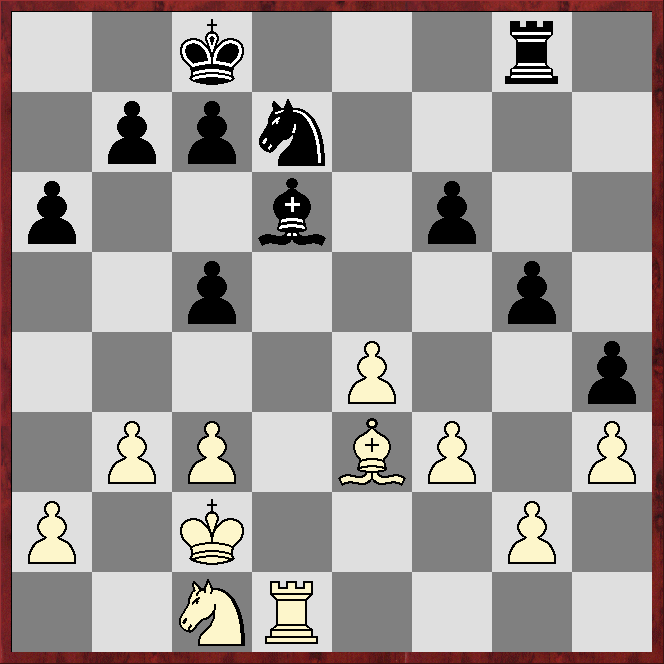
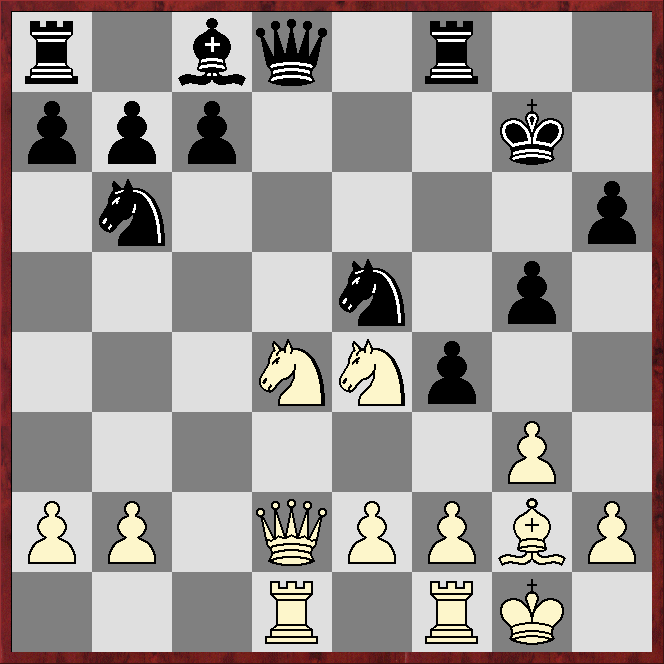
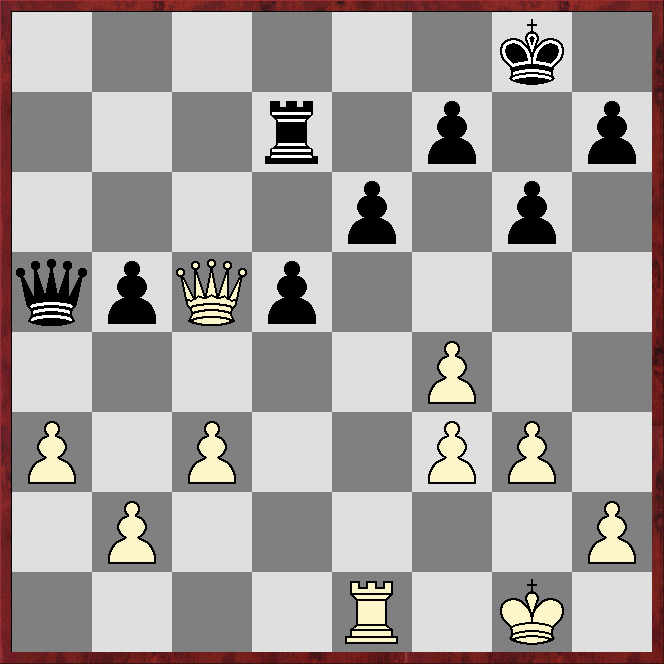
Showing posts with label Pawn-ending. Show all posts

Wednesday, 24 December 2025

All About That Bass VII

MOST of us have an opponent against whom nothing seems to work.
When the opponent is considerably stronger, this is not surprising, but when ratings are not so different, the results are harder to explain.
My biggest bogeyman is probably John Bass, whose record against me is +6=1-0.
Seven games is not a huge sample, but such a poor performance on my part must signify something.
So in this mini-series I am looking at my games against JB to try to discover what is going on.
Here is our latest encounter.

Spanton (1980) - Bass (1932)
Central London League 1925
English Four Knights
1.c4 e5 2.Nc3 Nf6 3.Nf3 Nc6 4.e4!?
This was a Nimzowitsch favourite.
4...Bb4 5.d3 0-0 6.Be2 d6 7.0-0
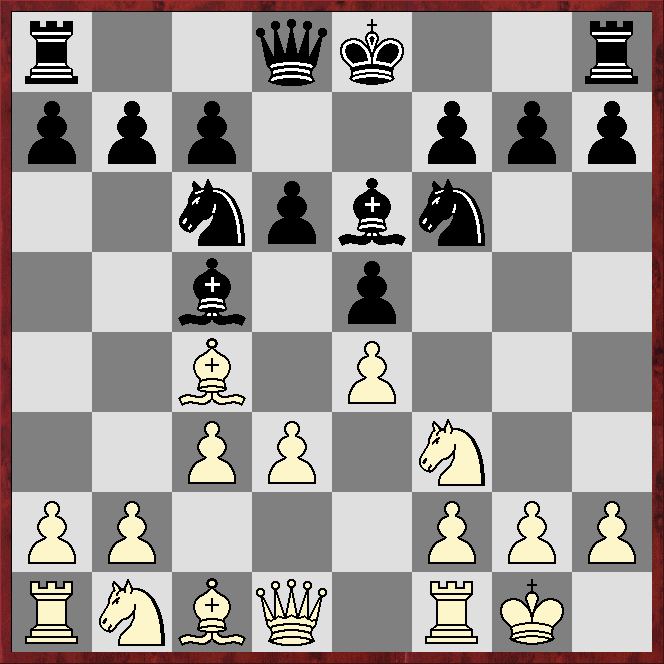
Now both sides have castled, how would you assess the position?
*****
*****
*****
*****
*****
White has more queenside space, and the hole at d4 is probably not a serious weakness, but White has a passive and bad light-square bishop, while Black's bad bishop is outside the pawn-chain, and therefore active. Stockfish17.1 and Dragon1 rate the game as equal.
7...h6 8.h3 Bxc3!? 9.bxc3 Re8 10.Rb1 Ne7 11.c5!? Ng6 12.cxd6 Qxd6!? 13.Qc2 b6 14.Rd1 Bb7 15.Be3 Rad8 16.Nh2 c5 17.Ng4 Nxg4 18.Bxg4 Qc7 19.Bh5 Nf4!? 20.Bxf4 exf4 21.Bf3
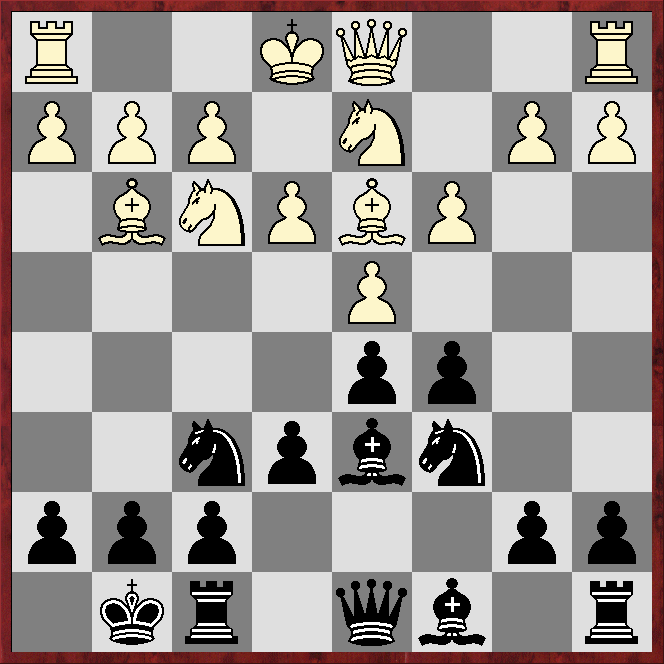
There has been much manoeuvring, and quite a few exchanges, but the position remains equal, according to the engines
*****
*****
*****
*****
*****
21...Re7 22.Qa4 Bc6 23.Qc4 Bb7 24.a4 Qc8 25.Bg4 Qc7 26.Ra1 Bc8 27.Bxc8 Qxc8 28.a5
More prudent is 28.f3.
28...f3! 29.axb6?
White is only slightly worse after 29.Re1, according to the engines.
29...axb6
This is enough for an edge, but stronger is 29...fxg2! 30.Kxg2 (30.bxa7? Qxh3) axb6.
30.Kh2?
The engines suggest 30.Re1 or 30.Qa6.
30...fxg2 31.Rg1?!
If 31.Kxg2?!, then 31...Qc6. Best may be 31.Re1.
31...Qc7+ 32.Kxg2 Qf4 33.Rad1 Re6 34.Qa2 Rg6+ 35.Kf1 Rxg1+ 36.Kxg1 Qf3 37.Rd2 Rxd3 38.Rxd3 Qxd3 39.Qa8+ Kh7 40.Qd5!?
This is Dragon1's top choice, but the ending is lost anyway.
40...Qxd5 41.exd5 Kg6 42.c4 Kf6 43.f4 g5 44.Kf2!? gxf4 45.Kf3 Ke5 46.h4 b5 47.cxb5 Kxd5 48.Kxf4 c4 49.Ke3 Kc5 0-1
LESSON: carelessness about king safety was followed by sub-optimal tactics that left me with a losing position.

Sunday, 21 September 2025

York Round Five

FACED a junior (born 2010).

Spanton (1936) - Shriaansh Ganti (2144)
Sicilian Nimzowitsch/...e6/Four Knights
1.e4 c5 2.Nf3 Nf6!?
This seems to have been first played by Aron Nimzowitsch in 1911.
3.Nc3!?
This is more popular than 3.e5 in ChessBase's 2025 Mega database, but scores five percentage points lower.
3...e6!?
The main line in Mega25 runs 3...d5 4.exd5 Nxd5 5.Bb5+ Bd7 6.Ne5!? Nf6!? 7.Qf3!?, with a slight edge for White, according to Stockfish17 and Dragon1.
4.d4 cxd4 5.Nxd4 Nc6
By an unusual move-order the game has reached the starting position of the Four Knights Variation of the Sicilian
*****
*****
*****
*****
*****
6.g3!?
Overwhelmingly most popular is 6.Ndb5.
6...Bb4 7.Bg2 0-0 8.0-0
With both players castling early, how would you assess the position?
*****
*****
*****
*****
*****
The position occurs 184 times in Mega25, with results almost exactly 50-50, although Black performs better rating-wise.
8...d6 9.Nde2!?
This is, by a small margin, the commonest continuation. The idea, as I understand it, is not so much to avoid doubled c pawns, but to avoid an exchange of knights and to keep maximum pressure on the d5 square.
9...e5!?
Black may have a slight edge after 9...a6, according to the engines.
10.a3
This may be a novelty. Known moves are 10.Bg5 and 10.h3.
10...Bc5 11.b4!? Bd4?!
Almost certainly better is 11...Bc7, when 12.Nb5 Bc7 13.Nxc7 Qxc7 also loses the bishop-pair, but in a better way than in the game. However, the engines show Black can meet 12.Nb5 with 12...Be6!, when 13.Nxd6? fails to 13...Bg4, eg 14.Re1 Nd4 etc, and 13.Qxd6? can be met by 13...Bc4.
12.Nxd4 Nxd4 13.Be3 Nc6 14.Nb5 Ne8 15.c4 a6?!
Probably better is 15...Be6.
16.Nc3 Be6
SG offered a draw.
Should I have accepted?
*****
*****
*****
*****
*****
When a higher-rated player, particularly a junior, offers a draw to a pensioner, you can be fairly sure that objectively the junior stands worst.
17.c5!? Nd4!?
A pawn sacrifice, presumably in the hope of freeing Black's position and generating activity. The engines prefer 17...Qd7 or 17...a5, but reckon White is well on top.
18.Bxd4 exd4 19.Qxd4 dxc5 20.Qxc5
Also good, according to the engines, is 20.Qxd8 Rxd8 21.bxc5 Rc8 22.Na4.
20...Rc8 21.Qe3 Nd6 22.Rfd1 Nc4!? 23.Rxd8 Nxe3 24.Rxc8
24.Rxf8+?! Kxf8 gives the black king a tempo.
24...Rxc8 25.Nxd5 Bxd5
SG offered a draw in my time.
26.exd5 Nxg2 27.Kxg2
How would you assess this rook-and-pawn ending?
*****
*****
*****
*****
*****
White's extra pawn is passed but vulnerable. Nevertheless the engines reckon White is winning.
27...Kf8
How should White proceed?
*****
*****
*****
*****
*****
28.d6!
This seems to be the only winning move. The problem with 28.Rd1 ("rooks belong behind passed pawns") is that after 28...Ke7 Black will blockade the passer with his king, leaving the black rook to generate counterplay.
28...Rd8
If 28...Ke8, then 29.Re1+ is very strong.
29.Rd1 Ke8 30.Re1+ Kf8 31.Re7?
This throws away White's winning chances. Correct is 31.Rd1 Ke8 32.Kf3, eg 32...Kd7 33.Re1! Kxd6 34.Rd1+ Ke7 35.Rxe8 Kxe8 36.Ke4, when material is level, but White's much more-active king seems enough to win.
Analysis diagram
*****
*****
*****
*****
*****
Best play, according to the engines, runs something like 36...Kc7 37.Kd5 Kb6!? 38.a4 Kc7 39.h3!? Kd7 40.h4 h5!? 41.Kc5 Kc7 42.f3 g6 43.Kd5 Kd7 44.g4 hxg4 45.fxg4 b6 46.h5 etc. There are many other possible lines, but the space advantage enjoyed in all of them by the white king appears decisive.
The game finished:
31...b5 32.Ra7 ½–½

Friday, 4 April 2025

League Chess

PLAYED on board one (of five) for Battersea against Pimlico 3 in Central London League Division Two last night.

Spanton (1985) - Simon Wilks (2127)
French Defence
1.e4 e6 2.d4 d5 3.exd5 exd5 4.Nf3 Nf6 5.Bd3 c5!?
The main move is 5...Bd6, but Stockfish17 and Dragon1 also like the text.
6.0-0!? c4 7.Re1+ Be7 8.Bf1 0-0
Now both sides have castled, how would you assess the position?
*****
*****
*****
*****
*****
Black has more space on the queenside, but that is easily challengeable in a way that is likely to leave Black with an IQP, albeit not on a semi-open file, and White with a half-open a file. The engines reckon the position is equal.
9.b3!?
Kasparov played 9.Bg5 in a win over Korchnoi at Tilburg (Netherlands) 1991, but the engines prefer the text.
9...cxb3 10.axb3 Nc6 11.c4!?
The main line in ChessBase's 2025 Mega database runs 11.Ne5!? Bf5 12.Nxc6 bxc6, when Dragon1 gives White a slight edge, but Stockfish17 is less convinced.
11...Bg4 12.Be3?
Correct is 12.Bb2, and if, as in the game, 12...Bb4!?, then 13.Re3.
12...Bb4! 13.Nbd2
Duško Pavasovič (2546) - Steve Berger (2435), Chess.com Rapid 1991, went 13.Re2 Bxf3 14.gxf3 Re8, with at least a slight edge for Black, according to the engines (0-1, 56 moves).
The engines suggest 13.Bd2!? Bxf3 14.Qxf3 Nxd4 15.Qd1 Bxd2 16.Nxd2 dxc4, again with at least a slight edge for Black.
13...Bc3
The engines reckon 13...Ne4!? is even stronger.
14.Rc1 Bxd4
The engines prefer maintaining the pressure with 14...Bb4!?
15.Bxd4 Nxd4 16.h3 Nxf3+ 17.Nxf3 Bh5!? 18.g4 Bg6 19.g5 Ne4 20.Qxd5 Qxd5 21.cxd5 Rfd8
Equal, according to the engines
*****
*****
*****
*****
*****
22.Bd3?
But not anymore.
22...Nxg5 23.Nxg5 Rxd5!
This is much better than 23...Bxd3 24.Rc7.
24.Be4?
After 24.Nxf7 Rxd3 25.Ne5 Rxh3 26.Nxg6 hxg6 White is two pawns down, but Black has 'only' the upper hand, according to the engines.
24...Rxg5+ 25.Bg2 Rb5?!
It was almost certainly better to activate the queen's rook or king.
26.Re3?
Better is the engines' 26.Rc7 Rxb3 27.Ra1!
26...h6 27.Rc7 a5?
For once a passive rook move, 27...Rb8!?, is best.
28.Rxb7 Rxb7 29.Bbx7 Rb8 30.Bd5
The engines prefer 30.Bg2!?
30...Kf8 31.Rc3 Rb4?
Black still has at least the upper hand after 31...Bf5, according to the engines, eg 32.Kg2?! Rd8 33.Bc4 a4! 34.bxa4 Rc8 etc. Better is 32.Rc7!? Be6 33.Bxe6 fxe6, but the engines reckon the rook-and-pawn ending is winning for Black.
32.Rc5 a4!? 33.bxa4 Rxa4 34.Rc7
The engines prefer immediately activating the king with 34.Kg2.
34...Rd4 35.Bg2 Bf5 36.Kh2 g5 37.Ra7 Be6 38.Bf3 Rf4 39.Ra3 Kg7 40.Kg3 Kg6 41.Re3?!
The rook is probably better kept at a distance.
41...h5 42.Be4+ Kg7 43.Bf3?!
And here the engines prefer removing the bishop from the crowded kingside with 43.Bc6.
43...Kh6 44.Kg2?
After 44.Bc6 White probably holds.
Black to play and win
*****
*****
*****
*****
*****
44...Bxh3+! 45.Kxh3 Rxf3+! 46.Rxf3 g4+ 47.Kg3 gxf3 48.Kxf3
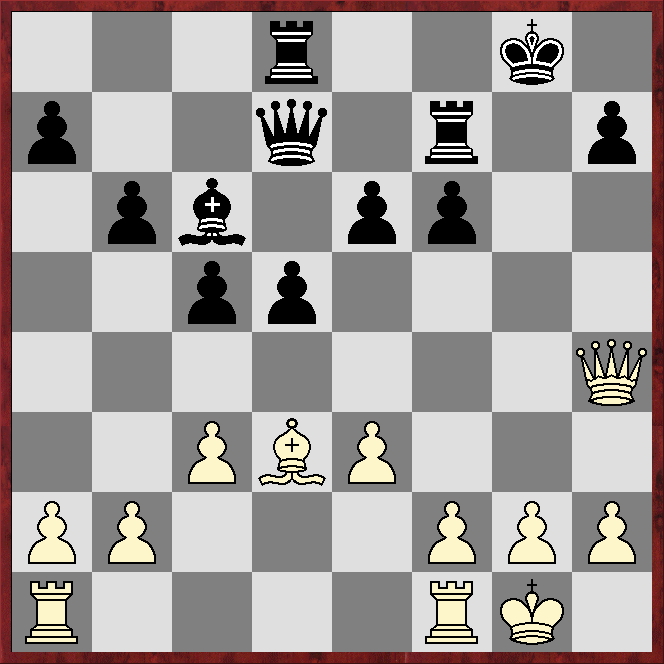
The pawn-ending is a simple win for Black
*****
*****
*****
*****
*****
48...Kg5 49.Kg3 h4+ 50.Kh3 f6 51.f3 f5 52.Kg2 Kf4 53.Kh3 Kxf3 54.Kxh4 f4 55.Kh3 Ke2 0-1
Pimlico 3 won the match 3-2.
MY BATTERSEA SEASON 2024-5
DATE.....EVENT...........................COL..RATING..OPP'S RATING..SCORE..SEASON PERF
12/9/24..Central London League....W......1933..........1886................1............2286
26/9/24..Central London League....B.......1933..........2112................1............2399
15/10/24.Club Championship.........W......1968..........1578................1............2259*
31/10/24.Central London League...B.......1968..........1867................0...........2061*
19/11/24.London League...............W.......1957..........1991................1............2127*
21/11/24.Central London League...B.......1957..........2035................=............2112*
27/11/24.London League...............W.......1957..........1723................=............2056*
12/12/24.Central London League...B.......1965..........2153................0............2018*
7/1/25.....Club Championship.........B.......1958..........1785................1............2037*
9/1/25.....Central London League...B.......1958..........1851................0............1978
14/1/25....Eastman Cup.................B........1958..........2052................1............2021*
28/1/25....London League..............B........1958..........1766................1............2033*
4/2/25......London League..............B........1980..........1757................1............2043*
6/2/25......Central London League..W.......1980..........1932................0............2006*
11/2/25....Central London League..B........1986..........2178................=............2018*
13/2/25....Central London League.W........1986..........1998................1............2042*
27/2/25....Central London League..B........1986..........1996................0............2015*
13/3/25....Central London League..B........1984..........2286................0............2008*
17/3/25....London League..............W........1984..........1870................0............1980*
3/4/25......Central London League..W.......1985...........2127...............0............1967
*My season's performance is slightly better than this as my win against a 1578 was a 1978 performance, lowering my average despite me winning.
I also scored a default win in a Croydon & District League match.

Friday, 21 March 2025

Bad Wörishofen Round One

FACED an Italian

Giulio De Joannon (1664) - Spanton (1911)
London System
1.d4 d5 2.Nf3 e6 3.Bf4 Bd6 4.Bg3 Nf6 5.e3 c5 6.Nbd2!?
The main move in ChessBase's 2025 Mega database is 6.c3.
6...Nc6 7.c3 0-0 8.Bd3
This position occurs 6,258 times in Mega25
*****
*****
*****
*****
*****
8...b6 9.Ne5!?
How should Black deal with the advanced white knight?
*****
*****
*****
*****
*****
9...Bxe5?!
Stockfish17 and Dragon1 strongly dislike this, preferring 9...Bb7!?, meeting both 10.Ndf3 and 10.f4 with 10...Ne7, one point being ...Ne7 makes ...Ne4 possible in many lines.
10.dxe5 Nd7 11.Nf3
Possibly even stronger is 11.f4, when Dmitry Andreikin (2720) - Aleksandr Lenderman (2615), Chess.com Blitz 2015, went 11...f6 12.Bh4?! Qe8 13.exf6 Nxf6 14.0-0 e5, with what the engines reckon is at best a slight edge for White (but 1-0, 36 moves). However the engines reckon better is 12.Qh5 f5 and now 13.Bh4, eg 13...Qe8 (more-or-less forced) 14.Qxe8 Rxe8 15.Rg1, claiming the upper hand for White.
11...f6 12.exf6 Nxf6 13.0-0 Qe7 14.Ne5 Nxe5 15.Bxe5 Nd7 16.Bg3 Bb7
How should White proceed?
*****
*****
*****
*****
*****
17.Qh5
A very direct approach, liked by the engines, along with 17.c4!?
17...Nf6
The engines suggest 17...h6!?
18.Qg5
Possibly even better is 18.Qh4, eg 18...Rf7 19.Be5 g6 20.Qg3 Nh5 21.Qh3 Nf6 22.Rad1 with continuing pressure.
18...Rae8 19.Bb5 Rd8 20.Bd3 Bc6
The engines reckon 20...h6 leaves White with only the better part of equality.
21.Be5 Rf7 22.Qh4 Qd7 23.Bxf6?!
This throws away almost all of White's advantage, whereas 23.Rad1 leaves White with the upper hand, according to the engines.
23...gxf6
How would you assess this mainly heavy-piece middlegame?
*****
*****
*****
*****
*****
White has the better bishop and safer king, but Black has more space in the centre and is more developed. Dragon1 reckons White is slightly better, but Stockfish17 calls the position equal.
24.Rad1 Kh8 25.h3!?
White has an edge after 25.e4!?, according to the engines.
25...Rg8 26.e4 d4 27.cxd4 cxd4
The engines prefer 27...Qxd4!?
28.f3 Bb5!? 29.Bxb5 Qxb5 30.Rxd4 Qxb2
The engines reckon 30...Rxg2+!? 31.Kxg2 Rg7 gives complete equality.
31.Qf2 Qxf2+ 32.Rxf2
How would you assess this double rook-and-pawn ending?
*****
*****
*****
*****
*****
Black has more pawn-islands, but also has a farside pawn-majority. Dragon1 gives White a slight edge, but Stockfish17 reckons the game is equal.
32...Rc8 33.Rfd2 Kg7 34.Rd7 Rc7 35.Rxf7+ Kxf7 36.Kf2!?
The engines suggest 36.Rd8 or 36.Kh2!?
36...Ke7 37.Ke2 a6 38.Kf2!?
The engines are OK with this, but prefer 38.a4.
38...b5 39.Kg3?!
The king should probably move towards the centre, as after 39.Ke3 the position is still equal, according to the engines.
39...a5
Perhaps better is 39...b4!?, discouraging 40.a3.
40.Kf2?!
Probably better is 40.a3, or 40.Kf4 with the possibility of playing on the kingside or of centralising.
40...b4 41.Kg3?
41.Ke3 keeps Black's advantage to a minimum.
41...a4 42.Kf2 e5 43.Ke2 Rc4 44.Ke1 Rd4?!
Pushing the a pawn is already a good move.
45.Ke2?
As usual, allowing liquidation into a pawn-ending, when defending a difficult position, is a bad idea unless certain of holding the resulting setup. Here White has a good alternative in 45.Rc2, when Black is slightly better (Stockfish17) or at best has the upper hand (Dragon1).
45...Rxd2+ 46.Kxd2 Kd6 47.Kd3 Kc5 48.g3 a3 49.h4?
After 49.Kc2 Black gets down to a winning queen-and-pawn ending by going for the white kingside pawns, but there are chances to go wrong.
49...b3! 50.axb3 a2 0-1

Saturday, 15 March 2025

Fareham Round One

Jaimie Wilson (2159) - Spanton (1984)
Giuoco Piano
1.e4 e5 2.Nf3 Nc6 3.Bc4 Bc5 4.d3 Nf6 5.c3 d6 6.0-0 Be6!?
This is a common idea in the Giuoco Piano, but it is unusual to see it this early.
How should White respond?
*****
*****
*****
*****
*****
7.Nbd2
The main move in ChessBase's 2025 Mega database is 7.Bb3, while Stockfish17 and Dragon1 like 7.Bxe6 fxe6 8.b4!? Bb6 and either 9.a4 or 9.Qb3. Note that 8.Qb3 can be met by 8...Qc8!?, and if 9.Ng5 then 9...Nd8!? or 9...d5, but the engines strongly dislike the gambit move 8...Qd7?!
7...0-0
This is the commonest move in Mega25, but the engines prefer 7...a6 or 7...a5.
8.b4!?
The engines marginally prefer this over 8.Bxe6.
8...Bb6 9.Bxe6 fxe6 10.Nc4!? Ne7?
The engines suggest 10...a6!?, but agree 11.Nxb6 cxb6 leaves White better.
11.Qb3!?
This may be a novelty. The engines prefer it over the known 11.a4.
11...Qc8!?
The engines prefer 11...Qd7, but either way Black is in trouble.
12.a4 a6 13.Ng5 d5?
Correct is 13...Ba7, albeit White is better.
14.Nxb6!?
This is enough for an advantage, but the engines reckon 14.Nxe5 is winning.
14...cxb6 15.f4?!
Black gets interesting counterplay after 15.Be3, eg 15...h6 16.Nf3 Ng6 17.Bxb6 Qc6, although White seems to be better. However the engines like attacking d5 with 15.c4!?
15...h6?!
Black is at least equal after 15...exf4 16.Bxf4 h6, according to the engines.
16.fxe5 Ng4 17.Rxf8+ Qxf8 18.Nf3 Ng6 19.Bd2!?
The engines reckon this quiet developing move is best.
19...N6xe5 20.Rf1 Qd8!? 21.h3 Nxf3+ 22.Rxf3 Nf6 23.e5 Nd7 24.d4 Rc8
How would you assess this late-middlegame?
*****
*****
*****
*****
*****
White's bishop is technically bad, because so many white pawns are on dark squares, but quite active, and White has the open file. The engines give White a slight edge.
25.Qd1 Qe8 26.Rg3 Kh8 27.Qg4 Qf7 28.Rf3 Qe8
Not 28...Qg8? as 29.Qh4 is strong, eg 29...Rf8 30.Rg3 Rf7 31.Bxh6! Qh7 32.Qd8+.
29.Qh4
The engines prefer 29.Rg3.
29...Kh7 30.g4 Nf8 31.Qf2
The engines recommend 31.Qh5!? Qxh5 32.gxh5, claiming equality.
31...Kg8 32.g5?! Qg6
Possibly slightly stronger is 32...h5.
33.Kh2 h5 34.Qe2 Nh7 35.Kg2?
White should probably play 35.h4, although the exposed state of the white king means Black is better.
How can Black exploit White's last move?
*****
*****
*****
*****
*****
35...Nxg5! 36.Bxg5
Not 36.Rg3? Qe4+.
36...Qxg5 37.Rg3 Qf5 38.Rf3 Qg6+ 39.Rg3 Qf7 40.Rf3 Qe8!?
The engines reckon the black queen should be kept active, eg 40...Qg6+ 41.Rg3 Qh6 42.Rf3 Rf8 43.Rxf8+ Kxf8, claiming Black is winning.
41.Rg3?
Better is the engines' 41.Qc2.
41...Kh7?!
Black is still better after this, but it seems ...Qxa4 is good, either immediately or after ...h4.
42.Qd3+ g6?
This throws away Black's advantage by weakening f6. Instead 42...Kg8!? gives at least the upper hand, according to the engines.
43.Rf3 Qg8 44.Rf6 Rf8 45.Qf3 Kg7 46.h4 Rf7 47.Qf4 Qf8 48.Rxf7+ Qxf7 49.Qg5 Qf5
There is nothing better, but now White can swop off into a drawn pawn-ending, despite being a pawn down and giving Black a protected passer.
50.Qxf5!? gxf5 51.Kg3 Kh6 52.Kf3 b5 53.a5
Not 53.axb5? as after 53...axb5 Black wins thanks to the b pawn giving a reserve tempo, eg 54.Kf4 Kg7! 55.Kf3 f4! 56.Kxf4 Kg6 57.Ke3 Kf5 58.Kf3 b6 59.Kg3 Ke4 60.Kh3 Kf3 etc.
53...f4!?
One last try.
54.Kxf4 Kg6 55.Kg3
But not 55.Kf3? Kf5 etc.
55...Kf5 ½–½

Tuesday, 11 March 2025

Lessons From Prague VIII

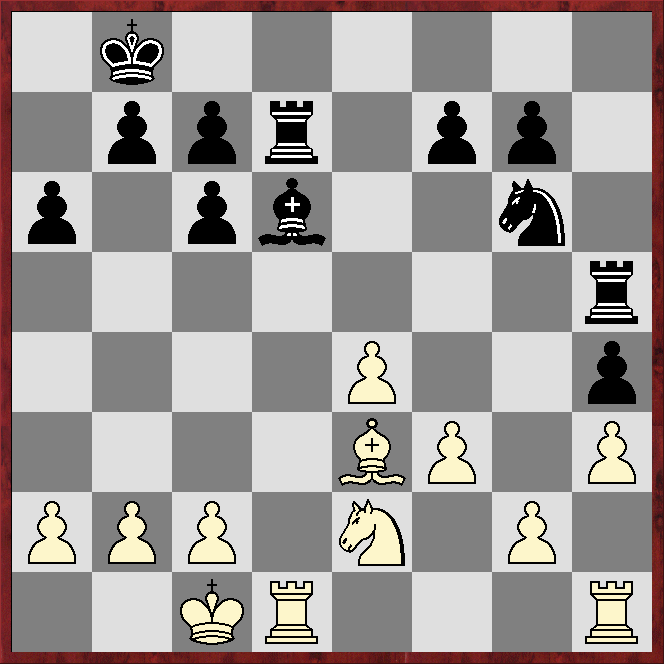
MY round-eight game reached the following position after 40 moves.
The game is completely equal, according to Stockfish17 and Dragon1
*****
*****
*****
*****
*****
*****
*****
*****
I resisted the temptation to play 41.Bd4?, when 41...Bxd4 42.Kxd4 improves the situation of the white king, which is now on the fourth rank while Black's remains on the third rank.
But after the obvious 42...Kd6, White is lost thanks to Black's ability to create a passed pawn on the queenside, eg 43.Kd3 Kc6 44.Kd4 Kb6 45.e5 fxe5+ 46.Kxe5 a5 etc.
LESSON: a drawn piece-and-pawn-ending can easily become a lost endgame in transposing to a purely pawn-ending.

Tuesday, 4 March 2025

Lessons From Prague

MY round-one game in the world senior team 65+ championship reached a knight-and-pawn ending in which my active king made up for being a pawn down.
Indeed in the following position I thought I was winning, as Black appears to be in zugzwang.
I have just played 44.Ke5-d5
*****
*****
*****
*****
*****
*****
However Stockfish17 and Dragon1 demonstrate there are at least five moves that draw, including the game's 44...Nf4+.
The biggest surprise to me is that one of the five drawing methods is with 44...Nd4!?, even though after 45.Nxd4 cxd4 46.Kxd4 White has a protected passed pawn.
That is normally fatal for the opponent, but the engines demonstrate that here it is not so.
Black has to play the fairly obvious 46...Kd6, when the try 47.Ke4 Ke6 48.Kf4 Kf6 49.Kg3 Kg5 50.Kh3 Kf5 51.Kh4 Kg6 gets nowhere.
The black king remains within the square of the white passer, and 52.c5 Kf6 53.Kxh5 Ke6 54.Kg5 Kd5 55.Kf5 Kxc5 56.Ke5 Kc6 57.Kd4 Kd6 also fails to make progress.
LESSON One is that a distant passed pawn can make up for a protected passer.
LESSON Two is the old but easily ignored advice that you cannot play by general principles alone ('a protected passer is a major weapon in a pawn-ending') - concrete analysis is necessary.

Tuesday, 25 February 2025

World Senior Team Championship 65+ Round Eight

ENGLAND 3 faced Finland 2 today.

Spanton (1896) - Riku Rantanen (2070)
Spanish Exchange
1.e4 e5 2.Nf3 Nc6 3.Bb5 a6 4.Bxc6 dxc6 5.d4 exd4 6.Qxd4 Qxd4 7.Nxd4 Bd7 8.Nc3 0-0-0 9.Be3 Ne7 10.0-0-0
Now both sides have castled, how would you assess the position?
*****
*****
*****
*****
*****
White has a lead in development, the better pawn-structure and the only pawn on the two centre files; Black has the bishop-pair. Dragon1 reckons Black is slightly better, but Stockfish17 is less sure.
10...Ng6 11.f3 h5 12.Nde2!? Bd6 13.h3!? h4 14.Na4
How should Black proceed?
*****
*****
*****
*****
*****
14...Rh5?!
Missing one of White's threats. The engines suggest 14...Be6, 14...Be8!? or 14...Kb8, eg 14...Be6 15.Nc5 Bc4 16.Rhe1 b6 17.Nd3 f6, and Black has kept the bishop-pair.
15.Nb6!
This would also have been the answer to 14...b6?
15...Kb8
Not 15...cxb6? as 16.Rxd6 Kc7 17.Rhd1 leaves White with strong pressure.
16.Nxd7+ Rxd7
With Black's bishop-pair gone, how would you assess the position?
*****
*****
*****
*****
*****
Black is still unable to create a passed pawn on the queenside, despite being a pawn up there. But White will have great difficulty making a passer on the other wing, which is why the engines reckon the position is equal.
17.Rd2 Ne5 18.b3 Ba3+?!
The engines dislike this, suggesting 18...Re7 (Stockfish17) or 18...f6 (Dragon1).
19.Kd1 Rxd2+ 20.Kxd2 Be7 21.Rd1 Kc8 22.Kc1
If the king is to be moved, the engines prefer it going in the other direction, ie to e1.
22...Rh8 23.Bd4 Nd7 24.c3
The engines suggest 24.Kd2!?, with a likely transfer of the king to the kingside.
24...c5 25.Bf2 g5!?
Putting another pawn on the same coloured square as Black's bishop, but the idea is to restrain White's pawn-majority.
26.Kc2 Bd6 27.Be3 Rg8 28.Nc1 f6!?
The engines agree the game is completely equal
*****
*****
*****
*****
*****
29.Nd3 b6 30.Nf2 Ne5 31.Bc1 b5 32.Nd3 c4!?
The black doubled pawns are being dissolved.
33.Nxe5 cxb3+ 34.axb3 Bxe5
Now what's the verdict?
*****
*****
*****
*****
*****
White can prevent Black properly mobilising on the queenside, and so the engines reckon the position is still completely equal.
35.Be3 Rd8
Not 35...a5? 36.Ra1 etc.
36.Rxd8+ Kxd8 37.b4 Kd7 38.Kd3 Ke6 39.c4 c6 40.cxb5 cxb5
How can White seal the draw?
*****
*****
*****
*****
*****
41.Bd2
But not 41.Bd4? as 41...Bxd4 42.Kxd4 Kd6 is an instructive pawn-ending win for Black. True 43.Kd3 Ke5 44.Ke3 f5? turns a win into a loss as White has 45.Kd3!, after which White gets a winning passed pawn, whatever Black plays. However Black wins with 44...Kd6 45.Kd4 Kc6 46.Kc3 Kb6 and ...a5, after which the Black passer will decide (43...Kc6, instead of 43...Ke5, is more precise).
41...Kd6 42.Be3 Ke6 43.Bd2 ½–½
TEAM RESULT
Brian Hewson (2039) = Dietmar Vinke (FM 2087)
Anthony Ashby (2049) = Eero Salmenkivi (2048)
Tim Spanton (1896) = Riku Rantanen (2070)
Charles Higgie (1945) 1-0 Serhil Nikolaienko (1870)
ENGLAND 3 2.5-1.5 FINLAND 2

Tuesday, 11 February 2025

Reuben v Fischer

MANY words will be spoken and written over the coming weeks following the death of Stewart Reuben at the age of 85 while cruising in the Caribbean.
Most chess fans will probably have known him as a congress organiser and adviser.
But he was also an above-average player with a rating over 2150 well into his 60s.
I thought of paying a little tribute by publishing one of our games (we played six times, scoring +2=2-2).
But then I learnt of a series of blitz games Reuben played against Bobby Fischer in New York in 1963.
It must have been quite a meeting - on one side you had a highly opinionated player who did not suffer fools gladly and was convinced he was always right; on the other was a man with a strong American accent.
Eight of the nine games were won by Fischer - here is the ninth.

Reuben - Fischer
English
1.c4 Nf6 2.Nc3 d5!? 3.cxd5 Nxd5 4.g3 g6 5.Bg2 Nb6 6.Nf3 Bg7 7.d3
This game is the earliest appearance of this position in ChessBase's Mega database
*****
*****
*****
*****
*****
Stockfish17 and Dragon1 reckon White is slightly better.
7...0-0 8.Be3!?
The engines prefer this over today's more-usual 8.0-0.
8...Nc6 9.0-0 e5 10.Qd2 f5 11.Bh6 f4?!
This seems to increase White's advantage. The engines suggest 11...Qe7.
12.Bxg7 Kxg7 13.Ne4 h6 14.Rad1 g5 15.d4 exd4 16.Nxd4 Ne5?
With Black's king so exposed, it is better to force queens off the board with 16...Qxd4.
How should White exploit Black's mistake?
*****
*****
*****
*****
*****
17.Nf3?!
White is still better after this, but stronger is 17.Qc3, after which best play, according to the engines, runs 17...Qe7 18.Nf3 Re8 19.gxf4 gxf4 20.e3!, when they reckon White's advantage is worth more than a minor piece.
17...Qxd2 18.Nxd2 Nec4 19.Rc2 Bf5?!
The engines much prefer 19..Re8 or 19...c6.
20.Nfd3?!
Here the engines recommend 20.Nd4.
20...Rae8 21.Nxc4 Bxe4 22.Bxe4 Rxe4 23.Nxb6 cxb6
How would you assess this double-rook-ending?
*****
*****
*****
*****
*****
Black has kingside pressure, but White's superior pawn-structure gives the upper hand, according to the engines.
24.gxf4 gxf4!? 25.Rfc1 Rf7 26.f3!? Re3 27.Kf2 Rfe7 28.Rd1 Kg6?!
Activating the king may be premature. The engines suggest 28...R3e5.
29.Rd3?
White has the upper hand after 29.Rd6+ or 29.Rd4, according to the engines.
29...Rxd3 30.exd3 Re3 31.Rd2
Also apparently completely equal is 31.Rc3.
31...Kf5 32.d4 Ke6 33.Re2 Rxe2+ 34.Kxe2
How would you assess this pawn-ending?
*****
*****
*****
*****
*****
White has the only passed pawn, but the ending is completely equal as the white king cannot penetrate Black's position.
34...Kd5
Also drawing is 34...b5.
35.Kd3 a5?
This lets White fix Black's queenside pawns, giving White a winning advantage.
36.a4!
The only winning move.
36...Kc6
36...h5 only postpones the crisis, assuming White answers with 37.h4.
37.Ke4 b5 38.axb5+ Kxb5 39.d5 Kb6
White to play and win
*****
*****
*****
*****
*****
40.Ke5?
White wins by creating a second passer with 40.Kxf4, and if, as in the game, 40...Kc7, then 41.Ke5 Kd7 42.f4 etc.
40...Kc7 41.Kxf4
White has lost a crucial tempo on the previous line, but 41.Ke6 Kd8 is also drawn.
Black to play and draw
*****
*****
*****
*****
*****
41...b5?
Drawing is 41...Kd6.
42.Ke5 b4
White to play and win
*****
*****
*****
*****
*****
43.f4?
Correct is 43.Ke6!, when 43...a4 44.Ke7 a3 45.bxa3 bxa3 46.d6+ Kc6 47.d7 a2 48.d8=Q a1=Q wins for White, according to the Syzygy endgame tablebase. Black can try 43...Kd8, but that gives White a vital tempo for pushing the f pawn, ie 44.f4 a4 45.f5 a3 46.bxa3 bxa3 47.f6, and now 47...Ke8 loses to 48.f7+ Kf8 49.d6 a2 50.d7 a1=Q 51.d8=Q+ Kg7 52.Qg8#.
43...a4 44.Kd4?!
This makes the draw easy, but 44.Ke6 a3 45.bxa3 b3! 46.Ke7 b2 47.d6+ Kb7! 48.d7 b1=Q 49.d8=Q Qe4+ also holds.
44...a3 45.bxa3 bxa3 46.Kc3 Kd6 47.Kb3 Kxd5 48.Kxa3 Ke4 49.Kb3 Kxf4 50.Kc3 Kg4 51.Kd3 Kh3 52.Ke3 Kxh2 53.Kf2 ½–½
Fischer was giving dollar odds of 10-1 in the games. In other words his eight wins earned him $8, whereas if Reuben had managed to convert this pawn-ending he would have received $10, giving a monetary profit over the series of $2 (but the experience of having played the future world champion was clearly worth more than just a paltry couple of dollars).
Stewart Reuben, RIP.

Tuesday, 28 January 2025

Winning Chess

IN addition to the main swisses at Mariánské Lázně, there were three round-robin norm events - two for would-be international masters, and one for potential grandmasters.
The GM norm tournament featured four Fide masters, three international masters and three grandmasters.
Top seed was Ukrainian Anton Korobov, whose 2627 rating put him more than 100 elo clear of the field.
His score of +4=5-0 won the tournament by a half-point, but cost him 6.5 elo (since he has a K factor of 10, that is the equivalent of most rated players losing 13 elo, ie scoring 0.65 points less than expected).
Second was Indian international master G B Harshavardhan, whose score +5=2-2 gained 15 elo (since he also has a K of 10, that means he scored 1.5 points points more than expected).
Their round-six game proved pivotal.

Harshavardhan (2405) - Korobov (2627)
French Winawer
1.e4 e6 2.d4 d5 3.Nc3 Bb4 4.e5 c5 5.a3 Bxc3+ 6.bxc3 Ne7 7.Qg4 cxd4!?
Much more popular are 7...0-0 and especially 7...Qc7. The text can easily transpose into the latter, but both sides have chances for independent play.
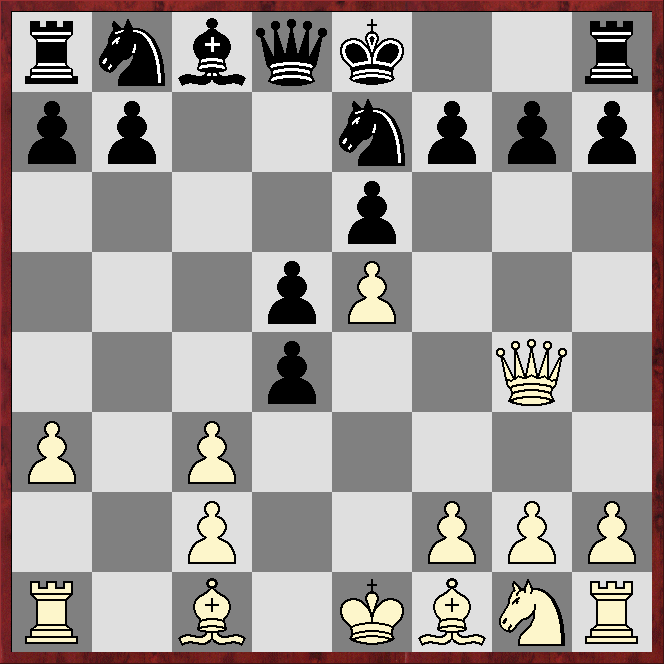
How should White respond?
*****
*****
*****
*****
*****
8.cxd4!?
The main line in ChessBase's 2025 Mega database runs 8.Qxg7 Rg8 9.Qxh7 Qc7 10.Ne2 Nbc6 11.f4 Bd7 12.Qd3 dxc3 13.Nxc3, with a slight edge for White, according to Stockfish17 and Dragon1.
8...Qc7 9.Ra2!?
An awkward-looking defence of c2 that, at least for a while, is the top choice of Dragon1.
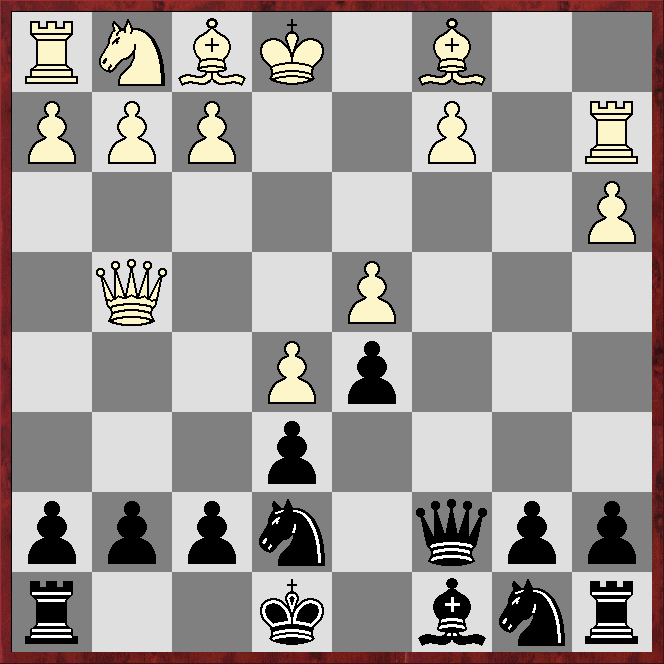
How should Black respond?
*****
*****
*****
*****
*****
9...Nf5
The engines reckon Black has equalised.
10.Nf3 Nc6 11.Bb2!?
This scores 75%, albeit from a very small sample (just six games) in Mega25, but is strongly disliked by the engines, which prefer 11.Bd3 and 11.Kd1!?
11...Qa5+ 12.c3 b6 13.Qf4!?
Apparently a novelty, the point of which will become clear next move. The engines prefer the known 13.Nd2.
13...Ba6 14.g4!? Nfe7 15.h4 Qa4!?
Black is better after this, according to the engines, but they reckon stronger is 15...Bxf1.
16.Bxa6 Qxa6 17.h5 Qd3!? 18.Ra1
The engines prefer 18.Nd2.
18...Qc2 19.Qd2 Qe4+ 20.Qe3 Qxg4
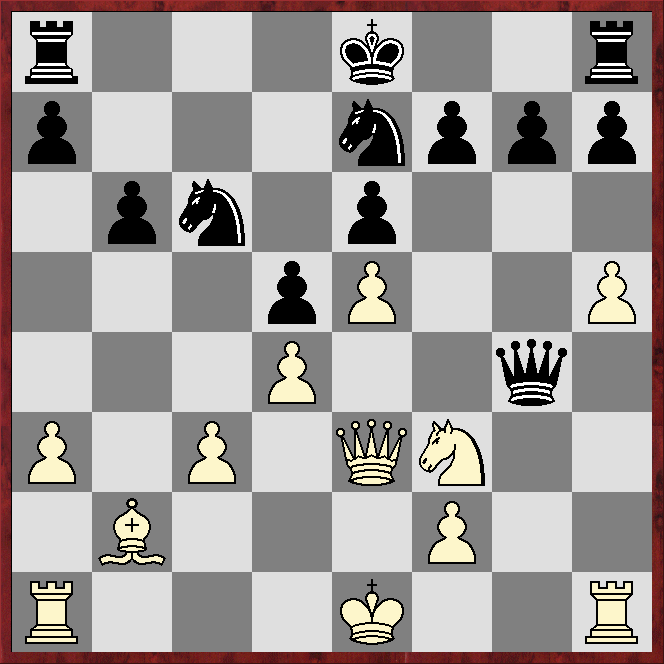
Black has won a pawn, and has at least the upper hand, according to the engines, but the position looks murky, at least to me
*****
*****
*****
*****
*****
21.Ke2 Qf5 22.Rag1 Qc2+ 23.Qd2 Qe4+ 24.Qe3 Qc2+ 25.Qd2 Qxd2+ 26.Kxd2 Nf5
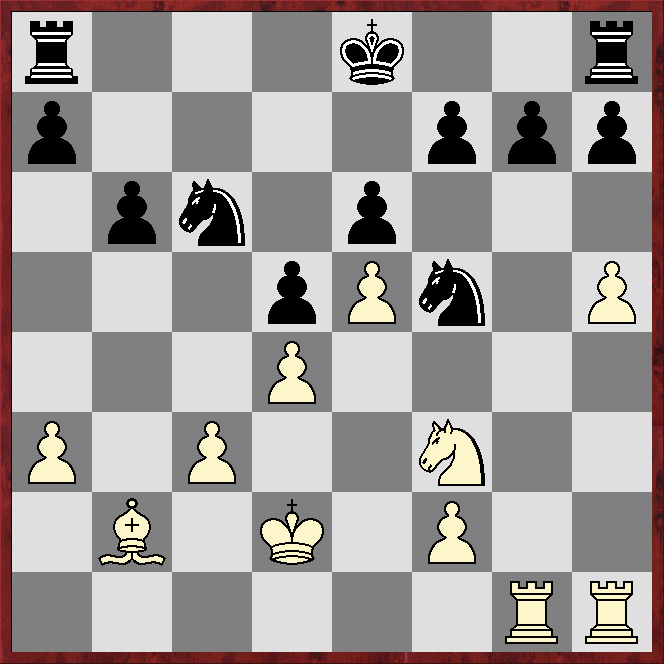
Black has consolidated the extra pawn, and has got queens off the board; White has some kingside pressure, but needs to somehow get the bad bishop into play
*****
*****
*****
*****
*****
27.Kd3 h6 28.a4 Kd7 29.Ba3 Rag8 30.Nh4 Nce7!? 31.Bxe7 Nxe7
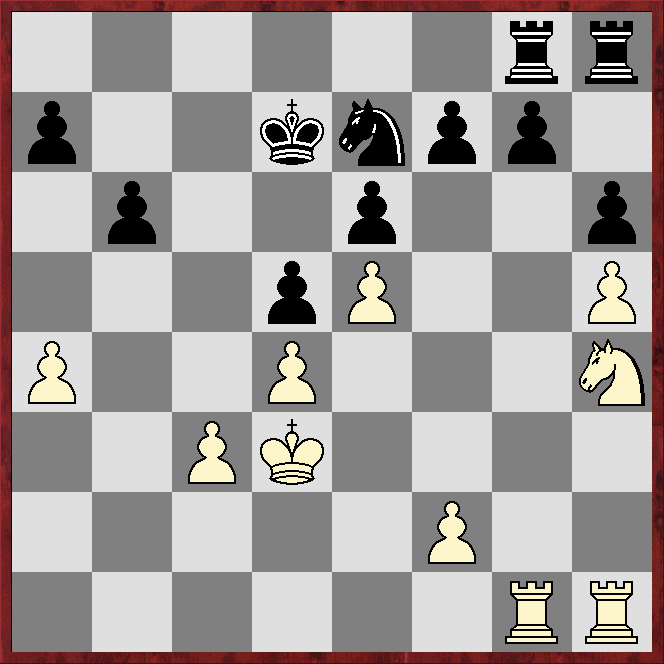
With the bishop gone, how big would you assess Black's advantage?
*****
*****
*****
*****
*****
White has a fair bit of compensation for a pawn, according to the engines, which give Black just a slight edge.
32.Rg4
The engines prefer 32.Ng2!?, intending Ne3, or 32.Rb1, intending a5.
32...g6 33.hxg6 fxg6 34.f4 g5 35.Nf3?!
The engines point out that 35.Ng2 threatens to equalise with fxg5, and after 35...gxf4 36.Rxg8 Rxg8 37.Nxf4 the white knight is well-placed to restrain the h pawn and pressure e6.
35...Rf8 36.Ke3 Rxf4 37.Rxf4 gxf4+ 38.Kxf4 Rf8+ 39.Kg4 Nf5!?
Even stronger may be first 39...Rg8+ and then ...Nf5.
40.Nh4 h5+!? 41.Kg5 Rg8+ 42.Kf6 Ne7!?
The engines at first strongly dislike this, preferring 42...Ng3, or 42...Rf8+ and then ...Ng3. However the text comes to be Dragon1's top choice, although Stockfish17 continues to prefer the alternatives.
43.Rh3 a5!?
This gives Black a backward b pawn, but is the engines' immediate top-choice, although Stockfish17 comes to prefer 43...Rg1 and 43...Rg4. The idea, I am fairly sure, is to create the threat of ...b5, followed, after axb5, by a quick advance of the a pawn.
44.Nf3?
The engines suggest 44.Rh2!? or 44.Rh1!?
44...h4!
Also very strong is 44...b5!
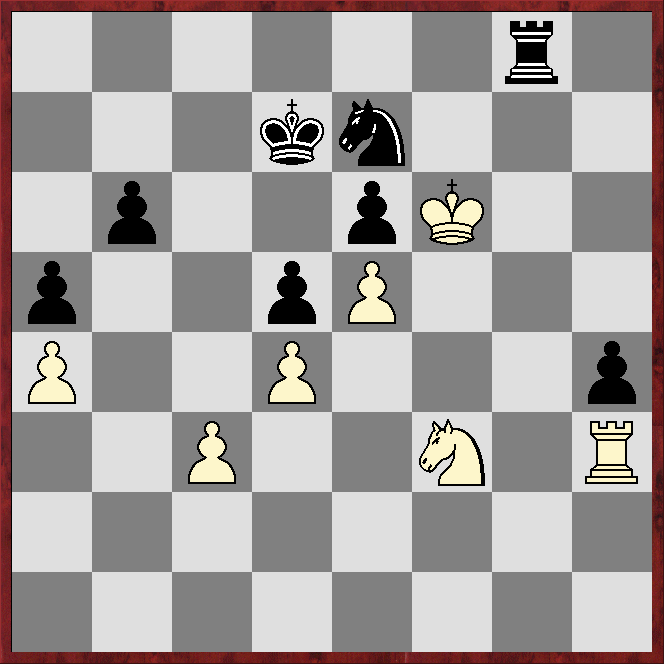
How should White continue?
*****
*****
*****
*****
*****
45.Nxh4
Walking into a pin, but the move seems forced, eg 45.Rxh4? loses the knight to 45...Rf8+ etc, while moving the knight away, eg 45.Nd2?, allows a quick mate starting with 45...Ke8! Finally, withdrawing the rook to h2 or h1 also loses the knight to 45...Rf8+ etc.
45...Rh8 46.Rh2
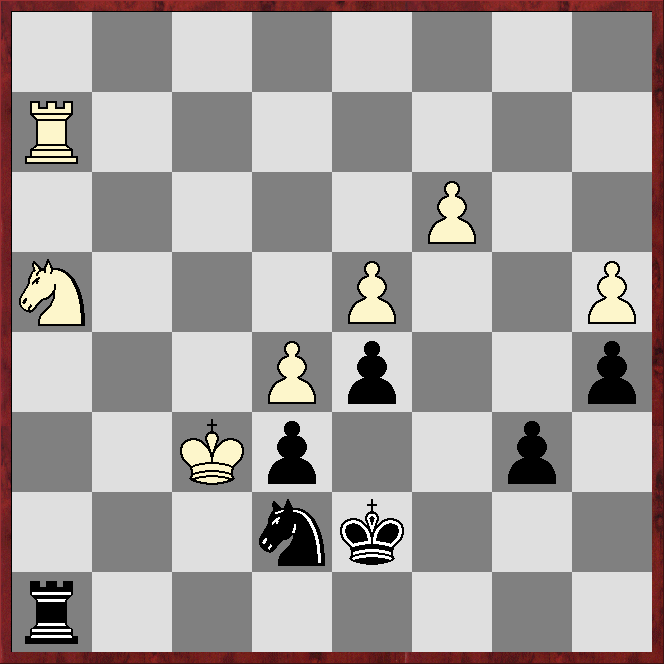
Black to play and win
*****
*****
*****
*****
*****
46...Nf5?
There is only one winning move: 46...Rh5!, when, unlike in the game, 47.Nf3? loses to 47...Rf5+ etc. If White instead shuffles the rook, for example to h3, then 47...Nf5 wins, while 47.Kf7 (best, according to the engines) runs into 47...Nf5 48.Nf3 Nd6+! 49.exd6 Rf5+ 50.Kg6 Rxf3 with a winning rook-and-pawn ending.
47.Rb2?
Incredible. I suspect most club players would play the correct 47.Nf3, even if they could not work out whether it really does draw. In fact after 47...Rxh2 48.Nxh2 b5!? 49.axb5 a4, presumably the sequence Harshavardhan feared, both 50.Nf3 and 50.Nf1 draw, eg 50.Nf3 a3 51.Nd2 a2 52.Nb3, or 50...Ne3 51.Nd2 (among other moves, 51.Ng5!? also draws, according to the engines), and here Black has to be careful as 51...Nd1?? loses to 52.Nb1, thanks to the deflecting power of pushing the b pawn, eg 52...Ne3 53.b6 etc.
47...Rxh4 48.Rxb7 Rf4!
Other moves also win, but the engines agree this is best.
49.Rb7+
Or 49.Kg5 Rf3, winning the c pawn.
49...Kc6 50.Ra7 Nxd4+ 51.Ke7 Nb3 52.Ra6+ Kc7 53.Ra7+
Little better is 53.Rxe6, when several moves win, including the simple 53...Rxa4, eg 54.Rd6 d4!? 55.cxd4 Rxd4 56.Ra6 a4 57.e6 Kb7 etc.
53...Kb6 54.Ra8 Nc5 55.Kd6 Rxa4 56.Rb8+ Ka7 57.Rc8 Rc4!? 58.Rxc5!?
There is nothing better, but the pawn-ending is lost.
58...Rxc5 59.Kxc5 Ka6!?
The key move - easy to find here, but difficult to see from afar.
60.Kd6
Or 60.c4 dxc4 61.Kxc4 Kb6 etc.
60...a4 61.Kxe6 a3 62.Kf7 a2 63.e6 a1=Q 64.e7 Qf1+ 65.Ke6 Qe2+ 66.Kd7 Kb5 0-1

Saturday, 25 January 2025

Mariánské Lázně Round Nine

Spanton (1946) - František Bublik (1896)
Spanish Schliemann
1.e4 e5 2.Nf3 Nc6 3.Bb5 f5 4.d4!?
This trails 4.Nc3 and 4.d3 in popularity. The main line in ChessBase's 2025 Mega database runs 4.d3 fxe4 5.dxe4 Nf6 6.0-0 Bc5, and now the equally popular 6.Bxc6 and 6.Nc3 give White a slight edge, according to Stockfish17 and Dragon1, although 6.Bxc6 scores 16 percentage points higher in Mega25.
4...fxe4 5.Bxc6!? dxc6 6.Nxe5 Nf6 7.0-0 Bd6 8.Bg5 0-0
Now both sides have castled, how would you assess the position?
*****
*****
*****
*****
*****
Black has the bishop-pair, but White has a well-placed knight at e5. Much may depend on whether the e pawn turns out to be a strength or a weakness. The engines start by calling the position equal, but given more time they come to give White a slight edge (Dragon1) or at least the better part of equality (Stockfish17).
9.Nd2 Qe8 10.Qe2 Bxe5 11.dxe5 Qxe5 12.Bxf6 Qxf6 13.c3!?
Protecting the queenside before levelling material.
13...Bf5 14.Nxe4 Qg6
If 14...Qe6, then 15.Ng3.
15.Rfe1 Rae8 16.Qc4+ Be6 17.Qd4 Bd5
Also equal is 17...Rf4 18.f3.
18.f3?
But here f3 is a mistake. White had to play 18.Ng3, with complete equality, according to the engines.
18...Rxf3! 19.Ng3 Rff8 20.c4
Not 20.Qxa7?? Qc2, when Black mates in five.
20...Be6 21.Re2 b6 22.Rae1 c5 23.Qc3 Bd7 24.Rxe8 Rxe8 25.Rxe8+ Qxe8 26.b3 Qe6 27.h3 Qd6 28.Qe3 Qd4 29.Kf2 Kf7 30.Ne2 Qxe3+ 31.Kxe3 Kf6
How would you judge this bishop-v-knight ending?
*****
*****
*****
*****
*****
Black is a pawn up, albeit the extra pawn is doubled, and has the better minor piece for action on both wings. All the White pawns being on light squares makes them possible targets for the bishop. The engines agree Black is winning.
32.Nc3 Bc6 33.g3 a6 34.a4
The engines prefer 34.h4!?
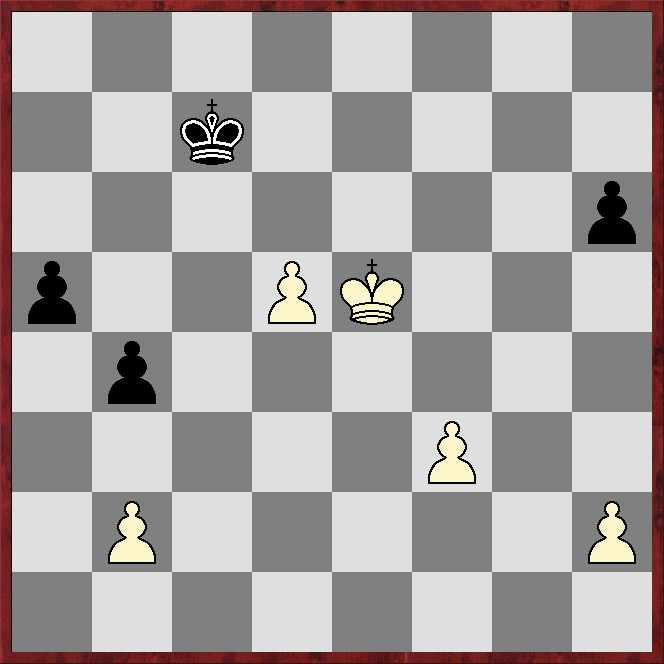
34...g5 35.Ne4+?
I knew Black's queenside pawns could not by themselves create a passer, but I did not properly take into account that they gave Black reserve tempi easily exploited in a pawn-ending. Black is lost anyway, but the text simplifies White's task.
35...Bxe4 36.Kxe4 c6 37.h4 h6 38.h5 Ke6 39.g4 Kf6 40.a5 bxa5 41,Kd3 Ke5 42.Ke3 a4!? 0-1
Wednesday, 15 January 2025

Knockout Chess

PLAYED on board six (of eight) for Battersea against University College London in the Eastman Cup last night.
Devan Patel (2052) - Spanton (1958)
Jobava-Prié
1.d4 d5 2.Bf4 e6 3.Nc3 Bd6 4.e3!?
This popular response to ...Bd6 is the top choice of Stockfish17 and Dragon1, and is easily the main move in ChessBase's 2025 Mega database, scoring 60%.
How should Black respond?
*****
*****
*****
*****
*****
4...Nf6
This and 4...Bxf4 are equally popular in Mega25, and both have been played by Magnus Carlsen.
5.Nf3 0-0 6.Bd3 Bxf4!?
The mainline in Mega25 runs 6...c5 7.dxc5!? Bxc5 8.0-0 Nc6, with what the engines reckon is equality.
7.exf4 Qd6
Baadur Jobava (2713) - Mohamed Tissir (2380), World Blitz Championship (Dubai) 2014, saw 7...c5!? 8.dxc5 Qc7 9.Qd2 Qxc5 10.0-0-0!?, with equal chances, according to the engines (but 1-0, 28 moves).
8.Ne2!?
Apparently a novelty. The engines prefer the known moves 8.Qd2 and 8.Ne5.
8...b6
Black can grab a pawn with 8...Qb4!? 9.c3 Qxb2, but Stockfish17 reckons White has decent compensation, starting with 10.a4, although Dragon1 gives Black a slight edge.
9.c3 c5 10.Ne5 Ba6 11.0-0!?
The engines agree with not preserving White's good bishop, although note that after 11.Bc2 Bxe2!? 12.Qxe2 Black cannot win a pawn by 12...cxd4 13.cxd4 Qb4+ 14.Qd2 Qxb2?? as Black loses the queen to 15.Bxh7+ etc.
11...Bxd3
White has the upper hand after 11...c4?! 12.Bc2, according to the engines.
12.Qxd3 Ne4 13.f3!?
This evicts the black knight, but probably reduces White's chances of attacking on the kingside.
13...Nf6 14.Rfe1 Nc6
Now both sides have connected rooks, how would you assess the position?
*****
*****
*****
*****
*****
White has a half-open file and a well-placed knight at e5, but Black has pressure against d4 and no weaknesses. The engines reckon the position is equal.
15.Qb5!?
The engines are not keen on this aggression, preferring 15.Nxc6!? Qxc6 16.f5 exf5 17.Qxf5.
15...Rfc8
The engines reckon Black is slightly better after 15...Ne7!?, the idea being that with b6 protected by the black queen, the white queen can be driven off with ...a6.
16.Rad1 cxd4?!
Better, according to the engines, are 16...Ne7!? and 16...c4!? One problem with the text is that it helps White activate his poorly knight.
17.Nxd4 Nxd4 18.Rxd4 Rc5 19.Qd3 Nd7 20.g3
If 20.c4 then 20...Nxe5, when 21.fxe5 dxc4! gives Black at least equality, while after the engines' choice, 21.Rxe5!?, Black has 21...Rd8, the engines reckoning 22.cxd5 Rxd5 23.Rexd5 exd5 gives complete equality.
20...Rd8 21.Ra4 a5 22.a3 b5!?
How should White respond to this pawn thrust?
*****
*****
*****
*****
*****
23.Rxa5!?
The engines marginally prefer this over 23.Nxd7!?
23...Qb6?
Necessary is 23...Nxe5. when the engines reckon Black has enough for a pawn.
24.Nxd7 Rxd7 25.Qd4
Not 25.Ra8+?? Rc8+.
25...Qxa5 26.Qxc5 g6
White has won a good pawn
*****
*****
*****
*****
*****
27.a4?!
The engines suggest consolidation with 27.Rd1.
27...Rc7
Not 27...Qa4?? 28.Qc8+, but Black is more-or-less fine after 27...d4!, when 28.Qxb5 Qa7 29.cxd4 Rd5!. with ...Rxd4 to come, gives Black good drawing chances, according to the engines.
28.Qxb5 Qa7+ 29.Kg2 Rb7 30.Qe8+ Kg7 31.Re2 Re7?
A big mistake, according to the engines, whereas they reckon 31...Qa6 followed by 32...Rb3 leaves White with at best a slight edge, despite being two pawns up, the point being Black has tremendous pressure against the white queenside.
32.Qc6 Rc7 33.Qd6 Kg8!? 34.Qe5 Rb7
How can White preserve all three queenside pawns?
*****
*****
*****
*****
*****
35.f5!?
Ingeniously giving up a doubled pawn, so the queen can protect a4, but the engines prefer 35.g4, 35.Qd4 or 35.b4, reckoning White is still winning even after giving up a passed pawn.
35...gxf5 36.Qf4 Qa6 37.Rd2 Qc4?!
Probably better is 37...Rb3.
38.Qxc4 dxc4 39.Rd4?!
Patience is required, eg 39.Kf2!? Ra7 40.Ke3 Rxa4 41.Kd4, when material is equal but White is winning, according to the engines.
How should Black proceed?
*****
*****
*****
*****
*****
39...Rc7?
As usual, passivity is the wrong choice in rook endings. After 39...Rxb2+ 40.Kh3 Ra2 41.Rxc4 White has major difficulties activating the queenside. Indeed Stockfish17 reckons the position is completely equal, although Dragon1 gives White a slight edge.
40.Rd8+ Kg7 41.Rb8 Kf6 42.f4 Ke7 43.Kf3 Kd6 44.Ke3 f6 45.Rb6+ Kd5 46.Rb5+ Rc5!?
At first the engines reckon this is best, but still losing. Dragon1 sticks to that verdict, but Stockfish17 comes to prefer retreating the king.
How should White proceed?
*****
*****
*****
*****
*****
47.Rxc5+!?
This is definitely best, according to Stockfish17, although Dragon1 for quite some time prefers 47.b3!?
47...Kxc5 48.a5!? e5
Black's hope for counterplay comes from threatening to create a protected passed pawn.
49.fxe5 fxe5
White to play and win
*****
*****
*****
*****
*****
50.g4??
This turns a win into a loss. There was no rush to break up Black's duo, so 50.h3 is good (other moves also win, including 50.Kf3), eg 50...h5 (50...e4 is met by 51.g4) 51.Kf3 Kb5 52.g4 fxg4+ 53.hxg4 hxg4+ 54.Kxg4 Kxa5 55.Kf5 Ka4 56.Kxe5 Kb3 57.Kd5 Kxb2 58.Kxc4 Ka3 59.Kb5 etc.
50...fxg4 51.a6 Kb6 52.a7 Kxa7 53.Ke4 Kb6 54.Kxe5 Kb5 55.Kd5
Also losing are 55.Kf5 and 55.Kf6.
55...h5 56.Ke4
Or 56.Kd4 h4 etc.
56...Ka4 (0-1, 63 moves)
UCL won the match 4.5-3.5
MY BATTERSEA SEASON 2024-5
DATE.....EVENT...........................COL..RATING..OPP'S RATING..SCORE..SEASON PERF
12/9/24  Central London League   W     1933         1886                   1            2286
26/9/24  Central London League   B      1933         2112                   1            2399
15/10/24 Club Championship        W     1968         1578                   1            2259*
31/10/24 Central London League  B      1968         1867                   0            2061*
19/11/24 London League               W     1957         1991                  1            2127*
21/11/24 Central London League   B      1957         2035                   =           2112*
27/11/24 London League               W     1957         1723                   =           2056*
12/12/24 Central London League   B      1965         2153                   0            2018*
7/1/25     Club Championship         B      1958        1785                   1            2037*
9/1/25     Central London League   B      1958        1851                   0            1978
14/1/25   Eastman Cup                 B       1958        2052                   1            2021*
*My season's performance is slightly better than this, the point being my win against a 1578 counts as a 1978 performance, which lowers my average despite me winning the game.