Showing posts with label Fischer. Show all posts

Tuesday, 11 February 2025

Reuben v Fischer

MANY words will be spoken and written over the coming weeks following the death of Stewart Reuben at the age of 85 while cruising in the Caribbean.
Most chess fans will probably have known him as a congress organiser and adviser.
But he was also an above-average player with a rating over 2150 well into his 60s.
I thought of paying a little tribute by publishing one of our games (we played six times, scoring +2=2-2).
But then I learnt of a series of blitz games Reuben played against Bobby Fischer in New York in 1963.
It must have been quite a meeting - on one side you had a highly opinionated player who did not suffer fools gladly and was convinced he was always right; on the other was a man with a strong American accent.
Eight of the nine games were won by Fischer - here is the ninth.

Reuben - Fischer
English
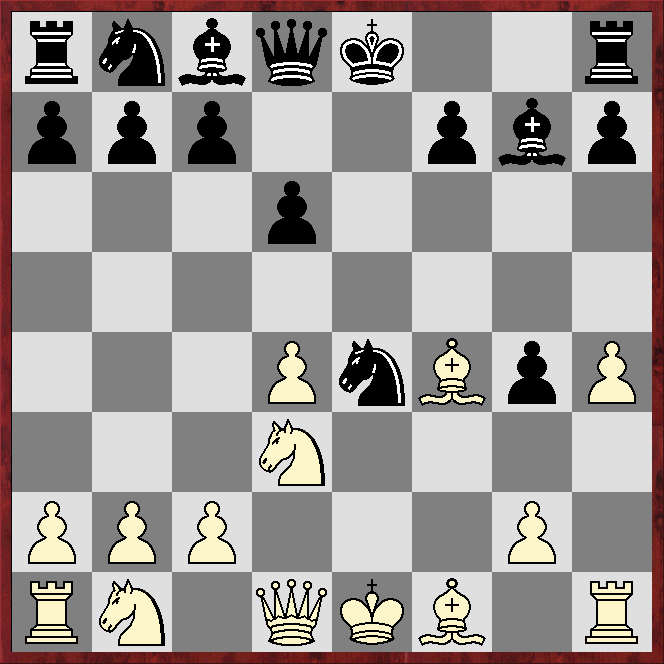
1.c4 Nf6 2.Nc3 d5!? 3.cxd5 Nxd5 4.g3 g6 5.Bg2 Nb6 6.Nf3 Bg7 7.d3
This game is the earliest appearance of this position in ChessBase's Mega database
*****
*****
*****
*****
*****
Stockfish17 and Dragon1 reckon White is slightly better.
7...0-0 8.Be3!?
The engines prefer this over today's more-usual 8.0-0.
8...Nc6 9.0-0 e5 10.Qd2 f5 11.Bh6 f4?!
This seems to increase White's advantage. The engines suggest 11...Qe7.
12.Bxg7 Kxg7 13.Ne4 h6 14.Rad1 g5 15.d4 exd4 16.Nxd4 Ne5?
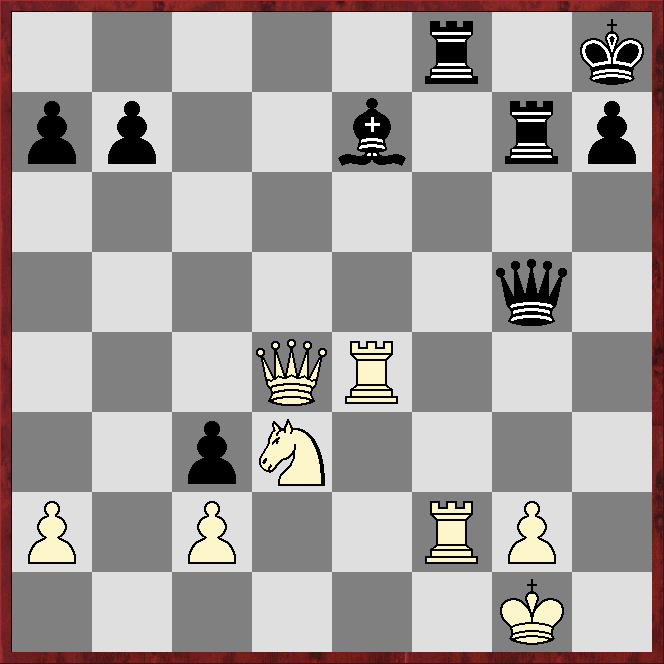
With Black's king so exposed, it is better to force queens off the board with 16...Qxd4.
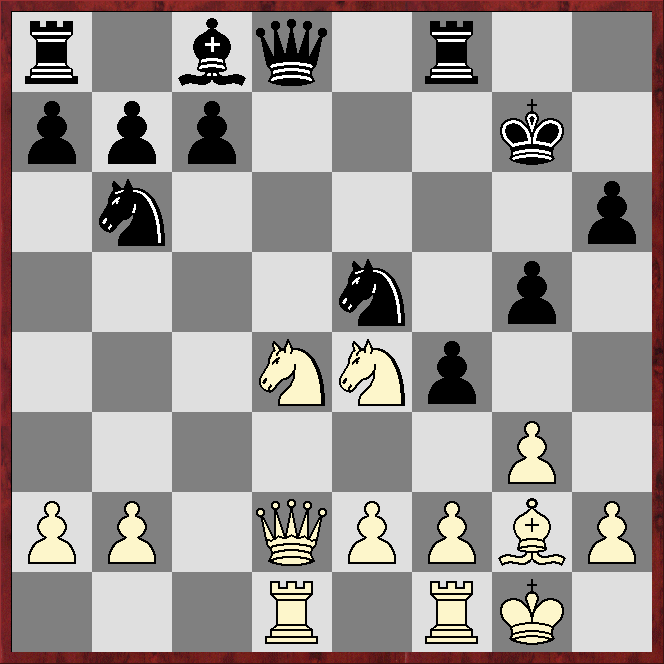
How should White exploit Black's mistake?
*****
*****
*****
*****
*****
17.Nf3?!
White is still better after this, but stronger is 17.Qc3, after which best play, according to the engines, runs 17...Qe7 18.Nf3 Re8 19.gxf4 gxf4 20.e3!, when they reckon White's advantage is worth more than a minor piece.
17...Qxd2 18.Nxd2 Nec4 19.Rc2 Bf5?!
The engines much prefer 19..Re8 or 19...c6.
20.Nfd3?!
Here the engines recommend 20.Nd4.
20...Rae8 21.Nxc4 Bxe4 22.Bxe4 Rxe4 23.Nxb6 cxb6
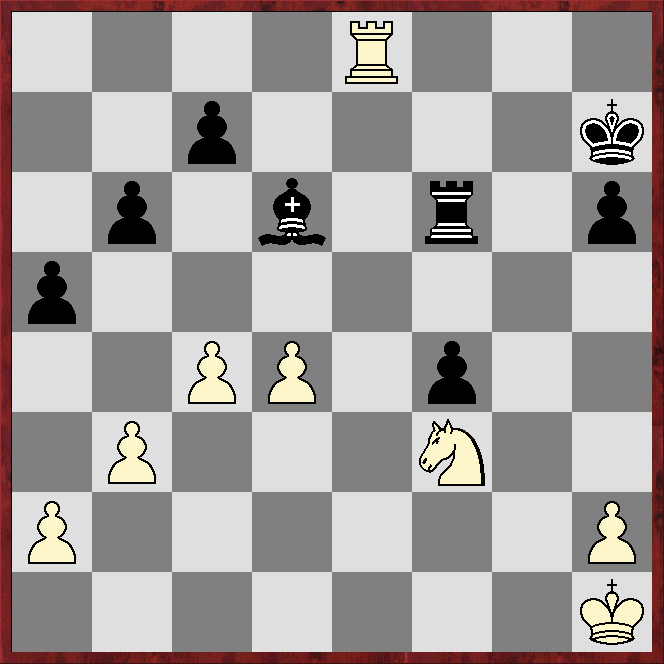
How would you assess this double-rook-ending?
*****
*****
*****
*****
*****
Black has kingside pressure, but White's superior pawn-structure gives the upper hand, according to the engines.
24.gxf4 gxf4!? 25.Rfc1 Rf7 26.f3!? Re3 27.Kf2 Rfe7 28.Rd1 Kg6?!
Activating the king may be premature. The engines suggest 28...R3e5.
29.Rd3?
White has the upper hand after 29.Rd6+ or 29.Rd4, according to the engines.
29...Rxd3 30.exd3 Re3 31.Rd2
Also apparently completely equal is 31.Rc3.
31...Kf5 32.d4 Ke6 33.Re2 Rxe2+ 34.Kxe2
How would you assess this pawn-ending?
*****
*****
*****
*****
*****
White has the only passed pawn, but the ending is completely equal as the white king cannot penetrate Black's position.
34...Kd5
Also drawing is 34...b5.
35.Kd3 a5?
This lets White fix Black's queenside pawns, giving White a winning advantage.
36.a4!
The only winning move.
36...Kc6
36...h5 only postpones the crisis, assuming White answers with 37.h4.
37.Ke4 b5 38.axb5+ Kxb5 39.d5 Kb6
White to play and win
*****
*****
*****
*****
*****
40.Ke5?
White wins by creating a second passer with 40.Kxf4, and if, as in the game, 40...Kc7, then 41.Ke5 Kd7 42.f4 etc.
40...Kc7 41.Kxf4
White has lost a crucial tempo on the previous line, but 41.Ke6 Kd8 is also drawn.
Black to play and draw
*****
*****
*****
*****
*****
41...b5?
Drawing is 41...Kd6.
42.Ke5 b4
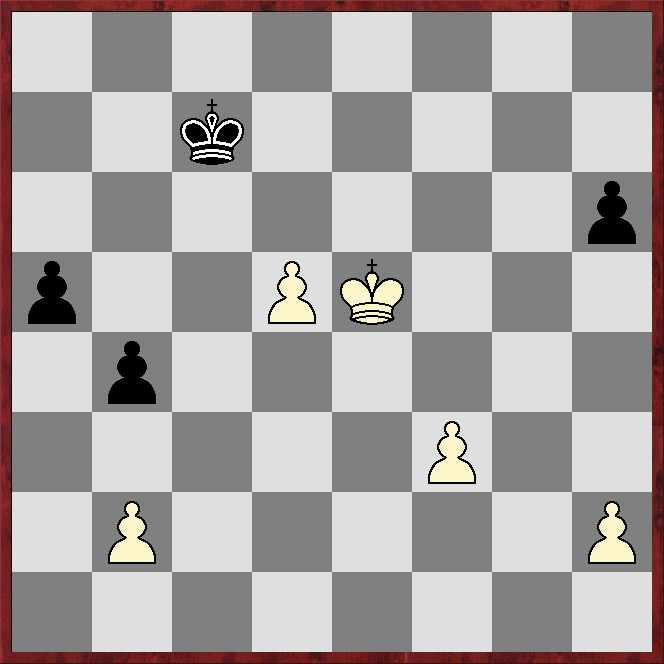
White to play and win
*****
*****
*****
*****
*****
43.f4?
Correct is 43.Ke6!, when 43...a4 44.Ke7 a3 45.bxa3 bxa3 46.d6+ Kc6 47.d7 a2 48.d8=Q a1=Q wins for White, according to the Syzygy endgame tablebase. Black can try 43...Kd8, but that gives White a vital tempo for pushing the f pawn, ie 44.f4 a4 45.f5 a3 46.bxa3 bxa3 47.f6, and now 47...Ke8 loses to 48.f7+ Kf8 49.d6 a2 50.d7 a1=Q 51.d8=Q+ Kg7 52.Qg8#.
43...a4 44.Kd4?!
This makes the draw easy, but 44.Ke6 a3 45.bxa3 b3! 46.Ke7 b2 47.d6+ Kb7! 48.d7 b1=Q 49.d8=Q Qe4+ also holds.
44...a3 45.bxa3 bxa3 46.Kc3 Kd6 47.Kb3 Kxd5 48.Kxa3 Ke4 49.Kb3 Kxf4 50.Kc3 Kg4 51.Kd3 Kh3 52.Ke3 Kxh2 53.Kf2 ½–½
Fischer was giving dollar odds of 10-1 in the games. In other words his eight wins earned him $8, whereas if Reuben had managed to convert this pawn-ending he would have received $10, giving a monetary profit over the series of $2 (but the experience of having played the future world champion was clearly worth more than just a paltry couple of dollars).
Stewart Reuben, RIP.

Thursday, 9 January 2025

White's Best First Move

BOBBY Fischer famously observed that 1.e4 is "best by test."
He first made the remark in his December 1963 Fischer Talks Chess column in the US federation's magazine Chess Life.
Fischer made the assessment based on his experience and judgment - there was little chance in those days of backing up such an assertion with meaningful statistics.
Today the situation is different, as ChessBase's 2025 Mega database reminds us.
I have used it discover what the statistics say about White's best move in modern chess.
I called up games played in the last five years - a massive 2,212,990 of them.
They include players of all abilities, but it is probably fair to say such a collection is skewed to above-average chess in that casual games and many club matches are excluded.
The first surprise is that in those games White scores only 53%, whereas it is often stated that in large databases White scores 55%, or, at worst, 54%.
In those games White had an average rating of 2122, returning an average performance of 2133 - again a lower figure than I expected.
It turns out that in modern chess, as defined above, 1.e4 scores just 52%, while 1.d4 pips it with 53%, but both moves lag behind 1.c4 (55%) and 1.Nf3 (56%).
Also doing relatively well is 1.b3 (56%), a move Fischer dabbled with, but all the moves pale in comparison with 1.h4 (60%), 1.a3 (61%) and 1.a4 (62%).
By now alarm bells should be ringing - clearly raw percentages are not enough to go on.
Luckily chess, unlike most sports, has a well-developed rating system that should give more-informative results.
For example 1.a4, which scores 62%, gives a rating performance of -63. In other words, whites performed at 63 elo below their average rating.
Also doing badly is the other flanking pawn thrust, 1.h4, whose 60% score comes at the price of a -7 rating performance.
In both cases whites must have been on average quite a bit higher rated than the average black.
The move 1.a3 (61%) bucks the trend, at least to an extent, as whites return a +7 rating performance. This is better than the -1 of the 56%-scoring 1.b3 and the +2 of the also 56%-scoring 1.Nf3.
But the three traditional pawn thrusts do best, with 1.c4 (55%) performing at +17, 1.d4 (53%) at +19 and 1.e4 (52%) at +21.
It seems Fischer may have been right all along.

Wednesday, 4 October 2023

Refuting The King's Gambit V

IN 1964 Fischer went on a simul-and-lecture tour of North America.
Early on, in Chicago, he essayed the King's Gambit, but this time played 3.Nf3 instead of his usual 3.Bc4, and found himself facing his own Bust.

Fischer - Kenneth Mott-Smith
Chicago (simul) 1964
King's Gambit
1.e4 e5 2.f4 exf4 3.Nf3 d6 4.d4!?
This is the move that Fischer had said in his article for The American Chess Quarterly would transpose into 4.Bc4 lines.
4...g5 5.Bc4!?
Joe Gallagher in Winning With The King's Gambit (Batsford 1992) called this illogical, explaining: "If White wants to play this he should play it on the fourth move, as then Black is forced to play ...h6." Gallagher mainly covers 5.h4, which was dismissed by Fischer in a note to 4.Bc4.
5...h6!?
This is by no means forced, but it may well be that Mott-Smith was determined to play Fischer's 'refutation'.
This position was considered important enough to merit a diagram in the Quarterly article
*****
*****
*****
*****
*****
6.0-0 Bg7 7.c3 Ne2!?
As I mentioned here, Fischer devoted most of his attention in the article to the known move 7...Nc6, but in a note annotated the text with "(!)" and said he felt it was best.
8.g3 Ng6!?
Preparation or memory slip (Fischer in his Bust article had only covered 8...d5!?, to which he awarded an exclamation mark)? I have not been able to discover much about Mott-Smith, except that he was a lawyer who represented the US in a cable match against Britain, and beat Emanuel Lasker and Alexander Alekhine in simuls in the mid-1920s.
9.Qb3?!
Stockfish16 and Komodo14.1 reckon 9.Ne1!? more-or-less equalises.
9...0-0
Fischer had written that the point of ...Ne2 is to strive to castle kingside, which is what Black has now achieved. If White had played the engines' 9.Ne1!?, then 9...0-0 could be answered with 10.gxf4, regaining White's sacrificed pawn.
10.gxf4 gxf4
Black's extra pawn is doubled and isolated, but it does a useful job in obstructing White's dark-square bishop
*****
*****
*****
*****
*****
11.Kh1 Nc6 12.Qc2 Nce7!? 13.Nbd2 Be6
Making this possible was the point of 12...Nce7!?, but the engines prefer 13...d5.
14.Rg1 Bxc4 15.Nxc4 d5 16.Nce5 dxe4 17.Qxe4 Qd5 18.Qxd5 Nxd5 19.Nxg6 fxg6 20.Rxg6
Who stands better after this flurry of exchanges?
*****
*****
*****
*****
*****
The engines reckon the position is completely equal, but that does not mean it is drawish. Black has the better bishop and a passed pawn, but White has a farside pawn-majority and fewer pawn-islands, so it will be a battle of trying to use one's own advantages while seeking to exploit the opponent's weaknesses.
20...Kh7 21.Rg2 Rae8 22.Bd2 Ne3 23.Re2 Nc4 24.Rae1 Rxe2 25.Rxe2 Nxd2!?
Presumably expecting the surviving bishop to work better with a rook than the surviving knight will, but the engines reckon Black should capture on b2, or play 25...c5!? and meet 26.dxc5 by capturing on b2.
26.Nxd2 Rf6!?
The engines are not keen on this either, one suggestion being 26...Rg8!? to deter Kg2. If White replies 27.Re4, hoping to induce 27...Rf8, and so allow 28.Kg2, possible is 27...Bf6!?, the idea being 28.Rxe4 Bg5, when 29.Rf2?? loses to 29...Be3, so White has to play 29.Rf7+ Kg6 30.Rf2, but then 30...Bxd2 31.Rxd2 Kf5 gives Black a much more-active king.
27.Nf3?!
Probably better is activating the king with 27.Kg2.
27...Bf8?!
The engines agree 27...Ra6 28.a3 Kg6 keeps any Black disadvantage to a minimum.
28.Re8 a5 29.b3!?
The engines suggest immediately activating the white king.
29...Bd6 30.c4 b6
How would you assess this ending?
*****
*****
*****
*****
*****
Black has the generally better piece for cooperation with a rook, but the bishop is somewhat restricted by the f pawn, which is a passer but is blockaded by the knight. White has a farside pawn-majority, but getting it successfully moving does not look easy. Komodo14.1 gives White a slight edge, but Stockfish16 calls the position equal.
31.Kg2 Kg6 32.Kf2 Kf5 33.h3 Rf8 34.Nh4+ Kg5 35.Rxf8+ Bxf8
How would you assess this bishop-v-knight ending?
*****
*****
*****
*****
*****
Rival pawn-majorities favour a bishop, but the bishop is not very good - every black pawn is on a dark square. The engines reckon the position is completely equal.
36.Ng2 Bg7 37.d5 Be5 38.Kf3 Kf5 39.Ne1 Bc3 40.Nd3 Be5 41.a3
Exchanging minor pieces is also equal, according to the engines.
41...Bd6 42.b4 axb4 43.axb4 Be7 44.c5 bxc5 45.bxc5
Black to play and draw
*****
*****
*****
*****
*****
45...Bg5?
Black seems to have three drawing moves but, perversely, defending the threatened f pawn is not one of them.
A) 45...h5!? 46.Nxf4 Bxc5 47.Nxh5 is a tablebase draw.
B) 45...Bf6!? 46.Nxf4 Ke5 is also a draw, according to the engines.
C) 45...Bf8!? is not so clearcut. Komodo14.1 reckons 46.d6!? is promising for White, but 46...Ke6 47.dxc7 Kd7 48.Kxf4, although liked by Komodo14.1, is shown by the Syzygy endgame tablebase to be drawn.
White to play and win
*****
*****
*****
*****
*****
46.Nb4?
The engines show 46.c6 wins, although the winning method is not simple. The threat is 47.d6, and if Black stops that with 46...Be7, then 47.Nxf4 means the white queenside pawns cannot be touched, and so Black is helpless, eg 47...Bd6 (47...Ke5? 48.Ng6+) 48.Nd3 Be7 49.Ke3 Bd6 50.Kd4 Bh2 51.Nc5 Kf6 52.Ke4 Bd6 53.Ne6 Bh2 54.Nd4 h5 55.Nf5 Kf7 56.h4 Kf8 (56.Kf6 d6! 57.cxd6 Kd5!) 57.Kf3! Kf7 58.d6!
46...Be7?
Both 46...Ke5 and 46...Bd8 are completely equal, according to the engines, and 46...Bh4!? also probably draws, but the active text should lose.
47.Na6?
Winning is 47.d6 cxd6 48.c6, eg 48...Bd8 49.Nd5 Kg5! 50.Nxf4!, or 48...Ke6 49.Nd5.
Black to play and draw
*****
*****
*****
*****
*****
47...Ke5?
The engines show Black holds with 47...Bd8.
48.d6! cxd6 49.c6 Bd8 50.c7 Bxc7 51.Nxc7 d5
White to play and win
*****
*****
*****
*****
*****
52.Na6!
If 52.Nb5, 52.h4 or 52.Ne8, then 52...d4 draws.
52...Kf5
If 52...d4 then 53.Nb4 or 53.Nc5.
The game finished:
53.Nb4 d4 54.Nd3 Kg5 55.Nxf4 Kh4 56.Kg2 h5 57.Kh2 1-0

Tuesday, 3 October 2023

Refuting The King's Gambit IV

NOT withstanding his Bust of the King's Gambit in The American Chess Quarterly, Fischer had a surprise in store two years later when he faced Larry Evans, one of the driving forces behind the magazine.

Fischer - Evans
US Championship (New York) 1963
King's Gambit
1.e4 e5 2.f4!? exf4 3.Bc4!?
Fischer's choice of the Bishop's version of the King's Gambit over the much-more popular Knight's could hardly have been predicted by Evans, who responded with the principled:
3...Qh4+
The point of White's beginnerish-looking play is that after ...
4.Kf1
... White will gain time hitting the black queen.
4...d6 5.Nc3!?
According to Viktor Bologan in Bologan's Black Weapons In The Open Games (New In Chess 2014), "Fischer was not satisfied with this move, mostly because he was caught by surprise when Black answered with ..."
5...Be6
... which Bologan awards an exclamation mark.
Unfortunately Bologan does not explain how Fischer would have varied, and the latter's games in ChessBase's 2023 Mega database are no help as subsequent opponents did not play the queen check. Perhaps Fischer would have played the natural 5.Nf3, when the main move in ChessBase's 2023 Mega database, 5...Qh5, is disliked by Stockfish16 and Komodo14.1 on account of 6.Nc3, eg 6...Be6 7.Be2 Nf6 8.d4 with an unclear position.
6.Qe2 c6!?
This may be a tad slow. The engines reckon Black should develop a knight, eg 6...Nd7, and if 7.Nb5, perhaps the move Evans was worried about, then 7...0-0-0!?, when 8.Nxa7+ Kb8 9.Nb5 Ngf6 leaves Black powerfully ahead in development and equal on material.
7.Nf3 Qe7 8.d4 Bxc4 9.Qxc4 g5!?
The engines agree with 9...g5!?, which is about opening a diagonal for the black bishop as much as holding on to the f4 pawn
*****
*****
*****
*****
*****
10.e5
Hoping to open lines to exploit White's lead in development and the awkward line-up of the black monarchs on the e file.
10...d5
Keeping lines closed, and doing it with tempo on the white queen.
11.Qd3
The engines prefer 11.Qb3!?
11...Na6 12.Ne2!? Nb4 13.Qd1 0-0-0 14.c3 Na6
How should White proceed?
*****
*****
*****
*****
*****
15.h4!?
Playing on the side where your king has its address is usually frowned on, but Fischer, I presume, wanted to get at Black's awkward pawn-structure before Black could complete development and be better placed to defend it.
15...g4 16.Nh2 h5 17.Nxf4 Qxh4?
Temporarily winning a pawn, but the engines prefer 17...Qd7!?
18.Kg1
Freeing a square for the h2 knight, and protecting the king's rook.
18...Nh6 19.Nf1 Qe7 20.Nxh5
White has won his pawn back and threatens to go a pawn up.
20...Rg8 21.Nfg3 Rg6?!
The rook is a target here. The engines suggest 21...c5 or 21...Qe6.
22.Nf4 Rg5 23.Be3 Nc7?!
The engines suggest 23...f6.
24.Qd2 Rg8
Again the engines suggest ...f6, but it seems Black is losing material no matter what, eg 24...f6 25.exf6 Qxf6 26.Nfh5.
25.Nfe2
After a series of what seem sub-optimal moves, Black is losing  a piece.
25...f6 26.exf6 Qxf6 27.Bxh6 (1-0, 36 moves)

Monday, 2 October 2023

Refuting The King's Gambit III

FISCHER'S response to his defeat by Boris Spassky led to one of the most famous articles in chess history.
I have told something of the background to the article's publication, in the first issue of The American Chess Quarterly, in this post.
Fischer begins the article by complaining that modern annotators treat the opening with "kid gloves," analysing it "romantically - not scientifically."
He acknowledges the gambit is "making a comeback with the younger Soviet masters," but says Spassky admitted it gives White little, "but he plays it because neither does the Ruy Lopez nor the Giuoco Piano." 
Fischer dismisses lines in which Black declines the gambit, stating "the refutation of any gambit begins with accepting it."
His solution, after the moves 1.e4 e5 2.f4 exf4 3.Nf3, is to reject his choice against Spassky of  3...g5, which he condemns as "inexact because it gives White drawing chances in the ensuing ending ... where Black's extra pawn is neutralised by White's stranglehold on the dark squares, especially f4."*
[The phrase "ensuing ending" is a little odd, considering his encounter with Spassky never reached the endgame - Fischer resigned with each player still possessing a queen, a pair of rooks and a minor piece.]
Instead of 3...g5, Fischer recommends 3...d6, which he awards an exclamation mark, calling it "a high-class 'waiting move'."
Today 3...d6 is second in popularity to 3...g5, but before 1961, the date of the article's publication, 3...d6 also trailed 3...d5, 3...Be7 and 3...Nf6.
Fischer regarded 4.Bc4 as White's proper response, reckoning 4.d4 transposes.
However, this is far from obvious, and in Winning With The King's Gambit (Batsford 1992), Joe Gallagher cites the latter move as "clearly the most critical," while conceding "the plan of Bc4 followed by d3 is also interesting."
Fischer recommended meeting 4.Bc4 with 4...h6, which, like 3...d6, he awarded an exclamation mark, calling it the Berlin Defence Deferred, although today it is more-or-less universally known as the Fischer Defence.
He did not mention Gallagher's suggested 5.d3, instead continuing 5.d4 g5 6.0-0 Bg7 7.c3, claiming the last move is "necessary to protect the d pawn."
Quite a few alternatives have been missed along the way, and it is not even clear 7.c3 is "necessary," eg Stockfish16 for a long time prefers 7.Nc3 and 7.h4, although it does eventually list 7.c3 among its top two moves, at least for a while (Komodo14.1, however, agrees with Fischer's choice).
Position after 7.c3
*****
*****
*****
*****
*****
Fischer then looks in some detail at 7...Nc6, citing authority for it being best, but adds in a note that he believes 7...Ne7 is best, annotating it with (!), adding "there is no reason why Black should not strive to castle kingside."
He continues with the sample line 8.g3 d5 (Fischer gives this an exclamation mark) 9.exd5 fxg3 10.hxg3 0-0 11.Qb3? Qd6 12.Kg2 Nf5 and "wins."
Unfortunately, as indicated, this analysis has a major flaw in it. The engines prefer, among other moves, 11.Nbd2, one point being 11...Qd6?! is now ineffective thanks to 12.Ne4.
Considering the article is so famous, it is short of detailed analysis. Rather, the sentiment behind it, and Fischer's eye for a catchy phrase, including the payoff: "Of course White can always play differently, in which case he merely loses differently," has helped keep it in the public eye.
*I have algebraicised the moves and quotes from the article.

Sunday, 1 October 2023

Refuting The King's Gambit II

BEFORE looking at Fischer's Bust, it makes sense to first look at why he felt a need to write the article.

Boris Spassky - Robert Fischer
Mar del Plata (Argentina) 1960
King's Gambit
1.e4 e5 2.f4
This was not a surprise to the American. Spassky had played the King's Gambit three times at the recently concluded 27th Soviet championship, scoring +2=1-0 in an otherwise disappointing tournament - his score of +5=10-4 left Spassky four points behind winner Victor Korchnoi.
2...exf4 3.Nf3 g5
A principled reply, and a successful one in that there are 4,220 examples of the move in ChessBase's 2023 Mega database, with Black scoring 50%.
4.h4
This goes back to at least 1620 analysis by Gioachino Greco.
4...g4 5.Ne5 Nf6
Holding on to the g4 pawn with 5...h5 is quite popular. Greco's original analysis continued "6.Bc4 Nh6 7.d4 Be7 8.Bxf4 Bxh4+ 9.g3 Bg5 10.Rxh5 Bxf4 11.gxf4 d6[this probably should have been played at move seven] 12.Nxg4 Bxg4 13.Qxg4 Nxg4 14.Rxh8+ Ke7 15.Rxd8 Kxd8 16.Bxf7" with a two-pawn advantage for White.
6.d4 d6 7.Nd3 Nxe4 8.Bxf4 Bg7
What does White have for a pawn, now the initial tactical foray is over?
*****
*****
*****
*****
*****
Not a lot, would seem to be the answer, unless having a d pawn on the fourth rank against a d pawn on the third is significant. Stockfish16 and Komodo14.1 give Black the upper hand.
9.Nc3
Fischer criticised this, giving it a question mark in My 60 Memorable Games, and suggesting 9.c3. The engines prefer the text.
9...Nxc3 10.bxc3 c5!?
Vigorously attacking the white centre. Paul Keres suggested castling, which is marginally preferred by the engines.
11.Be2!? cxd4 12.0-0 Nc6 13.Bxg4 0-0
Now both sides have castled, how would you assess the position?
*****
*****
*****
*****
*****
Komodo14.1 still gives Black the upper hand, but Stockfish16, perhaps influenced by White's lead in development, reckons White is only slightly worse.
Spassky now makes an interesting decision, that at first sight seems anti-positional.
*****
*****
*****
*****
*****
14.Bxc8!?
Exchanging a developed piece for an undeveloped piece, and developing the black queen's rook into the bargain. Stockfish16 likes the move, but Komodo14.1 is at first unimpressed, although the move comes to be it's second choice (behind 14.Bg5).
14...Rxc8 15.Qg4
This is Spassky's idea. By exchanging bishops he cleared a line for the white queen to immediately pressurise the black king's position. Fischer could have prevented this with 14...Qxc8!?, but then 15.Qh5 and 15.Qf3 perform a similar function for White.
15...f5
An anonymous ChessBase annotator in Mega23 claims 15...Kh8 is better, which was also Fischer's verdict in My 60 Memorable Games, but the engines prefer the text.
16.Qg3 dxc3!?
Greedy? Not according to the engines.
17.Rae1!?
Getting the final white piece into play. Alternatively 17.Bxd6 gets a pawn back, but is perhaps not in the spirit of the gambit. The problem is 17...Rf6 comes with a tempo that, as ChessBase points out, enables 18...Rg6, again with tempo.
17...Kh8
This has been criticised (17...Qd7 has been put forward as an improvement) but looks reasonable and rather sensible.
18.Kh1
ChessBase goes so far as to give this a question mark, which seems a bit strong. The anonymous annotator suggests 18.Bxd6, but does not mention the engines' reply, 18...Bd4+. After 19.Kh1 Rg8 White is under pressure and still a pawn down, but the engines agree this is objectively better than the text.
18...Rg8 19.Bxd6!? Bf8!?
Also interesting are 19...Bh6 and 19...Bd4, but the text may be best.
20.Be5+ Nxe5 21.Qxe5+ Rg7!?
Somewhat counterintuitive, but the engines marginally prefer it over 21...Bg7.
22.Rxf5 Qxh4+ 23.Kg1 Qg4
ChessBase gives this a question mark, citing Spassky as praising 23...Qg3. The engines prefer Fischer's choice.
24.Rf2!?
This looks retrograde and slightly awkward, bearing in mind Black has a bishop operating on the dark squares, but Spassky is saving the queen's rook for hitting the black queen.
24...Be7 25.Re4 Qg5
Fischer said he should have taken a draw by repetition with 25...Qd1+ 26.Re1 Qg4 27.Re4 Qd1+ etc. However the engines reckon White can play on with the pawn sacrifice 26.Rf1!? Qxc2 (forced) 27.Rg4 Rcg8, although then White probably has nothing better than taking a draw by repetition with 28.Rxg7 Rxg7 29.Qb8+ Rg8 30.Qe5+ etc. If 26.Kh2, Fischer gives 26...Rc6 27.Qb8+ Rg8 28.Qe5+ with another draw by repetition.
26.Qd4
How should Black proceed?
*****
*****
*****
*****
*****
26...Rf8?
"Overlooking White's real threat," was Fischer's comment. Black's advantage has eroded, according to the engines, but they reckon Black would be equal after 26...Rcg8, among other moves.
White to play and win
*****
*****
*****
*****
*****
27.Re5!?
A simple enough move, but Black's pieces are not supporting each other, and there seems no adequate reply.
27...Rd8
Certainly 27...Qh4? 28.Rxf8+ is no improvement, while 27...Qg4 28.Qxg4 Rxg4 29.Rxe7 also loses a piece for Black.
The game finished:
28.Qe4 Qh4 29.Rf4 1-0

Saturday, 30 September 2023

Refuting The King's Gambit

IN a recent post I pointed out Bobby Fischer took up the King's Gambit after he published his famous 'refutation' of the opening.
The story, briefly, is that Fischer lost to Boris Spassky on the black side of a King's Gambit at Argentina's 1960 Mar del Plata International.
Not only did he lose, but he lost relatively quickly - 29 moves - and apparently was reduced to tears (Fischer was 17 years old).
The following year, in the first issue of The American Chess Quarterly, he wrote A Bust To The King's Gambit.
The article was an instant success, not least thanks to Fischer's trenchant writing style, including: "In my opinion the King's Gambit is busted. It loses by force."
He concluded his analysis: "Of course White can always play differently, in which case he merely loses differently (Thank you, Weaver Adams!)."*
In 1963, at the US championship in New York, Fischer shocked the chess world by using the King's Gambit to beat Larry Evans.
But he did so by meeting 2...exf4 with 3.Bc4, which became his favourite weapon.
However Fischer twice tried 3.Nf3, with one of his opponents essaying Fischer's 'refutation'.
And what of Spassky? He apparently did not believe Fischer's Bust, as is evidenced by his continued success with the King's Gambit.

Here is probably a good point to interject a few words of caution.
When researching a subject such as this, it pays to double-check and, if possible, triple-check sources as myths are easily created and often repeated.
For example, a discussion at Chess.com of Romantic Openings includes the statement: "In 1960 (Mar del Plata) Spassky overwhelmed Fischer with a King's Gambit. Fischer wrote an article for American Chess Quarterly detailing his improved plan "refuting" the gambit, but Spassky used it again to beat Bronstein and Karpov. In fact, over his career Spassky won all 16 King's Gambits he played."
Whenever I see a statement as bold as this one, I instinctively think: "Can that really be true?" And if it is true, why on earth did Spassky not play the King's Gambit every chance he got?
A simple search of any decent database answers these questions.
ChessBase's 2023 Mega database has 31 games with Spassky on the white side of a King's Gambit. His score of +19=12-0 (81%), including wins against Furman and Najdorf as well as Bronstein and Karpov, is impressive, even though it does include games from simuls, but is not perfect.
Incidentally, the same database shows that all five times Spassky was on the black side of a King's Gambit, he won - perhaps that had something to do with his preference for 2.Nf3.
*Adams wrote a series of books and articles claiming White should win after 1.e4.
to be continued

Thursday, 10 August 2023

King's Gambit

DUTCH player Stef van Kesteren commented on a recent post of mine featuring two games in an unusual line of the King's Gambit: 1.e4 e5 2.f4 Bc5 3.Nf3 d5!?
He put forward the merits of another fairly unusual line - one in which blacks, as it were, get their theory in first, namely 2...Nf6!?
Taking a look at it, I found a game featuring none less than Bobby Fischer, his opponent being New Zealand-born Robert Wade, who had won the British championship in 1952 and would do so again in 1970.

Fischer - Wade
Vinkovci (Yugoslavia) 1968
King's Gambit
1.e4 e5 2.f4 Nf6!?
No prizes for guessing Stockfish16 and Komodo14.1 want Black to accept the gambit, but then so (probably) does everyone who plays 2.f4.
Incidentally if, like me, you did not know Fischer played the King's Gambit (yes, I should know things like that, but I must have been overly influenced by Fischer's famous 'refutation' of the opening that he wrote after losing with it with black against Boris Spassky), he played it 18 times, according to ChessBase's 2023 Mega database, every game occurring after his 1960 loss to Spassky.
The text is obscure enough - just 512 games in Mega23 - to be something of a surprise weapon, unless White is very well prepared (there are six more-popular continuations).
3.fxe5!?
The mainline in Mega23 runs 3.Nc3 d5 4.fxe5 Nxe4 5.Nf3 Be7 with an equal game, according to the engines. Fischer almost certainly knew Wade played 2...Nf6!?, and presumably felt the text is an improvement over the main move (the engines agree).
3...Nxe4 4.Nf3
This seems to have been first played by Fritz in 1889 against Isidor Gunsberg (the Fritz in question is Alexander Fritz, who has a variation of the Two Knights Defence named after him).
4...Ng5!?
This is not forced - Capablanca lost in a simul to 4...d5 - but it has been the overwhelming choice of the strongest players.
5.d4 Nxf3+ 6.Qxf3
Not 6...gxf3? 7.Qh4+, as in Jasper Seelemeijer - Van Kesteren, Utrecht (Netherlands) 1998 (0-1, 17 moves).
6...Qh4+ 7.Qf2 Qxf2+ 8.Kxf2
How would you assess this queenless position?
*****
*****
*****
*****
*****
White has lost castling rights, but the white king should fine safety on g1 after the king's rook is developed. Meanwhile White has occupied the centre with pawns, but it is questionable how useful that is without queens as the pawns are targets. Stockfish16 reckons the game is equal; Komodo14.1 gives White a slight edge.
8...Nc6
This was the main move but later 8...d6 became popular, a recent high-level example being Ian Nepomniachtchi (2766) - Shakhriyar Mamedyarov (2759), Zagreb SuperUnited Blitz 2022, which continued 9.exd6 Bxd6 10.Nd2!? 0-0 11.Nc4 Be7 12.Bf4 Be6 13.Rd1 c6 14.Be2 Nd7 15.Na5 g5!? 16.Bd2 Nf6 with a slight edge for Black, according to the engines (½–½, 38 moves).
9.c3 d6 10.exd6 Bxd6 11.Nd2 Be6!?
Svein Johannessen - Wade, Zevenaar (Netherlands) 1961, saw 11...Bf5 12.Nc4 Be7 13.d5!? Bc5+ 14.Be3 Bxe3+ 15.Nxe3 Ne7 16.Nxf5 Nxf5 17.Bd3, when White has the better minor piece in a late-middlegame with rival pawn-majorities.
12.Ne4 Be7 13.Ng5 Bxg5 14.Bxg5
The bishop-pair gives White an edge
*****
*****
*****
*****
*****
14...h6 15.Bh4 g5 16.Bg3 0-0-0 17.Bb5 f5 18.Bxc6!?
A very committal decision. White gives up the bishop-pair and allows opposite-coloured bishops in return for smashing Black's queenside pawn-formation. The move is Komodo14.1's top choice; it is disliked by Stockfish16.
18...bxc6 19.Be5 Rhg8 20.h4 g4!?
Both engines at first strongly dislike this, but it comes to be Komodo14.1's top choice, at least for a while.
21.h5 g3+!?
This positional pawn sacrifice is Stockfish16's top choice, but is not liked by Komodo14.1 until the move is played on the screen and the engine is given minutes to consider the position.
22.Bxg3
What has Black got for a pawn?
*****
*****
*****
*****
*****
I presume the answer is activity. Thanks to opposite-coloured bishops and pressure down the half-open g file, White's kingside pawns are vulnerable.
22...Rg4 23.Rh4 Rdg8 24.Rxg4 Rxg4 25.Re1 Kd7
The engines like 25...Bxa2, one point being 26.Ra1 Bd5 27.Rxa7?? fails to 27...f4. Instead the engines give 26.Re8+ Kb7 27.Be5 Bd5 with equality.
26.Re5 f4 27.Bh2 Rh4 28.Bg1 Bd5
Again capturing the a pawn may be best, eg 28...Bxa2 29.Ra5 Bd5 30.Rxa7 Rxh5. The engines reckon 29.g3 and 29.b4 are a tad better than 29.Ra5.
29.g3 Rg4 30.Bh2
How should Black proceed?
*****
*****
*****
*****
*****
30...f3?
This may have been a winning attempt, or perhaps the idea was to keep the white bishop out of play for as long as possible. Better are 30...fxg3+ and Stockfish16's 30...Rg7.
31.b3
Black cannot hold the f pawn.
31...a6
The opposite-coloured bishops ending after 31...Rg5!? 32.Rxg5 hxg5 is lost, according to the engines, and presumably the players thought so too. One plausible line runs 33.g4 Be4 34.c4 a5 35.Be5 Kd8 36.Ke3 Kd7!? 37.h6, after which Black must give way somewhere.
32.c4 Rxd4?!
Desperation.
33.cxd5 Rd2+ 34.Kxf3 Rxh2 35.dxc6+ Kxc6 36.Re6+ Kd7 37.Rxh6 Rxa2 38.Rg6 1-0

Friday, 20 November 2020

Bobby Fischer v The Sicilian (conclusion)

FISCHER for the most part attacked the Sicilian with open lines, ie those based on 2.Nf3, 3.d4 and (after 3...cxd4) 4.Nxd4.
He liked developing his king's bishop to c4, and usually did so even when he could set up a Maróczy Bind by pushing his c pawn to that square.
Fischer was often happy to castle queenside and aim for a vigorous kingside attack.
The one striking exception to the above is when he faced 1.e4 c5 2.Nf3 e6 - his percentage score with the King's Indian Attack (3.d3 followed by g3 and Bg2) was far higher than with 3.d4 cxd4 4.Nxd4.
However his score with the latter lines was by no means poor, and they occurred far more frequently in his games. 

Thursday, 19 November 2020

Bobby Fischer v The Sicilian (part 11)

Sicilian KIA
Fischer scored 74% in his career against the Sicilian, mostly using open lines, ie 2.Nf3, 3.d4 and (after 3...cxd4) 4.Nxd4.
After 1.e4 c5 2.Nf3 Nc6 3.d4 cxd4 4.Nxd4 he scored exactly 74%, according to ChessBase's 2020 Mega database.
After 1.e4 c5 2.Nf3 d6 3.d4 cxd4 4.Nxd4 his score slipped to 71%, and after 1.e4 c5 2.Nf3 e6 3.d4 cxd4 4.Nxd4 his score slipped further to 69%.
Scoring 69%, which roughly translates over 10 games to +5=4-1, is more than most of us can manage, but it was not good enough for Fischer.
That is why he started meeting 1.e4 c5 2.Nf3 e6 with 3.d3, inaugurating the King's Indian Attack.
Specifically it is a version of the KIA in which Black has committed to ...e6 and ...c5.
The move ...e6 is significant because it is sometimes said Black wants his e pawn on either e5 or e7 in the KIA, but not on e6.
And ...c5 is significant because it rules out black systems in which the c pawn is kept at home and the tempo saved is used for faster development.
Fischer played 1.e4 c5 2.Nf3 e6 3.d3 six times, and won all six games.
All of his opponents replied 3...Nc6, which is overwhelmingly the main line in Mega20, and Fischer continued with 4.g3, at which point play diverged.

Position after 4.g3
Black prepares to fianchetto the king's bishop by playing 4...g6!?
This is the main line but it is probably fair to say Black is taking a slight risk in that his play is a little slow, and the moves ...e6 and ...g6 do not always work well together (Black's kingside dark squares will be weak if the black dark-square bishop gets exchanged).
5.Bg2 Bg7 6.0-0 Nge7
More than 6,000 games reach this position in Mega20.
7.c3
Fischer earlier played 7.Nbd2, which is a typical placement for the white queen's knight in the KIA. It usually goes to d2 after Black has played ...d5. Then if Black later plays ...dxe4 White can recapture by playing dxe4 without allowing an exchange of queens. But another reason for the knight going to d2 is that it can be redeployed to the kingside via f1 (after White plays Re1) and e3 or h2 (White often plays h4). Fischer - Edmar Mednis, US Championship (Cleveland) 1957, continued, after 7.Nbd2, with 7...0-0 8.Re1 b6 9.e5 d5 10.Nf1 Qc7 11.Bf4 d4 12.Qd2 Re8 13.Bh6 Bh8 14.h4 with advantage to White, according to Stockfish12 and Komodo11.01 (1-0, 50 moves).
The point of the text is to blunt the black fianchettoed bishop and to build a strong centre with d4.
7...0-0
This is the main move, but also popular is 7...d5. Fischer - Ruben Rodríguez, Simul (Manila, Philippines 1957), continued 8.Qe2 (another way of avoiding an exchange of queens in the event of ...dxe4) 0-0 9.e5 f5!? (trying to get his share of kingside space - more popular are 9...b5 and 9...b6, with a slight edge for White, according to Stockfish12, although Komodo11.01 reckons the latter move is close to giving Black equality) 10.exf6!? Bxf6 11.Bh6 Re8 12.g4!? e5 13.h3 with an unclear position (1-0, 28 moves). The engines reckon White has a major improvement in not playing exf6; Stockfish12 likes 10.d4 while Komodo11.01 prefers 10.Bf4.
7...d6 8.Re1 transposes (Fischer played his seventh and eight moves in reverse order) to Fischer - Oscar Panno, Buenos Aires 1970, which continued 8...0-0 9.d4 cxd4 10.cxd4 d5 11.e5 Bd7 12.Nc3 Rc8 13.Bf4 with a sizeable advantage for White, according to the engines (1-0, 36 moves).
8.d4!?
More popular in Mega20 are 8.Be3 and 8.Re1, but the text scores a higher percentage and is Stockfish12's choice (Komodo11.01 likes 8.Re1).
8...d6!?
Subsequent games saw the more Sicilian-like 8...cxd4 9.cxd4 d5 10.e5, which is similar to Fischer - Panno but with White not having played Re1. Stockfish12 likes White, while Komodo11.01 gives a slight nod to Black.
9.dxc5 dxc5 10.Qe2
White scores an excellent 63% with this move in Mega20. Fischer - Joaquim Durão, Olympiad (Havana) 1966, continued 10...b6 11.e5 (the engines much prefer 11.Na3!?) a5 12.Re1 Ba6 13.Qe4 Ra7 14.Nbd2 Bd3 15.Qh4 Nd5 16.Qxd8 Rxd8 17.a4 Rad7 18.Bf1 Bxf1 19.Kxf1 with the better game for White, according to the engines (1-0, 46 moves).

Black strikes in the centre with 4...d5
This move is second in popularity to 4...g6!?
5.Nbd2 Bd6!?
This aggressive posting of the dark-square bishop is very popular, but also commonly seen is the more-modest 5...Nf6 6.Bg2 Be7, which will be considered later as Fischer reached it via a 4...Nf6 move-order.
6.Bg2 Nge7
Much less-popular is 6...Nf6 as Black will probably have to lose time avoiding a pawn fork on the e5 square.
7.0-0 0-0 8.Nh4!?
Fischer - Attilio Di Camillo, New Jersey Championship (East Orange) 1957, saw the more-popular 8.Re1, continuing 8...Qc7 9.c3 Bd7 10.Qe2 f6 11.a3!? (Fischer decides to chip away at Black's fourth rank with b4) Rae8 (11...a5!? may be better) 12.b4 b6 13.d4 cxd4 14.cxd4 dxe4 15.Nxe4 with much the better game for White, according to the engines (1-0, 49 moves).
8...b6 9.f4 dxe4 10.exd4 Ba6 11.Re1 c4
Later the move 11...Bc7!? became popular. It is generally met by 12.c3, giving up the d3 square (at least temporarily) but keeping black's pieces out of d4. Sergey Dolmatov (2605) - Joël Lautier (2560), Rubinstein Memorial (Polanica-Zdrój, Poland) 1991, continued 12...Bd3 13.e5 Qd7 (13...c4!?) 14.Ne4 Rad8 15.Qg4 with a promising kingside attack for White (1-0, 46 moves).
12.c3 Na5?!
Black's pieces are bunching on the queenside, leaving his king exposed. The engines reckon 12...Bc5+ 13.Kh1 b5, as seen in two later games, may be better, but they also want to annoy White with 13...Bf2!? 14.Rf1 Bc5, although it is not clear the rook is worse placed on f1.
13.e5 Bc5+ 14.Kh1 Nd5?!
Black should have played 14...Rc8 or offered the exchange by 14...Qd3!?, according to the engines, although they still prefer White.
15.Ne4 Bb7 16.Qh5
Fischer goes for the jugular. Also strong is 16.f5!?
16...Ne7
The engines come to agree this is Black's best defence.
17.g4 Bxe4
Komodo11.01 suggests 17...Ng6!?, but after Stockfish12's 18.Nf3 the engines agree best play runs 18...Bxe4 19.Rxe4 Nc6 20.Re1 Be7 21.Qh3 with strong play for White.
18.Bxe4 g6 19.Qh6 Nd5 20.f5
White had a winning attack in Fischer - Borislav Ivkov, Piatigorsky Cup (Santa Monica, California) 1966 (1-0, 29 moves).

Black develops his king's knight with 4...Nf6
5.Bg2 Be7 6.0-0 0-0 7.Nbd2 d5
This is an important position because it is often reached via a French Defence move-order, ie with 1...e6.
8.Re1
Fischer - Lhamsuren Myagmarsuren, Interzonal (Sousse, Tunisia) 1967, went 8.e5 Nd7 9.Re1 b5 10.Nf1 b4 11.h4 a5 12.Bf4 a4 13.a3 bxa3 14.bxa3 with a roughly level game, but Fischer pursued his kingside play more successfully than Myagamarsuren was able to counter on the queenside (1-0, 31 moves).
8...Qc7
The more-popular 8...b5 can easily transpose to the previous note. But an interesting independent try, preferred by the engines, is 9.exd5 exd5 10.d4!?, which scores very well in Mega20. The main line continues 11...c4 12.a4, when Black's queenside is looking a little loose. Best play, according to the engines, goes 12...Bf5 (12..b4 13.Ne5! Nxd4 14.Ndxc4 is awkward for Black) 13.c3 b4 14.Ne5 with pressure against the black queenside.
9.e5
Fischer - Arthur Feuerstein, US Championship (New York) 1957, saw 9.Qe2!? Rd8 10.e5 Ne8!? 11.c3 b5 12.Nf1 b4 13.Bf4 Qa5 14.c4!? Nc7 15.h4, when White has an edge, according to Stockfish12, although Komodo11.01 rates the position as equal (1-0, 44 moves).
9...Nd7 10.Qe2 b5 11.h4 a5 12.Nf1 Nd4!?
The main line runs 12...Ba6 13.Bf4 b4 14.Ne3 Nb6 15.Ng4 with a position the engines have trouble evaluating. Their verdicts fluctuate but eventually they give White an edge.
13.Nxd4 cxd4
The d4 pawn may prove long-term weak but, at least for a while, gives Black greater central control and allows pressure down the c file.
14.Bf4 Ra6!? 15.Nh2 Rc6 16.Rac1 Ba6?!
Missing White's reply. The engines suggest 16...Bb4 with an unclear position (Stockfish12 narrowly prefers White; Komodo11.01 reckons the chances are even).
17.Bxd5!
This was one of the games that persuaded blacks - at least those in the know - to avoid a line-up of having the black queen on c7 pressurising a white pawn on e5 but with a white bishop on f4 supporting the e5 pawn.
17...exd5!?
Arguably less calamitous but still bad is 17...Rc5 18.Be4, when Black has no compensation for a pawn and still faces a kingside attack.
18.e6 Qd8 19.exd7 Re6 20.Qg4 f5 21.Qh5 Qxd7 22.Nf3
White was much better in Fischer - Uzi Geller, Natanya (Israel) 1968 (1-0, 32 moves).

Black develops the king's knight with 4...Nge7
5.Bg2 g6!? 6.0-0 Bg7
This is a simple transposition to lines considered under Black prepares to fianchetto the king's bishop by playing 4...g6!?

Wednesday, 18 November 2020

Bobby Fischer v The Sicilian (part 10)

Sicilian Kan
Fischer varied his replies to 1.e4 c5 2.Nf3 e6 3.d4 cxd4 4.Nxd4 a6, playing 5.c4 early in his career and also trying 5.Nc3, but finally settling on 5.Bd3.
Position after 5.Bd3
Black develops his king's knight with 5...Nf6
6.0-0 d6
The other popular move here is 6...Qc7, which Fischer did not face. The main line continues 7.Qe2 d6 8.c4 g6 9.Nc3 Bg7. There are more than 1,200 games with this position in ChessBase's 2020 Mega database. White is better, according to my main analysis engines Stockfish12 and Komodo11.01, although there is no clearly established best move. One popular line liked by both engines is 10.Be3 0-0 11.Rac1 Nbd7 12.Rfd1 when White's extra space and lead in development make the white position easier to play, but Black has no big weaknesses.
7.c4
As a general rule Fischer did not set up a Maróczy Bind against the Sicilian but, as I mentioned above, he did like it early in his career against the Kan, and here c4 is overwhelmingly the most-popular move.
7...Bd7
The main line in Mega20 goes 7...Be7 8.Nc3 0-0 9.Be3, with the usual slight edge White gets early on in Maróczy Bind positions.
8.Nc3 Nc6 9.Be3!?
More popular is 9.Nxc6 Bxc6 10.Qe2, which the engines reckon slightly favours White.
9...Be7 10.h3!?
Other moves are more popular but this prophylaxis against a black knight coming to g4 has been played in more-modern times by Nigel Short and Michael Adams. A secondary idea is that White may later expand on the kingside with g4.
10...Ne5!?
Sergei Rublevsky played 10...0-0 against both Short and Adams, but the engines prefer the text.
11.Be2!?
An interesting moment. Whites often allow their light-square bishop to be exchanged in Maróczy Bind positions, but Fischer, as has perhaps been apparent in this series, had a special affinity for that bishop against the Sicilian.
11...Rc8 12.Qb3 Qc7 13.Rac1 0-0
Black has problems after 13...Nxc4?! 14.Bxc4 Qxc4 15.Qxb7.
14.f4 Nc6 15.Nf3
White was better in Fischer - Miguel Najdorf, Olympiad (Siegen, Germany) 1970 (1-0, 48 moves).

Black develops the queen with 5...Qc7
6.0-0 Nc6 7.Nxc6!?
This is the main move in the position.
7...bxc6
The engines agree this is best, but 7...dxc6 is also popular, after which the engines like 8.Be3 Nf6 9.Nd2, when White has a slight edge in development and space.
Much-less popular is 7...Qxc6, when White gets an even bigger lead in development.
8.Nd2 Nf6 9.b3 Bc5 10.Bb2 e5 11.Kh1 d6 12.f4
White was better in Fischer - Lewis Hucks, Simul (Washington DC) 1964 (but 0-1, 21 moves).

Black challenges the developed white knight with 5...Nc6
6.Nxc6
This is easily the most-popular move.
6...bxc6!?
After the commoner 6...dxc6 the main line runs 7.0-0 e5 8.Nd2 Nf6 9.Nc4 Qc7, when the engines reckon both 10.Be3 and 10.Bd2 give White an edge.
7.0-0 d5 8.c4!? Nf6
Quite popular is 8...dxc4?! 9.Bxc4 Qxd1 10.Rxd1, but the engines reckon White is much better.
9.cxd5 cxd5 10.exd5 exd5!?
A key moment.
Most popular in Mega20 is 10...Nxd5. The engines like meeting it with the somewhat-unusual 11.Nc3!?, when 11...Nxc3 12.bxc3 is good for White, according to them, a sample line running 12...Bd6 13.Rb1 0-0 14.Be3, when White's control of open lines gives the first player an edge, according to the engines.
Grandmasters have also played 10...Qxd5 11.Nc3 Qc6,when 12.Be2! is strong for White.
11.Nc3 Be7 12.Qa4+ Qd7
Subsequent games saw most players prefer 12...Bd7!? but then 13.Qd4 leaves White well-placed to combat Black's IQP.
13.Re1 Qxa4 14.Nxa4 Be6 15.Be3 0-0 16.Bc5
White was better in Fischer - Tigran V Petrosian, Candidates' Final Game 7 (Buenos Aires) 1971 (1-0, 34 moves).

Black develops the king's bishop with 5...Bc5
Fischer did not face this popular try. The main line continues 6.Nb3 Be7!? 7.0-0 d6 8.c4 Nf6 9.Nc3 with a Maróczy Bind that the engines reckon is good for White.

Tuesday, 17 November 2020

Bobby Fischer v The Sicilian (part nine)

Sicilian Taimanov
Fischer liked meeting 1.e4 c5 2.Nf3 e6 3.d4 cxd4 4.Nxd4 Nc6 (Black's second and fourth moves are often transposed) with the aggressive 5.Nb5 (5.N1c3 is over six times more popular in ChessBase's 2020 Mega database).
After 5...d6 Fischer again usually continued with what is the second-most popular move, 6.Bf4!?, meeting 6...e5 with 7.Be3.
Position after 7.Be3
Black develops the king's knight with 7...Nf6
8.Bg5!?
This surprising (at least at first sight) continuation is the main line. The idea is to take control of the d5 square.
8...Be6!?
This has been given a question mark, for example by Ľubomír Ftáčnik, but it is a popular move and is the choice of my main analysis engines, Stockfish12 and Komodo11.01.
The main alternative is 8...a6, which Fischer did not face. The normal continuation then is 9.Bxf6 gxf6 10.N5c3, which has many similarities to the Sveshnikov.
Fischer did face 8...Qa5+. Fischer - Mark Taimanov, Candidates' Quarter-Final Game 2 (Vancouver) 1971, continued 9.Qd2 Nxe4 10.Qxa5 Nxa5 11.Be3 Kd7 (the only reasonable answer to the threat of Nc7+) 12.N1c3!? (Black scores well after 12.Nxa7 d5) Nxc3 13.Nxc3 Kd8 14.Nb5 Be6 15.0-0-0 b6 16.f4, when White has more than enough compensation for a pawn (1-0, 89 moves). Subsequent games concentrated on 13...b6!? 14.0-0-0 Bb7 15.f4, when the engines like White's compensation, and practical results have greatly favoured the first player.
9.N1c3 a6 10.Bxf6 gxf6 11.Na3 Nd4
Fischer - Tigran V Petrosian, Candidates' Final Game 1 (Buenos Aires) 1971, saw 11...d5!? 12.exd5 Bxa3 13.bxa3 Qa5 14.Qd2 0-0-0 15.Bc4 Rhg8 16.Rd1 Bf5 17.Bd3 Bxd3 18.Qxd3 Nd4 19.0-0 with a roughly equal game (but 1-0, 40 moves).
12.Nc4!?
Fischer - Miguel Najdorf, Piatigorsky Cup (Santa Monica, California) 1966, went 12.Bc4 b5 (12...d5!?) 13.Bxe6 fxe6 14.Ne2 with a level game, according to the engines (but 1-0, 47 moves).
12...f5 13.exf5 Nxf5
13...Bxf5 14.Ne3 Be6 15.Bc4 is slightly better for White, according to the engines, while 14...Bg6 15.Ncd5 Bh6 16.c3 favoured White in Hikaru Nakamura (2708) - Alexei Shirov (2723), Corus (Wijk aan Zee) 2010 (1-0, 41 moves).
14.Bd3 Rc8
Stockfish12 reckons 14...Ne7!? is strong for Black, but Komodo11.01 is unimpressed. One sharp line runs 15.Qf3 d5!? (the point) 16.Nxe5 d4 17.Bc4 Qc7 18.Nxf7 Bxc4 19.Nxh8 0-0-0 with an unclear position that Stockfish12 reckons is winning for Black, but Komodo11.01 rates as almost equal.
15.Bxf5 Rxc4
White has a slight edge after 15...Bxf5 16.Ne3, according to the engines.
16.Bxe6 fxe6 17.Qe2 Rd4 18.0-0
White was slightly better in Fischer - Taimanov, Candidates' Quarter-Final Game 6 (Vancouver) 1971 (1-0, 43 moves).

Black drives the white knight back with 7...a6
8.N5c3 Nf6
This is the main move.
8...Be6 9.a4 (9.Nd5!?) Nge7 10.Nd5 Bxd5 11.exd5 Qa5+ 12.Nc3 Nb8 13.Bd3 was better for White in Fischer - John Blackstone, Simul (San Francisco) 1964 (1-0, 26 moves).
8...b5?! 9.Nd5 was much better for White in Fischer - Jeff Sullivan, Simul (Chicago) 1964 (but ½–½, 48 moves).
9.Na3!?
Other moves are more popular, including 9.Bg5!? and 9.Bc4.
9...Ng4!? 10.Nc4 Nxe3 11.Nxe3
Black has won the bishop-pair, but White's control of d5 is probably more important.
11...Be7 12.Bc4 0-0 13.0-0 Bg5 14.Nf5!? Bxf5 15.exf5 Nd4 16.Qd3
White had a tiny edge, according to the engines, in Fischer - Osvaldo Bazán, Bueons Aires 1960 (but ½–½, 35 moves).

Monday, 16 November 2020

Bobby Fischer v The Sicilian (part eight)

Sicilian Kalashnikov/Löwenthal
After 1.e4 c5 2.Nf3 Nc6 3.d4 cxd4 4.Nxd4 e5 Fischer played the mainline 5.Nb5, meeting the normal continuation 5...d6 with 6.N1c3, after which 6...Nf6 transposes to the Sveshnikov Variation (see part seven).
Position after 5.Nb5
However Black can avoid the transposition with 5...a6 (the Löwenthal Variation) and, after 5...d6 6.N1c3, with 6...a6 (the Kalashnikov Variation).

Löwenthal Variation 5...a6
6.Nd6+ Bxd6
7.Qxd6 Qf6
8.Qd1 Qg6
9.Nc3 Nge7
This is the main continuation in ChessBase's 2020 Mega database, but also popular is 9...d5!?, although after the forcing 10.Nxd5 Qxe4+ 11.Be3 Nd4 12.Nc7+ Kde7 13.Rc1 Bg4 (13...Rb8? 14.c3 Ne6 15.Nd5+ is positionally winning for White, according to Stockfish12 and Komodo11.01) 14.Qd3 Qxd3 15.Bxd3 Rd8 16.f3 White's bishops seem to give him the better game.
10.h4
The engines' 10.Be3!? also looks good for White.
10...h5
11.Bg5 d5!?
This is easily the most-popular move, and is also best, according to the engines, but after ...
12.exd5!?
(Fischer beat Tal at the 1962 Candidates' tournament with 12.Bxe7, but the text seems stronger)
12...Nb4
13.Bxe7 Kxe7
14.Bd3 Nxd3+
15.Qxd3 Qxd3
16.cxd3
... Black has trouble equalising.
The main line continues:
16...b5
17.a3 Bb7
Now the engines give best-play as 18.0-0 Rad8 19.Rae1 Bxd5 (19...f6 20.f4) 20.Rxe5+ Be6, when Black remains a pawn down.

Kalashnikov Variation
Fischer's opponents met 5...d6 6.N1c3 with 6...Nf6, transposing to what is now called the Sveshnikov Variation.
Today the main point of this move-order is 6...a6 7.Na3 b5.
The main line continues 8.Ng5 Nge7 9.c4, which the engines like, but they prefer the much-less well-known 9.Bd3!?, when the main line in Mega20 runs 9...Nxd5 10.exd5 Ne7 10.c4 with what they reckon is a good position for White, eg 10...bxc4 11.Nxc4 Ng6 (11...Nxd5?! 12.Be4 Nc7 13.Bxa8 Nxa8 does not seem to give enough compensation for the exchange) 12.Bd2, when White has a healthy lead in development and is much better, according to the engines.

Sunday, 15 November 2020

Bobby Fischer v The Sicilian (part seven)

Sicilian Sveshnikov
Fischer met 1.e4 c5 2.Nf3 Nc6 3.d4 cxd4 4.Nxd4 Nf6 5.Nc3 e5 with the mainline 6.Ndb5 d6 7.Bg5.

Position after 7.Bg5

Black attacks the advanced knight with 7...a6
8.Bxf6!?
The main move is 8.Na3 but the text is a respectable alternative.
8...gxf6 9.Na3

A)
9...f5
Stockfish12's choice.
10.Bc4 Bg7?!
Critical seems to be 10...Qg5, when the main reply is 11.g3 but my main analysis engines prefer 11.Bd5 with an unclear position. One point of 11.Bd5 is that 11...Qxg2 can be met by 12.exf5 Qg5 13.Nc4 Bxf5 14.Bxc6+ bxc6 15.Nxd6+ Bxd6 16.Qxd6, when the engines reckon Black has to find 16...Rd8! 17.Qxc6+ Kf8! 18.Rd1 Kg7, after which Black's active pieces compensate for the pawn-minus, according to Komodo11.01, but Stockfish12 comes to prefer White.
11.Qh5 0-0
12.exf5 Nd4
13.Bd3
White had a large advantage, according to the engines, in Fischer - Andrew Soltis, Manhattan (New York) Blitz 1971 (1-0, 25 moves).

B)
9...d5!?
This is not as weird as it may appear at first sight.
10.Nxd5 Bxa3
11.bxa3
The point of Black's play, which was pioneered by Jorge Pelikán, is that White's queenside pawns are a mess.
11...Be6
12.Bc4 Qa5+
13.Qd2 0-0-0
A key moment. Pelikán preferred exchanging queens, 13...Qxd2+ 14.Kxd2, and then castling long, 14...0-0-0, although the queenless middlegame is slightly better for White, according to the engines.
14.Rd1 Qxa3
15.0-0
Black has regained his pawn but White has the safer king.
15...Rhg8
The engines prefer 15...f5!? but reckon White may be slightly better after 16.Qe2 (Stockfish12) or 16.exf5 (Komodo11.01).
16.Qe3!
Despite having the safer king, Fischer first more-or-less forces queens off ...
16...Qxe3
17.fxe3!
... and then recaptures in a way that activates his king's rook along the f file.
17...Kb8
Leonid Shamkovich - Alexander Jongsma, IBM Amsterdam 1968, saw 17...Rg4 18.Bd3 f5 19.Nf6 Rh4 20.exf5 Bxa2 21.Be4 with a large advantage for White, according to the engines (1-0, 47 moves).
18.Bb3!?
The straightforward 18.Rxf6 is also good for White.
18...Rg6 19.Nb6 Kc7 20.Rxd8 Nxd8 21.Nd5 Bxd5 22.Bxd5
White was better in Fischer - Héctor Rossetto, Buenos Aires 1960, according to the engines (1-0, 44 moves).

C)
9...b5
This is easily Black's most-popular response, but it was not faced by Fischer. The main line runs 10.Nd5 f5 11.Bd3 Be6 12.0-0 Bxd5 13.exd5 Ne7
More than 1,000 games have reached this position in ChessBase's 2020 Mega database.
White faces a major choice between grabbing a pawn by 14.Nxb5!?, which gives Black a strong initiative with 14...Bg7 (14...Nxd5? 15.Bxf5; 14...axb5?? 15.Bxb5+ Nc6 16.Bxc6+ Ke7 17.Bxa8) 15.Nc3 e4 (Stockfish12 gives Black full compensation, but Komodo11.01 prefers White), or playing less greedily, eg 14.c4 Bg7 15.Rb1 e4 16.Be2 (again Stockfish12 reckons Black is equal, but Komodo11.01 gives White a small edge).

Black develops the king's bishop with 7...Be7?
This is the most-popular alternative to 7...a6 - there are 274 examples of the move in Mega20 - but White wins a pawn by force.
8.Bxf6

A)
8...gxf6
9.Nd5 0-0
10.Nxe7+ Qxe7
11.Qxd6
Black has no compensation for being a pawn down.

B)
8...Bxf6
9.Nxd6+
Both 9...Ke7 and 9...Kf8 can be met by 10.Nxc8(+), when again Black has no compensation for a pawn.

Saturday, 14 November 2020

Bobby Fischer v The Sicilian (part six)

Sicilian Scheveningen
After 1.e4 c5 2.Nf3 d6 3.d4 cxd4 4.Nxd4 Nf6 5.Nc3 e6 Fischer experimented with 6.Bc4, which can easily transpose into Najdorf and Sozin lines I have already covered.
So 6.Bc4 would be a good choice for someone who wants to cut down on learning new material.
But Fischer's main weapon against the Scheveningen was 6.g4!?, which is also the analysis engine Stockfish12's choice.

Position after the aggressive 6.g4!?

Black develops the queen's knight with 6...Nc6!?
A popular continuation that has been played by Kasparov, but it is not liked by Stockfish12 or my other main analysis engine Komodo11.01.
7.g5 Nd7 8.Be3
The main move. Fischer also tried 8.Ndb5!?, when the main line continues 8...Nb6 9.Bf4 Ne5 10.Qh5 Ng6 11.Be3 a6 12.Nd4 with a position the engines reckon is level, although Fischer beat Enver Bukić with it at Skopje (Yugoslavia) 1967.
8...Be7 9.h4 a6
Somewhat more popular, at least in ChessBase's 2020 Mega database, is 9...0-0, but castling into White's attack is not to everyone's taste, and the engines much prefer White after the mainline continuation 10.Qd2 a6 11.0-0-0 (winning, according to Stockfish12).
10.Qd2 Nde5 11.0-0-0!?
More popular today is 11.Be2, which the engines like, but they reckon the text is even stronger.
11...Qc7 12.f4 Ng4 13.Bg1 Nxd4?!
The engines prefer 13...h5, which was played in later games, but reckon White has at least the upper hand after several lines including 14.Be2 bd7 15.f5 g6 16.Nxc6 bxc6 17.f6, when White's extra space and better coordination are big factors.
14.Qxd4 e5 15.Qd2 exf4 16.Nd5 Qc6 17.Qxf4
White has a large advantage, and Fischer went on to win in a 1964 simul.

Black prepares queenside counterplay with 6...a6
7.g5 Nfd7 8.Be3 b5 9.a3 Bb7 10.Qd2!?
Later games saw 10.h4 become popular, but Fischer's choice also seems to give White an advantage and is less likely to be known by blacks.
10...Be7 11.h4 Nc5 12.f3 Qc7 13.0-0-0 Nbd7
All this was seen in Fischer - Miguel Najdorf, Olympiad (Leipzig) 1960, when Fischer continued with the speculative 14.Bxb5!? axb5 15.Ndxb5 Qc6 16.Nxd6+ Bxd6 17.Qxd6, which does seem better for White, although the game was drawn in 59 moves. However the engines reckon White should be more patient with 14.h5 and await developments.

Black counters in the centre with 6...d5?!
Meeting a flank attack with counterplay in the centre is a classic response, but it does not seem to work here.
7.exd5!
More popular is 7.Bb5+, but the text is stronger as the simple 7...Bd7 is an effective answer to the latter.
7...Nxd5 8.Bb5+ Bd7 9.Nxd5 exd5 10.Qe2+ Qe7 11.Be3
White has a lead in development and a target at d5. He is much better, according to the engines. Fischer - Samuel Reshevsky, US Championship (New York) 1966-67, continued 11...g6 12.Bxd7+! Nxd7 13.Nb5 (1-0, 43 moves).

Black counters in the centre with 6...e5!?
7.Nf5
A popular alternative runs 7.Bb5+ Bd7 8.Bxd7+ Qxd7 9.Nf5, which the engines reckon is better for White.
7...h5
Fischer - Maurice Lister, Simul (Toronto) 1964, went 7...g6 8.Ne3 Nc6 9.h3 (9.g5!?, 9.h4!?) Be6 10.Nd5 Bg7 11.Be3 0-0 12.Qd2 with an unclear position (the result is also unclear - all the sources I found have Fischer resigning when he is clearly winning).
The text is the main move.
8.Bg5!? hxg4 9.Nd5 Bxf5 10.Bxf6 gxf6 11.exf5
White has more than enough compensation for a pawn, according to the engines.

Black holds up g5 with 6...h6
This is now Black's main response, but was not faced by Fischer.
The main line runs 7.h4 Nc6 8.Rg1 h5 9.gxh5 Nxh5 10.Bg5 Nf6 11.Qd2 Qb6 12.Nb3 with what the engines reckon is an excellent position for White (winning, according to Stockfish12).
The engines suggest Black can improve with 8...d5!? 9.exd5 Nxd5 10.Nxd5 Qxd5, although still giving an edge to White.

Friday, 13 November 2020

Bobby Fischer v The Sicilian (part five)

Sicilian Classical/Sozin
Fischer's favourite weapon against the Classical variation of the Sicilian, 1.e4 d6 2.Nf3 d6 3.d4 cxd4 4.Nxd4 Nf6 5.Nc3 Nc6, was the Sozin, 6.Bc4.

Starting position of the Sicilian Sozin

Black blocks the white light-square bishop with 6...e6
7.Bb3
More popular today is 7.Be3, but the text was Fischer's usual response and the lines often transpose. The position is identical to ones he reached against the Najdorf, except Black has played ...Nc6 rather than ...a6.
7...Be7 8.Be3 0-0 9.0-0
Fischer usually preferred this to the commoner 9.Qe2, which is often played with the intention of castling long. After the text we come to a major parting of the ways.
A)
9...a6 10.f4 Nxd4
An exchanging manoeuvre we have seen before. Black swops off a piece that could assist White's kingside attack.
11.Bxd4 b5 12.a3!?
Fischer played this novelty (at least it is the first time it appears in ChessBase's 2020 Mega database) against Spassky in game four of their 1972 re-match.
The mainline continuation is 12.e5 dxe5 13.fxe5 Nd7 14.Ne4 Bb7 15.Nd6 Bxd6 (15...Qc7!?) 16.exd6 Qg5!? 17.Qe2 (17.Rf2 is also popular) e5, and now 18.Bc3 Qg6 19.Rad1 was slightly better for White in Nigel Short (2655) - Garry Kasparov (2805), World Championship Game 14 (London) 1993, although the game was drawn in 39 moves.
12...Bb7 13.Qd3 a5!? 14.e5 dxe5 15.fxe5 Nd7 16.Nxb5 Nc5
White has sacrificed a pawn for the bishop-pair and active piece-play. Fischer now played 17.Bxc5, but after 17...Bxc5+ 18.Kh1 Qg5 Spassky had plenty of compensation and the game was drawn in 45 moves.
A possible improvement came in Konstantinos Moutousis (2330) - Vladimir Tukmakov (2565), European Team Championship (Haifa, Israel) 1989, which saw 17.Qe3!? Nxb3 18.Qxb3 a4 19.Qd3 Qd5 20.Rf2 Rfd8 21.Rd1, although that too ended in a draw (in 64 moves).
Perhaps White's best chance for an edge is to play the mainline e5 at move 12.
B)
9...Bd7 10.f4 Nxd4
Again this knight-exchange is Black's normal continuation.
11.Bxd4 Bc6 12.Qe2 b5!?
This pawn thrust was very topical in the 1950s and 1960s and is still the main line today.
13.Nxb5 Bxb5 14.Qxb5 Nxe4 15.f5 Bf6 16.Qd3 Bxd4
Fischer - Raymond Weinstein, US Championship (New York) 1958, saw 16...d5 17.Bxf6 Nxf6 with a level game (but 1-0, 58 moves).
Fischer twice faced the text during a 1964 simul tour. After ... 
17.Qxd4 d5
... my main analysis engines, Stockfish12 and Komodo11.01, reckon White can gain a substantial advantage with 18.fxe6 fxe6 19.Rxf8+ Kxf8 (19...Qxf8?! 20.Bxd5!) 20.c4.
All in all, 9...Bd7 seems a tough nut to crack. A possible improvement is 16.Bxf6!? Qxf6 17.Rad1 Qg5 18.Qe2, which was played in Konstantinos Klokas (2219) - Bartłomiej Heberla (2513), European Championship (Dresden) 2007. Komodo11.01 reckons White is better, and Klokas did go on to win in 33 moves, but Stockfish12 rates the position as level, and the win had little to do with the opening.
C)
9...Na5!?
As always in Bc4 lines, playing to exchange the bishop is an option, but here it is generally thought to take too much time.
10.f4 b6
The main move, but 10...Nxb3 11.axb3 a6 is a popular alternative, when the main line runs 12.Qf3 Qc7 13.g4 with a dangerous attack.
11.e5 Ne8 12.f5!? dxe5 13.fxe6 Nxb3
This is the most-popular move in Mega20, but the engines reckon a major improvement is 13...fxe6!? 14.Rxf8+ Bxf8 15.Bxe6+ Bxe6 16.Nxe6 Qxd1+ 17.Rxd1 with only a small edge for White.
14.Nc6! Qd6 15.Qxd6 Bxd6 16.axb3 Bxe6 17.Na7 Rb8
White is much better, according to the engines, but went on to lose in 45 moves in Fischer- Viktor Korchnoi, Candidates (Curaçao, Dutch Antilles) 1962.

Black develops the queen with 6...Qb6
Playing ...e6 is automatic for some Sicilian players when faced with Bc4, but ...Qb6 is a popular alternative.
7.Nxc6!?
Fischer beat Pal Benko in 1959 with 7.Nde2 and beat Anthony Saidy in 1966 with 7.Nb3, but by 1971 he was apparently convinced the text, which avoids losing a development tempo, is best. For what it is worth, Stockfish12 agrees but Komodo11.01 prefers the mainline 7.Nb3.
7...bxc6
Mega20 has one game that went 7...Qxc6?? 8.Bb5 1-0.
8.0-0 e6 9.Bf4!?
The main move is 9.Qe2. The text, which seems to have been a novelty, was played by Fischer in a Manhattan Chess Club blitz game against Robert Byrne.
9...Qxb2!?
A brave decision. The engines reckon 9...Ba6 is safer, but slightly better for White.
10.Qd3 Qb4
Later games saw 10...e5!?, but then 11.Rab1 Qa3 12.Rb3 gives White very strong play.
11.Rab1 Qc5 12.Rfd1 e5
The engines prefer 12...Ng4 or 12...d5, but in each case with advantage to White.
13.Bg5 Be7 14.Bxf6 gxf6
White has very good compensation for a pawn, and Fischer went on to win in 26 moves. Although Fischer did not play it, the engines point out White can immediately get a big advantage with 15.Nd5! since 15...cxd5 runs into 16.Bxd5.

Black prepares to fianchetto the king's bishop with 6...g6?!
There are 1,136 examples of this move in Mega20, but White can immediately cause Black serious problems.
7.Nxc6 bxc6 8.e5 Ng4
Fischer faced 8...Nd7 in a 1964 simul, quickly getting a large advantage with 9.exd6 exd6 10.0-0 d5?! 11.Nxd5 etc.
Also good for White is 8...d5 9.exf6 dxc4 10.Qf3, and even better is 8...dxe5? 9.Bxf7+! Kxf7 10.Qxd8.
9.exd6!
The more-popular 9.e6?! is much less clear after 9...f5.
9...Qxd6 10.Qxd6 exd6
Now 11.0-0 and 11.Bf4 are roughly equally popular, and both give White good play.

Black develops with 6...Bd7
7.Bb3 g6
Fianchettoing after ...Bd7 is the main move, but Fischer also faced 7...e6 8.0-0 Be7 9.Be3 0-0 10.f4, which transposes to line B) in Black blocks the white light-square bishop with 6...e6.
8.f3 Na5!?
Fischer faced this move in 1959 (Candidates') and 1960 (Mar del Plata), winning both times.
The main line today runs 8...Nxd4 9.Qxd4 Bg7 10.Be3 0-0, when best might be the engines' 11.Qd3!? as the normal objection to this, the tempo-gaining manoeuvre ...Nd7-c5, does not apply here as Black, if wanting to play this, has to spend a tempo moving the light-square bishop. However, the normal 11.Qd2 may also be enough for a small edge.
9.Bg5 Bg7 10.Qd2 h6 11.Be3 Rc8 12.0-0-0 Nc4 13.Qe2
The engines claim a large advantage for White after 13.Bxc4!? Rxc4 14.Kb1, but the position seems unclear.
13...Nxe3 14.Qxe3
Fischer - Svetozar Gligorić, Candidates' (Yugoslavia) 1959, continued 14...0-0 15.g4 Qa5 16.h4 with an initiative (1-0, 32 moves).
Fischer - Luis Marini, Mar del Plata (Argentina) 1960, saw 14...Qb6 15.Qd2 Qc5 16.f4 h5 17.Nf3 Bh6?! (17...0-0 may be better, but probably still good for White) 18.e5, again with an initiative (1-0, 35 moves).