Showing posts with label King's Gambit. Show all posts

Thursday, 30 July 2026

Miniatures 43

IN this occasional series I am going through my decisive games of 20 moves or fewer.

H Chan (135 BCF) - Spanton (156 BCF)
Middlesex League 1991
King's Gambit
1.e4 e5 2.f4 Bc5 3.Nf3 d5!? 4.exd5
This is slightly more popular than 4.Nxe5 in ChessBase's 2026 Mega database, and scores 10 percentage points better.
4...e4
How should White proceed?
*****
*****
*****
*****
*****
5.Qe2!?
Most popular in Mega26 is 5.Ne5, while the engines suggest 5.d4.
5...Nf6
Stockfish18 and Dragon1 like an apparent-novelty in 5...Ne7!?, followed by a quick ...0-0.
6.d4?
6.d3 gives a slight edge, according to the engines.
6...0-0!
Not in Mega26, and better than 6...Bb4+, which was seen in a game in 2008.
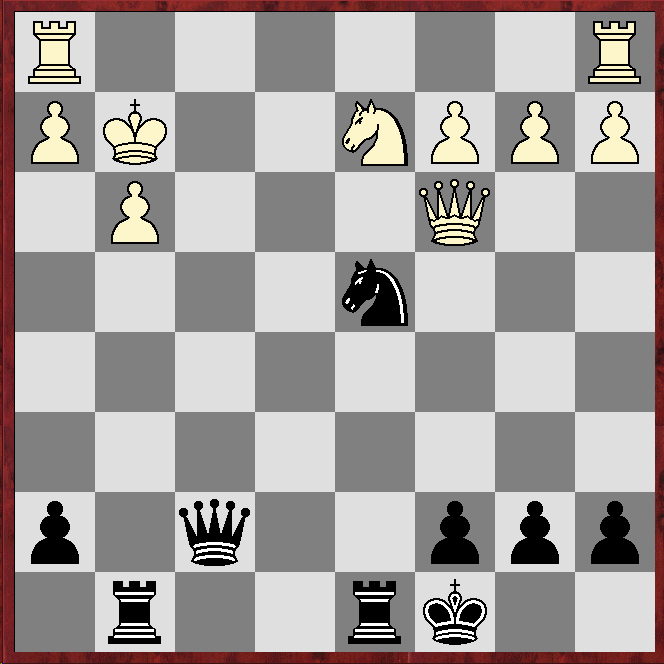
7.Qc4?
Possibly best is 7.dxc5, although 7...exf3 8.Qxf3 Bg4 gives Black more than enough compensation, according to the engines.
7...exf3 8.dxc5 Re8+ 9.Kf2 Ne4+ 10.Kxf3 Qh4 11.g3
This is best, according to the engines, but Black has an obvious and strong reply.
11...Nxg3! 12.hxg3 Qxh1 13.Kf2 Bg4 14.Qd3 Nd7 15.b4 Nf6 16.Bd2 0-1
White resigned without waiting for 16...Ne4+.
LESSON: an uncastled king is often a liability when tactics start.

Wednesday, 1 July 2026

Lessons From Bischofsgrün IX

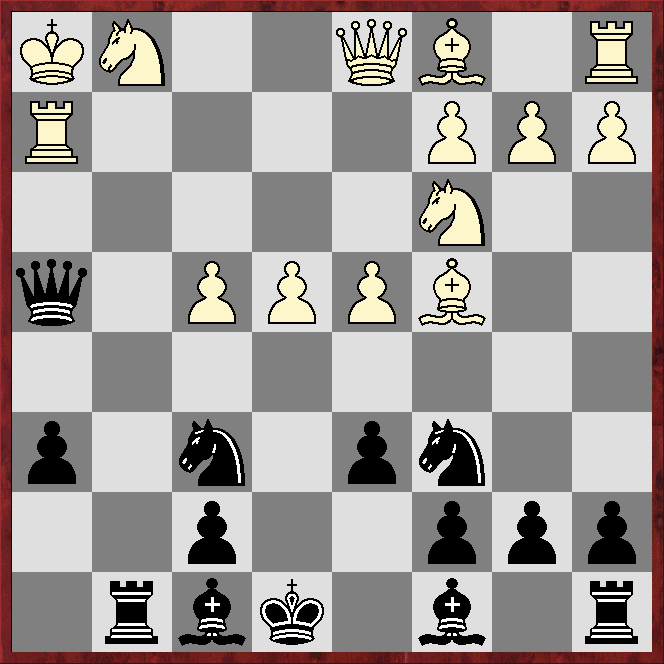
MY round-nine game, in which I was Black against Thomas Bildt (2029), featured a rare but sharp line from the King's Gambit, the following position being reached after White's eighth move.
White has just played 8.Bc1-d2
*****
*****
*****
*****
*****
*****
*****
*****
White is a pawn up, and is slightly ahead in development in that White has four pieces developed (queen, bishop and two knights), while Black has two (bishop and knight), but has also castled.
If left undisturbed, White will, next move, castle long, after which he will have no worries.
Black's obvious move to delay castling is ...Re8+, but there is also ...Ng4 to be considered, which indirectly delays castling by threatening the triple fork ...Nf2 (if White has castled, the knight would hit the queen and both rooks).
I chose 8...Ng4?, and was rewarded by the sequence 9.Ne4?? Bf5, after which, as I showed in my annotations to the game, Black has a large advantage.
However, while Ne4 was a blunder, turning a winning position into a losing one. according to Stockfish18 and Dragon1, the idea is correct.
But the right way to implement it is with 9.Ng5, threatening checkmate. Black can defend against the threat by 9...g6, or 9...Re8+ 10.Be2 g6, but in each case there follows ...Nce4, when White simultaneously defends f2 and attacks c5.
LESSON: when you have two moves that seem to answer an important need in the opening, but one of the moves involves moving an already developed piece, while the other move develops an extra piece, you must be absolutely certain the former move is significantly better as you are not helping your development.

Saturday, 20 June 2026

Bischofsgrün Round Nine

Thomas Bildt (2029) - Spanton (1951)
King's Gambit
1.e4 e5 2.f4 Bc5 3.Nf3 d5!?
A pet line of mine. There are 110 examples of the move in ChessBase's 2026 Mega database - 10 of the games are mine.
How should White proceed?
*****
*****
*****
*****
*****
4.exd5
This is the commonest continuation in Mega26, and is the second choice of Stockfish18 and Dragon1. Stockfish18 prefers the relatively rare 4.Nc3!?; Dragon1 the more popular 4.Nxe5.
4...e4 5.d4!?
5.Qe2 and especially 5.Ne5 are more common, but the engines agree the text is best.
How should Black respond?
*****
*****
*****
*****
*****
5...exd3
Dragon1 reckons the text and 5...exf3 have an almost identical value, but Stockfish18 suggests an apparent-novelty in 5...Bb4+!?, eg 6.Bd2!? Bxd2+ 7.Nfxd2 Nf6 8.Nc3 0-0, when the engines agree Black has enough for a pawn.
6.Qxd3!?
The engines are unsure whether to prefer this move, which is not in Mega26, or the known 6.Bd3, but given enough time, they come down in favour of the latter, reckoning Black should play 6...Ne7, when they find it hard to decide whether Black has enough for a pawn.
6...Nf6!?
Although 6.Qxd3!? is not in Mega26, the move transposes into a known position, where 6...Ne7 has been played. However, in this case the engines prefer the text.
What should White play?
*****
*****
*****
*****
*****
7.Nc3!?
The engines' main line runs 7.Qe2+ Qe7 8.Bd2!? (they also like 8.Nc3) Qxe2+ 9.Bxe2 Nxd5 10.Nc3 Nxc3 11.Bxc3 Nc6, when Stockfish18 calls the position equal, but Dragon1 fluctuates between equal and slightly favouring White. If 8.Qxe7+, then 8...Kxe7, with ...Re8 to come.
7...0-0 8.Bd2 Ng4?
I was disappointed to discover after the game I made exactly the same mistake at Hastings 1991. Better is 8...Re8+, with equality, according to the engines, although the game remains tense, eg 9.Be2 c6!? 10.0-0-0 (10.dxc6 Qxd3 11.cxd3 Nxc6 12.0-0-0 Bf5, with good play for Black) cxd5 11.Ne5 Nc6, with what they reckon are equal chances.
White to play and gain what the engines agree is a winning position
*****
*****
*****
*****
*****
9.Ne4??
This turns a winning position into a losing one. Instead, 9.Ng5 seems to flummox Black in all lines, eg 9...Re8+ 10.g6 Nce4, or 9...g6 10.Nce4.
After the immediate 9.Ne4??, White has defended f2 and attacks c5, but there is a fatal flaw
*****
*****
*****
*****
*****
9...Bf5!?
Seeing this was one reason why I mistakenly liked 9.Ne4??
10.0-0-0
Perhaps slightly better is 10.Ng5, but 10...Nf2 11.Qc4 Re8 12.Qxc5 Nxe4 13.Nxe4 Rxe4+ gives Black strong play for a pawn, eg 14.Kf2 (14.Be2? Bg4) Nd7 15.Qc3 Nf6 16.h3 Nxd5, when Black has got the pawn back, and continues to have play against White's king and uncoordinated pieces.
10...Nf2 11.Qb5 Nxe4 12.Qxb7 Nd7
White has two pawns for a knight, but that is rarely sufficient in an early-middlegame
*****
*****
*****
*****
*****
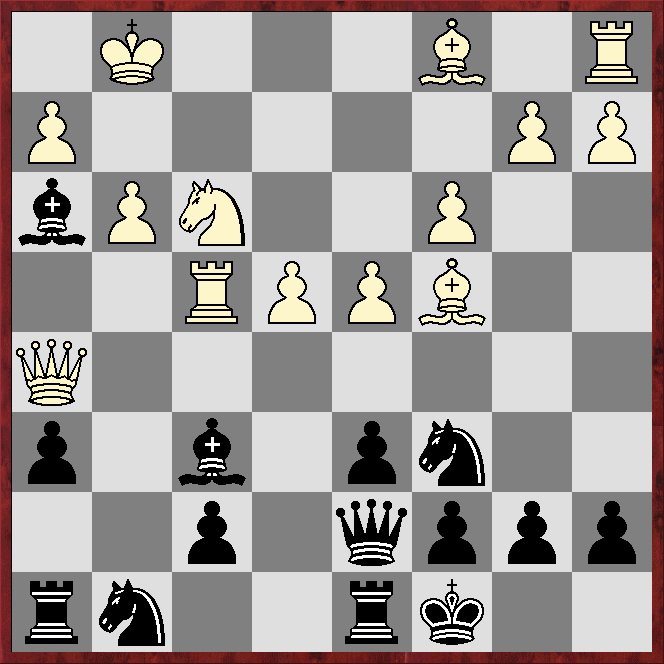
13.Bd3 Rb8 14.Qa6 Rb6 15.Qc4 Nxd2 16.Nxd2 Qf6 17.c3 Rfb8
As well as being ahead on material, Black is fully developed and has the safer king - advantages adding up to the equivalent of being roughly a rook ahead, according to the engines
*****
*****
*****
*****
*****
18.Nb3 Be3+ 19.Kb1 Bxd3 20.Qxd3 Bc5!?
The engines reckon capturing on f4 is playable, but I saw no need to give Black counterplay for the sake of a pawn.
21.Rhf1 Bd6 22.g3?!
Missing Black's next move. The engines suggest 22.Ka1 or 22.Rd2, but still have Black winning.
22...Nc5 23.Qd4 Qxd4 0-1

Tuesday, 9 June 2026

Miniatures 38

IN this occasional series I am going through my decisive games of 20 moves or fewer.

M Wadud (136 BCF) - Spanton (147 BCF)
Upminster Major 1991
Bishop's Opening/King's Gambit
1.e4 e5 2.Bc4 Bc5 3.f4!?
This move goes back at least to a game of Frank Marshall's in 1925. The position can also arise from a King's Gambit via the move-order 1.e4 e5 2.f4 Bc5 3.Bc4!?
How should Black respond?
*****
*****
*****
*****
*****
3...Bxg1
Marshall's opponent played 3...d6, but Stockfish17 and Dragon1 suggest a novelty in 3...d5!?
4.Rxg1
The zwischenzug 4.Qh5! is preferable.
4...Qh4+ 5.g3?
Better is 5.Kf1, when 5...Qxh2?! 6.Nc3 leaves Black dangerously behind in development. However, Black can instead get on with development, eg 5...Nf6, with what the engines reckon is the upper hand.
5...Qxh2 6.Kf1?!
The unpalatable 6.Rf1!? is probably better.
6...d5! 7.f5!?
The threat of 7...Bh3+ with a quick mate means White does not seem to have anything better, but White is losing a piece, to go with an already lost pawn.
7...dxc4 8.d4 cxd3 9.Qxd3 Bd7 10.Na3 Nf6 11.Bg5 Ng4 12.Qf3?! Qh5 13.Ke2!?
The second bishop cannot be saved, emphasising the desperateness of White's position.
13...Qxg5 14.Nb5? 0-1
LESSON: White in the King's Gambit needs to constantly be aware of the danger of allowing ...Qh4+.

Sunday, 7 June 2026

Miniatures 36

IN this occasional series I am going through my decisive games of 20 moves or fewer.

D Jerome (101 BCF) - Spanton (147 BCF)
Highbury (London) Rapid 1991
King's Gambit
1.e4 e5 2.f4 Bc5 3.Nf3 d5!? 4.fxe5? dxe4
How can White keep damage to a minimum?
*****
*****
*****
*****
*****
5.d4?
The engines give 5.Ng5!, when, after 5...Qxg5 6.d4 Qh4+!? 7.g3 Qe7 8.dxc5 Qxe5, White is a pawn down, but at least has the bishop-pair.
5...exf3 6.dxc5
At first glance White might seem OK, but the white queen cannot be saved
*****
*****
*****
*****
*****
6...f2+ 7.Ke2 Bg4+ 0-1
LESSON: in the King's Gambit, White is particularly sensitive on the h4-e1 diagonal.

Thursday, 16 April 2026

Minatures 34

IN this occasional series I am going through my decisive games of 20 moves or fewer.

Bertrand Barlow (173 BCF) - Spanton (147 BCF)
Hastings 3rd Week A 1991
King's Gambit
1.e4 e5 2.f4 Bc5 3.Nf3 d5!?
How should White respond to Black's unusual third move?
*****
*****
*****
*****
*****
4.exd5
This is the commonest continuation in ChessBase's 2026 Mega database, but Dragon1 prefers 4.Nxe5, while Stockfish17.1 suggests 4.Nc3!?
4...e4 5.d4!?
More popular are 5.Qe2 and especially 5.Ne5, but the engines like the text, which goes back to at least 1839.
5...exd3 6.Qxd3!? Nf6 7.Nc3 0-0 8.Bd2 Ng4?
The obvious 8...Re8+ is better.
9.0-0-0?
White has a large advantage after 9.Ng5, eg 9...Re8+ 10.Be2 g6 11.Nce4 Bf5 12.Bxg4 Bxe4 13.Nxe4 Qh4+ 14.Kf1! Rxe4 15.g3 Qe7 16.c3!?
9...Nf2 10.Qc4
What should Black play?
*****
*****
*****
*****
*****
10...Nxd1?
Best is 10...b6, protecting the loose bishop while maintaining a fork of the white rooks.
11.Qxc5 Nd7 12.Qd4 Nxc3 13.Bxc3 Nf6
White's bishop-pair and extra pawn give full compensation for the exchange, according to the engines
*****
*****
*****
*****
*****
14.Bc4 Qd6 15.Re1 Bd7 16.Ne5 a5?!
Black probably needs to disrupt White's build-up, perhaps by 16...b5, and if 17.Bb3, then 17...a5 18.a3 Rfb8, with equal chances, according to the engines, which reckon 17.Be2!? is a promising alternative.
17.Re3 b5?
Too late. 17...R(either)d8 keeps the game going by allowing the black queen to keep defending f6.
18.Nxd7 Qxd7 19.Qxf6! 1-0
If 19...gxf6?, then 20.Rg3+ leads to mate, while 19...Qg4 20.Qd4 f6 21.Bxb5 leaves White with an advantage worth more than a rook, according to the engines.
LESSON: when enemy pieces are lining up against your king's position, precise calculation is usually required.

Sunday, 8 February 2026

4NCL Day Two

PLAYED on board one (of six) for Wessex B against Eternal Optimists 2 in weekend three of the Four Nations Chess League Division Four.

Paul Badger (1797 ECF/1883 Fide) - Spanton (1928 ECF/1939 Fide)
King's Gambit
1.e4 e5 2.f4 Bc5 3.Nf3 d5!?
There are 110 examples of this move in ChessBase's 2026 Mega database - 11 of the games are mine.
How should White respond?
*****
*****
*****
*****
*****
4.Nc3!?
More popular are 4.exd5 and 4.Nxe5. Both moves are also much more successful percentagewise, but the text is the top choice of Stockfish17.1.
4...d4!?
This more-or-less commits to sacrificing the dark-square bishop.
5.Nb1?!
This is probably a mistake. A key line runs 5.Na4 Bd6!? 6.fxe5 Bxe5! (otherwise White is massively better) 7.Nxe5 Qh4+ 8.g3 Qxe4+ 9.Qe2 Qxh1 10.Ng6+ Be6 11.Nxh8, with an unclear position that Stockfish17.1 reckons is completely equal, but that Dragon1 evaluates as giving White a slight edge. However, White may have an improvement in 7.Bc4!? Nc6 8.0-0, which seems to have been first played in David McTavish - Todd Southam, Canadian U18 Championship (Winnipeg) 1985. That game continued 8...Nf6 9.Nc5!? Qd6 10.Nd3 Bg4!? 11.Bxf7+!? Ke7! 12.Ndxe5 Nxe5 13.Bb3, with another unclear position (the engines disagree about which side is better), although White went on to win.
5...exf4!
The engines reckon this apparent-novelty is a major improvement on the known 5...Bg4.
6.d3 g5 7.h4
The engines suggest 7.c3 or 7.h3.
7...g4 8.Ne5 h5 9.c3!?
This seems best. The problem with 9.Bxf4?! is 9...Qf6, eg 10.g3 Bd6.
9...Qf6!?
Attacking the advanced knight and defending f4.
10.b4!?
The engines agree this is best.
10...Qxe5 11.bxc5 dxc3
The engines prefer 11...Nc6 or 11...f3!?
How should White proceed?
*****
*****
*****
*****
*****
12.Qc2
This looks natural, but the engines slightly prefer 12.d4!? Qxe4+ 13.Qe2 Qxe2+ 14.Bxe2, when White is three pawns down, but Black has obvious weaknesses, a sample line running 14...Nc6 15.Nxc3 f3 16.gxf3 gxf3 17.Bxf3 Nxd4 18.Bg2!? Nc2+ 19.Kf2 Nxa1, after which White is a rook and two pawns down, but has dangerous play, eg 20.Nb5 Rb8 21.Nxc7+ Kd8 22.Bf4 Bd7 23.Na6!? Rc8 24.Bxb7 Nc2 25.Rd1!? Ke7!? 26.Rd2 Bf5!? 27.Bxc8 Bxc8 28.Re2+ Kf8 29.Nc7 Bf5 30.Re8+ Kg7 31.Nd5, when White is a knight down, but has full compensation, according to the engines. There are numerous alternatives along the way amid the chaos.
12...Nc6 13.Qxc3 f6 14.Bb2 Bd7?!
Much better, according to the engines, is 14...Nge7.
15.Nd2 Qxc3 16.Bxc3 0-0-0 17.d4 Nge7!?
Played with the coming piece sacrifice in mind.
18.d5 Ne5 19.c6 N7xc6!?
19...Be8?! 20.cxb7+ is good for White after both 20...Kxb7 and 20...Kb8, according to the engines.
20.dxc6 Bxc6
How would you assess this queenless middlegame?
*****
*****
*****
*****
*****
Black has three pawns for a bishop, but White also has the bishop-pair. Two of Black's pawns are doubled, but two have reached the fifth rank, and White's pawns are weak. Black has the safer king and a slight lead in development. For quite some time, both engines call the position completely equal, but Dragon1 comes to slightly favour Black.
21.Be2?!
The engines much prefer 21.0-0-0 or 21.Rc1.
21...Nd3+!? 22.Bxd3 Rxd3 23.Bxf6 Re3+ 24.Kd1 Rf8 25.e5!? Bxg2 26.Re1 Rxe1+?!
The engines strongly dislike this, reckoning 26...Rh3!? is winning.
27.Kxe1 Bd5
How would you assess this ending?
*****
*****
*****
*****
*****
Black has three pawns for a knight (rather than for a bishop), but king safety is no longer a serious issue (at least, certainly not for White). Black has a pair of connected passed pawns, but White also has a passer, and both of White's kingside pawns are solidly protected. The presence of opposite-colour bishops should favour whichever side can gain the initiative. Dragon1 reckons the position is completely equal; Stockfish17.1 gives White a tiny edge.
28.Rc1 g3 29.Rc3
The engines suggest 29.Nb3!?, 29.Kf1 or 29.Kf2.
29...Kd7
Black has at least a slight edge after 29...b5!?, according to the engines.
I was tempted by 29...Rg8 30.Bg5 Rxg5!? 31.hxg5 h4, but the position may just be equal (that, at least, is the engines' verdict).
30.Nf3 c6
The engines dislike this, suggesting 30...Rg8, and if 31.Bg5, then 31...Ke6!?, or 30...Bxa2!?, and if, after the latter, 31.Ra3?!, then 31...Bc4, as 32.Rxa7 runs into 32...Ba6. However, in both lines, 31.Rd3(+) may be an improvement.
31.a3
White has at least a slight edge after 31.Nd4, according to the engines, but their more-or-less main line runs 31...b5 32.Ne2 Rg8 33.Bg5 b4 34.Rd3 Re8 35.Nxf4 Rxe5+ 36.Kf1 Kd6, when they reckon chances are equal.
31...b5 32.Rd3
Nd4 may still be White's best.
32...Kc7 33.Ng5
Threatening 34.Rxd5! cxd5 35.Ne6+ etc.
33...Kb6 34.Nf3 a5 35.Nd4!?
Dragon1 for quite some time rates this as a serious mistake, but comes to agree with Stockfish17.1 that the position remains equal.
How should Black proceed?
*****
*****
*****
*****
*****
35...b4!?
Getting a second queenside passer is desirable, if it can be done safely, and this also sets a trap.
36.axb4 axb4 37.Be7?
White had to play 37.Ne2!, when the engines reckon Black is at most slightly better.
37...Re8
Probably even stronger are 37...g2!? and 37...Ra8!?
38.Bd6
If 38.Bxb4, then 38...Rxe5+ 39.Kd2 (39.Kf1 Bc4) g2, or 38.Bf6 and either 38...Rg8 or 38...Ra8, with ...g2 to come.
38...Rg8 39.Rd1
There is nothing better, according to the engines.
39...f3 40.Kf1 c5 41.Nxf3!?
This keeps the game going, but after ...
41...Bxf3
... White is two pawns down, and opposite-colour bishops should not be enough to save the game.
42.Rc1 Rc8 43.e6 g2+ 44.Kf2 Bd5 45.e7 Bf7 46.Kxg2
White has reduced the deficit to one pawn, and has a passer on the seventh rank, but is still losing, according to the engines
*****
*****
*****
*****
*****
46...b3 47.Rf1 Be8 48.Be5 Kb5?
This throws away most of Black's advantage, which could have been maintained by, for example 48...c4, when 49.Rf6+ Kb5 50.Rd6 is simply met by 50...Rc7!?, after which 51.Rd8 runs into 51...Rxe7, while 51.Rd5+ Rc5 52.Rxc5+ Kxc5 53.Bc3 is not enough for a draw as Black has 53...Kb5 (an only-move, but a fairly obvious one) 54.Kf3 Ka4 55.Ke4 (55.Bb2 Kb4) Ka3 56.Kd4 b2 57.Bxb2+ Kxb2 58.Kxc4 Kc2.
Analysis diagram - position after 58...Kc2
*****
*****
*****
*****
*****
It might at first glance seem as if the white king is well-placed, but it cannot both win the bishop and protect the h4 pawn. And note that Black's bishop is the right colour for promoting the h5 pawn, so it would not matter if White's king could get in front of Black's pawn on the h file. A likely finish is 59.Kd5 Kd3 60.Ke5 Ke3 61.Kf6 Kf4 62.Kg7 Kg4 63.Kf8 Ba4 64.e8=Q Bxe8 65.Kxe8 Kxh4 etc.
Returning to the position after 48...c4, White could try 49.Rd1, with the same idea of playing Rd8, but 49...Rc5! wins (49...Bc6+!? may also be good enough), eg 50.Bd4 c3, as after 51.Bxc5+ Kxc5 the white rook cannot cope with connected passed pawns on the sixth rank.
Back to the game.
White to play and draw
*****
*****
*****
*****
*****
49.Rf6+?
Drawing is 49.Rd1 as Black no longer has ...Rc5, and pushing the c pawn with 49...c4?? loses to 50.Rd8. Black has to play something like 49...Bc6+ 50.Kf2 Re8, but 51.Bf6 holds, eg 51...c4 52.Ke2 Kb4 53.Rd6 Bb5 54.Kd2 (an only-move, but not too difficult to find), after which the engines show neither side can make progress.
49...Bc6+
Now this is strong, but it is not the only winning move, according to the engines.
50.Kf2 Re8 51.Rf5
51.Bd6?! protects the e pawn, but loses to 51...b2, while 51.Rf7 also protects the e pawn, but 51...Kb4 will win.
51...Ka4?
Several moves win, including 51...Rxe7, when 53.Bd6 fails to 53...b2.
52.Bc3 Kb5
Not 52...c4?? 53.Ra5#, while 52...Rxe7 53.Rxc5 leaves no winning chances.
White to play and draw
*****
*****
*****
*****
*****
53.Rxh5?
53.Bf6 protects the e pawn, and lets White win Black's h pawn, or Black can try 53...b2, but 54.Bxb2 Rxe7 55.Rxh5 is also a draw.
White could probably also play 53.Bd4?!, as long 53...Kc4 is met by 54.Bf6, when the engines reckon that after 54...Rxe7!? 55.Bxe7 b2 56.Rxc5+ Kd3 57.Rxc6 b1=Q Black has a fortress, although Black could play on in the hope of inducing a mistake. Black could also try 54...Rb8, but 55.Bb2 also draws, according to the engines, although again there is play in the position, which could see White go wrong.
53...Rxe7 54.Rg5 Kc4 55.Bb2 Kb4 56.Rg3 Bb5 57.Re3 Ra7
White has an easy draw after 57...Rxe3?? 58.Kxe3 as 58...c4 can be answered by 59.Kd4 or 59.Kd2.
58.Re4+ c4 59.Be5 Ra2+ 60.Kg3 Bc6 61.Re1 c3 62.Re3
Or 62.Bxc3+!? Kxc3 63.h5 b2 64.h6 Be4!? etc.
62...c2 63.Re1 b2 0-1
Eternal Optimists 2 won the match 3.5-2.5.

Friday, 19 December 2025

All About That Bass II

MOST of us have an opponent against whom nothing seems to work.
When the opponent is considerably stronger, this is not surprising, but when ratings are not so different, the results are harder to explain.
My biggest bogeyman is probably John Bass, whose record against me is +6=1-0.
Seven games is not a huge sample, but such a poor performance on my part must signify something.
So in this mini-series I am looking at my games against JB to try to discover what is going on.
Our second game was at a rapidplay event.

Bass (159) - Spanton (unrated)
London University Rapid 1989
1.e4 e5 2.f4 Bc5 3.Nf3 d6 4.d4?!
This is much less popular than 4.Nc3, 4.Bc4 and especially 4.c3, but was a favourite of Emanuel Lasker in simuls.
4...exd4 5.Nxd4
Lasker liked 5.Bd3.
5...Nf6 6.Nc3 Qe7
Stockfish17.1 and Dragon1 reckon there is little to choose between this and the commoner 6...0-0.
7.Qd3!? 0-0 8.Nb3?!
This seems to be a novelty, and is still not in ChessBase's 2026 Mega database; White should probably get on with development.
How should Black respond?
*****
*****
*****
*****
*****
8...Bb4?!
The engines reckon Black should also develop, with either 8...Na6 or 8...Nc6.
9.Bd2 Bxc3 10.Bxc3 Nxe4 11.Qe3 Re8 12.0-0-0 Nxc3 13.Qxc3
How would you assess this middlegame?
*****
*****
*****
*****
*****
Black is a pawn up, and the engines reckon Black has a winning advantage, but positions with opposite-side castling are tricky to evaluate and tricky to play.
13...Bg4 14.Bb5!?
This is the engines' top choice.
14...Bxd1 15.Bxe8 Qxe8?!
Much better, according to the engines, is 15...Bxc2.
16.Re1 Qd7?
How should White proceed?
*****
*****
*****
*****
*****
17.Rxd1
Missing 17.Qxc7!
17...Nc6 18.Nd2 Re8 19.Nf3 h6 20.h3?
Possibly best is 20.g3, defending f4.
20...Re6
Even stronger is 20...Qf5.
21.g4 Qe8 22.Rd3?!
The engines much prefer contesting the open file with 22.Re1.
22...Re7
The active 22...Re4 is probably best.
23.b3 Qd7 24.Kb2 Qe6 25.f5 Qd7 26.Nh4!? Ne5 27.Rd1 f6?
This is very weakening.
How can White exploit Black's weak light squares?
*****
*****
*****
*****
*****
28.Ng2
The engines' 28.Qa5! seems to equalise as either a7 or b7 falls.
28...Qc6 29.Qd2 Qd7?
Too passive.
30.Nf4?!
Almost certainly better is 30.Qd5+ and 31.Qxb7.
30...Nc6?
The knight was fine where it was, whereas the queen's position could have been improved with 30...Qc6 or 30...Qb5.
31.Qd5+ Kh7 32.Ne6 Qe8 33.h4 b6?!
The engines suggest 33...Nd8 or 33...Ne5.
34.Re1 Ne5 35.g5 fxg5?!
Probably better is 35...Kh8 or 35...b5!?
36.hxg5 h5?
36...Kh8 is better, but still losing.
37.g6+ Nxg6
Or 37...Kh8 38.Qh1.
38.fxg6+ Qxg6 39.Nf8+ Kh6 40.Nxg6 Rxe1 41.Qd2+ 1-0
LESSON: once again JB showed better tactical control, helped by my weakening of the black king's position, and by my passive middlegame play.

Tuesday, 21 October 2025

Miniatures 16

IN this occasional series I am going through my decisive games of 20 moves or fewer.

W Ransome (140 BCF) - Spanton (151 BCF)
London League
Vienna Gambit/King's Gambit Declined
1.e4 e5 2.Nc3 Bc5!?
This trails 2...Nc6 and especially 2...Nf6 in popularity, but scores as well as the latter, and one percentage point better than the former, in ChessBase's 2025 Mega database.
3.f4
Stockfish17 and Dragon1 are not keen on this, preferring 3.Nf3.
How should Black respond?
*****
*****
*****
*****
*****
3...d6
This is the engines' top choice. After 3...Bxg1!? (played by Staunton) 4.Rxg1 White seems to be doing well as 4...Qh4+? 5.g3 Qxh2 6.Rg2 gives White lots of play for a pawn.
4.Nf3
The game has transposed to a mainline position from the King's Gambit Declined.
4...Nc6
A common continuation, but theory prefers 4...Nf6, one point being 5.fxe5 dxe5 6.Nxe5?! is probably too greedy, eg 6...Qd4 7.Nd3 Bb6 8.Qf3 0-0 with obvious compensation for a pawn.
5.Bc4
Chigorin's favourite, but the engines prefer 5.Bb5, or going after the bishop-pair with 5.Na4.
5...Bg4 6.h3 Bxf3 7.Qxf3 Nd4 8.Qd3!?
Dragon1's choice, at least for a while, but not liked by Stockfish17.
8...exf4 9.h4?!
Effectively isolating the f4 pawn, but the engines prefer getting on with development, suggesting a move that is not in Mega25, 9.b4!?, intending 9...Bb6 10.Bb2.
9...Qd7?!
The engines much prefer 9...Nf6.
10.Ne2 Nxe2 11.Qxe2 0-0-0 12.d3 Nf6 13.Bxf4 d5 14.Bb3 dxe4 15.0-0-0!
Not 16.dxe4? Nxe4!
With a fairly open centre, and both sides castling long, the position is set for a sharp middlegame
*****
*****
*****
*****
*****
16...exd3 17.Rxd3
White is a pawn down, but has the bishop-pair and an initiative.
17...Rhe8??
The engines give 17...Qf5, eg 18.Rf1 Rxd3 19.Qxd3 Qxd3 20.cxd3 Rd8 21.Bxf7 Rxd3, reckoning White has enough for a pawn.
18.Rxd7 Rxe2 19.Rxc7+ 1-0
LESSON: there is no substitute for basic tactical skills.

Monday, 10 February 2025

Kasparov & Tartakower On A Chess Classic

THE King's Gambit, while by no means common, still appears in club-standard games.
What is rare these days, however, is Black trying to hang on to the extra pawn with 3...g5, which used to be almost universal.
Here is an exciting example from Savielly Tartakower and Julius du Mont's 500 Master Games Of Chess.
Notes in italics are algebraicised from the book, those underlined are by Garry Kasparov in ChessBase Magazine.

Jakob Rosanes - Adolf Anderssen
Breslau, Prussia (now Wrocław, Poland)
A classic, showing how mind can triumph over matter.
1.e4 e5 2.f4
Of course the most popular opening of the mid-19th century. Conventional wisdom at the time assumed that White had an obligation to fight for the initiative at any price. That is why material sacrifice at an early stage of the game was simply a show of good taste, and to decline the opponent's kind material offer was not considered an honourable option.
2...exf4 3.Nf3 g5 4.h4 g4 5.Ne5
This variation is known as the Kieseritzky Gambit.
One of the key-positions of underdeveloped chess theory.
5...Nf6
An active defence.
How should White proceed?
*****
*****
*****
*****
*****
6.Bc4?!
As this immediate action against f7 is easily met, 6.d4 is more useful.
6.d4 was later proved to be a much better move.
The text is easily the most popular continuation in ChessBase's 2025 Mega database, while 6.Nxg4!? is recommended by Stockfish17 and Dragon1.
6...d5 7.exd5 Bd6
Continuing to show an active spirit.
8.d4 Nh5!?
Maintaining the same spirit; not only does the text move guard the gambit pawn, but it indicates Black's future line of play,
9.Bb5+?
He gets entangled in an expedition, which neglects the safety of his own king. If 9.Nxg4 [then] 9...Ng3 etc. The best, in spite of all apparent dangers, is 9.0-0, eg 9...Qxh4 10.Qe1 Qxe1 11.Rxe1 Kf8 12.Nc3 etc.
9...c6!
Playing for sacrifices in material, in order to speed up his action on the sector which he recognises as the most important. Otherwise 9...Kf8 is playable.
Anderssen in action! It's time to change colours and play white!
10.dxc6 bxc6!?
The engines reckon 10...Nxc6 is much stronger.
11.Nxc6 Nxc6
If 11...Qd7 [then] 12.Nxa7 wins.
12.Bxc6+ Kf8!
Great play! 12...Bd7 13.Bxd7+ Qxd7 14.0-0 etc would deprive Black's attack of all vitality, and so he prefers to give up his QR for nothing more than an attacking 'tempo'.
13.Bxa8
White is rook and pawn up, but the engines agree Black is winning
*****
*****
*****
*****
*****
13...Ng3 14.Rh2
Better is Kf2.
Obviously [to] the unknown club player who was playing white it wasn't clear whether Black had sufficient compensation for the sacrificed rook.
This is a bit harsh on Rosanes who, according to ChessBase's 2025 Mega database, had a score against Anderssen of +2=0-2 (Rosanes had white in every game).
14...Bf5?!
The engines show direct play with 14...Qe7+ is much stronger, thanks to meeting 15.Kf2 with 15...Ne2!, eg 16.Qxe2 g3+ 17.Kf1 Qxe2+ 18.Kxe2 Ba6+, when one line runs 19.Ke1 gxh2 20.g4 Kg7 21.Bf3 Re8+ 22.Kf2 Re2+! etc, or 16.g3+!? fxg3 17.Kg2 gxh2 18.Bh6+ Kg8 19.Nd2 Ng3 etc.
15.Bd5 Kg7 16.Nc3 Re8+ 17.Kf2 Qb6
Threatening 18...Be5.
Any modern player would be jealous about Andersen's confidence in playing with a rook down. Meanwhile ...Be5 is a decisive threat.
18.Na4 Qa6
Threatening mate in four by 19...Qe2+ etc.
In other words, 19...Qe2+ 20.Qxe2 Rxe2+ 21.Kg1 Re1+ 22.Kf2 Rf1#.
19.Nc3
If 19.c4 [then] 19...Qxa4.
19...Be5!?
A great fight for the diagonal, which is but weakly defended by White's QP.
20.a4
Intending, after 20...Qb6, to play 21.Nb5 a6 22.c3 etc, but Black is disinclined to wait, and announces mate in four. If 20.dxe5 [then] 20...Qb6+ 21.Ke1 Qg1+ 22.Kd2 Qe3#.
Even the computer defence 20.Kg1 doesn't save White: 20...Qb6 (20...Qf1+ doesn't work [because of] 21.Qxf1 Bxd4+ 22.Be3!) 21.Rh1 Bxd4+ 22.Kh2 Qf6! is crushing.
Black to play and win
*****
*****
*****
*****
*****
20...Qf1+!!
A splendid sacrifice of the queen, of which the object is to deflect the opposing queen from the protection of d4.
21.Qxf1 Bxd4+ 22.Be3 Rxe3!
A quiet preparation for the mate on the next move.
Despite the obvious inequality in the players' strength this game gives a clear idea of the chess fashions of Anderssen's time.
Not 22...Bxe3+? as the white king escapes after 23.Ke1, when Black has sacrificed too much material.
23.Kg1
Or 23.Nb5 Re2#. There could be no more impressive demonstration of the power of a double check.
23...Re1#

Thursday, 25 July 2024

King's Gambit

WHEN going through a book of games listed by opening it is natural to expect the first entry in the King's Gambit section to be special.
Here is the first King's Gambit in 500 Master Games of Chess by Savielly Tartakower and Julius du Mont.
Notes in italics are algebraicised from the book.

Lionel Kieseritzky - Ignazio Calvi
Match (Paris) 1842*
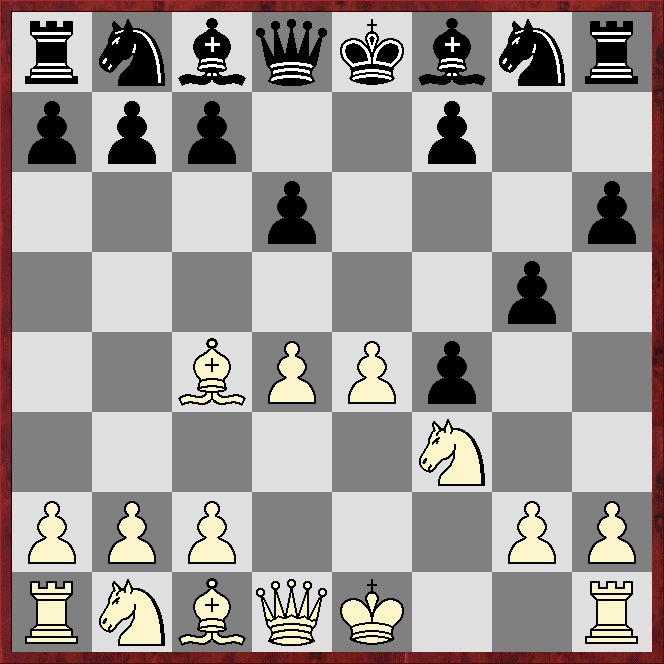
1.e4 e5 2.f4 exf4 3.Nf3 g5
The 'classical defence'.
4.h4
The most energetic reply.
4...g4 5.Ne5
Known as the 'Kieseritzky Gambit', this 'gambetto grande' was already well known in the 16th century.
It is easily the most popular continuation in ChessBase's 2024 Mega database.
5...h5!?
An ancient idea which scorns the consolidation of the inner lines, which is obtained chiefly by developing the pieces 5...Bg7 or 5....Nc6 or 5...Nf6 or 5....d5, followed by ...Nf6.
Stockfish16.1 and Dragon1 strongly dislike the text, preferring 5...Nf6, 5...d6 or 5...Qe7!?
6.Bc4 Rh7!?
A painstaking rook!
7.d4 d6 8.Nd3
How should Black proceed?
*****
*****
*****
*****
*****
8...f3!
The engines agree this is best. The point is a developing move, eg 8...Be7, allows White to develop smoothly with 9.Bxf4. This was illustrated in Harry Pillsbury - A Lissek, Vienna Blindfold Simul 1902, which continued 9...Bxh4+ 10.g3 Bg5 11.Nc3 Nc6 12.Bxg5!? Qxg5 13.Nf4 Nf6 14.Nd5?! Nxd5 15.Nxd5 f5?! 16.Qd3 with a position that remained sharp (1-0, 56 moves).
9.gxf3 c6?!
The engines reckon this is too slow, preferring 9...Nc6 or 9...Be7.
10.Nf4
Preventing both 10...d5 and 10...Be6.
10...Ne7?!
Less cumbersome would be 10...Nf6. The queen's knight could later on be developed via d7 to b6, and the king's bishop could find employment by ...Bh6 and eventually ...Bxf4.
11.Nc3 Nd7 12.Kf2?!
The engines are strongly against committing the king like this.
12...Rh8?!
Or first 12...Bg7 13.Qd3, and now only 13...Rh8 in view of the threat 14.e5.
The engines want to start opening lines to the white king with 12...gxf3, eg 13.Qxf3 Qb6 with ...Ne5 on the horizon.
13.Qd3 Bg7 14.Bd2 Kf8?!
The king relinquishes the critical e file, but remains in the danger zone.
Both Kieseritzky and Calvi are playing imaginatively, but dubiously, with their kings. The engines suggest 14...b5 or 14...Qb6.
15.Rae1 Qb6 16.Be3 Qc7?!
16...Qxb2 would be too risky.
Grabbing the b pawn is well-met by 17.Bb3 or 17.fxg4, according to the engines, but they reckon much better than the text is 16...gxf3.
17.Be6
A pretty episode.
Winning, according to the engines, is 17.Bxf7!? Kxf7 18.Qc4+, and even stronger, they reckon, is first 17.fxg4!?
17...b5
Hoping that the moment is favourable for a counteraction on the queenside.
18.b4?!
The engines reckon this throws away White's advantage, preferring 18.fxg4.
18...Nb6 19.Bb3 a5 20.a3 a4 21.Ba2 Bb7?
Rather than hope for things to happen in the distant future, he should have played 21...Bd7.
More to the point, according to the engines, is 21...d5 or 21...gxf3.
22.e5?!
Piercing the front.
The engines much prefer 22.fxg4 or 22.Nce2.
What should Black play?
*****
*****
*****
*****
*****
22...d5?!
He tries to keep the lines closed, for if eg 22...dxe5 23.dxe5 Bxe5 (or 23...Rd8 [then] 24.Bd4 etc) 24.Bd4 Bxd4+ 25.Qxd4 Rh7 26.Qf6 and wins.
The engines disagree with much of this analysis, eg they reckon 25...Rh6 is at least equal for Black. However they give 24.Bc5! as winning for White, the main threat being 25.Qf5. Therefore they reckon best is 23...Rd8, meeting 24.Bd4 with 24...Nd7, claiming at least a slight edge for Black.
23.e6
Energetic play.
The engines again much prefer fxg4 or Nce2.
23...Bc8 24.Bc1 Qd6 25.exf7 Kxf7?
A decisive mistake, allowing the hostile knight to get powerfully into play. Better would be the intermediary measure 25...Bf5, although Black's position would still be uneasy after 26.Qd2 Kxf7 27.Nce2 etc.
The engines agree the text is a mistake, but want to meet 25...Bf5 with 26.Ne4!? as they reckon 26.Qd2 gxf3 is good for Black. After 26.Ne4!? dxe4 (26...Qd7 may be better) 27.fxe4 Black should probably return the piece with 27...Ng6!?, as saving the bishop with, for example, 27...Bc8 can be met by the calm 28.c3!? with what the engines reckon is more than enough compensation for a knight.
26.Ne4 Qc7?!
Both 26...Qd7 and 26...Qd8 seem less worse.
27.Ng5+ Kg8 28.Rxe7?!
A sacrifice which has the double task of eliminating a defending piece and of speeding up the concentration of his own forces.
The engines reckon this lets Black back into the game, whereas 28.Ng6 seems overwhelming.
28...Qxe7 29.Re1 Qf6!?
He tries in vain to establish some counterscheme.
The engines like the text, giving White at best a slight edge
*****
*****
*****
*****
*****
30.Re8+ Bf8 31.Ng6 Bf5?
Completely equal, according to the engines, is 31...Bd7, eg 32.Rxa8 Nxa8 33.Nxh8 Bf5 and 34...Kxh8.
32.Qxf5!
Winning a piece.
32...Qxf5 33.Ne7+ Kg7 34.Nxf5+ Kf6 35.Re6+!? Kxf5 36.Bb1 1-0
White mates in two.
The game well-illustrates how difficult it is to analyse a sharp game reasonably accurately without an engine.
*It is listed in the book simply as "Paris, 1847," but was the first game of their match played in the French capital five years earlier.

Friday, 23 February 2024

Cambridge Round Five

Benedict Keohane (2063 ECF/1926 Fide) - Spanton (1916 ECF/1766 Fide)
King's Gambit
1.e4 e5 2.f4 Bc5 3.Nf3 d5!? 4.Nxe5!?
More common in ChessBase's 2024 Mega database is 4.exd5, but the text has been recommended in several books and is preferred by Stockfish16 and Komodo14.1.
4...dxe4!?
This used to be regarded as refuted, but has been revived.
How should White respond?
*****
*****
*****
*****
*****
5.Qh5!?
The mainline in Mega24 runs 5.Bc4 Nh6 6.Qh5 0-0 7.Nxf7 Bf2+!? 8.Kxf2 Qd4+ 9.Ke1, and now 9...Nxf7 gave equality, according to the engines, in Anthony Milnes (2019) - Spanton (1969), Guernsey 2016 (½–½, 34 moves).
5...Be6 6.Nxf7 Bf2+!? 7.Kxf2 Bxf7 8.Qe5+ Ne7 9.Qxg7!?
This must be the critical continuation. Two games reach the position in Mega24, one continuing 9.Bb5+?! and the other 9.b3!? I have additionally faced 9.Qxe4!?
9...Rg8 10.Qe5
White can grab a third pawn with 10.Qxh7!?, when 10...Qd4+ 11.Ke1 Rh8 12.c3 Qf6 13.Qxe4 leaves White four pawns up. Komodo14.1 reckons Black has enough compensation; Stockfish16 reckons Black has more than enough.
10...Nc6 11.Qc5
After 11.Qxe4, going three pawns up, the engines recommend 11...Qd6, followed by ...0-0-0, claiming the upper hand for Black.
11...Nd5 12.g3?!
The engines suggest 12.Nc3!?
12...Nxf4! 13.d3
Not 13.gxf4? Qh4+ 14.Ke3 (or 14.Ke2 Bh5+ etc) 14...Qe1+ 15.Be2 Qxh1.
13...Ne6 14.Qc3 Ncd4 15.dxe4 Qf6+ 16.Kg2 0-0-0 17.Bc4 Nf4+ 18.Bxf4 Qxf4 19.Bxf7
The engines prefer 19.Re1 or 19.Nd2, but agree Black is winning.
19...Qxe4+ 20.Kh3 Qf5+ 21.Kg2 Qxf7
Black is still winning after this, but even stronger is 21...Qe4+ 22.Kh3 Rd6 (this could also have been played at move 20), after which Black has a forced mate.
22.Nd2
Black to play and win
*****
*****
*****
*****
*****
22...Qd5+?
The easiest win is probably 22...Ne2, eg 23.Qe3 Qd5+ 24.Nf3 Rde8 25.Nd4!, threatening both 26.Qxf3+ and 26.Re2+.
23.Nf3 Rgf8 24.Rhf1?
The engines reckon White is, at worst, only slightly inferior after R(either)d1.
24...Nxf3 25.Rxf3
Black to play and win
*****
*****
*****
*****
*****
25....Qd2+?
Winning is 25...Qxf3 26.Qxf3 Rd2+ and 27...Rxf3.
26.Kg1 Rxf3 27.Qxf3 Qxc2 28.Qg4+ Kb8 29.Qg5 Qd3
The engines prefer 29...Rf8!?
30.Rf1 b6 31.Qf5 Qd4+ 32.Rf2 Rd7 33.Kg2 Kb7 34.b3 a5
I offered a draw.
How would you assess the position?
*****
*****
*****
*****
*****
White has the smaller, and therefore faster-moving, pawn-majority. But this is probably not significant as long as queens are on the board, as they make it problematic for either side to leave his king exposed.
35.Qf3+ Qd5?!
The engines reckon that after ...
36.Qxd5+ Rxd5
... the position remains equal, but it is surely easier for White to play.
37.h4 h5 38.Rc2 Rd3 39.Re2 Kc6 40.Re6+ Kd5!?
The engines do not like this, wanting the king to withdraw to b7 or d7.
41.Rh6 Ke4 42.Rxh5 Rd2+ 43.Kh3 Rxa2 44.Rb5 Kf3?!
The engines agree this makes matters worse, but they cannot agree on what Black should play  -suggestions include 44...Rf2, 44...c5 and 44...Rd2.
45.Rf5+ Ke4 46.Kg4 Rb2 47.Rb5?
White should push the passed h pawn.
Black to play and draw
*****
*****
*****
*****
*****
47...Rd2
The engines reckon 47...c5! gives complete equality, eg 48.Rxb6 c4 49.h5 Rxb3 50.Ra6 c3 51.Rxa5 c2 52.Rc5 Kd3 53.h6 Rb4+ 54.Kf3 Rb1 55.h7 Rh1 etc.
48.h5 Rd6 49.Rg5 c5!? 50.Rg6 Rd4 51.Rxb6 Kd3+ 52.Kf5 a4!?
Desperation, but the game is well gone.
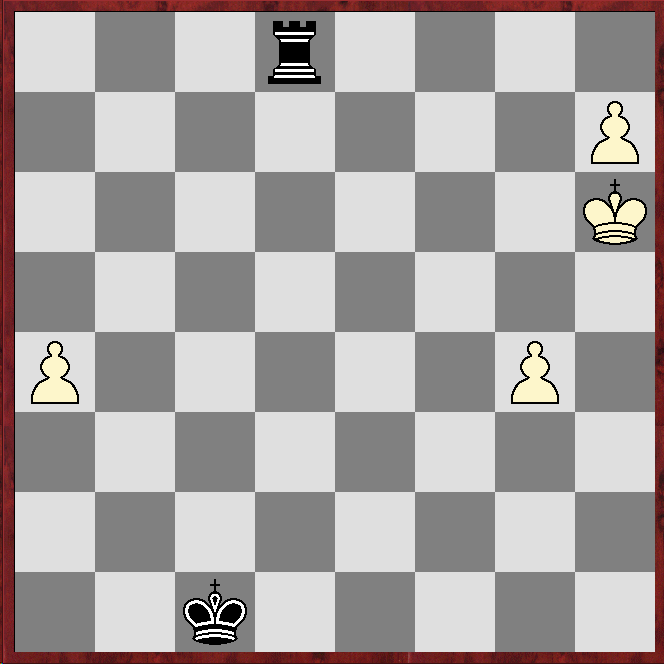
53.bxa4 c4 54.h6 c3 55.h7 Rd8 56.Rc6 c2 57.Kg6 Kd2 58.Kg7 Rd7+ 59.Kg8 Rd8+ 60.Kg7 Rd7+ 61.Kh6 Rd8 62.g4 c1=Q 63.Rxc1 Kxc1
White's three pawns easily beat Black's rook
*****
*****
*****
*****
*****
The game finished:
64.g5 Kd2 65.g6 Kc3 66.g7 Rd6+ 67.Kg5 1-0

Sunday, 12 November 2023

Cap Negret Round One

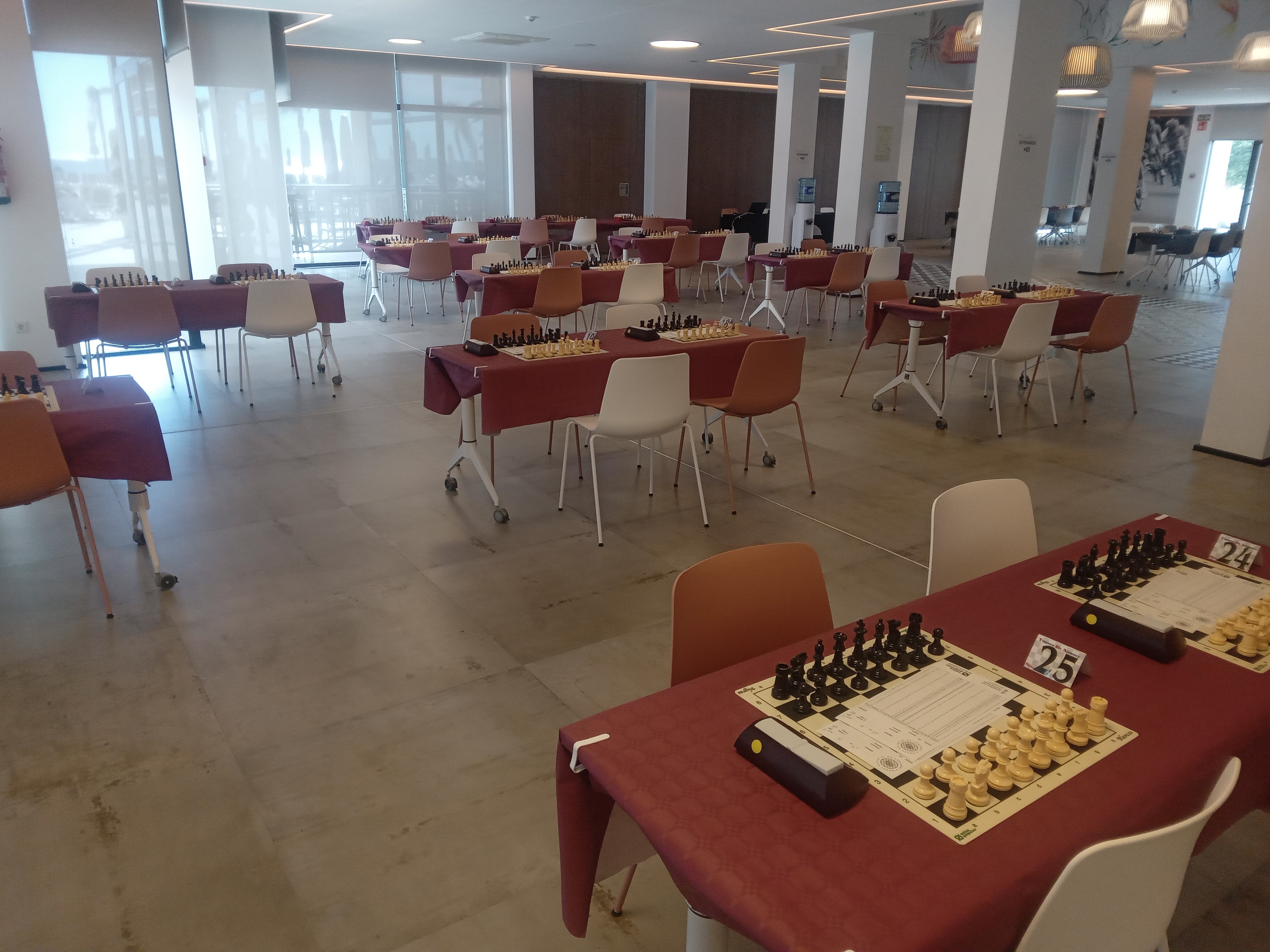
Playing hall
FACED a Belgian.

Spanton (1808) - Monique Weck (1148)
King's Gambit
1.e4 e5 2.f4 d6!? 3.Nf3 Nc6 4.Bc4 d5?
A simple mistake.
5.Bxd5 Bc5 6.c3 Nf6 7.Qb3 0-0
Stockfish16 and Komodo14.1 reckon better is 7...Nxd5, albeit giving White at least a slight edge after 8.Qxd5!?
8.fxe5 Nxd5?!
Probably better is 8...Na5.
How should the d5 knight be captured?
*****
*****
*****
*****
*****
9.exd5?
White has a huge advantage after 9.Qxd5.
Black to play and win
*****
*****
*****
*****
*****
9...Na5?
After 9...Nxe5! 10.Nxe5 Re8 11.Kd1 Rxe5, Stockfish16 and Komodo14.1 reckon Black has a winning advantage.
10.Qc2 g6 11.b4 Bf5 12.d3 Qxd5 13.bxc5 Bxd3 14.Qa4 c6?!
White is a knight up
*****
*****
*****
*****
*****
15.Qd4
Possible is 15.Qxa5!? Objectively it is stronger, according to the engines, but the consequences of missing one nuance could be very unpleasant.
The game finished:
15...Bf5 16.Bg5 b6 17.cxb6 Rab8 18.Nbd2 c5?? 19.Qxd5 axb6 20.Bf6 Be6 21.Qe4 Bf5 22.Qf4 b5 23.Qh6 Rfe8 24.Qg7#.

Tuesday, 17 October 2023

Started OK

Spanton (1864) - Marie-Jeanne Jonckers (1386)
Calvià U2350 Round One
King's Gambit
1.e4 e5 2.f4 d6!?
There are a perhaps-surprising 4,171 examples of this move in ChessBase's 2023 Mega database, but it scores just 29%.
3.Nf3 Bg4
Black can transpose to the Fischer Defence in the King's Gambit Accepted with 3...exf4!? However the text is more popular in Mega23.
4.Bc4 Bh5!?
The main move in Mega23 is 4...Nf6?!, but Stockfish16 and Komodo14.1 reckon 5.fxe5!? gives White a good game, eg the commonest continuation is 5...dxe5?, but that is hit by 6.Bxf7+!. while 5...Nxe4 (this is best, according to the engines) can be met by 6.Bd5.
5.0-0 Nf6!?
This may be a novelty. Known moves are 5...Nc6 and 5...Nd7?! (the latter running into 6.Bxf7+!).
6.Nc3 Nc6 7.d3 Nd4!? 8.Be3 Nxf3+ 9.gxf3 Nd7 10.Qe1
How should Black proceed?
*****
*****
*****
*****
*****
10...exf4!?
This is best, according to the engines, and after ...
11.Bxf4 Ne5 12.Qg3 Nxc4 13.dxc4
... Black has the bishop-pair, but has fallen well behind in development.
13...c6 14.c5!? d5 15.Bd6!?
The engines much prefer 15.b4 or 15.Kh1.
15...Bxd6 16.cxd6 Qb6+ 17.Kh1 0-0
Not 17...Qxb2? as 18.Qe5+ Kf8 19.Rab1 Qxc2 20.Rb7 gives White a winning attack.
18.exd5 Qxb2 19.Ne4 Bg6 20.dxc6 bxc6
 
After a flurry of tactics, how would you assess the position?
*****
*****
*****
*****
*****
White has more weak pawns and the less-safe king, but the d6 passer is strong. The engines reckon the game is balanced.
21.c3 Bxe4!? 22.fxe4 Rad8 23.e5 Qb5 24.Rfd1 Qe2 25.Rg1!?
The engines quite like this change of plan.
25...g6 26.Rg2 Qe4 27.h4 Qf5 28.Rf2 Qe4+ 29.Rf3 h5 30.Re1 Qg4?!
The engines prefer 30...Qd5, albeit awarding White a slight edge.
31.Qf2?!
White is positionally winning after 31.Qxg4 hxg4 32.Rd3, according to the engines.
31...Qe6 32.Re2 a6
The engines reckon 32...f6!? equalises.
33.Kh2 Rb8?
Here they reckon ...f6!? is more-or-less essential.
34.Qg3 Qc4 35.Ref2 Qe6?
This gives White a tempo for the desirable Rf6.
36.Rf6 Qd5 37.e6 Kg7
There is no defence.
38.e7 Rb1!? 39.exf8=Q+ Kxf8 40.Rxf7+ Qxf7 41.Rxf7 Kxf7 42.Qf4+ Kg7 43.Qe5+ Kg8 44.c4 Rd1 45.d7 Rd2+ 46.Kg3 Rd3+ 47.Kf4 Rxd7 48.Qe8+ 1-0

Thursday, 5 October 2023

Refuting The King's Gambit VI

AND what of Boris Spassky?
Fischer's Bust of 1961 did not put him off playing the opening - indeed, including simultaneous exhibitions, Spassky was still playing the King's Gambit 45 years later, when he scored +5=1-0 at a 2006 San Francisco simul.
Overall, eight opponents tried Fischer's recommended 3...d6, including four at one Reno simul in 2004.
Presumably those players had prepared the 'refutation' between themselves, but if so it did them no good - they all lost, including one game ending in checkmate on move 12.
At a more serious level Spassky first faced 3...d6 in the Hungary-Russia match of 1967.

Spassky - Lajos Portisch
1.e4 e5 2.f4 exf4 3.Nf3 d6 4.Bc4 h6 5.d4 g5
So far, all as in the article, at which point Fischer only covered 6.0-0
*****
*****
*****
*****
*****
6.g3!?
Seeking to undermine the black kingside pawn-chain.
How should Black respond?
*****
*****
*****
*****
*****
6...Nc6!?
The most popular continuation in ChessBase's 2023 Mega database is 6...g4 7.Nh4 f3, although Stockfish16 and Komodo14.1 reckon Harmen Jonkman's 8.Nc3 comes close to equalising (the engines do not approve of the King's Gambit). Alexander Beliavsky played 6...fxg3 in beating a 2215 in 1978, but the engines like that even less. They agree with Portisch's choice, but also like Larry Evans' 6...Bg7 (played in a US Open before Fischer wrote his Bust, the position being reached by a different move-order).
7.gxf4?!
A strange move for a grandmaster to make. Did Spassky really miss Portisch's reply? Probably not, but maybe he misjudged the strength of it. The position is anyway difficult for White, eg 7.0-0 transposes to a relatively well-known position where White scores very poorly. Perhaps best is the engines' 7.Nc3.
7...g4 8.Ng1 Qh4+ 9.Kf1 Nf6 10.Nc3 g3 11.Kg2?!
The engines reckon 11.Qe2 and 11.Qd2!? are much better.
11...gxh2 12.Rxh2 Rg8+ 13.Kh1
How should Black proceed?
*****
*****
*****
*****
*****
13...Qxh2+!?
Black has a large advantage after this, according to the engines, but they reckon even stronger is 13...Qg3!? with the simple threat of ...Ng4. After 14.Be2 Black can switch to 14...Bg4, again with ...Ng4 to come.
14.Kxh2 Ng4+ 15.Qxg4
The queen is doomed anyway. But after ...
15...Bxg4
... White has no compensation for the exchange. However Spassky gradually outplayed Portisch, winning the bishop-pair and slowly improving his position, eventually gaining the full point. Nevertheless the opening was a success for the 'refutation'.

Seven years later Spassky again faced the Bust.
Spassky - Axel Ornstein
Soviet Union - Sweden, Olympiad (Nice, France) 1974
1.e4 e5 2.f4 exf4 3.Nf3 d6 4.Bc4 h6 5.d4 g5 6.0-0
This is easily the main move in Mega23, although it is not liked by the engines.
6...Bg7 7.c3 Nc6 8.g3
Again Spassky seeks to undermine the black kingside pawn-chain, but the engines are not impressed. Stockfish16 suggests Steinitz's 8.Qb3!?, while Komodo14.1 likes 8.Qa4!?, which goes back to an 1839 simul by Alexander McDonnell.
8...g4?!
The wrong idea, according to the engines, which much prefer 8...fxg3 and 8...Bh3.
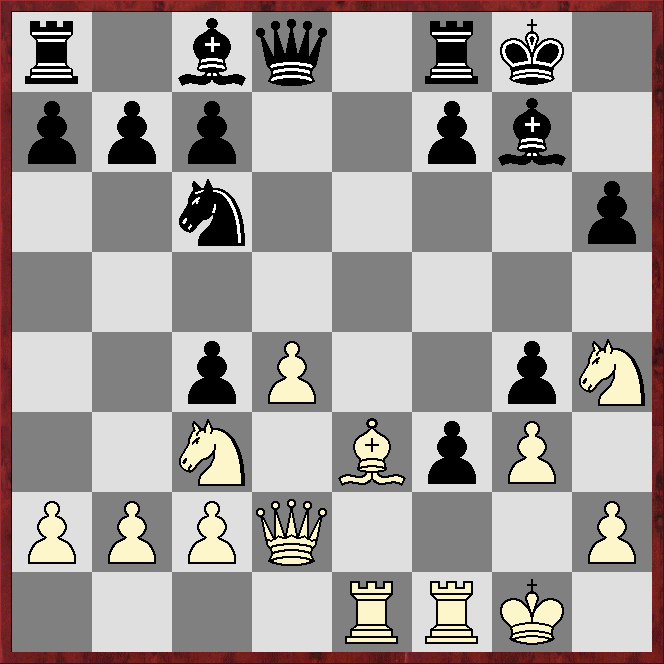
9.Nh4 f3
Black is a protected passed-pawn up, but the white king is much safer than in the previous game
*****
*****
*****
*****
*****
10.Nd2 Bf6 11.Ndxf3!?
All four games in Mega23 to reach the position saw this capture, but the engines reckon much stronger is 11.Nhxf3!?, which is counterintuitive since the king's knight is nearer the black king, and the queen's knight obstructs the queen's bishop. After 11.Nhxf3!? the engines reckon best play runs 11...gxf3 12.Qxf3 Bh3 13.Rf2 Qd7 14.e5, which frees the e4 square for the white queen's knight. Black can prevent it getting there with 14...Bg4, when best seems to be 15.Qe4. Black is then forced to play 15...dxe5, after which the engines give 16.Nb3!? with what they reckon is strong compensation for a knight.
11...gxf3 12.Qxf3 Bh3 13.Qh5!?
Also possible, as in the previous note, is 13.Rf2. But on 13...Qd7 the continuation 14.e5?! no longer has much point as Ne4 is not threatened.
13...Qd7 14.Rf4 0-0-0 15.Nf3?!
Probably better is 15.Nf5.
What should Black play?
*****
*****
*****
*****
*****
15...Ne5!
Giving back the knight in order to engineer exchanges and emerge the exchange up.
16.dxe5 dxe5 17.Rf5 Bxf5 18.Qxf5
Not 18.exf5? as 18...Qd1+ gives Black a very strong attack.
18...Qxf5 19.exf5
Spassky has even less compensation for the exchange than in the previous game, but battled on and salvaged a half-point when Ornstein missed a winning continuation on move 71

Next up with the Bust was reigning world champion Anatoly Karpov in the final of a made-for-TV tournament.
Spassky (2625) - Karpov (2720)
'World Cup' (Hamburg) 1982
1.e4 e5 2.f4 exf4 3.Nf3 d6 4.Bc4 h6 5.d4 g5 6.0-0 Bg7 7.g3!?
Not bothering with the the centre-strengthening 7.c3 and instead accelerating his kingside counterplay, but again the engines are unimpressed.
7...g4?!
And again the engines reckon this is the wrong idea, claiming Black has at least the upper hand after 7...Bh3 or 7...Nc6.
8.Nh4 f3 9.Nc3!?
Spassky tries to use the absence of c3 to speed his development. Previous games to reach the position, going back to 1850, saw 9.c3.
9...Nc6 10.Be3 Nf6 11.Qd2 Nxe4!? 12.Nxe4 d5 13.Nc3 dxc4 14.Rae1 0-0
Now both players have castled - a far-from-common occurrence in these lines - how would you assess the position?
*****
*****
*****
*****
*****
Black is two pawns up, for the moment, and has a protected passed pawn, but also has doubled pawns. Black also has the bishop-pair, but White has a lead in development and the safer-looking king. The engines reckon the position is completely equal.
15.Ne5 Ne7 16.Bxh6 Ng6 17.Nxg6 fxg6 18.Bxg7 Kxg7 19.Qd4+ Qf6 20.Re7+ Kg8 21.Qxf6 Rxf6 22.Rxc7 Bf5 23.Rxc4 Rxe8
Spassky has used his development advantage to go a pawn up and deprive Black of the bishop-pair, but Karpov has completed development and reached a position where king safety is not a paramount concern, and probably has the better minor piece
The rest of the game was marred by extraordinary blunders on both sides, with Spassky eventually winning.

CONCLUSIONS
These games seem to show five things.
1. Fischer's Bust gives Black an edge. But whether that counts as a refutation depends on whether Black gaining an advantage in the opening 'refutes' White's play or is merely good news for Black.
2. Modern engines are not just critical of common individual moves, but dislike plans that have become well-established over the years.
3. Play is very complicated with much needing to be considered both tactically and positionally.
4. The player more familiar with the arising positions will probably have a considerable practical advantage.
5. Much remains to be learned about what has become known as the Fischer Variation of King's Gambit, but that may also be true of the King's Gambit as a whole.