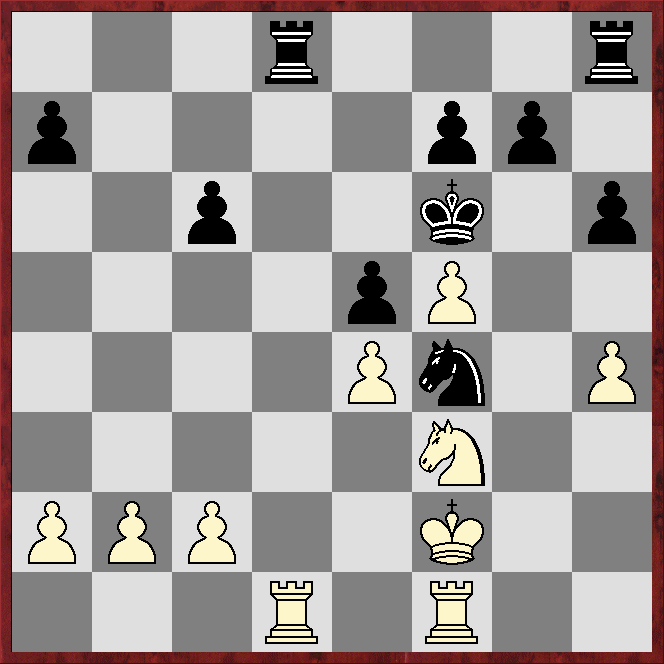
Showing posts with label Knight-and-pawn ending. Show all posts

Thursday, 27 August 2026

European 65+ Team: Game One

Playing hall
England 3 v Finland
Spanton (2003) - Heikki Westerinen (GM 2205)
Spanish Exchange
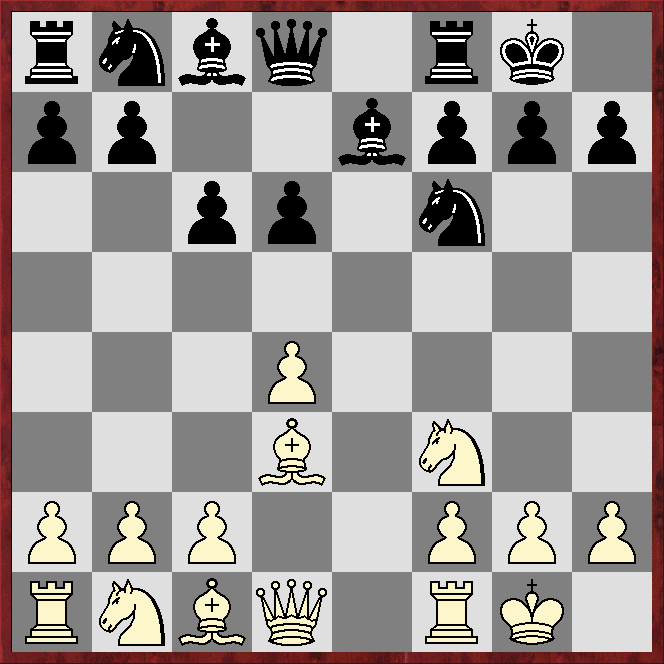
1.e4 e5 2.Nf3 Nc6 3.Bb5 a6 4.Bxc6 dxc6 5.d4 exd4 6.Qxd4 Qxd4 7.Nxd4 Bd7 8.Nc3 0-0-0 9.Be3 Bd6 10.0-0-0
Now both sides have castled, how would you assess the position?
*****
*****
*****
*****
*****
As usual in the Exchange Variation of the Spanish, especially in lines with an early d4, the battle has quickly become a queenless-middlegame clash between Black's bishop-pair and White's better pawn-structure. Stockfish18 and Dragon1 reckon Black has the better part of equality, which is more-or-less borne out by the score from this position in ChessBase's 2026 Mega database of +13=38-17, ie Black scores 53% over 68 games.
10....Ne7 11.Nb3!? Ng6
Three games in Mega26 saw 11...b6?, when 12.Bxb6 wins a pawn, but possibly even better is 12.Rxd6!? cxd6 13.Bxb6, when Wilhelm Schönmann - Josef Lokvenc, German Chess Federation Congress (Frankfurt) 1923, continued 13...Rde8 14.Rd1 f5 15.Rxd6 fxe4 16.Nc5 Bf5 17.a4, with much more than enough for the exchange, according to the engines (1-0, 34 moves).
12.Nc5
How should Black proceed?
*****
*****
*****
*****
*****
12...Rhe8!?
Euwe preserved the bishop-pair with 12...Be8 in a 1920 game, but the engines reckon White is fine after both 13.h4 and 13.Nd3. The text is Dragon1's top choice, at least for a while, and Stockfish18 also comes to rate it highly, but the engines also like 12...h5 and 12...Nh4, and Dragon1 eventually rates Euwe's move and 12...Nh4 as equally good.
13.Nxd7 Rxd7 14.a3!?
An apparent-novelty, played to prevent 14...Bb4, but the engines prefer 14.f3, or another apparent-novelty in 14.h4!?
14...Ne5 15.f3?!
This is probably a mistake. The engines suggest 15.Bf4.
15...Nc4 16.Bf2 Bf4+ 17.Kb1
Black to play and gain at least the upper hand
*****
*****
*****
*****
*****
17...Bd2?!
Much better, according to the engines, is 17...Red8, when one of their main line runs 18.Bh4!? Rxd1+ 19.Rxd1 Rxd1+ 20.Nxd1 Bxh2, netting Black a pawn, while they agree 18.Rxd7 Rxd7 19.Nd1 Rd2 20.g3 Bh6 leaves White positionally lost.
18.Na4
Not 18.Be1? Red8, when 19.Bxd2 Rxd2 20.Rxd2 Rxd2 21.Rg1 Ne3 leaves Black winning the g2 or c2 pawn.
18...b6
White seems fine after 18...Red8 19.Nc5.
19.Ka2 Red8 20.Kb3?!
Probably better is 20.b3. I was worried that 20...Nxa3!? 21.Kxa3 Bb4+ 22.Kxb2 Rxd1 23.Rxd1 Rxd1 was strong, but the engines give Black at best a slight edge.
20...Be3!? 21.Rxd7 Rxd7 22.Bxe3?!
Almost certainly better is 22.Kxc4, eg 22...b5+ 23.Kb4 Bxf2 24.Nc3, although the engines give Black the upper hand after, for example, 24...Bd4. Black could try the immediate 22...Bxf2, but 23.Nc3 b5+ 24.Kb3 c5 is, according to the engines, only slightly better for Black.
22...Nxe3 23.Kc3
What should Black play?
*****
*****
*****
*****
*****
23...g6
Possibly best is 23...Nd1+ 24.Kb3 Rd2 25.Re1, and now either 25...g6 or 25...a5, slowly increasing the pressure. The engines also like 23...Rd6, and they agree the text leaves Black positionally winning.
24.g3 c5 25.Re1 Nd1+ 26.Kb3 c4+?!
'Clever', but premature, whereas the engines' 26...Rd2 27.h4 c4+! 28.Ka2 c3! is very strong, eg 29.Nxc3 Nxc3+ 30.bxc3 Rxc2+ 31.Kb3 Rg2 32.g4 Rf2 33.Re3 Rh2, or 29.bxc3 b5 30.Kb1!? bxa4 31.Kc1 Rg2 32.Kxd1 Rxg3.
27.Ka2 g5?!
The engines give 27...b5 and 27...Rd2, in both cases claiming complete equality.
White to play and gain at least a slight edge
*****
*****
*****
*****
*****
28.g4?!
The engines suggest 28.Kb1, eg 28...Rd6 29.Kc1 Nf2 30.Nc3, when Black's initiative is spent, and White remains with the better pawn-structure.
28...Nf2 29.Re2?!
And here the engines much prefer 29.Nc3.
29...Nh3 30.Nc3 Nf4 31.Rf2 b5 32.Kb1 c5
Perhaps best is 32...Rd6 33.Kc1 Rh6, but White seems fine after 34.Ne2.
33.Kc1 Kc7 34.Rd2?!
The engines strongly dislike this, claiming 34.Ne2 and 34.h4!? give complete equality.
34...Rd4?!
Black has an edge after this, but the engines prefer 34...Rxd2!? 35.Kxd2 b4, eg 36.Nb1 Kc6!? 37.Ke3 Ne6!? 38.h3 Kb5 39.e5!? Ka4 (threatens 40...c3!) 40.axb4 cxb4 41.Ke4 h6!? 42.Kd5 Kb5, when White does not seem to have a good move, eg 43.Nd2 c3 44.bxc3 bxc3 45.Nb3 a5 46.Nc1 Nf4+ 47.Kd4 Nxh3 48.Kxc3 Ng1, after which f3 drops, and White has to contend with a passed a pawn. That is a very long line, with many alternatives along the way, but it illustrates White's difficulties.
35.Nd1
White comes close to equalising with 35.e5!?, according to the engines.
35...Kd6 36.Ne3 Ke5
The engines suggest 36...Ke6!?, and if, as in the game, 37.Nf5, then 37...Rxd2 38.Kxd2 Ng6!?, with what they claim is the upper hand for Black.
37.Nf5 Rxd2 38.Kxd2 h5
Here too the engines suggest 38...Ng6!?, but claim only a slight edge for Black, at best, the difference between the two lines presumably being due to the black king, in the second line, blocking the black knight's access to the e5 square.
39.gxh5 Nxh5 40.Ke3 Nf4 41.Ne7 Kd6 42.Nf5+
Not 42.Nc8+?? as 42...Kd7 traps the white knight.
42...Ke5 43.Ne7 f6 44.Nf5 b4!?
How should White respond?
*****
*****
*****
*****
*****
45.axb4!?
Also holding is 45.a4, but 45.c3? loses to 45...b3 as Black has ...Nd3 to come.
45...cxb4
Black's queenside pawns are straightened out, but White has enough threats to neutralise them
*****
*****
*****
*****
*****
46.Ne7 Kd6 47.Ng8
Not 47.Nf5+? as 47...Kc5 is very strong, eg 48.Kd2 Ng6 49.Kc1!? a5 (49...Ne5?! runs into 50.h4! gxh4 51.Nxh4) 50.b3 c3 51.Kd1 Kc6!? 52.Ke2 Nf4+ 53.Kd1 Kb5 54.Nd6+ Kc5 55.Nf5 Ng2 56.Ke2 a4!? 57.bxa4 Kb6 58.Kd1 Ka5 59.Nd4 Kxa4 60.Kc1 Ka3 61.Kb1 Ne3 62.Nb5+ Ka4 63.Nd4 Nf1 64.h3 Nd2+ 65.Ka2 Ka5 66.e5!? fxe5 67.Nc6+ Kb5 68.Nxe5 Ka4, when, at the end of another long engine-generated line, White is suddenly in zugzwang. Again there were lots of alternatives along the way, but Black was having all the fun.
47...Ke5 48.Ne7 Kd6 ½–½
TEAM RESULT
Bo.13
  England 3
Rtg-4
  Finland
Rtg2 : 2
4.1
Spanton, Tim R
2003-GM
Westerinen, Heikki M.J.
2205½ - ½
4.2
Freeman, Jon A
1950-FM
Henttinen, Markku I.O.
2176½ - ½
4.3
Guilfoyle, John M
1921-
Joentausta, Hannu
2092½ - ½
4.4
Wilson, Edgar
1903-FM
Vinke, Dietmar
2042½ - ½

Sunday, 1 February 2026

Kidlington U2000 Round Four

FACED a junior (born 2016).

Aviraj Bhaduri (1707) - Spanton (1929)
Sicilian Hyper-Accelerated Dragon
1.e4 c5 2.Nf3 g6 3.c3 d5!?
The main line in ChessBase's 2026 Mega database runs 3...Bg7 4.d4 cxd4 5.cxd4 d5 6.e5, with at least a slight edge for White, according to Stockfish17.1 and Dragon1.
4.exd5 Qxd5 5.Bb5+!?
This trails 5.Be2, 5.Na3 and especially 5.d4 in popularity.
5...Bd7 6.Bxd7+ Nxd7 7.d4 Ngf6 8.0-0 Bg7 9.Be3 cxd4 10.Qxd4 0-0
Now both sides have castled, how would you assess the position?
*****
*****
*****
*****
*****
Black has the only pawn on the two centre files, which could be a middlegame asset, while White has the possible endgame asset of a farside pawn-majority. The engines reckon the position is equal. 
11.Re1!?
They much prefer 11.Rd1 or 11.Na3.
11...Rfe8
The engines reckon 11...e5 12.Qxd5 Nxd5 gives Black the upper hand.
12.Na3 a6 13.Nc4 b5 14.Nb6 Qxd4 15.Bxd4 Nxb6 16.Bxb6 Nd5 17.Bd4 e6 18.Bxg7 Kxg7
How would you assess this late-middlegame position?
*****
*****
*****
*****
*****
Black has more space on the queenside, but the only other major difference between the two sides is the rival pawn-majorities. The engines agree the game is equal.
19.g3 Rec8 20.Rec1 Rc7 21.Rc2 Rac8 22.Rac1 Kf6
Not 22...Nb4 23.Rd2 Nxa2? 24.Ra1 Nxc3 25.bxc3 Rxc3 as, after 26.Kg2, White is well-placed to blockade, and ultimately destroy, Black's connected passers.
23.a3 h5 24.Kf1 g5!? 25.Ke2 g4!? 26.Nd2 Ke7 27.Kd3 f5 28.c4 bxc4+ 29.Rxc4 Rxc4 30.Rxc4 Rxc4 31.Nxc4
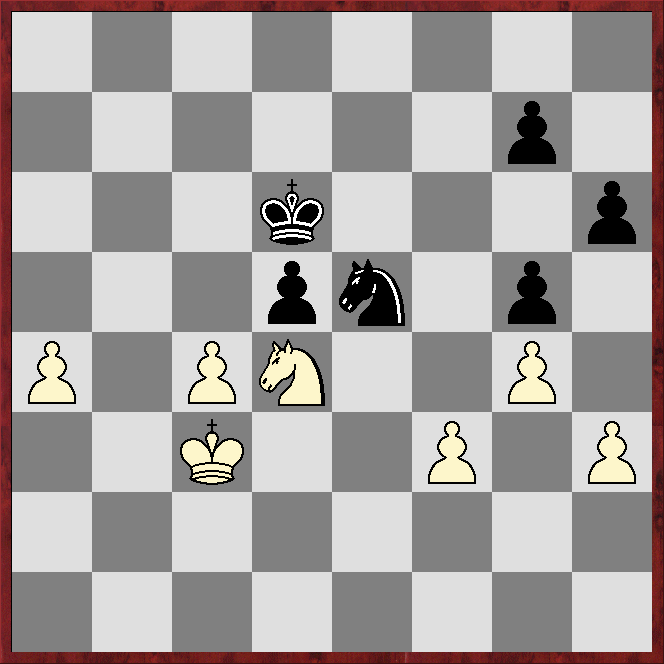
How would you assess this knight-and-pawn ending?
*****
*****
*****
*****
*****
White's queenside majority looks dangerous, but the engines reckon the position is completely equal.
31...f4?
But this is the wrong plan. Instead 31...Nf6, eyeing the e4 square, keeps White in check.
32.Ke4 f3 33.Ne3?
White is winning after 33.Ke5, according to the engines.
How should Black proceed?
*****
*****
*****
*****
*****
33...Nb6
The engines prefer a move I dismissed without bothering to analyse, namely 33...Nxe3!? I assumed 34.Kxe3 gave White a winning pawn ending. However, after 34...e5!? 35.Ke4 Ke6 36.b4 Kd6 37.a4 Ke6 38.b5 axb5 39.axb5 (39.a5?? loses to 39...Kd6) Kd6 40.b6 Kc6 41.Kxe5 Kxb7 42.Kf5 Kc5 43.Kg5 Kd4 44.Kxh5 Kd3 45.Kxg4 Ke2 46.h4 Kxf2 47.h5 Kg2 48.h6 f2 49.h7 f1=Q 50.h8=Q Qf3+, the game is drawn.
34.b3 Nd7!?
The text is for a long time strongly disliked by Dragon1, but the move seems to be fine. However, the engines are sure Black maintains complete equality with 34...Kd6, one point being 35.Kf4? loses to 35...Nd5+, eg 36.Nxd5 Kxd5! 37.Kg5 e5 38.Kxh5 e4 39.Kxg4 Kd4 40.h4 Kd3 41.h5 e3 etc.
35.b4 Nb6 36.Nd1!?
The engines for quite some time marginally prefer this over 36.Ke5, but come to view the two moves as equal.
36...Nc4 37.a4 Nb6
Going after the h2 pawn with 37...Nd2+? does not work, eg 38.Kf4 Nf1? 39.Kg5 Nxh2 40.Ne3!? Kd6 41.Kxh5. Slightly better is 38...Kf6, but 39.Ke3 Nf1 40.Kd4, with b5 to come, wins for White.
How should White proceed?
*****
*****
*****
*****
*****
38.Nc3
Interesting is 38.a5!? Nd5 39.b5 axb5 40.a6 Nc7 41.a7, but both 41...b4 and 41...Kd6 seem to hold.
The engines suggest 38.Kf4!? Kf6 (38...Nxa4? 39.Kg5 Nb6 40.Nc3! is very good for White, and if 40...Nd5 41.Nxd5+ exd5, White wins with 42.Kxh5 d4 43.Kxg4 etc), and now 39.Nc3, when 39...e5+ 40.Ke4 Ke6 transposes to the final position in the game, except with White, rather than Black, to move. The engines reckon White has to continue 41.a5!?, when Dragon1's 41...Nd7?! loses, according to Stcokfish17.1, but 41...Nc4 42.b5!? axb5 43.a6 b4!? 44.a7 Nb6 45.Na4 Na8 seems to hold.
38...Kd6 39.Kd4
39.Kf4 Nd5+ 40.Nxd5 exd5! is completely equal, according to the engines.
39...e5+ 40.Kd3 Ke6 41.Ke4 ½–½

Thursday, 13 November 2025

Cap Negret Round Six

Spanton (1896) - Josep Fernández Pérez (1801)
French Exchange
1.e4 e6 2.d4 d5 3.exd5 exd5 4.Nf3 Bd6 5.c4!?
Stockfish17.1 and Dragon1 slightly prefer this over the more popular 5.Bd3, and the text scores 14 percentage points higher in ChessBase's 2026 Mega database.
How should Black respond?
*****
*****
*****
*****
*****
5...c6
This is Dragon1's top choice, but Stockfish17.1 favours 5...Nf6.
6.Nc3 Ne7!?
The idea of this passive-looking placement of the king's knight is to meet Bd3 with ...Bf5, in order to swop light-square bishops, which generally speaking should benefit Black when pawns are fixed on d4 and d5, as in the diagram.
7.Bd3 0-0!?
The main move is 7...dxc4, giving White an IQP with tempo.
How should White proceed?
*****
*****
*****
*****
*****
8.0-0
Not 8.Bxh7+?? Kxh7 9.Ng5+ Kg8 10.Qh5 as Black has the winning 10...Bf5.
8...Bf5!?
Thematic, and it has been tried by players rated over 2400, but there is a problem with the move on this occasion.
9.Bxf5 Nxf5 10.Qd3
This is the engines' second choice, but it seems to be a novelty, probably because most players have preferred 10.cxd5 cxd5 11.Qb3.
10...g6
The engines suggest 10...Qd7 or 10...Ne7.
11.c5
Swoping on d5 is still the way to go, followed by 12.Qb5.
11...Be7 12.Bf4 Na6 13.h3 Nc7 14.b4 Ne6 15.Be5 Bf6 16.a4?
Better is 16.Rfe1.
16...Bxe5 17.Nxe5
If 17.dxe5, then 17...a5!
How should Black proceed?
*****
*****
*****
*****
*****
17...f6?
Black wins an important pawn with 17...Nfxd4, as attempting to trap the knight with 18.g4? only leaves matters worse after 18...f6.
18.Nf3 Qd7 19.b5 Rab8
The engines reckon Black, rather than defend the queenside, should go for counterplay on the kingside with 19...Nf4 or 19...Rae8.
20.Rfb1 Qc7 21.Rb4
The engines prefer 21.a5, and if 21...Qf4, then 22.Rd1 or 22.Kf1. The point about 22.Kf1 is that 22...Nfxd4?? fails to 23.Rb4 as ...Nxf3 does not come with check.
21...Qf4?!
This threatens 22...Nxc5, but that is easily countered.
It seems Black can more-or-less equalise by instead playing 21...a5!, coming at a time when White cannot gain advantage from opening the b file, eg 22.bxa6 bxa6 23.Rab1 Rxb4 24.Rxb4, and now 24...Re8!? or 24...Ng5!?, with serious kingside counterplay, one point being 24...Re8!? cannot be met by 25.Qxa6? as Black has 25...Nexd4!, when 26.Nxd4?? runs into 26...Re1+. After 24...Ng5!? 25.Nxg5 fxg5, the engines reckon White can play 26.Qxa6, but 26...Qf4 draws, eg 27.Qd3 Qc1+ 28.Kh2 Qf4+ etc, or 28.Nd1 Re8, with strong play for Black.
22.Rab1 a5
This comes to be Dragon1's top choice, at least for a while, but 22...Qc7 may be better.
23.bxa6 bxa6 24.Ne2!?
The key move, protecting d4 with tempo, leaving the white queen free to capture on a6.
24...Qc7 25.Qxa6 Ra8 26.Qd3 Rfb8 27.Rxb8+ Rxb8 28.Rab8+ Qxb8 29.a5 Nc7 30.Nd2
The engines prefer kingside play, eg 30.g4!? Ng7 31.g5!?, when Black has to worry about the king as well as about the a pawn queening.
30...Qb5 31.Qxb5
How should Black recapture?
*****
*****
*****
*****
*****
31...Nxb5?!
The engines strongly prefer creating a rival passed pawn with 31...cxb5.
32.Nb3 Nc7 33.Kf1 Ne7 34.Nc3 Nc8
The engines prefer activating the king.
35.Ke2 Kf7 36.Kd3 Ke6 37.Na2 Na6 38.Nd2 Na7 39.Nb1 Kd7 40.Na3 Kc7 41.Kc3 Kb7 42.Nb4 Nc7
The engines agree this is much better than swoping a pair of knights.
43.Nbc2?!
It seems this knight should have been left where it was to keep the black king out of a6.
43...Ka6
Now the black king is blockading the passed pawn, how would you assess the position? 
*****
*****
*****
*****
*****
Completely equal, according to Stockfish17.1, although Dragon1 gives White a token edge of about 0.1.
44.Kb4 Ncb5?!
Now White is back in business. Instead 44...Ne6 maintains equality, according to the engines.
45.Nb1 Kb7 46.Nd2 Nc8 47.Nf3 Ka6 48.Ne3
The engines reckon 48.g4!? gives at least a slight edge.
48...Ne7 49.g4
A move too late, apparently, as Black can now gain complete equality, according to the engines, although their assessment of other moves fluctuates. However it is possible 49.Ng4 or 49.Nc2!? is better.
49...h6
This may be enough for a draw, but the engines reckon 49...g5 virtually guarantees it.
50.Nc2 Nc7
Temporising with the king may be better.
51.Nfe1
51.Ka4 gives at least a slight edge, according to the engines.
51...Ne6 52.Nd3 g5!?
Dargon1 prefers temporising with the king, or pushing the h pawn, but Stockfish17.1, although at first sceptical, comes to be fine with the text..
53.Ka4 Nc7?
But this is a mistake. Instead 53...Kb7 seems to hold, although Dragon1 is less sure than Stockfish17.1.
54.f4
This seems enough for at least the upper hand, and is probably winning, but 54.Ndb4+ Ka7 55.Ne3 Kb7 56.f3!? Ka7 57.a6! definitely wins, according to the engines, eg 57...Nxa6 58.Nf5! Nxb4 (58...Nxf5 59.Nxc6+) 59.Nxe7 Nc2 60.Nxc6+ etc.
54...Nb5?
This makes it relatively easy. 54...Ng6 is trickier, but Stockfish17.1's 55.f5!? seems to win, although Dragon1 for quite some time disagrees, the main line running 55...Nf4 56.Nxf4 gxf4 57.Ne1 (Dragon1 now agrees White is winning) Nb5 58.Nf3 Nc3+ 59.Kb4 Ne4 60.h4 Ka7 61.Kb3 Ka6 62.Kc2! Kxa5 63.Nd2 Ng3 64.Kd3 Kb4 65.g5! hxg5 66.hxg5 Nxf5 67.gxf6 Nh6 68.Nf3 Nf7 69.Ne5 etc.
55.fxg5 fxg5 56.Ndb4+ Ka7
White to play and win
*****
*****
*****
*****
*****
57.Nxc6+! Nxc6 58.Kxb5 1-0

Tuesday, 7 October 2025

Calvià Round Four

FACED a Latvian.

Spanton (1941) - Vjačeslavs Verņuks (1794)
King's Indian Sämisch
1.c4 Nf6 2.Nc3 g6 3.d4 Bg7 4.e4 d6 5.f3 0-0 6.Bg5!? c5 7.d5 Qa5!?
An uncommon continuation, but it has been played by Shirov, Gelfand and other strong grandmasters.
How should White respond?
*****
*****
*****
*****
*****
8.Qd2
This is easily the main move in ChessBase's 2025 Mega database, but Stockfish17 and Dragon1 prefer András Adorján's 8.a4!?
8...b5?!
A dubious positional pawn sacrifice that appears to be a novelty. Normal is 8...a6.
9.Nxb5 Qxd2+ 10.Bxd2 a6 11.Nc3
For a pawn Black has the half-open b file, a slight lead in development ... and not much else
*****
*****
*****
*****
*****
11...e6
The engines suggest 11...a5!?
12.Rb1?!
Prophylaxis, but of a feeble kind. Best may be 12.0-0-0!?
12...exd5 13.Nxd5?
This throws away all of White's advantage by helping Black attack the extended white centre.
13...Nxd5 14.cxd5 Nd7
Probably best is 14...f5.
15.Bc3
The engines prefer developing the knight, to either h3 or e2.
15...f5
The engines like 15...Ne5 or 15...Rb8.
16.Bxg7
Better is 16.exf5!? Rxf5 17.Bd3!, but I missed that 17...Rxd5?? loses to 18.Bc4.
16...Kxg7 17.Be2
Black is better after this, according to the engines. They suggest giving the pawn back by 17.exf5!? Rxf5 18.Ne2 Rxd5 19.Nc3, claiming complete equality.
17....Rb8 18.Nh3
The engines reckon 18.b3 a5 (18...fxe4 19.fxe4 lets the white knight develop smoothly at f3) 19.exf5  Rxf5 20.Nh3 Nf6!? 21.Nf2 keeps White's disadvantage to a minimum.
18...fxe4 19.fxe4 Rb4?
Black gains at least the upper hand after 19...Nf6, according to the engines, eg 20.Nf2 Re8 (also strong is 20...Nxe4!? 21.Nxe4 Bf5 etc) 21.Bf3 Bf5.
20.Nf2 Ne5 21.0-0 a5 22.b3 Bd7 23.Rbc1 Ra8
Black's pressure is reminiscent of the Benko Gambit
*****
*****
*****
*****
*****
24.Bc4 a4 25.Rc2
25.Rc3 may be better.
25...Bb5!? 26.Bxb5
Not 26.a3?? axb3! (this is even stronger than 26....Bxc4) 27.axb4 bxc2 (27...Bxc4 also wins) 28.Bxb5 cxb4, after which Black's queenside pawns triumph.
26...Rxb5
The engines reckon White's task is slightly more difficult after 26...axb3!? 27.axb3 Rxb5.
27.bxa4 Rxa4 28.Re1
The engines advise giving back the pawn with 28.Nh3!? Rxe4 29.Ng5 and 30.Ne6+, claiming equality.
28...Rbb4 29.h3 h5 30.Kh2 Ra3 31.Ree2?! Nc4?!
Black gets at least the upper hand after 31...Rb1, according to the engines, eg 32.Rcd2 Ra1 33.Nd1 h4 34.Nf2 (White has run out of useful moves) Kf6 35.Rc2 Kg5!? 36.Rcd2 Kf4 37.Nd1 c4 38.Rf2+!? Kg5!? 39.Rfe2 c3 40.Rd4 Kh5! (40...R1xa2? 41.Nxc3), after which White is in zugzwang, and probably has nothing better than 41.Rc2 R1xa2 42.Rxc3 Rxc3 43.Nxc3 Rc2, when moving the knight loses to 44...Nf3+. This is a long variation, but in any event White's position is very difficult.
32.Nd1 Ne5 33.Rc3 Rba4 34.Rxa3 Rxa3 35.Rc2 Nd3?
The engines are OK with this at first, but the knight-and-pawn ending is lost for Black, although Dragon1 takes some convincing.
Stockfish17 comes to see the position as winning for White, but Dragon1 insists it is completely equal
*****
*****
*****
*****
*****
36.Rc3 Rxc3 37.Nxc3 Kf6 38.Kg3 Ke5 39.Kf3
Only now does Dragon1 realise Black is lost 
*****
*****
*****
*****
*****
39...c4
Dragon1 originally reckoned 39...Nb2!? draws, but White wins with 40.h4! eg 40...Nc4 41.Nb1!! (a study-like only-move) Kd4 42.a4, which is not so very different from the way the game unfolds (except the game does not have the same brilliance, as the text makes White's task less demanding).
40.Ke3 h4 41.a4 Nc5 42.a5 g5 43.Nb5!?
It turns out the white knight is not tied to the defence of e4.
43...Na6
Or 43...Nxe4 44.a6 Nf6 45.Nc3 Ne8 46.a7 Nc7 47.Kf3! Na8 (47...Kd4 48.Nb5+!) 48.Kg4 Kf6 49.Nb1!? (not the only winning move) Kg6 50.Kf3 Kf5 51.Na3 c3 52.Nb5!? etc.
44.Nd4 c3 45.Nf3+ Kf6 46.Nd4 Nc5
Or 46...Ke5 47.Nf3+ Kf6 48.Kd3 Nc5+ 49.Kxc3 Nxe4+ 50.Kc4 etc.
47.Nc3 Ke5 48.Nb4 1-0

Friday, 26 September 2025

Northumberland Round One

Spanton (1936 ECF/1977 Fide) - Oliver Graham (1829 ECF/1751 Fide)
Spanish Exchange
1.e4 e5 2.Nf3 Nc6 3.Bb5 a6 4.Bxc6 dxc6 5.d4 exd4 6.Qxd4 Qxd4 7.Nxd4 Bc5!?
This has been played by grandmasters, but trails 7...Nf6, 7...c5 and especially 7...Bd7 in popularity in ChessBase's 2025 Mega database.
How should White respond?
*****
*****
*****
*****
*****
8.Be3
This beats 8.Nb3 for popularity, but Stockfish17 and Dragon1 reckon there is little to choose between the two moves.
8...Nf6
This was Capablanca's choice in a 1914 game, and it is the commonest continuation, but the engines suggest 8...Bd7 or 8...Ne7.
9.f3 Bb6!?
Capablanca preferred castling.
10.Nc3 Bd7 11.Kf2!? h6!?
Apparently a novelty. The engines suggest 11...h5, 11...0-0-0 or 11...Ba5.
12.Nb3!?
This allows White to force off Black's bishop-pair.
12...Be6!? 13.Bxb6 cxb6 14.Nd4 Ke7!?
Now both players have connected rooks, how would you assess the position?
*****
*****
*****
*****
*****
White's superior pawn-majority gives the upper hand, according to the engines.
15.Nxe6 Kxe6 16.Rad1 Rhd8 17.Na4!?
This achieves nothing. The engines suggest starting to realise White's majority with 17.g4!?
17...Nd7 18.Rd2 b5 19.Nc3
Possible was 19.Rxd7!? as, whichever way Black captures, White regains the exchange with 20.Nb6(+).
19...Ne5 20.Rxd8 Rxd8 21.Rd1 Rxd1 22.Nxd1 b6
OG offered a draw.
How would you assess this knight-and-pawn ending?
*****
*****
*****
*****
*****
White still has the superior pawn-majority, but the engines reckon it is not easy to make much of it. Dragon1 gives White a slight edge, but Stockfish17 is not even sure of that.
23.Ne3 Nc4?
Allowing a pawn ending is probably losing, and at any rate makes Black's defence very difficult.
24.Nxc4 bxc4 25.Ke3 c5 26.f4 h5 27.h3!?
This allows 27...h4, which Dragon1 reckons is good for Black, reducing White's advantage to a slight edge, but Stockfish17 agrees with me that 28.Kf3 wins, eg 28...f5!? (Dragon1's idea) can be met by both 29.g4 and 29.e5, which Dragon1 comes to realise win for White.
27...Kd6 28.Kf3 b5 29.g4 h4!?
This is Stockfish17's top choice. Dragon1 prefers 29...hxg4+, but both 30.hxg4 and my planned 30.Kxg4!? seem to win.
30.g5 b4 31.Kg4 a5
White to play and win ... or lose
*****
*****
*****
*****
*****
32.Kxh4??
This allows Black a well-known breakthrough on the queenside, whereas that is prevented by 32.c3 (but not 32.a3?? c3).
32...a4
There is no defence against the threat of 33...b3
*****
*****
*****
*****
*****
33.Kg4
If 33.b3 then 33...cxb3 34.axb3 axb3 35.axb3 c4 etc, while 33.c3 loses to 33...a3, and 33.a3 loses to 33...c3.
The game finished:
33...b3 34.cxb3 axb3 34.axb3 cxb3 36.e5+ Kd5 37.g6 fxg6 38.Kg5 c4 39.Kxg6 c3 40.bxc3 b2 41.Kf7 b1=Q 42.e6 Qf5+ 0-1

Monday, 7 July 2025

Lessons From Bischofsgrün: Time

IN round one I reached the following winning knight-and-pawn ending.
Black has just played 37...Nc6-e5 in Spanton (1954) - Reinhold Winter (1789)
*****
*****
*****
*****
*****
*****
*****
*****
Clearly White cannot let Black win the c pawn, so I played 38.cxd5?, but this lets Black draw, the game continuing 38...Kxd5 39.Nf5 Nxf3 40.Nxg7 Ng1 41.Nf5 Nxg3 42.Kb4!? Kc6 43.a5 Nf4 44.Kc4 h5!?, when the position is so drawn that Black went on to reach a position in which he had 10 possible moves, only one of which lost.
Yet in the diagram White has two winning moves.
A) 38.Nf5+, which, after 38...Kc5 39.cxd5 Kxd5 reaches the same position as arises in the game after 39.Nf5, except now it is White rather than Black to move, and this extra tempo makes the position trivially winning (White is up the equivalent of about a rook, or even more, according to Stockfish17 and Dragon1).
B) 38.Nb5+!?, which, while not quite as emphatic as 38.Nf5+, still wins, as I show in my notes to the game. 
LESSON: a single tempo in an ending can make all the difference, and great care must be taken to avoid squandering one, and to not miss an opportunity to gain one.

Friday, 25 April 2025

English 65+ Round Three

TOOK a halfpoint bye in round two.

Spanton (1985 ECF/1922 Fide) - Chris Leeson (1750 ECF)
Petrov
1.e4 e5 2.Nf3 Nf6 3.Nxe5 d6 4.Nf3 Nxe4 5.d3!? N6 6.d4 c6!? 7.Bd3 Be7 8.0-0 0-0
Now both sides have castled, how would you assess the position?
*****
*****
*****
*****
*****
White, at least for now, has more space and a more-active king's bishop - enough for a slight edge, according to Stockfish17 and Dragon1.
9.h3!?
The engines like this, the idea being to restrict Black's light-square bishop.
9...h6!? 10.Nh4!?
The engines prefer developing with 10.Bf4 or 10.Re1.
10...d5 11.Nf5 Bxf5 12.Bxf5
White has won the bishop-pair, but it has cost tempi.
12...Nbd7 13.Nd2 Qc7 14.Nf3 Bd6 15.Be3 Bf4!? 16.Re1 Rae8 17.Qd2 Bxe3 18.Rxe3 Rxe3 19.Qxe3 Re8 20.Qd2 Ne4 21.Bxe4 Rxe4 22.Re1 Rxe1+ 23.Qxe1 Kf8
The bishop-pair is long gone, the pawn-structure is symmetrical, and occupation of the open file brings no advantage
*****
*****
*****
*****
*****
24.Qb4+ Ke8 25.Qa3 a6 26.Qd3 Qf4!? 27.Qe2+ Kf8 28.c3 Qf5 29.a3 Qe6!? 30.Qxe6 fxe6 31.Kf1 Ke7 32.Ke2 Kf6
CL offered a draw.
How would you assess the knight-and-pawn ending?
*****
*****
*****
*****
*****
Completely equal, according to the engines.
33.Ke3 g5 34.h4 g4 35.Nh2 Kf5 36.Nf1 e5 37.Ng3+ Ke6 38.dxe5 Nxe5
Recapturing with the king also maintains equality.
39.Kf4 c5
39...Nd3+?! 40.Kxg4 probably favours White, or at best (for Black) is equal.
40.b3 b5 41.Nf5 Nd3+ 42.Kxg4 Nf2+ 43.Kf4 Nd3+ 44.Kg4 Nf2+ ½–½

Tuesday, 4 March 2025

Lessons From Prague

MY round-one game in the world senior team 65+ championship reached a knight-and-pawn ending in which my active king made up for being a pawn down.
Indeed in the following position I thought I was winning, as Black appears to be in zugzwang.
I have just played 44.Ke5-d5
*****
*****
*****
*****
*****
*****
However Stockfish17 and Dragon1 demonstrate there are at least five moves that draw, including the game's 44...Nf4+.
The biggest surprise to me is that one of the five drawing methods is with 44...Nd4!?, even though after 45.Nxd4 cxd4 46.Kxd4 White has a protected passed pawn.
That is normally fatal for the opponent, but the engines demonstrate that here it is not so.
Black has to play the fairly obvious 46...Kd6, when the try 47.Ke4 Ke6 48.Kf4 Kf6 49.Kg3 Kg5 50.Kh3 Kf5 51.Kh4 Kg6 gets nowhere.
The black king remains within the square of the white passer, and 52.c5 Kf6 53.Kxh5 Ke6 54.Kg5 Kd5 55.Kf5 Kxc5 56.Ke5 Kc6 57.Kd4 Kd6 also fails to make progress.
LESSON One is that a distant passed pawn can make up for a protected passer.
LESSON Two is the old but easily ignored advice that you cannot play by general principles alone ('a protected passer is a major weapon in a pawn-ending') - concrete analysis is necessary.

Monday, 17 February 2025

World Senior Team Championship 65+ Round One

FACED a Norwegian Fide master.

Spanton (1896) - 
Ole Christian Moen (2201)
Spanish Exchange
1.e4 e5 2.Nf3 Nc6 3.Bb5 a6 4.Bxc6 dxc6 5.d4 exd4 6.Qxd4 Qxd4 7.Nxd4 Bd6!?
7...Bd6!? is fifth-most popular in ChessBase's 2025 Mega database, a long way behind 7...Bd7
*****
*****
*****
*****
*****
8.Be3 Ne7 9.Nc3 0-0 10.0-0-0
Now both sides have castled, how would you assess the position?
*****
*****
*****
*****
*****
White has the better pawn-structure and a lead in development; Black has the bishop-pair. Stockfish17 and Dragon1 reckon the game is completely equal.
10...f6 11.h3!?
This seems to be a novelty. Known moves are 11.f3, 11.Nb3 and 11.f4.
11...c5 12.Nde2 b6 13.Bf4 Be5!?
The engines agree this is Black's best move.
14.Bxe5 fxe5 15.f3 Be6 16.Nd5 Bxd5!?
White has the upper hand after 16...Nxd5?! 17.exd5, according to the engines.
17.exd5 Rad8 18.c4?!
White has a slight edge after 18.Nc3, according to the engines.
18...Nf5 19.b3 Ne3 20.Rdg1 b5 21.Kd2 Nf5 22.Kc3 b4+ 23.Kc2 Rf6 24.Kc1?!
The engines reckon 24.Kb1!? is equal.
24...c6
Black is at least slightly better after 24...a5!?, according to the engines, one line running 25.Re1 a4 26.Kb1 c6 27.dxc6 Rxc6 28.bxa4!? Ne3 29.Ng3 Nxc4 30.Rd1 Ra8 31.Ne4 Ne3 32.Rd3!? (32.Rd2? c4) Nxg2, when Black's objective advantage may be small, but White's position looks much harder to play.
25.dxc6 Rxc6 26.Rd1 Rcd6 27.Rxd6 Rxd6
How would you assess this rook-and-knight ending?
*****
*****
*****
*****
*****
Black has an isolated pawn, but has pressure thanks to being more active and having more space. The engines reckon the position is completely equal.
28.Re1 Nh4 29.Ng1!? Nxg2 30.Rxe5 Nf4!? 31.Kc2
Not 31.Rxc5?? Nd3+.
31...Rg6 32.Ne2 Rg2 33.Kd2
Possibly slightly better is 33.Kd1!?
33...Nxh3
The engines suggest 33...g6 or 33...Rh2, in each case claiming a slight edge.
How should White proceed?
*****
*****
*****
*****
*****
34.Ke3
Not 34.Rxc5? Ng1 35.Re5? Nxf3+.
34...Rg5 35.Rxg5 Nxg5
How would you assess this knight-and-pawn ending?
*****
*****
*****
*****
*****
The best piece on the board is the white king, and its activity gives White sufficient compensation for a pawn.
36.Kf4 Ne6+ 37.Ke5 Kf7 38.Ng3 g6 39.f4 a5 40.f5 gxf5 41.Nxf5 h5 42.Nd6+ Ke7 43.Nf5+ Kd7!?
Black could take a simple draw with 43...Kf7.
44.Kd5
Can Black save the game?
*****
*****
*****
*****
*****
Incredibly, at least it seems so to me, the engines reckon Black as at least five drawing lines, including 44...Nd4!? 45.Nxd4 cxd4 46.Kxd4 Kd6! 47.Ke4 Ke6 48.Kf4 Kf6 49.Kg3 Kg5, and 44...a4!? 45.bxa4 Nd8 46.Kxc5 Kc7 47.Kxb4 Kb6. Also apparently drawing are 44...Nd8!? and 44...Ng5!?, and the game continuation.
44...Nf4+ 45.Kxc5 Nd3+
The engines reckon 45...Kc7, 45...Ke6 and 45...a4!? also hold the balance.
46.Kb5 Nc1 47.Kxa5 Nxa2 48.Kb5 Kc7 49.Kc5 Kb7 50.Kd6 Nc3
Not 50...Nc1?? 52.c5 Nxb3 53.c6+ as, after 53...Kc8, White has time for 54.Ne7+ etc.
51.c5 Ne4+ 52.Kd5 Nd2 53.Nd6+ Kb8 54.c6 Nxb3 55.Kc4 Kc7 56.Nf5 Kxc6 ½–½
TEAM RESULT
Brian Hewson (2039) 1-0 Leif Øgaard (GM 2358)
Anthony Ashby (2049) 0-1 Sverre Heim (FM 2312)
Tim Spanton (1896) = Ole Christian Moen (FM 2201)
Charles Higgie (1945) = Richard Bjerke (FM 2037)
ENGLAND 3 2-2 NORWAY
Playing hall

Saturday, 11 January 2025

4NCL Game One

PLAYED on board five (of six) for Wessex against Coventry today in Division Three Knights of the Four Nations Chess League.

Spanton (1958 ECF/1946 Fide) - David Ireland (1932 ECF/1872 Fide)
Sicilian Bb5(+)
1.e4 c5 2.Nf3 d6 3.Bb5+ Nc6 4.0-0 Bg4!?
This has been played by grandmasters, and is third in popularity in ChessBase's 2025 Mega database, albeit a long way behind 4...Bd7.
5.h3 Bh5 6.d4!?
There are just two examples of this move in Mega25, but it is liked by Stockfish17 and Dragon1, although they also like the main continuation, 6.c3.
6...cxd4 7.g4!?
This may be a novelty. Dušan Popović (2504) - Jakub Roubalik (2343), Prague 2024, went 7.c3!? Nf6!? 8.cxd4 a6 9.Bxc6+ bxc6 10.Nc3, with the upper hand for White, according to the engines (1-0, 42 moves).
7...Bg6 8.Nxd4 Rc8
How should White proceed?
*****
*****
*****
*****
*****
9.f4?!
Probably too loosening. The engines reckon White is at least slightly better after 9.Nc3.
How should Black respond?
*****
*****
*****
*****
*****
9...e5!
This is best, according to the engines. If 9...Bxe4!? they reckon both 10.Nc3 and 10.c4!? give more than enough compensation for a pawn.
10.Bxc6+
The engines suggest 10.fxe5 or 10.f5.
10...bxc6 11.fxe5 dxe5 12.Nf5 Bxf5?!
The engines much prefer 12...Qxd1 13.Rxd1 Nf6, claiming Black has the upper hand.
13.Qxd8+ Rxd8 14.gxf5
Equalising is 14.exf5!?, according to the engines.
14...Bc5+ 15.Kg2!? h6!?
The engines reckon this is a little slow, recommending 15...Nf6.
16.Kf3 Nf6 17.Be3 Bxe3 18.Kxe3 Nh5 19.Nd2 Ke7 20.Nf3 Kf6!? 21.Rad1 Nf4 22.h4
Probably not 22.Nxe5?! Kxe5 23.Rxd8 Ng2+ 24.Kf2 Rxd8 25.Kxf2 Kxe4, when material is level and, although the engines reckon Black is at best 'only' slightly better, the position looks much easier for Black to play. 
22...Ng2+ 23.Kf2 Nf4
How would you assess this late-middlegame?
*****
*****
*****
*****
*****
Black has a powerfully placed knight, but White has a farside pawn-majority, and the open file is evenly contested. The engines reckon complete equality.
24.Nh2 Ke7 25.Ng4 f6 26.Kf3 Rb8!? 27.b3 Rhd8 28.Rg1 Nh3 29.Rge1 Nf4 30.Ne3 Rxd1!? 31.Rxd1 Rd8?!
The knight-and-pawn ending is difficult for Black. The engines suggest 31...h5, and if 32.Nc4 they reckon 32...Rd8 33.Rxd8 Kxd8 gives Black a better version of the game's knight-and-pawn ending.
32.Rxd8 Kxd8 33.Ng2 Nh3
Not 33...Nxg2? as, after 34.Kxg2, White's three kingside pawns will hold up Black's four, leaving White's 3-2 queenside majority to decide the game.
What should White play?
*****
*****
*****
*****
*****
34.Ne3?!
The engines' choices fluctuate, but they agree this is not best. Stockfish17 eventually decides 34.a4 and 34.Ne1 are winning, while Dragon 1 reckons 34.b4 wins, but rates its second choice, 34.Ke3, as giving at best the upper hand.
34...Nf4?!
The engines give 34...Ng1+, after which best may be triangulation with 35.Kf2 Nh3+ 36.Kg2 Nh4+ 37.Kf3, and if then 37...Nh3? the position is the same as after 34.Ne3, but with White to move, and 38.Nf1 wins, eg 38...Nf4 39.Ng3 prepares, as in the game, Ne2. Instead the engines suggest 37...h5 or 37...Ke7, but agree White is at least slightly better.
35.Nf1 Ke7 36.Ng3 Kf7 37.b4!?
The immediate 37.Ne2 Nxe2 38.Kxe2 is not so clear after 38...g6.
37...Ke7?
Much better, according to the engines, is 37...h5. but they give White the upper hand.
38.Ne2 g5
38...Nxe2? 39.Kxe2 leaves White with an easily won pawn-ending.
39.fxg6 Nxg6 40.Kg4 Kf7 41.a4 Ne7 42.Ng3 Ke6  43.c4 a6 44.h5
Not 44.Nf5?? as 44...Nxf5+ 45.exf5+ gives Black a protected passed pawn and a guaranteed draw. Interesting is 44...h5+!? 45.Kxh5 Nxf5 46.exf5+ Kxf5, but again the pawn-ending is completely equal, according to the engines.
44...c5!?
This is the engines' top choice, which only shows how desperate Black's position is.
45.b5 axb5 46.axb5 Nc8 47.Nf5 Nb6 48.Ne3 Nc8 49.Nd5 Nd6 50.b6 Kd7 51.Nxf6+ Kc6 52.Ng8 Nxc4 53.Nxh6 Nd6
White to play and win
*****
*****
*****
*****
*****
54.Kf3?
The winning plan is to quickly mobilise the h pawn, for example 54.Nf5 Nxe4 55.h7 Nf6+ 56.Kg5 Nh7+ 57.Kg6 Nf8+ 58.Kg7 Ne6+ 59.Kf7 Ng5+ 60.Kg6 Ne6 61.Ne7+ (61.h7? only draws after 61...Nf8+ and 62...Nxh7) Kxb6 62.Kf5 Nf8 63.Ng6 Nh7 64.Nxe5 Kc7 65.Kg6 Nf8+ 66.Kf7 Nh7 67.Kg7 Ng5 68.Nf3!? Ne6+ 69.Kf7 Nd8+ 70.Kf6 etc.
Black to play and draw
*****
*****
*****
*****
*****
54...Kxb6
The engines reckon Black had to play 54...c4!, eg 55.Nf5 c3 56.Ne3 Kxb6, or 55.Ng4 Kxb6 56.Nxe5, when the Syzygy endgame tablebase confirms 56...c3! draws, eg 57.h6 c2 58.Nd3 Nf7 etc.
55.Nf5 Nf7
White to play and win
*****
*****
*****
*****
*****
56.h6
The engines reckon 56.Kg4! wins, and 56.Ne3!? gives an advantage, but seemingly not enough for the full point.
Black to play and draw
*****
*****
*****
*****
*****
56...Kb5?
Three moves draw, according to the engines: 56...c4, 56...Kc6 and 56...Kc7, eg 56...c4 57.Ke3 Kc6 58.h7 Kd7 59.Kd2 c3+!? (not the only move) 60.Kxc3, which is a tablebase draw even if it is White to move.
White to play and win
*****
*****
*****
*****
*****
57.Ke2
Winning is 57.Kg4!, eg 57...c4 58.h7 c3 59.Ne3 Kc5 60.Kf5 Kd4 61.Nc2+ Kd3 62.Nb4+ Kd2 63.Kg6.
57...Ng5 58.Kd3 Kb4 59.Ne3
Black to play and draw
*****
*****
*****
*****
*****
59...Kb3?
The engines show both 59...Kb5 and 59...Kf7 draw.
White to play and win
*****
*****
*****
*****
*****
60.Nc4!?
White may have a slight edge after this, but winning is 60.Ng4!, eg 60...c4+ 61.Ke3! (another only-move, according to the engines) c3 62.Nxe5 c2 63.Nd3 etc, and if 61...Nf7 then 62.h7 c3 63.Nxe5!
60...Nf7 61.h7 Kb4 62.Nd6!? Nh8 63.Kc2 c4 64.Nf5 Ng6 65.Nh4!? Nh8 66.Nf3
Black to play and draw
*****
*****
*****
*****
*****
66...c3?
Drawing is 66...Kc5, the point being 67.Nxe5 can be answered by 67...Kd4 etc, while 66...Nf7? and 66...Ng6? are met by 67.Nxe5! anyway.
67.Nxe5 Kc5 68.Kxc3 Kd6
White to play and win
*****
*****
*****
*****
*****
69.Kd4
The engines for quite some time reckon this wins, and also for a while like 69.Nf3, but Syzygy shows only 69.Nd3! wins. After 69.Nd3! Black can try the obvious 69...Ke6, but winning is another only-move, 70.e5!, eg 70...Kf5 71.Kd4 Kg6 72.e6! Kf6 73.Nf4 etc.
69...Ke6 70.Ng4 Kf7 71.e5
Black to play and draw
*****
*****
*****
*****
*****
71...Ke6?
Two moves draw, 71...Kg7 and 71...Ng6, eg 71...Kg7 72.Nf6 Ng6 73.Kd5 Nxe5!? (other moves also draw) 74.Kxe5 Kh8, when White cannot make progress.
72.Ke4 Ng6 73.Nf6 Nh8 74.Nd5 Nf7 1-0 (Time)
Black is definitely lost in the final position, eg 75.Nf4+ Ke7 76.Ng6+!?, or 75...Kd7 76.e6+.
Wessex won the match 4.5-1.5