Showing posts with label Dama Negra. Show all posts

Saturday, 7 January 2023

Dama Negra Game Nine

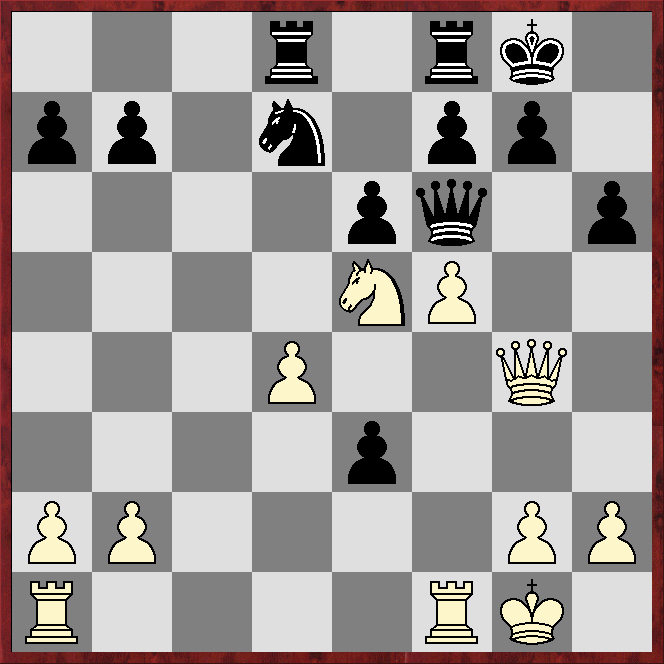
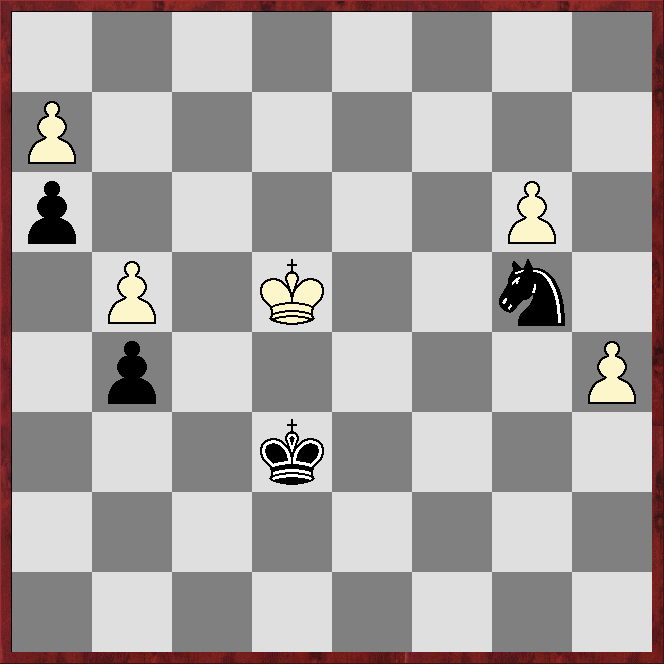
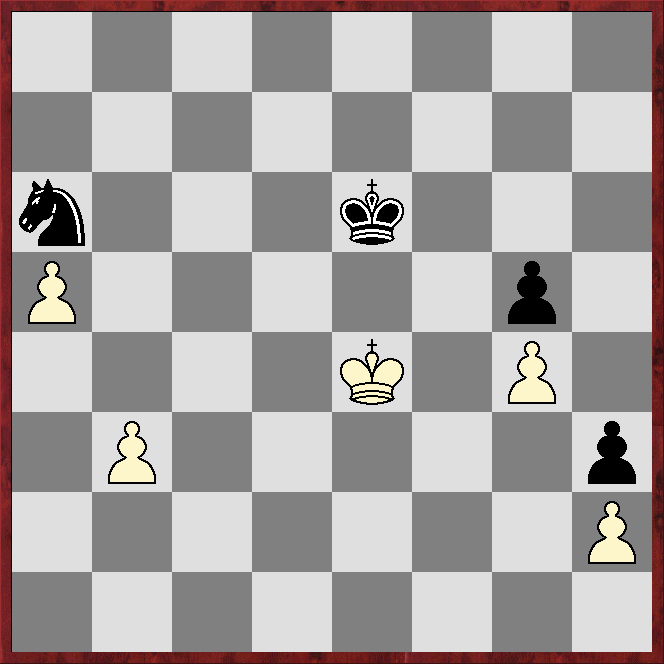
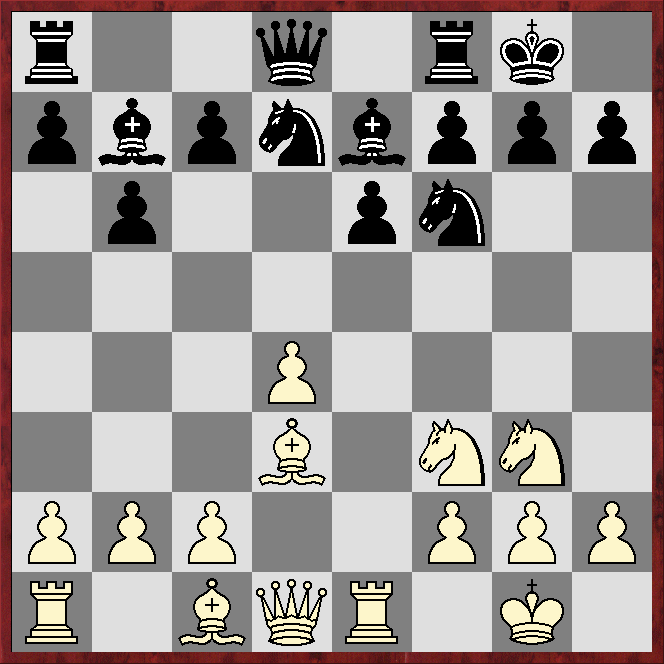
Spanton (1895) - David Nechifor (1613)
Sicilian Bb5(+)
1.e4 c5 2.Nf3 d6 3.Bb5+ Bd7 4.Bxd7+ Nxd7!?
Garry Kasparov played this and 4...Qxd7, but Magnus Carlsen, as far as I am aware, has only played the latter.
5.0-0 Ngf6 6.Qe2 e6
Developing the black king's bishop to e7 is much more popular than fianchettoing it.
7.c4 Be7
Black can prevent White setting up a Maróczy Bind by playing 7...e5!?, but the loss of tempo and the fact Black is left with a very bad bishop gives White at least a slight edge, according to Stockfish15 and Komodo13.02.
8.Nc3!?
Giving Black another chance to prevent a Bind. Carlsen in this position with white preferred 8.d4 in a 2016 blitz game against Hikaru Nakamura, which ended in a 77-move draw.
8...a6
Preventing the Bind with 8...e5!? favours White, according to the engines, but Black can instead play 8...Ne5!?, when 9.d4? Nxf3+ 10.Qxf3 cxd4 is bad for White, and 9.Rd1 can be met by 9...Rc8, when 10.d4!? cxd4 11.Rxd4 looks awkward but seems playable. Instead White can reply to 9...Rc8 with 10.b3, but then 10...Qb6 again prevents a quick d4.
9.d4!?
Strong players have tended to prefer 9.b3 or 9.Rd1, but the engines like the text.
9...cxd4 10.Nxd4 0-0
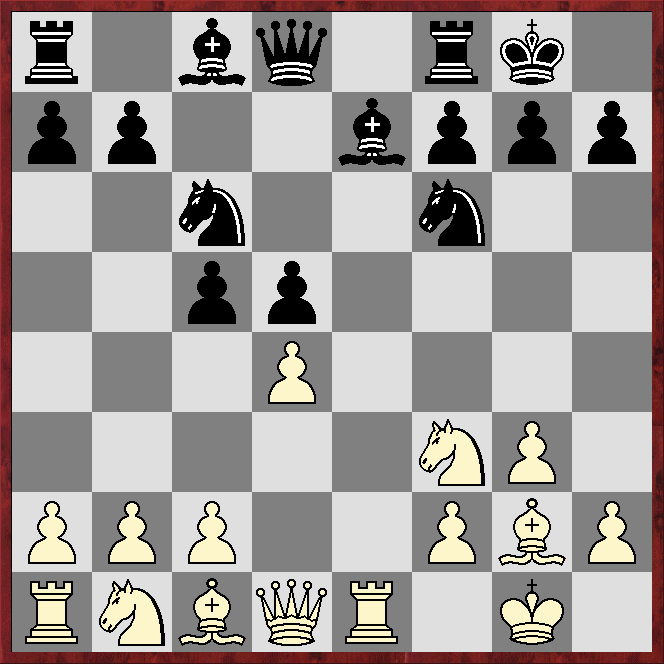
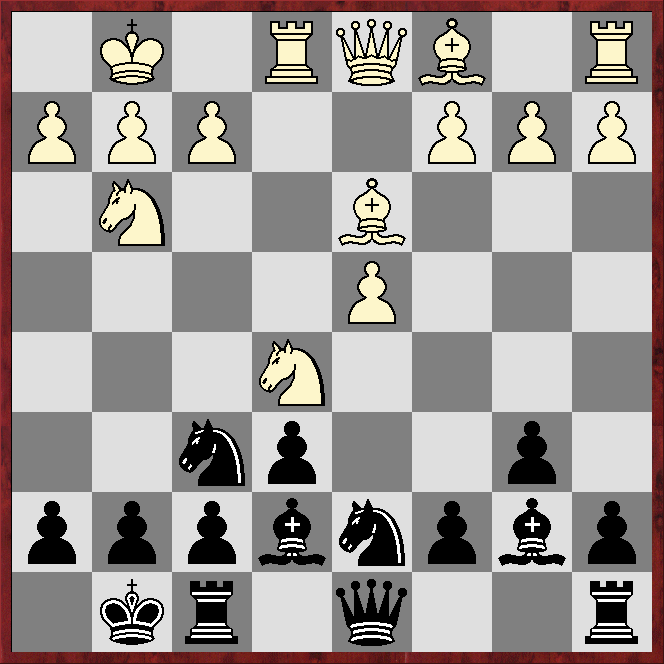
Now both sides have castled, how would you assess the position?
*****
*****
*****
*****
*****
White has a Maróczy Bind without having a bad (light-square) bishop. The Bind is generally considered to work better when Black has played ...e6 and ...Be7, as here, rather than ...g6 and ...Bg7. In Black's favour is that a pair of minor pieces has been exchanged, which leaves Black less cramped than would otherwise be the case. The engines reckon White is slightly better.
11.Be3 Rc8 12.Rac1
Not 12.b3? b5.
12...Nc5 13.f3 Qc7 14.Rfd1 Rfd8 15.Bf2 Qd7!? 16.f4 Ne8 17.e5!?
The engines strongly dislike this, preferring 17.b3 or 17.f5.
17...Qc7!?
This is the engines' top choice.
18.Nf3 Nd7 19.b3 dxe5 20.fxe5 Bc5 21.Ne4?
Black to play and gain a large advantage
*****
*****
*****
*****
*****
21...Bxf2+?
Black is on top after 21...Ba3, eg 22.Rb1 Nxe5 or 22.Rc2 Nxe5.
22.Nxf2 Qc5 23.Kh1 Nb6
The engines prefer 23...h6.
24.Ne4 Qc7 25.Rf1 h6!?
The engines reckon 25...Nd7 is necessary.
26.Rcd1
The engines give 26.c5!? followed by Nd6, claiming a large advantage for White.
26...Rd7
Black more-or-less equalises with 26...Nd7, according to the engines.
27.Rxd7
Better, according to the engines, is 27.Rc1 or 27.Rde1, the idea being to continue with c5.
27...Nxd7 28.Nf2 Rd8 29.Rd1 Nb8 30.Rxd8 Qxd8 31.Qd3 Qc7 32.Qe3 Nc6 33.Nd3 b6 34.Qe4 Qd7 35.Qe3 Qc7 36.c5!? b5
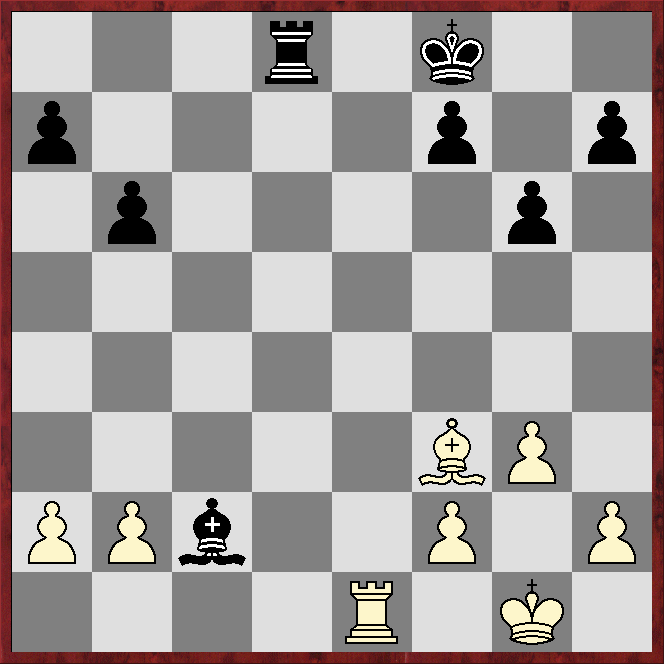
The position is now completely equal, according to the engines
*****
*****
*****
*****
*****
*****
37.Nd4 Ne7 38.b4 Nc6 39.Qe4 Nxd4 40.Qxd4 Qc6 41.Nf2 Qd5!?
The engines are OK with this, but after ...
42.Qxd5 exd5
... Black has an IQP that appears harder to defend than White's isolani.
43.Nd3 Kf8 44.Kg1 Ke7 45.Kf2 Ke6
The engines prefer 45...d4!? 46.Kf3 f5 47.exf6+ Nxf6, albeit with at least a slight edge for White.
46.Ke3 Nc7 47.Kd4 Kd7!
The only move to keep the game going.
48.g3
The point of Black's last move is 48.Nf4 can be met by 48...Ne6+, forcing 49.Ke3 (49.Nxe6? fxe6 is dead-drawn because both sides have a protected passer) Kc6, although both 50.Ne2 and 50.g3 give White at least a slight edge, according to the engines.
48...Kc6 49.Nf4 g6
The engines reckon the text and 49...Ne6+, transposing to the previous note, are equally good.
50.h4 h5 51.Nh3 Ne6+ 52.Kd3 Kd7 53.Ng5 Ke7?
Black is at worst only slightly down after 53...Nd8!?, according to the engines.
White to play and win
*****
*****
*****
*****
*****
54.c6?
Best may be 54.Nxe6!? (the engines reckon 54.Nf3 is also strong) fxe6 55.Ke3, eg 55...Kf7 56.Kf4 Ke7 57.g4 hxg4 58.Kxg4 Ke8 59.Kg5 Kf7 60.c6 Ke7 61.a3! Kd8 62.Kxg6, after which Black queens first but White queens with check and is completely winning, according to the engines. Black's best chance may be 55...Kd7 56.Kf4 Kc6 57.g4 hxg4 58.Kxg4 a5!?, but 59.bxa5 Kxc5 60.Kg5 b4 (better than 60...d4?! 61.Kf4, according to the engines) 61.a6 Kb6 62.Kxg6 d4 63.h5 d3 66.h6 d2 67.h7 d1=Q 68.h8=Q gives White a winning queen-and-pawn ending, according to the engines, although there is a lot of play left in the position. These lines are difficult to calculate, even for engines, and perhaps 54.Nf3 would be the best practical choice. Either way, the text is a mistake.
Black to play and draw
*****
*****
*****
*****
*****
54...Nc7?
Black draws with 54...Ke8, and even 54...Kd8?! is better than  the text, according to the engines, the point being the 54...Nc7? lets the white king invade Black's position.
55.Kd4 f6 56.exf6+ Kxf6 57.Kc5 Ke7 58.Kb6 Kd8 59.Nf7+ Kc8 60.Ne5 d4 61.Nd3
Black's position is hopeless.
61...Kd8 62.Kb7 Nd5 63.Kxa6 Kc7 64.Kxb5 Nc3+ 65.Kc4 Nxa2 66.b5 Kb6 67.Nb4 Nc1
If 67...Nc3 then 68.Kxd4 Nxb5+ 69.Ke5 Kc5 70.Nd5 Kxc6 71.Ne7+ etc, but not 68.Nd5+? Nxd5 69.Kxd4 (69.Kxd5?? d3 etc) Ne7 (or 69...Nc7) with a draw.
68.Nd5+ Ka7 69.b6+ Kb8 70.c7+ Kb7 71.Ne7 1-0

Friday, 6 January 2023

Dama Negra Game Eight

Ricardo Pérez Pardo (1705) - Spanton (1895)
Vienna Gambit
1.e4 e5 2.Nc3 Nf6 3.f4 d5 4.fxe5 Nxe4 5.Qf3!?
This is less popular than 5.d3!? and especially 5.Nf3, but has been tried by Magnus Carlsen and can lead to sharp play.
5...Nxc3
This is the commonest response in ChessBase's 2023 Mega database, but refusing to capture with, say, 5...f5!?, is more circumspect.
6.dxc3
Building a centre with 6.bxc3 is marginally more popular.
6...Be7 7.Bf4 0-0 8.0-0-0
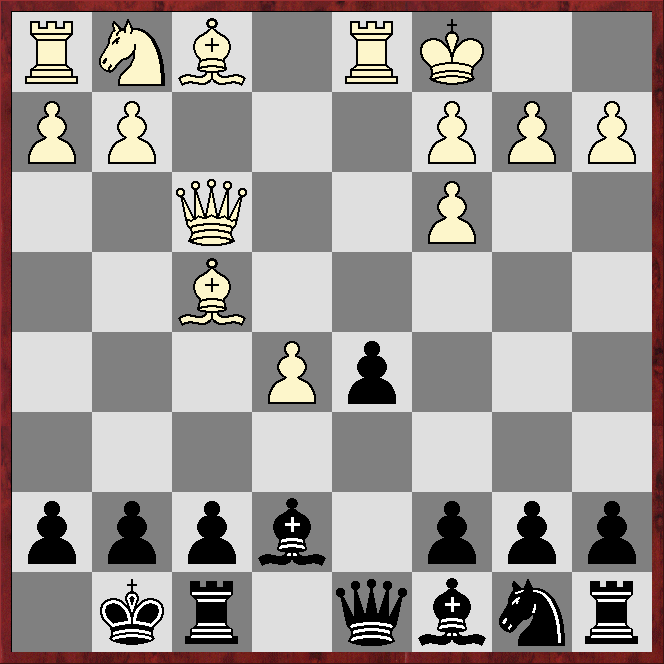
Both sides have quickly castled - how would you assess the position?
*****
*****
*****
*****
*****
White leads in development, has pressure against d5, has more space in the centre and has a useful half-open f file. Black has no weaknesses, and the white a pawn is unprotected, but the position looks, to me, easier for White to play. Stockfish15 and Komodo13.02 favour White, but not by much.
8...Be6 9.Bd3 f5?!
The engines strongly dislike this blocking move, which seems to be a novelty, preferring queenside development with 9...Nd7.
10.h4 Bxh4??
Grabbing a pawn in front of a castled king is rarely wise, especially where, as here, the pawn cannot be held. The engines agree White now has a won game.
11.Qh5 g5 12.Nf3 Qe8 13.Qxe8
Also strong is 13.Qh6.
13...Rxe8 14.Bxg5 Bxg5+ 15.Nxg5 Re7 16.Rh6 Bc8
Even worse is 16...Bd7 17.e6.
17.e6 Rg7 18.Nf3
White is still winning after this, according to the engines, but there are much stronger lines, eg 18.Nxh7! Rxh7 19.Rxh7 Kxh7 20.Bxf5+ Kg8 21.e7 Bd7 22.Bxd7 Nxd7 23.Rxd5 etc and 18.Bxf5! Rxg5 19.e7 Bd7 20.Rd5 Rg7 21.Be6+ Kh8 22.Bxd7 Rxe7 23.Bc8 c6 24.Rd8+ Kg7 25.Rh3 Na6 26.Rg3+ with a huge attack as 26...Kf7 (best, according to the engines) can be met by 27.Be6+!
18...Rg6 19.Rdh1
Even stronger, according to the engines, is 19.e7!? Bd7 20.Rxg6+ hxg6 21.Ne5 Kg7 22.Bxf5! gxf5 23.Rxd5.
19...Rxh6 20.Rxh6 Kg7 21.e7?
White is still much better, according to the engines, after, for example, 21.Rh3 Bxe6 22.Nd4.
21...Bd7 22.Rh5 Nc6 23.Bxf5 Bxf5 24.Rxf5 Nxe7 25.Re5 Kf6 26.Rh5 Rg8 27.Rxh7
RPD offered a draw.
27...Rxg2 28.Nd4 c6 29.b4!? Rg7 30.Rxg7 Kxg7 31.Kd2 Kf6 32.Kd3 Ke5 33.a4 Nc8 34.Nb3 Nd6 35.Na5 Kf4 36.c4 dxc4+ 37.Nxc4 Nxc4 38.Kxc4
Black to play and draw
*****
*****
*****
*****
*****
38...Ke4?
Three moves draw, according to the engines: 38...Ke3, 38...Ke5 and 38...Kf5!?. Stockfish15 reckons 38...b6!? also draws, but Komodo13.02 reckons it loses, or at least gives White the upper hand. Best play after 38...b6!? seems to be 39.b5 c5 40.Kd5 Ke3 41.Kc6 c4 42.Kb7 c3 43.Kxa7, which the Syzygy endgame tablebase shows is a draw.
39.Kc5 Ke5 40.a5
There is no defence to this.
40...b6 41.axb6 axb6 42,Kxc6 1-0

Thursday, 5 January 2023

Dama Negra Game Seven

Spanton (1895) - Dani Odriozola Coscolín (1639)
Sicilian Bb5(+)
1.e4 c5 2.Nf3 Nc6 3.Bb5 g6 4.c3 Nf6 5.Qe2 Bg7 6.0-0 0-0 7.d4 cxd4 8.cxd4 d5
Black immediately challenges White' classical pawn-centre. However, Levon Aronian (2765) - Magnus Carlsen (2882), Sinquefield Cup (St Louis) 2019), went 8...d6!? 9.h3 Nd7!? (Komodo13.02 prefers 9...d5!?) 10.Rd1 a6 11.Bxc6!? bxc6, which Stockfish15 and Komodo13.02 reckon is slightly better for White, although the game was drawn after 41 moves.
9.e5 Ne4 10.Nc3 Nxc3
White will get a backward c pawn, but will secure d4. The engines suggest 10...Bf5!?
11.bxc3 Na5 12.Bd2!?
Possibly a novelty. Seven other moves feature in ChessBase's 2023 Mega database, of which the engines like most 12.Bd3.
12...Bd7 13.Bd3 Rc8 14.Rab1 b6
This makes ...Nc4 possible, but so does the engines' choice, 14...Rc7.
15.Rfc1
Stockfish15 loves 15.Ng5!? h6 16.Nf3, claiming it gives White the upper hand, but Komodo13.02 reckons the position is completely equal.
15...Nc4
How should White proceed?
*****
*****
*****
*****
*****
16.Rb4
The engines much prefer preserving the dark-square bishop with 16.Bf4.
16...Qc7
And they reckon Black equalises with 16...Nxd2!?, even though this is swopping a good knight for a bad bishop.
17.Bg5 Be6!?
Probably not 17...e6?!, but the engines like 17...f6, continuing 18.Bf4 Bg4 19.h3 fxe5 20.hxg4 Rxf4 21.Bxc4 dxc4 22.g3 Rff8 23.dxe5 with what they reckon is complete equality.
18.Nd2 Rfe8 19.Nxc4 dxc4 20.Be4 Qd7
The engines again like ...f6.
21.Rd1 Bd5 22.Qf3 e6 23.Rdb1 Qc6 24.Bxd5 Qxd5?
Better is 24...exd5, and if, as in the game, Rb5, Black gets counterplay against the white centre with ...f6.
25.Qxd5 exd5 26.Rb5 h6 27.Be3 Rcd8 28.a4
The d5 pawn is adequately defended for the present, but White can create a second weakness by attacking b6.
28...Re6 29.g3 Rd7 30.a5 bxa5 31.Rxa5 Kh7?!
The king is almost certainly going to be needed in the centre. The engines suggest 31...f6, but reckon 32.f4 keeps a winning advantage.
32.Rbb5 f6 33.exf6 Rxf6 34.Rxd5 Rxd5 35.Rxd5 Ra6 36.Rc5 Ra4 37.Kg2
Black is 'only' a pawn down, but White has a protected passer and the white king is much more active than its black counterpart
*****
*****
*****
*****
*****
37...g5 38.Kf3 Kg6 39.Kf4 Kf7 40.Kf5 Ra6
Giving up a second pawn, but 40...Bf8 41.Rc7+ Ke8 42.d5 is not significantly better.
41.Rc7+ K88 42.Rxc4 Rf6+ 43.Ke4 a5 44.Rc8+ Kf7
Now another pawn drops.
The game finished:
45.Ra8 Rc6 46.Kd3 Bf8 47.Rxa5 Be7 48.c4 h5!? 49.Bxg5 1-0

Wednesday, 4 January 2023

Dama Negra Game Six

Oleksii Sukhodolskyi (1538) - Spanton (1895)
Spanish Berlin
1.e4 e5 2.Nf3 Nc6 3.Bb5 Nf6 4.0-0 Nxe4 5.Re1!?
This queens-on way of combatting the Berlin Defence has become increasingly popular, perhaps helped by engines marginally preferring it over the mainline 5.d4.
5...Nd6 6.Nxe5 Nxe5 7.Rxe5 Be7 8.Ba4!?
Most popular in ChessBase's 2023 Mega database is 8.Bf1!?, while most successful percentage-wise, among the commonly played moves, is 8.Bd3!?
8...0-0 9.d4 Bf6 10.Re1 Re8 11.c3 Rxe1+ 12.Qxe1 Qe7 13.Qxe7 Bxe7 14.Bf4 c6 15.Nd2 Nf5 16.Re1
How would you assess the position?
*****
*****
*****
*****
*****
White has put his king safely away and activated the remaining pieces, while Black is at least four moves away from activating the black rook (four moves because a tempo will have to be spent on safeguarding the dark-square bishop). Nevertheless there are no weaknesses in the black position, and queens are off the board, so a swift attack is less likely. Stockfish15 and Komodo13.02 give White a slight edge.
16...Kf8 17.Bc2
Perhaps 17.Nf3 is a tad better.
17...d5 18.Re5
The engines suggest 18.g4!?, but basically reckon Black has more-or-less equalised.
18...g6 19.Bxf5!? Bxf5 20.Bh6+ Ke8 21.Bg5 Be6 22.Bxe7 Kxe7
How would you assess this ending?
*****
*****
*****
*****
*****
Black's bishop is bad - the d5 pawn is fixed on a light square, and every other black pawn bar one is on a light square. In addition there are 14 pawns on the board, which usually favours a knight over a bishop, especially when there are not rival pawn-majorities. However this is not a classic case of good knight v bad bishop because the knight does not have a good dark-square outpost it can hope to occupy. But the key to why Black is not worse is the presence of rooks, which almost always favours the side with a bishop. The engines reckon the position is completely equal.
23.Kf1 Kd6 24.b4?
Presumably hoping to keep as many black queenside pawns as possible on light squares, but the move is bad because it allows the black rook to be easily activated.
24...a5 25.a3 axb4 26.axb4 Ra1+ 27.Ke2 Rc1 28.Re3 b6!?
This may be a little slow. The engines like 28...Bg4+.
29.Nf3 f6 30.Kd2 Rf1 31.Ke2 Ra1 32.h3!?
The engines like taking control of g4 in this way, but it does provide a target for a black kingside pawn-advance.
32...Rb2+ 33.Ne2!?
Self-pinning. The engines prefer retreating with 33.Kf1!, when, as in the game, 33...g5 is a way to add pressure.
33...g5 34.Kd3
The engines suggest 34.g4!? or 34.f4!?, but give Black at least a slight edge.
34...Ra1
Even stronger may be 34...h5 or 34...Bc8!?
35.g4!?
The engines approve of this, but reckon Black has the upper hand.
35...Bf7?!
This seems to let slip much of Black's advantage. The engines like 35...h6!?, intending ...f5.
36.Ke2 h5 37.Rf3 Ke7 38.Re3+ Kf8 39.Rg3?!
White equalises with 39.Rf3 or 39.Nf1, according to the engines.
39...Rh1 40.Nf1
This becomes Stockfish15's top choice, but Komodo13.02 prefers 40.Re3.
40...Bg6 41.Re3?!
The engines prefer something like 41.gxh5!? Bxh5+ 42.f3 Bg6 (Black must be careful that the rook is not trapped on a1) 43.Kf2 Bd3 44.Ne3 Kf7, although they reckon Black has at least a slight edge.
41...Kf7 42.Rg3
Giving up a pawn by 42.gxh5 Bxh5+ 43.f3 Rxh3 is preferred by the engines, but looks desperate. If 43.Ke1?, then 43...f5 is very strong, eg 44.Rg3 f4! 45.Rxg5 Bf3 (this seems even stronger than 45...Bg6 46.b5!)  46.Rf5+ Ke6 47.Rxf4 Bg2 etc, or 46.h4 Be4.
42...h4 43.Rf3?!
Probably better is 43.Re3, but 43...Bc2 is winning, eg 44.Nd2 Bd1+ 45.Kd3 Rh2, or 44.f3 Bb3! (this is even stronger than 44...Rxh3) 45.Kf2 Bc4 46.Re1 Bxf1 47.Rxe1 Rxh3 48.Kg2 Rg3+ 49.Kf2 f5! 50.gxf5 Kf6 etc.
43...Be4 44.Re3 Bg2 45.Nd2 Bxh3 46.f3 Bg2 47.Kf2 h3 48.Kg3 Rd1 49.Nb3 Rb1 50.Nd2 Rb2 51.Rd3 Kg6 52.Kh2
There is no defence, eg 52.Kf2 b5 53.Kg3 f5 54.gxf5+ Kxf5 55.Kf2 Kf4 56.Ke2 h2 etc.
52...Bf1 0-1

Tuesday, 3 January 2023

Dama Negra Game Five

Spanton (1895) - Pablo Garrido Silos (1674)
Sicilian ...e6
1.e4 c5 2.Nf3 e6 3.g3!? Nc6 4.Bg2 d5 5.exd5 exd5 6.d4 Nf6 7.0-0 Be7 8.Re1 0-0
Both sides have castled - how would you assess the position?
*****
*****
*****
*****
*****
The pace of development is equal and both players have a firm stake in the centre. The white king's bishop is more active than its black counterpart, but the chief potential for imbalance lies in the centre, where Black could contract an isolated queen's pawn or push on with ...c4 to try to avoid this (an IQP could still arise if White replies with b3). Stockfish15 and Komodo13.02 reckon the game is equal.
9.Nc3 Be6 10.dxc5!? Bxc5
The engines reckon 10...d4!? 11.Na4 favours White.
11.Na4!?
This seems to be a novelty. Known is 11.Bg5?!, but the engines reckon Black is at least slightly better after 11...h6 or 11...Qb6.
11...Be7 12.Nd4?!
This may look natural, but after ...
12...Nxd4 13.Qxd4
... Black can exploit the awkward alignment of the white queen and remaining white knight by playing vigorously with 13...Rc8!?, meeting 14.Qd3 with 14...d4!?
13...Qc7
This is not so strong, especially as White can ignore the threat to the c pawn and instead develop with:
14.Bf4!?
Black can take the pawn, although 14...Qxc2 15.Rac1 Qg6 16.Rc7 gives White good compensation. However that is probably better for Black than ...
14...Bd6?! 15.Bxd6 Qxd6 16.Nc5
... which brings the white knight nicely into play.
16...b6 17.Ne4?!
Better, according to the engines, are 17.Nd3 and especially 17.Nxe6, eg 17.Nxe6 fxe6 and either 18.Bh3 (Komodo13.02) or 18.c4 (Stockfish15).
17...Nxe4 18.Bxe4 Rad8
Black can get rid of the isolani with 18...Qc5, forcing 19.Qxc5 bxc5 with an equal position, according to the engines.
19.Rad1 Qc5 20.Qd3 g6
Not 20...dxe4?? 21.Qxd8 etc.
21.Bf3 Bf5 22.Qd2 Qxc2 23.Qxc2 Bxc2 24.Rxd5 Rxd5 25.Bxd5 Rd8 26.Bf3 Kf8
How should White proceed?
*****
*****
*****
*****
*****
27.Rc1?!
This is OK if White continues correctly, but it increases the chances of going wrong. Simple and good is 27.Kg2, and if, as in the game, 27...Rd2, then 28.Re2 is equal.
27...Rd2 28.b4?!
28.Re1, intending 29.Re2, is almost certainly better, although Black may have a tiny edge.
28...Bf5 29.a4?!
The horribly passive 29.Ra1 is probably better.
29...Rb2?!
This is good for Black, but winning a pawn with 29...Rd4 is simpler.
30.b5 Rb1!
This forces an exchange of rooks, after which White cannot defend the queenside.
31.Rxb1 Bxb1 32.Bd1 Ke7 33.Bb3
The engines' 33.f4 may be better, but Black has a large advantage.
33...f6 34.Kf1 Kf6 35.Ke2 Kc5 36.Kd2 Kb4 37.Bd5 Kxa4 38.Bc6 Kb4 39.Ke3 Ba2 40.h4 Bc4 (0-1, 47 moves).

Monday, 2 January 2023

Dama Negra Game Four

Anton Antón Vilariño (1406) - Spanton (1895)
London System
1.d4 d5 2.Nf3 e6 3.Bf4 Bd6 4.Bg3 b6 5.e3 Bb7
Black can more-or-less force an exchange of the bad black bishop for the good white bishop (based on the central pawn-formation) with 5...Ba6, but 6.Bxa6 Nxa6 7.Qe2 gives White a handy lead in development.
6.Be2 Nd7 7.0-0 Qe7 8.c4 Ngf6 9.Nc3 0-0
Now both sides have castled, how would you assess the position?
*****
*****
*****
*****
*****
Visually, to me at least, the position looks fairly even, except White has two pawns on the fourth rank against Black's one. The white queen's knight is more-actively placed than its black counterpart, but the black light-square bishop is more-active than the white light-square bishop. Stockfish15 and Komodo13.02 reckon White has a slight edge.
10.Qb3 dxc4!? 11.Qxc4 Bxg3 12.hxg3 c5 13.Rfd1 Rfc8!?
I was reluctant to unprotect the a7 pawn, but 13...Rac8 may be better.
14.Rd2 a6 15.dxc5 Nxc5 16.Qb4 Qc7 17.Rad1 Rcd8 18.Qf4!?
How should Black proceed?
*****
*****
*****
*****
*****
18...Qe7
An only-move, as 18...Qxf4?? loses to 19.Rxd8+ etc.
19.Rd6 Nd5?!
Almost certainly better is 19...Rxd6, and if 20.Rxd6 then 20...b5.
20.Nxd5 Bxd5 21.Rxb6 Bxa2?!
Restoring material equality, but the engines reckon better is 21...a5.
22.Rxd8+ Qxd8 23.Rd6
Komodo13.02 prefers 23.Rc6, but Stockfish15 flicks between the two moves.
23...Qc8 24.Nd4?!
The knight looks well-placed on d4, but it is not threatening anything in particular. Probably better is 24.b4, threatening the queen's knight, or 24.Ne5, threatening to capture on f7, in either case with something of an initiative.
24...Bd5 25.Bf3?!
Now Black gets an initiative.
25...Nd3 26.Qh4 Bxf3?
Better is 26...Qc1+, probably meeting 27.Kh2 with 27...h6!?, although 28.Nxe6!? fxe6 29.Bxd5 exd5 30.Qh5 Qc4 31.f3 is hard to assess, but is equal, according to the engines. Also interesting is 29.Rxd5!? Nxf2!? 30.Rd8+ Rxd8 31.Qxd8+ Kh7 32.g4 (avoiding 32...Qh1#) Qxe3 33.Qd6, which the engines again reckon is equal.
27.gxf3?
White is better after 27.Nxf3, not least because 27...Qc1+?? 28.Kh2 leaves Black unable to stop back-rank mate at the same time as protecting the black knight.
27...Qc1+ 28.Kg2
Perversely, protecting the f2 pawn in the short run means it cannot be saved in the medium term. Correct is 28.Kh2!, which does save the f2 pawn thanks to the threat of back-rank mate. If Black replies, as in the game, 28...h6?? then 29.Qe4, forking knight and rook, wins. Instead Black should play 28...Rf8 or 28...Qc5 with approximate equality.
28...h6
What should White play?
*****
*****
*****
*****
*****
29.Rd8+?
The engines give 29.Qe4 Ne1+ 30.Kh2!? Rf8!?, awarding Black the upper hand.
29...Rxd8 30.Qxd8+ Kh7 31.Nxe6
Everything else is even worse, but this combination, initiated at move 29, does not work.
31...Ne1+ 32.Kh3
Best is the paradoxical 32.Kf1!, eg 32...fxe6?! 33.Ke2 Ng2 (33.Nc2 Qd3+ etc draws) 34.Qd3+ Kg8 35.Qd8+ Kf7 36.Qd7+ Kf6 37.Qd4+ Kg6 38.Qe4+ Kf7 39.Qb7+ Kf6 40.Qb4 with drawing chances. However 32...Nxf3+ 33.Kg2 Ne1+ 34.Kf1 fxe6 35.Ke2 Qxb2+ is good for Black, according to the engines, but difficult to win over-the-board because of the exposed black king.
32...fxe6 33.Qa8 Qc5 34.Qe4+?
The engines reckon White is roughly the equivalent of a queen down anyway, but allowing queens to come off leaves White helpless.
34...Qf5+ (0-1, 41 moves).

Sunday, 1 January 2023

Dama Negra Game Three

Spanton (1895) - Miguel Fernández Pérez (1186*)
Veresov
1.d4 d5 2.Nc3 Nf6 3.Bg5 Bf5
When Black develops the queen's bishop this way in double-d pawn games, a frequently recommended antidote is to attack the centre with c4, Nc3 and Qb3, but White's 2.Nc3 in the Veresov rules that out.
4.e3 e6 5.Bd3 Bg6 6.Nf3 Be7 7.Ne5!? Bxd3 8.cxd3!? h6
The text may be a novelty. Kurt Richter - Enrique Reinhardt, Telephone Team Match Berlin-Hamburg 1937, went 8...0-0 9.0-0 Nfd7!? 10.Bf4!? Nxe5 11.dxe5!? with a slight edge for Black, according to Stockfish15 and Komodo13.02 (but 1-0, 36 moves).
9.Bh4 Nbd7 10.0-0 0-0 11.f4 c5 12.dxc5 Nxc5 13.f5?!
This is probably overstretch.
How should Black respond?
*****
*****
*****
*****
*****
13...d4
An awkward move to meet since 14.exd4?? Qxd4+ forks the white king, king's knight and queen's bishop.
14.Ne4?
Best seems to be 14.Nb5, eg 14...exf5 15.Nxd4 Nd5 16.Bf2 g6, when the engines reckon Black may have a slight edge.
14...dxe3 15.Bxf6?!
Probably better is 15.Nxc5, although 15...Qd4!? looks a good reply, eg 16.Qe2 Qxe5 17.Bxf6 Bxf6 18.Nd7 Qxb2 19.Rae1 Rfe8 20.fxe6 Qxe2 21.Nxf6+ gxf6 22.exf7+ Kxf7 23.Rxe2 - a complicated line, but it leaves Black with a large advantage, according to the engines.
15...Bxf6 16.Nxf6+ Qxf6 17.d4 Rad8 18.Qg4 Nd7!?
Possibly even stronger is the simple 18...e2 19.Qxe2 Rxd4.
Can you find a promising combination for White?
*****
*****
*****
*****
*****
19.Nxf7?
Like many promising combinations, this works in all lines but one. Probably best is 19.Nxd7 Rxd7 20.fxe6 Qxe6 21.Qxe6 fxe6 22.Rae1 Rxf1+ 23.Kxf1 Rxd4 24.Rxe3, with Black emerging up a passed pawn, but in a rook-and-pawn ending.
19...h5
Immediately capturing the knight is met by capturing on e6, but this intermezzo wins for Black.
20.Qe4
There is nothing better. but now ...
20...Qxf7 21.fxe6
.... can be met by the pinning:
21...Qe7
After ...
22.Qxe3
... White, at least temporarily, has two pawns for a knight, but Black is winning, according to the engines.
22...Rxf1+!?
Black wants to immediately go after one of the passed white pawns, but this develops the white queen's rook for free.
23.Rxf1 Nf8?!
Not the best, according to the engines, who like the calmer 23...Nf6.
24.Rf7?!
Tempting, but inferior to 24.Rf5 and to 24.h3!?, according to the engines.
24...Qd6 25.Rxb7 Nxe6 26.Rxa7 Nxd4
White still has two pawns for a knight, but the pawns are a long way from queening
*****
*****
*****
*****
*****
27.Qe7?
This allows a mating sequence, although Black is also winning after the engines' 28.Re7.
27...Qxe7?
Black wins quickly with 27...Ne2+, eg 28.Kf2 Qf4+! 29.Ke1 (29.Kxe2? Rd2+ 30.Ke1 Qf2#) Qd2+ 30.Kf1 Ng3+! 31.hxg3 Qd1+ 32.Kf2 (32.Qe1 Rf8+ etc) Rd2+ 33.Ke3 Re2+ - quite a long variation, but most of the moves are forcing.
28.Rxe7 Kf8 29.Rb7 Nc6 30.a4 Rd4?!
Probably the wrong idea. The usual rule-of-thumb, that rooks belong behind passed pawns, seems to hold true, so 30...Rd1+ 31.Kf2 Ra1 gives White the upper hand, according to the engines.
31.b3 Rb4?!
After the coming exchange of rooks, Black's material advantage in pieces goes, using traditional values, from 8:5 to 3:0. That is a massive jump in terms of ratio, but a knight is hard pressed to deal with flank pawns, so Black should probably keep rooks on.
32.Rxb4 Nxb4 33.Kf2 g5 34.Ke3 Ke7 35.Kd4 Kd6 36.Ke4 Ke6 37.a5 h4 38.g3!?
Komodo13.02 prefers 38.h3, but Stockfish15 is happy enough with the text.
38...h3
How should White proceed?
*****
*****
*****
*****
*****
39.g4?
This loses, as does 39.Kd4?, but both 39.Ke3 and 39.Kf3 draw, eg 39.Ke3 Kf5 40.Kd2!? (40.Kd4!? also draws, according to the engines, but 40.Kf3? loses to 40...g4+)  Ke4 41.Kc3 Nc6 42.a6 Kf3 43.b4 Na7 44.Kc4 Kg2 45.b5 Nc8! (45...Kxh2 loses) 46.Kc5 Kxh2 47.b6 Nxb6 48.Kxb6 Kg1 49.a7 h2 50.a8=Q h1=Q 51.Qa1+, after which the black king cannot escape being checked.
Black to play and win
*****
*****
*****
*****
*****
39...Na6
White is in zugzwang after 39...Kf6!, ie 40.Kd4 Nc6+ and 41...Nxa5, or 40.Ke3 Ke5 etc.
White to play and draw
*****
*****
*****
*****
*****
40.Kf3?
This loses by a tempo, whereas 40.Kd4 and 40.Kd3 draw, eg 40.Kd4 Kd6 (40...Nb4? 41.Kc5 wins for White) 41.Ke4.
40...Ke5 41.Kg3
If 41.Ke3, then 41...Nb4 wins.
41...Ke4 42.Kxh3 Kf3 43.b4 Nxb4 44.a6 Nd5 0-1
*Spanish rating.

Friday, 30 December 2022

Dama Negra Round Nine

WON in 71 moves with white this evening against a junior (born 2011), David Nechifor (1613).

Dama Negra Round Eight

LOST in 42 moves with black this morning against Ricardo Pérez Pardo (1705).

Thursday, 29 December 2022

Dama Negra Round Seven

WON in 49 moves with white this evening after being upfloated against a junior (born 2011), Dani Odriozola Coscolín (1639).

Dama Negra Round Six

WON in 52 moves with black this morning against a Ukrainian junior (born 2011), Oleksii Sukhodolskyi (1538).

Wednesday, 28 December 2022

Dama Negra Round Five

LOST in 47 moves with white this evening against a junior, Pablo Garrido Silos (1674).

Dama Negra Round Four

WON in 41 moves with black this morning against a junior (born 2007), Antón Vilariño Lorenzo (1406).

Tuesday, 27 December 2022

Dama Negra Round Three

LOST in 44 moves with white this evening against Miguel Fernández Pérez (no Fide, but a Spanish rating of 1186).

Dama Negra Game Two

Carlos Freire Boudon (1366) - Spanton (1895)
Scotch
1.e4 e5 2.Nf3 Nc6 3.d4 exd4 4.Nxd4 Qf6!? 5.Be3 Bc5 6.c3 Nge7
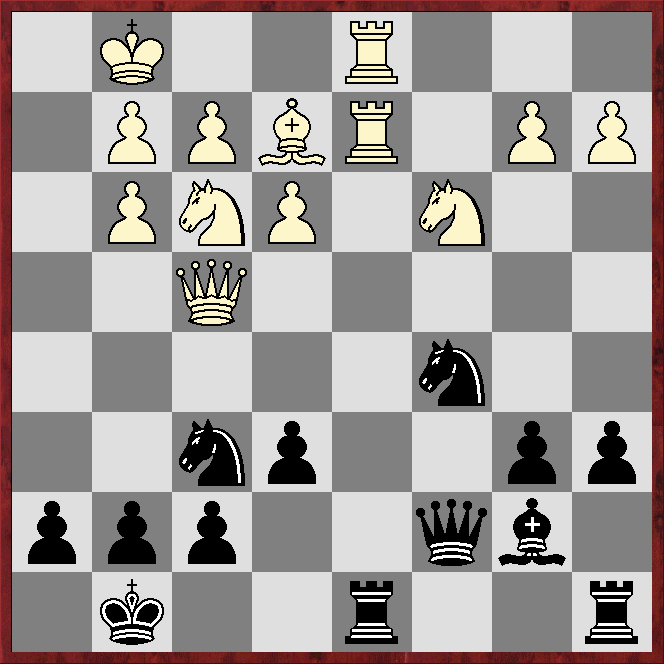
By a slightly unusual move-order the game has reached a mainline tabiya of the Scotch
*****
*****
*****
*****
*****
*****
7.Be2!?
Most popular are 7.Bc4 and 7.g3, but there are 1,562 examples of the text in ChessBase's 2023 Mega database.
7...0-0 8.0-0 b6?!
Rather as in many lines of the Sicilian, if Black can get in ...d5 in the Scotch without suffering immediate punishment then Black has probably at least equalised, and that is the case here (and on the previous move). After 8...d5 my main analysis engines, Stockfish15 and Komodo13.02, give 9.Nxc6 Qxc6 10.Bxc5 Qxc5 11.Nd2 Be6 with what they reckon is equality.
9.Qd2 Bb7 10.Nb5?!
This lets Black off the hook. Almost certainly better is 10.b4, which is not in Mega23 but causes Black huge problems as 10...Bd6 runs into 11.f4 with a strong initiative.
10...Bxe3 11.Qxe3 Rac8 12.Nd2 a6 13.Nd4 d5
At last. Now the tension in the centre makes each move more critical.
What should White play?
*****
*****
*****
*****
*****
14.Bf3?!
The game is equal, according to the engines, after both 14.Rfe1 and 14.Nxc6 Qxc6 15.Bf3.
14...Rfe8 15.g3?!
The white bishop will look good on g2 but the procedure probably takes too much time. One line given by the engines runs 15.exd5!? Ne5!? 16.Be4 Nxd5 with what they reckon is a slight edge for Black.
15...Ne5?!
Black is much better, according to the engines, after 15...Nxd4!? 16.Qxd4 Qxd4 17.cxd4 Nc6!?
16.Bg2 c5 17.Ne2
The knight is placed more actively with 17.N4f3, but the engines prefer Black after 17...Rcd8.
17...Rcd8
Black is fully developed and generally more active
*****
*****
*****
*****
*****
18.f4?
Trying for counter-activity, but White's position is not ready for this. The engines suggest 18.Nf4, but give Black at least a slight edge.
18...Ng4 19.Qf3 dxe4 20.Nxe4 Bxe4 21.Qxe4 Nf5 22.Qf3 Nge3 23.Rf2 Nxg2 24.Kxg2!?
This is best, according to the engines, although they reckon all three recaptures lose.
24...Qg6 25.Qb7?!
Best may be 25.Kh1, but 25...h5 adds to the pressure, as does 25...Re3.
25...Rd2 26.Ng1?
This speeds the end, but White's game cannot be saved, eg 26.Qxa6 Ne3+ 27.Kg1 Qe4 28.Re1 Rd1 29.Rxd1 Nxd1 30.Rg2 Ne3 31.Rf2 Qb1+ etc.
26...Ne3+ 0-1

Dama Negra Round Two

WON with black in 26 moves this morning against Carlos Freire Boudon (1366).

Monday, 26 December 2022

Dama Negra Game One

Spanton (1895) - Pablo Serrano Vásquez (1291)
French Rubinstein
1.Nc3 d5 2.d4 e6 3.e4 dxe4 4.Nxe4 Nd7 5.Nf3 Ngf6 6.Ng3!?
Keeping pieces on the board. The mainline in ChessBase's 2023 Mega database runs 6.Nxf6+ Nxf6 7.Bd3 c5 8.0-0 (8.dxc5 is also very popular) cxd4 9.Nxd4 Bc5 10.Nb3 Bd6, which Stockfish15 calls equals, but is a little better for White, according to Komodo13.02.
6...Be7 7.Bd3 b6 8.0-0 Bb7 9.Re1 0-0
Both players have castled - how would you assess the position?
*****
*****
*****
*****
*****
White has more space in the centre; Black has a powerful light-square bishop. The engines reckon the position is equal.
10.Ne5?!
This has been played by grandmaster Mikhail Al Antipov (2592), albeit at blitz, but may be a mistake. The engines prefer 10.c3 or 10.Bf4.
How should Black reply?
*****
*****
*****
*****
*****
10...Nxe5!?
This obvious-looking move seems to be a novelty, or at least it does not occur in any of the 18 games to reach the last diagram in Mega23.
11.dxe5 Qxd5
Can you find a defence for White?
*****
*****
*****
*****
*****
12.Bf1
Probably not 12.f3?! Bc5+ 13.Kh1 Ng4!, but the engines suggest 12.Qf3!? Qxf3 13.gxf3, although giving Black a slight edge.
12...Qxd1 13.Rxd1 Ng4 14.Rd7!?
This seems better than 14.Bf4 g5.
14...Bc5 15.Nh1
The engines slightly prefer 15.Be2!? Bxf2+ (not 15...Nxf2? 16.b4) 16.Kf1 Bxg3 (16...Nxe5!?) 17.hxg3 Nxe5 18.Rxc7, when having the bishop-pair gives White some compensation for being a pawn down and for having doubled isolanis.
15...Nxe5 16.Rxc7 Be4 17.Ng3?!
Probably stronger is 17.Bf4.
17...Bxc2 18.Bf4!?
Stockfish15 reckons 18.Be3 Bxe3 19.Rxc2 is much less worse for White, but Komodo13.02 narrowly prefers the text.
18...Ng4
Possibly stronger - the engines again disagree - is 18...Nd3.
19.h3?
But they agree this is a mistake, preferring 19.Be2 Bxf2+ 20.Kh1 Bf5 21.Nxf5 exf5, after which Black is two pawns up, but has doubled f pawns, while White has the bishop-pair and a rook on the seventh, which give some compensation.
19...Nf6?!
This is good enough for a large advantage, but better is 19...Bxf2+ 20.Kh1 Be3.
20.Rc1 Nd5?
The simple 20...Bg6 maintains a large advantage.
21.Rxc2 Nxf4 22.Ne4
White is a pawn down, but for practically the first time in the game has an initiative.
22...Nd5 23.Rd7 Bd4 24.a3
Possibly better is 24.Rd2 Be5 25.g3.
24...Rfd8 25.Rb7 Rdb8 26.Rd7 Rf8 27.Rb7
Black should probably play on with 27...h6, preventing Ng5, but instead the game saw:
27...Rdb8 ½–½

Dama Negra Round One

DREW with white in 27 moves against a junior (born 2006), Pablo Serrano Vásquez.

Más Alicante

WALKED into Alicante city again this morning, partly for the exercise but also to capture more views.
Long view of Santa Bárbara castle
Closer view of the castle, which was originally built in the 700s but was frequently modernised
Alicante seafront
It's that castle again
Colourful cross, presumably depicting Christ being arraigned by a Roman soldier before Pontius Pilate

Tuesday, 11 January 2022

Opposite Conundrum

IN my round-nine game at Alicante I had white against a Belgian Fide master.
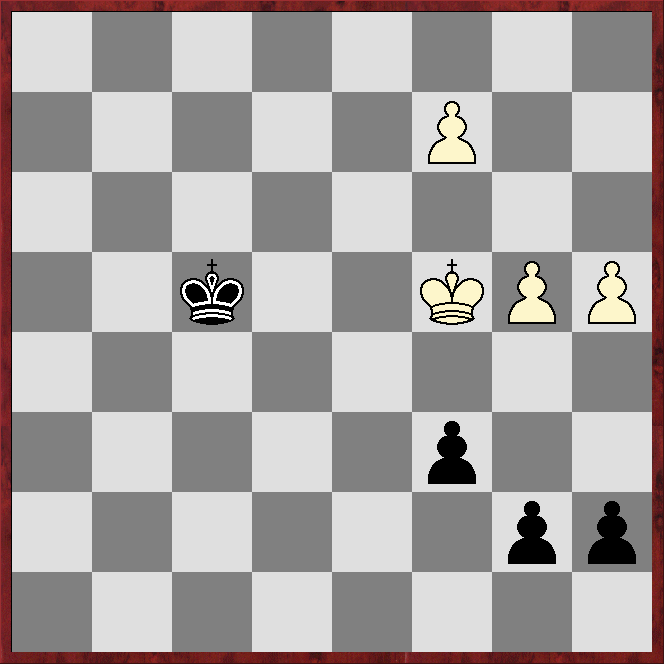
Here I want to concentrate on the ending of opposite-coloured bishops.
It was drawn after 38 moves, but for much of it the analysis engines Stockfish14.1 and Komodo12.1.1 reckon Black is winning.
More than that, a lot of the time they reckon Black is winning by a large margin.
A critical point comes at move 50.
Position after White played 50.Kd1-e2
*****
*****
*****
*****
*****
Black is a pawn up, which often is not enough for a win in an ending with opposite-coloured bishops and no other pieces (apart from kings).
But here White has four pawns fixed on the same squares as Black's light-squared bishop, with the ones at f3 and d3 being targets for the bishop.
True, Black has four pawns fixed on the same squares as White's dark-coloured bishop, but it is difficult for the bishop to get at them.
The engines reckon Black is winning. Stockfish14.1 gives Black's advantage as worth 4.26 pawns, while Komodo12.1.1 gives a more-conservative 2.1 pawns (in both cases the advantage increases, slightly, with the more time the engines are given).
However engines are not very good at assessing endings with opposite-coloured bishops.
It is perhaps significant that in the diagram they reckon Black's advantage is exactly the same after any reasonable move - often a sign an engine's evaluation is seriously wrong.
To test this I am going to play the position out, taking white while Stockfish14.1 plays black.
50...Kc6 51.Kd2 b5
Clearly Black has to play this at some point. The key to a correct defence, assuming there is one, is to have the white bishop poised to counterattack the black central pawns.
52.cxb5+
Not much choice as Black can force this capture anyway by playing ...Be6.
52...Kxb5!? 53.Ke2
The king must not stray too far from the f3 pawn.
53...Be6 54.a3 Bd7!? 55.Kd2 Ka4 56.Ke2 Kxa3
Black has won a second pawn and increased his advantage to 4.49 pawns, according to Stockfish14.1, but now White can threaten counterplay against d6
57.Ba5 Kb3!
This is an only-move, according to Stockfish14.1, which reckons everything else allows White to draw, eg 57...Kb2 58.Kd2 gives White a superior version of the game.
58.Kd2!
The black king must be kept out of the centre, so the natural-looking 58.Bc7 loses to 58...Kxc3 59.Bxd6 Kd4 and 60...Bb5 etc.
58...c4 59.dxc4 Kxc4 60.Bc7 Kc5 61.Kd3 Bb5+ 62.Kd2 Kc6 63.Ba5
63.Bb8? a5.
63...d5 64.Bc3 Kd6 65.Bb4+ Ke6 66.Ba5 Bf1 67.Bc7 Bg2 68.exd5+ Kxd5 69.Ke2 e4 70.fxe4+ Kxe4 71.Bd8 f3+ 72.Kf2 Kd4 1-0
I resigned here as clearly the a pawn is going to cost me my bishop.
So unless a major improvement can be found for White, it seems the engines' assessment of this ending is much better than I suspected.
Arguably it is more instructive to understand how an FM failed to win  ... for which see https://beauchess.blogspot.com/2021/12/alicante-round-nine.html.