Showing posts with label French Rubinstein. Show all posts

Thursday, 28 November 2024

League Chess

PLAYED on board two (of eight) for Battersea 2 against Hackney 3 in London League Division Four last night.

Spanton (1957) - Chris Gribben (1723)
French Rubinstein
1.e4 e6 2.d4 d5 3.Nc3 dxe4 4.Nxe4 Bd7
This is the start of the For Knox Variation within the Rubinstein complex.
5.Nf3 Bc6!?
This seems to have been first played by José Capablanca in 1902.
6.Bd3 Nd7 7.0-0 Ngf6
There are 5,288 examples of this position in ChessBase's 2025 Mega database
*****
*****
*****
*****
*****
8.Re1
The mainline in Mega25 runs 8.Ng3 Be7 9.Re1 0-0 10.c3, with a slight edge for White, according to Stockfish17 and Dragon1.
8...Nxe4 9.Bxe4 Bxe4 10.Rxe4 Nf6 11.Re1
The engines like 11.Rh4!?
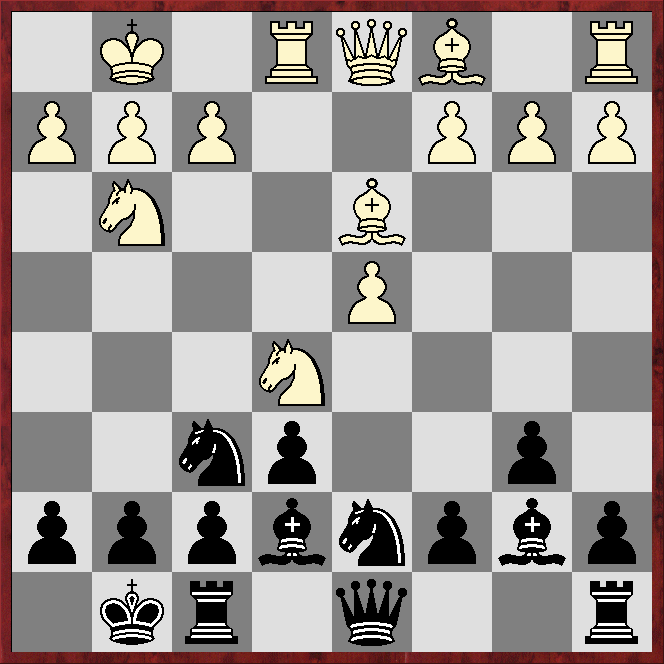
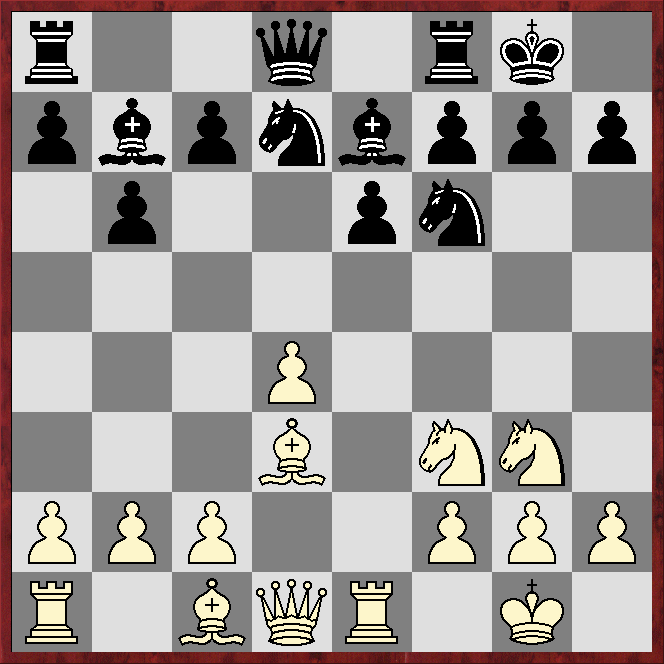
11...Be7 12.c3 0-0 13.Bg5 c6 14.Ne5 Qc7!?
This may be a novelty. Known moves are 14...h6 and 14...Nd7.
How should White proceed?
*****
*****
*****
*****
*****
15.Re3?
Building up on the kingside is positionally desirable, but here it is tactically flawed. The engines suggest 15.a4, 15.Bf4 or 15.Qe2.
15...Nd5! 16.Bxe7
There is nothing better, eg 16.Qg4? can be met by 16...Bxg5 17.Bxg5 f6.
16...Nxe3 17.fxe3 Qxe7 18.Qf3 Rad8 19.Rf1 Rc8!? 20.Qg3 Qc7 21.Qh4 Qd8 22.Qg3 Rc7 23.h4 Kh8?!
The engines dislike this, preferring 23...f6 or 23...c5.
24.Qf4 Qe7 25.h5 h6?
The engines reckon 25...Kg8!? and 25...Qd8!? maintain a winning advantage.
26.Ng6+! fxg6 27.Qxf8+
CG offered a draw.
27...Qxf8 28.Rxf8+ Kh7 29.g4
White has a slight edge after 29.Ra8 a6 30.Re8!?, according to the engines.
29...gxh5 30.gxh5 Re7 31.Kf2 g6 32.hxg6+ Kxg6 33.Kg3 e5 34.Rf2 exd4 35.exd4 Re4+ 36.Kf4 Re7
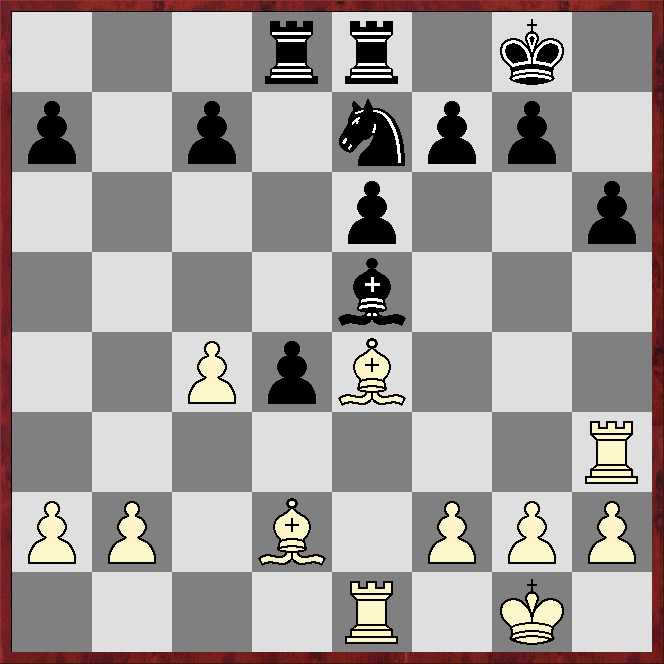
Who, if anyone, stands better?
*****
*****
*****
*****
*****
The engines reckon the position is completely equal.
37.Rg2+ Kf6 38.Rh2 Rh7!? 39.c4 Ke6 40.b4 a6 41.Rh5 b5!? 42.Re5+ Kd6 43.c5+ Kd7 44.d5 cxd5 45.Rxd5+ Kc7
White has a protected passed pawn, but this is balanced by Black's mobile passed pawn, the position remaining completely equal, according to the engines
*****
*****
*****
*****
*****
46.Rd6 Kb7 47.Kf5 h5 48.Rd3
White gets nowhere with 48.Kg6 Rh8 49.Kg7 Re8.
48...h4 49.Kg4 Re7!? 50.a3 Re4+ 51.Kf5 Rc4
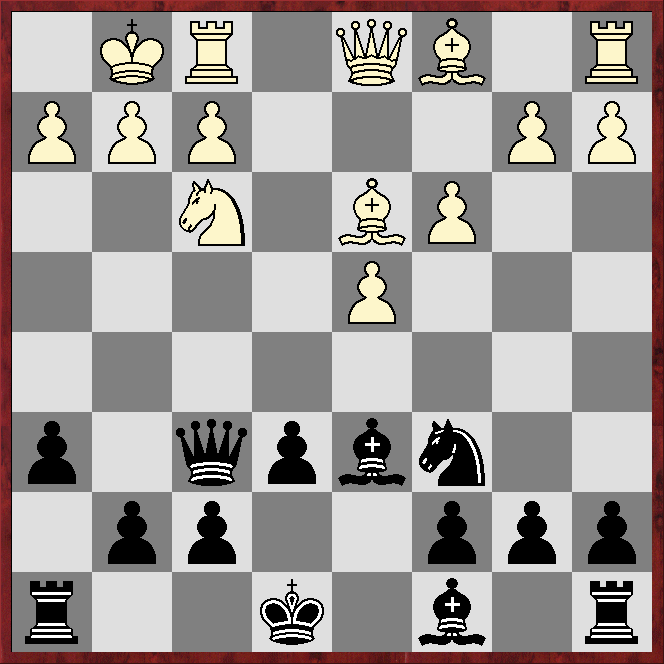
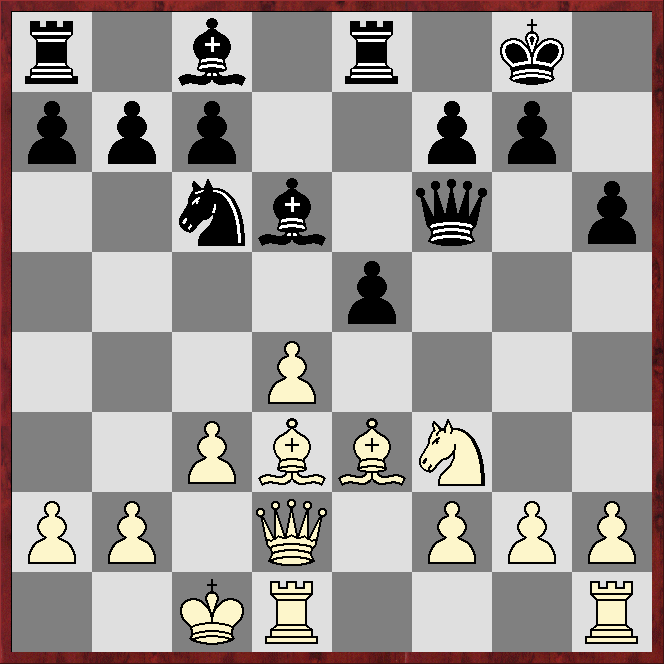
What should White play?
*****
*****
*****
*****
*****
52.Kg5?
It was time to think about securing the draw, starting with, for example, 52.Rd7+ or 52.Ke6.
52...a5 53.Rb3?!
Perhaps the best practical chance lay with 53.Rd7+ Kc8 54.Rh7, but the Syzygy endgame tablebase shows the position after 54...axb4 55.axb4 Rxb4 is winning for Black.
53...axb4 54.axb4 Kc6 55.Kf5 Kc7
This does not spoil anything, but the simplest win begins with 55...h3!?
56.Kf5 ½–½
Battersea 2 won the match 5-3..

MY BATTERSEA SEASON 2024-5
DATE.....EVENT...........................COL..RATING..OPP'S RATING..SCORE..SEASON PERF
12/9/24  Central London League   W     1933         1886                   1            2286
26/9/24  Central London League   B      1933         2112                   1            2399
15/10/24 Club Championship        W     1968         1578                   1            2259*
31/10/24 Central London League  B      1968         1867                   0            2061*
19/11/24 London League               W     1957         1991                   1            2127*
21/11/24 Central London League   B      1957         2035                   =           2112*
27/11/24 London League               W     1957         1723                   =           2056*
*My season's performance is slightly better than this, the point being my win against a 1578 counts as a 1978 performance, which lowers my average despite me winning the game.

Monday, 26 December 2022

Dama Negra Game One

Spanton (1895) - Pablo Serrano Vásquez (1291)
French Rubinstein
1.Nc3 d5 2.d4 e6 3.e4 dxe4 4.Nxe4 Nd7 5.Nf3 Ngf6 6.Ng3!?
Keeping pieces on the board. The mainline in ChessBase's 2023 Mega database runs 6.Nxf6+ Nxf6 7.Bd3 c5 8.0-0 (8.dxc5 is also very popular) cxd4 9.Nxd4 Bc5 10.Nb3 Bd6, which Stockfish15 calls equals, but is a little better for White, according to Komodo13.02.
6...Be7 7.Bd3 b6 8.0-0 Bb7 9.Re1 0-0
Both players have castled - how would you assess the position?
*****
*****
*****
*****
*****
White has more space in the centre; Black has a powerful light-square bishop. The engines reckon the position is equal.
10.Ne5?!
This has been played by grandmaster Mikhail Al Antipov (2592), albeit at blitz, but may be a mistake. The engines prefer 10.c3 or 10.Bf4.
How should Black reply?
*****
*****
*****
*****
*****
10...Nxe5!?
This obvious-looking move seems to be a novelty, or at least it does not occur in any of the 18 games to reach the last diagram in Mega23.
11.dxe5 Qxd5
Can you find a defence for White?
*****
*****
*****
*****
*****
12.Bf1
Probably not 12.f3?! Bc5+ 13.Kh1 Ng4!, but the engines suggest 12.Qf3!? Qxf3 13.gxf3, although giving Black a slight edge.
12...Qxd1 13.Rxd1 Ng4 14.Rd7!?
This seems better than 14.Bf4 g5.
14...Bc5 15.Nh1
The engines slightly prefer 15.Be2!? Bxf2+ (not 15...Nxf2? 16.b4) 16.Kf1 Bxg3 (16...Nxe5!?) 17.hxg3 Nxe5 18.Rxc7, when having the bishop-pair gives White some compensation for being a pawn down and for having doubled isolanis.
15...Nxe5 16.Rxc7 Be4 17.Ng3?!
Probably stronger is 17.Bf4.
17...Bxc2 18.Bf4!?
Stockfish15 reckons 18.Be3 Bxe3 19.Rxc2 is much less worse for White, but Komodo13.02 narrowly prefers the text.
18...Ng4
Possibly stronger - the engines again disagree - is 18...Nd3.
19.h3?
But they agree this is a mistake, preferring 19.Be2 Bxf2+ 20.Kh1 Bf5 21.Nxf5 exf5, after which Black is two pawns up, but has doubled f pawns, while White has the bishop-pair and a rook on the seventh, which give some compensation.
19...Nf6?!
This is good enough for a large advantage, but better is 19...Bxf2+ 20.Kh1 Be3.
20.Rc1 Nd5?
The simple 20...Bg6 maintains a large advantage.
21.Rxc2 Nxf4 22.Ne4
White is a pawn down, but for practically the first time in the game has an initiative.
22...Nd5 23.Rd7 Bd4 24.a3
Possibly better is 24.Rd2 Be5 25.g3.
24...Rfd8 25.Rb7 Rdb8 26.Rd7 Rf8 27.Rb7
Black should probably play on with 27...h6, preventing Ng5, but instead the game saw:
27...Rdb8 ½–½

Thursday, 3 November 2022

Dresden Game Seven

Spanton (1764) - Klaus Briesemeister (1591)
French Rubinstein
1.Nc3 e6 2.e4 d5 3.d4 dxe4 4.Nxe4 b6!?
This unusual continuation - it is seventh-most popular in ChessBase's 2022 Mega database - has been played by Magnus Carlsen.
5.Bd3
5.Qf3 can be met by 5...Qd5, although Stockfish15 and Komodo13.02 slightly prefer White.
5...f6?
KB could not explain in the postmortem why he played this, except for vaguely fearing something might happen on the kingside (and 5...f6? makes such an event more likely).
6.Qf3 c6
The engines suggest giving up a pawn by 6...Nc6!? 7.Nxf6+ and 8.Qxc6+. Also possible is 6...Qd5, as 7.c4?! runs into 7...Bb4+, but 7.Ne2 is strong.
7.Ne2 Ne7?!
Black, already well behind in development, is not helped by this leisurely move.
How should White continue?
*****
*****
*****
*****
*****
8.Bf4!?
This is almost certainly better than 8.Nxf6+?! gxf6 9.Qxf6 Rg8 10.Bxh7, when the position is unclear - Stockfish15 gives White the upper hand; Komodo13.02 declares the position equal. However, even better than the text seem to be 8.Qh5+ and 8.Nf4.
8...Nf5?!
Probably better is 8...Nd5.
9.0-0-0 Bd6??
Not 9...Nxd4?? 10.Nxd4 Qxd4 11.Ba6, but 9...Be7 is better.
10.Nxd6+ Nxd6 11.Qg3 Nf5 12.Bxf5 Ba6 13.Bd3
Even stronger seem to be 13.Bxe6 and 13.Qxg7.
13...Bxd3 14.Rxd3 0-0 15.Bd6 Re8 16.Nc3 Qd7 17.Ne4 f5?? 18.Nf6+ 1-0

Friday, 19 August 2022

Czech Seniors Open Championship Round Seven


Sculpture-festival entry

Spanton (1852) - Jiří Macoun (1675)
French Rubinstein
1.Nc3 d5 2.d4 e6 3.e4 dxe4 4.Nxe4 Nf6!?
This continuation does not have a great theoretical reputation. There are 5,043 examples of the move in ChessBase's 2022 Mega database, compared with 10,385 for 4...Bd7 and 19,573 for 4...Nd7. White scores an excellent 61% after the latter two moves, but an even more impressive 67% after the text. Looking in Mega22, the oldest game with 4...Nf6!? is from 1861. Another 29 years were to pass before Adolf Albin played 4...Nd7, and a further 12 years before José Capablanca introduced 4...Bd7. But 4...Nf6!? is a favourite with some grandmasters, including Hungarian Candidate Richárd Rapport.
5.Nxf6 Qxf6 6.Nf3 h6 7.Bd3 Nc6
Rather than attacking the white centre with ...c5, Black aims for ...e5.
8.0-0 Bd6
The double-blunder 8...Nxd4?? 9.Nxd4 Qxd4?? 10.Bb5+ does not appear in Mega22, but has probably occurred in many friendly games.
9.c3
Is ...e5 already possible?
*****
*****
*****
*****
*****
9...0-0
The game Marek Ihnát (2066) - Gyula Pap (2535), Piešťany (Slovakia) 2021, went 9...e5!? 10.dxe5 Nxe5 11.Nxe5, at which point the game was agreed drawn. Stockfish15 and Komodo13.02 continue 11...Bxe5 12.f4 Bd6 13.Re1+, claiming White has the upper hand. They reckon Black improves with 10...Bxe5!?, when 11.Nxe5 Nxe5 effectively rules out 12.f4 (12...Nxd3), while 12.Re1 is simply met by 12...0-0, after which White has the bishop-pair but must spend a tempo moving the light-square bishop to preserve it, meaning Black has equalised, according to Stockfish15, although Komodo13.02 gives White a slight edge. So the answer seems to be that 9...e5!? is playable.
10.Re1
This allows 10...e5. The main move in Mega22 is 10.Qe2, the idea perhaps being that 10...e5!? can be met by 11.Qe4. However Black can then reply 11...g6!? as the 'obvious' 12.Bxh6?! is hit by 12...Bf5 13.Qe3 exd4 14.cxd4 Rfe8 15.Qd2 Bg4, when the engines reckon Black has good compensation for a pawn. An improvement in this line for White, according to the engines, is 12.dxe5 Nxe5 13.Nxe5 Bxe5, when 14.Re1 may give White a slight edge. Rather than 10.Qe2, Stockfish15 suggests 10.Bc2!?, preparing a bishop-queen battery on the b1-h7 diagonal. Komodo13.02 prefers 10.Be4!?, but either way both engines reckon White is better.
10...Bd7?!
Missing the chance to play the thematic 10...e5, when 11.dxe5 Nxe5 12.Nxe5 Bxe5 is equal according to Stockfish15, although Komodo13.02 gives White a tiny edge.
11.Bc2
Preparing a battery on the key diagonal. Gilberto Hernández Guerrero (2510) - Luís Galego (2435), Capablanca Memorial Premier, Matanzas (Cuba) 1995, saw another way of threatening this, ie 11.Qe2. The game continued 11...Ne7 12.Ne5 (12.Qe4 Qg6 13.Qxg6 Nxg6 14.Bxg6 slightly favours White, according to the engines) Bxe5, when the engines reckon 13.dxe5 gives White the upper hand. The game saw 13.Qxe5 Qxe5 14.dxe5, when the bishops give White an edge but the game was quickly drawn.
11...Rfe8?!
Both games in Mega22 saw 11..Ne7 12.Ne5, when the engines reckon White is much better. The engines suggest 11...Rfd8, and if 12.Qd3 then 12...Qf5, when 13.Qxf5 exf5 is only slightly better for White, according to the engines. One of the points of 11...Rfd8 is to protect the light-square bishop while also vacating the f8 square for the black king.
White to play and get a winning advantage
*****
*****
*****
*****
*****
12.Qd3
The engines give 12.Ne5!?, and if 12...Rad8 then 13.Qh5, eg 13...Be7 14.Re4 Nxe5 15.dxe5 Qf5 16.Qe2 with a huge attack, or 13...Bxe5 14.dxe5 Qe7 15.Bxh6! gxh6 16.Qxh6 f5 17.exf6 Qf7 18.Re3 etc. Alternatively 12...Bxe5 13.dxe5 Nxe5 loses to 14.Qd4.
12...Ne7?
Black should settle for 12...Qf5, when 13.Qxf5 exf5 14.Bd2 gives White at best a slight edge, according to the engines.
13.Ne5
Also strong is 13.Qh7+ Kf8 14.Qh8+ Ng8 15.Ne5, reaching a position that could also be reached in the game. White can also play 15.Bh7, eg 15...g5!? 16.Qxg8+ Ke7 17.Qxg5 hxg5 18.Bg5 Qxg5 19.Nxg5, but 19...f5 leaves White's advantage less clear.
13...Bc6 14.Re3?!
Almost certainly too slow. One line given by the engines runs 14.Qh7+ Kf8 15.h3!?, intending 16.Ng4 (if 15.Ng4 then 15...Qh4 slows White's attack, although the attack still seems strong).
14...Nf5 15.Nxc6 bxc6
Not 15...Nxe3?? 16.Qh7+ Kf8 17.Qh8#.
16.Rf3 Qh4
The engines prefer 16...c5, albeit giving White the upper hand after 17.dxc5 Bxc5 18.Qe2.
17.Rh3 Qg4 18.Bd1 Qg6 19.Bh5?!
Over-chasing the black queen. White is still better after this, but the engines' 19.Ba4 wins the c6 pawn as defending it with 19...Ne7 seems even worse, eg 20.Qxg6 fxg6 21.Re3 Kf7 22.c4.
19...Qf6 20.Bf3 Ne7 21.c4?
Fatally weakening the d pawn. White remains better after 21.Be4, eg 21...e5 22.Rf3 Qe6 23.dxe5, when having the bishop-pair and better pawn-structure give White the upper hand, according to the engines.
21...Rad8!
Preventing 22.c5 and breaking the pin on the c6 pawn.
22.Qe4 c5 23.Be3?
Better is 23.Bd2, accepting that 23...cxd4 wins a pawn.
23....cxd4 24.Bd2
Black gets a central initiative after 24.Bxd4? Bxh2+ and 25...Rxd4.
24...Qf5?!
Probably too eager for exchanges.
25.Re1?!
Probably better is 25.Qxf5, when 25...exf5 dilutes Black's pawn advantage, while 25...Nxf5 allows strong counterplay, eg 26.b4 c5 27.b5.
25...Qxe4 26.Bxe4 Be5?
Black has a large advantage after 26...Rb8.
How should White proceed?
*****
*****
*****
*****
*****
27.Ra3!?
This switch-of-play - easy for engines to see, but not for humans focussed on the kingside - wins back White's lost pawn.
27...d3 28.Rxa7
Obvious, but the engines prefer 28.b4!?
28...c5?!
Good for White is 28...Bxb2 29.Rxc7, but the engines like 28...Nc8!? 29.Ra3 Bxb2 30.Rb3 Bf6, reckoning Black may have an edge after 31.Bxd3 Rd7.
29.b3 Nc8?!
JM went to play 29...Nc6??, but just in time saw 30.Bxc6.
30.Ra8 Bd4 31.Ba5!?
The engines for a long time reckon this is a mistake (they change their verdict a few moves into the variation detailed below the diagram), but it seems to be as strong as it looks at first glance. The engines instead suggest 31.g4!?, which seems to be aimed against ...f5. White can also play 31.Bxd3!? as 31...Bxf2+? 32.Kxf2 Rxd3 runs into 33.Be3, when White will get three connected passed pawns on the queenside.
What should Black play?
*****
*****
*****
*****
*****
31...d2?
This looks more threatening than it is. For a long time the engines reckon Black equalises with 31...Nd6!? 32.Rxd8 Rxd8 33.Bxd8 Nxe4, but they come to agree 34.a4!? is good for White, eg 34...Nxf2 35.Kf1 d2 36.Rb1 d1=Q+ 37.Rxd1 Nxd1 38.a5 Be5 39.a6 Bb8 40.Bb6, after which White is a knight down but the white queenside pawns give excellent compensation (winning, according to Stockfish15, although Komodo13.02 allows only the upper hand). However this may be academic as the engines reckon a major improvement in this line is 33.Bh7+!?, displacing the black king further from the queenside. Much of this is very difficult to see over the board, but it is relatively easy to see the text gets Black nowhere.
32.Rd1 Rd6
No longer giving hope is ...Nd6 as 33.Rxd8 Rxd8 34.Bxd8 (34.Bh7+!? also wins) Nxe4 35.Kf1 is a much clearer win for White than the lines in the previous note.
33.Bc7 f5 34.Bxd6 Nxd6 35.Rxe8+ Nxe8 36.Bc2 Bc3 37.Kf1 Kf7 38.Ke2 Kf6 39.Rxd2!?
Returning the exchange, the point being that after ...
39...Bxd2 40.Kxd2
.... White is a pawn up, has a 3-1 queenside majority and the better piece for dealing with rival pawn majorities.
The game finished:
40...e5 41.a3 Nd6 42.Kc3 e4 43.b4 cxb4+ 44.axb4 Ke5 45.Ba4 f4 46.c5 Nc8 47.Kc4 g5 48.Bd7 Ne7 49.b5 e3 50.fxe3 fxe3 51.Kd3 Kd5 52.c6 Kd6 53.Kxe3 Nd5+ 54.Kf3 Kc7 55.Kg4 Ne3+ 56.Kh5 Nxg2 57.Kxh6 Nh4 58.h3 Kf3 59.Kh5 Kb6 60.Kg4 Nd4 61.Kxg5 Nxb5 62.h4 1-0

Wednesday, 10 August 2022

Lessons From Transylvania VIII

IN round nine of the Brașov International I had black against a 1411.
The full game can be seen at B9 but here I want to concentrate on the opening.
The game began 1.e4 e6 2.d4 d5 3.Nc3 dxe4 4.Nxe4 Nf6!?, a sequence dating back to at least 1861, although Akiba Rubinstein, after whom the 3...dxe4 variation is named, preferred 4...Nd7, which is easily the commonest continuation in ChessBase's 2022 Mega database.
After 5.Nxf6+ Qxf6 6.Nf3 the threat of 7.Bg5 is unpleasant, so Black usually plays 6...h6.
Black has 'given up the centre' but has no weaknesses and can hope to pressurise d4
*****
*****
*****
*****
*****
7.Be3!?
Normal is 7.Bd3 but the text has also been played by grandmasters.
7...Bd6 8.Qd2 0-0 9.Bd3 Nc6 10.c3 Re8
Possible already is ...e5, which if it can be played without compromising the black position usually means Black has at least equalised.
11.0-0-0 e5
How should White respond?
*****
*****
*****
*****
*****
The game saw 12.Qc2?! exd4 13.Nxd4, after which 13...Ne5 gives Black at least a slight edge, according to Stockfish15 and Komodo13.02.
Instead 12.dxe5 Nxe5 13.Nxe5 Bxe5 14.Qc2 is equal, according to Komodo13.02 although Stockfish15 slightly prefers Black.
If 12.d5!? the engines give 12...e4 13.dxc6 exd3 as better for Black, eg 14.Rhe1 Qg6 15.Qxd3 Bf5 16.Qd2 Be4 17.cxb7 Bxb7, when Black is a pawn down but has the bishop-pair and the safer king.
CONCLUSION: if White lets Black play ...e5 in the Rubinstein Variation of the French Defence, without having a strong riposte in mind, Black has a good game.

Sunday, 31 July 2022

Brașov Round Nine

TODAY in the final round I played another Romanian junior (born 2008).

Razvan-Alexandru Panait (1411) - Spanton (1889)
French Rubinstein
1.e4 e6 2.d4 d5 3.Nc3 dxe4 4.Nxe4 Nf6!?
The main moves are 4...Nd7 and 4...Bd7 but there are 5,043 examples of the text in ChessBase's 2022 Mega database.
5.Nxf6+ Qxf6 6.Nf3 h6 7.Be3!?
The mainline runs 7.Bd3 Bd6 8.0-0 0-0 9.Qe2, when White has the upper hand, according to Stockfish15 and Komodo13.02.
7...Bd6 8.Qd2!?
Hinting at quick queenside castling.
8...0-0 9.Bd3 Nc6 10.c3 Re8!?
Possibly new. 10...e5 is known from three games in Mega22.
11.0-0-0 e5 12.Qc2?!
Capturing on e5 or playing 12.d5 are probably better.
12...exd4 13.Nxd4 Nxd4?!
Almost certainly better is 13...Ne5.
14.Bxd4 Bf4+?!
Grabbing a pawn by 14...Qg5+ 15.Kb1 Qxg2?? loses on the spot to 15...Rdg1 etc but the engines reckon 15...Be6 gives Black at least an even game. The text spends a tempo helping the white king to safety.
15.Kb1 Be5 16.Rhe1 Re7??
It was necessary to play 16...Re6 or 16...Bg4 17.f3 Bxd4, although in both lines Black is struggling for equality.
17.Bh7+?
This is good enough for a large advantage, but winning is 17.Qe2.
17...Kf8
Not 17...Kh8?? 18.Rxe5!? (18.Bxe5 also wins) Rxe5 19.Bxe5, and if 19...Qxe5? then 20.Rd8+ Qe8 21.Rxe8#.
18.Bc5 Bd6 19.Rxe7 Qxe7
Not 19...Bxe7?? 20.Rd8#.
20.Bxd6 cxd6
How large is White's advantage?
*****
*****
*****
*****
*****
The engines reckon White is the equivalent of about three-quarters of a pawn ahead.
21.Be4 Be6 22.Bf3 Kg8 23.Qe4
How should Black proceed?
*****
*****
*****
*****
*****
23...Rb8
The engines give 23...Re8!?, and if 24.Qxb7 then 24...Bf5+ 25.Ka1 (25.Kc1? Qg5+ 26.Rd2 Bg6) Qe1!, when the game is dead-equal, according to Komodo13.02 although Stockfish15 gives White a slight edge.
24.Qb4
Also strong is the simple 24.Qd4.
24...Bf5+ 25.Ka1 Bc2!? 26.Qxd6 Qxd6!?
Heading for a rook-and-pawn ending. The engines prefer 26...Qe8.
27.Rxd6 Re8 28.b3 Be4 29.Bxe4 Rxe4
How would you assess the ending?
*****
*****
*****
*****
*****
White is a pawn up and it is White to move, but the black king is slightly better placed than its opposite number. Stockfish15 reckons White is winning; the more-conservative Komodo13.02 gives White 'only' the upper hand.
30.Rd8+ Kh7 31.Rd7!?
Slower, but possibly better, is 31.Rd2.
31...Re1+ 32.Kb2 Re2+ 33.Ka3 Rxf2 34.Rxb7 f5?
Best is 34...a6, according to the engines, and they also prefer 34...Rxg2?!
35.g3?
White should get on with it, eg 35.Rxa7 Rxg2 36.b4 etc.
35...Rxh2 36.Rxa7 Rh3 37.Kb4
Stockfish15 reckons 37.b4!? is best but Komodo13.02 much prefers the text and 37.c4.
37...Rxg3 38.c4 f4?
Stockfish15 reckons 38...h5 and 38...Rg6 more-or-less equalise; Komodo13.02 disagrees, but both engines reckon the text is wrong.
39.c5!?
Stockfish15 reckons this and 39.Rf7 win, but Komodo13.02 much prefers the latter.
39...f3?!
39...Re3 was the best chance, according to the engines, although 40.Rf7 seems strong.
40.Rf7 Kg8 41.Rf4 g5
White to play and win
*****
*****
*****
*****
*****
42.c6!
Also probably good enough is 42.Rf5 Rg4+ 43.Kc3, but 43.Ka5? only draws and 43.Kb4?? loses.
42...gxf4 43.c7 f2 44.c8=Q+ Kg7 45.Qc7+ Kg6 1-0

Wednesday, 2 June 2021

Beat The ... French Rubinstein

IN this series I am looking at the statistically best way to play against popular opening lines.
The numbers are drawn from the 2021 edition of ChessBase's Mega database, ignoring, where possible, those results that include very few games and so are statistically insignificant.

The Rubinstein Variation of the French Defence: 1.e4 e6 2.d4 d5 3.Nc3/d2 dxe4 is most-successfully met by 4.Nxe4, after which Black has seven continuations appearing more than 300 times each in Mega21.
Position after 4.Nxe4
A) 4...Nd7 (18,127 games)
White scores 61% with the most popular move 5.Nf3, 64% with the second-most popular move 5.Bd3, but 68% with the third-most popular 5.g3!?
After 5...Ngf6 6.Nxf6+ Nxf6 7.Bg2 the line splits.
A1 7...c5 8.Nf3 cxd4 9.Qxd4 Qxd4 10.Nxd4, after which the line splits again.
A1.1 10...Bc5 11.Nb3, when A1.1a 11...Bd6 12.Be3 scores 91% for White, albeit from a small sample, and A1.1b 11...Bb6 12.0-0 scores 85% for White, albeit from a small sample.
A1.2 10...a6 11.Bf4 scores 95% for White, albeit from a small sample.
A2 7...e5!? 8.Qe2!? Qxd4 9.Nf3 scores 68% for White.
A3 7...Be7 8.Nf3 0-0 9.0-0 c5 10.dxc5 Bxc5 11.Qe2 scores 86% for White, albeit from a small sample.

B) 4...Bd7 (9,598 games)
White scores 62% with the most popular move 5.Nf3, 60% with the second-most popular move 5.Bd3, but 64% with the third-most popular 5.c4!?
After 5...Bc6 6.Nc3 Nf6 7.Nf3!? Bxf3 8.Qxf3 the line splits.
B1 8...c6 9.Be3 Nbd7 10.Bd3 scores 71% for White, albeit from a small sample.
B2 8...Nc6 9.Be3!? scores 80% for White, albeit from a small sample.

C) 4...Nf6 (4,580 games)
After 5.Nxf6+ the line splits.
C1 5...Qxf6 6.Nf3, after which the line splits again.
C1.1 6...h6 7.Bd3, when C1.1a 7...Bd6 8.Qe2 Nc6 9.c3 Bd7 10.Be3 scores 92% for White, albeit from a small sample, C1.1b 7...Nc6 8.0-0 Bd7 9.c3 Bd6 10.Qe2 0-0-0 11.b4 scores 76% for White and C1.1c 7...c5 8.Be3 Nc6 9.0-0 cxd4 10.Nxd4 Bd7 11.Nb5 scores 86% for White, albeit from a small sample.
C1.2 6...Qd8!? 7.Bd3, when C1.2a 7...Be7 8.Qe2 Nd7 9.Bd2 scores 93% for White, albeit from a small sample, C1.2b 7...Nd7 8.0-0 Be7 9.Qe2 scores 92% for White, albeit from a small sample, and C1.2c 7...c5 8.0-0 scores 88% for White, albeit from a small sample.
C2 5...gxf6 6.Nf3, after which the line splits again.
C2.1 6...b6 7.g3!? Bb7 8.Bg2 scores 79% for White.
C2.2 6...c5 7.Be3, when C2.2a 7...cxd4 8.Nxd4 scores 82% for White and C2.2b 7...Qb6 8.dxc5 Bxc5 9.Bxc5 Qxc5 10.Qd2 scores 75% for White, albeit from a small sample.
C2.3 6...Nc6 7.g3 scores 75% for White, albeit from a small sample.

D) 4...Be7 (1,774 games)
After 5.Nf3 the line splits.
D1 5...Nf6 6.Bd3, after which the line splits again.
D1.1 6...Nbd7 7.Qe2, when D1.1a 7...0-0 8.Nxf6+ Nxf6 9.Bg5 c5 10.0-0-0 cxd4 11.h4 Qa5 12.Kb1 scores 84% for White, D1.1b 7...Nxe4 8.Qxe4!? Nf6 9.Qh4 scores 91% for White, D1.1c 7...c5 8.c3!? cxd4 9.Nxd4 scores 71% for White, albeit from a small sample, and D1.1d 7...b6 8.Neg5 scores 94% for White, albeit from a small sample.
D1.2 6...0-0 7.c3!? Nbd7 8.Qe2 scores 78% for White.
D1.3 6...Nxe4 7.Bxe4 Nd7 8.0-0 Nf6 9.Bd3 0-0 10.Ne5 c5 11.dxc5, when D1.3a 11...Bxc5 12.Qe2 scores 77% for White and D1.3b 11...Qc7 12.Re1 Qxc5 13.Qf3 scores 88% for White, albeit from a small sample.
D2 5...Nd7 6.Bd3 Ngf6 is a transposition to D1.1.

E) 4...Qd5!? (594 games)
After 5.Nc3 the line splits.
E1 5...Bb4 6.Nf3 Nf6 7.Bd3, after which the line splits again.
E1.1 7...Ne4 8.Bd2 Bxc3 9.bxc3 Nxd2 10.Qxd2 scores 75% for White.
E1.2 7...b6 8.Qe2 Bb7 9.0-0 Bxc3 10.bxc3, when E1.2a 10...0-0 11.Re1 scores 78% for White, albeit from a small sample, and E1.2b 10...Qh5 11.c4 scores 67% for White, albeit from a small sample.
E1.3 7...0-0 8.0-0 Bxc3 9.bxc3 scores 82% for White.
E2 5...Qd8 6.Nf3 Nf6 7.Bd3, after which the line splits again.
E2.1 7...Be7 8.Qe2!? scores 81% for White, albeit from a small sample.
E2.2 7...c5 8.0-0, when E2.2a 8...Nc6 9.dxc5 Bxc5 10.a3!? scores 83% for White, albeit from a very small sample, and E2.2b 8...cxd4 9.Nxd4 Be7 (9...Qxd4?? 10.Bb5+ etc) 10.Bf4 scores 90% for White, albeit from a small sample.

F) 4...Nc6 (421 games)
After 5.Nf3 the line splits.
F1 5...Be7 6.c3 Nf6 7.Bd3, after which the line splits again.
F1.1 7...0-0 8.Qc2 h6 9.Nxf6+ Bxf6 10.Bf4 scores 100% for White, albeit from a small sample.
F1.2 7...b6 8.Nxf6+ Bxf6 9.Be4 scores 70% for White, albeit from a small sample.
F1.3 7...h6 8.Qe2 scores 100% for White, albeit from a small sample.
F1.4 7...Nxe4 8.Bxe4 scores 87% for White.
F1.5 7...Bd7 8.Qc2 scores 90% for White, albeit from a small sample.
F2 5...Nf6 6.Nxf6+, after which the line splits again.
F2.1 6...Qxf6 7.Bd3!? h6 is a transposition to C1.1b.
F2.2 6...gxf6 is a transposition to C2.3.

G) 4...b6 (314 games)
After 5.Nf3 Bb7 6.Bb5+!? c6 7.Bd3 the line splits.
G1 7...Be7 8.Qe2 scores 83% for White, albeit from a small sample.
G2 7...Nd7 8.Qe2 scores 100% for White, albeit from a small sample.
G3 7...Nf6 8.Qe2 scores 90% for White, albeit from a small sample.

Friday, 13 March 2020

Back On Top

I WAS back on top board, having been upfloated to play the sole leader, in round eight of Bad Wörishofen U2000.
Spanton (1837) - Wolfgang Müller (1823)
French Rubinstein
1.d4 d5 2.Nc3 e6 3.e4 dxe4 4.Nxe4 Nf6!?
More popular are 4...Nd7 and 4...Bd7, but there are well over 4,000 examples of the text in ChessBase's 2020 Mega database.
5.Nxf6+
This is generally considered best. The idea is Black has to either damage his kingside pawn-formation or prematurely commit his queen.
5...gxf6 6.Nf3 b6 7.Bd3
I rejected the most-popular move, 7.Bb5+, because I thought 7...c6 8.Bd3 Bb7 did not especially help White, and anyway Black could play 8...Ba6!?
7...Bb7 8.Qe2 Qd6
WM at first placed his queen on d5, but did not let go, eventually releasing it on d6.
9.Be3 a5?!
Presumably designed to dissuade long castling by White, but reducing the chances of the black king finding safety.
10.0-0
The engines do not like 10.0-0-0!? but it seems playable.
10...h5?!
The engines prefer 10...Rg8 or 10...Nc6, but with advantage to White.
11.c4
The engines at first prefer 11.d5!?, and if 11...Bxd5?, then 12.Rad1, eg 12...Qe7 13.Bb5+ c6 14.c4 Bxf3 15.Qxf3 with a strong attack.
11...Nd7 12.Rfd1 Bh6 13.Rac1
I had been looking at the stronger move 13.c5, but for some reason I cannot recall, I did not play it.
13...Bxe3 14.fxe3?!
This restricts the activity of the white queen and removes the possibility of the protective pawn-move f3, so probably better was 14.Qxe3.
14...c5 15.a3!?
Planning to blast open the queenside with an immediate b4 if Black castles long.
15...Ke7?!
The engines prefer 15...h4, but still like White.
16.d5 Rag8 17.dxe6?
Good is the engines' 17.Be4.
17...Qxe6 18.Nh4 Rg5 19.e4 Rhg8 20.Rf1 Ne5 21.Rf5??
21.Bb1 is level according to Komodo10, but Stockfish10 much prefers Black.
21...Nxd3 22.Qxd3 Bxe4 23.Rxg5 Bxd3 0-1

Monday, 8 April 2019

Missed Opportunities

TODAY was the double-round day at Jersey - necessary to fit nine rounds into a Saturday-to-Saturday schedule - and it turned out for me to be a day of missed opportunities.
First up this morning in round three I had Black.
Black to make his 31st move in Alek Safarian (2005) - Spanton (1914)
*****
*****
*****
*****
*****
*****
*****
31...Rh2??
A ridiculous move that removes any danger from White's king while exposing Black's weak kingside pawns.
I wanted to play 31...g5 but rejected it because of 32.Ne4. What I missed, but Stockfish10 and Komodo9 see instantly, is that Black has 32...Nxe3! as the obvious 33.Bxe3 runs into 33...gxf4. Black is then temporarily down a bishop for two pawns, but threatens to win the e3 bishop or fork White's king and g2 rook, in either case giving Black a winning advantage.
After the text, the game continued ...
32.Rxh2 Nxh2 33.Ne4
… when White's bishop-pair, combined with Black's weak pawns and uncoordinated pieces, gave White a winning advantage (1-0, 53 moves)
***********************************
MY reward for being the only player in the Open on nul points was to be upfloated against the 12th seed in round four.
Spanton (1914) - Paul Curtis (2186)
French Rubinstein (Fort Knox Variation)
1.d4 e6 2.e4 d5 3.Nc3 dxe4 4.Nxe4 Bd7!?
The Fort Knox has a super-solid reputation but seems a strange choice against someone rated 272 elo lower. Stockfish10 at first rates Black's fourth move as giving White a winning position, but soon calms down.
5.Nf3 Bc6 6.Bd3 Nd7 7.0-0 Ngf6 8.Qe2
It is more popular to avoid exchanges with 8.Ng3.
8...Be7 9.Re1 Nxe4 10.Bxe4 Bxe4 11.Qxe4 c6 12.Ne5!?
The engines do not like this, preferring 12.Bf4.
12...Nf6 13.Qf3!?
Position after 13.Qf3!?
This seems to be a novelty. The idea is to meet 13...Qxd4 with 14.Nxc6, when the engines agree with what I thought was the main line, namely 14...Qd5 (14...bxc6?? loses the a8 rook after 15.Qxc6+) 15.Qxd5 Nxd5 16.Nxe7 Kxe7, when White has bishop-v-knight and a queenside pawn-majority, but Black has no weaknesses.
13...Qd5 14.c3
The engines reckon 14.Qxd5 cxd5 is fine for White, but I suspect PC would have fancied his chances of turning a minority attack into a full point.
14...Qxf3 15.Nxf3 0-0 16.Bf4 Rac8 17.Rad1 Rfd8 18.h3 Nd5 19.Be5 Bf6 20.Bxf6 Nxf6 21.Ne5 Rd6 22.Nc4 Rd5 23.a4 Rcd8 24.b4 b6?!
This may look aggressive because of the line-up of Black's rooks on the d file, but in reality it is weakening.
25.Ne5
Even stronger is 25.a5, which I looked at but was not sure about after 25...c5? 26.axb6, although with the help of the engines it is fairly easy to see that Black is in big trouble, eg 26...cxd4? 27.bxa7 wins for White, not least thanks to the threat of Nb6. The engines reckon Black's best after 25.a5 is the horrible 25...b5, when White is clearly better after 26.Ne5.
Maybe if I had not had such a disappointing start to the tournament, or had been playing someone nearer my rating, I would have looked harder at these lines instead of concentrating on avoiding defeat.
25...R5d6 26.Nc4 Rd5 27.Ne5 R5d6
While I was thinking about my next move, which would almost certainly have been 28.Nc4, PC offered a draw, which I accepted.