Showing posts with label Spanish Classical. Show all posts

Wednesday, 19 November 2025

League Chess

PLAYED on board four (of eight) for Battersea against Lewisham 2 in London League Division Two last night.

Spanton (1891) - Anthony Agu (1980)
Spanish Classical
1.e4 e5 2.Nf3 Nc6 3.Bb5 Bc5 4.c3 Nf6 5.d3
More popular are 5.d4 and especially 5.0-0.
5...d6 6.Be3!?
This is quite a sideline - only sixth-most popular in ChessBase's 2026 Mega database.
6...Bb6
Stockfish17.1 and Dragon1 reckon capturing gives Black a slight edge.
7.Nbd2 0-0 8.Qe2 Ne7!? 9.Nc4!?
Probably a novelty. Zhanibek Amanaov (2398) - Anton Demchenko (2514), Voronoezh (Russia) 2010, went 9.Ba4!? c6 10.Bb3 Ng6 11.0-0-0!? a5, with at least a slight edge for Black, according to the engines (but ½–½, 35 moves).
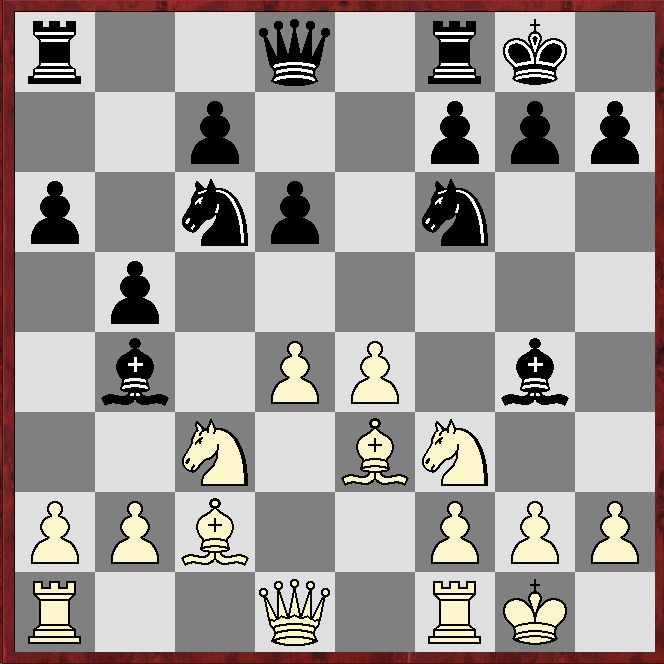
9...c6 10.Nxb6 axb6 11.Bc4 b5 12.Bb3 Be6 13.0-0
Now both sides have castled, how would you assess the position?
*****
*****
*****
*****
*****
Black's doubled pawns are not really a weakness, but they make Black's structure less flexible, although in compensation Black has pressure down the a file. White's bishop-pair is not a major factor as it is unlikely to survive long. The engines call the game equal.
13...Bg4!? 14.h3 Bh5?!
But now the bishop-pair could easily be significant. Almost certainly better is 14...Be6, despite the loss of time.
15.g4 Nxg4?
This is bad, but the engines reckon White has the upper hand anyway after 15...Bg6 16.Nh4.
16.hxg4 Bxg4
How big is White's advantage?
*****
*****
*****
*****
*****
Black has two pawns for a bishop, a pin on the white knight, and hopes of exploiting the exposed state of White's king. But the last two factors are manageable - the pin is easily broken, and it is not easy for Black to get at the white king. The engines reckon White's advantage is worth 2.5 pawns (Dragon1) or a little more (Stockfish17.1).
17.Bg5 Qd7 18.Bxe7!? Qxe7 19.Qe3 Qf6 20.Nh2 Bh5
The engines much prefer 20...Be6 or 20...Bd7.
21.Kh1 Kh8 22.Rg1 h6 23.Rg3 Rg8?
The engines suggest 23...Qf4!?, which I think many humans would regard as tantamount to resigning, but anyway there are other better moves than the text.
24.Rag1?!
Missing the strength of 24.Rh3, when 24...Bg6? can be met by 25.Rxh6+.
24...Kh7 25.Rh3 Bg6 26.Rg4 Rh8 27.Nf3 d5 28.Rgh4 Rae8 29.Nh2 Kg8 30.Nf1 Qe6 31.Ng3 Rf8 32.exd5 cxd5 33.Qf3 Rd8 34.Qe2 Qd6 35.Nf1 Re8 36.Ne3 d4 37.Ng2 Re7 38.Rg3 h5 39.Qf3 Rh6 40.Qd5!?
The engines strongly dislike this, but mainly because they believe an exchange of queens greatly reduces White's advantage, which has slowly grown over the previous dozen moves.
40...Qf6!?
A human response, much to the engines' disgust.
41.Rf3 Qg5 42.cxd4 Kh7
Avoiding lines in which Qd8+ picks up a rook.
43.Re3 Qf6 44.Qf3 Qg5 45.dxe5 Rxe5 46.Rxe5 Qxe5 47.d4 Qe7 48.Qe3 Qd8 49.Rf4 Qd7 50.Qf3 f6 51.Qd5
Threatening, as well as an exchange of queens, 51.Qg8#.
51...Qc8 52.Rf3 h4 53.Rc3 Qe8 54.Qe6
Exchanging queens can hardly be avoided any longer
*****
*****
*****
*****
*****
54...Qxe6 55.Bxe6 b4 56.Re3 Bc2 57.d5 Kg6 58.d6 Rh8 59.d7 Ba4 60.Rd3 Rd8 61.Nxh4+ Kg5 62.Nf3+ Kf4 63.Kg1 Bc6 64.Nh2 Ke5 65.Bh3 f5 66.Nf3+ Kf6 67.Kh2
The engines like 67.Rd6+ Ke7 68.Rxc6!? bxc6 69.Bxf5.
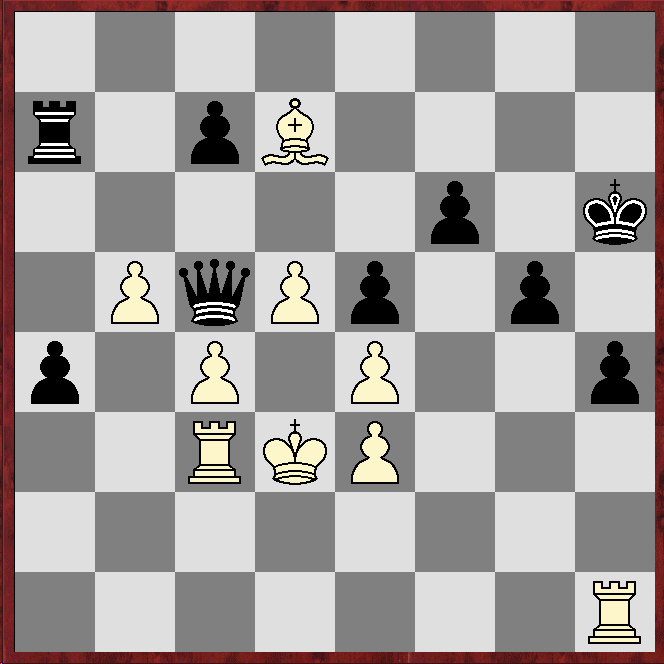
67...Be4 68.Re3 g5 69.Nd2 Bc6 70.Rd3 Rxd7!? 71.Rxd7 Bxd7
How would you assess this minor-piece ending?
*****
*****
*****
*****
*****
White's knight-for-a-pawn advantage means White is winning comfortably, but Black has counterplay, mainly based on the fact that the strongest piece in a minor-piece ending is the king, and Black's is much better placed than White's.
72.Kg3 Be6 73.b3?
White is still winning, but now the a pawn is chronically weak.
73...f4+ 74.Kh2
An only-move!
74...g4 75.Bf1 Ke5 76.Nc4+ Kd4
White to play and keep a winning advantage
*****
*****
*****
*****
*****
77.Kg2?
The engines show that only 77.Nd6 and 77.Na5 maintain the win, although the lines are not simple, eg 77.Nd6 Kc3!? 78.Nxb7 Bf5 79.Nc5 Kd4!? 80.Na6 Kc3 81.Be2 g3+!? 82.fxg3 fxg3+ 83.Kxg3 Bb1 84.Bc4 Ba2 85.Nc5, after which White will eventually have to demonstrate how to win with bishop-and-knight against a bare king.
77...Bd5+?
For quite a long time Dragon1 reckons this draws, but comes to agree with Stockfish17.1 that only 77...Kc3 and 77...Bf5 are correct.
78.Kg1 Be4 79.Nd6 Bc6 80.Bb5?
Offering an exchange is wrong.
80...Bf3
And so is declining it, although why is not immediately obvious. After 80...Bxb5 81.Nxb5+ Kc5! 82.Nc7 Kd6! 83.Ne8+ Ke7! 84.Ng7 Kf6 85.Mh5 Kg6 it turns out the knight cannot escape the attentions of the black king.
81.Bd7 Kc3 82.Nc4 g3!?
White to play and win
*****
*****
*****
*****
*****
83.fxg3?
Natural-looking, but the engines show 83.Bf5 and 83.Be6 are the only winning moves. I find it difficult to understand why swoping pawns is wrong, but the reason may be that by not swoping there will come a moment when Black is obliged to play ...gxf2+, giving White a tempo to activate the king.
83...fxg3 84.Bf5
Black to play and draw
*****
*****
*****
*****
*****
84...b5!?
The engines reckon just about everything draws, including 84...g2, 84...b6!?, 84...Bd5 and 84...Bc6, but at first they strongly dislike the text. However, Stockfish17.1 comes to call the position after the text completely equal, although Dragon1 reckons White is winning.
85.Ne5 Be2?
The engines agree the bishop should stay on the long light-square diagonal.
White to play and win
*****
*****
*****
*****
*****
86.Nc6?
86.Kg2 and 86.Bc6 seem to be the only winning moves, eg 86.Kg2 Kb2 87.Nd3+ Kxa2 88.Nc1+ Kb2 89.Nxe2 Kxb3, although again White will have to demonstrate technique with bishop and knight.
86...Bf3 87.Ne5 Bd5 88.Nd3 Bf3 89.Ne1 Be2?
This is wrong for the same reason it was wrong at move 85.
90.Be6?
The engines show winning are 90.Kg2 and any reasonable move keeping the white bishop on the b1-h7 diagonal.
Black to play and draw
*****
*****
*****
*****
*****
90...Kb2?
Drawing are 90...Bh5!? and 90...Kd2!?
91.Kg2 Kxa2
White to play and win
*****
*****
*****
*****
*****
92.Nc2?
Both 92.Kxg3 and 92.Nf3 allow White to eventually reach bishop-and-knight-versus-bare-king.
92...Bd1 93.Nxb4+ Ka3 94.Nd3 Bxb3 ½–½
Lewisham 2 won the match 5-3
My Battersea Season 2025-6
Date       Event  Colour  Rating  Opp's Rating  Score  Season's Perf
16/9/25   CLL       W       1936         1952             0           1552
18/9/25   CLL       W       1936         1797             =           1675
16/10/25 CLL       W       1889         2047             0           1665
23/10/25 CLL       B        1889         1823             1           1805
18/11/25  LL         W       1891         1980             =           1840
CLL: Central London League
LL: London League

Tuesday, 12 November 2024

Cap Negret Round Six

FACED a player from Bexhill, East Sussex.

Spanton (2009) - Andrew Fleming (1900)
Spanish Classical
1.e4 e5 2.Nf3 Nc6 3.Bb5 Bc5 4.c3 Nge7!?
This has been played by Magnus Carlsen, but the mainline in ChessBase's 2024 Mega database runs 4...Nf6 5.0-0 0-0 6.d4 Bb6 7.Bg5, with a slight edge for White, according to Stockfish17 and Dragon1.
5.d4 exd4 6.cxd4 Bb4+ 7.Nc3
This is the most popular continuation in Mega24, but many very strong players, including Lasker, Alekhine, Tal and Anand, have played 7.Bd2!?
7...d5 8.e5 h6!?
More common are 8...Bg4 and especially 8...0-0.
9.0-0 0-0
Now both sides have castled, how would you assess the position?
*****
*****
*****
*****
*****
The main imbalance is White's central/kingside space advantage, and that is enough for at least a slight edge, according to the engines.
10.Be3!?
This may be a novelty. Known moves are 10.Ne1!?, 10.a3 and 10.h3.
10...Nf5
The engines suggest 10...f6, albeit preferring White.
11.Rc1 Nce7!? 12.Qa4!? Nxe3 13.fxe3 Bxc3 14.Rxc3 c6 15.Bd3 Be6!?
This seems a little passive. The engines again suggest ...f6.
16.Qc2 a5 17.Nh4 Qd7 18.Qe2!? Rac8!?
Black can activate the bishop with tempo by 18...Bg4, when I intended 19.Qe1, hoping to later win back the tempo by attacking the bishop.
19.Bb1!
The engines agree this is best, the idea being to set up a bishop-queen battery on the b1-h7 diagonal.
19...g6 20.Rf6 Kg7?!
This is the engines' second choice, but they much prefer 20...c5.
21.Rc1 Ng8 22.Rcf1!?
A positional exchange sacrifice, but even stronger, according to the engines, is 22.Rf4!?, and if 22...g5?, then 23.Qd3. The engines reckon Black should instead play something like 22...c5, but agree 23.Rcf1 leaves White well on top.
22...Nxf6 23.Rxf6?
This throws away all of White's advantage, according to the engines, which reckon 23.exf6+ wins.
23...Rg8?
Black may even have a slight edge after 23...c5, according to the engines.
White to play and gain a winning advantage
*****
*****
*****
*****
*****
24.Qf2
The engines give 24.Nxg6! fxg6 25.Rxg6+ Kf8 (25.Kf7 comes to the same thing) 26.Qf3+ Ke8 27.Qf6, when Black has no defence as 27...Bf7? loses to 28.Rxg8+ Bxg8 29.Bg6+ Bf7 30.e6.
24...Kh7 25.Qf4 Rg7
The engines reckon White has full compensation for the exchange, but no more
*****
*****
*****
*****
*****
26.Nf3?!
Several moves seem to keep the balance, including 26.h3, 26.Bd3 and 26.Nf5!?, eg 26.Nf5!? gxf5 27.Rxh6+ Kg8 28.Qh4 Kf8 29.Rh8+ Rg8 30.Qh6+ Ke7 31.Qf6+ Kg8 etc.
26...Rh8?!
With the pressure abated, Black definitely had time for 26...c5, with a large advantage, according to the engines.
27.Nh4?!
Clearly I had lost the thread of the game. The engines reckon 27.h4 gives at least a slight edge.
27...Qe8
The engines still like ...c5.
28.g4?!
The engines suggest 28.Nf3!?
28...Kg8 29.Qf3 b6
Both 29...c5 and 29...Qc8 give the upper hand, according to the engines.
30.h3 Qe7 31.Ng2 g5!?
The engines agree this was important to stop Nf4.
How should White proceed?
*****
*****
*****
*****
*****
32.e4?
Opening a second front, but the move gives Black time to free his game with 32...Rg6, after which the engines reckon White's compensation for the exchange has vanished.
32...Qd7?
Missing the chance. Now the position is completely equal again, according to the engines.
33.exd5 Bxd5?
The other two recaptures are much better.
White to play and gain a winning advantage
*****
*****
*****
*****
*****
34.Be4?
The engines give 34.Rd6! Bxf3 35.Rxd7, when Black has no answer to the threat of Rd8+, and if 34...Qe7, then, as in the game, 35.Qc3, with Ne3 to follow. Also better than the text is the immediate 34.Qc3.
34...Be6?
Correct, thanks to the pin on White's bishop, is 34...Rg6.
35.Qc3 Bd5?
Black is in big trouble anyway, but this makes matters worse. Perhaps Black should have gone for counterplay with 35...h5!?, but 36.Bxc8, with d5 and/or Ne3 to come, is very good for White.
36.Rd6 Qe7 37.Bxd5 cxd5 38.Ne3!
This is much better than immediately grabbing the loose d pawn.
38...Rg6 39.Nxd5 Qf8 40.Nf6+ Kg7 41.Rxb6!?
Other moves also win - Black's rooks are helpless to intervene.
41...Qc8 42.Rc6 Qa8 43.Nh5+ Kh7 44.Rxg6!?
This forces checkmate.
44...Rc8!?
Or 44...fxg6 45.Qc7+ Kg8 46.Qg7#, or 44...Kxg6 45.Qd3+ f5 46.Qxf5#.
45.Rg7+ Kh8 46.Qd3 1-0

Tuesday, 28 November 2023

Beat The ... Spanish Classical

HERE is a post I wrote but did not publish during the covid crisis.

In this series I am looking at the statistically best way to play against popular opening lines.
The numbers are drawn from the 2021 edition of ChessBase's Mega database, ignoring, where possible, those results that include very few games and so are statistically insignificant.

A popular answer to the Ruy Lopez, at least at club level, is the Classical Variation: 1.e4 e5 2.Nf3 Nc6 3.Bb5 Bc5.
It could be said Black is meeting the Spanish Opening by playing the black side of the Italian Game.
Of those responses appearing in Mega21 at least 500 times, the most-successful statistically is 4.c3, which scores 62%.
Position after 4.c3
Black has six replies that each appear more than 250 times in Mega21.

A) 4...Nf6 (1,721 games)
After 5.Qe2!? the line splits.
A1 5...0-0 6.0-0 (6.d3 scores equally well, and in practice the two moves often transpose, but castling is more popular and arguably more flexible as the white king is probably destined to end up on the kingside), after which the line splits again.
A1.1 6...Re8 7.d3, when A1.1a 7...h6 8.h3!? scores 86% for White, albeit from a small sample, and A1.1b 7...a6 8.Ba4 b5 9.Bc2 scores 60% for White, albeit from a small sample.
A1.2 6...d6 7.d3, when A1.2a 7...h6 8.Nbd2 scores 90% for White, albeit from a small sample, A1.2b 7...Bb6!? 8.Nbd2 Ne7!? 9.Nc4 scores 58% for White, albeit from a small sample, A1.2c 7...a6 8.Ba4 Ba7!? 9.Be3 scores 83% for White, albeit from a very small sample, and A1.2d 7...Bg4 8.h3 Bh5 9.Nbd2 scores 83% for White, albeit from a very small sample.
A2 5...Qe7 6.d3 0-0 7.Bg5 d6 8.Nbd2 scores 89% for White, albeit from a small sample.

B) 4...f5 (840 games)
After 5.d4 the line splits.
B1 5...fxe4 6.Bxc6 dxc6 7.Nfd2!? Bd6 8.dxe5 e3 (not 8...Bxe5?? 9.Qh5+ etc) 9.exd6 exd2+ 10.Nxd2 scores 71% for White, albeit from a small sample.
B2 5...exd4!? 6.e5!? dxc3 7.Nxc3 scores 80% for White, albeit from a small sample.

C) 4...Nge7 (598 games)
After 5.0-0 the line splits.
C1 5...Bb6!? 6.d4 exd4 7.cxd4 d5 8.exd5 Nxd5 9.Bg5!? scores 77% for White, albeit from a small sample.
C2 5...a6 6.Ba4, after which the line splits again.
C2.1 6...b5 7.Bc2!? (7.Bb3 scores equally well, but Bc2 is less well-known and is preferred by Stockfish13 and Komodo12.1.1), when C2.1a 7...d6 8.d4 exd4 9.cxd4 scores 86% for White, C2.1b 7...0-0 8.d4 exd4 9.cxd4 scores 75% for White, albeit from a small sample, and C2.1c 7...d5 8.d4!? scores 80% for White, albeit from a small sample.
C2.2 6...0-0 7.d4 exd4 8.cxd4, when C2.2a 8...Ba7 9.d5 Nb8 9.d6!? scores 100% for White, albeit from a small sample, and C2.2b 8...Bb6 9.d5 Na7 10.d6!? scores 92% for White, albeit from a small sample.
C3 5...0-0 6.d4 exd4 7.cxd4 Bb6 8.d5, after which the line splits again.
C3.1 8...Nb8 9.d6!? scores 81% for White.
C3.2 8...a6 9.Ba4, when C3.2a 9...Na7 10.d6!? scores 92% for White, albeit from a small sample, and C3.2b 9...Nb8 10.d6!? scores 83% for White, albeit from a small sample.

D) 4...d6!? (481 games)
After 5.d4 exd4 6.cxd4 Bb4+ 7.Kf1!? Bd7 8.Qa4 the line splits.
D1 8...Nge7 9.d5 scores 100% for White, albeit from a small sample.
D2 8...a5 9.a3 scores 100% for White, albeit from a small sample.
D3 8...Qe7 reaches a position in Mega21 in which White scores 100% with both 9.d5 and 9.Bxc6, albeit from  very small samples.

E) 4...Qf6!? (335 games)
After 5.d4!? exd4 6.e5 Qg6 7.cxd4 the line splits.
E1 7...Bb4+ 8.Nc3, after which the line splits again.
E1.1 8...d5 9.0-0 Ne7 10.Qb3 Bxc3 10.bxc3 scores 90% for White, albeit from a small ample.
E1.2 8...Nge7 9.0-0 d5 is a transposition  to E1.1.
E2 7...Nxd4!? 8.Nxd4 Qb6 9.Be3 Bxd4 reaches a position in Mega21 in which White scores 63% with 10.Qxd4. albeit from a small sample, and 100% with 10.Bxd4, albeit from a very small sample.

F) 4...a6!? (265 games)
After 5.Bxc6!? the line splits.
F1 5...dxc6 6.Nxe5 scores 83% for White, albeit from a small sample.
F2 5...bxc6 6.Nxe5 scores 95% for White, albeit from a small sample.

Saturday, 4 November 2023

Bavarian International Round Seven

FACED a German junior (born 2011).

Spanton (1858) - Jakob Greive (1441)
Spanish Classical
1.e4 e5 2.Nf3 Nc6 3.Bb5 Bc5
How should White respond?
*****
*****
*****
*****
*****
4.c3!?
This is second in popularity to castling, but is slightly preferred by Stockfish16 and Komodo14.1.
4...d6?
The main move is 4...Nf6. There are 591 examples of the text in Chessbase's 2023 Mega database, but it is a mistake.
5.d4 exd4 6.cxd4 Bb4+ 7.Nc3
Even stronger is 7.Kf1!, when the mainline in  runs 7...Bd7 8.Qa4 Nge7 9.d5 with a winning advantage for White.
7...a6 8.Ba4 b5 9.Bc2 Bg4 10.Be3 Nf6 11.0-0 0-0
How would you assess the coming middlegame?
*****
*****
*****
*****
*****
The most significant factor is that White has more central space. Admittedly Black has pressure against the white centre, but the engines reckon White has the upper hand.
12.h3
This natural-enough move may be a novelty. Known moves are 12.Ne2!? and 12.Bg5!?
12...Bh5 13.a4 Bxc3!? 14.bxc3 Re8
How should White proceed?
*****
*****
*****
*****
*****
15.d5?
White is at least slightly better after both 15.axb5 and 15.Bg5!?, according to the engines.
15...Ne5 16.g4?
16.Kg2 keeps White's disadvantage to a minimum.
16...Nfxg4! 17.Nxe5?
Better, but still losing, is 17.hxg4.
17...Nxe3 18.Qxh5 Rxe5 19.Qxe5
Even worse is 19.Qe2? Qg5+ etc.
19...dxe5 20.fxe3 Qg5+ 21.Kf2 Qh4+ 22.Ke2 Qxh3 23.axb5 Qg4+ 24.Kd2 Qg2+ 25.Kd3 h6?!
Stronger is 25...Qg6.
26.Rg1?
I rejected 26.bxa6 because of 26...Rxa6?, missing that 27.Rg1 etc draws.
26...Qf2?
Better is 26...Qf3, and if 27.bxa6? then 27...f5 is strong.
27.Rgf1 Qg2 28.Bb3?
Again bxa6 was possible and desirable.
28...Qg6 29.c4 Qb6 30.Rfb1 a5 31.Bd1 g6 32.Bg4 Qd6 33.Ra4 h5 34.Bf3 f6 35.Rc1 Qc5 36.Rh1 Kf7 37.Bg2 Kg7 38.Bh3 Kh6 39.Bd7 Ra7 40.Be8 Qe7 41.Bc6 g5 42.Ra2 h4 43.Rc2?! Qa3+ 44.Rc3 Qc5 45.Bd7 a4
White faces too many passed pawns
*****
*****
*****
*****
*****
46.Rf1 Kg7 47.Ra1 a3 48.Ra2 Qb4 49.c5!?
Desperately trying for counterplay.
49...Qb1+ 50.Rcc2 Qd1+ 51.Kc3 Qe1+ 52.Kd3 Qb1 53.Bc6 Qb3+ 54.Ke2 Qb4
Also probably winning is 54...Qxc2+!?, but there is no need for such 'heroics'.
55.d6!? cxd6 56.b6 Ra6 57.Bb7 Qb5+ 58.Kf2
Black to play and win
*****
*****
*****
*****
*****
58...dxc5!
All other moves at best draw, according to the engines.
59.Bxa6 Qxa6 60.Rxc5 Qxb6 61.Rc3 Qb4 62.Rcxa3 Qxe4 63.Ra4 Qf5+ 64.Kg2 e4 65.Rf2 Qg4+ 66.Kf1?
A better try is 66.Kh2, hoping for 66...Qg3+ 67.Kh1 Qxf2?? 68.Ra7+, after which White draws by stalemate.
66...Qd1+ 0-1

Tuesday, 4 July 2023

Championship Chess

PLAYED this evening in round one of the Battersea club summer championship.

Spanton (1932) - Ariel Barrett (*)
Spanish Classical
1.e4 e5 2.Nf3 Nc6 3.Bb5 Bc5 4.c3 a6!?
This delayed putting-the-question-to-the-bishop is not particularly popular but is a speciality of Serbian grandmaster Ivan Ivanišević, at least at fast time-controls.
How should White respond?
*****
*****
*****
*****
*****
5.Bxc6!?
The mainline in ChessBase's 2023 Mega database runs 5.Ba4 b5 6.Bb3 Nf6 7.0-0 d6 8.d4 Bb6 with a slight advantage for White, according to Stockfish16 and Komodo14.1. However the engines prefer the text.
5...dxc6 6.d4
The engines give 6.Nxe5!?, and if 6...Qg5 then 7.0-0!? Qxe5 8.d4, claiming at least a slight edge for White.
6...exd4 7.Nxd4!?
We now have a pawn-structure closely associated with the Exchange Variation of the Spanish.
7...Nf6 8.e5
More in keeping with Exchange Variation ideas is 8.f3.
8...Ng4 9.0-0 0-0 10.f4?!
Almost certainly better is 10.Bf4.
10...f6 11.e6!?
Or 11.exf6 Nxf6, after which Black is positionally winning, according to the engines.
How should Black proceed?
*****
*****
*****
*****
*****
11...Bxe6?!
Probably best is 11...f5, eg 12.h3 Nf6 13.Be3 Nd5 with strong pressure against White's position.
12.f5 Bxd4+?!
Presumably hoping for 13.Qxd4? Qxd4+ 14.cxd4, after which 14...Bc4 is very good for Black, but almost certainly better is the immediate 12...Bc4, when 13.Qxg4 Bxf1 14.Kxf1 gives White two knights for rook and pawn, but 14...Re8 leaves Black with at least a slight edge, according to the engines.
13.cxd4 h5??
Black has maybe a slight edge after 13...Bc4 etc, according to the engines.
14.fxe6 Qd6!?
The engines reckon this is best.
15.Bxf4 Qxe6!?
They also approve of this, but Black is lost.
16.h3 Ne3 17.Qe2 1-0
*No ECF but 1726 Fide.

Monday, 27 July 2020

Biel Corona Round Seven

FACED a Frenchman in round seven of the Biel Special Corona Amateur Tournament this afternoon.
Spanton (1855) - Philippe Emmenecker (2100)
Spanish Classical
1.e4 e5 2.Nf3 Nc6 3.Bb5 Bc5
In effect we have a battle of the Mediterranean - Black plays an Italian set-up against White's Spanish opening.
4.c3 Nf6 5.d3
More popular are 5.0-0 and 5.d4, but the text has also been played by top grandmasters.
5...0-0 6.Be3!?
White can grab a pawn with 6.Bxc6 bxc6 7.Nxe5, but Black gets lots of counterplay with 7...d5, one point being that the greedy 8.Nxc6?! runs into 8...Qe8, as demonstrated by Adolf Anderssen in 1865. The main move is 6.0-0.
6...Bxe3 7.fxe3 d6 8.0-0 Ne7 9.Nbd2 c6 10.Ba4 Ng6
Black forks two pawns after 10...Qb6, but White can reply 11.Nc4 or, as suggested by Stockfish11 and Komodo11.01, 11.d4, the point being Black's queen gets trapped after 11...Qxb2? 12.Nc4 Qxc3 13.Rc1 Qb4 14.a3.
11.Qe1 b5 12.Bb3 Qb6 13.Kh1
Not 13.Qe2? Nf4.
13...a5 14.a3 Ng4 15.d4 a4 16.Ba2 c5 17.h3 Nf6
How should White proceed?
*****
*****
*****
*****
*****
18.dxe5?!
Trying to keep my pieces active, but the engines prefer 18.Nh4, which I rejected because of 18...cxd4 19.Nxg6 hxg6 20.exd4 exd4 etc, but then White has 21.Qg3! with strong play. Note that Black cannot play 18...Nxh4 19.Qxh4 cxd4 20.exd4 exd4? as White replies 21.Rxf6! gxf6 22.Rf1! with what seems a winning attack.
18...dxe5 19.Nh4?!
During the game I regretted not playing 19.Rd1?!, but the engines reckon that is too slow, eg 19...Bb7 20.Bb1 c4, when White is very passive. Best is probably 19.Bd5.
19...Bb7 20.Nxg6 hxg6 21.Qg3 Rad8!
A strong move - both engines reckon Black is winning.
22.Qf2
I rejected 22.Rad1 because of 22...Rxd2!? 23.Rxd2 Nxe4, missing 24.Qxe5 Nxd2 25.Bxf7+ Kxf7 26.Qe8+ Kh7 27.Rxf7, which the engines reckon is equal after 27...Qc6 28.Qxc6 Bxc6 29.Rc7. However the engines also reckon the calm 22...Rd6 keeps a winning advantage for Black.
22...Rxd2?
This throws away most if not all of Black's advantage, which is maintained by a move such as 22...c4 followed by building up on the d file.
23.Qxd2 Nxe4
The engines find it difficult to decide if the text or 23...Bxe4 or 23...c4 is best. Given plenty of time, Stockfish11 settles on the text while Komodo11.01 prefers 23...c4.
24.Qe1 Qc6
And here they are hard-pressed to choose between the text and 24...c4.
25.Rf3?
The engines reckon the position is dead-equal after 25.Rg1 or 25.Rd1!? For some reason I did not consider the latter, and I do not think 25.Rd1!? seriously occurred to me as I feared 25...Nxc3?, missing that this loses to 26.Bxf7+! Rxf7 27.Rd8+.
25...g5
Not 25...Ng5 26.Rg3 Nxh3? as White simply replies with a move such as 27.Qf1, after which the knight is lost. But the engines' 25...c4!? seems strong, eg 26.Rd1 Nc5 27.Bb1 e4.
26.Rd1 c4 27.Bb1 g4 28.Bxe4
Komodo11.01 reckons 28.hxg4 Qh6+ 29.Kg1 (not 29.Rh3 Nf2+!) Ng5 30.Rg3 gives White a tiny edge, but Stockfish11.01 rates the position as exactly level.
28...Qxe4 29.hxg4 Qh7+ 30.Kg1 Bxf3 31.gxf3 e4!
The best try, putting pressure on the white position.
32.f4 Qh3 33.g5!?
This may be OK but simpler is 33.Qe2 Qg3+ 34.Kf1 (but not 34.Kh1?? as the h file is too dangerous for the white king after 34...g6 etc).
33...Qg4+ 34.Kh1??
Drawing is 34.Kf2 and probably 34.Kf1!?
34...Qh5+??
The engines give 34...Kh7, eg 35.Rd2 Kg6 36.Rg2 (if 36.Rh2 then 36...Rd8) Qf3 37.Kg1 Rd8 38.Qe2 Rd1+ 39.Kh2 Kf5 40.Qxf3 (otherwise Black plays ...Rd3 and ...Rxf3) exf3 41.Rf2 Kg4 and wins.
35.Kg1?
White is equal after 35.Kg2.
35...Qg4+?
Strong is 35...f6.
36.Kh1??
The same blunder as at move 34.
36...f6?
As already shown, ...Kh7 wins.
37.Rd5?
The engines give 37.g6!, which loses a pawn to 37...Qxg6, but after 38.Qh4 the danger to the white king is largely over, and White gets good counterplay thanks to controlling the open d file.
37...Qf3+ 38.Kg1 Qg4+ 39.Kf1
Or 39.Kh1 Kh7 etc.
39...fxg5
Black has won a pawn, and the white king is still exposed. The game finished:
40.Qe2 Qh4 41.Qf2 Qh3+ 42.Ke2 g4 43.Re5? (43.Qf1 puts up more resistance) g3 44.Qg1 Qg4+ 45.Kf1 Qf3+ 0-1

Saturday, 29 February 2020

Fareham

AM playing in the open section of Castle Chess's 16th Fareham weekend congress, which began last night in the Hampshire town's Lysses House Hotel, and continues over six rounds.
The time control is 36 moves in 90 minutes, followed by a 15-minute quickplay finish.
Spanton (170) - Marc Shaw (140)
Spanish Classical
1.e4 e5 2.Nf3 Nc6 3.Bb5 Bc5 4.c3 Qe7!?
Black's idea, as MS explained afterwards, is to strongpoint e5.
5.0-0 a6 6.Ba4 b5 7.Bc2
Strong players, including Emanuel Lasker, albeit in a simul, have generally preferred 7.Bb3.
7...Nf6 8.d4 Bb6 9.d5
Even better, according to Stockfish10 and Komodo10, is 9.a4.
9...Nd8?!
The knight has limited prospects on d8. The traditional Spanish knight manoeuvre 9...Na5 is probably better.
10.a4 bxa4 11.Rxa4 Nb7 12.b4 Nd6?!
Castling or 12...d6 looks sensible. One problem with the text is it weakens the strongpoint e5.
13.Qe2 Bb7?
Black will now have great difficulty defending his queenside. The engines suggest 13...Nb5, but much prefer White after, for example, 14.Bb2 d6 15.c4.
14.c4 c5 15.Bb2
Capturing the black c pawn with either the d5 or b4 pawn is also good.
15...cxb4 16.Rxb4 Nc8
Or 16...Bc5 17.Ra4 0-0 18.Nbd2, when Black cannot save the e5 pawn.
17.Ba3 d6
Also very good for White is 17...Bc5 18.Rxb7 Bxa3 19.Nxa3 Qxa3 20.Nxe5.
18.Ba4+ Nd7 19.Nc3 a5
How should White proceed?
*****
*****
*****
*****
*****
20.Rb2
I was tempted by 20.Rxb6!? Nxb6 21.Nb5, but the text is simpler and seems stronger.
20...Ba6 21.Rfb1 Bd8
If 21...Bc7, then 22.Bc6 Ra7 23.Bb5!, eg 23...0-0 24.c5 Nxc5 25.Bxc5 dxc5 26.Bxa6. And if 21...Rb8, then one good line given by Stockfish10 runs 22.Bxd7+ Qxd7 23.Nxe5!? dxe5 24.Qh5 Qc7 25.d6 Qxc4 26.Qxe5+ Kd7 27.Nd5 with a winning attack.
22.Bc6 Ra7 23.Nb5 Bxb5 24.Rxb5 0-0 25.Bxd7 Qxd7
Or 25...Rxd7 26.c5 dxc5 27.Rxc5 Nd6 28.Rc6 Bc7 29.Qa6 Rfd8 30.Rb7, when Black is completely tied down and cannot avoid massive material loss, eg 30...h6 31.h3 f6 32.Nh4 etc.
26.c5 dxc5
Not much better is the engines' 26...Bc7, eg 27.Nd2 f5 28.exf5 Rxf5 29.Ne4 with a huge attack.
27.Bxc5 Nd6 28.Nxe5 1-0
Black has only lost a pawn, but his position appears hopeless, eg 28...Qc7 29.Bxd6 Qxd6 30.Nc6 Ra8 31.e5 Qg6 32.Rb8 Bg5 33.Rxf8+ Rxf8 34.Rb7 a4 35.g3 a3 36.Ra7.

Friday, 10 January 2020

In 19th-Century Style

PLAYED on board eight (of 10) for Battersea away to Cavendish in division one of the London League last night.
Spanton (168) - Daire McMahon (193*)
Spanish Berlin/Classical
1.e4 e5 2.Nf3 Nc6 3.Bb5 Nf6 4.0-0 Bc5
Much less popular than 4...Nxe4, but there are more than 3,600 examples of this move in ChessBase's 2020 Mega database. The position also arises from a Classical move order, ie 3...Bc5 4.0-0 Nf6.
5.Nxe5
The main line, which seeks another way of taking advantage of the placing of Black's dark-square bishop on c5, runs 5.c3 0-0 6.d4 Bb6 7.Bg5 h6 8.Bh4 with a position Stockfish10 and Komodo10 assess as equal.
5...Nxe5 6.d4 a6
Mikhail Yudovich in Spanish Without ...a6 (Batsford, 1986) says Boris Spassky "recently revived" this move.
7.Ba4
Yudovich treats 7.Be2 as the main move.
7...Nxe4 8.dxc5?!
The text involves a pawn sacrifice that is not liked by the engines. The main move is 8.Qe2, which Alekhine used to meet with 8...Be7 9.Qxe4 Ng6.
White can get an edge with 8.Re1 Be7 9.dxe5 Nc5 10.Nc3, according to Stockfish10.
 8...Nxc5 9.Qd5
9.Qd4 is more commonly seen.
9...Qe7 10.Bf4
Not 10.Re1?? Nf3+ 11.gxf3 Qxe1+ 12.Kg2 Nxa4.
10...f6
If 10...Nxa4, then 11.Bxe5, and White recovers his pawn.
11.Nc3 c6 12.Qd2
12.Qd4 Ne6 is good for Black.
12...0-0!?
The a2-g8 diagonal looks to be a weakness for Black, but it is hard for White to exploit it.
13.Rfe1 d6 14.Rad1 Rd8?!
How can White take advantage of Black's last move?
*****
*****
*****
*****
*****
Black's last move allows a combination. The engines prefer 14...d5, when White's compensation for his pawn-minus looks insufficient.
15.Rxe5! fxe5 16.Bg5 Qf8 17.Bxd8 Qxd8 18.Qxd6 Qxd6 19.Rxd6 Bf5 20.Rd2 Kf7 21.f3 Ke7 ½–½
Black can get an ending of rook-and-bishop versus rook-and-knight (plus pawns) at his choosing, but any theoretical advantage is unlikely to be significant.
*Last published grade from January 2018.
Cavendish won the match 7-3.
My updated Battersea statistics for 2019-20
Event*..Colour...Grade...Opponent's Grade...Result
CLL..…...B....…..168...………169...……….....W
CLL...…..B...…...168...………196...…………..D
CLL...…..W...…..168...………176...…………..L
LL....……W...…..168...…....…175...………….D
CLL...…..B...…...168...………192...…………..D
CLL...…..W...…..168...………181...…………..L
LL...…….W...…..168...………168...…………..L
EC...…….B...…..168...………175...……….….L
CLL...…...B.........168...………170...…………..L
LL...…….W...…..168...………193...…………..D
Overall this season for Battersea I have scored +1=4-5 for a grading performance of 160.
In season 2018-19 I scored +12=12-13 for a grading performance of 169.
In season 2017-18 I scored +10=8-9 for a grading performance of 175.
*CLL: Central London League; LL: London League; EC: Eastman Cup.

Saturday, 6 July 2019

Spooky Coincidence

FLICKING through the January/February 2001 issue of the US Chess Federation magazine Chess Life, I came across the following brilliancy-prize game from the 2000 US women's championship.
Notes in italics are by grandmaster John Fedorowicz.
Elina Groberman (2054) - Olga Sagalchik (2145)
Sicilian Scheveningen
1.e4 c5 2.Nf3 e6 3.d4 cxd4 4.Nxd4 a6 5.Nc3 b5 6.Bd3 Bb7 7.0-0 d6 8.f4
Now we've transposed into a sharp Scheveningen.
8...Nf6 9.Qf3 Nbd7 10.Be3
The move 10.a3!? defends e4.
Fedorowicz's suggestion may have been first played by Hugh Alexander in a loss to the Indonesian Hiong Tan at Hastings 1962-3. It is the most popular move, from a small sample size, in ChessBase's 2019 Mega database, but scores just 23 percent. My main analysis engines Stockfish10 and Komodo9 like 10.a4!?, which would apparently be a novelty. EG's choice transposes to a popular line that has seen Tal and Judit Polgar on the white side.
10...b4 11.Nb1
I thought 11.Na4!? was a more aggressive try.
11...Be7 12.Nd2 Nc5 13.Kh1
Another way to go would be 13.a3!? bxa3 14.b4 Nxd3 15.cxd3.
13...0-0
This looks level here.
For what it's worth, the engines very slightly prefer Black.
14.Rae1 Nxd3?! (Fedorowicz's punctuation)
Black makes things easier for White. The pressure on e4 is released. 14...g6!? with ideas of ...e5.
Fedorowicz's notes seem to have been truncated. I guess an additional point is that the knight on c5 is a better piece than White's tied-down light-square bishop.
15.cxd3 Nd7 16.Qg4 Kh8 17.Rf3
How would you defend as Black?
*****
*****
*****
*****
*****
17...f5? (Fedorowicz's punctuation)
This panic-button move allows White to sac the exchange with a winning game; 17...g6 doesn't look so bad.
The engines give 17...Nf6 with equality (Stockfish10) or a slight edge for Black (Komodo9).
18.exf5!
It seems mean not to give this move an exclam.
18...Bxf3 19.Qxf3 Qb8 20.Nc6 Qe8 21.fxe6 Ne5 22.Nxe5 dxe5 23.f5! (Fedorowicz's punctuation)
Black is in trouble now.
23...Qb5 24.Qe4 Rad8 25.Nc4 Rd5 26.Bf2 Bf6 27.g4 Rfd8 28.g5 Bxg5 29.Nxe5 Kg8 30.Nf7 Rxf5 31.Nxd8 Rxf2 32.e7 Qe8 33.Qe6+ Kh8 34.Nf7+! (Fedorowicz's punctuation)
Simple and strong.
34...Rxf7 35.Qxf7 Qc6+ 36.Kg1 Qc5+ 37.Kf1 1-0
Olga saw some ghosts and then Elina took advantage of the opportunity.
And the "spooky coincidence"? I recognised the winner's name, as four years earlier I played her at the 1996 US Open in Alexandria, Virginia, when my American rating was exactly the same as hers was in the game above. One for a second edition of grandmaster Jim Plaskett's Coincidences book?
Spanton (2054) - Groberman (1684)
Spanish Classical
1.e4 e5 2.Nf3 Nc6 3.Bb5 Bc5 4.c3 Nf6 5.d3!?
More popular are 5.0-0 and 5.d4, but I decided at the board to play an idea I knew Steinitz was fond of, ie to refuse the centre and castle long.
5...d6 6.Be3!?
Seventh-most popular in Mega19, but it was subsequently played by a 2541.
6...Bb6 7.h3
This obviously protects against ...Ng4, but also prepares the thrust g4.
7...0-0 8.Nbd2
Nesevedski - Bogoljubow, Tallinn 1930 saw a more-conventional plan of 8.0-0 Ne7 9.Nbd2, but that game was decided by a strange blunder by Black (1-0, 46 moves).
Black to make her eighth move
*****
*****
*****
*****
*****
8...h6!?
The engines are happy with this move, but it does fall in with White's plans by giving a target for the white g pawn. Spanton (2010) - Hamilton McMillan (2020), Paignton 2008, saw the more circumspect 8...Qe7. The game continued 9.Qe2 Nd8, and now I castled long despite Black not having weakened his kingside (0-1, 53 moves).
9.Qe2 Nh7 10.g4!? Ne7 11.0-0-0 c6 12.Ba4 Re8!?
Stockfish10 does not like this, although Komodo9 is not too bothered. As is often the case, moves in positions with opposite-side castling are hard to evaluate unless they are clear blunders.
13.Rdg1 Ng6 14.Nf1 d5
Central counterplay is the traditional way to meet a flank attack. One of the ideas behind White's 5.d3!? is to reinforce e4 in case of this eventuality.
15.Ng3 Nf6 16.g5 dxe4 17.dxe4 hxg5?
The engines' second-choice, but a mistake. They prefer 17...Nf4, when Stockfish10 calculates 18.Qf1 as giving White a winning advantage, but Komodo9 reckons it leaves Black with a slight edge (see note to Black's 12th move).
18.Nxg5 Bxe3+ 19.fxe3!
Taking the f4 square away from a black knight, and leaving White's queen with access to the h file at h5 or h2.
19...Nh7 20.Nxh7 Kxh7 21.Qh5+ Kg8 22.Nf5 Bxf5 23.exf5 Qh4
The best defence, but White is positionally winning after the queens come off following 24.Qg4 or 24.Qxh4. Instead, concentrating too much on the kingside, I came up with a real lulu:
24.Qf3?? Qxa4 25.fxg6 Qxa2
Possible because the queen covers f7.
26.Rg5?
White remains a pawn down after 26.h4 but has full compensation, according to the engines.
26...Rad8?
Black seems to have a definite edge after the engines' mainline of 26...Re7 27.Rf1 fxg6 28.Rxg6 Rd8.
27.Rhg1?
White gets his pawn back with 27.gxf7+ (27.Qxf7+ comes to the same thing) Qxf7 28.Qxf7+ Kxf7 29.Rhg1.
27...f6 28.R5g2 Rd6 29.Qh5 Qa1+ 30.Kc2 Qa4+
Black offered a draw. Objectively I should accept, but my usual optimism, and the rating difference (significant despite my opponent being a junior and therefore almost certainly underrated), persuaded me to play on.
31.Kb1 Qe4+ 32.Rc2 Rd2?
This looks powerful, but better was 32...Qc4 or 32...Qd5, allowing a check at h8 to be met with ...Qg8.
33.Qh7+ Kf8 34.Qh8+ Ke7 35.Qxg7+ Kd8 36.Qxf6+ Kc8 37.Rgc1 Red8?
Black draws with 37...Rxc2 38.Rxc2 Rd8.
38.Qe6+?
Good enough for a draw, but White is slightly better, according to the engines, after 38.g7, the point being that now ...Rxc2?? fails to Qxd8+.
38...Kb8 39.Qg4 Qxg4 40.hxg4 Rxc2?
An instructive mistake that helps the white king to centralise. The obvious 40...R2d6 seems to be a dead draw.
41.Kxc2 Rg8 42.Kd3 Rxg6 43.Rg1
The rook-and-pawn ending is a little better for White, who has an outside passed pawn and the more-centralised king.
43...Kc7
Possibly better was 43...Rg5 to enable the rook to defend e5 as well as pressurise g4.
44.Ke4
White in turn could probably have played 44.g5 to prevent the above scenario.
44...Rg5 45.Kf3 Kd6 46.Rd1+ Ke7
The engines prefer 46...Ke6!? even though this lets White's rook onto the back rank.
47.Rh1
A neat switchback that forces Black further on the defensive.
47...Rg7 48.Rh5 Ke6 49.e4?!
The engines reckon White keeps an edge after 49.g5 or 49.c4.
49...Rf7+ 50.Rf5
Black to play and draw
*****
*****
*****
*****
*****
50...Rh7?
Black is bluffed. Perfectly safe was, for example, 50...a5, as 51.Rxf7?? leads to a lost pawn-ending - White's king will be diverted to the queenside by Black creating a passer there, leaving Black to win White's g and e pawns.
51.g5 Rh1?!
There does not seem to be any way for Black to save this - White's passed pawn is too strong - but 51...Rh2 would have given me something to worry about.
52.Rf6+ Ke7 53.Kg4 Rh2
An admission that Black's 51st lost a tempo.
54.b4 Rc2 55.Rf3 Ke6 56.Kh5 Rh2+ 57.Kg6 Rc2
If 57...Re2, then 58.Rf6+ Ke7 59.Kf5 etc,
58.Kg7 Re2 59.Kf8 Rg2 60.Rf6+ Kd7 61.g6 1-0