Showing posts with label Pirc. Show all posts

Monday, 8 June 2026

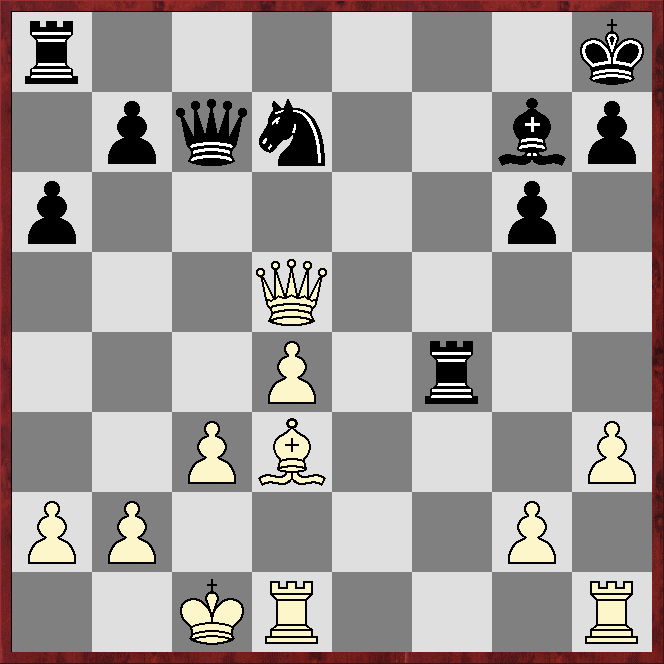
Miniatures 37

IN this occasional series I am going through my decisive games of 20 moves or fewer.

Spanton (147 BCF) - A Darrington (?)
Highbury (London) Rapid 1991
Pirc
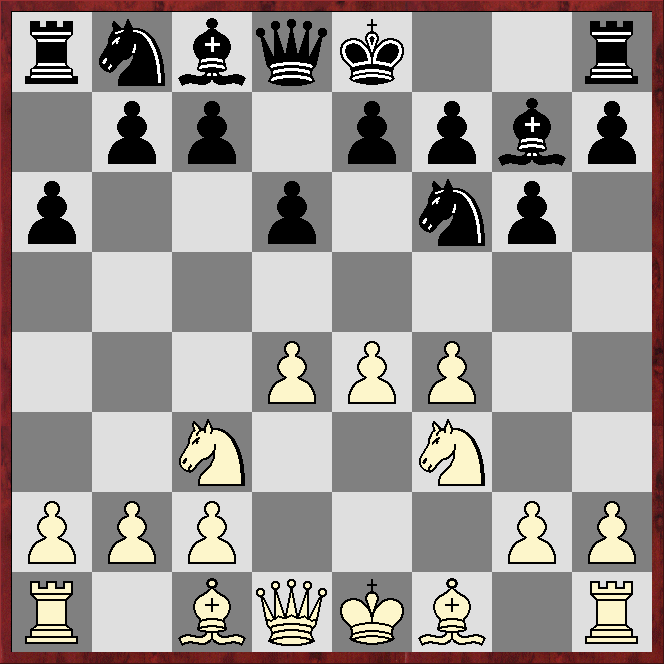
1.e4 d6 2.d4 Nf6 3.Nc3 g6 4.Be2!?
A modest continuation, but it develops a piece, and has been played by many grandmasters, including Garry Kasparov. One idea is to play a quick Be3, without fearing ...Ng4.
How should Black respond?
*****
*****
*****
*****
*****
4...e6!?
The main move is 4...Bg7. Stockfish17 and Dragon1 do not like the text, which is not in ChessBase's 2025 Mega database.
5.Nf3 Bg7 6.Bg5 0-0!? 7.Qd2 Nc6 8.0-0-0
White's large lead in development and greater space give a positionally won game, according to the engines
*****
*****
*****
*****
*****
8....Bd7?
The engines suggest 8...a6 or 8...d7.
9.h4
Even stronger is 9.e5.
9...Qb8 10.h5 Ng4 11.hxg6!? Nxf2?
This forks White's rooks, but Black has to play 11...fxg6 to have any sort of chance of escaping defeat.
12.Rxh7 f6?!
Again ...fxg6 is better, but still losing.
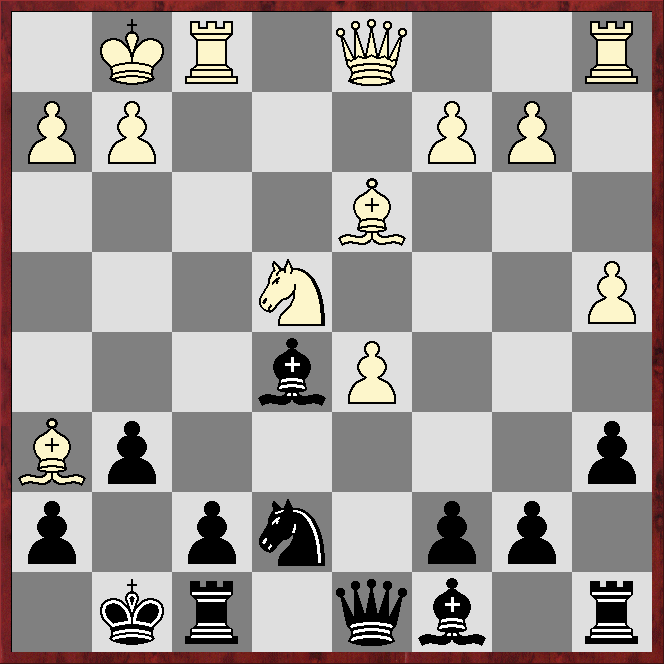
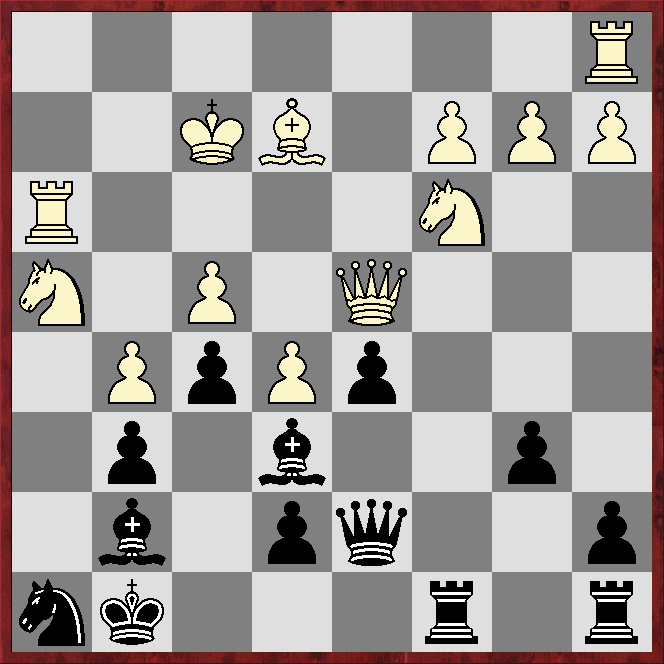
13.Bh6 1-0
LESSON: there are many mainstream defences in which Black falls well-behind in development or space, but none, as far as I know, in which Black falls behind in both.

Friday, 13 March 2026

Bad Wörishofen Senioren Round One

THIS game ended a streak in which I had seven consecutive blacks.

Spanton (1919) - Detlef Sombetzki (1577)
Pirc/Philidor
1.e4 d6 2.d4 Nf6 3.Nc3 Nbd7 4.f4 e5 5.Nf3 exf4!?
The main line in ChessBase's 2026 Mega database runs 5...exd4 6.Qxd4 c6 7.Be3 d5!? 8.exd5 Bc5!? 9.Qd3 Qe7!? 10.Nd4 Nb6 11.dxc6 bxc6 12.0-0-0, when Black does not have enough for a pawn, according to Stockfish17.1 and Dragon1.
6.Bxf4 Nb6
The engines suggest 6...Be7, although Stockfish17.1 fluctuates between the text and 6...c6 as its second choice. Dragon1 definitely prefers 6...c6 as a second choice; indeed, if given enough time, it prefers 6...c6 to 6...Be7.
7.Bd3 h6
Possibly a novelty. The known moves are 7...Bg4 and 7...Be7.
8.0-0 Be7 9.Qd2 Bd7 10.Rae1
Now White is fully mobilised, how would you assess the position?
*****
*****
*****
*****
*****
White's large lead in development and central space advantage give a positionally won game, according to the engines.
10...Nh5 11.Be3 c6 12.a4 a5 13.b3!?
The fact that a consolidating move like this is not only possible, but is possibly the best move in the position, according to Stockfish17.1, demonstrates Black's lack of counterplay. However, I should add that, given more time, Stockfish17.1 comes to fluctuate between the text and Dragon1's preference, 13.d5.
13...g5!?
Trying to take advantage of the white king's knight having no safe square to which it can move.
How should White respond?
*****
*****
*****
*****
*****
14.d5
Also strong is 14.Qf2, and there are other moves that maintain a large white advantage.
14...c5 15.e5!? 0-0
Not 15...g4? 16.exd6!
16.exd6 Bxd6 17.Ne4 Bf4 18.c4!?
Simple consolidation. Now White has a potential endgame advantage, as well as continuing middlegame chances.
18...Bxe3+ 19.Qxe3 Nf4 20.Bb1
Possibly even stronger is the double-sacrifice 20.Nfxg5!? hxg5 21.Rxf4!?
20...Re8 21.Qc3!? 1-0
Black lost on time (the time control is 40 moves in 90 minutes, plus 30 minutes to finish, with a 30-second increment throughout). The engines reckon Black's best is to give up the exchange with 21...Rxe4!?, but White keeps a winning advantage.
Shrine near Dorschhausen

Saturday, 7 February 2026

4NCL

PLAYED on board one (of six) for Wessex B against a junior (born 2012) from Guildford Young Guns B in weekend three of the Four Nations Chess League Division Four.

Spanton (1928 ECF/1939 Fide) - Elijah De Lange (1840 ECF/1664 Fide)
Pirc
1.e4 d6 2.d4 Nf6 3.Nc3 g6 4.f4 Bg7 5.Nf3 c5!?
A well-known idea in the Pirc. The point is that after ...
6.dxc5
... Black does not have to recapture immediately.
6...Qa5 7.Bd3 Qxc5 8.Qe2 Bg4 9.Be3 Qb4!?
This is a rarely played alternative to the normal 9...Qa5.
How should White respond?
*****
*****
*****
*****
*****
10.0-0
Stockfish17.1 also likes 10.a3!? Qxb2 11.Kd2!?
10...Nbd7!?
This apparent-novelty is Stockfish17.1's top choice, at least for a while. Known moves are 10...0-0, 10...Nc6 and 10...Qxb2? The capture is bad because of the reply 11.Nb5, when 11...Na6 loses the black queen to 12.Rfb1.
11.a3 Qa5
Not 11...Qxb2?? 12.Na4.
12.b4!?
This makes the c pawn backward, but takes away the c5 square from the black queen's knight.
12...Qd8 13.Rad1 0-0
Now both sides have castled, how would you assess the position?
*****
*****
*****
*****
*****
White has more space and a lead in development, but Black has a solid position - one that looks as if it could have come from the Dragon Variation of the Sicilian. Stockfish17.1 and Dragon1 give White a slight edge.
14.Qf2
The engines suggest 14.h3 or 14.Qe1!?
14...Bxf3!?
This is a common idea in the Pirc/Modern complex. Black gives up the light-square bishop for the white king's knight, usually as preparation for playing ...e5. Ideally, from a black perspective, the capture is provoked by White spending a tempo on playing h3. White has not done that here, but it could be argued 14.Qf2 is a similar spend of a tempo, in that after the text White is obliged to recapture on f3 with the queen.
15.Qxf3 a6 16.Rfe1
The engines claim White has at least a slight edge after 16.Ne2!? or 16.Nb1!?
16...Rc8 17.Nb1!? Qc7?!
This is strongly disliked by the engines. They reckon both 17...b5 and 17...Nb6 equalise.
18.c4 a5 19.Rc1 axb4 20.axb4 b6 21.Nc3 Ra8 22.Nd5 Nxd5 23.cxd5 Qb7
How should White proceed?
*****
*****
*****
*****
*****
24.Rc6
Active and aggressive, but Black has counterplay. The engines suggest 24.Bb5.
24...Ra3 25.Bb5?
Too late. White still has chances of a small edge after 25.Qe2.
25...Bc3!?
The 'Dragon' bishop strikes.
What should White play?
*****
*****
*****
*****
*****
26.Rb1?!
Stockfish17.1 gives 26.Rc1!? Bd2 27.Bxd2 Rxf3 28.gxf3, which is the same as the game, except the white king's rook is on the open c file instead of passively placed behind the b4 pawn. Dragon1 comes to view both moves as equally good.
26...Bd2 27.Bxd2
There is nothing better.
27...Rxf3 28.gxf3
How would you assess this imbalanced middlegame?
*****
*****
*****
*****
*****
White has rook and two bishops for queen and knight. That is a material advantage for Black, but the bishop-pair and White's control of the c file give some compensation, although Black is still winning, according to the engines, which probably regard White's weakened king's position as significant.
28...Nb8!?
The engines prefer 28...Nf6.
29.Rc2
There is no good way to give up the exchange on c6.
29...Rc8 30.Ra2 Rc7 31.Rba1 Qc8 32.Ra8?
As with my 24th move, I play something that is active and aggressive, but fails to take into account my opponent's counterplay. Perhaps best is 32.Be1!?, Stockfish17.1's idea being to meet 32...Qh3 with 33.Bg3.
Black to play and win
*****
*****
*****
*****
*****
32...Rc2!
Other reasonable-looking moves allow White to more-or-less equalise, according to the engines.
33.Bc6?
Perhaps best is the retreat 33.R8a2, but then White has lost the initiative, and has no compensation for being material down and with an exposed king.
33...Rxd2 0-1
Black wins easily after 34.Rxb8 Qxb8 35.Ra8 Qxa8 38.Bxa8 Rb2.
The match was drawn 3-3.

Saturday, 29 November 2025

Benidorm Bali Round Two

Spanton (1896) - Enrique Martínez Pérez (1726)
Modern/Pirc
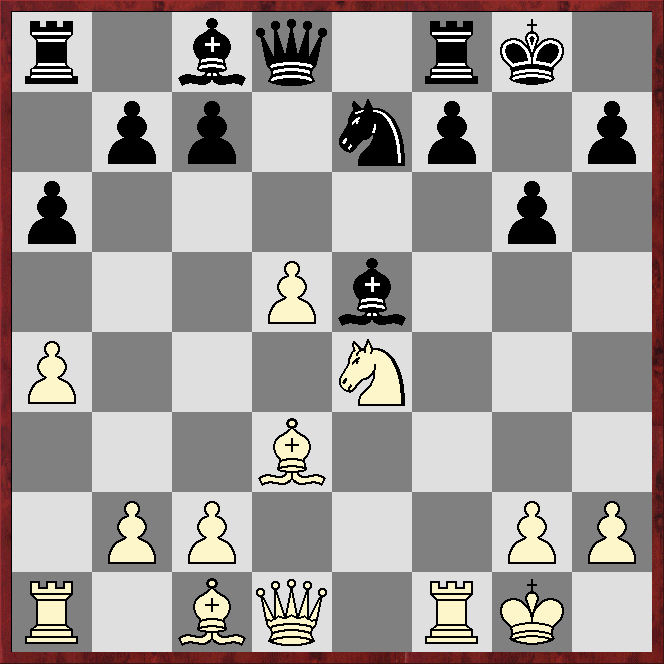
1.Nc3 g6 2.e4 Bg7 3.d4 c6 4.f4 d6 5.Nf3 Nf6 6.Be2 0-0 7.0-0
With both sides castling early, how would you assess the position?
*****
*****
*****
*****
*****
White has more space and a slight lead in development, which together give the upper hand, according to Stockfish17.1 and Dragon1.
7...a5!?
This is Stockfish17.1's top choice, for a while, and is anyway preferred over the much more popular 7...b5, which the engines agree is well-met by 8.e5. Dragon1 also prefers the text over 7...b5, but to a lesser degree, and eventually both engines settle on 7...Nbd7!? as best.
8.a4 Qb6 9.Kh1 Na6 10.Ra3!? Bd7 11.Rb3 Qc7 12.Be3 Ng4 13.Bf1 Nb4 14.Qd2 d5
The engines dislike this, preferring 14...Rad8 or 14...Nf6.
How should White proceed?
*****
*****
*****
*****
*****
15.h3
The engines much prefer 15.e5.
15...dxe4!
This equalises, according to the engines.
16.Nxe4 Nf6 17.Nc5 Bc8
The engines give 17...Bf5!, the point being 18.g4 can be met by 18...Ne4 (not 18...Bxc2?? 19.Rxb4 etc) 19.Nxe4 Bxe4, when they reckon Black is at least slightly better. White should probably play 18.c3, when 18...b6 19.cxb4 bxc5 seems equal.
18.c3 Nbd5 19.f5!?
White gets reasonable compensation for this pawn sac, but I probably should have gone for my other main thought of 19.c4!?, and after 19...Nb4, best may be 20.Ne3.
How should Black respond?
*****
*****
*****
*****
*****
19...b6!?
This zwischenzug is Black's best chance for an edge.
20.Bh2 Qd8 21.Nd3
21.fxg6!? is probably asking too much of the position after 21...bxc5, eg 22.gxh7+ (the engines reckon this is is better than taking on f7) Nxh7 (22...Kh8!?) 23.dxc5 Bf5!? 24.Ne5 Be4!?, with a complicated position that the engines reckon favours Black.
21...Bxf5 22.Nfe5 Ne4!? 23.Qc1 Qc8?!
The engines suggest 23...Rc8 or 23...f6, claiming a slight edge for Black.
24.c4 Nb4 25.Nxb4 axb4 26.g4!? Be6 27.Bf3 Bxe5!?
This looks risky, but Dragon1 reckons it is best. Stockfish17.1 also likes the text, but reckons 27...f6 is as good.
28.Bxe5 Nd6 29.Qh6 f6 30.Bxd6 exd6 31.d5!?
31.Rxb4 regains the pawn and gives complete equality, according to the engines.
31...cxd5 32.cxd5?
Capturing on b4 is best.
Black to play and win
*****
*****
*****
*****
*****
32...Bf7?
Missing 32...Qc4!, forking the white rooks.
33.Rfc1 Qd7 34.Rxb4 Ra5
There seems nothing wrong with 34...Rxa4.
35.Qd2 Rc8?!
Capturing on  a4 is still playable, and is better than the text.
36.Rxc8+
Possibly stronger is 36.Rc6!?, with a slight edge, according to Dragon1, although Stockfish17.1 reckons the position is equal.
36...Qxc8 37.Rxb6 Rxa4
How would you assess this late-middlegame?
*****
*****
*****
*****
*****
The engines reckon the position is completely equal.
38.Rc6
Not 38.Rxd6? Ra1+, eg 39.Kg2 Qc5 40.Rd8+ Kg7 41.Qf2 Qc7, and White's rook drops, or 39.Bd1 Qb8! 40.Rxf6 Qb3 etc.
38...Qb8 39.Qc3?
Probably best is 39.Kg2, with equality, according to the engines.
Black to play and win
*****
*****
*****
*****
*****
39...Kg7?
Missing 39...Ra1+, followed by 40...Qa7, eg 40.Kg2 Qa7 41.Kg3 Qg1+ 42.Bg2 Re1 etc.
40.g5 Qd8?
Black has to play 40...Rf4, according to the engines, and after 41.gxf6+ probably has to continue with 41...Kh6!?, as 41...Rxf6 42.b4 gives White a dangerous queenside initiative.
White to play and win
*****
*****
*****
*****
*****
41.gxf6+
This wins a pawn, but not the game, whereas 41.b4! wins comfortably, according to the engines, as Black cannot cope with pressure against f6 and d6 as well as the advancing passed pawn.
41...Qxf6 42.Rxd6 Qd4!
There is no win after this.
43.Kg2 Rb4 44.Kg3 Rc4 45.Qxd4 Rxd4 46.Rd7 Kf6 47.b3 h5 48.h4 Rb4 49.Bd1 Rd4
EMP offered a draw in my time.
50.Bc2 Rxd5!?
The engines do not like this because they do not understand the coming bishop-and-pawn ending. Stockfish17.1 reckons the move gives White the upper hand, while Dragon1 reckons White's advantage after the text is worth more than a rook, but they are both wrong.
51.Rxd5 Bxd5 52.b4
This allows complete equality, but so does 52.Kf4 as Black has 52...Bxb3!, which the Syzygy endgame tablebase confirms is a draw (White's bishop is on the wrong colour complex for promoting an h pawn).
52...g5 53.b5 Bb7 54.Bd1 Kg6 55.Bf3 gxh4+ 56.Kf2 Bc8 57.b6 Kg5 58.Kg2 h3+ 59.Kh2 h4 60.Bd5
EMP offered a draw.
60...Kf5 61.Bc6 Ke5 62.Bd7 Bb7 63.Bxh3 Kd6 64.Bg2 ½–½

Friday, 18 July 2025

Bad Bertrich Round One

Spanton (1946) - Cordula Hinrichs (1683)
English
1.e4 d6 2.c4!? Nf6 3.Nc3 e5!?
Most popular in ChessBase's 2025 Mega database is 3...g6, which is arguably more in keeping with Black's apparent original intent of playing a Pirc. But it is possible Black was aiming for a variation of the Philidor, and anyway after 3...g6 4.d4 Black has to be happy with playing a King's Indian. Also, 3...g6 is not liked by Stockfish 17 and Dragon1, for what that is worth at such an early stage of the opening. By choosing the text, Black has switched into lines of the English in which White, by following up with g3, Bg2 and Nge2 - not necessarily in that order - has a Botvinnik setup in what are generally considered favourable circumstances, ie with a black pawn on e5.
4.g3 Nbd7 5.Bg2 Be7 6.Nge2 c6 7.0-0 0-0
Now both sides have castled, how would you assess the position?
*****
*****
*****
*****
*****
White has more queenside space, and the better king's bishop. Dragon1 gives White the upper hand, but Stockfish17 awards just a slight edge.
8.d4
ChessBase classifies the opening as "A53: Old Indian Defence without Nf3." There are 239 examples of the position in Mega25.
8...Qc7 9.f4!?
Is there a Four Pawns Attack against the Old Indian? Korchnoi in a 1961 game preferred the more-restrained 9.Be3.
9...Re8 10.h3
Tartakower in a 1924 game played 10.Kh1.
10...Bf8 11.g4!?
And now it is a Five Pawns Attack, which the engines are OK with.
11...exd4
This is best, according to the engines, but after ...
12.Nxd4
... White can be happy at the improved position of the white king's knight.
12...Nc5 13.Qc2 Ne6
An apparently more logical follow-up is 13...a5, but the engines reckon White has a good game anyway.
14.Be3 Nxd4 15.Bxd4 Be6!?
The bishop becomes a target here for White's pawn-advance.
16.b3
This seems better than 16.Bxf6?! gxf6, after which White is not well-placed to attack Black's smashed kingside.
16...Qe7
The engines suggest 16...h6, even though it gives White a kingside target.
17.Rae1 c5?!
This weakens the d5 square, as well as making the d pawn backward.
18.Bf2 a6?
There is no time for this. The engines suggest 18...h6!? or 18...Kh8!?, but have White well on top.
19.Bh4 Qc7 20.f5 Bc8
Forced, as 20...Bd7? 21.g5 Nh5 21.Nd5 is horrendous for Black, eg 21...Qd8 22.Bf3 g6 23.Bxh5 gxh5 24.Nf6+ Kh8 25.Qd1 leaves Black hopelessly busted.
After 20...Bc8, how should White continue?
*****
*****
*****
*****
*****
21.Bxf6!?
This may make Black's defence easier. The engines like 21.e5!? dxe5 22.g5.
21...gxf6 22.Nd5 Qd8 23.Qc3 Bg7 24.Kh1!?
The engines reckon this is slow, preferring 24.Qg3.
24...b5?!
Loosening. White 'only' has the upper hand after 24...Bd7 or 24...Re5, according to the engines.
How should White exploit Black's last move?
*****
*****
*****
*****
*****
25.Nf4
This is not bad, but the engines' 25.e5! lands Black in all sorts of trouble, despite there being three ways to capture the white pawn.
A) 25...fxe5? is worst as 26.f6 Bf8 27.Ne7+ wins the black queen's rook.
B) 25...Rxe5?! allows 26.Rxe5 dxe5 (26...fxe5? 27.f6) 27.Nxf6+ Bxf6 28.Bxa8, winning the exchange. Black can get a pawn for it with 28...bxc4 29.bxc4 Bxf5 30.gxf5 Qxa8+, but 31.Qf3 is strong.
C) 25...dxe5 is relatively best, but White has several good replies, including 26.Rd1 and 26.g5!?, eg 26.g5!? Ra7 27.Rd1 Rd7 28.gxf6 Bxf6 29.Be4!?, when White is a pawn down but winning, according to the engines.
25...Bb7 26.Nh5 Re5 27.Qd2 Qf8?!
Probably better is 27...Rb8, albeit White's pressure continues, eg 28.h4 h6 29.Re3 bxc4 30.bxc4 Bc6 31.Qe2 Bf8 32.Rg3 Qe7 33.Re1, with White retaining the upper hand, according to the engines.
28.Rg1 Rae8?!
The engines give 28...Qe7 or 28...h6.
How should White meet the threat to e4?
*****
*****
*****
*****
*****
29.Qf4?
The threat to e4 is illusory. Even if it were Black to move in the diagram, capturing on e4 would be bad, ie  29...Bxe4? 30.Bxe4 Rxe4 31.Rxe4 Rxe4 32.g5 Kh8 (there is nothing better) 33.gxf6 Bh6 34.Qg2 Re5 35.Qg7+! Bxg7 36.fxg7+ etc.
Therefore, rather than the text, the engines give 29.g5 as winning, one line running 29...fxg5 30.Qxg5 f6 31.Qh4 with a strong attack. Probably better is 29...Kh8!?, but 30.gxf6 Bh6 31.Qf2 is also winning, according to the engines.
29...Bh6??
A horrible blunder, especially when 29...h6 and 29...Qe7 give equality, according to the engines.
30.Nxf6+ Kh8 31.g5 Bxg5?!
31...Bg7 is not a great deal better.
32.Qxg5 Qe7 33.Qh6 1-0

Friday, 18 April 2025

Bad Soden-Salmünster Round Eight

Spanton (1922) - Siegfried Schmieder (1893)
Pirc
1.e4 d6 2.d4 Nf6 3.Nc3 g6 4.f4 Bg7 5.Nf3 0-0 6.Bd3 Nc6 7.e5
This is popular, but the main line in ChessBase's 2025 Mega database runs 7.0-0 Bg4 8.Be3 e5 9.fxe5 dxe5 10.d5 Nd4!? 11.Be2 Nxe2+ 12.Qxe2, with an equal game, according to Stockfish17 and Dragon1.
7...dxe5
How should White recapture?
*****
*****
*****
*****
*****
8.dxe5
More usual is 8.fxe5, when the most popular line in Mega25 runs 8...Nh5 9.Be3 Bg4 10.Be2 f6 11.exf6 exf6 12.0-0, again with an equal game, according to the engines.
8...Nd5 9.Nxd5 Qxd5 10.Qe2 Bg4 11.Be4
Where should the black queen go?
*****
*****
*****
*****
*****
11...Qd7!?
This is Stockfish17's top choice, but Dragon1 fluctuates between the text and the more popular 11...Qa5+.
12.Be3 Rad8 13.Rd1!? Qe6!?
The engines give 13...Qxd1+ 14.Qxd1 Rxd1+ 15.Kxd1, claiming 15...f6 equalises.
14.h3?!
Daniel Sadzikowski (2470) - Alexey Kislinsky (2500), Góra Świętej Anny (Poland) 2014, went 14.0-0 f6!? 15.c4 Kh8 16.Bd5, with the upper hand for White, according to the engines (but ½–½, 49 moves).
14...Bf5
Possibly better is 14...Bxf3 15.Qxf3 Rxd1+ 16.Qxd1 Qxa2, when Black has won a pawn but White's bishop-pair and queenside pressure give enough compensation, according to the engines.
15.Bxf5 Qxf5
The engines slightly prefer 15...gxf5.
16.0-0
Now both sides have castled, how would you assess the position?
*****
*****
*****
*****
*****
White's extra space gives a slight edge, according to Dragon1, but Stockfish17 is less sure.
16...Bh6 17.Qc4!
A multi-purpose move that defends f4, prevents ...Qe4, reduces the prospect of a quick ...f6, and puts latent pressure on c7.
17...a6!?
Dragon1 fluctuates between this and 17...Qc8!?, while it comes to be Stockfish17's second choice behind 17...Rxd1+.
18.g4 Qc8
Not 18...Qe6?? as 19.Qxe6 fxe6 20.g5 entombs Black's bishop.
19.Qe4
The engines suggest 19.Kf2, 19.Kg2, 19.Rde1 or 19.Rb1!?
 e6?!
But now 19...Qe6 is possible, and gives equality, according to the engines.
20.Nd2!?
This lets the white king's rook support the pawn-push f5, and creates the possibility of the knight hopping into f6 vie e4.
20...Rd5 21.c4 Rd7 22.f5!?
This may be too early.
22...Bxe3+ 23.Qxe3 exf5 24.gxf5 gxf5?
Probably best is 24...Kh8, allowing the g7 square to be covered by the black king's rook in the event of White playing f6, followed by Qh6 with the idea of Qg7#.
White to play and win
*****
*****
*****
*****
*****
25.Qg5+ 1-0
Black resigned but, as I shall show, resignation is premature.
However White is winning after the engines' 25.Ne4!!, eg 25...fxe4 26.Qg5+ Kh8 27.Qf6+ Kg8 28.e6! fxe6 (28...Re7? allows 29.Rf5 with a quick mate) 29.Qxf8+ Qxf8 30.Rxf8+ Kxf8 31.Rxd7.
After the text, play should continue 25...Kh8 26.Qf6+ Kg8, and now best, according to the engines, is 27.Kf2!? Ne7, when 28.Rg1+ Ng6 29.h4? loses to 29...Qd8 etc. Instead the engines recommend 28.Nf3!?, when 28...Ng6 29.h4 Rxd1 30.Rxd1 Qe6 31.Qxe6!? fxe6 32.h5 Ne7 33.h6 gives more than enough compensation for a pawn, according to the engines, but the game continues.

Wednesday, 16 April 2025

Bad Soden-Salmünster Round Six

Spanton (1922) - Uwe Neubauer (1808)
Pirc
1.e4 d6 2.d4 Nf6 3.Nc3 g6 4.f4 Bg7 5.Nf3 Bg4!?
This is only fourth-most popular in ChessBase's 2025 Mega database, but even so there are 801 examples of the position.
How should White respond?
*****
*****
*****
*****
*****
6.Be3!?
The main line in Mega25 runs 6.h3 Bxf3 7.Qxf3 c6 8.Be3, with a positionally won game for White, according to Stockfish17 and Dragon1.
6...0-0 7.h3 Bxf3 8.Qxf3
The engines reckon White also has a won game here.
8...Nbd7?!
The engines strongly dislike this. It seems Black has to immediately challenge White's centre by 8...c5 or 8...e5!?
9.0-0-0 a6!?
Apparently a novelty. Known moves are 9...c6 and 9...Qc8!?
10.e5 Ne8 11.e6?!
This gives away a lot of White's advantage. The engines like 11.h4 or 11.Be2, and reckon 11.Qxb7!? is well-playable.
11...fxe6 12.Qg4 Nef6 13.Qxe6+ Kh8 14.Bd3 Nh5!? 15.Nd5?!
White is still winning, according to the engines, after 15.Ne2!? or 15.Rhf1 (but not 15.Rdf1?? Ng3).
15...c6
This is the engines' second or third choice, but Dragon1 prefers 15...Ndf6, and Stockfish17 suggests 15...Bh6!?
16.Nxe7?
The knight is doomed here, while after 16.g4 the engines reckon White has at least the upper hand, and probably more.
16...Rf6 17.Qe4??
Correct is 17.Nxg6+ hxg6 18.Qg4, when, for a piece, White has two pawns, the bishop-pair and some attacking chances against Black's weakened king's position. Equal chances. according to the engines.
17...d5?
The knight fork 17...Ng3 wins.
18.Nxd5?
Much better is 18.Nxg6+ hxg6 19.Qf3, according to the engines, although they give Black at least a slight edge.
18...cxd5 19.Qxd5 Nxf4 20.Bxf4 Rxf4 21.c3
White loses quickly after 21.Qxb7?, eg 21...Rb8 22.Qxa6 Rxd4 23.Rhe1 Nc5 24.Qa3 Qg5+ 25.Kb1 Ra4.
21...Qc7
Now the tactical melee is over, how would you assess the middlegame?
*****
*****
*****
*****
*****
White has two pawns for a knight, which might suggest Black's advantage is worth about a pawn, or a little more, but the engines reckon Black is roughly the equivalent of two-and-a-half pawns ahead.
22.Kb1 Nf6 23.Qg5 Ne4 24.Bxe4 Rxe4 25.Rd2 Rae8 26.Rhe1 Qb6 27.Ka1 h6 28.Qg3 Re2 29.Kb1? Rxd2?
29...R(either)e3 wins a pawn.
30.Rxd2 Kh7 31.Qd3 Qc6 32.d5?!
Probably better is 32.a3, but not 32.c4? Re1+ 33.Kc2 Qe6 (even stronger than 33...Qa4+ 34.Qb3), when White has no good answer to the threat of ...Re3 followed by ...Qe4+.
32...Re1+ 33.Rd1 Rxd1+
Even stronger is the engines' 33...Qb5!, eg 34.Qxb5 Rxd1+ 35.Kc2 axb5 36.Kxd1, after which Black's bishop and king will soon mop up the white pawns.
34.Qxd1 Qd7 35.g4
Not 35.c4? Qf5+, eg 36.Ka1 Qf2 etc.
35...Bf6 36.c4 b5 37.a3 Qd6 38.Qd2 a5 39.Ka2 Be7 40.Qe1 Qc5 41.Qe4 Kg7 42.Qd3 Kf7!?
The king heads for the queenside.
43.Qe4 Qd6 44.Kb3 Ke8 45.Qe3 g5
A minor victory for White as the white queen will now find it easier to invade Black's position
*****
*****
*****
*****
*****
46.Qe4 Kd8 47.Ka2 Kc7 48.Qh7 b5!? 49.Qe4!?
This is the engines' second choice, but some way behind 49.cxb5!?
49...b4 50.a4!?
Trying to keep lines closed, but the engines prefer 50.axb4.
50...Bf6 51.Qe3 Kb7 52.Qe8 Qb6
Best is 52...b3+, eg 53.Kxb3 Qb4+ 54.Kc2 Qxb2+ 55.Kd1 Qd4+ etc, or 53.Kb1 Qc5, when White has no good defence to ...Qg1+.
53.Qf7+ Kc8
Not 53...Ka6? 54.c5!
54.Qe8+ Bd8 55.Kb3 Qf6
The checks soon run out after 55...Qc5 (55...Qd6 is also good), eg 56.Qe6+ Kc7 57.Qe5+ Kb7 58.Qg7+ Be7, and if 59.Qxh6? then 59...Qe3+ starts a mating sequence.
56.Ka2 Qb6 57.Kb3 Qf6 58.Ka2 Qb6?
Black is still winning after, for example, 58...Qd6, one point being 59.Kb3 can be met by 59...Qg3+ 60.Ka2 b3+! 61.Ka3 Qd6+ 62.Kxb3 Qb4+ etc.
After 58...Qb6? I announced my next move would be ...
59.Kb3
... and so I was claiming a draw.
½–½

Thursday, 27 March 2025

Bad Wörishofen Round Seven

Spanton (1911) - Holger Hinz (2006)
Pirc
1.e4 d6 2.d4 Nf6 3.Nc3 g6 4.f4 Bg7 5.Nf3 a6!?
This is seventh-most popular in ChessBase's 2025 Mega database, the main moves being 5...c5 and especially 5...0-0.
How should White respond?
*****
*****
*****
*****
*****
6.a4!?
The main line in Mega25 runs 6.Bd3 0-0 7.0-0 b5 8.e5 Ne8, with a positionally won game for White, according to Stockfish17 and Dragon1.
6...0-0 7.Bd3 Nc6 8.0-0 e5!?
Stockfish17 prefers the main move in Mega25, 8...Bg4, while Dragon1 likes 8...Nb4. After the latter, Jiří Nun (2365) - Andrzej Adamski (2350), Wrocław (Poland) 1980, continued 9.e5!? dxe5 10.fxe5 Ng4?! 11.Ne4 Nxd3 12.Qxd3, with White enjoying the upper hand, according to the engines (but ½–½, 35 moves).
9.fxe5 dxe5 10.d5 Ne7!?
This may be a novelty. Known moves are 10...Nd4 and 10...Nb4.
11.Nxe5!? Nxe4?!
A better capture seems to be 11...Nfxd5, when 12.Nxd5 Nxd5 13.Nxf7 Rxf7 14.Rxf7 Kxf7 15.Bc4! gives White at least the upper hand, according to the engines. However their top suggestion is 11...c6!?, when 12.dxc6?? loses to 12...Qd4+ etc. White's best may be 12.Bg5!?, when the long but largely forcing line 12...cxd5! 13.Bxf6 Qb6+ 14.Kh1 Bxf6 15.Nxd5 Nxd5 16.Nc4 Qd4 17.exd5 Bf5!? leaves White with a slight edge, according to the engines.
12.Nxe4 Bxe5
White to play and gain what the engines reckon is a winning advantage
*****
*****
*****
*****
*****
13.Bh6?!
The engines give 13.Bg5!? Bf5 14.Nf6+ Bxf6 (14...Kg7? 15.Bxf5 gxf5? 16.Qh5 leads to mate, while 14...Kh8? 15.Qe1 is not much better) 15.Bxf6 Bxd3 16.Qxd3 Qd7 17.c4, one line continuing 17...Nf5 18.Rf3 Rae8 19.c5!? Ng7 20.Rg3 Qg4 21.d6 cxd6 22.cxd6 Qd7 23.Be7 etc.
How should Black proceed?
*****
*****
*****
*****
*****
13...Bg7?!
Probably best is 13,,,Nxd5!?, when after 14.Bxf8 Ne3 15.Qf3 Nxf1 16.Rxf1 Qxf8 White's lead in development partially compensates for being a pawn down and facing the bishop pair. However the engines' 14.h3 may give White equality, although after 14...Re8 the engines disagree as to whether 15.Qf3 or 15.Bg5 is correct.
14.Bxg7 Kxg7 15.Bc4
Now Qd4+ is a huge threat.
15...Nf5 16.g4!?
The engines suggest 16.Re1!? or 16.a5, claiming a slight edge for White.
What should Black play?
*****
*****
*****
*****
*****
16...Qe7?
After 16...Nd6? Black loses in a similar way to the game, but 16...Qh4 holds the balance, according to the engines, as long as Black meets 17.Rf4 with 17...h5.
17.Qd3 Nd6 18.Qd4+ f6 19.Nxf6! Rxf6
After 19...Nxc4? White has several winning lines, the simplest perhaps starting with 20.Nd7+.
20.g5 Bf5 21.Rae1!
This is even better than immediately capturing on f6.
21...Qd8 22.gxf6+ 1-0
A likely continuation was 22...Qxf6 23.Re7+ Nf7 24.Qxf6+ Kxf6 25.Rxc7, when White is the exchange and a pawn up, and with a continuing attack.

Tuesday, 31 December 2024

Kraków Round Six

Spanton (2011) - Hanna Bartczak (1657)
Pirc
1.e4 d6 2.d4 Nf6 3.Nc3 g6 4.Nge2!?
A rare continuation - 12th-most popular in ChessBase's 2025 Mega database.
How should Black respond?
*****
*****
*****
*****
*****
4...c6!?
This is liked by Stockfish17 and Dragon1, along with 4...b5!?, but both lag well behind the obvious 4...Bg7 in terms of popularity.
5.h3!?
As will be seen, the idea of this is not just to prevent a black piece landing on g4.
5...b5 6.a3 Nbd7 7.g4!? Nb6 8.Bg2 Bb7!?
Possibly a novelty - the engines prefer it over the known 8...e5.
9.Ng3 Qc8?!
Taking the sting out of lines where White pushes the e pawn, followed by capturing on b5. But probably a better way is 9...Qc7.
10.b3 a5 11.Be3 Qc7!? 12.Qd2 a4 13.0-0 h5!?
This is Dragon1's top choice for a while, but it makes the black kingside brittle.
14.g5 Nfd7 15.f4 Bg7 16.f5 0-0!?
The engines reckon this is best. Perhaps the point is there is no safe haven for the black king.
Now both sides have castled, how would you assess the position?
*****
*****
*****
*****
*****
White's central and kingside space provide a springboard for attacking the black king. The engines reckon has a positionally won game.
17.Qd3 axb3 18.cxb3 Ba6 19.b4!?
This looks awkward, not least because it gives up the c4 square, but is effective.
19...Nc4 20.Nce2?
This throws away White's advantage. The engines reckon 20.Bf2 is correct.
20...Nxe3?
Black is at least equal after 20...h4, according to the engines.
21.Qxe3 Qb6?!
The engines do not like this, preferring 21...c5 (Stockfish17) or 21...Qa7 (Dragon1).
22.Rad1 Ne5?
This loses control of the f6 square.
23.f6 exf6
The engines prefer 23...Bh8!?
24.gxf6 Bh8 25.Qg5 Kh7 26.Kh1 Nd7
White's advantage is so large that the method of winning is largely a matter of taste
*****
*****
*****
*****
*****
27.Nxh5 Qd8 28.e5 Ra7 29.Be4 d5 30.Bb1 Re8 31.Rf4 Nf8 32.Rh4 Kg8 33.Qh6!? gxh5 34.Rxh5 Ng6 35.Bxg6 hxg6 36.Qxg6+ Bg7 37.Qh7+ Kf8 38.fxg7+ 1-0

Monday, 30 December 2024

Kraków Round Four

I WAS downfloated.

Spanton (2011) - Stanisław Tomalak (1750)
Philidor/Pirc
1.Nc3 Nf6 2.d4 d6 3.e4 Nbd7 4.f4 e5!?
Technically the opening is considered to come under the Pirc banner, but the idea of playing ...e5, while allowing White to deprive Black of castling rights, is common in the Philidor, although the Philidor arises after the moves 1.e4 e5 2.Nf3 d6, usually ruling out an early f4
*****
*****
*****
*****
*****
5.dxe5!?
Theory considers 5.Nf3 a more promising way of trying for a significant advantage.
5...dxe5 6.fxe5 Nxe5 7.Qxd8+ Kxd8
There are 356 examples of this position in ChessBase's 2025 Mega database - who stands better, if anyone, and by how much?
*****
*****
*****
*****
*****
Both Stockfish17 and Dragon1 reckon the position is equal - indeed Stockfish17, at least for a time, has Black 0.04 ahead. I guess the point is that losing castling rights is not such a big deal with queens off the board, and Black has a slight lead in development, while White has an isolated pawn.
8.Bf4
This is the most popular continuation in Mega25, but the strongest players have tended to prefer 8.Bg5 or 8.Nf3.
8...Bd6 9.0-0-0 Ke7 10.Nf3!?
How should Black proceed?
*****
*****
*****
*****
*****
10...Nxf3!?
Dragon1 at first regards this as a mistake, while Stockfish17 is happy enough with it. However, given enough time, both engines come to award White a slight edge, whereas they reckon winning the bishop-pair with 10...Nd3+! keeps the game equal.
11.Bxd6+ cxd6 12.gxf3 Bd7
The engines suggest 12...Be6!?, and if 13.Nb5 then 13...Rhd8 or 13...d5.
13.Bg2!?
A 'mysterious' bishop move, but there really is not a great alternative destination for White's light-square bishop.
13...Rhd8 14.Rhe1 Bc6
What should White play?
*****
*****
*****
*****
*****
15.Nd5+?!
White is at least slightly better after 15.Rd4 or 15.f4, according to the engines.
15...Bxd5
More-or-less forced, but good.
16.exd5+ Kf8 17.Re2?!
Stockfish17 suggests getting the bishop on on decent diagonal with 17.Bh3, while Dragon1, with a similar idea in mind, prefers 17.Bf1!?
17...Re8 18.Rxe8+ Rxe8 ½–½
I could not justify playing on. White's only decent move, according to the engines, is 19.c4, although they reckon that leaves Black with the upper hand (Dragon1) or at least a slight edge (Stockfish17), while they reckon every other move gives Black a positionally won game.

Saturday, 22 June 2024

Bischofsgrün Round Two

FACED the top seed on board one.

Spanton (1942) - Joachim Görg (2154)
Pirc
1.e4 g6 2.d4 Bg7 3.Nc3 d6 4.f4 Nf6 5.Nf3 0-0 6.Be2 d5?!
The mainline in ChessBase's 2024 Mega database runs 6...c5 7.dxc5 Qa5 8.0-0 Qxc5+ 9.Kh1 Nc6 10.Bd3!? Bg4 11.Qe1, with a slight edge for White, according to Stockfish16 and Komodo14.1
7.e5 Ng4?!
This seems to be new. Siegbert Tarrasch - Rudolf Charousek, Nürnberg 1896, went 7...Ne8 8.Be3 e6 9.h4!?, with a positionally won game for White, according to the engines (1-0, 17 moves).
8.h3 Nh6 9.0-0
The engines like 9.Be3 and 9.g4.
9...b6 10.g4 f5 11.g5 Nf7 12.Be3 Be6!? 13.h4 Qd7 14.h5 Rc8 15.hxg6 hxg6 16.Nh4 Nh8
How would you assess this middlegame?
*****
*****
*****
*****
*****
White's extra space gives a winning advantage, according to the engines.
17.Kf2 c5 18.Rh1 Nc6 19.Rh3 cxd4 20.Bxd4 Nxd4 21.Qxd4
The bishop-pair gives little or no compensation for Black's cramped and disjointed position
*****
*****
*****
*****
*****
21...Bf7 22.Rah1 Qc6 23.Rd3?!
The rook is probably better left on the open file.
23...e6 24.Rdh3!? Qc5 25.Nf3 Be8 26.Kg3 Nf7 27.Qf2!?
The engines reckon this gives away a fair bit of White's advantage. They like, among other lines, 27.Rh7 Rc7 28.Qd2 d4!? 29.Qxd4 Rd8 30.Qxc5 Rxc5 31.Bd3, claiming White has at least the upper hand.
27...Qxf2+ 28.Kxf2 Bf8 29.Bd3 Bc6 30.Nd4 Bc5 31.Ne2 Bd7 32.c3 a5 33.Kg3 Bf8!? 34.Ng1!? a4 35.a3 Rc7 36.Ngf3 Rac8 37.Rh7 Bg7 38.Nb5 Rc5 39.Nd6?!
The engines prefer backtracking with 39.Nbd4.
How should Black proceed?
*****
*****
*****
*****
*****
39...Rf8
The engines give 39...Nxd6 40.cxd6 d4!?, claiming complete equality, eg 41.cxd4 Rd5 42.Ne5!? Rxd4 43.Ba6 Rd8 44.Nxg6 Bd8 45.Ne7+ Kf8, after which White should probably take a draw by repetition.
40.Nxf7 Rxf7 41.R7h2 Be8 42.Nd4 Bd7 43.Nf3 ½–½
The engines give White the upper hand, but there seems no way for White to make progress.

Thursday, 9 May 2024

Bodensee Senioren Round Five

FACED a German.

Spanton (1902) - Olaf Hilbig (2035)
Modern/Pirc
1.e4 g6 2.d4 Bg7 3.Nc3 c6!?
There are 18,761 examples of this move in ChessBase's 2024 Mega database, although it appears to only go back to 1953. Among those who have played it are three world champions: Magnus Carlsen, Garry Kasparov and Vladimir Kramnik.
4.Nf3 d6 5.Be2 Nf6 6.h3!? 0-0 7.0-0
With both sides castling early, how would you assess the position?
*****
*****
*****
*****
*****
White's space advantage gives a slight edge, according to Stockfish16 and Komodo14.1.
7...b5!?
This scores an excellent 55% in Mega24, ahead of the more popular 7...Qc7 (52%) and 7...Nbd7 (53%).
8.a3
Polish grandmaster Michał Krasenkow specialises in this position as black
*****
*****
*****
*****
*****
The first three times Krasenkow had the position in Mega24, he played the most popular move, 8...a6, but in 2016 he chose 8...Nbd7, and four years ago he switched to ...
8...Bb7!?
... after which the commonest reply in the database, 9.Be3, scores 34%, while my choice scores a not-much-better 37%.
9.Re1 a5 10.e5 dxe5 11.dxe5!?
This may be a novelty. The known move in Mega24 is 11.Nxe5, but the position has only been reached once.
11...Qxd1
The only reasonable continuation, according to the engines.
12.Rxd1 Nfd7
The engines reckon White has a positionally won game after 12...Ne8?! 13.Bg5 f6 14.exf6.
How should White proceed?
*****
*****
*****
*****
*****
13.e6!
A common positional pawn sacrifice in this type of position, although the engines also like 13.Bf4.
13...fxe6 14.Ng5 Nc5 15.Be3 Nba6
Not 15...Nbd7? 16.Bg4 (almost certainly better than 16.Nxe6?! Nxe6 17.Rxd7 Bc8 18.Rxe7 Bf6 19.Ra7 Rxa7 20.Bxa7, when White is a little uncoordinated).
16.Bg4 Rfd8?!
Giving back the pawn, but probably better is being stubborn about the material with 16...Bc8, and if 17.Bf3 then the engines give 17...Rb8!? 18.Bxc6 b4 19.axb4 Nxb4 20.Rxa5 Ncd3!? 21.Be8!? Rxe8 22.cxd3, albeit reckoning White is at least slightly better.
17.Nxe6 Nxe6 18.Bxe6+ Kf8 19.Bb6!?
Superficially attractive as the bishop hits both d8 and a5, but Black has a good reply, which is why the engines suggest 19.Bd7!? or 19.Bg4.
19...Rd6 20.Bg4 a4 21.Bf3 Bxc3!?
It is often difficult deciding which is more valuable - the bishop-pair or the better pawn-structure. Here this exchange probably favours White as Black is giving up his good bishop.
22.bxc3 Rb8 23.Be3
The engines like 23.Ba7!?, and if 23...Ra8 then 24.Be3.
23...Rbd8
Better, according to the engines, is 23...Rxd1+ 24.Rxd1 c5 25.Be2 Bc6.
24.Rd4 e5?
This natural-looking move is a mistake, although the engines reckon 24...Rxd4 leaves White with at least a slight edge.
25.Rxd6
Possibly even stronger is 25.Rh4!?
25...Rxd6 26.Re1!?
The e pawn cannot be saved
*****
*****
*****
*****
*****
26...Kf7
This is best, according to the engines, as 26...Re6 can be met by 27.Bf4 or 27.Bd4 (and even stronger might be 27.c4!?).
27.Bg5
Again 27.c4!? looks even better.
27...Re6?
A futile attempt to save the pawn, after which Black is in big trouble. Relatively best seems to be the engines' 27...Nc7, giving up the e pawn, but getting the knight into play.
28.Bg4 Re8 29.Bd7 Rb8 30.Rxe5 Ba8
There is no good defence.
31.Re7+ Kf8
Black is mated after 31...Kg8? 32.Be6+ Kf8 33.Rf7+ Ke8 34.Rg7.
32.Rxh7 Kg8 33.Re7 Nc5 34.Re8+ Rxe8 35.Bxe8 Ne4 36.Be3 Nxc3 37.Bxg6 b4!?
White is two pawns up in a minor-piece ending, but it is still possible to go wrong
*****
*****
*****
*****
*****
38.Bc5?!
Not 38.Bd4?? Ne2+ etc, but more clearcut are 38.Bd2 and 38.Bd3 bxa3 39.Bc4+.
38...bxa3?!
Black sets more problems with 38...b3 39.cxb3 axb3, when the engines agree White is winning, but disagree as to how to go about it. Perhaps best is my planned 40.Bb4, although 40...Na4 leaves some play in the position, eg 41.Kf1? can be met by 41...c5. One engine suggestion runs 41.Bd3 b2 42.Bb1 c5 43.Ba5 c4 44.f3 Bd5 45.Kf2, which looks winning for White, but the line is tricky and there are alternatives along the way.
39.Bxa3 Nb1 40.Bc5 a3 41.Bd3 Kg7
The engines reckon it does not matter where the king goes.
42.Bc4 Bb7 43.Ba2 Nd2
Not 43...Nc3? 44.Bd4+ etc.
44.Bxa3 Kf6 45.f3 Ba6 46.Kf2 Ke5 47.Bb2+ Kd6 48.h4 Bc4!?
Even the opposite-coloured bishops ending is easily won, but inviting this exchange is, on the face of it, bizarre, but perhaps the idea is to hope for a devastating knight fork, or perhaps a stalemate, on a simplified board.
The game finished:
49.Bxc4 Nxc4 50.Bg7 Ke6 51.h5 Kf7 52.h6 Kg6 53.Ke2 Nd6 54.g4 Nf7 55.f4 Nd6 56.Kd3 1-0

Sunday, 5 May 2024

Bodensee Senioren Round One

PLAYED a German, who told me after the game this was his first proper tournament since Strasbourg 1987.

Spanton (1902) - Michael Schuh (1748*)
Pirc(?)
1.Nc3 Nf6 2.e4 d6 3.d4 Nbd7 4.Nf3 Nb6!?
4...e5 would make the opening a Philidor, although ChessBase, after 4.Nf3, already classifies the opening as "B07: Pirc Defence: Miscellaneous Systems."
5.a4!?
This may be a novelty. Known moves are 5.Bf4, 5.Be3 and 5.h3.
5...a5 6.h3 g6 7.Bg5 Bg7
The position now certainly looks like a Pirc
*****
*****
*****
*****
*****
8.Qd2 Bd7 9.Be2 0-0 10.Bh6 Re8 11.Bxg7
The engines much prefer 11.e5!?
11...Kxg7 12.e5
Played not least to forestall ...e5 by Black.
12...Nd5 13.Ne4!?
Can Black safely capture the a4 pawn?
*****
*****
*****
*****
*****
Probably not, at least according to Stockfish16 and Komodo14.1. After 13...Nxa4?! 14.c4 Nb4 (14...Ndb6? 15.b3 etc) the engines give 15.e6!?, meeting 15...fxe6 with 16.h4, after which the black king looks very lonely. If 13...Bxa4?!, the engines like the immediate 14.h4!?, again with a promising attack.
13...f6 14.0-0
With both sides castled, how would you assess the position?
*****
*****
*****
*****
*****
A mantra often repeated by grandmaster Nigel Davies is that the most important factor in chess is king safety, and here there can be no doubt the white king is less vulnerable than its black counterpart. White also has a little more space in the centre. Stockfish16 gives White the upper hand, but Komodo14.1 reckons White only has a slight edge.
14...f5
Not 14...Nxa4? 15.c4 Nb4 16.e6! But 14...Bxa4 is possible, when 15.Rfe1!? Bd7 16.Ng3 gives more than enough for a pawn, according to the engines.
15.Ng3
Possibly even stronger is 15.Neg5, when 15...h6 16.Nf7! Kxf7 17.Qxh6 wins, but even 15...e6 16.h4 gives White the upper hand, according to the engines.
15...e6 16.c4?!
The engines strongly dislike this, claiming it lets Black equalise. They suggest slower play with 16.b3, eg 16...Bc6 17.Bb5 Nd7 18.Bxc6 bxc6 19.Rfd1, awarding White the upper hand.
16...Nb4
After 16...Ne7?! 17.b4!? axb4 18.a5 Nbc8 19.Qxb4 White has at least the upper hand, according to the engines.
17.b3 d5?!
Almost certainly the wrong idea. whereas 17...Bc6 activates the bishop.
18.c5 Nc8
Black is cramped, not well-coordinated and has worries about king safety
*****
*****
*****
*****
*****
19.Rac1!?
Partly hoping the rook may find work down the c file, but mainly hoping to perform a rook-lift along the third rank to the kingside.
19...Ne7 20.Bb5!? Nec6
Black could have swopped off his bad bishop with 20...Bxb5, but 21.axb5 looks very pleasant for White.
21.Bxc6!?
The engines are OK with this, although they prefer 21.Ne2, intending Nf4.
21...Bxc6
Perhaps it was better to recapture with the knight, bringing the knight into contact with the kingside. It might seem a pity to give up the b4 outpost, but the knight is rather lonely there, at least in the short and medium term.
22.h4 h6 23.Rc3 Rf8 24.Ne2 Qe7 25.Qf4 b5 26.axb6 axb6 27.Qg3 Kh7 28.Nf4 Rg8 29.Rfc1 Rac8
How should White proceed?
*****
*****
*****
*****
*****
30.h5?!
The engines suggest 30.Ne1!?, eg 30...Qe8 (threatening ...Na2) 31.Rd1!? Bd7 32.Rxc8 Qxc8 33.Ned3, awarding White at least a slight edge.
30...gxh5?
White is winning after this, whereas 30...g5 gives at least equality, according to the engines, one point being 31.Ng6 puts the knight on an aggressive square, but it is by itself and has no way out.
31.Qh3 h4 32.Nh5 Qgf8 33.Nf6+ Kh8 34.Nxh4 Rxf6
More or less forced, but after ...
35.exf6 Qxf6 36.Rg3
... Black is much worse than just being the exchange down for a pawn.
The game finished:
36...Rg8 37.Rxg8+ Kxg7 38.Qg3+ Kf7 39.Nf3 f4 40.Qg4 Ke7 41.Ne5 Kd6 42.Qg7 Qe7 43.Qb8+ 1-0
*National rating - does not have a Fide.