Showing posts with label Sicilian Alapin. Show all posts

Saturday, 16 May 2026

Bregenz Seniors Round Seven

Overnight hail and snow
FACED a Belgian.

Bernard Logie (1822) - Spanton (1911)
Sicilian Hyper-Accelerated Dragon
1.e4 c5 2.Nf3 g6 3.c3 d5 4.e5!?
Stockfish18 and Dragon1 prefer this over the more popular 4.exd5, and it scores five percentage points better in ChessBase's 2026 Mega database.
4...Nc6 5.d4 Bg7
This natural-looking move may be a little slow; the engines prefer 5...Bg4 or 5...cxd4.
6.Bb5!? Ob6!?
How should White proceed?
*****
*****
*****
*****
*****
7.Bxc6+!?
Giving up White's good bishop is the top choice of the engines.
7...bxc6
The engines reckon the less popular 7...Qxc6!? is better.
8.0-0 e6?!
The engines suggest an apparent-novelty in 8...f6!?
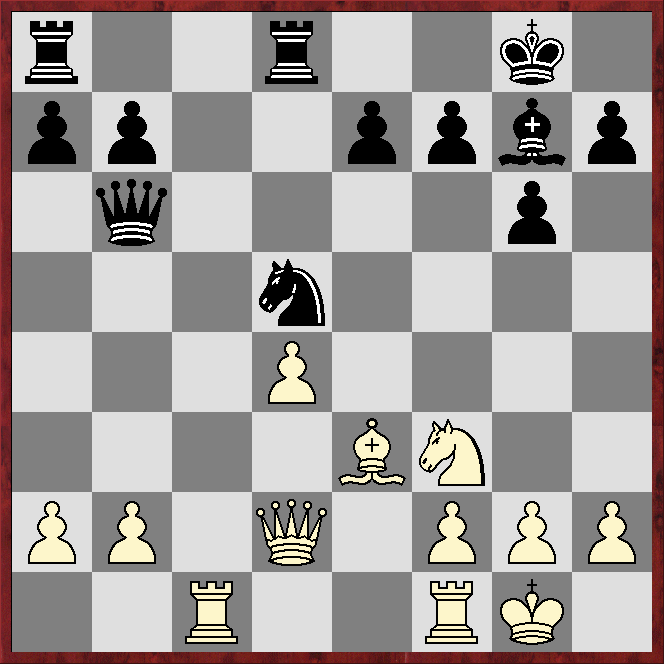
9.Na3 Ne7 10.Nc2 0-0
Now both sides have castled, how would you assess the position?
*****
*****
*****
*****
*****
White's central space advantage is much more important than Black's bishop-pair, according to the engines, and they reckon White has a positionally won game.
11.b4
The engines suggest 11.b3.
11...c4?!
Reducing the light-square bishop to a sorry looking piece,
12.a4
BL pressed the clock and immediately offered a draw.
12...Nf5 13.a5 Qc7 14.g4!?
This is the top choice of Stockfish18, and is also liked by Dragon1, although the latter marginally prefers 14.Bf4.
14...Ne7 15.g5!?
Again Stockfish18 approves; Dragon1 suggests 15.h4 or 15.Qe2.
15...Nf5 16.Ne3!? Nxe3
Otherwise White has 17.Ng4.
17.Bxe3 Ba6 18.Re1 Rfd8 19.Kg2 Rab8 20.Qc2 Bb5 21.h4
White I was thinking about my next move, BL offered a draw, commenting that he was tired
*****
*****
*****
*****
*****
White's advantage is worth about two pawns, according to the engines, but in human terms the advantage is surely worth much more as White can build up at leisure on the kingside, safe in the knowledge that any possible counterplay by Black will involve giving up a pawn for nebulous compensation.
½–½
This game ended a sequence for me of 11 without a draw, and I have had just two draws in my last 21 games.

Wednesday, 8 April 2026

Championship Chess

PLAYED last night in the Battersea club championship.

Michael Krautzberger (1505) - Spanton (1938)
Sicilian Alapin
1.e4 c5 2.c3 e6!? 3.d4 d5 4.exd5!?
There are 6,208 games with this continuation in ChessBase's 2026 Mega database, keeping the game in independent Alapin lines, whereas there are 3,928 games with 4.e5, transposing into the Advance Variation of the French.
4...exd5 5.Nf3 Nc6 6.Be3 cxd4!? 7.Nxd4 Bd6
Black has felt obliged to spend a tempo (6...cxd4!?) in accepting an isolated queen's pawn, but in compensation the white dark-square bishop is not particularly actively placed and the white queen's knight will take two tempi to reach the active f3 square, now that c3 is occupied 
*****
*****
*****
*****
*****
8.Bd3 Nf6 9.0-0 0-0 10.Nd2
How should Black proceed?
*****
*****
*****
*****
*****
10...Ng4!
This was probably also good at move nine, which is why Stockfish171.1 and Dragon1 recommended h3 on the last two moves.
11.Nxc6?
Allowing a simple zwischenzug, although 11.N2f3 Nxe3 also favours Black.
11...Bxh2+ 12.Kh1 bxc6 13.g3?
This only makes matters worse.
13...Nxe3 14.Qh5 g6 15.Qxh2 Nxf1 16.Rxf1
Black is 'only' up the exchange and a pawn, but Black's advantage is close to the equivalent of a whole rook, according to the engines
*****
*****
*****
*****
*****
16...Qf6 17.Kg2 Kg7 18.Be2 Rh8 19.Nf3 Bg4 20.Rh1 Bxf3+ 21.Bxf3 h6 22.Qh3 Rab8 23.Qxd7 Rxb2 24.Qxa7 Qxc3 25.Rh4 Rhb8 26.Rf4 R8b7 27.Qa4 Qc2 28.Qd4+ Kg8 29.Bh5? gxh5 30.Qf6 Qg6 31.Qd8+ Kg7 32.Ra4 Rxf2+! 33.Kxf2 Qc2+ 0-1
My Battersea Season 2025-6
Date       Event  Colour  Rating  Opp's Rating  Score  Season's Perf
16/9/25   CLL       W       1936         1952             0           1552
18/9/25   CLL       W       1936         1797             =           1675
16/10/25 CLL       W       1889         2047             0           1665
23/10/25 CLL       B        1889         1823             1           1805
18/11/25  LL         W       1891         1980             =           1840
20/11/25  CLL      W       1891         1866             1            1911
25/11/25  BCC     B        1891         1817             1            1955
9/12/25    LL         W       1904         1982             1            2008
16/12/25  LL         B        1904         2046             0            1968
18/12/25  CLL      B        1904         2066             1            2018
6/1/26      CLL      W       1929         2150             =            2066
7/1/26      LL         W       1929         1971             =            2058
8/1/26      CLL      B        1929         1800?           =            2038
13/1/26    LL         B        1929         2035             1            2067
27/1/26    LL         B        1929         2089             0            2041
29/1/26    CLL      B        1929         1882             =            2031
3/2/26      BCC     W       1928         1836             1            2043     
12/2/26    CDL      B        1928        1890              1            2057
25/2/26    LL         B        1928        1863              =            2047
26/2/26    CLL      B         1928        2015             0            2025
3/3/26      CDL      B        1914        1976              1            2043
24/3/26    BCC     W        1921        1780             1            2049
26/3/26    CLL      B         1921        1942             =            2045
31/3/26    CDL      B        1921         2091             0            2030
7/4/26      BCC     B         1938        1505*            1            2030  
CLL: Central London League
LL: London League
BCC: Battersea club championship
CDL: Croydon & District League
I also have a win-by-default in the Central London League
*A win against a 1505 counts as a 1905 performance, so I have excluded this game from calculating my season's performance as it would lower my average despite me winning.

Tuesday, 22 July 2025

Bad Bertrich Round Five

FACED  a Finnish grandmaster.

Heikki Westerinen (2205) - Spanton (1946)
Sicilian Alapin
1.e4 c5 2.c3 Nc6!?
A somewhat unusual continuation, but the game will quite possibly transpose to a main line.
3.d4 d5 4.exd5 Qxd5
This position occurs 13,046 times in ChessBase's 2025 Mega database
*****
*****
*****
*****
*****
5.Nf3 Bg4 6.Be2 e6
This is second in popularity to 6...cxd4, when the commonest continuation is 7.cxd4 e6 8.Nc3 Qa5 9.0-0 Nf6, with a slight edge for White according to Dragon1, although Stockfish17 reckons the position is equal.
7.0-0 Nf6 8.Be3 cxd4 9.cxd4 Be7 10.h3 Bh5 11.Nc3 Qd7!?
The engines prefer the main move, 11...Qd6.
12.Qb3 Nd5?!
The engines strongly dislike this, preferring 12...Bxf3!? 13.Bxf3 0-0.
13.Ne5 Nxe5 14.Bxh5 Nc6 15.Rac1
The engines suggest 15.Nxd5 exd5 16.Bg4.
15...Na5 16.Qb5 Qxb5 17.Nxb5 0-0
Now both sides have castled, how would you assess the position?
*****
*****
*****
*****
*****
White has the bishop-pair and a slight lead in development, but also an IQP in a queenless middlegame. The engines reckon chances are equal.
18.Nc7 Rad8
18...Nxe3 19.fxe3 Rac8 maintains equality, according to the engines.
19.Nxd5 exd5 20.Rc7!? Bd6 21.Rc2 Nc6 22.a3 f5!? 23.f4!?
The engines reckon both 23.Bf3 and 23.Rd1 give White an edge.
23...Be7 24.Bf3 Rfe8 25.Bf2 Kf8 26.Rd1 g6 27.Kf1 Kf7 28.g3 Kf8!? 29.Rd3 Rd7 30.b4 a6 31.Rb2
How should Black proceed?
*****
*****
*****
*****
*****
31...b5?
This is seriously weakening. Instead both 31...Na7 and 31...Rc8 keep the position completely equal, according to the engines.
32.Rc2 Nb8?!
Probably better is 32...Nd8, but White has the upper hand, according to the engines, a sample line running 33.h4!? Nf7 34.h5 Red8 35.Re3 Rd6 36.Kg2 Bf6 37.Re1 Kg7 38.Re5!?, with an offer of the exchange that Black should probably reject.
33.Rdc3 Red8 34.Rc7?!
Much better, according to the engines, is 34.g4, slowly increasing the pressure.
34...Rxc7 35.Rxc7 Kf7 36.g4 Ke6?
This lets White swop off into an easily won ending. Instead 36...Rd6 leaves White only slightly better (Stockfish17) or at best with the upper hand (Dragon1).
37.Rxe7+! Kxe7 38.Bh4+ Kd7 39.Bxd8 Kxd8 40.Bxd5
White is a pawn up, has the better minor piece and has targets in that every black pawn is on the same colour complex as the bishop
*****
*****
*****
*****
*****
40...fxg4 41.hxg4 h5 42.Kf2!?
Unnecessary, but harmless.
42...hxg4 43.Kg3 Nd7 44.Bb7
Not 44.Kxg3?? Nf6+ etc.
44...Nb8
Or 44...Nb6 45.Bxa6 Nc4 46.Bxb5 Nxa3 47.Bd3, trapping the knight.
45.Kxg4 1-0

Thursday, 15 May 2025

Summer Club: Round Three

AM playing in a summer daytime tournament organised by Surrey's Coulsdon Chess Fellowship.
It takes place on 10 Wednesday afternoons, the time control being 90 minutes with a 30-second increment.


David Lilwall (1343 ECF/1510 Fide) - Spanton (1960 ECF/1937 Fide)
Sicilian Alapin
1.e4 c5 2.c3 d5 3.exd5 Qxd5 4.d4 Nc6 5.Nf3 Bg4 6.Be2 cxd4 7.cxd4 e6
Holding back on the development of Black's kingside pieces for so long is slightly unusual; nevertheless the position occurs 4,444 times in ChessBase's 2025 Mega database
*****
*****
*****
*****
*****
8.0-0 Nf6 9.Nc3
Where should Black's queen go?
*****
*****
*****
*****
*****
9...Qd7
Most popular in Mega25 is 9...Qa5, when the main line runs 10.h3 Bh5 11.Be3 Be7, with Stockfish17 and Dragon1 reckoning White is at least slightly better.
10.h3!? Bh5
The engines prefer 10...Bxf3!? 11.Bxf3 Nxd4 12.Bxb7, claiming equality after both 12...Qxb7 and 12...Rd8.
11.Be3 Be7
Black should play more actively, according to the engines, with a move such as 11...Bd6.
How should White proceed?
*****
*****
*****
*****
*****
12.Ne5
The engines reckon 12.g4!? Bg6 13.Ne5 gives White the upper hand.
12...Nxe5?
This transforms White's isolani into a space-gaining spearhead at e5. Correct is 12...Bxe2, eg 13.Nxd7 Bxd1 14.Nxf6+ Bxf6 15.Rfxd1, when the engines reckon the game is completely equal, although Black's position is probably easier to play. Better for White is 13.Qxe2, with what the engines reckon is a slight edge.
13.dxe5 Bxe2
The commonest move in Mega25 is the blunder 13...Qxd1??, when 14.Bxd1 Bxd1 15.exf6 wins a piece.
14.Qxe2 Nd5 15.Nxd5?!
This is the commonest move in Mega25, but it largely lets Black off the hook. Instead 15.Qg4!? leaves Black without a good answer, eg 15...Nxc3 16.Qxg7! Ne2+ 17.Kh1 0-0-0 18.Qg4 Nd4 19.Rfd1 etc.
15...Qxd5 16.f4
The engines reckon 16.Bf4, and possibly 16.Bd2!?, give a slight edge.
16...0-0 17.Rfd1 Qa5!?
Apparently a novelty, and seemingly better than the known 17...Qe4 and 17...Qc6?
18.b3
Freeing the white queen's rook from defending a2. More promising, at first glance, is 18.Rd7 Bc5 19.Rxb7, but 19...Rfb8 gives Black full compensation for being, at least temporarily, a pawn down.
18...Rfd8 19.Rd2 Bb4 20.Rad1??
A hard-to-explain oversight.
20...Bxd2 21.Rxd2 Rxd2 22.Qxd2 Qxd2 23.Bxd2 Rd8 24.Be3 b6 0-1

Friday, 14 April 2023

Lessons From Fagernes III

MY round-three game featured the Alapin Variation of the Sicilian Defence.
It began 1.e4 c5 2.c3 g6!? (Black is effectively playing a Hyper-Accelerated Dragon) 3.d4 cxd4 4.cxd4 d5.
White has a slight advantage, according to Stockfish15.1 and Komodo14.1
*****
*****
*****
*****
*****
*****
*****
*****
Despite the engines' optimism about the white position, the two main continuations in ChessBase's 2023 Mega database, 5.e5 and 5.exd5, score disappointingly - 46% and 47%, respectively.
My game saw 5.Nc3!?, which scores an almost-as-poor 48%.
After the virtually forced reply 5...dxe4, my opponent played 6.Nxe4, when Stockfish15.1 reckons Black already has a slight edge, although Komodo14.1 calls the game equal.
Black is posed more problems by 6.Bc4!?
Black's difficulties were starkly illustrated in David Howell (2334) - Spanton (2004), Isle of Man 2004, which continued 6...Nf6 7.Qb3 e6 8.d5 exd5 9.Nxd5 Nxd5 10.Bxd5 Bb4+?? 11.Qxb4 Qxd5 12.Qc3 1-0.
Position after 12.Qc3 - Black cannot avoid losing significant material, eg 12...0-0 is met by 13.Bh6
*****
*****
*****
*****
*****
Two years later, again at the Isle of Man, I faced the same line in Ian Marks (1944) - Spanton (2075), which varied with 10...Qe7.
The game continued 11.Bd2!? (IM said afterwards he reckoned this is better than 11.Qc3, although fast-forward 17 years and my main engines both prefer the latter) Nc6 (the engines much-prefer 11...Nd7!?) 12.Bxc6+ bxc6 13.Qc3 e3! (everything else loses on the spot) 14.Qxc6+ Qd7 15.Qxd7+ Bxd7 16.Bxe3 Bb4+ 17.Bd2 Bxd2+ 18.Kxd2 0-0-0.
Black has full compensation for a pawn, according to the engines, and went on to win
*****
*****
*****
*****
*****
Seven years later, at Guernsey, I tried playing the white side in Spanton (2030) - Ad Reijneveld (2135), varying with 11.Qc3.
The game continued 11...Qb4 12.Bd2 Qxc3 13.Bxc3 Rg8, at which point I played the probable-novelty 14.0-0-0!?
After 14...Nc6 15.Bxe4 Be6 16.Nf3 Be7 17.Kb1 Rd8 18.Rxd8+ Kxd8 19.Rd1+ Kc8 20.Nd4 Nxd4 21.Rxd4 Rd8 a draw was agreed.
The position is completely equal, according to the engines
*****
*****
*****
*****
*****
In 2019, again at Guernsey, the game Ton Goris (1913) - Reijneveld (2056) varied with 14.Bxe4.
The game continued 14...Nc6 15.Nf3 Bg7 16.Rc1 Bd7 17.0-0 Bxc3 18.Rxc3, at which point the engines reckon 18...Ke7!? equalises.
Instead the game saw 18...Kf8?! 19.Rd1 Be8, after which White has a large lead in development (1-0, 33 moves).
The somewhat picturesque final position of Goris - Reijneveld
*****
*****
*****
*****
*****
LESSON: a little experience goes a long way in sharp positions, but once (club) players are on their own resources, anything can happen. I do not know how much of this analysis I would have remembered if my opponent at Fagernes had played 6.Bc4!?, but my (admittedly limited) familiarity with the position after 5...dxe4 meant I was reasonably confident, however he had continued.

Tuesday, 4 April 2023

Fagernes Game Three

Bjørn Noralf Dybvik (1430) - Spanton (1806)
Sicilian Alapin
1.e4 c5 2.c3 g6!?
This is the fifth-most popular continuation in ChessBase's 2023 Mega database.
3.d4 cxd4 4.cxd4 d5 5.Nc3!?
The mainline in Mega23 runs 5.e5 Nc6 6.Nc3 Bg7 7.Bb5 Nh6 8.Nge2 0-0 9.0-0 with an equal position, according to Stockfish15.1 and Komodo14.1.
5...dxe4 6.Nxe4
Much more popular is 6.Bc4!? with sharp play.
6...Ng7 7.Nf3 Nf6 8.Bb5+!?
8.Nxf6+ Nxf6 9.Bh6 is met by 9...Qa5+, when White faces a difficult choice, one line running 10.Qd2 Qxd2+ 11.Kxd2!? with a slight edge for Black, according to the engines.
8...Bd7 9.Bxd7+ Nbxd7 10.Nxf6+
I expected the developing 10.Qd3!?
10...Nxf6 11.0-0 0-0 12.Be3 Nd5 13.Rc1 Qb6 14.Qd2 Rfd8
White to play and lose
*****
*****
*****
*****
*****
15.Ne5? Nxe3 16.Qxe3
Not 16.fxe3?? Bxe5.
16...Qxd4 17.Qxd4 Rxd4
White has no compensation for being a pawn down - indeed Black has the better minor piece for operating in an open position with rooks
*****
*****
*****
*****
*****
18.Nf3 Rd7 19.Rc2 Rad8 20.h3 e5 21.Ng5?!
This leads nowhere and, if anything, helps Black.
21...h6 22.Ne4 f5 23.Nc3 Rd2 24.Rfc1 e4 25.Kf1 Rxc2 26.Rxc2 Rc8 27.Ke2 b5 28.Kd2 a6 29.b3 Kf7 30.Ne2 Rxc2+ 31.Kxc2 Be5 32.Kd2 Ke6 33.Ke3 Kd5 34.g3 Kc5 35.Nf4 g5
Even stronger is 35...Bxf4+, but the text is plenty good enough.
The game finished:
36.Ne6+ Kd5 37.Nf8 f4+ 38.gxf4 gxf4+ 39.Ke2 Kd4 40.Ne6+ Kd5 41.Nd8 f3+ 42.Ke1 Kc5 43.Nb7+ Kb4 44.Kd2 Bd4 45.Ke1 Ka3 46.Nd6 e3 47.fxe3 Bxe3 0-1

Monday, 26 September 2022

I'll Never Forget Whatshisname

TYPICALLY when people discover I play in chess tournaments they recount how they knew the moves as a child but never kept at it.
Sometimes they relate meeting a "strong" player who always beat them, but they usually cannot remember the person's name, or at least only recall a first name.
The other day, however, in my East End 'local', I was chatting to a guy who had a slightly different version of this story.
Apparently he often played someone who always beat him easily, and who eventually said to him something along the lines of: "Don't feel too bad about it. See this chess book - I have games in it."
And, unusually, the guy remembered the player's name: "Stebbings - Terry Stebbings."
I recognised the surname but it was only later in the evening that I realised Terry should be Tony.
When I got home I looked him up in my database of personal games and found we had played twice.
All of which is an excuse for recounting the games, which have interesting points, on my blog. Here is the first one.

Spanton (2060) - Anthony J Stebbings (2280) 
Hastings Masters 1995-6
Sicilian Alapin
1.e4 c5 2.Nf3 e6 3.c3 Nf6 4.e5 Nd5 5.d4 cxd4 6.cxd4 d6 7.Bd2!?
This is the second choice of Komodo13.02, behind the main move 7.Bc4.
7...Bd7 8.Nc3 Bc6 9.Bc4 Nb6 10.Bb3 N8d7 11.0-0 Be7?!
This is probably a mistake. Lê Thảo Nguyên Phạm (2319) - Sergei Movsesian (2658), Chess.com Blitz 2015, went 11...dxe5 12.Nxe5 Nxe5 13.dxe5 Qd4 14.Qe2 Be7 with equality, according to Stockfish15, although Komodo13.02 gives White a slight edge (0-1, 58 moves).
How should White proceed?
*****
*****
*****
*****
*****
12.Bf4?!
The engines give White the upper hand after 12.exd6 Bxd6 13.d5!, eg 13...Nxd5 14.Nxd5 exd5 15.Re1+ Kf8 (not 15...Be7?? 16.Bb4) 16.Bc3, when White is a pawn down but has a strong attack.
12...dxe5 13.Nxe5 Nxe5 14.dxe5 Qxd1 15.Rfxd1 0-0 16.Be3 Rfd8 17.a3 Rxd1+ 18.Rxd1
I offered a draw.
18...Rd8 19.f4 Rxd1+ 20.Bxd1?
The game is equal after 20.Nxd1.
20....Nc4 21.Bxa7
Even worse seems to be 21.Bc1?! Bc5+.
21....Nxb2 22.Be2 Bxa3 23.g4?!
This is probably more weakening than anything else.
23...Bb4 24.Bd4 Ba5 25.Nb5 Na4 26.Kf2 Nb6 27.Nd6 Nd5 28.f5 Bd2 29.Bc4 Bb4 30.fxe6 fxe6 31.Ke2 Kf8 32.Kd3 Ke7 33.Ne4?!
This allows Black a knight tour that ends with White losing the bishop-pair. Probably better is 33.Bb3, not fearing 33...Bxd6? 34.exd6+ Kxd6 as 35.Bxg7 gives excellent drawing chances.
33...Nf4+ 34.Ke3 Ng2+ 35.Kd3
Or 35.Kf3 Ne1+ 36.Kf4 g5+!? 37.Ke3 Nc2+ 38.Kd3 Nxd4.
35...Ne1+ 36.Ke3 Nc2+ 37.Kd3 Nxd4 38.Kxd4 Ba3 39.Ng5!?
Not much better is 39.Nc3 Bb2.
39...Bb2+ 40.Kc5 Bxe5 41.Nxe6 Bd7 42.Ng5 h6 43.Nf3 Bd6+ 44.Kb6 Bxg4 45.Nh4 g5 46.Kxb7!? gxh4 47.Bd5 Bxh2 0-1

Tuesday, 17 May 2022

Beat The ... Sicilian 2...d6

IN this occasional series I am looking at the statistically best way to play against popular opening lines.
The numbers are drawn from the 2021 edition of ChessBase's Mega database, ignoring, where possible, those results that include very few games and so are statistically insignificant.

After 1.e4 c5 2.Nf3, Black's most-popular continuation is 2...d6.
White's commonest third moves are 3.d4, which scores 52%, and 3.Bb5+, which scores 51%.
Most other moves, including 3.g3, 3.Bc4, 3.Nc3, 3.b4 and 3.d3, score under 50% - in other words, in those lines, from a statistical view, Black already has an edge.
But there is one move that beats all these by scoring a respectable 54%, and that is 3.c3, which is a delayed form of the Sicilian Alapin: 1.e4 c5 2.c3.
One point about playing the Alapin in this delayed form is that Black's most-popular answer to 2.c3, namely 2...d5, is effectively ruled out as, after 1.e4 c5 2.Nf3 d6 3.c3 d5?! Black is a tempo down on normal lines.
Similarly, another popular response to the Alapin, 2...e6, which is usually a prelude to playing ...d5 in one move, also looks a little strange if played in the move-order 1.e4 c5 2.Nf3 d6 3.c3 e6.
Position after 3.c3
Black has eight replies that occur more than 100 times in Mega21 and, despite what I have written above, they include ...d5 and ...e6.

A) 3...Nf6 (22,511 games)
After 4.h3 (this and 4.g3 score equally well, but h3 is preferred by Stockfish13 and Komodo12.1.1), the line splits.
A1 4...Nc6 (there are 80 games in Mega21 that saw 4...Nxe4?? 5.Qa4+) 5.Bd3, after which the line splits again.
A1.1 5...g6 6.0-0 Bg7 7.Bc2 0-0 8.d4 cxd4 9.cxd4, when A1.1a 9...Nb4 10.Bb3 d5 (not 10...Nxe4?? 11.Qe1) 11.e5 Ne4 12.Re1 scores 68% for White, albeit from a small sample, A1.1b 9...e5 10.d5 Nb4 11.Bb3 a5 12.Nc3 Bd7 13.a3 Na6 14.Be3 scores 86% for White, albeit from a small sample, and A1.1c 9...d5 10.e5 Ne4 11.Re1 Bf5 12.Nc3 scores 75% for White, albeit from a very small sample.
A1.2 5...d5 6.exd5!?, when A1.2a 6...Qxd5 7.Qe2 Bf5 8.Bc4 scores 60% for White, and A1.2b 6...Nxd5 7.0-0 g6 8.Bb5 scores 60% for White, albeit from a small sample.
A1.3 5...e6 6.0-0 Be7 7.Re1 0-0 8.Bc2 scores 77% for White, albeit from a small sample.
A2 4...g6 5.Bd3 Bg7 6.Bc2 (this and 6.0-0 score equally well, but the bishop move is narrowly preferred by the engines, although the lines often transpose anyway), after which the line splits again.
A2.1 6...0-0 7.0-0, when A2.1a 7...Nc6 is a transposition to A1.1, and A2.1b 7...e5 8.d3 Nc6 9.a3 scores 71% for White.
A2.2 6...Nc6 7.d4 cxd4 8.cxd4, when A2.2a 8...0-0 9.Nc3 e5 10.dxe5!? scores 67%, albeit from a small sample, and A2.2b 8...d5 9.e5 Ne4 10.0-0 0-0 is a transposition to A1.1c.
A2.3 6...e5 7.0-0 0-0 is a transposition to A2.1b.
A3 4...Nbd7 5.Bd3, after which the line splits again.
A3.1 5...b6 6.0-0 Bb7 7.Re1, when A3.1a 7...Qc7 8.Bc2 Rc8 9.Na3!? e6 10.d4 scores 56% for White, A3.1b 7...Rc8 8.Qe2!? scores 70% for White, albeit from a small sample, and A3.1c 7...e6 8.Bc2 Be7 9.d4 scores 64% for White.
A3.2 5...g6 6.Bc2 Bg7 7.d4 0-0 8.0-0, when A3.2a 8...Qc7 9.Qe2 scores 69% for White, albeit from a small sample, A3.2b 8...b6 9.e5 scores 75% for White, albeit from a small sample, and A3.2c 8...e5, following which White scores 63% with both 9.dxe5 and 9.Re1, albeit from small samples.
A4 4...e6 5.Bd3, after which the line splits again.
A4.1 5...Be7 6.0-0 0-0 7.Re1 scores 100% for White, albeit from a small sample.
A4.2 5...Nc6 is a transposition to A1.3.
A5 4...Bd7 5.Bd3, after which the line splits again.
A5.1 5...Bc6 6.Qe2 Nbd7 7.Bc2 scores 63% for White.
A5.2 5...Nc6 6.Bc2 Rc8 7.0-0 g6 8.d4 scores 75% for White, albeit from a small sample.
A5.3 5...g6 6.0-0 Bg7 7.Bc2 0-0 8.d4 scores 64% for White.

B) 3...Nc6 (1,359 games)
After 4.d4 the line splits.
B1 4...cxd4 5.cxd4, after which the line splits again.
B1.1 5...Nf6 6.Nc3, when B1.1a 6...g6 7.h3 Bg7 8.Bd3 0-0 9.0-0 e5 10.dxe5 dxe5 11.Be3 scores 67% for White, B1.1b 6...e6 7.Bd3 Be7 8.0-0 0-0 9.h3 scores 74% for White and B1.1c 6...Bg4 7.d5!? Ne5 8.Nxe5! dxe5 (Black loses a piece after 8...Bxd1? 9.Bb5+ Nd7 10.Bxd7+ Qxd7 11.Nxd7) 9.Qb3 scores 100% for White, albeit from a small sample.
B1.2 5...e6 6.Nc3, when B1.2a 6...Nf6 is a transposition to B1.1b, and B1.2b 6...a6 7.Bd3 Nf6 8.0-0 Be7 9.Re1 scores 90% for White.
B1.3 5...Bg4 6.d5!?, when B1.3a 6...Ne5? (Black's most-popular move, but it loses immediately) 7.Nxe5! Qa5+ (7...Bxd1 8.bb5+ etc) 8.Bd2 scores 100% for White, B1.3b 6...Bxf3 7.gxf3!? scores 95% for White, albeit from a small sample, and B1.3c 6...Nb8 7.Nc3 scores 100% for White, albeit from a very small sample.
B1.4 5...g6 6.d5!?, when B1.4a 6...Ne5 7.Nxe5 dxe5 8.Nc3 scores 88% for White, albeit from a small sample, and B1.4b 6...Nb8 7.Bb5+ scores 100% for White, albeit from a small sample.
B2 4...Nf6 5.d5 Nb8 6.Bg5 scores 69% for White, albeit from a small sample.
B3 4...Bg4 5.d5, after which the line splits again.
B3.1 5...Ne5? 6.Nxe5 Bxd1 7.Bb5+ Qxd7 8.Bxd7+ scores 100% for White, albeit from a small sample.
B3.2 5...Nb8 6.h3 Bxf3 7.Qxf3 scores 88% for White, albeit from a small sample.
B3.3 5...Bxf3 6.Qxf3 Ne5 reaches a position in which White scores 100% with 7.Qe3, 7.Qd1 and 7.Qg3, albeit from very small samples.

C) 3...g6 (638 games)
After 7.d4 cxd4 8.Qxd4!? Nf6 9.e5 the line splits.
C1 9...dxe5 10.Qxd8+ Kxd8 11.Nxe5 Be6 12.Na3 White scores 86%, albeit from a small sample.
C2 9...Nc6 10.Bb5, when the line splits again.
C2.1 10...Nh5 reaches a position that occurs only three times in Mega21. The engines agree White has the upper hand after 11.0-0.
C2.2 10...dxe5 11.Bxc6+ bxc6 12.Qxd8+ Kxd8 13.Nxe5 scores 83% for White, albeit from a very small sample.

D) 3...e6 (295 games)
After 4.d4 cxd4 5.cxd4 Nf6 6.Bd3!? the line splits.
D1 6...Be7 7.Nc3, after which the line splits again.
D1.1 7...0-0 8.0-0, when D1.1a 8...Nc6 is a transposition to B1.1b, and D1.1b 8...a6 9.Qe2 Nc6 10.e5 scores 89% for White.
D1.2 7...Nc6 is a transposition to B1.1b.
D2 6...Nc6 7.0-0 Be7 8.Nc3 is a transposition to B1.1b.

E) 3...a6 (159 games)
After 4.d4 the line splits.
E1 4...Nd7 5.Bd3 after which the line splits again.
E1.1 5...g6 6.0-0 Bg7 7.a4 scores 79% for White, albeit from a small sample.
E1.2 5...e6 6.0-0 when E1.2a 6...Ngf6 7.Qe2 scores 90% for White, albeit from a small sample, and E1.2b 6...Ne7 reaches a position in Mega21 in which White scores 75% with both 7.Nbd2 and 7.b4, albeit from very small samples.
E1.3 5...Qc7 6.0-0 Ngf6 7.Qe2 scores 69% for White, albeit from a small sample.
E1.4 5...e5 6.dxe5!? scores 75% for White, albeit from a small sample.
E1.5 5...b5 6.0-0 Bb7 7.a4 c4 8.Bc2 scores 75% for White, albeit from a small sample.

F) 3...e5!? (150 games)
After 4.d4 the line splits.
F1 4...cxd4 5.cxd4, after which the line splits again.
F1.1 5...exd4 6.Nxd4 Nf6 7.Nc3 Be7 8.Bb5+ scores 75% for White, albeit from a small sample.
F1.2 5...Bg4 6.dxe5 Bxf3 7.Qxf3 scores 93% for White, albeit from a small sample.
F2 4...Qc7 5.dxe5 dxe5 6.Bc4 scores 65% for White.
F3 4...exd4 5.cxd4, after which the line splits again.
F3.1 5...Nf6 6.Nc3 scores 94% for White, albeit from a small sample.
F3.2 5...cxd4 is a transposition to F1.1.

G) 3...Bg4 (115 games)
After 4.d4 cxd4 5.cxd4 Nf6 6.Nc3 White scores 71%, albeit from a small sample.

H) 3...d5?! (108 games)
After 4.exd5 Qxd5 5.d4 the line splits.
H1 5...Nf6 6.Be2 scores 83% for White, albeit from a small sample.
H2 5...Bg4 6.Be2 scores 75% for White, albeit from a small sample.
H3 5...cxd4 6.cxd4 scores 92% for White, albeit from a small sample.

Wednesday, 26 January 2022

Championship Chess

PLAYED last night.

Hugo Bassa (no rating) - Spanton (2042 ECF)
Battersea Club Championship
French Advance (by transposition from the Sicilian Alapin)
1.e4 c5 2.c3 e6
The text trails 2...d6, 2...Nf6 and 2...d5 in terms of popularity in ChessBase's 2022 Mega database.
3.d4 d5 4.e5
4.exd5 keeps the game in independent Sicilian Alapin lines, and was the choice of Semyon Alapin.
4...Bd7 5.Nf3 Qb6
The idea of Black's move-order is (usually) to follow with ...Bb5 and exchange light-square bishops.
6.Qb3!?
An unusual way of cutting across Black's plans, but one that has been played by grandmasters, although in Mega22 it only dates back to 1969. The main line runs 6.Be2 Bb5 7.0-0 Bxe2 8.Qxe2 Qa6!? (8...Nc6 is also popular) 9.Qd1!? with a position slightly favouring White, according to Stockfish14.1 and Komodo12.1.1.
6...Nc6 7.Na3!?
The engines like this and the somewhat-more popular 7.Qxb6.
How should Black proceed?
*****
*****
*****
*****
*****
7...cxd4
This is apparently a novelty. Komodo12.1.1 prefers 7...c4 8.Qxb6 axb6, claiming equality. Stockfish14.1 fluctuates between 7...Qxb3, 7...f6 and 7...Qc7, in each case also claiming equality.
8.Qxb6 axb6 9.Nb5
The game has transposed to a known position in which Vladimir Bondarenko (2315) - Leonid Totsky (2450), Moscow 1995, continued 9...Ra5 10.Nbd4, when White had the upper hand, according to Stockfish14.1, although Komodo12.1.1 is less enthusiastic about White's chances, and the game was drawn in 52 moves.
9...Rc8 10.Nbxd4 Nge7 11.Bf4
The engines prefer 11.Be3!? Ng6 12.Nxc6 bxc6 with a roughly level position.
11...Ng6 12.Bg3 Be7 13.Bd3 0-0 14.h4!? Nxd4 15.Nxd4!?
The engines reckon the text and 15.cxd4 and of about the same value.
15...Bc5
The engines prefer 15...f6 16.Nf3 Nxe5 17.Nxe5 fxe5 18.Bxe5, albeit giving White a slight edge.
16.h5 Ne7 17.h6 g6
How should White proceed?
*****
*****
*****
*****
*****
18.Nc2!?
I thought this very strange but, once played, it comes to be Komodo12.1.1's top choice, although Stockfish14.1 narrowly prefers 18.Nf3.
18...Nc6 19.b4?
This seriously weakens the queenside. The engines prefer 19.0-0-0, 19.Ne3 or 19.Be2!?
19...Be7 20.a3?
Too slow. Black has at most a slight edge after 20.0-0-0 or 20.f4, according to the engines.
20...Na7?
Not active enough. Black is positionally winning, according to Stockfish14.1 after 20...f6 21.f4 fxe5 22.fxe5 Bg5, although Komodo12.1.1 'only' gives Black the upper hand.
21.Kd2 Bb5
At last getting in the thematic move (see note to 5...Qb6)!
22.Nd4 Bxd3 23.Kxd3 Rc4 24.f4 Rfc8 25.Rhc1!?
I thought this was a mistake, and rather a crass one at that, but the engines disagree.
25...Bf8
What should White play?
*****
*****
*****
*****
*****
26.Be1
Stockfish14.1 reckons White has an edge after 26.Bf2!? Bxh6 27.g3 (Komodo12.1.1 rates the position as equal). The point seems to be White is better placed for play on both flanks, for example if it were White's move the engines reckon best-play would go 28.a4 g5 29.Be3 Nc6 30.Nxc6 R4xc6 31.Bd4 Kg7 (31...gaxf4 32.Rh1). A plausible continuation given by Stockfish14.1 runs 32.Ra2 Kg6 33.Rh1 Bg7 34.fxg5 Ra8 35.Rf1 with pressure. Bearing this in mind, the engines reckon Black should meet 27.g3 with 27...g5 28.Be3 Nc6, when Black is a tempo up on the previous line and seems fine.
The text is the engines' second-choice, but probably is inferior because it interferes with rook-play along the first rank.
26...Bxh6 27.Bd2 Bf8 28.g4!?
Presumably played to attempt to restrain ...h5, but the engines do not like it, preferring the consolidating 28.g3.
28...Nc6 29.Nc2?
Black has the upper hand after 29.Be3 g5!? 30.Nxc6 R8xc6 but White is still in the game, according to the engines.
29...Na7?!
Stronger seems to be the engines' 29...g5, eg 30.Re1 gxf4 31.Nd4 Bg7!? 32.Bxf4 Rxd4 33.cxd4 Rc2, when Black is a pawn up with a big initiative.
30.Ne3
This is better, according to the engines, than trying for repetition with 30.Nd4, when 30...Nc6 returns to the position - good for Black - after 28...Nc6. Black also has 30...g5!?
30...R4c6
Black is slightly better after 30...Re4!?, when ....g5 and ...Nc6 are both strong threats, according to the engines.
31.g5 h5 32.gxh6 Bxh6 33.Ng4 Bg7 34.a4
Black apparently has only one move to maintain equality
*****
*****
*****
*****
*****
34...Kf8?!
It seems 34...Rc4 may be necessary, when neither side can make progress, according to the engines.
35.Nf6?!
The engines give 35.Be3 Rc4 36.Nf6 Bxf6 37.exf6 Nc6 38.Rh1 Ke8 39.Rh8+ Kd7 40.Rxc8 Kxc8 41.b5 Nb8, when White has a lot of play for a pawn.
35...Ke7 36.Ng4 Rh8 37.Rh1 Rcc8?!
White seems only slightly better after 37...Rxh1 38.Rxh1 Rc4.
38.b5
This is good enough for equality, according to the engines, but promising is 38.Be3!?, after which Black's defensive task is very difficult, eg 38...Rxh1 39.Rxh1 Rc6 40.Bd4 Nc8 41.Ne3 followed by c4.
38...Rxh1 39.Rxh1 Rh8 40.Rxh8 Bxh8 41.c4 Nc8 42.cxd5 exd5 43.Ne3 Ke6 44.Kd4?!
White is equal after 44.Nc2, intending Nd4(+), according to the engines.
44...Ne7?!
Almost certainly stronger is 44...f6 45.exf6 Bxf6+.
45.Bb4 Nf5+ 46.Nxf5 gxf5 47.Bd6 f6 48.Bc7 fxe5+ 49.fxe5 Bg7 50.Bxb6 Bxe5+ 51.Kd3 Kd7
How should the game finish?
*****
*****
*****
*****
*****
52.a5?
This loses whereas almost any bishop move, eg 52.Be3, 52.Bf2 or 53.Ba5, draws, according to the engines.
52...Bc7 53.Bxc7 Kxc7 54.Kd4 f4 55.Kd3 Kd6 56.Ke2 d4 57.a6 bxa6 58.bxa6 Kc6 0-1

Saturday, 29 May 2021

Calvià (part nine)

Adrian Ponce Cano (2169) - Spanton (1793)
Calvià U2350 Round 9
Sicilian Alapin/Hyper-Accelerated Dragon
1.e4 c5 2.Nf3 g6 3.c3 Bg7 4.d4 cxd4 5.cxd4 d5 6.e5 Bg4 7.Bb5+ Nd7!?
The point of avoiding 7...Nc6 is to avoid contracting a backward pawn on a half-open file after 8.Bxc6+!?
8.0-0 Nh6?!
Russian grandmaster Boris Savchenko has played both 8...e6 and 8...a6, the two moves suggested by Stockfish13 and Komodo12.1.1. The text is strongly disliked by the engines.
9.Nbd2 0-0 10.h3 Bxf3 11.Nxf3 a6 12.Bd3
Position after 12.Bd3
12...e6
Miroslav Zacharias (1727) - Spanton (1923), Trebic Highlands (Czechia) 2018, saw 12...f6 13.exf6 Nxf6 14.Ng5 Qd6 15.Re1 with a large advantage for White, according to the engines (but 0-1, 58 moves).
13.Re1 Qb6 14.a4 Rae8?!
Over-optimistically expecting the game to be decided on the kingside. The engines prefer 14...Nf5 or 14...Nb8!?, while giving White a large advantage. 
15.a5 Qa7 16.Qa4 Nb8 17.b4
White's queenside initiative is winning, according to the engines.
17...Nc6 18.b5 axb5 19.Bxb5 Rc8 20.Ba3 Rfd8 21.Bc5 Qa8 22.Bb6 Rf8 23.Rec1 Nf5 24.a6 Nfe7 25.Nc5 Rfe8
Or 25...Bh6 26.axb7 Qxb7 27.Rcb1 with a large advantage.
26.Bxe7 Rxe7 27.axb7 Qxb7 28.Ba6 Qb2 29.Bxc8 Ra7 30.Qd1 1-0

Friday, 21 May 2021

Calvià

LAST October I flew to Mallorca to play at Calvià, a seaside resort next-door to Magaluf.
I had considered the tournament previously but been put off because the dates clashed with Guernsey and the rounds started at 8.30pm.
But beggars cannot be choosers, so I was happy to give it a try even though it meant wearing a facemask most of the time in Mallorca, including outdoors.
I stayed at a hotel in Magaluf - the only one in the area that was open as far as I could discover.
Magaluf resembled a ghost town, with almost every cafe, restaurant and bar closed.
But I was happy having nearly all of my meals in my hotel room, and I found a cafe run by a Spaniard who turned out to have been born in Hammersmith, West London, so most mornings I enjoyed an espresso or two on his premises' veranda while soaking up Mediterranean sunshine.
I did not post about my participation for various reasons, including the fact that several of my games did not finish till past midnight.
But with unofficial news that Guernsey will be cancelled again this year (so playing at Calvià this coming October is a distinct possibility), now is as good a time as any for going through my games from last October.
Nicolo Napoli (2309) - Spanton (1793)
Calvià U2350 Round 1
Sicilian Alapin
1.e4 c5 2.c3 g6 3.d4 cxd4 4.cxd4 d5 5.exd5 Nf6 6.Nc3 Nxd5 7.Qb3!?
More popular in ChessBase's 2021 Mega database is 7.Bc4, but the text scores a better percentage.
7...e6!?
Overwhelmingly the main move is 7...Nb6.
8.Nf3 Bg7 9.Bg5 Qa5 10.Bb5+ Bd7 11.Bxd7+ Nxd7 12.0-0 N7b6 13.Bd2
Eric Lobron (2528) - Tal Baron (2544), Amsterdam Batavia Grolsch 2017, saw 13.Ne4 0-0 14.Nc5 Qb4 15.Qxb4 Nxb4 (½–½, 24 moves).
13...Qa6 14.a4!?
The analysis engines Stockfish13 and Komodo12.1.1 prefer 14.Ne4 with what they reckon is a roughly equal game.
14...0-0 15.Ne5
If 15.a5, then 15...Nxc3 followed by 16...Nd5 or 16...Nc4.
15...Nxc3 16.Bxc3 Rac8 17.Rfe1
Position after 17.Rfe1
*****
*****
*****
*****
*****
17...Bxe5!?
Leaving White with a slightly-bad bishop and Black with an unchallengeable knight-outpost at d5.
18.dxe5 Rfd8 19.Qa3?!
It is not clear what this achieves as White is unlikely to be able to push his b pawn, but perhaps the idea is to try to attack the weak dark squares around the black king with moves such as Qe7 and Re3-f3/h3.
19...Rd3 20.g3?!
This is also puzzling.
20...Nd5 21.Rac1
This natural-looking move is not liked by the engines, who want White to give up a pawn, eg 21.Qb3!? Nxc3 22.bxc3 Rdxc3 23.Qb4, although the resulting position is clearly very good for Black.
21...Nxc3?!
Black is still better after this, but giving up a good knight for a very-limited bishop is not optimal.
22.bxc3 Qc4?!
Black probably has better than this, although the engines cannot agree on what should be played.
23.Red1! Rcd8
Not 23...Rxd1+?! 24.Rxd1 Qxc3?? 25.Rd8+ etc.
24.Rxd3 Qxd3 25.Qb4 Rd7 26.a5 Qd5 27.Re1 Rc7 28.Re4?
The engines reckon White is only very slightly worse after 28.Qd6!? Rxc3 29.Qxd5 exd5 30.Rb1 Rc7 31.f4 despite being a pawn down.
28...Qc5?
Missing the simple 28...Rxc3.
29.Rd4 Kg7 30.f4?
The engines reckon 30.Rd8 effectively equalises.
30...Qxc3 31.Qxc3 Rxc3 32.Rd7 Ra3 33.Rxb7 Rxa5
Black is a pawn up but White's active rook gives good drawing chances.
34.Kg2 Ra2+ 35.Kh3 h5 36.Rb8 a5 37.Ra8!?
The engines strongly dislike this natural-looking move, preferring 37.Rc8, 37.Rd8 or 37.Re8 
37...a4 38.Ra7 a3 39.Ra8 Ra1?
Black is much better, according to the engines, after 39...g5!?, eg 40.fxg5 Kg6 41.g4 Kxg5 42.Rg8+ Kh6 43.gxh5 Re2.
40.Ra5?
White apparently equalises with 40.h4, and if 40...Ra2 then 41.h3.
40...a2?
40...Ra2 would have corrected my previous move.
41.Kh4 Kh6
I offered a draw.
42.Ra7 Rc1 43.Rxa2 Rc7 44.Ra8 Rb7 45.Rd8 Rc7 46.Rd2 Rb7 47.Kh3 g5 48.Rf2 g4+ 49.Kh4 Kg6 50.Ra2 Rb1 51.f5+!? Kxf5 52.Kxh5 Rb4 53.Re2
The game has been dead-equal for many moves, according to the engines.
53...Re4?
Allowing a transposition into a pawn-ending that is easier for White to play. The engines reckon White is winning this ending (Stockfish13) or is at least much better (Komodo12.1.1), but the position is still a tablebase draw.
54.Rxe4 Kxe4 55.Kxg4 Kxe5 56.Kg5
The idea I missed at move 53. It came a s shock to me (but it is not enough for a win).
56...f6+ 57.Kg6
Position after 57.Kg6 - Black has three drawing moves and two that lose
*****
*****
*****
*****
*****
57...f5?
Also losing is 57...Ke4, but the other three king moves, all of which let the e pawn rush forward to queen, draw, according to tablebases.
The game finished:
58.h4 Ke4 59.h5 Kf3 60.h6 Kxg3 61.h7 f4 62.h8=Q f3 63.Qh1 Kf2 64.Kg5 Ke2 65.Kf4 f2 66.Qf3+ Ke1 67.Qe3+ 1-0

Monday, 19 April 2021

Syd Kalinsky RIP

ANYONE who plays county chess in the southern region will likely know, or at least recognise from his photo, Essex stalwart Syd Kalinsky.
There is a nice tribute to him at https://ilfordchessclub.com/syd-kalinsky/ from people who knew him better than I did.
However I was surprised, when I consulted my database of own games after I learnt of his death at the age of 89, that we had only played each other once.
Kalinsky (2040) - Spanton (2010)*
Southern Counties Chess Union U175 2003
Sicilian Alapin
1.e4 c5 2.c3
Not that I knew this, but the c3 Sicilian was apparently one of SK's favourite openings.
2...g6 3.d4 cxd4 4.cxd4 d5 5.Bb5+!?
This gives White a small edge, according to Stockfish13 and Komodo12.1.1, but is much less popular than 5.e5, 5.exd5 and 5.Nc3. SK explained afterwards his idea was to exchange light-square bishops so he could play e5 without allowing Black to later meet Nf3 with ...Bg4.
5...Bd7 6.Bxd7+ Qxd7 7.e5 Nc6 8.Nf3 Nh6 9.0-0 Nf5 10.Nc2
The knight will defend the d4 pawn from c2.
10...Bg7 11.Nc2 0-0 12.Re1 Rac8 13.b4!?
The engines are not very keen on this pawn thrust, which gains queenside space but restricts the possible activity of White's remaining bishop.
13...e6 14.a4 f6!?
The engines do not much like this either.
15.Bb2
The engines reckon White has a slight edge after gaining space on both flanks with 15.b5 Na5 16.g4!?
15...fxe5 16.Nxe5
The engines prefer to avoid an exchange of knights by playing 16.dxe5.
16...Nxe5 17.dxe5 Rc4!?
My original notes state: "17...a6 maintains Black's edge. Now the game becomes more double-edged." However my modern engines find it difficult to decide if they prefer 17...a6 or the text.
18.b5 Qc7 19.Ne3 Nxe3 20.Rxe3 Rc2 21.Re2 Rc8
I rejected 21...Rxb2?! 22.Rxb2 Bxe5 because of 23.Rc2, missing the power of 23...Qd6. However, after the further moves 24.Rb1 Bxh2+ 25.Kh1 the engines prefer White.
22.Bd4 Rc1 23.Rxc1 Qxc1 24.Re1 Qxd1 25.Rxd1 Rc4
Position after 25...Rc4
SK offered a draw here but I am fairly sure I quite fancied my chances, having the better pieces and a protected passed pawn.
26.Bxa7 Rxa4
The engines give Black much the better game after 26...Bxe5!? I rejected it because I feared 27.a5 gave White promising counterplay, but 27...Rb4 seems strong.
27.Bd4 Rb4 28.f4!? Kf7!?
From my original notes: "SK thought he was winning around here, which is bizarre although I overrated my bishop compared with his." Perhaps one point is that 28...Rxb5 allows counterplay with 29.Rc1.
29.b6 Ke8
The engines reckon Black should activate his bishop with 29...Bh6!? 30.g3 g5.
30.Be3!?
Untying the rook from the bishop, but the engines prefer activating the king with 30.Kf2.
30...g5!? 31.g3 gxf4 32.gxf4 Bh6 33.Rf1?!
Going passive in time trouble. Best seems to be activating the rook with 33.Rc1.
33...d4 34.Bf2?!
This only adds to White's problems.
34...Bxf4 35.Ra1 Bxe5 36.Ra8+ Kd7 0-1
*Ratings are converted from ECF grades.

Thursday, 15 April 2021

Beat The ... Sicilian Alapin

IN this series I am looking at the statistically best way to play against popular opening lines.
The numbers are drawn from the 2021 edition of ChessBase's Mega database, ignoring, where possible, those results that include very few games and so are statistically insignificant.

The Alapin (or c3) Variation of the Sicilian: 1.e4 c5 2.c3 is popular at most levels of chess, but particularly among club players.
The best response, statistically, is 2...Nf6, which scores a very good 52%. After 3.e5 Nd5 White has four moves that each appears more than 1,000 times in Mega21.
Position after 3...Nd5
A) 4.d4 (29,734 games)
After 4...cxd4 the line splits.
A1 5.Nf3 d6 (5...Nc6 and 5...e6 are more popular, but their scores of 51% and 52% respectively lag behind the 53% of 5...d6), after which the line splits again.
A1.1 6.cxd4 Nc6 7.Bc4 Nb6, when A1.1a 8.Bb5 Bd7 9.Nc3 dxe5 10.dxe5 g6 scores 61% for Black while A1.1b 8.Bb3 d5 9.Nh4 e6 10.Nf3!? Be7 scores 53% for Black.
A1.2 6.Bc4 Nb6 7.Bb3 d5, when A1.2a 8.cxd4 Nc6 is a transposition to A1.1b while A1.2b 8.Nxd4 Nc6 reaches a position that only occurs 10 times in Mega21, with no consensus on how White should proceed (four games saw 9.f4, four saw 9.Bf4 and two saw 9.Qe2, while my main analysis engines Stockfish13 and Komodo12.1.1 suggest 9.0-0!?).
A1.3 6.Qxd4 e6 7.Nbd2 a6!? 8.Nc4 reaches a position that only occurs 17 times in Mega21. Most popular is 8...Nc6 but the engines reckon 8...dxe5!? gives Black a tiny edge.
A1.4 6.exd6 e6!?, when A1.4a 7.Nxd4 Bxd6 scores 57% for Black while A1.4b 7.cxd4 Bxd6 scores 61% for Black.
A2 5.cxd4 d6, after which the line splits again.
A2.1 6.Nf3 is a transposition to A1.1.
A2.2 6.Bc4 Nb6, when A2.2a 7.Bb5+ Bd7 8.e6!? (this is much more popular than 8.Bxd7+ Qxd7, which scores 61% for Black) fxe6 (8...Bxb5 9.Qh5! reduces Black's score to 51%) 9.Bd3 g6 scores 63% for Black while A2.2b 7.Bb3 Nc6 8.exd6 (almost as popular is 8.Nf3 d5, which is a transposition to A1.1b) e6!? scores 67% for Black.
A2.3 6.exd6 Qxd6 7.Nc3 Nc6 8.Nf3 g6 scores 65% for Black.
A2.4 6.f4 dxe5!? 7.fxe5 (there are four games in Mega21 with 7.dxe5, but the engines reckon Black has at least a slight edge after 7...e6 or 7...Nc6) Nc6 scores 73% for Black, albeit from a small sample.
A3 5.Qxd4 e6, after which the line splits again.
A3.1 6.Nf3 Nc6 7.Qe4 Qc7!?, when A3.1a 8.Nbd2 f5 9.exf6 Nxf6 scores 67% for Black while A3.1b 8.Bc4 Nde7 9.Bf4 Ng6 10.Bg3 b6 scores 57% for Black, albeit from a small sample.
A3.2 6.Bc4 Nc6 7.Qe4 d6, when A3.2a 8.exd6 Nf6 9.Qe2 Bxd6 10.Nf3 Qc7 scores 70% for Black, albeit from a small sample, while A3.2b 8.Nf3 Nb6 9.Bb3 Qc7 scores 71% for Black.
A4 5.Bc4 Qc7 6.Qe2 Nb6, after which the line splits again.
A4.1 7.Bd3 Nc6 8.Nf3 g6 scores 72% for Black.
A4.2 7.Bb3 Nc6 8.Nf3 d5 9.exd6 Qxd6 scores 69% for Black.

B) 4.Nf3 (7,997 games)
After 4...d6 the line splits.
B1 5.d4 cxd4 is a transposition to A1.
B2 5.Bc4 dxe5 6.Nxe5 e6 7.0-0 Bd6 8.d4 0-0 scores 50% for Black.
B3 5.exd6 e6!? 7.d4 cxd4 is a transposition to A1.4.

C) 4.Bc4 (1,493 games)
After 4...e6 the line splits.
C1 5.Nf3 b6!?, after which the line splits again.
C1.1 6.0-0 Bb7 7.d4 cxd4 8.cxd4 Qc7 scores 53% for Black.
C1.2 6.Bxd5!? exd5 7.d4 reaches a position that only occurs 22 times in Mega21. Black has tried five different moves, but the engines like 7...d6, which they reckon gives equality.
C1.3 6.d4 Bb7 7.0-0 cxd4 is a transposition to C1.1.
C2 5.d4 d6 6.Nf3 cxd4 7.cxd4 and now 7...Nc6 scores 50%, but so does the lesser-known 7...Be7, which is preferred by the engines. After the further moves 8.0-0 0-0 9.Qe2 b6 the line splits again.
C2.1 10.Nc3 Nxc3 11.bxc3 Bb7 scores 63% for Black.
C2.2 10.Rd1 Bb7 11.Bxd5!? Bxd5 12.Nc3 reaches a position that only occurs 12 times in Mega21. Black usually plays 12...Bxf3 but the engines prefer the apparent-novelty 12...Bb7!?, although they reckon White may have a slight edge.
C2.3 10.Bd2 Bb7 11.Nc3 Nxc3 12.Bxc3 Nd7 scores 69% for Black.
C2.4 10.Qe4!? Ba6!? reaches a position that only occurs 21 times in Mega21, with no White reply occurring more than seven times. Black scores 57%.
C2.5 10.Nbd2 Bb7 11.Ne4 dxe5 12.dxe5 Nd7 scores 57% for Black.
C2.6 10.Bxd5!? exd5 11.Rd1 reaches a position that only occurs 14 times in Mega21. Stockfish13 reckons 11...Be6 gives equality (it scores 62%, but from only four games), while Komodo12.1.1 prefers 11...Na6 (it scores 50%, but from only five games).

D) 4.g3 (1,033 games)
After 4...d6 5.exd6 Qxd6 6.Bg2 Nc6 the line splits.
D1 7.Ne2 g6!?, after which the line splits again.
D1.1 8.Na3 Nc7!? Bg7 scores 73% for Black, albeit from a small sample.
D1.2 8.d4 cxd4 9.Nxd4 Qe5+ scores 73% for Black, albeit from a very small sample.
D2 7.Na3 Bf5 reaches a position in which no reply occurs more than eight times in Mega21. Black scores 69%.
D3 7.Nf3 Qe6+!? 8.Qe2 Qxe2+ 9.Kxe2 Bg4 scores 67% for Black, albeit from a small sample.

Tuesday, 25 August 2020

Best By Test (part five)

ONE of the most intriguing of the Sicilian statistics is the success of the Alapin, ie 2.c3.
Its percentage score of 49% is nothing special, although it equals the score of 2.Nc3 and is only two percentage points behind 2.Nf3.
But 2.c3's rating performance of +40 is well clear of the field, in particular leading 2.Nf3 by 19 points and 2.Nc3 by 27 points.
Here I want to look at 2.c3's success, from a statistical viewpoint, in its 2,662 appearances in games played last year in ChessBase's 2020 Mega database (I will ignore moves occurring less than one percent of the time).

Table 13: Popularity Of Black Moves After 1.e4 c5 2.c3
Move.....Number Of Times Played
2...Nf6....................979
2...d5......................947
2...d6......................211
2...e6......................181
2...g6......................164
2...Nc6.....................93
2...e5........................53

I am not surprised at the modern popularity of 2...Nf6 and 2...d5, but I was not expecting 2...e6 to be less popular than 2...d6.

Table 14: Black Second Moves By Percentage Score (tie broken by frequency of appearance)
Move....................Score
2...Nf6..................56%
2...d5....................51%
2...e5....................49%
2...d6....................46%
2...e6....................43%
2...g6....................43%
2...Nc6.................32%

What is interesting here is that the moves' percentage scores, with the exception of 2...e5, are in the same order as the number of times they are played.

Table 15: Black Second Moves By Rating Performance
Move.............Rating Performance
2...d5....................-20
2...e5....................-34
2...Nc6.................-38
2...Nf6..................-40
2...e6....................-65
2...g6....................-65
2...d6....................-75

Table 15 shakes things up, in particular with the poor performances of the third-and-fourth most-popular moves, 2...d6 and 2...e6.
The move 2...e5 confirms the relative success of its percentage score, but this is from a small sample size.
It is striking how poorly 2...g6 does, both percentage-wise and in rating performance.
(To be continued)

Friday, 7 February 2020

The Power Of Two Rooks

TWO rooks are better than a queen, except in those cases where they aren't.
OK, that is not very helpful, except it does highlight the point that, as usual in chess, everything depends on the situation on the board.
Traditionally a rook is given the value of five pawns, and a queen the value of nine pawns, so two rooks, other things being equal, are a pawn better than a queen.
But database computer analysis by IM - now GM - Larry Kaufman found a queen is really worth, on average, 9.75 pawns.
In other words, a queen is more-or-less as valuable as two rooks, so everything really does depend on the game position.

Factors Favouring The Queen
1. Loose pawns. The queen is by far the most mobile chess piece. In effect it is a rook ranging horizontally and vertically, a bishop that can operate on either colour, and a king that attacks every adjacent square. Unprotected pawns are particularly vulnerable to a queen darting about.
2. Exposed enemy king. The player with two rooks is often in trouble if his king is not sheltered behind friendly pawns. This is because the queen can speed around the board even quicker than usual by checking the king to effectively gain a tempo. If all else fails, the player with the queen may be able to bail out to a draw via perpetual check.
3. Play on both sides of the board. The queen's mobility makes it easy to switch threats between wings.
4. Other pieces. The more other pieces there are on the board, the more this tends to favour the queen. This is partly because the queen is equally at home in a middlegame as in an ending, and partly because a queen normally needs a friendly piece to help create mating threats. In this context a knight can be particularly effective.

Factors Favouring The Rooks
1. Pawn chains. A pawn-chain only needs a rook protecting its base for the whole chain to be invulnerable to a queen.
2. Coordination. Rooks grow massively in strength if they are coordinated (another way of putting this is that rooks lose a lot of their combined strength if they are not in touch with each other).
3. Endings. Rooks operate best on open files, whereas in a middlegame a rook may not be worth much more, if anything, than a well-placed minor piece.
4. Bishops. A rook and bishop combine well because there is no redundancy - one operates on ranks and files, the other on diagonals. A queen can also be powerful in combination with a bishop - think of the two of them operating as a battery on a long diagonal - but there is some redundancy as they both run, at least partly, on diagonals.

Here is a game in which the rooks triumph, albeit with a major assist from the clock, despite many of the above factors favouring the queen. I will only lightly annotate the mistake-strewn early stages (before the diagram).
Spanton (164) - Adrian Waldock (142)
Sutton 1996
Sicilian Alapin
1.e4 c5 2.c3 d5 3.exd5 Qxd5 4.d4 Nf6 5.Nf3 Bg4 6.Nbd2!?
Normal is 6.Be2 but the text has been played by Shirov, Tiviakov, Adams and other strong grandmasters.
6...e6 7.Bc4 Qd7 8.Qb3 a6?
Better is 8...Nc6 or 8...cxd4.
9.Ne5 Qc7 10.a4?
10.Qa4+ Nc6 11.Bb5 Rc8 12.Bxc6+ bxc6 13.Nxg4 Nxg4 14.dxc5 Qe5+ 15.Qe4 Bxc5 was roughly level in Alessio Valsecchi (IM 2412) - Joan Fluvià Poyatos (IM 2491), Badalona (Spain) 2013, although White quickly blundered.
Stockfish10 and Komodo10 give 10.Nxg4 Nxg4 11.Ne4 (not 11.Bxe6?? fxe6 12.Qxe6+ Qe7) Be7 (if 11...cxd4, then 12.Bxe6! fxe6 13.Qxe6+ Be7 14.Qxg4 with a strong position) 12.Be2 h5 13.dxc5 with a large advantage for White.
10...Nc6?!
Black should probably preserve the light-square bishop, eg by 10...Bh5.
11.Nxg4 Nxg4 12.Qd1?!
This retreat leaves the bishop on c4 loose and vulnerable.
12...Nf6 13.Nf3?
Better is 13.dxc5 Bxc5 14.Nf3.
13...cxd4 14.0-0
Or 14.cxd4 Rd8 with advantage to Black.
14...Be7?
Black could safely remain a pawn up after 14...dxc3.
15.Qe2?
Correct is 15.Nxd4.
15...0-0?
Again ...dxc3 is safe and good.
16.cxd4 Rac8 17.Rd1 Nb4 18.b3 Nfd5 19.Bb2 Nf4 20.Qe4 Nfd5 21.Rac1 Qd8 22.h4 Nf6 23.Qe2 Nbd5
Black offered a draw.
24.Ne5 g6 25.Re1 Kg7 26.Rcd1 h5 27.Bc1!? Ng8
White is better after 27...Nc3 28.Qe3, but the engines' 27...b5!? seems to favour Black, eg 28.axb5 axb5 29.Bd3 Nc3 30.Qe3 Ng8.
28.Rd3 Bxh4!?
Having twice failed to take a safe pawn, Black now grabs a potentially hot one.
29.Rh3 Bg5 30.Bxg5 Qxg5 31.Rg3 Qh6
Black offered a draw.
32.Nxf7??
Missing how vulnerable the e1 rook is to a skewer.
32...Rxf7 33.Qxe6 Rxc4 34.bxc4 Re7 35.cxd5
Best, both objectively and from a practical view, but Black is completely winning.
35...Rxe6 36.dxe6 Qd2 37.Ree3 Qxd4??
This costs Black his knight. Any other reasonable move is winning.
38.e7 Nxe7 39.Rxe7+ Kf6
A pure two-rooks versus queen ending.
Black is a pawn up and there is play on both wings, but the rooks can easily be coordinated and the white king is relatively safe.
40.Rge3
Possible is 40.Rxb7 as 40...Qxa4? 41.Rb6+ is good for White. But 40...Qd1+ 41.Kh2 Qd6 looks dead-drawn, and I presume, bearing in mind the relative grades, I wanted to try to avoid simplification.
40...Qd1+ 41.Re1
Not 41.Kh2?? Qd6+.
41...Qxa4 42.Rxb7 a5
Black offered a draw.
43.Rb6+ Kg5 44.Re5+ Kh6 45.Rbb5 Qd1+ 46.Kh2 a4 47.Ra5 Qg4 48.Re3 Qf4+ 49.Kg1 Qb4 50.Ra8 Qb1+ 51.Kh2 Qb4
Black offered a draw.
52.Ra6 Qb8+ 53.g3 h4!?
Stockfish10 reckons this keeps the draw in hand, but Komodo10 now has White slightly better.
54.Rxa4 hxg3+ 55.Rxg3 Qb6
Black offered a draw.
56.Rh4+ Kg7 57.Rg2
The active 57.Re3 poses more of a challenge to Black, but it seems he should be fine, eg 57...Qf6 58.Kg3 Qd6+ 59.Kg2 Qd5+ 60.Rhe4 Kf6.
57...Qd6+ 58.f4 Qe6 1-0
Black's flag fell as he made his 58th move.