Showing posts with label Amateur Chess Organization. Show all posts

Wednesday, 6 August 2025

Amateur Chess

THE German-based Amateur Chess Organization has glossy brochures at the British championships advertising three upcoming tournaments.
Oct 1-10 is the "World Senior (50+) Chess Championship" at Fodele Beach, Crete.
May 6-15 is the "World Amateur Chess Championship" at Atlantica Belvedere, Kos, which also hosts the "World Super Senior (65+) Chess Championship" from May 15-24 (all dates include arrival and leaving days).
Details available at the ACO

Saturday, 19 October 2024

Lessons From Crete IX:

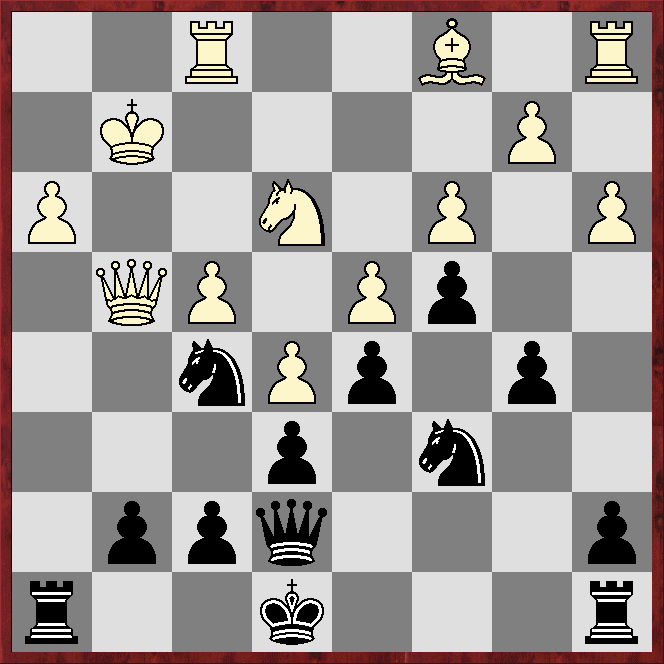
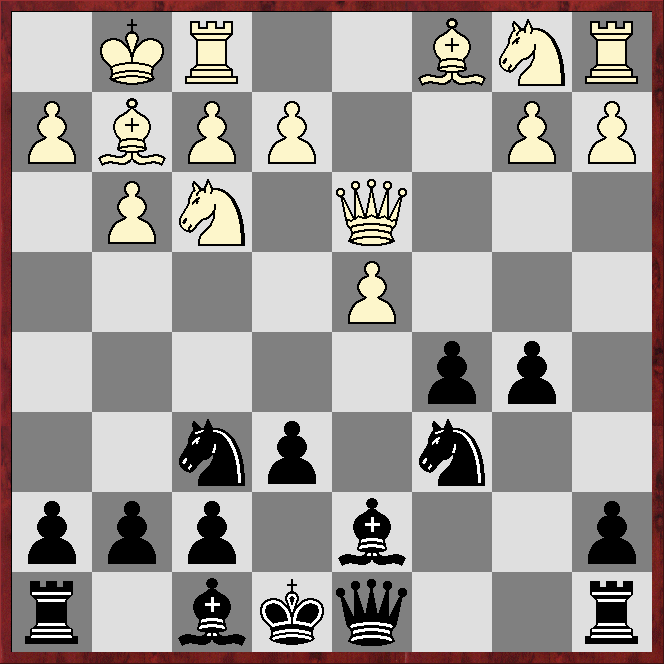
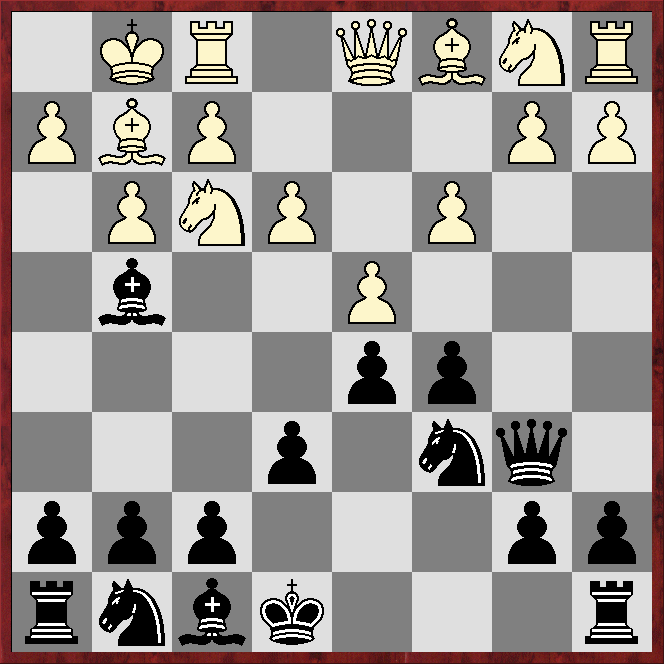
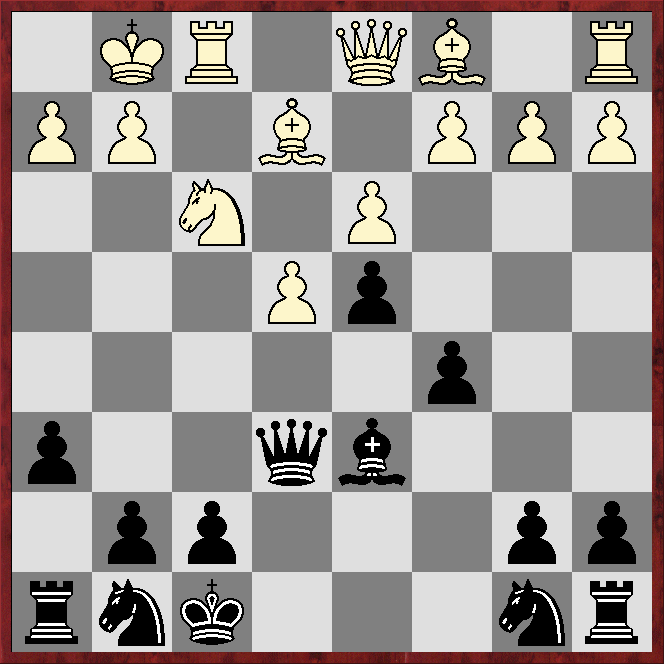
THE following position was reached in my round-nine game at the Amateur Chess Organization's 50+ 'world championships' at Fodele Beach, Crete.
White has just played 21.Nd1-e3
*****
*****
*****
*****
*****
*****
*****
Stockfish17 and Dragon1 agree Black has at least the upper hand, presumably based on Black's safer king and White's bad bishop, hemmed in by its own pawns.
Many moves preserve an advantage for Black, including my choice of 21...Nh6, even if it is not the best.
However, the game remains far from simple, not least thanks to White's central space advantage.
One idea I did not consider seriously enough is exchanging knights.
True, this takes pressure off White's king by reducing the number of black attacking pieces, and I was very much focused on attack.
But it has the great practical advantage of leaving Black with much the better minor piece of the two remaining minors, which means Black can continue pressing for a middlegame decision, while at the same time knowing almost all endings with minors still on will strongly favour Black.
In the game, four minor pieces stayed on the board and White eventually was able to swop the bishop for a black knight.
The move 21...Nxe3 may not be the strongest - the engines slightly prefer 21...g6 - but it is arguably best from a practical view.
LESSON: flexible thinking is an important chess skill. I had been looking for a decisive advantage in the middlegame, and was not flexible enough to properly consider the pluses of having a large endgame advantage 'in reserve'.

Friday, 18 October 2024

Lessons From Crete VIII: Overpressing

MOST players will find the following scenario all too familiar.
You are better, but your opponent keeps finding only-moves to hold the draw.
Nevertheless you keep pressing - after all, it is an ending and, barring a really stupid blunder, there are only two possible outcomes, ie either you win or you have to settle for a half-point.
So you keep pressing and pressing, and eventually your sense of danger deserts you - after all, only two results are 'possible' - and you make a completely stupid blunder.
This is what happened to my opponent in our round-eight game at the Amateur Chess Organization's 50+ 'world championships' at Fodele Beach, Crete.
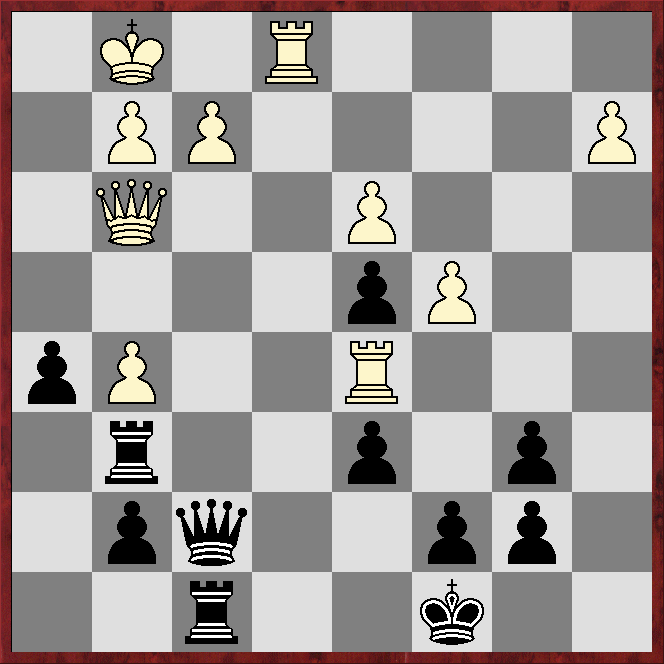
Black to make his 39th move - how would you assess the position?
*****
*****
*****
*****
*****
Black has more space on the kingside, the better bishop (only the white c pawn can be targeted by a bishop), and the more-advanced king.
Dragon1 reckons Black has the upper hand, but Stockfish17 calls the position equal.
It may be the latter engine is correct, in as much White should probably draw with correct play, but the position is undoubtedly easier for Black to play.
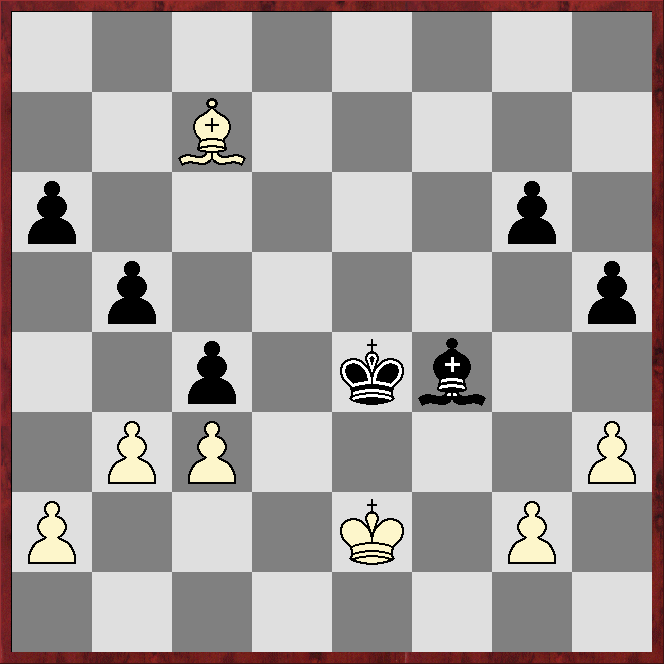
Here is the game after a further 10 moves - how would you assess the position?
*****
*****
*****
*****
*****
The engines keep to their previous assessments, except Dragon1 has become even more enthusiastic about Black's chances, reckoning Black is up by the equivalent of more than a pawn.
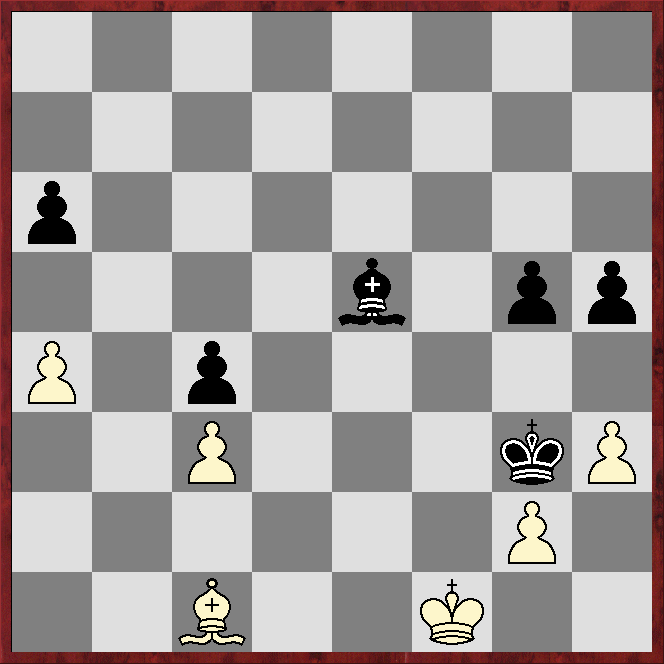
A further 10 moves have passed, during which Black missed a win - how would you assess the position?
*****
*****
*****
*****
*****
Stockfish17 calls the position completely equal, but Dragon1 still favours Black, albeit only slightly (less than a half-pawn).
The game continued:
59...Ke4 60.Ke2 Bd6 61.Kd2 Bf4+ 62.Ke2 Kd5 63.Kf2 Bd6 64.Ke3 Bh2 65.Kf2
And now came the completely stupid blunder, 65...Ke4, which led to resignation after 66.g3.
LESSON: when only two results - a win for you or, at worst, a draw - seem possible, or your position is so overwhelming that a win is 'inevitable', ask yourself every move, "How can I lose this?" - and actually look for ways that a loss could somehow occur.

Thursday, 17 October 2024

Lessons From Crete VII: Square Of The Pawn

THE following position was reached after 50 moves in my round-seven game at the Amateur Chess Organization's 50+ 'world championships' at Fodele Beach, Crete.
Black has just played 50...h4
*****
*****
*****
*****
*****
*****
*****
*****
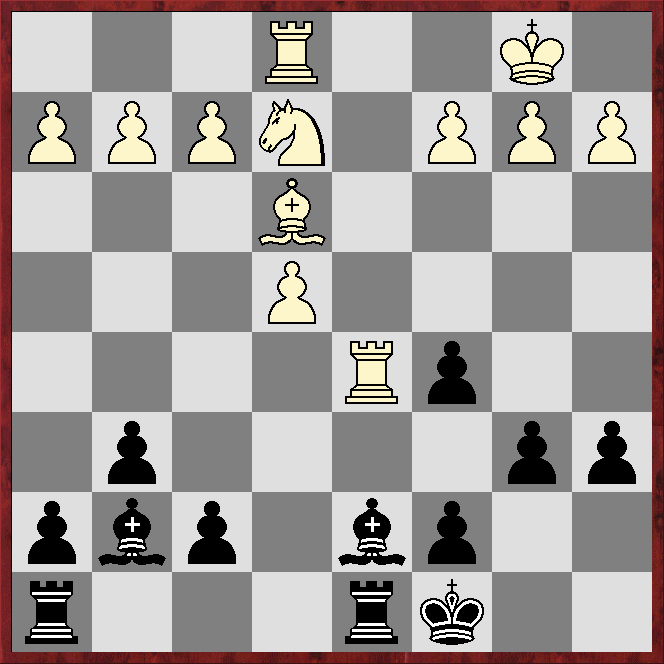
White has a protected passed pawn, which makes many pawn-endings winning for White, but has to be careful not to let Black queen on the kingside.
As is well known, for a king to be able to stop an enemy pawn from promoting, the king must be within 'the square of the pawn'.
Here is a simple example.
The position is drawn even if it is Black to move, and it does not matter whether Black is playing up or down the board! 
In both cases the white king is within an imaginary square formed by counting the number of squares the pawn is from queening and then counting the same number along the rank.
For example, if White is playing up the board, then it can be seen the black pawn is three squares from queening, and the white king is within the square formed by imagining lines from g4-g1, g4-d4, d4-d1 and d1-g1.
Now look at the top diagram again, and it can be seen the white king is within the square of the g4 pawn, which may be why my opponent played 51.Bd5, but after 51...h3 White is lost, the point being the white king is not within the square of the black h pawn, so 52.Ke3, even if it did not drop the bishop, would not save White as Black could show off by playing 52...g3 53.Bf3 Bc6 54.Bxc6 Kxc6 55.Kf3 (or 55.hxg3 h2 etc) gxh2 etc.
The game saw 52.Bh1, but 52...Bc6 forced resignation as 53.Bxc6 Kxc6 54.Ke3 g3 reaches the same position as in the previous paragraph.
LESSON: the square of the pawn is a useful visualisation tool, but it is vital to be sure which enemy pawn's square your king needs to be able to enter.

Wednesday, 16 October 2024

Lessons From Crete VI: The Most Important Factor In Chess

THERE are many candidates for what counts most in chess, including material, time, initiative and accurate analysis, all of which have been put forward by one top player or another.
But arguably all these are trumped by grandmaster Nigel Davies's "most important factor," namely king safety*, as was graphically illustrated in my round-six game at the Amateur Chess Organization's 50+ 'world championships' at Fodele Beach, Crete.
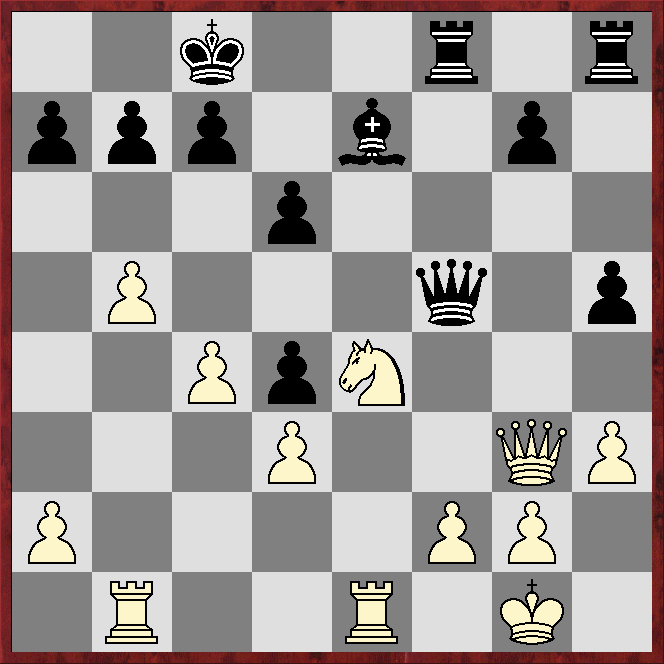
The following position arose after 30 moves.
Black has just played 30...Ke8-e7
*****
*****
*****
*****
*****
Black's rook-plus is only temporary, so really the material situation can be thought of as favouring White by a pawn.
Not only that, but White also has the safer king ... provided the black queen is not allowed into White's position.
I played 31.Qxh7, which turns a probable win into a loss as there is no good answer to 31...Qg4.
Instead 31.h3 would have covered the g4  square, given the white king a bolt hole at h2, and left the rook to be picked up next move.
LESSON: nothing else matters in chess if your king is not safe.
*Davies is not the only GM to emphasise king safety, but he is the one I have seen - mostly on DVDs - emphasise this factor the most.

Tuesday, 15 October 2024

Lessons From Crete V: Keep Active

THE following endgame position arose in my round-five game at the Amateur Chess Organization's 50+ 'world championships' at Fodele Beach, Crete.
White has just played 39.c4-c5
*****
*****
*****
*****
*****
*****
*****
*****
I played the passive 39...Rd8, guarding the back rank, but soon lost after 40.Rxa6 Rc8 41.c6 Kf8 42.Kg3 Ke8 43.Kf4 Kd8 44.g4 Bxg4 45.hxg4 (the rook-and-pawn ending does not save Black) Kc7 46.Ra7+ Kxc6 47.Rxf7 etc.
Instead Black draws fairly comfortably after the active 39...Rc3 40.c6, and now the key move, 40...Kh7 (this could also be played before ...Rc3).
True, White can go a pawn up with 41.Rxa6, but Stockfish17 and Dragon1 call the position completely equal, a likely continuation being 41...Kh6 42.h4 Rc4 43.g3 g5 44.Ra5 g4 45.Bg2 Kg6, and White cannot make progress.
LESSON: passivity should be regarded as a last resort, only to be used when active play is demonstrably wrong.

Monday, 14 October 2024

Lessons From Crete IV: Tunnel Vision

IN round four of the Amateur Chess Organization's 50+ 'world championships' at Fodele Beach, Crete, I played an interesting pawn sacrifice to relieve pressure against my king.
Black has just played 20...Qd7-f5
*****
*****
*****
*****
*****
*****
*****
*****
Black threatens 21...g5, followed by opening lines to the white king.
Stockfish17 and Dragon1 want White to play 21.Qxg7, which I (mistakenly) did not seriously consider.
Instead I played the engines' second choice, 21.b6, the game continuing 21...axb6 22.Rb5 Qf7 23.Rd5 Rh6 24.h4 Rg6 25.Ng5 Bxg5 26.hxg5, reaching the following position.
How should Black proceed?
*****
*****
*****
*****
*****
I cannot be sure, but here I suspect my opponent thought something like this:
White's pawn sacrifice caught me by surprise, and if he now regains the pawn he may well be better. I need to somehow defend d4.
At first glance 26...Qf4 looks good, especially if it leads to queens coming off, as White probably has the safer king. BUT White can reply 27.Re8+, with the forcing continuation 27...Kd7 28.Rxf8 Qxf8 29.Qh3+ Re6 (29...Ke7 looks unpleasant after both 30.Qxh5 and 30.Rf5) 30.Rxd4, when White has regained his pawn, threatens the h pawn and has a pin on the black rook.
That won't do, but instead I can defend d4 with 29...c5 and I remain a pawn up as 30.Rxd6 is a horrible blunder thanks to 30...Rxd6 31.Qxd6 Qxf2+ etc.
There is nothing wrong with White thinking like that, at least as far as the analysis goes.
But it is mistaken thinking because it focuses exclusively on defending d4, rather than looking at the bigger picture.
Instead of the game's 29...c5 the engines point out the much superior 29...c6 30.Rxd4 Rxg5, when 31.Qxg5 loses to 31...Qxf2+ 32.Kh2 Qxd4.
So White should probably play 31.Qe3, but after 31...Re5 Black is a pawn up and has successfully contested the open file.
LESSON: beware getting so engrossed in one aspect of a position that you lose focus on the bigger picture.

Sunday, 13 October 2024

Lessons From Crete III: Choosing The Right Recapture

THE following instructive position arose in my round-three game at the Amateur Chess Organization's 50+ 'world championships' at Fodele Beach, Crete.
Black has just captured on d5
*****
*****
*****
*****
*****
REASONS FOR 26.exd5
1. A pawn on d5 gives White more space in the centre.
2. A pawn on d5 takes away the e6 square from Black's pieces, particularly the queen.
3. The e4 square is freed for a white piece, particularly the knight.
REASONS FOR 26.Rxd5
1. The d6 pawn is left backward on a half-open file.
2. A rook on d5 has pressure down the d file and is more dangerous to the black king than it is on d1.
3. The e pawn is left controlling the f5 square, which is denied to Black's pieces, particularly the queen, and might become an outpost for a white piece, particularly the knight.
I played 26.exd5, which is not even in the top two choices of Stockfish17 and Dragon1. They slightly prefer 26.f4 and much prefer 26.Rxd5.
After 26.Rxd5, the threat of f4 is hard to meet, eg 26...Ne7 (the engines' first choice) 27.f4 Qg6 (27...Nxd5 loses material to 28.fxe5 followed by exd5)28.Qxg6 N5xg6, and then 29.Rd2 leaves pressure, which cannot be evaded by 29...d5 as 30.f5 Nf4 (more-or-less forced as White threatens 31.f6+) 31.Nxf4 gxf4 32.Bxf4 wins a sound pawn as 32...dxe4 fails to 33.f6+ Kxf6 34.Bc7+.
Having played through this line, the engines come to prefer meeting 26.Rxd5 with 26...Qe6, but then 27.Rfd1 threatens 28.Bxe5+ Nxe5 29.Ng3 with Nf5(+) to come.
In the game, 26.exd5 was met by 26...Qf5, when the engines reckon Black has equalised.
The continuation 27.f4 Qg4 forced queens off and so alleviated the danger Black's king faced.
LESSON: concrete analysis in the diagrammed position shows which recapture is better, and concrete analysis is almost invariably better than positional feeling, unless a position is so complicated that reliable conclusions cannot be drawn from analysis.

Saturday, 12 October 2024

Lessons From Crete II: Party Time!

THE following position arose in my round-two game from the Amateur Chess Organization's 50+ 'world championships' at Fodele Beach, Crete.
White has just played 9.Qc4-d3
*****
*****
*****
*****
*****
This position occurs 696 times in ChessBase's 2024 Mega database.
The vast majority - 637 games - feature 9...c4 or 9...Rc8.
After 9...c4 the commonest continuation is 10.Qd1 Rc8 11.Bg5 Be7, when Stockfish17 and Dragon1 reckon Black has fully equalised.
After 9...Rc8 the commonest continuation is 10.dxc5 Bxc5, when Stockfish17 again reckons Black has equalised, although Dragon1 fluctuates between equality and giving White a slight edge.
As well as 9...c4 and 9...Rc8, grandmasters have also played 9...Qb6, but no one over 2399 has tried my choice, 9...Nb4.
After 10.Qd1 Bc6 I thought I was doing well - White's queen has been driven back to its starting square, and the 'Catalan' bishop on g2 has an opposing bishop on the h1-a8 diagonal.
But after 11.a3 Na6 (11...Nbd5 12.e4 is worse, according to the engines) alarm bells started ringing as I had two hangers, ie two pieces (the queenside minors) unprotected by other black pieces or pawns.
The whole sequence reminds me of two of grandmaster John Nunn's axioms.
1. Invite everyone to the party.
Nunn particularly applies this to the build-up of an attack on the king.
The point is to get as many pieces as possible into the action as an attack with just two or three pieces is less likely to succeed unless the opponent's position is very bad.
Inviting everyone to the party can apply equally well to a queenside attack, which is what I had in my game, hence why ...Rc8, or ...c4 followed by ...Rc8, is the best continuation in the above diagram.
2. Loose pieces drop off.
Nunn turned this into an initialism, LPDO, for easy memorisation.
By "loose pieces" he meant any piece, or a pawn for that matter, not protected by a colleague.
After 11...Na6 I have two such pieces, at c6 and a6, while White has none.
The game continued 12.Bg5 cxd4 13.b4 h6 14.Bxf6 Qxf6 15.Qxd4 Be7 16.Nbd2 Qxd4 17.Nxd4 Bxg2 18.Kxg2 Bf6 19.N2b3 0-0, reaching the following position.
Black still has two 'loose pieces', or hangers as I like to call them, on a6 and b5
*****
*****
*****
*****
*****
White is winning, according to the engines, as there is no good answer to 20.Rac1.
LESSON: try to ensure your party is well-attended, and keep an eye out for lonely wallflowers who may need your assistance.

Friday, 11 October 2024

Lessons From Crete: Passivity

WHITE scores about 55% across large databases, a score that reflects the advantage of having the first move.
Moving first is an advantage, no matter how many people you come across who claim they score better as Black.
(When I ask such players what they actually score as White and what they score as Black, they can never give numbers - they just have a gut feeling).
One way of throwing away the advantage of the first move is to play passively, typically by trying to play 'solidly' in the face of a perceived Black threat.
My round-one game at the Amateur Chess Organization's 50+ 'world championships' in Crete neatly illustrates this.
Pay particular attention to White's fifth and seventh moves.
1.Nf3 d5 2.g3 c5 3.Bg2 Nc6 4.d4 Bg4 5.c3 e6 6.0-0 Qb6 7.e3
Position after White's seventh move
Spyridon Skembris, one of the ACO's resident grandmasters at its events, pointed out, after my next move, 7...Nf6, that the position looked as if Black were playing with the white pieces.
Stockfish17 and Dragon1 more-or-less confirm this by giving Black a slight edge - roughly the same edge they give White at the start of a game before a move has been played.
The fault lies with White's passive fifth and seventh moves, which, among other things, make the white queen's bishop a problem piece shut in by its own pawns (Black often has such a problem bishop in d-pawn openings).
Skembris said that, instead of 5.c3, White should play 5.Ne5.
I intended replying 5...Nxe5, which is the most popular continuation in ChessBase's 2024 Mega database, but after 6.dxe5 the engines reckon White has a positionally won game.
That may seem a bit OTT, but following 6...e6 7.c4 it is obvious Black's centre is under a lot of pressure.
White's passive 7.e3 may be a novelty.
The engines prefer 7.a4, meeting 7...Bxf3 with 8.dxc5 Qxc5 9.Bxf3.
They also like Skembris's suggested 7.dxc5 Bxc5 8.b4, an idea seen in lines of the Advance Variation of the French Defence.
LESSON: White, having the advantage of the first move, can get away with more than Black in the opening, but there is a limit, and passive pawn moves are liable to hand the initiative to Black and so give away the very advantage of having the first move.

Thursday, 10 October 2024

Summing Up Crete

AMATEUR Chess Organization events are not sent to Fide to be rated, but if they were my score in the 50+ 'world championship' of +4=1-4 would have lost 28.4 elo.
Chess-themed cakes at the outdoors closing buffet

Wednesday, 9 October 2024

Crete Round Nine

UPFLOATED  against a German.

Manfred Gradwohl (1911) - Spanton (2013)
Amateur Chess Organization 50+ World Championship Group C
French Winawer
1.d4 e6 2.e4 d5 3.Nc3 Bb4 4.e5 b6!?
This move is third in popularity in ChessBase's 2024 Mega database, behind 4...Ne7 and especially 4...c5.
How should White respond?
*****
*****
*****
*****
*****
5.a3
Stockfish17 and Dragon1 like the text, which is the commonest move, and they also like the rare 5.h4!?
5...Bf8!?
This is part of the main idea behind 4...b6!? - preserving Black's good dark-square bishop while seeking to swop off White's good light-square bishop. The engines prefer 5...Bxc3+ and 5...Be7, albeit awarding White the upper hand.
6.f4
This has been played by many grandmasters, but more popular is 6.Nf3.
6...Nh6!? 7.Nf3 c5 8.Bd3!?
This move, which is the top choice of the engines, appears to be a novelty. Known moves are 8.Be3, 8.Bb5+ and 8.Ne2!?
8...Ba6 9.Bxa6 Nxa6 10.Qd3
How should Black proceed?
*****
*****
*****
*****
*****
10...c4!?
This is nearly always a controversial move in the Winawer Variation of the French Defence, even when, as here, it comes with tempo. The move gains space and ensures the white d pawn remains for the foreseeable future on a dark square - the same colour complex as the white bishop - but takes pressure off the white centre.
11.Qe2 Nf5 12.0-0 h5 13.g3!? Be7 14.Nd1
The knight heads to e3 to challenge the black king's knight.
14...b5 15.c3 Nb8 16.Kg2 Nc6 17.h3?
Consistent with earlier play is 17.Ne3, when Stockfish17 reckons Black has an edge after both 17.Nxe3 and 17.g6!? Dragon1 also marginally favours Black.
17...h4! 18.Nxh4
The engines prefer 18.g4 or 18.gxh4.
18...Bxh4!?
This is better than capturing with the knight, which is well-placed in the vicinity of the white king.
19.gxh4 Qxh4 20.Qg4 Qe7?!
The engines agree with avoiding an exchange of queens, but reckon e7 is the worst of the four possible retreat squares.
21.Ne3 Nh6
The engines prefer 21...g6 or 21...Nxe3.
22.Qf3!?
This is the engines' top choice, threatening both 23.f5 and 23.a4.
22...Na5 23.Bd2 Nb3 24.Rad1 0-0-0
Now both sides have castled, how would you assess the position?
*****
*****
*****
*****
*****
The black king cuts something of a lonely figure on the queenside, but it is hard for White to exploit this. Meanwhile the white king could find lines being opened to it, and White has a bad bishop. The engines give Black the upper hand.
25.Be1 Rdg8?!
Probably better is 25...g6.
26.f5 Na5 27.Kh2 Nc6 28.Rd2 Qd8?
Vacating e7 for the queen's knight is a good idea, but it should be done so ...Ne7 does not allow a pin on the h4-d8 diagonal.
29.Rg2 Ne7?!
It was almost certainly better to spend a tempo moving the queen to d7 or e8.
30.Bh4 Qe8 31.Bxe7 Qxe7 32.Rfg1 Rh7 33.f6 Qf8 34.fxg7
Even stronger, according to the engines, is 34.Nxd5!? exd5 35.Qxd5, eg 35...Nf5 36.Qf3!? g6 37.Qxf5+!, or 35...Qd8 36.Qa8+ Kc7 37.Qxa7+.
34...Rhxg7 35.Qf6?
Winning is 35.Rxg7 Rxg7 36.Nxd5!? exd5 37.Qxd5
35...Rxg2+ 36.Rxg2 Rxg2+ 37.Kxg2 Qg8+ 38.Kh2 Qg6? 39.Qh8+
After 39,Qxg6 fxg6 40.Kg3 White has a winning knight-and-pawn ending.
39...Kb7 40.Qf6 Qxf6? 41.exf6 Kc7 42.Kg3 Kd6 43.Kf4 a5 44.Kg5 Ng8 45.Ng4 Kd7 46.h4 Kc6 47.h5 b4
Desperation.
48.axb4 axb4 49.h6 Nxh6 50.Nxh6 e5 51.Nxf7 exd4 52.Ne5+ Kd6 53.cxd4 c3 54.f7 Ke7 55.bxc3 b3 56.Nxd3 Kxf7 57.Kf5 1-0

Tuesday, 8 October 2024

Crete Round Eight

FACED a German.

Spanton (2013) - Uwe Ritter (1893)
Amateur Chess Organization 50+ World Championship Group C
Spanish Exchange
1.e4 e5 2.Nf3 Nc6 3.Bb5 a6 4.Bxc6 dxc6 5.d4 exd4 6.Qxd4 Qxd4 7.Nxd4 Bd7 8.Nc3 0-0-0 9.Be3 g6!?
An unusual continuation, but José Capablanca and Artur Yusupov are among those who have won with it.
10.0-0-0
Now both sides have castled, how would you assess the position?
*****
*****
*****
*****
*****
The main features are White's superior pawn-structure and Black's bishop-pair. White also has a slight lead in development, although it is not clear anything can be done with it. Stockfish17 and Dragon1 call the position equal.
10...Bg7 11.Rhe1 Ne7 12.Nde2 b6 13.Kb1!? c5 14.Nd5 Nxd5 15.Rxd5?
White had to play 15.exd5, after which White's kingside majority is gone, but Black still has the bishop-pair.
How can Black exploit White's last move?
*****
*****
*****
*****
*****
15...Bc6
There is no good answer to the engines' 15...Rde8!, eg 16.f3 f5 17.Nc3 fxe4 18.Nxe4 Bc6 and 19...Bxe4 etc, or 16.Ng3 Bc6 and 17...Bxe4 etc.
16.Rxd8+ Rxd8 17.f3 Re8 18.Bd2 Bd7 19.Nc3 f5!? 20.exf5 Rxd1+ 21.Bxe1 Bxf5
Black has swopped off into an ending in which White has the superior pawn-majority, but Black's bishop-pair is matched against a bishop and knight, with no other pieces complicating matters, on a board with an open centre. The engines reckon chances are equal.
22.Nd5 Be6 23.Nc3!? h5!?
Black could have forced a draw with 23...Bxc3!? as the resulting opposite-coloured bishops neutralise White's superior pawn-structure. Instead the text keeps the game going.
24.Ne4 Bf5 25.c3 Kd7 26.Kc2 Ke6 27.Kd3 b5 28.Bg3 c4+ 29.Ke3 Bh6+!? 30.Bf4 Bf8 31.Bxc7
White has won a pawn, but the position remains equal, according to Stockfish17
*****
*****
*****
*****
*****
The point is that if White is going to win the game, the win will come on the kingside - the c7 pawn was more-or-less irrelevant in that its absence does not help White on the kingside, and its presence would not have helped Black create a passed pawn on the queenside. However Dragon1 gives White a slight edge, presumably on the basis that a pawn is a pawn.
31...Be7?!
But this lets the white king advance, so probably better is 31...Kd5.
32.f4?!
After 32.Kd4 White has the upper hand (Dragon1) or at least is slightly better (Stockfish17).
32...Kd5 33.Ng3?!
The knight proves awkwardly placed here. Since 33.Nf2 and 33.Ng5 allow Black to swop off into an opposite-coloured bishops ending, the correct move to keep the game going is 33.Nd2.
33...Bc5+ 34.Kd2 Be4 35.Nxe4 Kxe4 36.Ke2 Bg1 37.h3 Bh2 38.b3 Bxf4
What should White play?
*****
*****
*****
*****
*****
39.Ba5!?
Drawing is 39.Bxf4!? Kxf4 40.bxc4 bxc4 41.Kf2 as Black cannot make progress, eg 41...h4 42.a3 (42.a4 also draws) a5 43.a4 g5 44.Ke2 Kg3 45.Kf1 g5 46.hxg4 Kxg4 47.Kf2.
Dragon1 at first reckons the text loses, but later switches to giving Black 'just' the upper hand; Stockfish17 reckons White is still equal.
39...Be5 40.bxc4 bxc4 41.Bb4 Bc7 42.a4 Bb6 43.Ba3 g5 44.Bb4 Bc7 45.Ba3 Kf4 46.Bc1+ Kg3 47.Kf1 Bf4 48.Ba3 Bc7 49.Bc1 Be5
How should White proceed?
*****
*****
*****
*****
*****
50.Bd2?
This lets Black force a zugzwang position, whereas 50.Bxg5 Bxc3 51.Be3 holds, according to the engines. But the engines are split as to the merits of 50.Ba3!?, although they agree 50...Bxc3 51.Bd6+ is a draw, eg 51...Kh4 52.Bc5 g4 53.Be7+ Kg3 54.Bd6+ etc. If in this line Black tries 52...Be5, then 53.Bf2+ Bg3 54.Bd4 draws. However, after 50...a5!? there is a sharp divergence - Stockfish17 gives Black a slight edge, while Dragon1 reckons Black is winning. A sample line runs 51.Bb2 g4 52.hxg4 hxg4 53.Kg1 Bf6 54.Kf1 Kh2 55.Kf2 g3+ 56.Kf1 Kh1 57.Ba1. and it is hard to see how Black makes progress.
50...g4 51.hxg4 hxg4 52.Be1+ Kf4?
Winning is 52...Kh2 53.Bd2 g3 54.Be1 Bf4. Not much better is 54.Bc1 Bxc3 55.Bf4 Bb2 etc.
53.Ke2 Ke4 54.Bd2 Bf6 55.Be1 Kd5 56.Kd2 Be7 57.Bf2 Bg5+ 58.Be3!? Be7
Only drawing is 58...Bxe3+ 59.Kxe3 Ke5 60.g3 a5 61.Kd2 (or 61.Kf2, but not 61.Ke2?? Ke4 etc) Ke4 62.Ke2.
59.Bd4 Ke4 60.Ke2 Bd6 61.Kd2 Bf4+ 62.Ke2 Kd5 63.Kf2 Bd6 64.Ke3 Bh2 65.Kf2
Black to play and lose
*****
*****
*****
*****
*****
65...Ke4?? 66.g3 1-0

Monday, 7 October 2024

Crete Round Seven

FACED an Austrian.

Siegfried Voglmayr (1808) - Spanton (2013)
Amateur Chess Organization 50+ World Championship Group C
Sicilian Accelerated Dragon
1.e4 c5 2.Nf3 g6 3.d4 cxd4 4.Nxd4 Nc6 5.Be3!?
The main moves in ChessBase's 2024 Mega database are 5.c4 and especially 5.Nc3, but the text is also popular and will probably transpose.
5...Bg7 6.Nc3 Nf6 7.f3!?
This is third in popularity in Mega24, behind 7.Be2 and especially 7.Bc4.
7...0-0 8.Qd2
This is White's main idea with 7.f3!? - to prepare long castling, followed by a kingside attack.
8...d5
And this is the point of Black's Accelerated Dragon move-order - to get in ...d5 without, as in the normal Dragon, spending a tempo on ...d6.
9.exd5
Stockfish17 and Dragon1 suggest immediate castling, after which the mainline in Mega24 runs 9...dxe4 10.Nxc6 Qxd2+ 11.Rxd2 bxc6 12.Nxe4 Nd5!?, when the engines reckon Black has at least a slight edge.
9...Nxd5 10.Nxd5 Qxd5 11.Nxc6 bxc6
The engines prefer the much more popular 11...Qxc6.
12.Qxd5 cxd5 13.0-0-0
Now both sides have castled, how would you assess the position, which occurs 76 times in Mega24?
*****
*****
*****
*****
*****
Black has the only pawns on the two central files and has half-open lines to the white king, but has an isolated pawn. The engines reckon Black is slightly better.
13...Bb7?
The engines reckon 13...Rd8 maintains a slight edge, but the text is a is a mistake as it lets White win material. Can you see how?
*****
*****
*****
*****
*****
14.Bc5
SV offered a draw.
14...Bf6 15.Bb5?
There is no good reply to 15.Re1 as 15...Rfe8 is met by 16.Bb5.
15...Rfc8 16.Ba3 Rab8 17.b3!? Ba8 18.Bd3 a5 19.Bb2 Bg5+
The engines like 19...d4!?
20.Kb1 a4 21.Rhe1 e6 22.Be5 Rb4?!
This lets White get a protected passed pawn, so probably better is 22...Rb6.
23.a3 Rb6 24.b4
White has at least a slight edge, according to the engines
*****
*****
*****
*****
*****
24...Rbc6?!
Almost certainly better is 24...Be7, or to start getting the other bishop more into play with 24...Bc6 or 24...Bb7.
25.Re2
Probably even stronger is 25.Bb5! Rxc2 26.Ba6 R8c6 27.b5. Black can possibly improve with 25...Rb6!?, but then 26.Bxa4 Ra6 27.Bd7 Rd8 28.Bb5 Rxa3 29.Kb2 gives White a positionally won game, according to the engines.
25...f6!?
The engines suggest, among other moves, 25...Be7.
26.Bb2 Rb8 27.Bc1?!
The engines suggest 27.f4!? or 27.g3.
27...Bxc1 28.Kxc1 e5 29.Kb2 Kf7 30.Rc1 d4 31.c4 dxc3+ 32.Rxc3 Rxc3 33.Kxc3 Bd5 34.Bc2?
This throws away almost all of White's advantage, according to the engines, which recommend 34.b5, or 34.Ba6 followed by b5.
34...Rc8+ 35.Kb2 Bc6 36.Bb1 Rd8
The engines suggest centralising the king with 36...Ke6 or 36...Ke7.
37.Ba2+ Ke7 38.Kc3 Bb5 39.Rd2 Rxd2 40.Kxd2
How would you assess this bishop-and-pawn ending?
*****
*****
*****
*****
*****
White has a protected passed pawn, but it is blockaded and there seems no clear way of safely activating it. Meanwhile Black has a mobile kingside majority. Stockfish17 calls the position equal, but Dragon1 gives White a slight edge.
40...f5 41.Bb1 Kd6 42.Ke3 h6 43.Bd3 Bc6
Black also holds after 43...Bxd3!? 44.Kxd3 g5, according to the engines.
44.Bc4 g5 45.Bd3 Bd7 46.Bc4 h5 47.g3 Be8 48.f4!?
This is the engines' top choice.
48...exf4+ 49.gxf4 g4 50.Kd4 h4 51.Bd5??
White had to play 51.Ke3.
The text allows an abrupt finish:
51...h3 52.Bh1 Bc6 0-1
The point is 53.Bxc6 Bxc6 54.Ke3 loses to 54...g3 55.hxg3 (55.Kf3 gxh2) h2.

Weight 6

I AM keeping a check on my weight while staying at an all-inclusive resort.

Day One: 82.3kg/181lb
Day Two: 82.4kg/182lb
Day Three: 81.9kg/181lb
Day Four: 82.3kg/181lb
Day Five: 81.8kg/180lb
Day Six: 82.8kg/183lb

Sunday, 6 October 2024

Crete Round Six

FACED a Dutchman in the second of yesterday's double-round games.

Spanton (2013) - Huub van Helvoort (1830)
Amateur Chess Organization 50+ World Championship Group C
1.Nc3
1.Nc3 d5 2.e4!?
This keeps the game in independent 1.Nc3 lines, but is disliked by Stockfish17 and Dragon1, which reckon that after ...
2...d4
... Black has a slight edge.
3.Nce2 e5 4.Ng3!? Be6 5.d3
Dick van Geet, after whom the opening is sometimes named, liked 5.c3.
5...Bd6!?
This prevents 6.f4 but unguards g7, which White can immediately try to exploit with a move not in ChessBase's 2024 Mega database.
6.Nh5!?
However the engines reckon Black remains better after 6...Bf8 or ...
6...Kf8!?
... with Dragon1 awarding Black the upper hand, although Stockfish17, given enough time, comes to view the position as equal.
7.f4 exf4?!
But the engines do not like this, preferring 7...g6, when White must avoid 8.fxe5?? as Black can reply 8...Bb4+, winning a piece. Instead 8.f5 gxf5 9.exf5 Bxf5 10.Be2 gives White full compensation for a pawn, according to the engines.
After typing the above I backtracked to the position brought about by 6...Kf8!?, finding Dragon1's evaluation had changed to 'only' a slight edge for Black.
8.Nxf4 Qf6 9.Nxe6+ Qxe6 10.Nf3 c5!?
The engines reckon 10...Nc6?! leaves Black positionally lost, a sample line continuing 11.Be2 Nf6 12.0-0 Re8 13.c3, which gives White the centre.
11.Be2 h6!? 12.0-0
How would you assess the position?
*****
*****
*****
*****
*****
White's lead in development and attacking chances against the uncastled black king give the upper hand, according to the engines.
12...Nf6 13.Nh4!?
The engines reckon White should concentrate on undermining Black's centre, starting with 13.c3, or 13.Bd2 followed by c3.
13...Nbd7
The engines prefer 13...g6 to prevent Nf5, or a more-active positing of the queen's knight at c6.
14.Nf5 Bc7 15.Qe1 Rc8 16.Qh4 Rh7!?
This awkward-looking move is the top choice of Dragon1, and the second choice (behind 16...h5!?) of Stockfish17.
17.Rf2 Ne5!?
This is strongly disliked by the engines, which suggest 17...h5!? or 17...Be5.
18.Bd2 Bd8!? 19.Qg3 Ng8?
A mistake, but the engines reckon only 19...h5!? keeps Black's disadvantage to a minimum, the point being to stick a knight on g4, eg 20.c3 Nfg4 21.Rff1 g6 22.Bxg4 Nxg4 23.Nh4, when White's attack is no more.
20.Raf1 Bf6?
Better is 20...g6.
21.c3!?
White threatens to open a second front against Black's king
*****
*****
*****
*****
*****
21...Nc6 22.Nxd4
Seemingly stronger is 22.Nd6, and even 22.cxd4 Nxd4 23.Nxd4!? Bxd4 24.Bg4 Qc6 25.Bxc8 Qxc8 (25...Bxf2+ 26.Qxf2) 26.Be3.
22...cxd4 23.Bg4 Qe8 24.Bxc8 Qxc8 25.Qd6+
Definitely stronger is 25.e5! Nxe5 26.cxd4 Ng6 27.Rc1.
25...Ke8
How should White proceed?
*****
*****
*****
*****
*****
26.c4?
Black has the upper hand after this, according to the engines, which give 26.e5!, one point being 26...Bxe5 runs into 27.Re2, and if 27...f6 then 28.cxd4 etc.
26...Qd7 27.Qg3?
Any White disadvantage is kept to a minimum by 27.Qa3!?
27...h5?
Strong is 27...Be5, eg 28.Bf4 Qe6 29.Bxe5 Nxe5 30.Rf5 f6, when Black is ready to untangle.
28.Rxf6!
An equalising combination, although Dragon1 at first reckons it loses.
28...Nxf6 29.Rxf6! gxf6?
Correct is 29...h4! 30.Qg5 gxf6 31.Qg8+ Ke7 32.Qxh7 Qg4 33.Be1, and Black has a draw, eg 33...Qd1 34.Qxh4 Qxd3 with complete equality, according to the engines.
30.Qg8+ Ke7
White to play and gain what is probably a winning advantage
*****
*****
*****
*****
*****
31.Qxh7??
Correct is 31.h3!, preventing 31...Qg4 and giving the white king luft, while Black, thanks to not playing 29...h4!, cannot save the rook.
31...Qg4 32.Qh6
There is no defence.
Black to play and win
*****
*****
*****
*****
*****
32...Ne5?
Winning is 32...Qd1+ (32...Qe2 is also probably good enough) 33.Kf2 Ne5.
White to play and draw
*****
*****
*****
*****
*****
33.Qf4??
Both 33.h3 and 33.Bb4+ Ke6 34.h3 draw.
33...Qd1+ 0-1

Free Day

WITH no chess scheduled, the weather forecast naturally changed from 'sunny all day' to 'scattered thunderstorms', but the latter were not expected before 11:00.
I rose early to what passes in Crete for a threatening sky
My plan was to take my usual post-breakfast walk to Fodele village for an espresso, and then head on to the monastery of Saint Panteleimon, a Christian convert martyred in 305 during the Diocletian persecutions.
This dog barked furiously the first day I walked past, but now just wags its tail and yawns

I have been used to seeing - and hearing the bells of - herds of goats, but today quite some time past before I spotted this loner, which was non-stop bleating, perhaps having lost its companions

It is only three kilometres (about two miles) from Fodele Beach Resort to Fodele village, but the roadside is littered with shrines built to commemorate traffic-accident victims or to give thanks for seemingly miraculous escapes

Shrines may contain a saint's icon, mementoes of the victim, offerings and such like, and may be securely locked or open to inspection 

It is hard to tell if this new-looking building - I do not recall it from when I was here three years ago - is a shrine erected by someone rich and especially devout, or perhaps a very small church

A welcome splash of colour

Shrine with an 'eternal flame'

A small flock of geese apparently emboldened by the peace of a Sunday morning to travel by road

An old and gnarled platanus or plane tree in the centre of Fodele, with beside it a plaque commemorating the painter El Greco, who may have been born in the village

Leaving the village, one of the first things seen is this shrine of modest make, but with a carefully tended 'eternal flame'

Gourds

Fat cat - a rarity in Greece

Sunshine enhances the scenery

Pomegranates

Evidence I was nearing the monastery, which is about 3.6km from Fodele village 

Close-up of the cave

This statuesque tree looks to me like a Norfolk Island Pine, but someone may know better

I reached the monastery before it normally opens to visitors at 09:00, but because this was a Sunday the main door was ajar to let in worshippers for a service

The only substantial remains of the monastery, apparently originally built in the hills by monks fleeing early-16th century raids by Turkish pirates and slavers, is this chapel, which today was filled to overflowing 

Monastery cats proved less timid than most Greek cats, and some even approached me to be scratched and stroked, but were too nervous to stay long

Although obliged to return the same way I had come, this had the advantage of seeing things from a different perspective, including this view of an 11th-century Byzantine church

Finally, having almost got back to the hotel, I encountered this herd of goats passing a parked pickup