Showing posts with label Reti Opening. Show all posts

Thursday, 5 February 2026

Lessons From Mariánské Lázně VIII

IN round eight I had black against Germany's Guido Schott (2016).
By coincidence, the players to either side of GS were also Germans, although I did not pay much attention to this before the start of the round.
My game began 1.Nf3 d5 2.e3!? Nf6 3.c4, a somewhat unusual variation of the Réti.
But it is not exactly rare - this position occurs 9,956 times in ChessBase's 2026 Mega database
*****
*****
*****
*****
*****
I continued 3...e6, and, at about this time, or maybe a couple of moves later, I glanced at the adjacent boards to see what was happening there.
Imagine my surprise when I noticed that all three boards were showing the moves Nf3, e3 and c4, although in one case in a slightly different order.
Naturally, since White's system is not forcing, all three games diverged quite considerably quite quickly.
It reminded me of a famous variation in the Sicilian prepared by three Argentinian players when they faced three Soviets in the 14th round of the 1955 Interzonal in Gothenburg, Sweden.
The preparation backfired when Efim Geller found a piece sacrifice, whose follow-up the Argentineans had not properly analysed, and all three Soviet players, using the sacrifice, went on to win, with the games visible for all to see on giant display boards.
Such 'triple games' are rare, but when I asked one of the Germans the next day whether they had indeed prepared Nf3, e3 and c4 together, he agreed they had.
Their preparation worked out slightly better than the Argentineans', although the Germans' score on the three boards of +0=2-1 would not have matched their hopes.
LESSON: team preparation can be fun, but there is a danger of ending up playing something you do not properly understand, and that may not suit your style.

Friday, 23 January 2026

Mariánské Lázně 50+ Round Eight

FACED a German.

Guido Schott (2016) - Spanton (1915)
Réti
1.Nf3 d5 2.e3!?
This is fifth-most popular in ChessBase's 2026 Mega database, behind 2.b3, 2.c4, 2.d4 and especially 2.g3, but has been played by Carlsen, Kramnik, Nakamura and So. It is also liked by Stockfish17.1 and Dragon1, ahead of the quintessential Réti move 2.c4, albeit we are talking fine margins.
2...Nf6 3.c4 e6 4.b3!? c5 5.Bb2 Nc6 6.cxd5
How should Black recapture?
*****
*****
*****
*****
*****
6...Nxd5
The engines prefer 6...exd5 and 6...Qxd5!? over the text.
7.Nc3!?
This is the engines' top choice.
7...Nxc3
The engines suggest 7...Nf6.
8.Bxc3 Qd6!?
This appears to be a novelty, the idea being to get in ...e5 to allow ...Be7. Known moves are 8...f6, 8...Qc7 and 8...Bd7.
How should White respond?
*****
*****
*****
*****
*****
9.d4
The engines reckon White has the upper hand after 9.a3!? (Stockfish17.1) or 9.Qc2 (Dragon1).
9...cxd4 10.Nxd4 Nxd4 11.exd4?!
The isolani gives White more space, but, with all the knights off the board, it is more of a weakness than a strength.
11...Bd7 12.Be2?!
Leaving the dark-square bishop loose on an open file is probably unwise.
How should Black proceed?
*****
*****
*****
*****
*****
12...Rc8
Black gets at least a slight edge, according to the engines, after 12...Qc6, eg 13.Qd3 Rc8!? 14.Bd2 (worse is 14.Rc1? Ba3 15.Rc2 Qxg2 16.Bf3 Qh3) Qxg2 15.Bf3 Qh3, or 13.Bd2 Qxg2 14.Bf3 Qg6 15.Bxb7 Rd8, or 13.Rc1?! Qxg2 14.Bf3 Qg6 15.Bxb7 Rb8 16.Qf3!? Ba3 17.Rd1 0-0.
13.Rc1 Be7
Not 13...Qa3 14.0-0! Qxa2?? 15.Ra1.
14.0-0 0-0
Now both sides have castled, how would you assess the position?
*****
*****
*****
*****
*****
The key feature is the IQP, which gives Black a slight edge, according to Dragon1, although Stockfish17.1 is less sure.
15.Qd2
DS pressed his clock and offered a draw.
15...Rfd8 16.Bf3 Bc6 17.Bxc6 Rxc6
What would have been wrong with recapturing with the queen, giving the above position?
*****
*****
*****
*****
*****
Full marks if you plumped for 18.Ba5!, but go to the bottom of the class (do teachers still use that as a sanction?) if you chose 18.Bb4?, as White is lost after 18...Bxb4!
Back to the game.
18.Bb2 Rdc8 19.Rxc6 Rxc6 20.Rc1 h6 21.Rxc6 Qxc6
How would you assess this queen-and-bishop ending?
*****
*****
*****
*****
*****
The isolated queen's pawn remains the key feature, but with rooks off the board, and with White having no other weakness, it is not decisive. Indeed Stockfish17.1 reckons the position is equal, although Dragon1 gives Black a slight edge.
22.g3
GS offered a draw in my time.
22...Qd5 23.Qc3 Bf6 24.a3
The engines do not like this, preferring 24.Qc2!?, when they reckon 24...Bxd4 25.Bxd4 Qxd4 26.Qc8+ Kh7 27.Qxb7 is equal.
24...h5 25.h4 g6 26.Kh2 Kf8 27.Kg1 Kg7 28.Kh2 b5 29.Kg1 a5!? 30.Kh2?!
This may be a mistake. The engines give 30.Qxa5 Qxb2 31.Qd2, when they reckon White is only slightly worse.
30...Qf5 31.Kg2 Qe4+ 32.Qf3?
This is definitely a mistake. Instead 32.Kf1!? Qb1+ 33.Bc1 (33.Kg2? b4! 34.axb4 axb4 35.Qd2 Qa2 36.Qc2 Kh7 leaves White unable to defend both b3 and d4) g5!? 34.Qe3!? gxh4 35.Qh6+ Kg8 36.Qxf6 Qxc1+ 37.Kg2 hxg3 38.Kxg3 is a sharp line, with several major alternatives along the way, that ends with a position that Dragon1 at first reckons only slightly favours Black, but it comes to agree with Stockfish17.1 that Black is winning.
32...Qc2
32...Qb1! is very strong, in a similar way to the previous note, eg 33.Qc3 b4! 34.axb4 axb4 35.Qd2 Qa2, which is a direct transposition to the line in brackets.
33.Qc3 Qe4+ 34.Qf3?
34.Kf1!? gives the same position as in the note to White's 32nd move. After the text, 34...Qb1! almost certainly wins, as explained above.
½–½

Monday, 17 March 2025

Fareham Round Five

Daniel Sullivan (2051) - Spanton (1984)
Réti
1.c4 e6 2.Nf3 d5 3.g3 d4!?
This is only fifth-most popular in ChessBase's 2025 Mega database (3...Nf6 is normal) but has been played by Magnus Carlsen.
4.Bg2 c5
Starting the game with four pawn moves looks suspicious, especially for Black,  but there seems no way for White to immediately take advantage
*****
*****
*****
*****
*****
5.0-0 Nc6 6.e3 Nf6 7.exd4 cxd4 8.d3 Be7 9.Na3!? Bxa3!? 10.bxa3 0-0
Now both sides have castled, how would you assess the position?
*****
*****
*****
*****
*****
White's bishop-pair is pitted against Black's better pawn-structure and central space. Stockfish17 and Dragon1 reckon White is slightly better.
11.Re1 Nd7!?
Fighting to get in ...e5. After 11...Re8 12.Bf4 the move 12...Nd7 can be met by 13.Bd6!?, although the bishop may not be very stable on such an advanced post. However Dragon1 points out the possibility of 12...Ng4 13.h3 e5!?
12.Rb1 e5
Achieving the aim, but at a high cost in time - the engines reckon White is at least slightly better
*****
*****
*****
*****
*****
13.Ng5 h6 14.Ne4 Nf6
The engines reckon this is an improvement over the known move 14...Qc7?!, which is probably too passive. They also like the ambitious 14...f5!?
15.f4 Re8 16.Qf3
The engines suggest 16.a4!?, although not with the idea of developing the dark-square bishop to a3 (it goes to f4 or d2 in most lines). Presumably the point is to simply gain queenside space, and perhaps to take the b5 square away from Black in the event of White playing c5.
16...Nxe4 17.Qxe4 Rb8
The engines reckon 17...Qf6 gives equality.
18.f5!? f6 19.Qg4
How should Black respond?
*****
*****
*****
*****
*****
19...Ne7!
The only move to keep the game going. Any move of the king loses a piece to 20.Bxc6 etc.
20.Be4
After 20.Bxh6 Nxf5 21.Bd5+ Kf8 22.Bd2 Ne7 (White threatened 23.Bb4+) Black is holding on.
20...Kh7 21.Qh5 Rf8
Probably not 21...Rg8?! 22.Bxh6!? gxh6 23.Qf7+ Rg8 24.Qxf6 Nc6 (forced) 25.Qxd8 Nxd8 26.f6+.
22.g4 Qe8 23.Qh3 Kg8 24.Qg2 Qd7 25.c5!? Qc7 26.Qc2?!
The engines reckon 26.Bd2!? gives equal chances, the point being 26...Qxc5?! is incredibly risky in view of 27.Bb4 Qc7 28.Rec1.
26...Bd7 27.Bd2 Rfc8 28.Qc4+ Kh7
How should White proceed?
*****
*****
*****
*****
*****
29.Rec1?!
Probably better is 29.Qf7, meeting 29...Be8 with 30.Qe6. Black has to be careful, eg 29...Nc6? can be met by 30.Bxh6!?, and by the even stronger 30.g5!, when 30...hxg5? allows mate by 31.Qh5+ Kg8 32.Bd5+ etc.
29...Bc6 30.Bxc6?!
And here the engines prefer going for counterplay with 30.h4 or 30.Qf7.
30...Qxc6 31.Kf2 Qd5?!
Black is well on top after 31...Nd5, according to the engines.
32.Qb3?!
The engines reckon getting the queens off the board gives equality.
32...Rc7?! 33.Qxd5! Nxd5
The queenless late-middlegame is roughly equal, according to the engines
*****
*****
*****
*****
*****
34.Rc4?!
But it is probably easier for Black to play. Correct seems to be getting on with centralising the king by 34.Kf3, and if, as in the game, 34...Rbc8, then 35.h4 is fine as 35...Rxc5 36.Rxc5 Rxc5 37.Rxb7 is completely equal, according to the engines.
34...Rbc8 35.Rbc1 Kg8?!
The engines like 35...Ne7 and 35...h5!?, eg 35...h5!? 36.h3 (36.gxh5 Ne7) g6 as Black is better placed to take advantage of open lines on the kingside.
36.Ra4?
Much better is 36.Kf3.
36...b6 37.cxb6 axb6?
Black has a large advantage after 37...Rxc1, eg 38.bxa7 Rh1! 39.a8=Q Rxa8 40.Rxa8+ Kh7, one continuation being 41.a4 (41.Kg2 Rd1) Rxh2+ 42.Ke1 Rh1+ 43.Ke2 Ra1 44.Kf3 Rxa2 45.Be1 Nf4 etc. Alternatively 37...Bxc1? can be simply met by 38.Nxb6, when both the white rook and bishop hang.
38.Rac4 Nc3?
This loses a pawn, whereas after 38...Rxc4 39.Rxc4 Ra8 40.a4 Kf7 Black may have a slight edge.
39.Bxc3 dxc3 40.R1xc3 Rxc4 41.dxc4
How would you assess this rook-and-pawn ending?
*****
*****
*****
*****
*****
White's extra pawn is doubled, while Black has a protected passer - completely equal, according to the engines.
41...b5 42.c5 Kf7 43.Ke3 Ke7 44.Ke4 Rd8 45.Rb3 Rd4+ 46.Kf3 Kd7 47.Rxb5 Kc6 48.Ra5 Rf4+ 49.Kg3 Rc4?
Despite Black being two pawns down, the game remains completely equal after 49...h5 50.h3 hxg4 51.hxg4 Rf1, according to the engines.
50.Ra7 Kxc5 51.Rxg7 Kd4 52.Rg6
Even stronger seems to be 52.Rf7!?
52...e4?
Better is 52...Rc3+ 53.Kh4 Rc6, holding on to the f pawn. The reason Rf7 was probably stronger than Rg6 at move 52 is that after 52.Rf7!? Rc3+ 53.Kh4 Rc6 the white rook is ready to get behind the black e pawn.
53.Rxf6 Rc3+ 54.Kh4 e3 55.Re6 Rc2 56.Kg3 Kd3 57.h4 Rf2
White to play and win
*****
*****
*****
*****
*****
58.f6?
Both 58.Rxh6 and 58.h5 win easily.
58...Ke2
Black has a drawing net.
59.g5 h5 60.f7 Rf3+ 61.Kg2 Rf2+ 62.Kg3 ½–½

Saturday, 1 March 2025

Winning Chess

BOARD one for England 3 - the team I played for at the world senior 65+ championship in Prague - was Brian Hewson, who scored +3=3-3, gaining 26.8 Fide elo.
Here is his game from round one against Norwegian grandmaster Leif Øgaard.

Hewson (2039) - Øgaard (2358)
Réti/Nimzowitsch-Larsen
1.Nf3 Nf6 2.g3 d5 3.b3 c5 4.Bb2 Nc6 5.d4!?
The main move in ChessBase's 2025 Mega database is 5.Bg2.
5...Bg4 6.Nbd2 Qa5!? 7.Bg2!?
This may be a novelty. Borislav Kostić - János Balogh, Bardejov (Czechoslovakia) 1926, went 7.dxc5 Qxc5 8.Bg2, with an equal game, according to Stockfish17 and Dragon1 (1-0, 35 moves).
7...Bxf3!? 8.exf3!?
The engines prefer this to recapturing with the bishop, presumably because the bishop could become a target for black expansion after, for example, 8.Bxf3 cxd4 9.0-0 e5.
8...cxd4 9.0-0 e5
Black has won a pawn, but White has the bishop-pair and can hope to undermine the black centre
*****
*****
*****
*****
*****
10.a3 Bd6 11.f4!? exf4!?
After 11...0-0 12.fxe5 Bxe5 13.Nf3 the engines reckon White has at least full compensation for a pawn.
12.Re1+ Kf8 13.Nf3 fxg3 14.hxg3 h5 15.Nxd4 h4
Black is still up a pawn, but the position is opening for the bishops
*****
*****
*****
*****
*****
16.Nxc6?!
The engines prefer 16.g4 or 16.gxh4!?
16...bxc6 17.Qf3?
Again the engines prefer g4, but give Black the upper hand.
17...Ne4?!
Winning, according to the engines, is 17...hxg3, eg 18.Bxf6 gxf2+ 19.Qxf2 gxf6 20.Qxf6 Qc5+, but neither king is safe.
18.Qg4 Nf6
If 18...Rh7? then the simple 19.Bxe4 dxe4 20.Qxe4 is good for White.
19.Bxf6 gxf6 20.gxh4
Now White has regained the pawn, but given up the bishop-pair, how would you assess the position?
*****
*****
*****
*****
*****
Clearly it is messy, especially with opposite-coloured bishops, but the engines reckon equal chances.
20...Be5 21.Rad1 Qxa3 22.h5?!
The engines agree White maintains the balance with 22.c4!?
22...Qc5 23.Re2?!
The engines still prefer c4.
23...Rd8 24.Qf5?!
The engines suggest 24.Qh4 or 24.Kf1!?
24...Qd6?!
Black has at least a slight edge after 24...Rg8, according to the engines.
25.Rd3 Rb8 26.Rh3 Qa3 27.Rhe3!? Qd6 28.Rh3!?
An implicit draw offer?
28...a5
Black is right to play on, according to the engines.
29.Rh4 Qe6 30.Qxe6 fxe6 31.f4?
The engines reckon 31.Bh3 leaves Black at best slightly better.
31...Rb4?
Correct is 31...Bd4+, eg 32.Kf1 Kf7.
32.c3 Bxc3 33.Rxe6 Rxb3 34.Rxc6
Black to play and lose
*****
*****
*****
*****
*****
34...d4??
Saving the d pawn, but losing the game. Perhaps I should have titled this post Losing Chess.
35.Rc8+ Kg7 36.Rg4+ 1-0

Tuesday, 18 February 2025

World Senior Team Championship 65+ Round Two

ENGLAND 3 faced Netherlands today.

Ed Baarslag (2005) - Spanton (1896)
Réti
1.Nf3 d5 2.c4 d4 3.b4 c5!?
This and 3...f6 are equally popular. The latter scores two percentage points better in ChessBase's 2025 Mega database, but Stockfish17 and Dragion1 prefer the text.
4.e3
After 4.bxc5 the main line in Mega25 runs 4...Nc6 5.g3 e5 6.d3 Bxc5, when Black is at least equal, according to the engines.
4...dxe3
This is overwhelmingly the commonest continuation in Mega25, but the engines reckon 4...Nf6 is equally good.
5.fxe3 e6?!
This lets White take control of the centre. Normal is 5...cxb4, when 6.d4 also grabs the centre, but after 6..Nf6 7.Bd3 Bg4 the engines reckon Black's extra pawn and pressure give enough compensation. The position after 5...e5?! 6.Nxe5 Qh4+? 7.g3 Qe4 occurs 13 times in Mega25, blacks apparently missing that White has 8.Nf3.
6.bxc5 Bxc5 7.d4 Qa5+?!
Almost certainly better is 7...Bb4+, albeit the engines give White the upper hand after 8.Nbd2!?
8.Bd2 Bb4 9.Bd3 Nf6 10.0-0 0-0
Now both sides have castled, how would you assess the position?
*****
*****
*****
*****
*****
White has the centre and more development - a winning advantage, according to the engines.
11.e4 Bxd2 12.Nbxd2 Qh5 13.e5 Ng4!? 14.Qe2 Nc6 15.h3 Nh6 16.Qf2!? f5 17.Rab1 Nf7 18.Rfe1 Re8 19.c5!? g5 20.Rb3 Kh8 21.Nh2?!
White keeps a winning advantage with 21.Nc4, and other moves.
How can Black exploit White's last move?
*****
*****
*****
*****
*****
21...Qh6?
The engines reckon White has 'only' the upper hand after 21...Rd8. True, 22.Ndf3 g4?! 23.hxg4 fxg4 24.Nh4 Nxd4 can be met by, among other continuations, 25.Re4!?, when 25...Nxb3 26.Qf6+ Kg8 27.Rxg4+ Kf8 28.Rf4!? Rxd3 29.g4 wins the black queen. However 22...Nh6 keeps Black in the game.
22.Nc4 Ne7 23.Ng4!
How should Black respond?
*****
*****
*****
*****
*****
23...fxg4?!
This probably speeds the end, but moving the queen allows Nf6, after which White's advantage is worth more than a piece, according to the engines.
The game finished:
24.Qxf7 Rf8!? 25.Qe7 gxh3 26.Rf1 Rxf1+ 27.Bxf1 h2+ 28.Kh1 g4 29.Qf6+ 1-0
TEAM RESULT
Gerard Welling (IM 2195) 1-0 Brian Hewson (2039)
Gerrit Prakken (FM 2155) 1-0 Anthony Ashby (2049)
Ed Baarslag (2005) 1-0 Tim Spanton (1896)
Jos Ten Hacken (2020) 0-1 Charles Higgie (1945)
NETHERLANDS 3-1 ENGLAND 3

Friday, 13 December 2024

League Chess

PLAYED on board three (of five) for Battersea against Streatham in Central London League division two last night.

Andrew Stone (2153) - Spanton (1965)
Réti
1.c4 e6 2.Nf3 d5 3.g3 d4!?
This is fifth-most popular in ChessBase's 2025 Mega database, but has been played by grandmasters, including Magnus Carlsen.
4.Bg2 Nc6 5.0-0 Nf6 6.e3 Be7 7.exd4 Nxd4 8.Nc3 0-0
Now both sides have castled, how would you assess the position?
*****
*****
*****
*****
*****
The key to the position seems to be the d pawn. If White can get rid of its backwardness by advancing it to d4, White should be doing well. If Black can keep a piece at d4, or at least replace it with a pawn, Black should at worst have the slight disadvantage that comes with moving second.
9.d3 Re8?
This may be a novelty, and not a good one as it flies in the face of the previous note. Better is 9...Nxf3+ or 9...c5, and even 9...Bc5!?, although the latter involves giving up the bishop-pair after 10.Nxd4 Bxd4 11.Ne2!? (or letting White play 12.d4 after 11...Bb6).
10.Nxd4 Qxd4 11.Be3 Qd8 12.d4 c6 13.Qe2 Qc7 14.Bf4 Bd6 15.Bg5 Be7 16.Rad1 Bd7 17.Rfe1 Rad8
How big is White's advantage?
*****
*****
*****
*****
*****
Black has no weaknesses per se, but White's extra space gives much greater freedom of movement and makes it harder for Black to get counterplay. Stockfish17 and Dragon1 give White the upper hand.
18.Bf4 Bd6 19.Be5!? Bc8 20.Bxf6!?
The engines reckon this is premature, preferring 20.a3, eg 20...a5 21.h4!? f6 22.f4 Qe7 23.g4!?, awarding White the upper hand.
20...gxf6 21.Ne4 Be7 22.Qg4+ Kh8 23.Qh5 f5
The engines suggest 23...Rg8 or 23...Kg7!?
24.Ng5 Bxg5 25.Qxg5 Qe7 26.Qe3 Qf6
Black has beaten off the attack, but at the cost of contracting pawn weaknesses and a very bad bishop
*****
*****
*****
*****
*****
27.Rd2 a6!? 28.Red1 Kg7
This may have been a good time to seek to free the light-square bishop with 28...e5!? After 29.dxe5 Rxd2 30.Qxd2 Qxe5 White is obviously better, but only slightly, according to the engines. Alternatively 29.d5 leads to a different sort of play, but again is probably slightly better for White.
29.f4!
The engines agree that this move, making an ...e5 break difficult to achieve, is best.
29...Re7 30.Qa3 Red7 31.Qc5 h5!?
Striving for kingside counterplay.
How should White respond?
*****
*****
*****
*****
*****
32.h4!?
This is Stockfish17's top choice, and it comes to be Dragon1's, although for quite some time the latter prefers 32.a4. The text prevents ...h4 and fixes the black h pawn on a light square, but is double-edged because it weakens g3.
32...Kh6!? 33.Bf3 Qg7 34.Kf2!? Rg8 35.Rg1 Rgd8 36.Ke3 Rd6 37.Rdd1 R6d7 38.Rg2 Rd6 39.a4 R6d7 40.a5 Rd6 41.Rdd2?!
The engines reckon White keeps the upper hand with 41.Rgg1, and even with 41.Rgd2!?, the point about the latter being 41...Qxg3?? fails to 42.Rg2 Qxh4 43.Qe5 with unstoppable mate.
41...Qf6?!
Missing the chance to more-or-less equalise with 41...f6, when 42...e5 is threatened.
42.Rd3 Qg7 43.Be2 R6d7
The move ...f6 is no longer so effective as the protected state of the white rook on the d file means a quick ...e5 is not threatened.
44.Qe5 Qxe5?!
Probably keeping queens on, as John Carlin (2298) suggested afterwards, is better, although 44...f6 45.Qc5 leaves White with the upper hand, according to the engines.
45.dxe5
The engines slightly prefer 45.fxe5!?
45...Rxd3+?
Much  better is 45...c5, with decent chances to hold.
46.Bxd3 c5 47.Rd2 Rg8 48.Kf2 Rd8
How should White proceed?
*****
*****
*****
*****
*****
49.Rd1
The engines reckon White is winning after protecting the rook with 49.Ke1!? (49.Ke3!? also seems to win), eg 49...Rg8 50.Be2!, when 50...Rxg3?! is met by 51.Rd8, winning the black bishop.
49...Rd4 50.Be2 Rxd1 51.Bxd1 Bd7 52.Ke3 Be8 53.b4!? cxb4?
Black has good drawing chances after 53...Bc6!
The game finished:
54.Kd4 Kg7 55.Kc5 f6 56.Kxb4 fxe5 57.fxe5 f4 58.gxf4 Kg6 59.Bc2+ Kf7 60.Be4 1-0
Battersea defaulted on bottom board, losing the match 5-0.

MY BATTERSEA SEASON 2024-5
DATE.....EVENT...........................COL..RATING..OPP'S RATING..SCORE..SEASON PERF
12/9/24  Central London League   W     1933         1886                   1            2286
26/9/24  Central London League   B      1933         2112                   1            2399
15/10/24 Club Championship        W     1968         1578                   1            2259*
31/10/24 Central London League  B      1968         1867                   0            2061*
19/11/24 London League               W     1957         1991                   1            2127*
21/11/24 Central London League   B      1957         2035                   =           2112*
27/11/24 London League               W     1957         1723                   =           2056*
12/12/24 Central London League   B     1965         2153                   0            2018*
*My season's performance is slightly better than this, the point being my win against the 1578 counts as a 1978 performance, which lowers my average despite me winning the game.

Thursday, 3 October 2024

Crete Round Two

FACED a Scot, with my second black in a row.

Michael Ridge (1885) - Spanton (2013)
Amateur Chess Organization 50+ World Championship Group C
Réti/Reversed Grünfeld/Catalan/QGD Tarrasch
1.Nf3 d5 2.g3 c5 3.Bg2 Nc6 4.d4 Nf6
Varying from round one, when I played 4...Bg4!?
5.0-0 e6 6.c4
There are 7,833 games with this position in ChessBase's 2024 Mega database
*****
*****
*****
*****
*****
6...dxc4
This is the main move in Mega24, and leads ChessBase to classify the opening as "E04: Open Catalan: 5 Nf3," but other classifications are possible.
7.Qa4 Bd7 8.Qxc4 b5! 9.Qd3
Probably not 9.Qxb5?! Nxd4.
9...Nb4!?
The main moves are 9...Rc8 and, a tad more popular in Mega24, 9...c4.
10.Qd1 Bc6!?
A superficial glance at the position might lead one to suppose Black is doing well - the white queen has been chased back to its starting square, and the white king's knight cannot move without allowing a swop of light-square bishops
*****
*****
*****
*****
*****
However after ...
11.a3
... the impetuous black knight does not have a good retreat square, eg 11...Nbd5?! 12.e4 is positionally winning for White, according to Stockfish17 and Dragon1.
That leaves ...
11...Na6
... but the knight is sidelined for the foreseeable future.
12.Bg5!?
This may be a novelty. The engines prefer the known 12.Nc3.
12...cxd4 13.b4!?
Fixing the b5 weakness and preventing ...Nc5.
13...h6?!
Probably better is 13...Be7.
14.Bxf6 Qxf6
The engines prefer 14..gxf6!?
15.Qxd4
Even stronger is 15.Qd3!?, according to the engines.
15...Be7 16.Nbd2 Qxd4
Both 17.Ne4 and 17.Rac1 were unpleasant threats.
17.Nxd4 Bxg2 18.Kxg2 Bf6
Perhaps better is 18...Nc7, but Black's position is very difficult.
19.N2b3 0-0 20.Rac1
Can you find a decent continuation for Black?
*****
*****
*****
*****
*****
No, unless your abilities surpass those of Stockfish17 and Dragon1. They reckon best-play goes 20...Bxd4!? 21.Nxd4 Nb8 22.Nxb5 a5, but White is winning.
20...Rfd8 21.Nxb5 Rd7 22.Rfd1 Rad8?!
Perhaps better is the engines' 22...Rb7 23.Nd6 Re7!?, but it is all rather hopeless.
23.Rxd7 Rxd7 24.Rc6 Rb7
There is nothing better, eg 24...Nb8 25.Rc8+ Rd8 26.Nxa7.
25.Rxa6 Rxb5 26.Rxa7 Bb2 27.Nc5 Bd4 28.Rb7!? (1-0, 41 moves)

Wednesday, 2 October 2024

Crete Round One

FACED a German.

Daniel Schröder (1975) - Spanton (2013)
Amateur Chess Organization 50+ World Championship Group C
Réti/Reversed Grünfeld
1.Nf3 d5 2.g3 c5 3.Bg2 Nc6 4.d4
How should Black proceed?
*****
*****
*****
*****
*****
4...Bg4!?
This has been tried by many grandmasters, but Greek GM Spyridon Skembris, who is one of the ACO's resident GMs and kindly offered to go over my game, said Black should play 4...e6 or 4...Nf6. Stockfish17 and Dragon1 basically agree, while also being happy with 4...cxd4. All three moves are more popular than the text in ChessBase's 2024 Mega database.
How should White respond to the bishop's development?
*****
*****
*****
*****
*****
5.c3!?
This is somewhat passive, but is second in popularity behind Skembris's suggested 5.Ne5, and if then 5...Nxe5, White has 6.dxe5, with c4 to come, enhancing the influence of the white light-square bishop.
5...e6 6.0-0 Qb6!?
Normal is 6...Nf6.
7.e3!? Nf6
As Skembris pointed out, Black has a type of position more usually associated with White, and vice versa
*****
*****
*****
*****
*****
8.Nbd2 Be7 9.Qb3 c4 10.Qxb6
The engines prefer 10.Qa4!?
10...a6 11.Re1 Bf5!?
The engines agree that stopping an immediate e4 is Black's best plan.
12.h3!?
The engines strongly dislike this, suggesting 13.Ng5!? with 14.e4 to come.
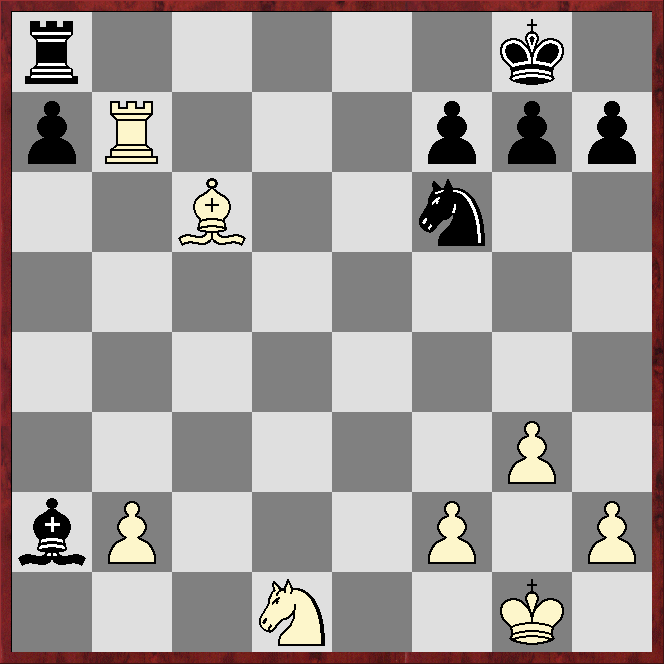
12...0-0 13.Nh2 b5 14.g4!?
The engines like 14.e4, eg 14...Nxe4 15.Nxe4 Bxe4 16.Bxe4 dxe4 17.Rxe4, reaching the same position as is reached in the game, but with the white g pawn on g3 instead of g4.
14...Bd3 15.e4
What should Black play?
*****
*****
*****
*****
*****
15...dxe4
Skembris wanted Black to undertake immediate queenside play, first suggesting 15...b4!? and later 15...Na5? The latter is a mistake, however, as White has 16.exd5, when Black cannot recapture as the bishop at e7 will hang. The engines like 15...b4!? and 15...h6!?
16.Nxe4 Nxe4 17.Bxe4 Bxe4 18.Rxe4 b4
White has opened the position to the benefit of White's bishop and king's rook, but Black has a queenside initiative
*****
*****
*****
*****
*****
19.Re2
Perhaps it was better to start bringing the white knight back into play with 19.Nf1!?
19...Ra4 20.Bf4?!
The engines' 20.Nf3 is probably better.
20...Rfa8 21.Rae1!? bxc3
As Chelmsford's Edgar Wilson, who was watching the analysis, pointed out, 21...Rxa2!? may be stronger, the engines showing that if 22.d5 then 22...exd5!? 23.Rxe7 Nxe7 24.Rxe7 Rxb2 leaves Black winning thanks to the preponderance of black queenside pawns.
22.bxc3 Rxa2 23.Rxa2 Rxa2 24.Rb1
Now that White suddenly has strong counterplay, how should Black continue?
*****
*****
*****
*****
*****
24...g5!
The engines agree this is best, but Skembris's 24...Na5 also seems reasonable.
25.Bc7!?
This may give the best practical chances as, after 25.Be3, Black has 25...Nd8, with the black rook remaining active and the b pawn not falling.
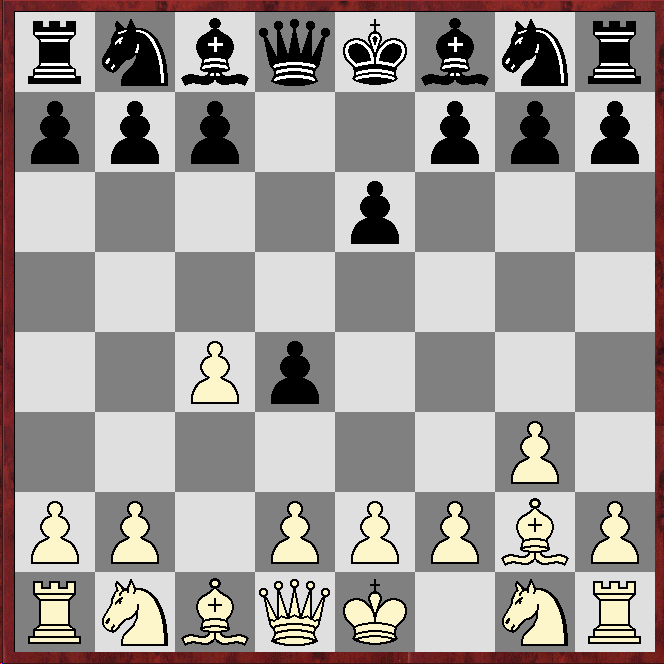
How should Black reply?
*****
*****
*****
*****
*****
25...Rc2
Even stronger seems to be the engines' 25...Nxd4!?, eg 26.cxd4 c3 and 27...c2, or 26.Rxb7 Ne2+ and 27...f6.
26.Rxb7 Rxc3 27.Rb6
Black to play and maintain a winning advantage
*****
*****
*****
*****
*****
27...Nb4!
This proved very difficult to find, as was illustrated by the number of people who could not find it during the post-game analysis.
While playing I thought Black has a draw with 27...Nxd4!? 28.Bxe5 Rb3?? 29.Bxd4 Rxb6 30.Bxb6 c3 31.Be3? Ba3 32.Nf3 c2 33.Nxg5 c1=Q+ 34.Bxc1 Bxc1, but the engines point out that winning for White is the simple 31.Bd4 c2 32.Bb2 as White retains an extra piece. However 27...Nxd4!? does win as 28.Be5 can be met by the engines' 28...Bd8!, eg 29.Rb8 Rc1+ 30.Kg2 Nc6.
28.Rb8+
Or 28.Be5 f6 29.Bxf6 (29.Rxe6? Kf7) Bxf6 30.Rxb4 Bxd4, when, as Skembris pointed out, White's kingside is horribly weak.
28...Kg7 29.Ba5
This pin is easily dealt with, but White is lost anyway.
29...Rc1+ 30.Kg2 Nc6 31.Rb5?!
Objectively better is 31.Bd2.
31...Nxd4
This is plenty good enough, but, as Skembris noted, even stronger is 31...c3!?
32.Rb7 Bf6 33.Nf3 Ne2 34.Rc7?
Better, but still losing, is 34.Bd2.
34...c3 35.Rc5 h6 36.h4!? gxh4 37.Kh3 c2 38.Bd2 Rh1+ 39.Kg2 c1=Q 40.Bxc1 Rxc1 0-1

Tuesday, 30 July 2024

British 65+ Round Two

FACED a Scottish Fide master.

Philip Giulian (2057 ECF/2070 Fide) - Spanton (1919 ECF/1928 Fide)
Réti
1.c4 e6 2.g3 d5 3.Bg2 Nf6 4.Nf3 d4!?
The mainline in ChessBase's 2024 Mega database runs 4...Be7 5.0-0 0-0 6.b3 c5 7.Bb2 Nc6 8.e3 b6, reaching a position occurring 2,315 times in Mega24 - one that Stockfish16.1 and Dragon1 reckon is equal.
5.0-0 Nc6 6.e3 Bc5
How should White proceed?
*****
*****
*****
*****
*****
This is another of those lines in the Réti Opening in which the pawn-sacrifice b4 seems strong. After 7.b4!? Bxb4 8.exd4 Black probably has nothing better than 8...0-0 as 8...Nxd4? loses to 9.Nxd4 Qxd4 10.Qa4+ Bd7 11.Qxb4 Qxa1 12.Ba3 Nd5 13.cxd5 Qf6 14.Qxb7 etc.
7.exd4 Nxd4 8.Nc3 0-0 9.d3 Nxf3+!?
This capture is Stockfish16.1's top choice, but Dragon1 suggests an interesting novelty, 9...e5!?, eg 10.Nxe5 Re8 11.Re1 h6 12.Bf4 Bf5, although the engines agree White has at least a tiny edge.
10.Qxf3 c6 11.Be3!?
The engines like this apparent-novelty. Known moves are 11.Bg5 and 11.Re1.
11...Bd4 12.Bxd4 Qxd4 13.Qe3 Rd8 14.Qxd4 Rxd4 15.Rad1
What should Black play?
*****
*****
*****
*****
*****
15...e5!?
This looks risky, but the engines agree it is correct.
16.Rfe1 Bf5?!
But this is probably the wrong continuation. Perhaps best is 16...Be6, or 16...Bg4 followed, after 17.f3, by 17...Be6, eg 16...Be6 17.Rxe5 Rad8 18.Bf1 Bxc4 19.dxc4 Rxd1 20.Nxd1 Rxd1, with complete equality, according to the engines.
17.Rxe5 Bxd3?
The engines reckon 17...g6 18.Bf1 Rad8 19.Re3 b5 is only slightly better for White.
18.Re7 Rdd8
The engines give 18...c5 as a marginal improvement.
19.Rxb7 Bxc4 20.Bxc6?
PG said after the game he simply forgot to first exchange rooks. Indeed, after 20.Rxd8+ Rxd8 both 21.Bxc6 and Rxa7 are winning.
20...Rxd1+ 21.Nxd1 Bxa2
How should White continue?
*****
*****
*****
*****
*****
22.Rc7
The engines reckon White is at least slightly better after 22.Nc3 Be6 23.Bg2.
22...Nd5 23.Rd7
Or 23.Rxf7 Rc8 24.Bxd5 Bxd5 25.Rf5 Be6 26.Re5 Rc1 27.Rxe6 Rxd1+ 28.Kg2 a5 with almost complete equality, according to the engines.
23...Nb6 24. Rc7 Rc8 25.Rxc8+ ½–½
Note that 25.Rxa7?? would have lost to 25...Rxc6 26.Rxa2 Rc1 etc.

Tuesday, 16 July 2024

Lessons From Bad Herrenalb

BEGINNERS are warned not to move the same piece twice in the opening.
Naturally it is taken as read that there are occasions where something has to be moved for a second time, a common example being when a white bishop on g5 is challenged by ...h6.
But this second tempo can be justified by the fact Black has spent on tempo on pushing the h pawn.
And this is the key point - moving a unit for the second time is often not a good idea if the move is only desirable.
The move usually needs to be justified by some action the opponent has taken, typically spending a tempo, or leaving something unguarded.
My round-one game at Bad Herrenalb reached the following position in a Réti after White played 6.d3.
This position occurs 215 times in ChessBase's 2024 Mega database
*****
*****
*****
*****
*****
The most popular continuations are 6...Be7 and especially 6...Bc5.
I preferred 6...e5!?, which has been played by grandmasters rated over 2700, including world champion Liren Ding, albeit 10 years.
At first glance the move looks good - Black gains space in the centre, supports the advanced d pawn and opens the c8-h3 diagonal for Black's light-square bishop.
But the move violates the beginners' rule against moving a piece, or in this case a pawn, twice in the opening.
Not only that, but it is at an early stage of the opening, when such offences are more likely to be serious, and it is Black who is breaking the rule, which is significant because White is a  tempo up by virtue of having the first move.
The position after 6...e5!? occurs 1,071 times in Mega24, but that is largely because the vast majority of those games reach the position with Black to move.
That makes a huge difference, with Stockfish16.1 and Dragon1 reckoning Black is at least equal.
But the position with White to move gets a very different assessment, with the engines giving White the upper hand.
In the game my opponent replied 7.a3, evidently hoping to get in 8.b4, which I stopped with 7...a5.
However it turns out Black's lost tempo means White can play the immediate 7.b4!?
The obvious point is that 7...Nxb4 can be met by 8.Nxe5, an exchange that clearly favours White.
The much less-obvious point is that 7...Bxb4 can also be met by 8,Nxe5!
After 8...Nxe5 9.Qa4+ White, one way or another, captures the black dark-square bishop, eg 9...Nc6 10.Bxc6+ bxc6 11.Qxb4 with the upper hand for White, according to the engines.
LESSON: moving a pawn or piece for the second time in the opening needs to be justified by something the opponent has done.

Tuesday, 9 April 2024

Tegernsee Round Four

Günter Kaiser (2001) - Spanton (1886)
English/Réti
1.c4 e6 2.g3 d5 3.Bg2 d4!?
This is only fifth-most popular in ChessBase's 2024 Mega database, behind ...c5, ...dxc4, ...c6 and especially ...Nf6, but has been played by Magnus Carlsen.
ChessBase classifies the opening as an English, although I could understand some people calling it a Réti, but in that case the move ...e6 would be a little strange
*****
*****
*****
*****
*****
4.Nf3 Nc6!?
More common is 4...c5, but the text was Carlsen's choice in game nine of the 2021 world championship against Ian Nepomniachtchi, and again when he had the position two years later at blitz. Wesley So, commentating for ChessBase on the world championship, called the text "very suspicious."
5.e3
Nepomniachtchi preferred castling, the game continuing 5...Bc5 6.d3 Nf6 7.Nbd2 a5 8.Nb3 Be7 9.e3 dxe3 10.Bxe3 Ng4 11.Bc5!? 0-0 with a slight edge for White, according to Stockfish16 and Komodo14.1 (but 0-1, 39 moves).
5...Nf6 6.exd4 Nxd4 7.0-0 Bc5 8.b4!?
This seems to be a novelty. Known moves are 8.d3, 8.Nxd4 and 8.Nc3.
How should Black respond?
*****
*****
*****
*****
*****
8...Nxf3+
Not 8...Bxb4? 9.Nxd4 (Black seems OK after 9.Qa4+?! Nc6 10.Ne5 Rb8!) Qxd4 11.Qa4+! Bd7 12.Qxb4 Qxa1 13.Ba3 etc.
9.Bxf3
The engines marginally prefer giving up a pawn with 9.Qxf3!? Bxb4, continuing 10.Qb3, claiming White more-or-less has enough compensation, although Stockfish16 is less keen on the white position than Komodo14.1.
9...Bd4 10.Nc3 0-0 11.Rb1 e5 12.Re1 Bf5
How should White proceed?
*****
*****
*****
*****
*****
13.Rb3
Not 13.Bxb7? Bxc3, eg 14.Rb3 Bd4! 15.Bxa8 Qxa8, when the material balance only slightly favours Black, but positionally White is busted.
13...c6 14.Ne2!?
This is the engines' top choice.
14...Bb6 15.c5 Bc7 16.d4
GK offered a draw in my time.
Should Black accept?
*****
*****
*****
*****
*****
A matter of taste, but the engines give Black a slight edge.
16...e4 17.Bg2 Re8
The engines like 17...h6!?
18.Bg5 h6 19.Bxf6 Qxf6 20.d5?
The game seems roughly equal after 20.Nc3 or 20.Re3, with both centre pawns being vulnerable.
20...cxd5 21.Qxd5 Be6 0-1
Was White's resignation premature?
*****
*****
*****
*****
*****
Yes.
The engines give best-play as 22.Qxb7 Bxb3 23.axb3 Qe5 24.Nc1!? Rab8!? 25.Qc6!?, when they reckon Black has at least the upper hand, but the position is far from simple.

Tuesday, 31 October 2023

Bavarian International Round Four

Jens Weichelt (2042) - Spanton (1858)
Réti
1.Nf3 c5 2.e3 g6 3.d4 d5 4.Be3 Nc6 5.0-0 cxd4 6.exd4 Bg7 7.c3
This pawn-formation could arise from the Exchange Variation of the Caro-Kann
*****
*****
*****
*****
*****
7...Nf6 8.Bf4 0-0 9.Nbd2 Nh5!? 10.Be3 Qd6 11.Re1!?
This seems the best way of meeting Black's threat to win the bishop-pair.
11...Nf4 12.Bf1 a6
How should White proceed?
*****
*****
*****
*****
*****
13.Ne5!?
How should Black respond?
*****
*****
*****
*****
*****
13...Nh5
After 13...Bxe5 14.dxe5 Qxe5 I was worried about 15.Qf3. However Stockfish16 and Komodo14.1 continue 15..g5. albeit giving a slight edge to White.
14.Ndf3 f6 15.Nxc6
The engines prefer 15.Nd3.
15...bxc6 16.b4!? Re8 17.Nd2!?
The c5 square beckons.
What should Black play?
*****
*****
*****
*****
*****
17...e5!?
Aggressive, and perfectly reasonable, if followed up correctly.
18.g4!? exd4 19.cxd4 Nf4??
This loses a piece, Correct is 19...Bxg4! 20.Qxg4 f5 with ...f4 and at least equality to come.
20.Bxf4 Rxe1 21.Bxd6 Rxd1 22.Rxd1 (1-0, 32 moves)