Showing posts with label Sicilian Grand Prix Attack. Show all posts

Monday, 29 June 2026

Lessons From Bischofsgrün VI & VII

IN round six I was White against Dieter Bauer (1787), and in round seven I was Black against Manfred Herbold (2075).
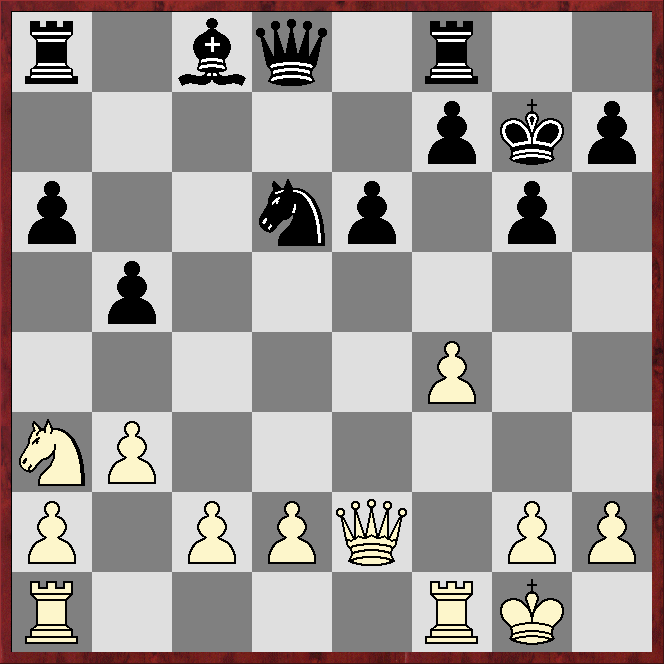
The openings were very different - an English and a Sicilian Grand Prix Attack - but there was something similar about Black's position in both games after 10 moves.
Black has just captured on c4 in the English game
Black has just pushed the e pawn in the Sicilian game
In the English game, Black has one developed piece, a knight, against White's three - a bishop and two knights.
In the Sicilian game, Black has one developed piece, a bishop, against White's, arguably, four - both rooks and both knights, and White has castled.
In both games it is White to move, so Black's lack of development is even starker.
But there is a huge difference in how Stockfish18 and Dragon1 evaluate the positions.
In the first diagram, White is winning, according to the engines, after the game's 11.0-0, and after 11.Nxc6!
In the second diagram, again according to the engines, White has the normal slight edge one associates with moving first.
Why the difference, especially in view of the discrepancy in development being greater in the second diagram, and White having a doubled and vulnerable pawn in the first diagram?
The answer is that in the first diagram, lines have been opened in the centre, which makes it easier for pieces to attack the opponent's position in general, and the opponent's king in particular.
In the second diagram, while the centre is not closed, it is definitely not open either, with both sides having eight connected pawns, and none in contact with enemy pawns.
LESSON: the importance of development increases dramatically as lines are opened.

Thursday, 18 June 2026

Bischofsgrün Round Seven

Manfred Herbold (2075) - Spanton (1951)
Sicilian Grand Prix Attack
1.Nc3 c5 2.e4 Nc6 3.f4 g6 4.Nf3 Bg7 5.Bb5 Nd4 6.d3?!
This fairly common continuation - there are 100 examples of the position after 6.d3?! in ChessBase's 2026 Mega database - may be a mistake.
How should Black proceed?
*****
*****
*****
*****
*****
6...Nxb5
Winning the bishop-pair. However, after the little-played 6...Qa5!? 7.Bc4 (forced) Nxf3+ 8.gxf3 (8.Qxf3?? Bxc3+ 9.bxc3 Qxc3+ sees Black winning rook and pawn) b5!? 9.Bd5 Rb8, Stockfish18 and Dragon1 give Black the upper hand.
7.Nxb5 a6
The commonest continuation in Mega26 runs 7...Qa5 8.Nc3 Bxc3+!? 9.bxc3 Qxc3+, but after 10.Bd2 White has a slight edge, according to the engines.
8.Nc3 d6
The engines suggest 8...b5!? or 8...b6.
9.a4 b6 10.0-0 e6!?
The engines suggest getting on with development with 10...Bb7 or 10...Nf6.
11.Qe1 Ne7
How should White proceed?
*****
*****
*****
*****
*****
12.g4?!
The engines strongly dislike this, suggesting two apparent-novelties in 12.e5 and 12.a5, but they also prefer, over the text, the known moves 12.Ne2 and 12.Bd2.
12...h5!?
Even stronger may be 12...f5.
13.g5 d5 14.Bd2 0-0
Now both sides have castled, how would you assess the position?
*****
*****
*****
*****
*****
White is more developed, and has more space on the kingside, but it is not easy for White to open lines there. Meanwhile, Black has the bishop-pair and the safer-looking king, although the former factor is hardly a big issue in the present position. The engines award Black the upper hand.
15.Ne2?!
A positional pawn sacrifice that the engines do not like.
15...Nc6?!
After 15...Bxb2 the engines reckon both 16.Rb1 and 16.Bc3!? leave Black with at least the upper hand.
16.Bc3 d4 17.Bd2 f5?
Black has a slight edge after 17...Bb7, according to the engines.
18.gxf6 Rxf6!?
How should White continue?
*****
*****
*****
*****
*****
19.Qg3!
White can win the exchange with 19.f5 exf5 20.Bg5, but 20...fxe4 gives decent compensation, eg 21.Bxf6?! Qxf6 22.dxe4 Bh3. Better is 21.dxe4, but Black is fine, according to the engines, after, for example, 21...Qd6 22.Bxf6 Bxf6.
19...Qe8 20.Rf2 Bh6?!
The engines suggest 20...e5!? or 20...Ra7, one point being 20...e5!? should probably not be met by 21.fxe5?! as 21...Nxe5 22.Nxe5 Rxf2 23.Kxf2 Bxe5 gives Black decent counterplay, although the position is unclear (equal - Stockfish18; White has the upper hand - Dragon1).
21.Rg2 Ra7!?
This loses a pawn, but may be Black's best continuation.
22.e5
Possibly even stronger is 22.Qh4!?, but the text is good enough for a winning advantage.
22...Rf8 23.Qxg6+ Qxg6 24.Rxg6+ Rg7 25.Rxg7+ Kxg7 26.Kf2 Ne7?!
The engines much prefer 26...Bd7 or 26...Kh8!?
27.Rg1+ Kh7 28.Ng5+ Bxg5 29.Rxg5 Rf5
What should White play?
*****
*****
*****
*****
*****
30.Rxf5
30.h4?! lets Black equalise with 30...Rxg5 and 31...a5!, according to the engines;
30.Rg3?! can be met by 30...Ng6; and 30...Rg2?! loses a tempo to 30...Bb7.
But best may be 30.Rg1!? MH rejected it because of the line 30...Ng6? 31.Ng3 Nxf4? 32.Nxf5 Nh3+, missing that after 33.Kg2 Nxg1 White wins a piece with 34.Nd6. I intended 30...h4, but 31.Rg4 Ng6 32.a5!? is winning, according to the engines.
30...Nxf5
How would you assess this minor-piece ending?
*****
*****
*****
*****
*****
Black has a strong knight, but a pawn is a pawn, and the engines reckon 31.a5! wins, eg 32...b5 33.Nc1!, or 32...bxa5 33.Bxa5 Ne3 34.Ng3 Nxc2 35.Ne4, although the play is tricky.
31.b4?! cxb4 32.Bxb4 Bd7 33.a5 ½–½

Wednesday, 10 June 2026

League Chess

PLAYED on board six (of eight) for Battersea against Hammersmith 2 in London League Division Two last night.

Sergiy Teslya (2059) - Spanton (1954)
Sicilian Grand Prix Attack
1.e4 c5 2.Nc3 g6 3.f4 Bg7 4.Nf3 Nc6 5.a3!?
There are 404 examples of this move in ChessBase's 2026 Mega database, including being played by Magnus Carlsen. The move is Dragon1's second choice, at least for a while; Stockfish18 prefers 5.a4!?
5...d6 6.Bc4 e6 7.d3
This has been tried by David Howell and Alexander Morozevich, but Carlsen both times preferred castling.
7...Nge7 8.Ba2!? 0-0
This is the commonest continuation in Mega26, but Stockfish18 suggests 8...b6, 8...d5 or 8...Rb8. Dragon1 at first quite likes castling, but comes to prefer 8...b6 or 8...Rb8.
How should White proceed?
*****
*****
*****
*****
*****
9.h4!?
This is the engines' top choice.
9...d5 10.h5 Nd4 11.hxg6
This has been played by a 2623, and comes to be Dragon1's top choice, at least for a while, but Stockfish18 suggests apparent-novelties in 11.Qd2!?, 11.Bd2 and 11.Ne2!?
11...fxg6 12.Ng5!? h6 13.Nf3
The engines reckon this apparent-novelty is a slight improvement on Anton Demchenko (2623) - Eduardo Jesús Méndez Fortes (2250), Chess.com Blitz 2023, which featured 13.Nh3, after which 13...b5 14.Ne2 dxe4 was at least equal for Black, according to the engines (0-1, 53 moves).
13...Kh7
Strengthening h6, but weakening g5.
14.Qd2!? dxe4?!
The engines strongly dislike this. Stockfish18 gives 14...Qc7 15.Nxd4 cxd4 16.Ne2 Bd7, claiming a slight edge for Black, although Dragon1 reckons it is White who has at least a slight edge.
15.dxe4 Nxf3+ 16.gxf3 Qxd2+ 17.Bxd2 e5?!
This is Dragon1's top choice, for a short while, but the engines come to agree 17...b6 is best, albeit awarding White the upper hand.
What should White play?
*****
*****
*****
*****
*****
18.Ne2?!
The engines reckon White has a positionally won game after 18.fxe5!? Rxf3 19.e6!?, eg 19...Rf6? loses to 20.Bg5. Stockfish18 gives as best 19...b5!? 20.Bg5 c4!?, but 21.Bxe7 Bxe6 22.0-0-0 is clearly winning. Dragon1 suggests 19...a5, but 20.Bc4 (Stockfish18 reckons 20.Bg5 is even stronger) Nc6 21.Nb5 Nd4 22.Nxd4 cxd4 23.0-0-0 is very strong.
18...Bd7?!
Probably better are 18...exf4 and 18...Nc6.
19.0-0-0 Rad8?
Possibly best is 19...Nc6, although the engines prefer White after both 20.c3 and 20.f5!?, eg 20.f5!? gxf5 21.c3!? f4!? (this is best, according to the engines) 22.Bxf4! Bc8 23.Bd2 Rxf3, when they agree White has more than enough for a pawn, but they disagree on how to proceed.
20.Be3
How should Black continue?
*****
*****
*****
*****
*****
20...b6
The best the engines can come up with is 20...Bb5!?, when 21.c4 Rxd1+ 22.Rxd1 Bc6 23.Bxc5 Re8 24.Bxa7 wins two pawns.
21.fxe5 Rxf3?
The engines give 21...h5, but White has several strong continuations, including 22.Nf4 Bh6 23.Nd5 Bxe3+ 24.Nxe3 Rxf3 25.Ng4!?, when Black has no good answer to Nf6(+).
22.Bg5 Bf8
There is no satisfactory move..
The game finished:
23.e6 Kg7 24.Bxh6+ Kf6 25.Bxf8 1-0
Hammersmith 2 won the match 4.5-3.5.
My Battersea Season 2025-6
Date       Event  Colour  Rating  Opp's Rating  Score  Season's Perf
16/9/25   CLL       W       1936         1952             0           1552
18/9/25   CLL       W       1936         1797             =           1675
16/10/25 CLL       W       1889         2047             0           1665
23/10/25 CLL       B        1889         1823             1           1805
18/11/25  LL         W       1891         1980             =           1840
20/11/25  CLL      W       1891         1866             1            1911
25/11/25  BCC     B        1891         1817             1            1955
9/12/25    LL         W       1904         1982             1            2008
16/12/25  LL         B        1904         2046             0            1968
18/12/25  CLL      B        1904         2066             1            2018
6/1/26      CLL      W       1929         2150             =            2066
7/1/26      LL         W       1929         1971             =            2058
8/1/26      CLL      B        1929         1800?           =            2038
13/1/26    LL         B        1929         2035             1            2067
27/1/26    LL         B        1929         2089             0            2041
29/1/26    CLL      B        1929         1882             =            2031
3/2/26      BCC     W       1928         1836             1            2043     
12/2/26    CDL      B        1928        1890              1            2057
25/2/26    LL         B        1928        1863              =            2047
26/2/26    CLL      B         1928        2015             0            2025
3/3/26      CDL      B        1914        1976              1            2043
24/3/26    BCC     W        1921        1780             1            2049
26/3/26    CLL      B         1921        1942             =            2045
31/3/26    CDL      B        1921         2091             0            2030
7/4/26      BCC     B         1938        1505*            1            2030
9/4/26      CLL      W        1938        2012              =           2029
30/4/26    CLL      W        1938        2285              0           2023
7/5/26      CLL      W        1939        2007              1           2037
9/6/26      LL         B         1954        2059              0           2024
CLL: Central London League
LL: London League
BCC: Battersea club championship
CDL: Croydon & District League
I also have a win-by-default in the Central London League
*A win against a 1505 counts as a 1905 performance, so I have excluded this game from calculating my season's performance as it would lower my average despite me winning.

Saturday, 14 September 2024

Lessons From Torquay VI: Magnus The Not-So-Magnificent

MY round-six game began 1.e4 c5 2.Nc3 Nc6 3.f4 g6 4.Nf3 Bg7 5.a4!?
This position occurs 208 times in ChessBase's 2024 Mega database
*****
*****
*****
*****
*****
In 123 of those games, Black played 5...e6, which scores 81% if White continues 6.Bc4?!
Magnus Carlsen is among those who have played 5...e6, admittedly in online blitz against a much-lower rated opponent.
But Stockfish16.1 reckons the reply 6.e5!? gives White a slight edge, although Dragon1 comes to view the game as equal.
Instead of 5...e6, they prefer 5...b6!?, and the move I played, 5...a6!?
LESSON: Magnus Carlsen may be the best-ever chess player, and plays a wide variety of openings in which he often comes up with surprising, but engine-approved, continuations. However, he is not infallible.

Thursday, 5 September 2024

Riviera Round Six

I WAS upfloated against a Guernsey-registered player.

Jamie Morgan (1880 ECF/1809 Fide) - Spanton (1931 ECF/1980 Fide)
Sicilian Grand Prix Attack
1.e4 c5 2.Nc3 Nc6 3.f4 g6 4.Nf3 Bg7 5.a4!?
This unusual continuation is the top choice of Stockfish16.1; Dragon1 prefers the much commoner 5.Bb5, and 5.Be2.
How should Black respond?
*****
*****
*****
*****
*****
5...a6!?
Most popular is 5...e6, which has been played by Magnus Carlsen. However Stockfish16.1 reckons 6.e5!? gives White a slight edge, although Dragon1 comes to rate the game as equal.
6.Bc4 e6 7.d3 Nge7 8.0-0 d5 9.Ba2 0-0
Now both sides have castled, how would you assess the position?
*****
*****
*****
*****
*****
White has a lead in development and more kingside space, but the white queen's bishop does not have a good square to go to. Black has a powerful fianchettoed bishop. The engines reckon Black is at least equal.
10.Qe1
This occurred in 42 of the 82 games to reach the position in ChessBase's 2024 Mega database, but the engines prefer 10.Ne2!? or 10.e5!?
10...Nd4 11.Nxd4
The engines point out 11.Bb1!? as an alternative, but neither move is ideal.
11....cxd4 12.Ne2 dxe4 13.dxe4 d3
The engines suggest 13...b5!?, which would seem a novelty.
14.cxd3 Qxd3 15.Ng3 Bd7 16.f5?!
Sacrificing the white f pawn on the f5 square is thematic in the Grand Prix Attack, although it does not seem to work here. However it is tricky as after ...
16...exf5
... White has ...
17.Bg5!?
Bearing in mind the black knight is hanging, and the black light-square bishop is loose, how should Black proceed?
*****
*****
*****
*****
*****
17...Nc6?
Correct is 17...Qd4+, and if 18.Kh1 then 18...Rae8 (18...Rfe8 is also good), the idea being 19.Rd1?! is met by 19...Qxa4.
18.Rd1 Bd4+ 19.Kh1 Qc2 20.Bb1!
The engines agree this is best.
20...Qxb2 21.exf5?!
This throws away much of White's advantage, whereas the engines' 21.Ne2! wins, eg 21...Be6 runs into 22.Nxd4 Nxd4 23.Bf6.
21...Rae8 22.Qd2
White still has at least a slight edge, according to the engines, after 22.Be4.
22...Qxd2 23.Rxd2 Bc8!?
This backward bishop move - the second in the game - solves Black's problems, as does, according to the engines, 23...Bxf5.
24.Be4
Maybe 24.Ne4 is slightly better, eg 24...Bxf5 25.Nd6 Re5 26.Nxf5 gxf5 27.Bf6 Rd5 28.Bxf5, a sharp line in which the engines reckon White gets full compensation for a pawn.
What should Black play?
*****
*****
*****
*****
*****
24...Be5
The engines also like 24...Bh8, but the exchange sacrifice 24...Rxe4? 25.Nxe4 Bxf5 does not seem good, despite Black having two pawns and the bishop-pair for a rook. After the further move 26.Nd6 Black has major problems, eg 26...Bc8 runs into 27.Rxd4! Nxd4 28.Be7 etc.
25.fxg6?!
The engines prefer 25.Rdd1!? or 25.Bh6.
25...hxg6
25...fxg6!? may be even stronger, according to the engines.
26.Bxc6 bxc6 27.Ne4 Kg7 28.Nd6
White has equality after 28.Nf6 Re6 29.Ng4, according to the engines.
28...Re6 29.Nxc8 Rxc8 30.Rd7 Rf8
Possibly stronger is 30...Bf6 31.Bxf6+ Rxf6 (Dragon1 reckons Black is winning at first, although later gives Black 'only' the upper hand; Stockfish16.1 gives Black a slight edge).
31.Be8 Re8 32.Bg5 Bf6 33.Bxf6+ Rxf6
How should White proceed?
*****
*****
*****
*****
*****
34.Rg1?
Even worse is 34.Rxf6?? Re1+ 35.Rf1 Rxf1#, but the engines reckon 34.Kg1 leaves Black with at best a slight edge.
34...Re4 35.a5 Rh4 0-1

Sunday, 9 July 2023

Lessons From Prague 8

IN round eight with Black I faced the Grand Prix Attack in the Sicilian, reaching the following position after the moves 1.e4 c5 2.Nc3 Nc6 3.f4 g6 4.Nf3 Bg7 5.Bc4 e6 6.0-0 Nge7 7.Qe1!? Nd4!? 8.Nxd4 cxd4 9.Nb5!?
How should Black proceed?
*****
*****
*****
*****
*****
*****
*****
I played 9...0-0?!, after which 10.Nd6 (the game saw White push his e pawn) is at least equal.
What Black should play is 9...d5 10.exd5 exd5, which I rejected because if White captures for a second time on d5 and Black replies 11...Qxd5??, White wins with 12.Nc7+.
I missed, although I knew the idea from similar lines in the Sicilian, that after 11.Bxd5?? Black has the zwischenzug 11...a6, winning one of White's fifth-rank pieces.
LESSON: I knew the right idea in the diagrammed position, but failed to recall it at the board. Nevertheless Black's ninth move was obviously going to be critical, and it was incumbent on me to devote enough time to properly work out what was going on.

Thursday, 29 June 2023

Prague Open Round Eight

PLAYED a South African junior (born 2012) this afternoon.

Michael Schwartz (1237) - Spanton (1824)
Sicilian Grand Prix Attack
1.e4 c5 2.Nc3 Nc6 3.f4 g6 4.Nf3 Bg7 5.Bc4 e6
Black's position has several holes - can White take advantage of this?
*****
*****
*****
*****
*****
6.0-0
This is the most popular continuation in ChessBase's 2023 Mega database, but White has many other possibilities, including the sharp 6.f5!?, when the mainline in Mega23 runs 6...Nge7 7.fxe6 fxe6 8.d3 d5 9.Bb3 b5!? with equal chances, according to Stockfish15.1 and Komodo14.1.
The latter engine suggests 6.e5!?, and if 6...d6 then 7.Qe2, although Stockfish15.1's reply of 7...Nge7 splits the engines after 8.Ne4 dxe5 9.fxe5 Nxe5 10.Nxe5 Bxe5. Komodo14.1 reckons White has full compensation for a pawn, but Stockfish15.1 gives Black at least a slight edge.
Instead of castling or pushing a pawn to the fifth rank, Stockfish15.1 suggests 6.d3 Nge7 7.0-0 0-0 8.Bb3!?, but gives Black the better side of equality.
6...Nge7 7.Qe1!?
The mainline in Mega23 runs 7.d3 0-0 8.Qe1 d5 9.Bb3 Nd4 10.Nxd4 cxd4 11.Ne2 dxe4 12.dxe4 with equality, according to Komodo14.1, although Stockfish15.1 reckons 12...b5!? gives Black a slight edge.
7...Nd4!?
Much more popular is 7...0-0, when White usually replies 8.d3, transposing into the previous note.
8.Nxd4 cxd4 9.Nb5!?
The engines much prefer 9.Ne2.
How should Black proceed?
*****
*****
*****
*****
*****
9...0-0?!
Ukrainian grandmaster Andrey Vovk played the text in a 2009 rapid game, but almost certainly better is 9...d5 10.exd5 exd5, the point being 11.Bxd5?? loses to 11...a6 (but not 11...Qxd5?? 12.Nc7+).
10.e5
MS offered a draw.
Possibly better than the text is 10.Nd6, when 10...Qc7 11.e5 Nf5 12.Nxf5 exf5 is equal, according to the engines, but Black must avoid 12...Qxc4? 13.d3, eg 13...Qc5 14.Nxg7 Kxg7 and either 15.Qh4 or 15.f5!?, in each case with a very strong-looking attack.
10...d5!?
This temporary pawn sacrifice may be a novelty, but at any rate is an improvement on Martina Skogvall (2100) - Vovk (2512), Warsaw AIG Life Rapid 2009, which saw 10...Qb6, when the engines reckon 11.Bd3 or 11.b3 would have given White at least a slight edge.
11.exd6?!
The engines prefer 11.Bd3 or 11.Be2, but give Black a slight edge.
11...Nf5 12.b3?!
The engines suggest 12.g4!? but much prefer Black.
12...a6
Probably not 12...Nxd6?! as 13.Nxd6 Qxd6 14.a4 leaves Black with at best a slight edge, according to the engines. However White should avoid 13.Ba3 Nxc4 14.Bxf8?? Bxf8 15.bxc4 as 15...a6 traps the white knight.
13.Na3 Nxd6 14.Bb2 b5 15.Be2??
White has to play 15.Bd3, although the engines believe Black is positionally winning.
15...d3 16.Bxg7 dxe2 17.Qxe2 Kxg7
White is down a pawn for a piece, and it soon gets much worse
*****
*****
*****
*****
*****
18.Rae1 Nf5 19.g4 Qd4+ 20.Kh1?? Bb7+ 21.Rf3 Nh4 22.c3 Qxf4 (0-1, 33 moves)

Sunday, 12 February 2023

Beat The ... Grand Prix Attack (part five)

IN this series I am looking at the statistically best way to play against popular opening lines.
The numbers are drawn from the 2021 edition of ChessBase's Mega database, ignoring, where possible, those results that include very few games and so are statistically insignificant.

Here I will cover lines of the Grand Prix Attack against the Sicilian Defence starting with 1.e4 c5 2.Nc3 g6 3.f4.
After the further moves 3...Bg7 4.Nf3 Nc6 the position has transposed to lines already covered in Beat The ... Grand Prix Attack (part two).

Summing up: Black has little to fear, statistically, from the Grand Prix Attack, which is perhaps why it is rarely sighted at elite tournaments. Club level is another matter, and the Grand Prix Attack can be particularly expected there when, as not infrequently happens, it is recommended in a new repertoire book.

Saturday, 11 February 2023

Beat The ... Grand Prix Attack (part four)

IN this series I am looking at the statistically best way to play against popular opening lines.
The numbers are drawn from the 2021 edition of ChessBase's Mega database, ignoring, where possible, those results that include very few games and so are statistically insignificant.

Here I will cover those Grand Prix Attack lines against the Sicilian Defence that start with 1.e4 c5 2.Nc3 e6 3.f4.
After 3...d5 there are five continuations in Mega21 that each features more than 300 games.
Position after 3...d5
A) 4.Nf3 (1,562 games)
After 4...dxe4 5.Nxe4 Nc6 the line splits.
A1 6.Bb5 Bd7, after which the line splits again.
A1.1 7.0-0 Nh6!?, when A1.1a 8.d3 Be7 scores 62% for Black, albeit from a small sample, and A1.1b 8.b3 Be7 9.Bb2 Nf5 scores 87% for Black, albeit from a small sample.
A1.2 7.Qe2 Nh6!? 8.b3 Nf5 9.Bb2 reaches a position in Mega21 in which Black scores 100% with both 9...Nd4 and 9...a6, albeit from  very small samples.
A2 6.g3 Nh6!? 7.Bg2 Nf5 8.0-0 Be7 scores 62% for Black, albeit from a small sample.

B) 4.Bb5+ (934 games)
After 4...Bd7 the line splits.
B1 5.Bxd7+ Qxd7, after which the line splits again.
B1.1 6.d3 dxe4, when B1.1a 7.Nxe4 Be7 scores 83% for Black, albeit from a small sample, and B1.1b 7.dxe4 Qxd1+ 8.Nxd1 Nc6 9.c3 Nf6 scores 60% for Black, albeit from a small sample.
B1.2 6.Nf3 dxe4 7.Nxe4 Nc6, when B1.2a 8.d3 Nh6!? scores 85% for Black, albeit from a small sample, and B1.2b 8.0-0 Be7 (8...Nh6!? won the only time it was played) 9.d3 Nh6!? scores 83% for Black, albeit from a small sample.
B2 5.Qe2 dxe4, after which the line splits again.
B2.1 6.Nxe4 Bxb5 7.Qxb5+ Qd7 scores 50% for Black, albeit from a small sample.
B2.2 6.Bxd7+ Qxd7 7.Nxe4 Nc6 8.Nf3 Be7 scores 64% for Black, albeit from a small sample.

C) 4.exd5 (350 games)
After 4...exd5 5.Bb5+ Nc6 the line splits.
C1 6.Nf3 Nf6, after which the line splits again.
C1.1 7.0-0 Be7, when C1.1a 8.Ne5 Bd7 9.Bxc6 bxc6!? scores 75% for Black, albeit from a very small sample, C1.1b 8.d3 0-0 9.Bxc6 bxc6 10.Ne5 Qc7 scores 57% for Black, and C1.1c 8.Bxc6+ bxc6 9.d3 0-0 is a transposition to C1.1b.
C1.2 7.Ne5 Qc7 8.Qf3 Be6 scores 100% for Black, albeit from a very small sample.
C1.3 7.Bxc6+ bxc6 8.0-0 Be7 is a transposition to C1.1c.
C1.4 7.Qe2 Be7, when C1.4a 8.Ne5 Qc7 9.0-0 0-0 10.Bxc6 bxc6 11.d3 Re8 scores 87% for Black, albeit from a small sample, C1.4b 8.0-0 0-0 9.Bxc6 bxc6 10.Ne5 Qc7 is a transposition to C1.4a, and C1.4c 8.Bxc6+ bxc6 9.0-0 0-0 is a transposition to C1.4b.
C2 6.Qe2 Be7 7.Nf3 Nf6 is a transposition to C1.4.

D) 4.d3 (335 games)
After 4...Nc6 5.Nf3 Be7!? 6.g3 h5!? Black scores 67%, albeit from a small sample.

E) 4.e5 (323 games)
After 4...Nc6 5.Nf3 Nh6!? the line splits.
E1 6.Bb5 Be7 scores 100% for Black, albeit from a small sample.
E2 6.g3 Nf5 7.Bg2 Be7, after which the line splits again.
E2.1 8.0-0 h5 scores 72% for Black.
E2.2 8.d3 h5 scores 96% for Black, albeit from a small sample.

Friday, 10 February 2023

Beat The ... Grand Prix Attack (part three)

IN this series I am looking at the statistically best way to play against popular opening lines.
The numbers are drawn from the 2021 edition of ChessBase's Mega database, ignoring, where possible, those results that include very few games and so are statistically insignificant.

Here I will cover the lines of the Grand Prix Attack against the Sicilian Defence that start with 1.e4 c5 2.Nc3 d6 3.f4.
Black's commonest response is 3...Nc6, but that only scores 43%, while the second-most popular move, 3...g6, scores 50%.
Position after 3...g6
After 4.Nf3 Bg7 White has two popular continuations.

A) 5.Bc4 (1,990 games)
After 5...Nc6 the line splits.
A1 6.0-0 Nf6 7.d3 0-0 (7...Bg4 scores equally well, but Stockfish13 and Komodo12.1.1 prefer castling), after which the line splits again.
A1.1 8.Qe1 e6, when A1.1a 9.f5 d5 10.Bb3 c4!? 11.dxc4 dxe4 12. Nxe4 Nxe4 12.Qxe4 exf5 scores 78% for Black, albeit from a small sample, and A1.1b 9.Qh4 d5 10.Bb3 c4!? scores 75% for Black, albeit from a small sample.
A1.2 8.a3 Bd7 scores 55% for Black, albeit from a small sample.
A1.3 8.f5!? gxf5 9.Qe1 fxe4 10.dxe4 Be6 scores 75% for Black, albeit from a small sample.
A2 6.d3 e6, after which the line splits again.
A2.1 7.0-0 Nge7 8.Qe1 h6!? 9.Bb3 a6 10.a4 Rb8 scores 73% for Black, albeit from a small sample.
A2.2 7.f5!? exf5 8.0-0 h6!? 9.Qe1 Nge7, when A2.2a 10.Qg3 g5 scores 90% for Black, albeit from a small sample, A2.2b 10.exf5 Bxf5 scores 74% for Black, and A2.2c 10.Qh4 Be6 scores 79% for Black, albeit from a small sample.

B) 5.Bb5+ (1,385 games)
After 5...Bd7 the line splits.
B1 6.Bc4 Nc6, after which the line splits again.
B1.1 7.0-0 Na5 8.Be2 Nf6, when B1.1a 9.d3 0-0 10.Qe1 Nc6 11.Qh4 Nd4 12.Bd1 Bg4 scores 56% for Black, albeit from a small sample, and B1.1.b 9.Qe1 Nc6 scores 70% for Black, albeit from a small sample.
B1.2 7.d3 Na5, when B1.2a 8.Bd2 a6!? scores 62% for Black, albeit from a small sample, and B1.2b 8.Bb3 b5 9.Bd5 Rb8 scores 100% for Black, albeit from a very small sample.
B2 6.Bxd7+ Qxd7, after which the line splits again.
B2.1 7.0-0 Nc6 8.0-0 Nh6!?, when B2.1a 9.Qe1 f5 scores 79% for Black, albeit from a small sample. B2.1b 9.h3 f5 scores 89% for Black, albeit from a small sample, and B2.1c 9.Kh1 f5 scores 60% for Black, albeit from a small sample.
B2.2 7.d3 e6!? 8.0-0 Ne7 9.Qe1 0-0 scores 50% for Black, albeit from a small sample.
B3 6.a4!? e6!? 7.0-0 Ne7 scores 85% for Black, albeit from a small sample.

Thursday, 9 February 2023

Beat The ... Grand Prix Attack (part two)

IN this series I am looking at the statistically best way to play against popular opening lines.
The numbers are drawn from the 2021 edition of ChessBase's Mega database, ignoring, where possible, those results that include very few games and so are statistically insignificant.

The modern way to play the Grand Prix Attack against the Sicilian Defence is to precede f4 with Nc3, in other words 1.e4 c5 2.Nc3, and here I want to look at the GPA after ...Nc6, ie 2...Nc6 3.f4.
Black's most-popular reply is 3...g6, scoring an excellent 55%. 
Position after 3...g6
After 4.Nf3 Bg7 White has three common continuations.

A) 5.Bb5 (8,578 games)
After 5...Nd4 the line splits.
A1 6.0-0 a6!?, after which the line splits again.
A1.1 7.Bd3 d6 8.Nxd4 cxd4 9.Ne2 Nf6, when A1.1a 10.c3 dxc3 11.bxc3 0-0 12.Bc2 b5 scores 82% for Black and A1.1b 10.Kh1 e5 11.c3 0-0!? scores 83% for Black.
A1.2 7.Bc4 b5 8.Bd5 Ra7!? scores 83% for Black.
A1.3 7.Be2 e6, when A1.3a 8.d3 Ne7 9.Be3 Nec6 scores 100% for Black, albeit from a small sample, and A1.3b 8.e5 d5 9.exd6 Qxd6 scores 77% for Black, albeit from a small sample.
A2 6.Nxd4 cxd4 7.Ne2 Nf6!?, after which the line splits again.
A2.1 8.Bd3 (not 8.d3?? Qa5+) d6!?, when A2.1a 9.0-0 0-0 10.c3 dxc3 11.dxc3 b5!? scores 81% for Black, A2.1b 9.c3 dxc3 10.dxc3 0-0 11.0-0 is a transposition to A2.1a, and A2.1c 9.Nxd4 Nxe4 10.Bxe4 Bxd4 11.c3 Bg7 12.Qf3!? Qb6 13.d4 0-0 scores 50% for Black, albeit from a very small sample.
A2.2 8.e5 Nd5, when A2.2a 9.c4 Nc7!? scores 92% for Black, albeit from a small sample, and A2.2b 9.c3 0-0!? scores 64% for Black, albeit from a small sample.
A3 6.Bd3 d6 7.Nxd4 cxd4 8.Ne2 Nf6 is a transposition to A2.1.
A4 6.Bc4 e6, after which the line splits again.
A4.1 7.0-0 Ne7, when A4.1a 8.Nxd4 cxd4 9.Ne2 0-0 10.d3 d5 11.Bb3 dxe4 12.dxe4 b6 scores 77% for Black, A4.1b 8.d3 d5 scores 76% for Black, and A4.1c 8.e5 d5 9.exd6 Qxd6 scores 72% for Black, albeit from a small sample.
A4.2 7.e5 Nxf3+ 8.Qxf3 d5 9.exd6 Qxd6 scores 60% for Black, albeit from a small sample.
A4.3 7.d3 Ne7, when A4.3a 8.Nxd4 cxd4 9.Ne2 0-0 10.0-0 is a transposition to A4.1a, and A4.3b 8.0-0 is a transposition to A4.1b.
A5 6.a4 e6, after which the line splits again.
A5.1 7.0-0 Ne7, when A5.1a 8.e5 a6 9.Bc4 d5 10.exd6 Nef5!? 11.Ne4 Nxd6 12.Nxd6 Qxd6 scores 71% for Black, A5.1b 8.Nxd4 cxd4 9.Ne2 0-0 10.c3 a6 11.Bd3 Nc6 scores 64% for Black, and A5.1c 8.d3 a6 9.Bc4 d5 10.Ba2 0-0 scores 70% for Black.

B) 5.Bc4 (7,264 games)
After 5...e6 the line splits.
B1 6.0-0 Nge7, after which the line splits again.
B1.1 7.d3 d5!?, when B1.1a 8.Bb3 0-0 9.Qe1 Na5!? 10.Bd2 b6 scores 80% for Black, and B1.1b 8.Bb5 0-0 9.Bxc6!? Nxc6 10.Qe1 a6!? scores 80% for Black, albeit from a small sample.
B1.2 7.Qe1 0-0 8.d3 Nd4 9.Nxd4 Bxd4+!? scores 68% for Black.
B1.3 7.e5 d6 8.exd6 Qxd6, when B1.3a 9.Ne4 Qc7 10.d3 0-0 scores 92% for Black, albeit from a small sample, and B1.3b 9.d3 0-0 10.Ne4 Qc7 is a transposition to B1.3a.
B1.4 7.f5!? d5, when B1.4a 8.exd5?! exd5 9.Bb5 Bxf5 scores 92% for Black, albeit from a small sample, B1.4b 8.Bb5 dxe4 9.f6!? Bxf6 10.Nxe4 Bg7 scores 72% for Black, albeit from a small sample, B1.4c 8.fxe6?! dxc4 9.exf7+ reaches a position in Mega21 in which Black scores 75% with both 9...Kxf7 and 9...Kf8, albeit from small samples, and B1.4d 8.fxg6 hxg6 scores 69% for Black, albeit from a small sample.
B2 6.f5!? gxf5!?, after which the line splits again.
B2.1 7.d3 Nge7 8.0-0 0-0 9.Qe1 fxe4 10.dxe4 d5 scores 100% for Black, albeit from a very small sample.
B2.2 7.exf5 d5 8.Bb5 e5 scores 81% for Black, albeit from a small sample.
B3 6.d3 Nge7, after which the line splits again.
B3.1 7.0-0 is a transposition to B1.1.
B3.2 7.e5 0-0 scores 86% for Black, albeit from a small sample.

C) 5.g3 (1,065 games)
After 5...d6 6.Bg2 Rb8!? the line splits.
C1 7.0-0 e6 8.d3 Nge7 9.Be3 Nd4, after which the line splits again.
C1.1 10.Qd2 0-0, when C1.1a 11.Nd1 b5 12.c3 Nxf3+ 13.Bxf3 b4 14.d4 bxc3 15.bxc3 Ba6 scores 79% for Black, C1.1b 11.Rae1 b6 scores 68% for Black, C1.1c 11.Rab1 b6 12.Ne2 Nxf3+ 13.Bxf3 d5 scores 67% for Black, albeit from a small sample, and C1.1d 11.Nh4 b6 scores 62% for Black, albeit from a small sample.
C1.2 10.e5 Nef5 11.Bf2 h5!? scores 75% for Black, albeit from a small sample.
C2 7.a4 a6 8.0-0 b5 9.axb5 axb5 scores 83% for Black, albeit from a small sample.

Wednesday, 8 February 2023

Beat The ... Grand Prix Attack

HERE is a series I wrote in the covid panic but did not publish.

In this series I am looking at the statistically best way to play against popular opening lines.
The numbers are drawn from the 2021 edition of ChessBase's Mega database, ignoring, where possible, results that include very few games and so are statistically insignificant.

The Grand Prix Attack is a system against the Sicilian Defence: 1.e4 c5 in which White plays an early f4, usually preceded by Nc3.
Here I am looking at what happens statistically if White launches the GPA immediately by playing 2.f4.
Black's most-popular reply is 2...Nc6, which scores an excellent 54%, but even this is beaten by the 59% of 2...d5!?
Position after 2...d5!?
White has four main responses.

A) 3.exd5 (2,710 games)
After 3...Nf6 the line splits.
A1 4.Bb5+ Nbd7 5.c4 g6!? 6.Nf3 Bg7 7.0-0 0-0 scores 83% for Black.
A2 4.c4 e6 5.dxe6 Bxe6 6.Nf3 Nc6, after which the line splits again.
A2.1 7.Be2 Qc7 scores 79% for Black, albeit from a small sample.
A2.2 7.Nc3 Bd6 scores 72% for Black, albeit from a small sample.
A3 4.Nc3 Nxd5, after which the line splits again.
A3.1 5.Nxd5 Qxd5, when A3.1a 6.Qf3 Qd6!? scores 64% for Black, albeit from a small sample, and A3.1b 6.Nf3 g6 scores 87% for Black, albeit from a small sample.
A3.2 5.Nf3 Nxc3 6.bxc3 g6 scores 69% for Black, albeit from a small sample.
A3.3 5.Bb5+ Bd7 6.Bxd7+ Qxd7 7.Nxd5 Qxd5 8.Qf3 Qd7 scores 86% for Black, albeit from a small sample.
A4 4.Nf3 Nxd5, after which the line splits again.
A4.1 5.Bb5+ Bd7 6.Bxd7+ Nxd7!? scores 65% for Black, albeit from a small sample.
A4.2 5.d3?! Nc6 scores 92% for Black.
A4.3 5.d4 e6!? scores 87% for Black, albeit from a small sample.
A4.4 5.Bc4 Nb6 scores 69% for Black, albeit from a small sample.
A4.5 5.Nc3 is a transposition to A3.2.

B) 3.e5 (882 games)
After 3...Nc6 the line splits.
B1 4.Nf3 Nh6, after which the line splits again.
B1.1 5.Be2 Nf5 scores 100% for Black, albeit from a small sample.
B1.2 5.c3 Bg4 6.Be2 e6, when B1.2a 7.0-0 Nf5 8.Na3 Be7 scores 60% for Black, albeit from a small sample, and B1.2b 7.d3 Nf5 8.0-0 Be7 9.Na3 h5!? 10.Nc2 d4!? scores 83% for Black, albeit from a small sample.
B2 4.c3 Nh6!? 5.Nf3 is a transposition to B1.2.
B3 4.Bb5 Nh6!? 5.Nf3 Bg4 scores 87% for Black, albeit from a small sample.

C) 3.Nc3 (525 games)
After 3...d4 4.Nce2 Nf6!? 5.d3 Nc6 6.Nf3 Bg4 7.Ng3 h5 Black scores 90%, albeit from a small sample.

D) 3.Bb5+ (178 games)
After 3...Nc6!? 4.exd5 Qxd5 Black scores 65%, albeit from a small sample.
(to be continued)

Thursday, 26 November 2020

Belgrade Round Three

I WAS downfloated against a local player on zero
Spanton (1831) - Nenad P Stojković (2104)
34th Belgrade Trophy International
Sicilian Grand Prix Attack
1.e4 c5 2.Nc3 d6 3.f4 Nc6 4.Nf3 g6 5.d3!?
White normally plays 5.Bc4 or 5.Bb5.
5...Bg7 6.Be2 e6 7.0-0 Nge7 8.Be3 Nd4 9.Qd2 0-0 10.Nd1 b5!? 11.c3
Trying to grab a pawn with 11.Bxd4? cxd4 12.Qb4 is pointless because Black can defend the d4 and b5 pawns with 12...Qb6, or offer the d4 pawn with 12...Rb8 as then 13.Nxd4?? loses to 13...a5 14.Qc3 Qb6.
11...Nxe2+ 12.Qxe2 Bb7 13.Nf2
Black's bishop-pair means he stands better. The only danger is of being overrun on the kingside, and NS immediately lessens that danger.
13...f5 14.Rad1
If 14.e5?! Black can make a timely return of the bishop-pair with 14...Bxf3, meeting 15.Qxf3 with 15...Rc8, eg 16.d4 cxd4 17.Nd5, or with the immediate 15...Nd5, but not 15...dxe5? 16.Bxc5.
14...h6 15.c4?!
Wanting to get more pawns on light squares, but this is probably too weakening. The analysis engines Stockfish12 and Komodo11.01 prefer something like 15.Rfe1.
15...a6?!
Probably better is 15...bxc4, when 16.dxc4 fxe4 17.Nd2 Nf5 18.Ndxe4 does not lose a pawn, but the black minor pieces are becoming very active.
16.Rfe1 Qc7
The capture ...bxc4 is no longer so strong with the extra moves ...a6 and Rfe1, although 16...bxc4 17.dxc4 fxe4 18.Nd2 Nf5 19.Ndxe4 is still better for Black. The engines prefer the text.
17.Bc1 Rae8 18.b3 e5?!
This opening of the centre is probably premature. The engines prefer 18...b4 or 18...Nc6.
19.fxe5 dxe5 20.Bb2 f4?
This is a mistake. Again ...b4 and ...Nc6 are better, and if the latter is met with 21.cxb5 axb5 22.Rc1, Black has 22...Nd4.
21.Ng4?
Black has problems after 21.cxb5 axb5 22.Rc1, eg 22...Qd6 23.Qc2 Rc8 24.Ng4.
21...Nc6 22.cxb5 axb5 23.Qc2?!
Almost certainly better is 23.Rc1. I think I wanted to keep the rook supporting d3, but it is not easy for Black to get at the backward pawn in the short term.
23...Qb6 24.Kh1?!
The engines reckon this is unnecessary, preferring, for example, 24.Nf2!?
24...h5 25.Nf2 Nb4?!
Probably better is 25...Nd4.
26.Qb1 Nc6!?
This is Komodo11.01's choice, at least for quite some time, but Stockfish12 prefers 26...Bc8.
27.Rc1 c4?!
More solid is 27...Rc8.
How should White proceed?
*****
*****
*****
*****
*****
28.Re2
I looked at, but did not believe, 28.bxc4! Qxf2 29.cxb5. However the engines reckon Black is in trouble, eg 29...Nd8 30.d4! exd4 31.Rc2, trapping the black queen. So they prefer 28...b4, but then White is a pawn up.
28...cxb3 29.axb3 Bf6 30.Nh3 Qd8 31.Rec2?!
This pawn sac does not seem to work. Instead the engines like 31.Rc5, when 31...g5, the move I feared, is unclear, but probably good for White, one interesting line running 32.Rd5 Qe7 33.Nhxg5!? Bxg5 34.Bxe5, when White has two pawns and attacking chances for a bishop.
31...Qxd3 32.Nhg5 Nb4 33.Ba3??
This loses. Correct is 33.Rc3 Qxb1 34.Rxb1, when the engines reckon White probably does not have quite enough for a pawn.
33...Nxc2 34.Bxf8 Rxf8 35.Qxc2 Qxc2 36.Rxc2 Rc8
Black is winning comfortably.
The game finished:
37.Rxc8+ Bxc8 38.Kg1 Kf8 39.Nh7+ Ke7 40.Nxf6 Kxf6 41.h4 b4 42.Ne1 Bb7 43.Nd3 Bxe4 44.Nxb4 Kf5 45.Na6 Kg4 46.Nc5 Bc6 47.Nd3 Kf5 48.Kf2 e4 49.Nb4 e3+ 50.Kg1 Be4 0-1

Monday, 20 July 2020

Biel Corona Round One

FACED a Swiss pre-teen junior in the first round of the Biel Special Corona Amateur Tournament this afternoon.
Spanton (1855) - Johannes Schmid (1142)
Sicilian Grand Prix Attack
1.e4 c5 2.Nc3 d6 3.f4 Nc6 4.Nf3 Bg4 5.Be2
The main move in ChessBase's 2020 Mega database is 5.Bb5. My chief analysis engines, Stockfish11 and Komodo11.01, do not like the text, but it is often unwise to pay much regard to positional judgments by engines in the opening.
5...e6 6.0-0 Nf6 7.d3 Be7 8.Be3 0-0 9.h3 Bxf3 10.Bxf3
A 1901 played 10.Rxf3?! in a game in 2012, perhaps hoping for a quick kingside attack. He did sort of get that, but the game was decided early on when his unrated opponent blundered a piece. I thought it was better to activate the light-square bishop and concentrate, at least for now, on the centre.
10...h6?!
This weakens the kingside for no good reason (except perhaps as prophylaxis against a later - much later - back-rank mate). It was better to play in the centre with 10...d5 or 10...Nd4.
11.Qd2 Re8 12.Rad1 Qc7
This was Black's last chance for effective central play.
13.Ne2 Rad8 14.c3 Bf8 15.d4 cxd4 16.cxd4 d5!?
The engines quite like this move - it is Komodo11.01's first choice and Stockfish11's second choice, behind 16...e5!? - but White gets easy kingside play with a closed centre.
17.e5 Nd7
White is also clearly better after 17...Ne4 18.Bxe4 dxe4 19.Qc2.
18.Ng3 Qa5
How should White proceed?
*****
*****
*****
*****
*****
19.Qf2!?
The engines reckon 19.Qxa5 Nxa5 20.f5 is also very good for White.
19...Qxa2?
Too greedy, although the engines reckon White has a very good game even after their choice, 19...Ne7.
20.f5 Ne7
The engines reckon Black's best bet is to sac a piece by 20...Ndxe5
21.fxe6 fxe6 22.Bh5 g6 23.Qf7+ Kh8 24.Bxg6 Nxg6 25.Qxg6 Qxb2?
Black had to play 25...Re7 but White is winning after, for example, the simple 26.Bxh6 Bxh6 27.Qxh6 Rh7 (27...Kg8? 28.Rf4) Qxe6.
26.Rf7 1-0
A lightweight game but it was good to get back in the saddle.
Playing on a table 1.5metres across is certainly different, but not as much of a stretch as might be thought. My opponent, for example, despite being either 11 or 12, did not have to stand up to play moves or press the clock.
I could not take any photos of play as the arbitrating team is very hot on electronic devices, but presumably photos will appear this evening at the festival website: https://www.bielchessfestival.ch/Homepage.html

Friday, 25 October 2019

Guernsey Round Six

Fred Hamperl (1995) - Spanton (1927)
Grand Prix Attack
1.e4 c5 2.Nc3 g6 3.f4 Bg7 4.Nf3 Nc6 5.Be2!?
Not a popular continuation, especially when compared with 5.Bb5 and 5.Bc4, but it has been played by Oleg Romanishin and Michael Basman. I guess the idea is to avoid a sharp theoretical duel.
5...d6 6.0-0 Bg4!?
Aiming for simplifications. The main move is 6...e6, although Vishy Anand chose 6...Nf6 in a win against Nigel Short at the 2010 London Classic.
7.Qe1 Nd4 8.Nxd4 Bxd4+ 9.Kh1 Bxe2 10.Nxe2 Bg7 11.d3 e6 12.Bd2 Ne7 13.Bc3 Bxc3 14.Qxc3 0-0 15.Rf2 Rc8 16.Qb3 Qb6 17.g4 c4 18.Qxb6 axb6 19.d4
19.dxc4 Rxc4 20.Nc3 is fine for Black after 20...Rac8 or 20...f5, according to Stockfish10 and Komodo10.
19...d5 20.e5 Ra8 21.a3 Ra5 22.Rg1?
It was better to solidify the queenside with 22.c3 before continuing kingside operations.
22...Kh8?
22...Rb5 forces 23.Rb1, giving Black time to comfortably organise kingside defences.
23.Ng3?
Again c3 was correct. After the text, Black takes over the initiative.
Black to play and distract White from the kingside
*****
*****
*****
*****
*****
23...c3 24.Rb1 cxb2 25.Rxb2 b5?
Defending a weak pawn like this is inferior to attacking with 25...Nc6, or immediately capturing with 25...Rxa3. A good rule-of-thumb, especially with rooks, is to actively capture rather than passively defend.
26.f5 gxf5 27.gxf5 Nxf5
Arguably better was 27...Kg8 as the text leaves Black with a weak f pawn, and leaves White with a potentially protected passed pawn.
28.Nxf5 exf5 29.Rxf5 Rxa3 30.Rxb5 Ra1+?
I rejected the engines' 30...Rg8, threatening mate, because of 31.Rf1, missing the strength of 31...Rc3, eg 32.Rc1 Rg4 33.Rxd5 b5 34.Rd7 b4 35.Rxf7 b3 36.Rf2 Rxc2 37.Rcxc2 bxc2 38.Rxc2 Rxd4, when Black is a pawn down but should draw with little trouble.
31.Kg2 Rg8+ 32.Kh3
The engines prefer 32.Kf2, but in either case like White.
32...Ra6 33.Kh4 Rh6+ 34.Rh5 Rc6 35.Rg5 Rxc2 36.h3 Rb8?
A good move if White allows 37.Rxd5? b5, but why would he? Black seems to have good drawing chances after 36...Rf2, 36...Rc6 and 36...Rxg5.
37.Rg4?
Better was 37.Rf5. If 37...Kg7?!, White has 38.Rxd5 Rc7 (38...b5? 39.Rd7 Rf8 40.e6) 39.Rb5 with a large advantage despite the material balance. So Black has to try 37...Rc7, but then 38.Rf6 leaves White with all the active play.
37...Rc3?
Black draws with 37...f6 (37...Rf2 is also good), eg 38.exf6 Rf2 39.Rb6 Rf8.
38.Rb6?
Better is 38.Rf4 with play similar to the note at White's move 37.
38...Rc6 39.Rb5 Rh6+
Simple and good is 39...f6.
40.Kg3 Rg6
Not 40...f6? 41.Rb6.
41.Kf4
The engines give White a slight edge after 41.h4.
41...Kg7 42.Kf5 b6 43.Rg5 Rb7 44.h4 Rb8?
The last sure-fire draw was 44...Kf8, eg 45.Rxg6 hxg6+ 46.Kf6 Rb8 47.e6 fxe6 48.Kxe6 Kg7 49.Kd5 Rd8+ 50.Kc4 Rc8+ 51.Kb4 Rd8 etc, or 45.h5 Rxg5+ 46.Kxg5 Ke7 47.Kh6 f6 48.Kxh7 fxe5 49.dxe5 Ke6+.
45.h5 Rxg5+ 46.Kxg5 h6+ 47.Kf5 Kf8?
Much more resistance is put up by 47...Rb7 48.e6 Rb8 49.Ke5 fxe6 50.Kxe6 Re8+ 51.Kxd5 Kf6 52.Kc6 Rd8 53.Rd5 Rc8+ 54.Kxb6 Ke6, when Black seems to have very good drawing chances despite being a pawn down.
48.Kf6 Rb7?
Feeble, although 48...Ke8 49.Kg7 looks pretty hopeless.
49.Rxd5
Black only has stalemate tricks left.
The game finished:
49...Rb8 50.Rb5 Rb7 51.d5 Rb8 52.d6 Rb7 53.d7 Rxd7 54.Rxb6 Kg8 55.Rb8+ Kh7 56.Rf8 Rd6+ 57.Kxf7 Rd8 58.e6 Rd1 59.e7 Rf1+ 60.Ke8 Re1 61.Rf6 Kg7 62.Rg6+ Kh7 63.Kf7 Re2 64.Rf6 Ra2 65.e8=Q Ra8 66.Qe4+ 1-0

Sunday, 12 May 2019

Painful Instruction

SUFFERED a painful but instructive loss today in round two of the Bad Wiessee Senioren-Cup.
Werner Kugelmann (2046) - Spanton (1880)
Sicilian Grand Prix Attack
1.e4 c5 2.Nc3 g6 3.Bc4
3.f4 is the normal GPA move-order, but we soon transpose to a mainline of White's system.
3...Nc6 4.f4 Bg7 5.Nf3 e6 6.0-0 Nge7 7.f5!?
The pawn-thrust f5 is a main idea in the Grand Prix Attack, although in this move-order it is more popular at move six.
7...d5
Not the only move, but probably the safest.
8.exd5?!
The second-most popular move in ChessBase's 2019 Mega database, but it may be a mistake.
Slightly-more popular is 8.Bb5, as played by Juan Bellon Lopez and Lev Gutman, although my main analysis engines Stockfish10 and Komodo9 give a reply that is not in the database in this particular position, namely 8...gxf5!?, claiming a clear advantage for Black after 9.d3 or 9.exd5.
Going back to the position after 7...d5, Stockfish10 suggests 8.fxg6!?, and if 8...dxc4 then 9.gxf7+ with  a messy position, although both engines prefer Black.
8...exd5 9.Bb3
This appears to be a novelty, or at least is not in Mega19. Stockfish10 prefers the most-popular continuation, 9.Bb5. This time it is Komodo9 that suggests the speculative 9.fxg6!? In both cases Black seems to be better.
9...Bxf5 10.d3 0-0 11.Bg5 Qd7 12.Qe1 h6 13.Bh4
I was a bit concerned about 13.Qh4!? hxg5 14.Nxg5 but decided Black is doing well after 14...Rfe8. The engines reckon a simpler solution is 13...Be6, which is possible as 14.Bxh6?? loses to 14...Nf5.
WK's decision to retreat with 13.Bh4 is effectively an admission that he has no compensation for his pawn-minus
13...Rae8 14.Qd2 Kh7 15.Rae1 Be6 16.Bf2 b6 17.Kg1 Nf5 18.Ne2 Na5 19.Nf4 Nxb3 20.axb3 d4 21.Ne5 Qd6 22.Nc4 Bxc4 23.bxc4 Be5 24.Nd5 Kg7 25.g4
I faced a key decision at move 25
*****
*****
*****
*****
*****
25...Ne3?
I rejected 25...Ne7 because of 26.Rxe5 Qxe5 27.Bg3, missing that after 27...Qe6 28.Nc7 Black has 28.Qc6+ with a large advantage.
26.Nxe3?
26.Bxe3, preserving White's unchallengeable knight on d5, is a much better decision from a positional viewpoint, and, as it happens, the text is tactically bad too.
26...dxe3?
Tamely giving the pawn back. The engines point out 26...Bf4.
27.Bxe3 Qc6+ 28.Kg1 Bd4?
Now Black gets a weak d pawn. Correct was 28...Kh7! as 29.Bxh6?? fails to 29...Bd4+ 30.Be3 Rxe3! 31.Rxe3 Re8, which wins for Black, eg 32.Re1 Rxe3 33.Rxe3 Qf3.
29.Bxd4+ cxd4 30.Rxe8 Qxe8?
Another mistake. Correct was 30...Rxe8 as 31.Qf4 e6 32.Qxd4 leads to a perpetual by 32...Re2 33.Rf2 Rf1+ etc.
31.Qf4 Qe3+?
A hallucination. Somehow I thought my rook was supporting the queen from e8.
32.Qxe3 dxe3 33.Rf3 Re8 34.Kf1 e2+ 35.Ke1 Re5 36.Rf2 Rg5 37.Rf4 h5 38.h3 Re5 39.d4
39.Re4 may also be winning, but is more committal by White.
39...Re3 40.gxh5 gxh5 41.h4 Kg6
I could see no way to save this ending, so I thought I should at least play actively, and hope for the best.
42.d5
Even stronger seems to be 42.c5.
42...f5?!
The f pawn is weak here, so almost certainly better was 42...f6.
43.d6 Re8
Not 43...Kf6? 44.Rxf5+!
44.b4 Kf6 45.Rd4?!
45.c5 is more clear-cut.
45...Ke5?
45...Ke6 makes White's task more difficult, eg 46.Kxe2 Kd7+ 47.Kf3 a5 48.bxa5 bxa5, when Black has counterplay.
46.Rd2?
46.Rd3 was correct, as will become clear.
46...Kf6??
Black has drawing chances after 46...Ke6. I rejected it because of 47.Rxe2+?? Kd7 48.Rxe8 Kxe8 as somehow I thought 49.b5? won for White, but the position is an easy win for Black. Even after the better 49.Ke2, Black wins, eg 49...Kd7 50.c5 bxc5 51.bxc5 a5 as White's protected passed pawn is no match for Black's two distant passed pawns.
After 46...Ke6 play should proceed 47.c5 bxc5 48.bxc5 Kd7 with what seem to be good drawing chances for Black. However, if White's rook were on d3 (as a result of playing the more-active 46.Rd3 instead of 46.Rd2?), he would be winning with 49.Ra3.
The game finished:
47.c5 bxc5 48.bxc5 Ke6 49.c6 Ra8 50.d7 1-0


Friday, 12 April 2019

A Tale Of Two Islands

Spanton (1914) - Ian Heppell (2001)
Jersey Round 8
Botvinnik English
1.c4 e5 2.Nc3 Nc6 3.g3 f5
Black is playing the Grand Prix Attack with colours reversed and a tempo less.
4.Bg2 Nf6 5.a3!?
This move goes all the way back to a game of Bird's in 1889 (he lost) and has been played in more modern times by Nakamura, Naiditsch and other strong players. The idea - at least, my idea in playing it - is to stop Black playing ...Bb4 (Bb5 being a popular move for White in the Grand Prix Attack proper).
The most popular line in ChessBase's 2019 Mega database runs 5.d3 Bb4 6.Bd2 0-0 7.a3 Bxc3 8.Bxc3 d6 9.Nf3 Qe8, reaching a position from which Black scores a stupendous 63%, but which my main analysis engines Stockfish10 and Komodo9 regard as quite a bit better for White.
The last time I had White against IH, also in the Channel Islands, the game continued 5.e3!? (Tony Kosten warns in The Dynamic English against playing this) d5!? 6.Nxd5 Nxd5 7.cxd5 Nb4 8.d3 Nxd5, when, according to Kosten, "Black has a reasonable Sicilian structure." Spanton (2030) - Heppell (2106), Guernsey 2013 (½–½, 17 moves).
5...d6
Most popular is 5...a5, but it is by no means clear that Black has to stop White playing b4.
6.d3 g6!?
Now Black is playing a Closed Sicilian with colours reversed and a tempo down.
7.e4
Arguably more consistent was 7.b4 but the text, which establishes a Botvinnik formation, has been the choice of  at least two 2500+ players.
7...Bg7 8.Nge2 0-0 9.0-0 Ne7
This may be a novelty. Most popular is 9...Be6.
10.b4 c6 11.Bb2 Be6 12.Rc1
Preparation for the c file being opened after a later ...d5.
12...Qd7 13.a4?!
Black's next move shows White's queenside play is too slow.
Can you find Black's thematic move in this type of position?
*****
*****
*****
*****
*****
13...f4! 14.gxf4 Nh5 15.fxe5
The engines agree this is White's best try.
15...dxe5!?
I thought 15...Bxe5 was more dangerous, but the engines prefer the text. The position is certainly unclear, eg after 15...Bxe5, Komodo9 likes 16.f3, which it reckons is slightly better for White, but Stockfish10 reckons 16.f3 is slightly better for Black.
16.Rc2
Again the position is unclear. Komodo9 suggests 16.b5 with equal chances, but Stockfish10 reckons Black is close to winning after meeting 16.b5 with 16...g5 or 16...Rf7.
16...Bh3
The engines prefer a slow build-up with 16...g5 or 16...Rad8.
16...Bh6 looked strong in the postmortem, but as with many moves around here the best continuation is far from clear.
17.f3 Rad8 18.Bc1 Bxg2
The engines want to prepare ...g5 with 18...h6 or 18...Bf6.
19.Kxg2 Nf4+?!
This seems to dissipate what remains of Black's advantage. Again ...h6 and ...Bf6 are liked by the engines.
20.Nxf4?!
The engines agree White is quite a bit better after 20.Bxf4 exf4 21.d4.
20...exf4 21.Ne2 g5 22.d4 Ng6 23.Kh1 Nh4?!
The engines give 23...g4 24.d5 cxd5 25.Qxd5+ Qf7 26.Qxf7+ Rxf7 27.fxg4 Re8, when Black is temporarily two pawns down, but is about to get one back and apparently has almost full compensation for the other one.
24.Qe1?
Better was 24.d5 as the text allows Black a neat combination.
Black to make his 24th move
*****
*****
*****
*****
*****
24...Qh3
This is fine if followed up correctly, but even stronger seems to be 24...Bxd4! We both thought it failed to 25.Rd2, but then comes 25...Qh3 26.Nxd4 Rxd4 27.Rdf2 (27.Rxd4?? Qg2#) Rd3 28.Qe2 Rfd8 with what the engines reckon is a winning attack.
25.Ng1 Qd7
Better is 25...Qc8! with 26...Bxd4 to follow, when Black has restored material equality and still has an attack, although the engines disagree just how much better this is for Black.
26.Ne2
As IH pointed out in the postmortem, White has an edge after 26.Bb2.
The game finished:
26...Qh3 27.Ng1 Qd7 ½–½

Thursday, 24 January 2019

Golden Age

THE golden age of Mariánské Lázně was undoubtedly in the second half of the 19th century and the early years of the 20th.
This coincides with what was probably also the high-water mark of the Austro-Hungarian Empire, and at that time the town went by its German name of Marienbad.
Most of the town-centre's buildings date from this period, including an impressive cast-iron colonnade.
Detail from the colonnade
It was in 1904 that Britain's Edward VII met the Austro-Hungarian Emperor Franz Joseph in Mariánské Lázně. Their discussions focussed on the balance of power in Europe, with Edward trying to detach the emperor from his alliance with Germany.
Franz Joseph and Edward
Edward did not succeed, and he died in 1910, aged 68, which meant he did not live to see Britain and Austria-Hungary go to war.
Franz Joseph lived on to 1916, dying aged 86 at a point in the Great War when events were going well for his empire (Serbia conquered, Russia in retreat and the Italian front stabilised).
My game today, in round seven of the Seniors, was anything but stable and had more than its fair share of instructive moments.
Jan Lacha (1727) - Spanton (1943)
Sicilian Defence, Grand Prix Attack
1.e4 c5 2.Nc3 g6 3.f4 Bg7 4.Nf3 Nc6 5.Bc4
The main alternative to 5.Bb5. The text has been favoured by Anand and Aronian.
5...e6
I have a friend who has tendency to play ...d6 in these sort of positions, and it is fair to say 5...d6 has been the choice of many players. But it is certainly logical to blunt White's light-square bishop with the text, when the plan is to get in ...d5 without first spending a tempo on ...d6.
6.0-0
The speculative 6.f5!? is also popular, and considered more effective here than against 5...d6 - an argument in favour of the latter for players unsure of how to meet White's pawn sac.
6...Nge7 7.d3 d5
More popular is 7...0-0, but the text has been chosen by some strong players, and seems fine.
8.Bb3 0-0
The chief tabiya of the 5.Bc4 line
9.a3!?
The mainline goes 9.Qe1 Nd4 10.Nxd4 cxd4 11.Ne2 dxe4 12.dxe4 b6 with a position that Stockfish10 reckons favours White but that Komodo9 declares to be equal.
JL's choice appears in ChessBase's 2019 Mega database in the games of several players rated 2400+. White's main idea is to preserve his light-square bishop against the threat of ...Na5.
9...Nd4 10.Nxd4 cxd4 11.Ne2 dxe4!?
The analysis engines do no like this move. Stockfish10 prefers 11...Qb6 while Komodo9 suggests 11...Bd7. In both cases one possible reply is 12.f5!?
12.dxe4 Qb6 13.Kh1 Bd7 14.Be3?
This move works tactically, but JL failed to properly consider the position after the little combination is over.
14...dxe3 15.Qxd7 Nc6
Threatening to win White's queen by bringing a rook to the d file.
16.Qd1 Rad8
16...Rfd8 might seem more natural, saving the other rook for the c file, but I wanted to keep f7 well protected.
17.Qe1 Na5
Grabbing two pawns with 17...Bxb2 18.Rb1 Bxa3 looks risky but may be playable, while 18...Bg7 19.Bxe6 looks even more dangerous for Black.
18.f5!?
This may well not be the best move but it leads to complications and was probably White's best practical chance.
18...Nxb3 19.cxb3 Bxb2?!
More sensible was 19...exf5 (now Black has two pieces covering the f6 square) 20.exf5 Rd2 with a big advantage.
20.Rb1 Bf6 21.e5!?
Adding fuel to the fire - again a practical choice.
21...Bxe5 22.f6 Rd2 23.Ng1!
The best move in the position. Note that 23.Qh4? is hopeless in the face of 23...Rxe2 24.Qh6 Bxf6.
23...Qd6?
Throwing away nearly all of Black's advantage - I somehow missed that I was leaving the e pawn en prise. The engines give 23...Bc3, and if 24.Qh4, then 24...Rf2.
24.Qxe3 Rc8?
A deliberate piece sac, but there is no need for this. Simplest was 24...Rd8, giving the d2 rook extra protection so 25.Qh6 can be met by 25...Qf8.
25.Qh6 Bxf6 26.Rxf6 Rc2
Black is a piece down and will remain so for the rest of the game, but Black's very active pieces, and White's uncoordinated ones, mean the position is unclear
*****
*****
*****
*****
*****
27.Qf4?
I thought this was White's best chance as 27.Qh3 (27.Qg5 comes to the same thing) runs into 27...Rxg2 28.Qxg2 Rxg2 29.Kxg2 Qd5+ 30.Rf3 g5, but this position, like the last diagram, is unclear - Stockfish10 reckons Black is winning while Komodo9 calls it equal.
27...Qxf4?
The engines point out a win by 27...Qd5 28.Nf3 Rxg2 when White cannot sensibly defend the h2 square.
28.Rxf4 Rxg2 29.Rh4
29.Nf3 does not seem to be an improvement after the reply 29...Rgf2.
29...g5
Black's initiative continues, giving White no time to get coordinated.
30.Rh5 Kg7 31.Nf3
Not 31.Rh3?? g4 32.Rh4 Kg6 as White will have to give up the knight to let his king's rook escape.
31...Kg6
Better, it seems, was 31...h6! as White is obliged to play the game continuation of 32.Ne1 because 32.Rh3??, which is possible in the game, loses trivially to 32...g4.
32.Ne1
But here White could have played 32.Rh3! as I had missed that 32...g4?! can be met by 33.Nh4+, when 33...Kg5 34.Nxg2 gxh3 gives White a better version of the game continuation, although the position is still not clear.
32...Rb2
The engines at first strongly prefer 32...Kxh5 33.Nxg2 f5, but their evaluation steadily goes down with more thinking time while their evaluation of my move goes up.
33.Rxb2 Rxb2 34.Rh3 Re2 35.Nd3 f5 36.Rg3!?
I thought this was just playing for a trap (White threatens 37.Nf4+), but JL seems to have had in mind going for a draw by repetition. The engines prefer 36.Kg1 but reckon Black is much better after 36...f4.
36...e5 37.Rg2 Re3 38.Rg3 Re2 39.Rg2
What should Black play?
*****
*****
*****
*****
*****
39...Rxg2!
I felt I was taking a huge risk as the resulting ending of knight-and-three-pawns versus six pawns was by no means clear to me.
40.Kxg2 e4 41.Nc5
The alternative try of 41.Ne5+ is met by 41...Kf6 42.Nd7+ Ke7! (42...Ke6 runs into 43.Nf8+! Ke5 44.Nh7 when the engines reckon neither player can make progress after 44...g4 or 44...Kf4) 43.Nc5 b6 44.Na4 Kf6 and White's knight cannot get at Black's queenside pawns quickly enough nor effectively interfere with the advance of Black's kingside pawns. In this latter line the attempt 43.Ne5 is answered by 43...Ke6 44.Nc4 f4 with similar results.
41...b6 42.Nb7 f4 43.Nd6 e3 44.Nc8 Kf5 45.Nxa7 Ke4 46.Nc6 f3+ 47.Kf1 g4 48.a4 h5 49.b4 h4 0-1