Showing posts with label Guernsey. Show all posts

Saturday, 7 March 2026

Miniatures 27

IN this occasional series I am going through my decisive games of 20 moves or fewer.

Thomas Hauptmann (166 BCF) - Spanton (147 BCF)
Guernsey 1990
Scotch
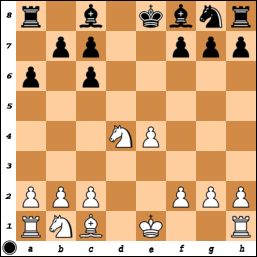
1.e4 e5 2.Nf3 Nc6 3.d4 exd4 4.Nxd4 Bc5 5.Nb3
This was the main move 36 years ago, but has been massively overtaken by the Kasparov-popularised 5.Be3. Nevertheless, in ChessBase's 2026 Mega database it scores 56%, two percentage points more than 5.Be3, and also two more than the other popular continuation, 5.Nxc6.
5...Bb6 6.Nc3 Nf6 7.Bd3
More popular are 7.Bg5 and especially 7.Qe2!?, but the text has also been played by grandmasters.
7...d6 8.0-0
This game is the first in Mega26 to reach this position
*****
*****
*****
*****
*****
8...Bg4
Stockfish17 and Dragon1 suggest 8...h6 or 8...Ne5!?
9.Qe1
Subsequently, 9.Be2 became slightly more popular, but the text is probably better.
9...0-0
Now both sides have castled, how would you assess the position?
*****
*****
*****
*****
*****
The most significant factor in the position is probably White's central space advantage. The engines give White a slight edge.
10.Be3 Bxe3 11.Qxe3 Re8 12.Qg3 Qd7
The engines prefer 12...Be6 or 12...Nb4!?
13.h3 Bh5?!
Probably the wrong retreat.
14.f4 Re7?
The engines give 14...h6, but much prefer White.
15.Qh4 Rae8 16.Nd5 Nxd5 17.exd5 Be2?!
'Better', but still losing, is 17...Nb4.
18.Qxh7+ 1-0
LESSON: the game could be dismissed as being simply decided by tactical mistakes, but the underlying factor was that White's central dominance made Black's position harder to play.

Friday, 17 September 2021

Good News, Bad News

THE bad news is confirmation that the annual Guernsey chess festival will not be held this year, as the notice below at the island chess federation's website shows.
The good news is that, contrary to rumours, the notice implies the festival is not just a thing of the past.

IMPORTANT ANNOUNCEMENT

Due to the Covid 19 virus the Guernsey Chess Federation very much regrets to confirm the cancellation of the 46th Guernsey International Chess Festival. We very much hope that all our chess friends will understand that in making this decision we consider the safety of players to be of paramount importance. We hope to see you again in the future. 

Tuesday, 19 May 2020

Fundamentals (part 25)

Spanton (161) - Kenneth Norman (191)
Guernsey 1993
White to play and win
*****
*****
*****
*****
*****
*****
*****
*****
*****
*****
36.g4?
It seems two moves win.
A) 36.e5, eg 36...c4 (if 36...Kd5 then 37.h5! followed by Kf5) 37.Ke4 c5 38.Kf4 h5 (38...Ke7 39.h5!) 39.Kg5 Kxe5 40.Kxg6 etc.
B) 36.c4!?, eg 35...bxc4 37.e5 Kf7 (37...Kd5 38.h5!) 38.Ke4 Ke6 39.h5! etc.
The game finished:
36...Kf6 37.h5 g5+ 38.Ke3 ½–½

Saturday, 26 October 2019

Guernsey Round Seven

Kees de Kruif (1985) - Spanton (1927)
Botvinnik English
1.c4 e5 2.g3 Nc6 3.Bg2 g6 4.Nc3 Bg7 5.d3 Nge7 6.e4
The most popular move in ChessBase's 2019 Mega database, setting up a Botvinnik formation, assuming the king's knight goes to e2 (if it goes to f3 we have an earlier, similar formation pioneered by Nimzowitsch). An excellent source for understanding the Botvinnik set-up is Tony Kosten's The Dynamic English.
6...0-0 7.Nge2 d6 8.0-0 f5 9.Rb1 Be6 10.b3?
A novelty, and not a good one. This move is bad positionally and tactically (I only managed to spot the former drawback).
Black to make his 10th move
*****
*****
*****
*****
*****
10...Qd7
The positional problem with White's move is that Rb1 and b3 do not go well together. The former, in this type of position, is normally a prelude to queenside expansion with b4.
The second problem is that Black can reply with the positionally desirable 10...f4! thanks to the tactical point 11.gxf4 exf4 12.Nxf4?! Rxf4 13.Bxf4, dropping the queen's knight to 13...Bxc3. Black ends up with two knights and the less-exposed king for rook and pawn.
Note that 10.b4? can be met in a similar way, although it was not the three times 10.b4? appears in Mega19. Most strong players who have reached this position as White have preferred 10.Nd5.
11.Nd5 Rf7 12.f4 Raf8 13.Be3 a6 14.Qd2 Kh8 15.Kh1
KdK offered a draw.
15...Ng8 16.Rbd1 fxe4 17.Bxe4?!
Stockfish10 and Komodo10 prefer 17.dxe4.
17...exf4?!
I somehow missed White's reply. Stockfish10 reckons Black has the upper hand after 17...Nd4!? Komodo10 also likes the move, but is not so enthusiastic about it.
18.Rxf4 Rxf4 19.Ndxf4 Bf5 20.Bg2 Nf6 21.Nd4 Nxd4 22.Bxd4 c6 23.Re1 Re8 24.Rxe8+ Qxe8 25.Kg1 Ng4!
At first glance it might seem strange to allow an exchange of bishops with check, but White has to find a fairly precise defence.
26.Bxg7+ Kxg7 27.Bf3!
Best, according to the engines, as the 'obvious' 27.Qc3+ can be simply sidestepped with, for example 27...Kf7, when Black gets a bit of an initiative.
27...Qe5 28.h3?!
Almost certainly better was 28.Bxg4, hoping to take advantage of the fact that a knight and queen often work well together, although here the knight does not have an unchallengeable outpost (=, according to the engines), or 28.d4, when I planned 28...Qe3+ 29.Qxe3 Nxe3, but the engines give 30.Kf2 as also =.
28...Qd4+ 29.Kg2??
Correct was 29.Kf1, when 29...Ne5 30.Be4 Qa1+ is a little better for Black as White will get an isolated e pawn.
29...Ne3+ 30.Kg1
Forced as 30.Kh1?? loses a piece to 30...Qa1+. Note that the white king cannot go to h2, either immediately or on move 31, because of the fork ...Nf1+.
30...Nxc4+ 31.Qf2 Qxf2+ 32.Kxf2 Ne5 33.d4 Nxf3 34.Kxf3 a5 35.a3 Kf6 36.b4 axb4 37.axb4 g5 38.Nh5+ Ke7 39.h4
The only realistic way to keep the game going was 39.g4 Bg6 40.Ng3, but the position is hopeless for White.
39...Bg6 40.Ng7 Kf7 41.h5 Kxg7 42.hxg6 Kxg6 0-1
My final score of +1=4-2 saw me gain 1.6 Fide elo.

Friday, 25 October 2019

Guernsey Round Six

Fred Hamperl (1995) - Spanton (1927)
Grand Prix Attack
1.e4 c5 2.Nc3 g6 3.f4 Bg7 4.Nf3 Nc6 5.Be2!?
Not a popular continuation, especially when compared with 5.Bb5 and 5.Bc4, but it has been played by Oleg Romanishin and Michael Basman. I guess the idea is to avoid a sharp theoretical duel.
5...d6 6.0-0 Bg4!?
Aiming for simplifications. The main move is 6...e6, although Vishy Anand chose 6...Nf6 in a win against Nigel Short at the 2010 London Classic.
7.Qe1 Nd4 8.Nxd4 Bxd4+ 9.Kh1 Bxe2 10.Nxe2 Bg7 11.d3 e6 12.Bd2 Ne7 13.Bc3 Bxc3 14.Qxc3 0-0 15.Rf2 Rc8 16.Qb3 Qb6 17.g4 c4 18.Qxb6 axb6 19.d4
19.dxc4 Rxc4 20.Nc3 is fine for Black after 20...Rac8 or 20...f5, according to Stockfish10 and Komodo10.
19...d5 20.e5 Ra8 21.a3 Ra5 22.Rg1?
It was better to solidify the queenside with 22.c3 before continuing kingside operations.
22...Kh8?
22...Rb5 forces 23.Rb1, giving Black time to comfortably organise kingside defences.
23.Ng3?
Again c3 was correct. After the text, Black takes over the initiative.
Black to play and distract White from the kingside
*****
*****
*****
*****
*****
23...c3 24.Rb1 cxb2 25.Rxb2 b5?
Defending a weak pawn like this is inferior to attacking with 25...Nc6, or immediately capturing with 25...Rxa3. A good rule-of-thumb, especially with rooks, is to actively capture rather than passively defend.
26.f5 gxf5 27.gxf5 Nxf5
Arguably better was 27...Kg8 as the text leaves Black with a weak f pawn, and leaves White with a potentially protected passed pawn.
28.Nxf5 exf5 29.Rxf5 Rxa3 30.Rxb5 Ra1+?
I rejected the engines' 30...Rg8, threatening mate, because of 31.Rf1, missing the strength of 31...Rc3, eg 32.Rc1 Rg4 33.Rxd5 b5 34.Rd7 b4 35.Rxf7 b3 36.Rf2 Rxc2 37.Rcxc2 bxc2 38.Rxc2 Rxd4, when Black is a pawn down but should draw with little trouble.
31.Kg2 Rg8+ 32.Kh3
The engines prefer 32.Kf2, but in either case like White.
32...Ra6 33.Kh4 Rh6+ 34.Rh5 Rc6 35.Rg5 Rxc2 36.h3 Rb8?
A good move if White allows 37.Rxd5? b5, but why would he? Black seems to have good drawing chances after 36...Rf2, 36...Rc6 and 36...Rxg5.
37.Rg4?
Better was 37.Rf5. If 37...Kg7?!, White has 38.Rxd5 Rc7 (38...b5? 39.Rd7 Rf8 40.e6) 39.Rb5 with a large advantage despite the material balance. So Black has to try 37...Rc7, but then 38.Rf6 leaves White with all the active play.
37...Rc3?
Black draws with 37...f6 (37...Rf2 is also good), eg 38.exf6 Rf2 39.Rb6 Rf8.
38.Rb6?
Better is 38.Rf4 with play similar to the note at White's move 37.
38...Rc6 39.Rb5 Rh6+
Simple and good is 39...f6.
40.Kg3 Rg6
Not 40...f6? 41.Rb6.
41.Kf4
The engines give White a slight edge after 41.h4.
41...Kg7 42.Kf5 b6 43.Rg5 Rb7 44.h4 Rb8?
The last sure-fire draw was 44...Kf8, eg 45.Rxg6 hxg6+ 46.Kf6 Rb8 47.e6 fxe6 48.Kxe6 Kg7 49.Kd5 Rd8+ 50.Kc4 Rc8+ 51.Kb4 Rd8 etc, or 45.h5 Rxg5+ 46.Kxg5 Ke7 47.Kh6 f6 48.Kxh7 fxe5 49.dxe5 Ke6+.
45.h5 Rxg5+ 46.Kxg5 h6+ 47.Kf5 Kf8?
Much more resistance is put up by 47...Rb7 48.e6 Rb8 49.Ke5 fxe6 50.Kxe6 Re8+ 51.Kxd5 Kf6 52.Kc6 Rd8 53.Rd5 Rc8+ 54.Kxb6 Ke6, when Black seems to have very good drawing chances despite being a pawn down.
48.Kf6 Rb7?
Feeble, although 48...Ke8 49.Kg7 looks pretty hopeless.
49.Rxd5
Black only has stalemate tricks left.
The game finished:
49...Rb8 50.Rb5 Rb7 51.d5 Rb8 52.d6 Rb7 53.d7 Rxd7 54.Rxb6 Kg8 55.Rb8+ Kh7 56.Rf8 Rd6+ 57.Kxf7 Rd8 58.e6 Rd1 59.e7 Rf1+ 60.Ke8 Re1 61.Rf6 Kg7 62.Rg6+ Kh7 63.Kf7 Re2 64.Rf6 Ra2 65.e8=Q Ra8 66.Qe4+ 1-0

Thursday, 24 October 2019

Guernsey Round Five

Spanton (1927) - Antoine Canonne (1908)
Spanish Exchange
1.Nf3 Nc6 2.e4 e5 3.Bb5 a6 4.Bxc6 dxc6 5.d4 exd4 6.Qxd4 Qxd4 7.Nxd4 
The starting tabiya of the old main line of the Spanish Exchange
7...c5 8.Ne2 Nf6 9.Nbc3 Bd7 10.f3 0-0-0 11.Be3 Bd6 12.0-0-0 Rhe8 13.h3 Bc6 14.Bg5 Be7 15.Rxd8+ Bxd8
AC offered a draw.
16.Rd1 h6 17.Bxf6 Bxf6 18.g3 g6 19.Nd5 Bxd5!?
Black usually keeps the bishop-pair, which is his compensation for an inferior pawn-structure. On the other hand, after the exchange on d5, Black has rook and bishop versus rook and knight, another example of an advantage even though material is supposedly equal (at least by a point-count).
20.Rxd5 b6 21.c3 Bg7
This bishop retreat was what I had expected on move 19.
22.Kd2 c6 23.Rd3 Kc7 24.b3 b5 25.c4 b4 26.Re3 Bd4 27.Rd3 Bg7 28.Kd1 a5 29.g4 a4 30.bxa4!?
I did not want to risk Black's rook invading my position after ...Ra8 and ...axb3.
30...Ra8 31.Kc2 Rxa4 32.Kb1 Ra8 33.h4?!
Almost certainly overextending on the kingside. Stockfish10 and Komodo10 give 33.f4 Re8 34.Ng3 Bd4 with a slight edge for Black.
33...Re8 34.Rd2 Bf6 35.h5 gxh5 36.gxh5 Re5 37.Ng3?
I missed that 37.Nf4 saves the h5 pawn as 37...Bg5 is met by 38.Nd3.
37...Rg5 38.Nf5 Rxh5 39.Nd6 Bc3 40.Ne8+ Kb6 41.Re2?
I rejected 41.Rd7 because of 41...Rh1+ 42.Kc2 Rh2+ 43.Kb1 (43.Kd3?? Rd2+ etc) Rb2+ 44.Kc1 Rxa2, but that is better than what should happen after the text.
41...f6?!
This may be good enough, but much stronger is 41...Rh1+ 42.Kc2 Ra1, when 43.Kd3 loses the knight to 43...Rd1+ and 44...Rd8. That leaves 43.Kb3, but then 43...Rc1 followed by …Bd4 is deadly.
42.f4 Ka5?!
Again this may be good enough, but 42...Rh1+ 43.Kc2 Ra1 44.Kd3 Rd1+ leaves Black a pawn up and with the better minor piece.
43.Ng7 Rh4 44.e5!?
This has a tricky point, but it seems better was 44.Ne6, eg 44...Kb6 45.e5 fxe5 46.fxe5 Rh5 47.Nf8 Kc7 (not 47...Rxe5?? 48.Nd7+) 48.Ne6+ Kc8 49.Nxc5 Rxe5 50.Rxe5 Bxe5 51.Nd3, when White is getting his pawn back. However, the engines reckon Black is close to winning as the bishop is much better at supporting a passed h pawn, and blocking an enemy passed a pawn, than the knight is at supporting a passed a pawn and blocking an enemy passed h pawn.
44...fxe5
Not 44...Rxf4?? 45.e6.
45.fxe5 Rxc4?
This only draws, but the engines point out 45...Ka4, when 46.e6? loses to 46...b3 47.axb3+ Kxb3  and ...Bxg7. So White has to try something such as 46.Kc2 or 46.Ne6, but in each case Black replies 46...Rxc4 and is two pawns up.
46.e6 Bf6 47.e7 Bxe7 48.Rxe7 Rh4 49.Re5 Rh1+ ½–½

Wednesday, 23 October 2019

Guernsey Round Four

Pal Magnussen (1983) - Spanton (1927)
Accelerated Dragon
1.e4 c5 2.Nf3 g6 3.d4 cxd4 4.Nxd4 Nc6 5.Nxc6!?
Other moves - 5.Nc3, 5.c4, 5.Be3 - are more popular, but there are almost 2,100 examples of the text in ChessBase's 2019 Mega database.
5...bxc6 6.Qd4 Nf6 7.e5 Nd5 8.e6 f6 9.c4 Nb4 10.Qc3 Na6
10...a5 was played in James Hart - Jeremy Silman, Flagstaff (Arizona), 1991, and is Stockfish10's choice. 10...c5 is at first preferred by Komodo10, but it later switches to 10...a5.
11.exd7+ Qxd7 12.Be3 e5 13.a3 Bc5 14.Be2 Bd4 15.Qc2 Rb8 16.Nc3 Bxe3?
The wrong idea. Yes, White gets an isolated e pawn, but it is not worth giving up such a strong bishop, especially as the isolani is not easy to get at and White might be able to use the half-open f file. The engines give 16...Nc5 17.0-0 Kf7!? with a slight edge for Black.
17.fxe3 Nc5?!
White now gets a strong initiative and ends up taking over the d6 square. Better is 17...Nc7, and if, as in the game, 18.b4, Black can counterattack on the queenside with 18...a5!?, or simply castle and be ready to meet any White attempt to take over d6. However, White would still be better.
18.b4 Ne6 19.Rd1 Qe7 20.Bf3 Bd7 21.Ne4?!
Going after the d6 square, but even stronger seems to be 21.Qa4, hitting both black isolated pawns.
21...0-0 22.c5 a5 23.Qd2
Black to make his 23rd move
*****
*****
*****
*****
*****
23...Rfd8
I strongly considered 23...axb4!?, which does eventually become the engines' top choice. The idea is to meet 24.Qxd7 with 24...Qxd7 25.Rxd7 bxa3. The engines reckon White is better, but the position is not clear-cut. I just was not sure, and there was also the practical point that White would have the choice of taking the bishop, if he thought the sac did not work, or of declining it with 24.axb4, although then the position is equal, according to the engines.
24.0-0 f5 25.Nd6 axb4 26.axb4 Ng5 27.Be2
27.Qc3!? Nxf3+ 28.gxf3 leaves White with an unchallengeable knight, but it is not clear if White can effectively support it.
27...Be6 28.Qc3 Bd5?!
The engines prefer 28...Nf7 29.Nxf7 Bxf7 30.Rxd8+ Rxd8 31.b5 cxb5 32.Bxb5, when the white passed pawn is dangerous but probably manageable.
29.Bc4?!
Now the pawn push b5 is even more dangerous as Black cannot capture because the d5 bishop would hang.
29...Bxc4 30.Qxc4+ Qe6
White has a very strong continuation
*****
*****
*****
*****
*****
31.Qc3
Stronger is the engines' 31.Qa6!! The main point is that 31...Rxb4 runs into 32.h4! (the immediate 32.Nxf5 is also good) Rxh4 33.Nxf5!, when Black is losing material, or even getting mated, eg 33...Rxd1 34.Qa8+ Kf7 35.Nd6+ Kg7 36.Qf8#. Black can go for counterplay with 31...Qb3, when one line runs 32.Rb1!? Qxe3+ 33.Kh1 Nf7 34.Nxf7 Kxf7 35.Qxc6, but White's connected passed pawns are clearly more threatening than Black's 4-2 kingside majority. Stockfish10 eventually gives 31...Nf7!? 32.Qxc6 Nxd6 33.Rxd6 Rxd6 34.cxd6, but White is a pawn up and has two dangerous passed pawns, so it is hard to see the game continuing much longer.
31...Nf7 32.Nc4 e4 33.h3 Rxd1?!
Almost certainly better was 33...h5 as the text gives White an initiative.
34.Rxd1 Rd8 35.Rxd8+ Nxd8 36.Qd4
Stockfish10's 36.Nd6! looks strong, eg 36...Nf7 37.b5! cxb5 (37...Nxd6 38.cxd6 Qxd6 39.b6! wins for White - in queen-and-pawn endings a far advanced passed pawn is often more important than an extra pawn) 38.Nxb5, with a difficult defence ahead for Black.
36...Nf7 37.Nd6
Too late - the extra tempi Qd4 and …Nf7 favour Black.
37...Ne5 38.b5 cxb5 39.Nxb5 Nc6 40.Qa4 Kg7 41.Kf1 Qd5 42.Nd4 Nxd4 43.Qxd4+
Or 43.exd4 e3 44.c6 Qe4 45.Qb4 Qf4+ when eventually one player or the other has to take a draw by perpetual check.
43...Qxd4 44.exd4
PM had thought his pair of passed pawns would win, but he forgot Black too has a protected passed pawn.
44...Kf6 45.c6 ½–½

Tuesday, 22 October 2019

Guernsey Round Three

HAVING gone out of my way yesterday to win the bishop-pair, today I made a beeline for giving up the two bishops.
Spanton (1927) - Jan Maarten van den Boogaart (2039)
Bb5(+) Sicilian
1.e4 c5 2.Nf3 Nc6 3.Bb5 d6 4.d4!?
More popular are 4.0-0 and 4.Bxc6+, but the text is also frequently seen.
4...cxd4 5.Qxd4 Bd7 6.Bxc6 Bxc6 7.Nc3
Black has the bishops but White has speedy development - similar to what happened in yesterday's game, albeit in a totally different position.
7...Nf6 8.Bg5 e6 9.0-0-0 Be7 10.Rhe1 Qc7!?
Normal is 10...0-0, but JB goes for a line in which Black saves a tempo for queenside play by leaving his king in the centre.
11.Kb1
A known line goes 11.Bxf6 Bxf6!? 12.Qxd6 Qxd6 13.Rxd6 Bxc3 14.bxc3 Ke7, when Stockfish10 much prefers White, but Komodo10 reckons Black has decent compensation for the pawn. I was more concerned about 12...Qa5, which is not in ChessBase's 2019 Mega database, and there is also 12...Qb6 to consider. In practice Black usually plays 11...gxf6, although then the engines give White the upper hand.
11...a6 12.Qd3
Again Bxf6 was possible. Generally in these lines the engines prefer White but recognise that Black has quite a bit of compensation. More popular than 12.Bxf6 is 12.Qd2, which, as with the text, is generally a prelude to bringing the king's knight to d4.
12...b5 13.Bxf6
At last I felt the time was right.
13...gxf6
13...Bxf6 14.Qxd6 Qxd6 15.Rxd6 looked strong for White to me; Stockfish10 agrees but Komodo10 reckons White only has a small edge.
14.Nd4
The engines prefer 14.a3!?, which I did not seriously consider.
14...Bb7 15.f3?!
Again the engines reckon a3!? is the way to go. I guess their point is that an exchange of pawns on the b4 square will not massively weaken the white king's position, but would more or less rule out queenside castling for Black. The black king would therefore have to go to the kingside, which does not look safe, or stay in the centre, where it would also be at risk and might get in the way of Black's manoeuvring.
The specific problem with the text is it reduces White's ability to get pieces quickly to the kingside.
15...Rc8
15...b4 16.Nce2 is roughly equal after 16...0-0 (Komodo10) or 16...d5 17.exd5 Bxd5 (Stockfish10).
16.Rd2
Again the engines like a3!?
16....b4
Komodo10's choice for quite some time, but eventually both engines see a problem with the text and so prefer a move such as 16...Rd8 or 16...Qc4.
White to make his 17th move
*****
*****
*****
*****
*****
17.Nce2
I looked at 17.Nd5! exd5 18.exd5, but did not think it worked. However, 18...0-0? loses to 19.Nf5, eg 19...Bd8 (19...Rfe8 20.Rde2) 20.f4 mating; 18...Bxd5 19.Rde2 0-0 20.Rxe7 is clearly good for White; 18...Kd8 (the engines' choice) 19.Rde2 Re8 20.Nf5 is also clearly good for White. So the knight on d5 cannot be taken; instead the engines give 17...Qc4 18.Qxc4 Rxc4 19.b3 Rc8 20.Nxb4, when White is a pawn up, although the game is opening up for Black's bishops.
17...Rg8
Hitting g2 and possibly threatening to swing across to the queenside.
18.e5??
Overambitious and badly calculated.
The engines give 18.g4, and if 18...Rg5, then 19.Ng3 or 19.h4 as neither 19...Ra5 nor 19...Rc5 seems dangerous.
18...fxe5 19.Qxh7 Rg6 20.Nb3
White has not lost material - at least not immediately - but White's king is more in danger than Black's, which is the complete opposite of the intent behind my combination.
20...Bf8
This is not in Stockfish10's top-three choices but is nevertheless considered by the engines as winning for Black - a sign of just how bad the white position is.
21.f4
This is best, according to the engines - the idea is to block, at least temporarily, the h6-c1 diagonal.
21...Be4 22.Ka1 d5 23.Qh8 exf4 24.g3 fxg3 25.Nxg3 Qb6
The engines prefer 25...a5 or 25...Rh6, one point being that White cannot double-capture on e4 after 25...a5 as Black has a back-rank mate starting with ...Rg1+. However the text is also good.
26.Nxe4 dxe4 27.Qe5 e3 28.Rde2 Bg7 29.Qe4 a5 30.Kb1
Possible is 30.Rxe3, but after 30...a4 31.Nc1 a3 32.Kb1 (32.Nd3 Rxc2) Qc7, Black is well on top.
30...a4 31.Nc1 Qd4
This forces queens off, after which the win is easy.The remaining moves were:
32.Qxd4 Bxd4 33.Nd3 Rb8 34.Nf4 Rh6 35.Nd3 f5 36.Rg1 Kf7 37.Reg2 Rh7 38.Nf4 e5 39.Ne2 Bc5 40.Rg5 Kf6 41.Rg6+ Kf7 42.Rc6 Rxh2 43.Rxc5 Rxe2 44.Rxe5 Kf6 45.Rd5 Rf2 46.Rdd1 f6 47.Rgf1 Rxf1 48.Rxf1 e2 0-1

Monday, 21 October 2019

Guernsey Round Two

Jan Prins (1987) - Spanton (1927)
New London
1.d4 d5 2.Bf4 e6 3.e3 Bd6 4.Bg3!?
Easily the most popular move in ChessBase's 2019 Mega database. It has been played by many strong grandmasters, including Kramnik, Grischuk and Kamsky, but in a way White is relinquishing the advantage of the first move, ie the pawn-structure is symmetrical, and both players have developed a piece, but it is Black rather than White to move. I guess White's counter-argument to this is that the white queen's bishop has been developed outside the pawn-chain, while Black's is shut in. A sharp alternative is 4.Qg4!?
4...Nf6 5.Bd3 Nc6!?
Threatening the central pawn break ...e5, while trying to get White to spend a tempo protecting the light-square bishop with c3 or a3.
6.f4!?
Normal is 6.Nf3, stopping 6...e5, and if 6...Nb4, then White can play 7.Be2 followed by evicting the b4 knight, probably with a3. The text also stops ...e5, but makes White's dark-square bishop bad.
6...Nb4 7.Be2 Ne4 8.c3 Nc6 9.Nd2 Nxg3?!
I sometimes play as if winning the bishop-pair is an end in itself, rather than the means to an end. The problem with the text is that the knight has spent three moves in order to be exchanged for White's bad bishop while at the same time half-opening the h file for White.
Stockfish10 and Komodo10 like 9...0-0 or 9...Ne7!? They reckon a White capture on e4 is nothing for Black to worry about.
However, Stockfish10 in particular does not like 9...f5!?, when first shown it, although after the engines' main continuation, viz 10.Ngf3 0-0 11.Bh4 Ne7 12.0-0, they reckon the position is equal.
10.hxg3 Bd7 11.Qc2 h6
11...f5?! can be met by 12.Bh5+, when 12...g6?? 13.Bxg6+ is a catastrophe for Black.
12.g4 Qe7 13.b4 a6 14.Nb3 b6 15.Nf3 a5 16.a3
Also interesting is 16.b5 Na7 17.a4 c6 18.bxc6, when the engines prefer White.
16...axb4 17.axb4
Not 17.cxb4? Rxa3 18.Rxa3 Bxb4+ 19.Kf2 Bxa3.
17...Rxa1+ 18.Nxa1 Na7 19.g5 Bb5 20.gxh6 gxh6
White gets a second queen after 20...Bxe2?? 21.hxg7 Rxh1+ 22.Kxe2. However, the engines prefer 20...Rxh6 21.Rxh6 gxh6, as an invasion with 22.Qh7 does not seem to lead to anything.
21.Kf2 Bxe2 22.Qxe2 c6
The engines prefer 22...Qd7, one point being 23.Qa6 can be met by 23...Nb5.
23.Qd3
I intended meeting 23.Qa6 with 23...Qc7, when the engines give 24.c4!, the idea being that 24...Bxb4 25.Rb1 c5 26.dxc5 Bxc5 27.Nb3 leaves Black's position under a lot of pressure. A better reply seems to be 24...dxc4, although the engines still much prefer White after 25.Qxc4.
23...Nb5 24.Nc2
I was more worried about 24.c4 dxc4 25.Qxc4, again with pressure.
24...Bc7 25.Ne5
The engines at first much prefer 25.c4, but my idea was 25...Nd6, when Black has serious counterplay thanks to the threat of ...Ne4+.
25...Bxe5?!
I considered giving up a pawn by 25...Nd6! 26.Nxc6 Qf6, but did not trust it. However, the engines reckon Black has good compensation, although they slightly prefer White.
26.dxe5
White's king is too exposed after 26.fxe5?
26...f5
Stockfish10 suggests 26...Kf8, but much prefers White after 27.g4. Komodo10 gives 26...h5, but again 27.g4 seems a strong reply. I did seriously consider the latter line, but thought Black's h pawn would not last long.
27.exf6
Even stronger, according to the engines, is giving up a pawn by 27.Nd4 Nxd4 28.cxd4!? Qxb4, when White invades with 29.Qa6.
27...Qxf6 28.Nd4 Nxd4 29.cxd4 b5
The engines give 29...Kf7 30.g4 (30.Qa6? allows serious counterplay with 30...Qg6, taking advantage of the fact that Black's king is not the only vulnerable one) Qg6 31.Qxg6+ Kxg6 32.Rc1 Rc8 33.e4 dxe4 34.Ke3 Kf6 35.Kxe4 b5 36.Rh1 Kg7, when Black is passive but it is not clear White is winning.
30.Qc2 Kd7 31.Rc1 Rc8 32.Qh7+ Kd6 33.g3?!
Safety-first, but probably unnecessary. The engines give 33.Rh1, when 33...Rh8 34.Qb7 Qg6 35.Rc1 Qe8 36.Qg7 is their main line. One possible continuation is 36...Qa8 37.e4! dxe4 38.d5! exd5 39.Ra1 Qb8 40.Ra7 with a winning attack - not a line many humans would find over the board.
33...Rc7?
Better was 33...Qf5!, when 34.Qxh6 gives Black a respite from checks, and so he can draw with, for example, 34...Ra8. Also no good for White is 34.Qxf5 exf5 as this is a much better rook-and-pawn ending, from Black's viewpoint, than the note at move 29. White should therefore perhaps try 34.Qb7, although the simple 34...Rc7 seems good enough for Black.
34.Qc2?
34.Qg8 looks strong in all lines, eg 34...Qf7 35.Qxf7 Rxf7 36.Rh1, when the h pawn cannot be defended in the long run, eg 36...Rf6 37.g4 Ke7 38.Kg3 Rg6 (38...Kf7 39.Rc1) 39.Rc1 Kd6 40.Ra1 Rg7 41.Ra8 Rg6 42.Ra7 Rf6 43.Rh7 Rg6 44.Kg3 with Kh4, Kh5 and Rxh6 to follow. This is another long engine line, but Black at no point has any counterplay and must eventually succumb.
34...Kd7?
A mistake, not least because White can transpose to the previous note with 35.Qh7+. Correct was 34...Qf5, which seems to draw.
35.Ra1
This may not be as strong as 35.Qh7+, but is probably good enough.
35...Qg7
Black loses the h pawn after 35...Qf5? 36.Qxf5 exf5 37.Rh1.
36.Ra8
The engines want to take the white king off the second rank with 36.Kf3!?
36...Rb7
36...h5 is suggested by the engines, but they much prefer White.
37.Qc5
The engines' second choice, but 37.g4 is apparently stronger.
37...Rc7 38.Qb6?
Again g4!? is the engines' main line. They continue 38...Qf6 (the checks run out after 38...Qxg4 39.Qf8 Qh4+ 40.Ke2 Qg4+ 41.Kd2 Qg2+ 42.Kc3) 39.Qf8 Qxf8 40.Rxf8 and the h pawn falls.
The text threatens Qxc7+, as well as doubling on the eighth rank, but there is a flaw.
Black to play and draw
*****
*****
*****
*****
*****
38...Qg6
Threatens perpetual check starting with 39...Qc2+.
39.Qc5 Qh5
Perpetual check still cannot be stopped. The game finished:
40.Qf8 Qh2+ 41.Kf1 Qh1+ 42.Ke2 Qg2+ 43.Kd3 Qf1+
But not 43...Qe4+?? 44.Kd2 Qg2+ 45.Kc3.
44.Kd2 ½–½ 

Sunday, 20 October 2019

Guernsey Round One

Spanton (1927/168) - Kevin Thurlow (2021/172)
Barry Attack
1.Nc3 d5 2.d4 Nf6 3.Bf4
The Veresov-London hybrid that I call the Barry Attack, although it has other names.
3...e6 4.Nb5!? Na6
The main move. For 4...Bb4+!? see https://beauchess.blogspot.com/2019/10/veresov-london-hybrid.html
5.e3 c6 6.Nc3 Bd6!?
Not a popular choice.
How should White react?
*****
*****
*****
*****
*****
Black's offer to exchange his good bishop is slightly strange, but I rejected 7.Bxd6, which would have been a novelty, or at least is not in ChessBase's 2019 Mega database, because 7...Qxd6 leaves Black with a handy lead in development. One continuation is 8.Bxa6!? bxa6 9.Na4, but I thought Black would be fine after 9...Nd7. However, Stockfish10 and Komodo10 reckon White is slightly better.
A 2445 three years ago played 7.Bxa6!? bxa6 8.Nge2, beating a 2110, but the engines are unimpressed.
Kirill Alekseenko (2575) - Normunds Miezis (2430), Riga 2017, went 7.Nf3!? Bxf4 8.exf4 9.Bd3 c5 10.0-0 with what the engines reckon is a slight edge for White.
7.Bg5?!
Black has a simple but good reply that I missed.
7...e5 8.dxe5 Bxe5 9.Nf3 Bxc3+ 10.bxc3 Nc5 11.Bxf6!?
The engines' choice. The idea will soon become clear.
11...Qxf6 12.Qd4 Ne4 13.Qxf6 Nxf6 14.c4
Dissolving White's doubled pawns  - the point behind 11.Bxf6!?
14...0-0 15.cxd5 Nxd5 16.Bc4 Nb4?!
I was more concerned about 16...Nb6 and 16...Nc3!?, although White seems to be OK. The text causes Black unnecessary difficulties.
17.0-0-0 c5?!
This leads directly to later problems. The engines suggest 17...a5 18.a3 Na6 19.Bxa6 Rxa6, but give White a slight edge after 20.Ne5.
18.a3 Nc6 19.Rdx5 b6 20.Rd6 Na5 21.Bd5
How should Black meet the threat to his queen's rook?
*****
*****
*****
*****
*****
21...Nb7?!
The worst of three choices, it seems
Best, according to the engines, is 21...Bb7 22.Bxb7 Nxb7 23.Rd7, when Komodo10 gives 23...Na5 24.Rhd1 Nc4 25.a4 with a slight edge for White thanks to having more-active rooks, while Stockfish10 gives 23...Nd8!? 24.Rhd1 Re8 25.Ne5!? Kf8 26.R1d5 f6 27.Nc4, when it reckons White has the upper hand, but there is no immediate win of material.
After the third choice, 21...Rb8, the engines give 22.Rd1 Bb7 23.Rd7 Bxd5 24.R1xd5 Ra8 with White being much better, but again not immediately winning material.
22.Bxb7?!
KT's postmortem suggestion of 23.Rc6! is strong. White seems to win a pawn whatever Black plays, eg 23...Rb8 24.Rc7 Nd6 25.Ne5 Bb7 26.Rd1 Bxd5 27.Nxd5 f6 28.Rxd6 fxe5 29.Rdd7 Rxf2 30.Rxg7+ Kf8 31.Rxh7 Rxg2 32.Rxa7, although whether this is winning for White (Stockfish10) or merely much better (Komodo10) is hard to judge.
22...Bxb7 23.Rd7?!
Almost certainly another inaccuracy. White seems to be fine after 23.Rhd1 as it is very difficult for Black to dispute White's control of the only open file. The text, however, allows exactly such a challenge.
23...Bc6 24.Rd6 Rac8 25.Rhd1 f6 26.Ne1 Kf7 27.Kb2 Ke7 28.Kc3 Rfd8 29.Rxd8 Rxd8 30.Rxd8 Kxd8
The start of a classic bishop-v-knight battle
*****
*****
*****
*****
*****
Black is better because a bishop outperforms a knight in endings where there are rival mobile pawn-majorities. The engines reckon Black's advantage is worth just under half a pawn.
31.f3!?
Putting pawns on the same-coloured squares as the bishop might seen strange in an ending where they will be targets, but I thought it was best to restrict the bishop's freedom of movement where possible while using the knight and/or king to prevent Black's king penetrating on dark squares.
31...Ke7 32.Nd3 g5 33.Nf2 h5 34.h3?!
This may have been taking the light-square policy too far, although the engines' suggestion of 34.e4 is similarly motivated.
34...Ke6 35.Kd2 b5 36.c3 a5 37.e4 Kd6
This comes to be Komodo10's choice, at least for a while, but Stockfish10 much prefers to fix the kingside with 37...h4.
38.Nd3?!
It seems I should have taken the chance to play 38.g3.
38...c4?!
Fixing a pawn on the same-coloured square as the bishop is unlikely to be the way to proceed unless, perhaps, there is an immediate tactical point to the move. The engines again suggest ...h4, and reckon White is winning (Stockfish10) or at least much better (Komodo10). However, get them to play on in the position and their evaluations hardly ever change, and nothing much happens as they make aimless moves with the bishop.
39.Ne1 h4 40.Nc2 Bd7 41.Ke3 Ke5 42.Nd4 Be8 43.Ne2 Bc6 44.Nd4 Bd7 45.Ne2 f5 46.exf5 Bxf5 47.Nd4
White is in zugzwang after 47.f4+?! gxf4 48.Nxf4 Be4. Even so, White still seems to be drawing, eg 49.Ne2 Bxg2 50.Nd4 Bxh3 51.Nf3+ Kd5 52.Nxh4, when Black is a pawn up, but all the pawns are on one side of the board and the bishop is the wrong colour for promoting a pawn on the a file.
47...Bd7 48.Ne2 Bc6 49.Nd4 Bd7 50.Ne2 Bc6 ½–½

Saturday, 19 October 2019

45th Guernsey

ARRIVED in Guernsey this afternoon for the 45th Guernsey international chess festival, being held at the Peninsula hotel.
The hotel has a new and much-improved bar, and the restaurant has been completely refurbished.
Rooms are as they were, which is meant as a compliment, not a complaint - I am back in my favourite room, which has a huge double-bed and, by all accounts, better wifi than most (but you need to be in the reception/bar area to get a good signal).
New bar at the Peninsula
The open has 43 entrants, including GM Mark Hebden and two IMs.
No.NameFideIDFEDRtg
1GMHebden Mark L400084ENG2427
2IMPovah Nigel E400467ENG2301
3IMBaker Chris W401676ENG2245
4FMGiulian Philip M2400197SCO2131
5Havenaar Jan1005081NED2091
6Bianco Valerio800600ITA2088
7Curtis John E411892ENG2059
8Reijneveld Ad1010654NED2056
9Van Den Boogaart Jan Maarten1044559NED2039
10Dilleigh Stephen P408379ENG2037
11CMThurlow Kevin J406104ENG2021
12Pleasants Allan J411337WLS2019
13Wager John D420204ENG2013
14Collier David O406422ENG2009
15CMKirby Peter J.409014GCI2004
16Sedgwick David404020ENG1999
17FMHamperl Fred10700110GCI1995
18Heppell Ian N412058ENG1995
19Purdon Colin408581ENG1993
20CMRosen Daniel B405418ENG1990
21Prins Jan1017179NED1987
22Kraft Karl-Heinz Prof. Dr.12924121GER1986
23De Kruif Kees1006479NED1985
24Kwossek Georg4670531GER1984
25Magnussen Pal1711814SWE1983
26Van Dijk Bram1001116NED1982
27Korte Markus4615620GER1975
28White Nigel455830ENG1975
29CMRowe Peter10700099GCI1957
30Fassaert Desire1008331NED1952
31Dijksterhuis Rolf1006452NED1937
32Spanton Tim R404802ENG1927
33Taylor Mark V409243ENG1921
34Sikkel Dirk1050079NED1918
35Goris Ton1003526NED1913
36Canonne Antoine619388FRA1908
37Morcom Huw1800469WLS1906
38Jones Tibor2405288SCO1872
39Burton Ronnie408441ENG1862
40Gravett Alan D406171ENG1831
41CMBrookfield Toby10700234GCI1804
42Agustsson Hafsteinn2302047ISL1804
43Murray J Stephen2401495SCO1736
There are 45 entrants - almost a perfect split - in the Holiday, which is for players rated under 1900.
No.NameFideIDFEDRtg
1Coenen Albert1028960NED1899
2Strade Arita11603437GCI1882
3Van Hoek Wim10700293NED1863
4Nevska Gerda10700366GCI1858
5Hermes Geoff R423254ENG1833
6Ingham H William451096ENG1807
7Hamann Marcus24668060GER1802
8Hoogakker Peter1053922NED1788
9O`connell Denis2505860IRL1787
10Dennis Nigel W408913ENG1768
11WCMSmith Lynda1800191WLS1765
12Stanners Michael J437212ENG1752
13Baart Edwin1055429NED1746
14Turner David J419737ENG1746
15Haisma Henk1038486NED1725
16Kirk Matthew10700145GCI1722
17Nielsen Jorgen Holmstrom1434373DEN1715
18Remie Peter1060368NED1688
19Hall Alan449652ENG1684
20Goman Colin10700170GCI1671
21Goris-Schouwstra Adry1012746NED1662
22Vonhoff Joerg24693669GER1654
23Finch Russell10700277GCI1638
24Parfett Gerald F414794ENG1633
25Kershaw Graham448826ENG1631
26Kirkwood Robin1800990WLS1628
27Foran Barry2508230IRL1627
28Denning Julie L10700129ENG1625
29Collins Alan470120ENG1615
30Gunn Michael J409030ENG1608
31Bakkes Frits1044079NED1605
32Knudsen Jan1460803DEN1603
33Kearsley Raymond J470562ENG1597
34Henry Eric694681FRA1591
35Colsen Manuel1024779NED1583
36Beadle John R402818ENG1571
37Rowe Oliver10700226GCI1545
38Foster Paul447706ENG1533
39Jones Sidney A448818ENG1524
40Harnden Terry10700340GCI1499
41Bennett David448460ENG1401
42Nalichowski Bogdan1184873POL1375
43Le Maitre RichardGCI1351
44Bennett Delroy460320ENG1326
45McGill Brendan479284ENG1195

Friday, 12 April 2019

A Tale Of Two Islands

Spanton (1914) - Ian Heppell (2001)
Jersey Round 8
Botvinnik English
1.c4 e5 2.Nc3 Nc6 3.g3 f5
Black is playing the Grand Prix Attack with colours reversed and a tempo less.
4.Bg2 Nf6 5.a3!?
This move goes all the way back to a game of Bird's in 1889 (he lost) and has been played in more modern times by Nakamura, Naiditsch and other strong players. The idea - at least, my idea in playing it - is to stop Black playing ...Bb4 (Bb5 being a popular move for White in the Grand Prix Attack proper).
The most popular line in ChessBase's 2019 Mega database runs 5.d3 Bb4 6.Bd2 0-0 7.a3 Bxc3 8.Bxc3 d6 9.Nf3 Qe8, reaching a position from which Black scores a stupendous 63%, but which my main analysis engines Stockfish10 and Komodo9 regard as quite a bit better for White.
The last time I had White against IH, also in the Channel Islands, the game continued 5.e3!? (Tony Kosten warns in The Dynamic English against playing this) d5!? 6.Nxd5 Nxd5 7.cxd5 Nb4 8.d3 Nxd5, when, according to Kosten, "Black has a reasonable Sicilian structure." Spanton (2030) - Heppell (2106), Guernsey 2013 (½–½, 17 moves).
5...d6
Most popular is 5...a5, but it is by no means clear that Black has to stop White playing b4.
6.d3 g6!?
Now Black is playing a Closed Sicilian with colours reversed and a tempo down.
7.e4
Arguably more consistent was 7.b4 but the text, which establishes a Botvinnik formation, has been the choice of  at least two 2500+ players.
7...Bg7 8.Nge2 0-0 9.0-0 Ne7
This may be a novelty. Most popular is 9...Be6.
10.b4 c6 11.Bb2 Be6 12.Rc1
Preparation for the c file being opened after a later ...d5.
12...Qd7 13.a4?!
Black's next move shows White's queenside play is too slow.
Can you find Black's thematic move in this type of position?
*****
*****
*****
*****
*****
13...f4! 14.gxf4 Nh5 15.fxe5
The engines agree this is White's best try.
15...dxe5!?
I thought 15...Bxe5 was more dangerous, but the engines prefer the text. The position is certainly unclear, eg after 15...Bxe5, Komodo9 likes 16.f3, which it reckons is slightly better for White, but Stockfish10 reckons 16.f3 is slightly better for Black.
16.Rc2
Again the position is unclear. Komodo9 suggests 16.b5 with equal chances, but Stockfish10 reckons Black is close to winning after meeting 16.b5 with 16...g5 or 16...Rf7.
16...Bh3
The engines prefer a slow build-up with 16...g5 or 16...Rad8.
16...Bh6 looked strong in the postmortem, but as with many moves around here the best continuation is far from clear.
17.f3 Rad8 18.Bc1 Bxg2
The engines want to prepare ...g5 with 18...h6 or 18...Bf6.
19.Kxg2 Nf4+?!
This seems to dissipate what remains of Black's advantage. Again ...h6 and ...Bf6 are liked by the engines.
20.Nxf4?!
The engines agree White is quite a bit better after 20.Bxf4 exf4 21.d4.
20...exf4 21.Ne2 g5 22.d4 Ng6 23.Kh1 Nh4?!
The engines give 23...g4 24.d5 cxd5 25.Qxd5+ Qf7 26.Qxf7+ Rxf7 27.fxg4 Re8, when Black is temporarily two pawns down, but is about to get one back and apparently has almost full compensation for the other one.
24.Qe1?
Better was 24.d5 as the text allows Black a neat combination.
Black to make his 24th move
*****
*****
*****
*****
*****
24...Qh3
This is fine if followed up correctly, but even stronger seems to be 24...Bxd4! We both thought it failed to 25.Rd2, but then comes 25...Qh3 26.Nxd4 Rxd4 27.Rdf2 (27.Rxd4?? Qg2#) Rd3 28.Qe2 Rfd8 with what the engines reckon is a winning attack.
25.Ng1 Qd7
Better is 25...Qc8! with 26...Bxd4 to follow, when Black has restored material equality and still has an attack, although the engines disagree just how much better this is for Black.
26.Ne2
As IH pointed out in the postmortem, White has an edge after 26.Bb2.
The game finished:
26...Qh3 27.Ng1 Qd7 ½–½

Saturday, 27 October 2018

Horrible Loss

LOST feebly in my last-round game at Guernsey this morning.
Position after 20.Nd6-f5 in Stephen Dilleigh (1986) - Spanton (1923)
The game has already gone badly wrong by this (early) stage, but I now made matters much worse:
20...Re8??
A blunder. I had to play something like 20...Bc5, but White has all the chances.
21.Rde1 Rxf2 22.Rxe7 Rb8??
This allows a quick finish. My original idea was 22...Rxe7 23.Nxe7 Rxh2, and struggle on.
23.Nh6 1-0
I finished the tournament with a score of +1=4-2 for a rating gain of 0.6 elo.

Friday, 26 October 2018

Bishop Pair v Knight Pair

EVERY serious chess player knows the bishop-pair usually conveys an advantage, or at least the prospect of an advantage to come.
Sometimes people joke about having the knight-pair, but can the knight-pair sometimes be an asset?

Black to make his 27th move in Spanton (1923) - John Wager (2029), Guernsey Round Six
A computer-run database study by IM Larry Kaufman - now a GM - showed the bishop-pair to be on average worth half-a-pawn more than bishop-and-knight or two knights.
In the diagram position, the knights are favoured by there being 14 pawns on the board, but the bishops benefit from the position being an endgame with no major pieces.
My main analysis engines, Komodo9 and Stockfish9, at first think Black has a small edge, but the more time they have to look at the position, the more they like Black. K9 comes to put Black the equivalent of virtually a pawn ahead, while S9 reckons the advantage is nearer a pawn-and-a-half.
27...h5
Black wants to open lines for his bishops.
In the post-mortem, JW thought 27...f6, with the same idea of opening lines, might have been better, but the engines prefer the text.
28.gxh5
I did not consider 28.Nh2 for long - such a passive move would almost certainly be worse.
28...gxh5 29.h4 Bf5
The light-square bishop eyes White's a pawn. If the latter advances, it becomes vulnerable to the dark-square bishop.
30.Kf2 e6
White's c pawn is also vulnerable, to the manoeuvre ...Bf8-a3-b2.
31.Ng5
Aiming to block the light-square bishop's action by playing e4.
31...f6
Opening more lines.
32.exf6
Better than 32.e4? dxe4 33.exf6 Bxf6 34.Ndxe4 Bxe4 35.Nxe4 Bxh4+, when Black emerges a pawn up, as in the game, but with a good bishop rather than a bad one.
32...Bxf6 33.e4?!
This loses a pawn, but I felt might give practical chances as White gets knight v bad bishop.
Objectively better may have been 33.Kf3 or 33.Kg3, but the position still massively favours Black.
33...Bxg5 34.hxg5 Bxe4
I was more worried about 34...dxe4!? Komodo9 agrees, but Stockfish9 prefers the text.
The ending has reached a new phase. Black has traded the bishop-pair for the win of a pawn, but is left with a bad bishop (all the black pawns are on the same coloured squares as the bishop)
35.Kg3
White ends up in zugzwang after 35.Nxe4? dxe4 36.Ke3 Kg7 37.Kxe4 Kg6 38.Kf4 a3.
35...Kg7
After this natural move, both engines for a while think the position is drawn … but it isn't!
36.a3 Kg6 37.Kf4
No improvement is 37.Kh4, although Black needs to find the idea 37...Bh1 38.Nf1 e5!, eg 39.dxe5 d4! etc.
37...h4 38.Kg4 h3 39.Kxg3 Kxh5 40.Kg3 Kf5 41.Nf1 Bd3
During the game, I thought Black should have pushed his e pawn immediately, but the text is stronger.
42.Nd2 e5 43.dxe5 Kxe5 44.Kf2
44.Kf3 is simply met by 44...d4.
44...Kf4
The engines show 44...d4!? is still playable, eg 45.Nf3+ Ke4 46.Nxd4 b4! 47.axb4 a3 48.Nb3 a2 49.Ke1 Bc2 50.Na1 Kd3 51.b5 Kxc3, and the pawn promotes.
45.Nf3 Bc4 46.Nd2 Bd3 47.Nf3 Bc2?
There was still a win by losing a tempo with 47...Bf1! 48.Nd2 Bc4, when 49.Nf3 allows 49...Ke4 while 49.Ke1 allows 49...Ke3.
The text hopes for 48.Ke2? Bd1!, but after …
48.Nd4
… Black has nothing better than …
48...Bd3
… which would allow a three-fold repetition, so a draw was agreed.

Thursday, 25 October 2018

Computers Get It Wrong Again

I WAS losing for much of today's round-five game at Guernsey.
But after sacrificing the exchange to slow White's attack, I reached the following position:
Black to make his 45th move in Jan Maarten Van den Boogaarten (2009) - Spanton (1923)
The obvious move is 45...a5, after which my main analysis engines, Komodo9 and Stockfish9, reckon White's advantage is worth about three-quarters of a pawn.
Instead, I played:
45...Bd5!?
After the obvious …
46.Rxa6
… I sprang a surprise with …
46...Bxg2!
The game continued:
47.Qe5+
Forced as 47.Kxg2?? loses the rook.
47...Qxe5 48.fxe5 Bd5
When I loaded the game into ChessBase, the engines reckoned White was winning. However, as in my round-three game, this is an ending computers do not understand.
The engines eventually tone their evaluation down to plus-over-minus, but most humans, I am sure, would realise this position is dead-drawn.
49.h4 Bc4 50.Rf6 Bd5 51.Kg3 Bb3 52.Kf4 Bd5 53.Ke3 Be6 54.Kd4 Kf8 55.Rf2 Kg7 56.Kc5 Kf8 57.Kd6 Kg7 58.Rb2 Bc4 59.Ke7 Be6 60.Rb6 Bc4
But not 60...Kg8?? 61.Rxe6, which wins for White.
61.Rd6 ½-½
Going back to the position after 45...Bd5!?, Black had a major alternative in 46.Rc3. I had planned 46...Qe2, when the engines give a move I had not considered: 47.Rg3.
They continue 47...Qe4 48.Qe5+ Qxe5 49.fxe5, evaluating the resulting position as winning for White.
I find that hard to believe, and they have been unable to prove a win in analysis (with me taking the Black pieces). Even after reaching a position with White having just h pawn and rook against g pawn and bishop, they still believe White is winning, but it ain't so!

Wednesday, 24 October 2018

Guernsey Round Four

FOR the second-day running I got down to an ending of bishops of the same colour.
White to make his 42nd move in Spanton (1923) - John Cummins (1748), but is the position winning for White, better for White but not necessarily winning, roughly equal, better for Black but not necessarily winning, or winning for Black?
****
****
****
****
****
****
****
****
This is about as simple-a-win for White as is possible in a position with equal material.
The key points are: Black's bishop is bad, ie it is severely restricted by its own pawns while being unable to attack White's pawns; White threatens at the right moment to create a passed pawn near a queening square on the kingside; White's king is nearer the centre and, by extension, nearer Black's vulnerable queenside.
42.a4
It makes sense to keep Black's queenside pawns on dark squares, partly to stop the black pawns rolling forward but also so White's king can enter via the light squares.
42...Bf6
Other moves were possible but none was any good - Black is totally lost.
43.Kd3 Kd7 44.Kc4 Ke6
44...Kc6 keeps White's king in its own half of the board, but then comes 45.g6 hxg6 46.Bxh6 etc.
45.Kb5 Bd8 46.Kc6 Be7
Or 46...Kf6 47.Kd7 Be7 48.Kc7 (there are other wins, but this is the simplest).
47.Kxb6 Bd8+ 48.Kxc5 1-0
I knew from the diagram that the position was a very easy win for White. If you were not so sure, you would probably benefit from reviewing any literature you have that covers good and bad bishops.

Tuesday, 23 October 2018

Trying Too Hard As Black

HAVING tried for too much in yesterday's Guernsey Open game as White, I promptly did the very same today as Black.
White has just offered a draw as he played 41.Kd3-e3 in the round-three game Antoine Canonne (1902) - Spanton (1923)
41...Kd7
There is no justification for playing on here (my main analysis engines Komodo9 and Stockfish9 rate the position as dead-equal), but then again there should be no harm in trying a few more moves - I do hate it when a game finishes!
42.Bf8 Bb6 43.Kf3 Ke8?
Partly caused by trying for more than is justified by the position, and partly by allowing myself to be distracted by a rook-sacrifice on an adjacent board.
I only give the move one question-mark as, amazingly, it seems Black still has the draw in hand.
44.Bd6 Kf7 45.Bxe5
The engines agree, hardly surprisingly, that White is much better, but neither thinks White's advantage is worth a full pawn.
45...Ke6 46.Bb8 Bd8
The engines prefer 46...Ba5 or 46...Kf6, but it is not clear the text is inferior.
One problem with analysing this ending is that the engines tend to overestimate White's chances, as will be graphically illustrated at move 49.
47.Kf4 Bf6 48.e5!?
AC was doubtful about this in the post-mortem, but without pushing the e pawn it is hard to see how White makes progress. The engines reckon White is winning.
48...Be7
Can you find a win for White?
****
****
****
****
****
49.Ke4
White cannot improve his position after this.
Critical was 49.Bd6! which the engines reckon is winning after the forcing 49...Bxd6 50.exd6 Kxd6 51.Kg5 (51.g4? hxg4 52.Kxg4 Ke6 is a trivial draw) Ke5 52.Kxg6 Kd4 53.Kxh5 Kxc4.
Both engines have White winning with 54.g4 or 54.Kg6! but the Nalimov endgame tablebase shows the position to be drawn. However, I have given 49.Bd6! an exclamation-mark as it would have given practical winning chances, especially after 54.Kg6!, which leaves White with a g pawn rather than an h pawn after both players have promoted.
AC had not seen much of this, thinking that giving up the e pawn to get the bishops off was an easy draw. He was right in the sense that it was a draw, but it would have been very possible for Black to go wrong.
The game finished:
49...Bf8 50.Bc7 Kd7 51.Ba5 Ke6 52.Bd2 Bg7 53.Bc3 Bf8 54.Ba5 Bg7 55.Bc7 Bf8 56.Bd8 Kd7 57.Bf6 Ke6 58.Kf3 Kf5 59.Bh8 Bh6 60.Bf6 Bf8 61.Bh8 Bh6 62.Bf6 ½-½
A lucky, and undeserved, escape.