Tuesday, 8 August 2023

World's Cleverest Fool?

THERE are eight games in ChessBase's 2023 Mega database that reach the position after 1.f3!? e5 2.g4??
All eight ended abruptly with 2...Qh4#, which is known as Fool's Mate.
There could soon be two more games in Mega with the same sequence of moves as former world champion Vladimir Kramnik has lost two games in exactly the same fashion, as is being highlighted at the English Chess Forum.
Where does that leave the game we love?

Olomouc Highlights III

IT was in the last round of the 2014 Olomouc open that I first played Jiří Navrátil (the one born in 1966, that is - Fide has three other players with the same name).

Spanton (1976) - Navrátil (2087)
Veresov/Liberated Bishop
1.d4 d5 2.Nc3 Bf5 3.Bg4!?
With the black light-square bishop on f5, it probably makes sense to go after it with 3.f3, or go for a Jobava-Prié setup with 3.Bf4.
3...c6!?
This is the most popular move in ChessBase's 2023 Mega database, with 134 examples, ahead of the 116 examples of 3...h6. Perhaps surprisingly there are only 25 games with 3...f6.
4.e3 Nd7 5.Nf3 Ngf6 6.Bd3 Bg6 7.0-0
Kurt Richter, after whom the Veresov Opening is often also named, played 7.Qe2 in a game at the 1930 Olympiad.. But if he was thinking of castling long, he thought better of it after 7...Qb6, preferring 8.Rb1 Bh5 9.0-0.
7...e6 8.Ne5 Be7
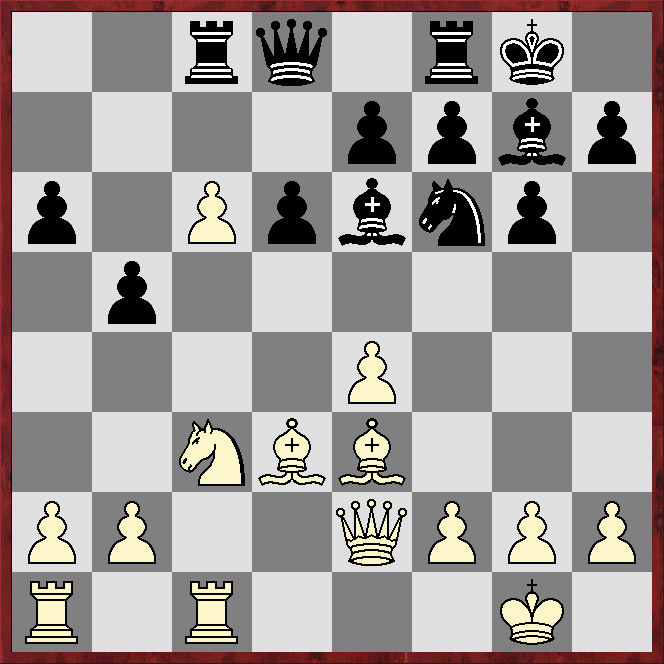
How should White proceed?
*****
*****
*****
*****
*****
9.Nxg6!?
White gains the bishop-pair, but castling kingside and then half-opening the h file for the black king's rook is risky.
9...hxg6 10.Bf4!?
Stockfish16 and Komodo14.1 do not like this, although they do not agree on what White should play.
10...Nb6 11.a4 Bd6 12.Qf3 Qc7 13.Rfe1 a5 14.Ne2 0-0-0!?
Now the players have castled on opposite sides, how would you assess the middlegame?
*****
*****
*****
*****
*****
Neither king is immediately endangered, but neither is completely safe. Meanwhile White's bishop-pair is unlikely to be a factor, and is unlikely to exist much longer. The engines reckon the position is equal.
15.c3 g5 16.Bxd6 Qxd6 17.Qg3 Qxg3 ½–½
A strange time for a higher-rated player to be offering a draw, but perhaps it had something to do with this being the last round.

Two years later we again met in the Olomouc open, this time in the fifth round.
Spanton (1923) - Navrátil (2056)
Caro-Kann Classical
1.d4 d5 2.Nc3
Presumably I was satisfied with how the opening went in our previous game, but now JN varies.
2...c6!? 3.e4
I am fairly sure I knew my opponent normally met 1.e4 by playing the Sicilian, so it seemed sensible to switch to an e-pawn opening, namely the Caro-Kann, with which he might well be unfamiliar.
3...dxe4 4.Nxe4 Bf5
JN offered a draw, perhaps confirming my hope he was on unfamiliar ground.
5.Ng3 Bg6 6.Nf3 e6!?
The main continuation is 6...Nd7, but the text is also popular.
7.Ne5 Nd7 8.Nxg6
Winning the bishop-pair, much as in our previous encounter, but with a big difference - I have not castled.
8...hxg6 9.Bd3 Ngf6 10.c3 Qc7 11.Qf3 Bd6 12.Bg5
My notes show a game on an adjacent board reached the same position, but continued 12.h3.
What should Black play?
*****
*****
*****
*****
*****
12...Nh5!?
The engines strongly dislike this, preferring 12...c5, 12...Qb6 or 12...e5!?
13.Ne4 Be7!? 14.Bxe7 Kxe7 15.g3
More-or-less ensuring the black king's knight will have to spend a tempo going back to f6.
15...Qa5!? 16.h4 Qd5 17.0-0-0!?
Can Black safely grab the a2 pawn?
*****
*****
*****
*****
*****
17...Nhf6
This is the engines' second choice, behind 17...Qxa2!?, although after the latter is executed on the screen their evaluations fluctuate quite a bit. One line runs 18.Ng5 Nhf6 19.Rhe1 Rhe8 20.Kc2 Kf8 21.Ne4, when White has full compensation for a pawn, according to the engines.
18.Rhe1!?
Renewing the offer, but the engines reckon White is at least slightly better after 18.Kb1.
18...Nxe4
The engines again prefer immediately capturing the a2 pawn.
19.Bxe4 Qxa2 20.d5!? cxd5 21.Bxd5
The engines reckon Black has only one good continuation
*****
*****
*****
*****
*****
21...Qa5?
This is the worst of the four plausible queen moves, according to the engines. They give 21...Qa1+ 22.Kc2 Qa4+ 23.Kb1, after which they reckon White has a slight edge.
22.Bxb7
Missing 22.Bxe6!! fxe6 23.Rxd7+! Kxd7 24.Qcb7+ with a winning attack, eg 24...Kd6 25.Rd1+ Ke5 26.Qxg7+ Kf5 27.g4+ Kf4 28.Qd4+ Kf3 29.Qd3+ Kxg4 30.Rg1+ Kf4 31.Qd4+ Kf5 32.Rg5#.
22...Rad8 23.Qg4?
The engines reckon White may be slightly better after 23.Qc6.
23...Ne5?
Black is much better after 23...Rb8 as, if the bishop moves, Black has 24...Qa1+ followed by capturing on b2. If 24.Qf3, then 24...Nc5 wins. Perhaps best is the engines' 24.Qd4!? Rxb7 25.Rxe6+ fxe6 26.Qxg7+ Ke8! 27.Qxh8+, but after 27...Nf8 White does not have enough for a knight.
24.Qd4 Rxd1+ 25.Rxd1 Rd8 26.Rxd8 Kxd8 27.Qd4+ Ke7 28.f4 Nd7 29.Bc6 Nf6
How would you assess this ending?
*****
*****
*****
*****
*****
It is fairly well-known that queen and knight often make a better partnership than queen and bishop, but here the most important factor may be that neither king is very safe. Meanwhile White has a protected passed pawn, although it is unlikely to move far, if at all, while queens remain on the board. The engines reckon the position is equal.
30.g4!? Qb6!?
Both the text and 30...Nxg4 31.Qd7+ Kf6 32.Qd4+ are completely equal, according to the engines.
31.Qxb6 axb6
Is the position really still completely equal?
*****
*****
*****
*****
*****
It seems so, or at least the engines reckon it is. Ture, White no longer has a passed pawn, but rival pawn-majorities nearly always favour a bishop over a knight, and I cannot see why that is not the case here.
32.Bf3 Kd6 33.Kd2 Nd5!?
This is Stockfish16's top choice. Komodo14.1 at first condemns the move, but comes to agree the position remains completely equal.
34.Bxd5 Kxd5
Komodo14.1 prefers 34...exd5!?, but Stockfish16 reckons both moves keep the game level.
35.Kd3 e5 36.c4+ Kd6 37.fxe5+ Kxe5 38.b4
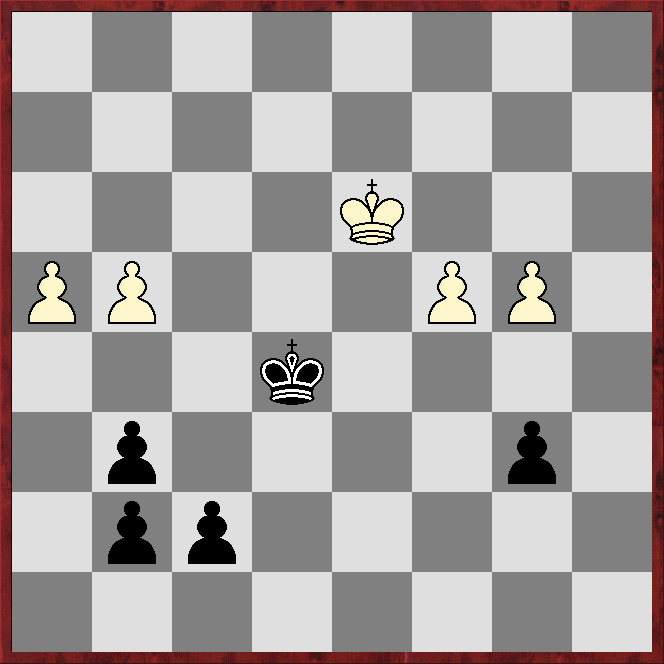
Black to play and draw
*****
*****
*****
*****
38...f6?
It seems Black had four drawing moves: 38...f5, 38...Ke6, 38...Kd6 and 38...Kf6. I expected 38...f5, eg 39.gxf5 gxf5, after which the two pawn-majorities cancel out each other.
White to play and win
*****
*****
*****
*****
*****
39.Ke3
It is that simple.
39...Ke6
After 39...f5 40.gxf5 gxf5 White wins with 41.h5!, eg 41...f4+ 42.Kf3 Kd4 43.Kxf4 Kxc4 44.Kg5 Kxb4 45.Kg6 Ka3 46.Kxg7 b5 47.h6, after which White gets a winning queen-v-pawn ending.
40.Kf4 Kd6 41.h5 f5
Or 41...gxh5 42.gxh5 Ke6 43.c5 etc.
42.hxg6 fxg4 43.Kxg4 Ke5 44.c5 bxc5 45.bxc5 1-0

The following year we met in round five of another CzechTour event, the Highlands Open in Třebíč, but with colours reversed..
Navrátil (2013) - Spanton (1858)
London System
1.d4 d5 2.Nf3 e6 3.c3!?
This may simply have been to get me out of book, but it has been played by grandmasters - indeed there are 1,123 examples of the move in Mega23.
3...Nc6!?
This scores just 28% in Mega23.
4.Bf4 Bd6 5.e3!?
This is the engines' top choice.
5...Nf6
The game has transposed to a position occurring 224 times in Mega23.
6.Nbd2 Nh5!?
This was probably a novelty, and apparently has not been repeated since - at least this game is the only example in Mega23.
7.g3!? Nxf4 8.exf4!? Qe7 9.Bd3 f6 10.Qe2 e5 11.fxe5 fxe5 12.Bb5?!
White should probably continue exchanging on e5.
12...e4 13.Nh4 0-0 14.0-0-0!?
Now both sides have castled, how would you assess the position?
*****
*****
*****
*****
*****
Positions with opposite-side castling are nearly always hard to judge as so much can hinge on a tempo gained or lost, but perhaps the most important factor is coming up with the right plan and executing it correctly. For what it is worth, the engines reckon Black is much better.
14...a6 15.Bxc6?!
Now Black gets a half-open file to White's king. The engines prefer 15.Ba4.
15...bxc6 16.Ng2
After making this move, JN pressed his clock and offered a draw.
16...a5 17.Ne1 Ba6 18.Qe3 Rab8 19.f3?
This allows a quick finish, but the engines reckon White is positionally lost anyway.
19...Ba3! 20.Nb1
Or 20.Nb3 a4 etc.
20...Rxb2!? 21.Nxa3 Qxa3 0-1

Monday, 7 August 2023

Olomouc Highlights II

MANY players are averse to being drawn against someone they have faced before.
I can understand the desire to avoid sameness, and a preference for fresh challenges.
But I enjoy the idea of renewing combat, especially if the colours are the same.
Is it best to stick to what you know, and if so are you ready for whatever improvement the opponent has planned?
Alternatively, should you switch openings entirely, even at the risk of finding yourself on unfamiliar ground?
In round six of the 2014 Olomouc Open I faced a Czech junior (born 1996), František Kamarád.

Kamarád (1747) - Spanton (1976)
King's Gambit
1.e4 e5 2.f4 Bc5 3.Nf3 d5!?
A sharp continuation that has never been popular, and which suffered quite a blow four years before my opponent was born when a 'refutation' was published in Joe Gallagher's Winning With The King's Gambit (Batsford).
4.Nxe5
This was Gallagher's recommendation. There are 41 examples of the move in ChessBase's 2023 Mega database, where it scores 51%, but 51 examples of 4.exd5, which scores 64%. That might appear clearcut, but the sample sizes are small and opinion is divided, not least among engines, with Stockfish16 opting for 4.exd5 while Komodo14.1 likes the text. To complicate matters further, both engines give another move as their top choice, 4.Nc3!?, which scores 44% in Mega23 from an even smaller sample size - just nine games.
4...Nf6!?
This used to be regarded as almost forced, and gets an exclamation mark in Play The King's Gambit - Volume 2: King's Gambit Declined by Yakov Estrin & Igor Glaskov (Pergamon 1982).
5.d4 Bb6
This also gets an exclamation mark in Play The King's Gambit. It is the only continuation in Mega23, but Estrin & Glaskov quote "Jorgenssen - Larsen, Denmark 1953" (I have not been able to track down this game) as running 5...Nxe4?! 6.dxc5 Qh4+ 7.g3 Nxg3, "when White had the chance of gaining a clear advantage by 8.hxg3! Qxg3+ 9.Ke2." Better than 8...Qxg3+? is 8...Qxh1, but the engines reckon 9.Qf3 gives White a winning advantage.
6.exd5 Qxd5 7.Be3 Nc6 8.Nc3
So far the game has followed an 1865 correspondence match between Vienna and Innsbruck, cited in Play The King's Gambit.
How should Black proceed?
*****
*****
*****
*****
*****
8...Qd6!?
Estrin & Glaskov recommended 8...Ba5, handing out another exclamation mark, and that was played in all three games in Mega23 to reach the diagrammed position. Gallagher's answer to this was 9.Be2!? (he gives it an exclamation mark but, as I explain below, that may be misplaced). I faced it in a 1993 London League game. Bertrand Barlow (180 ECF) - Spanton (161 ECF) continued 9...Bf5?! 10.0-0 Bxc3 11.bxc3 with a large advantage to White, according to the engines (1-0, 33 moves). Probably better is the brave 9...Qxg2!?, which Gallagher did not mention but was tried in Neil McDonald (2490) - Wolfgang Pajeken (2270), Wichern (Hamburg) 1997. After 10.Bf3 Qh3 11.Nxc6 bxc6 12.Bxc6+ Kd8 13.Qf3 Qxf3 14.Bxf3 Rb8 15.0-0-0 the engines reckon Black has some, but not enough, compensation for being a pawn down (1-0, 45 moves). So 9.Be2!? seems to be good enough for at least a slight edge, but the engines reckon 9.Bc4!? and 9.a3!? are even stronger.
I cannot recall whether the text, which still does not appear in the Mega database, was computer-assisted preparation, but it is the top choice of Stockfish16 and Komodo14.1.
9.Bb5
My notes show Stockfish5 recommended 9.Qd2 0-0 10.Bc4, a sequence also liked by its descendant, Stockfish16. Komodo14.1 prefers 9.Bd3, meeting both 9...Be6 and 9...0-0 with 10.Nb5. Yet another suggestion, from Fide master Steve Berry, was 9.Nxc6 followed by quick queenside castling, although the engines reckon this favours Black. At any rate four different sources, if you count my opponent, give four different continuations, which shows how unclear the position is.
9...0-0 10.Bxc6!? bxc6 11.0-0
Now both sides have castled, how would you assess the position?
*****
*****
*****
*****
*****
White is a pawn up, has more space, enjoys the better pawn-structure and has a well-placed knight at e5, but White's surviving bishop is bad. Black has the bishop-pair and can hope to exploit the central light squares. Komodo14.1 gives White a slight edge, but Stockfish16 calls the position equal.
11...Ba6 12.Rf2 Rad8
Better is the engines' 12...Nd5!, which more-or-less forces 13.Nxd5 (13.Bc1?! Ne7!), after which 13...cxd5 solves Black structural problems.
13.Rd2?!
This is probably too passive. Instead the active 13.a4!? somewhat embarrasses the black dark-square bishop as 13...Bxd4?! 14.Bxd4 Qxd4 15.Qxd4 Rxd4 16.Nc6 brings helpful simplification for White.
13...Ba5 14.Qf3 Bxc3 15.bxc3 Nd5 16.Bf2
Not so much preserving the bishop as uncovering protection for c3.
16...f6 17.c4!?
Stockfish5 did not like this, prompting me to give the move a question mark in my notes. However it is the top choice of Stockfish16, although Komodo14.1 prefers 17.Nd3.
As an aside, it is interesting how often a contemporary engine's assessment is overturned by a later engine, and indeed how often modern engines disagree in their assessments. It is because of this that I tend to be cautious in handing out question marks and exclamation points, usually preferring ?! or !? unless I am reasonably sure.
17...fxe5 18.cxd5 Rxf4 19.Qe3 Qxd5 20.Rad1
The engines' 20.Re1!? may be better, meeting 20...Rxd4 with 21.Rxd4 exd4 22.Qa3!?, giving counterplay.
20...Rg4 21.g3 e4
The contrast between the two bishops is stark
*****
*****
*****
*****
*****
22.Qa3 Bc4! 23.Qxa7?!
The engines reckon White should prefer 23.Be3.
23...Qg5
Winning is 23...e3! 24.Bxe3 Qe4 25.d5 Bxd5 (the move I missed, according to my notes), when White has to give up the exchange. Even worse is 25.Bf2? as 25...Bd5 leads to mate.
24.d5?!
Probably better is 24.Qa3, although my modern engines do not agree with Stockfish5's verdict that it equalises.
24...cxd5 25.Be3 Qe7
Black is a pawn up and has a protected passer, but opposite-coloured bishops and the passed a pawn give White practical chances
*****
*****
*****
*****
*****
26.a4 Rg6 27.Ra1 Ra6 28.Qb7 Rda8 29.Rf2 Rf8!? 30.Rxf8+ Qxf8 31.Qxc7 Rxa4?!
This was the 'clever' point behind 29...Rf8!? - White cannot recapture on a4 as ...Qf1 mates. However the engines' 31...Rf6! leaves Black dominant.
32.Rb1 Ra8 33.Bd4 Re8 34.Qa7 Re7
I gave this move two questions marks, an unfair judgment probably based on Stockfish5 assessing 34...h5 as giving the upper hand. Stockfish16 reckons the game is completely equal after 34...h5, although Komodo14.1 gives Black a slight edge.
35.Rb8
Also drawing is 35.Qb8.
35...Rxa7
Not 35...Re8?? 36.Rxe8 Qxe8 37.Qxg7#.
36.Rxf8+ Kxf8 37.Bxa7
FK offered a draw. I played on for five moves, but then conceded the inevitable.

Fast-forward a year and I was paired against the same teenaged opponent at the same tournament, this time in round seven. In the intervening months our ratings had travelled in opposite directions, dramatically in his case.

Kamarád (1886) - Spanton (1950)
King's Gambit
1.e4 e5 2.f4 Bc5 3.Nf3 d5!? 4.Nxe5 dxe4!?
Estrin & Glaskov said this is wrong because of "5.Bc4!", which has been played in 20 of the 29 games to reach the position in Mega23. I will look at it below, because it is what my opponent played, although I do not know if it was a result of preparation.
Gallagher gave 4...dxe4!? a straight question mark, saying 5.Qh5 Qe7 6.Bc4 "is very good for White."
Only one Russian game has reached this position in Mega23
*****
*****
*****
*****
*****
Vladimir Pogosian (2203) - Dmitry Melnikov (2303), Chigorin Memorial (St Petersburg) 2004, continued 6...g6 7.Qe2 Nf6 8.Bxf7+ Kf8 9.b4!? Bd4, after which 10.c3 would have given White at least the upper hand, according to the engines, eg 10...Bxe5 11.fxe5 Kxf7 12.exf6 Qd6 13.0-0.
5.Bc4 Nh6
I have a printout of an article* by Thomas Johansson, author of two books on the King's Gambit, in which he looks at 3...d5!? in some detail.
He gives 5.Qh5 an exclamation mark, but calls 5.Bc4 dubious, recommending "5...Nc6!" There is just one game in Mega23 with this move, Petr Weiss (1845) - Spanton (2030), Brno (Czechia) 2010, which continued 6.Bxf7+ Kf8 7.Nxc6 bxc6 8.Bxg8 Kxg8 9.Qh5 Bb6 10.Qe5?! Bg4 11.Nc3? Qh4+ 12.g3 Qh3 13.b3? Qg2 0-1.
Johansson instead quotes a 1999 correspondence game that went 6.Nxf7 Qh4+ 7.g3 Qh3 8.Bf1!? Qf5 9.Nxh8 Be6, after which White is, at least temporarily, a rook and pawn up, but Black has a dangerous attack that in the game quickly won.
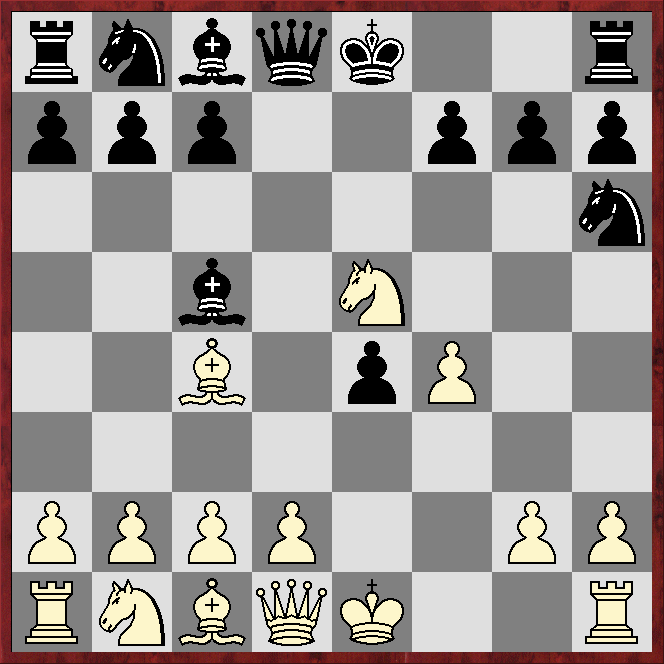
After 5...Nh6, how should White proceed?
*****
*****
*****
*****
*****
6.Nxf7?
Much better is 6.Qh5, when five games in Mega23 have seen 6...0-0 7.Nxf7 Bf2+!? White has to continue 8.Kxf2 (two players did not, and lost trivially), after which 8...Qd4+ 9.Kf1 Nxf7 gives Black sufficient compensation for a pawn, according to the engines.
6...Qd4 7.Qe2 Bg4!?
The simple 7...Nxf7 also wins.
8.Qf1?
Better is 8.c3 Bxe2 9.cxd4 Bxc4, although the engines reckon Black has a positionally won game.
8...Nxf7 9.c3 Qd6 10.b4 Bb6 11.a4 a6 12.Ba3 0-0!? 0-1
*It may have been on a long-defunct blog - I can no longer find it on the internet.

Sunday, 6 August 2023

Olomouc Highlights

TIM Harding of chessmail.com kindly emailed me with some tips for visiting Olomouc after he read I was playing there later this month.
What he did not know is that I have played in the Czech city 10 times before, which got me to thinking about how I have performed there.
Here are my results.

YEAR...RATING...SCORE... PERFORMANCE
2009......2020.........+4=2-3.....1923 (-97)
2010......2057.........+4=1-4.....2009 (-46)
2011......1999.........+4=0-5.....1876 (-123)
2014......1976.........+3=4-2.....1826 (-150)
2015......1950.........+5=0-4.....1962 (+12)
2016..... 1923.........+5=1-3.....1988 (+65)
2017......1836.........+5=2-2.....1971 (+135)
2018......1946.........+4=4-1.....2021 (+75)
2019......1881.........+4=3-2.....1905 (+24)
2022......1852.........+4=1-4.....1737 (-115)
Overall I have scored +42=18-30, or 56.7%. My average rating was 1944 and my average performance was 1922 (-22).

I generally have fond memories of Olomouc, which I guess may be connected to my winning percentage rather than my average performance.
Hunting for highlights, it seemed to make sense to first look at 2017, where I played three English players in consecutive rounds.
I drew with Joe Skielnik and lost to Paul Stokes, with the following game sandwiched in-between.

Ian Heppell (2062) - Spanton (1836)
Reversed Philidor?
1.e4 e5 2.Nf3 Nc6 3.d3!?
I am fairly sure I did not realise White is angling for a Philidor Defence, but with colours reversed and an extra tempo.
How should Black respond?
*****
*****
*****
*****
*****
3...Nf6
Viktor Bologan in Bologan's Black Weapons In The Open Games (New In Chess 2014) recommends 3...d5!?, which is not at all popular, perhaps because, whatever its merits, it gives White a central structure familiar, with colours reversed, from the Philidor.
4.Be2 Bc5 5.0-0 d6 6.c3
The position is arguably more reminiscent of a Reversed Pribyl than a Reversed Philidor, except in the real Pribyl White will have played e4 and d4 (e5 and d5 here), while in the real Philidor White will not always play an early d4.
6...a5
James Hanham, of Philidor Defence fame, had the position after 6.c3 with white at least twice, his opponents playing 6...Bb6.
7.d4 Bb6 8.d5 Ne7 9.Na3 0-0
Not 9...Nxe4?? 10.Qa4+ etc.
10.Qc2 c6 11.dxc6 bxc6 12.Nc4 Ba6 13.Bg5
IH said afterwards he should have gone for the slight edge that comes with 13.Nxb6. Stockfish16 and Komodo14.1 agree, but only marginally.
13...Bxc4 14.Bxc4 Ng6 15.Rad1 h6 16.Bc1
IH had hoped to play 16.Nh4? hxg5 17.Nxg6 but saw in time that after 17...Re8 the knight would be trapped.
16...Qc7 17.Rfe1 Rad8 18.h3 Nh5 19.Bf1!? Rfe8 20.c4!?
This was presumably the main idea behind 19.Bf1!? The d pawn is fixed as semi-backward for the foreseeable future, but the light-square bishop becomes a miserable-looking piece.
20...Re6 21.Be3!? Bxe3 22.Rxe3 c5!?
The d pawn is now fully backward, but Black can hope to get a knight into d4, and meanwhile the bishop has few offensive prospects
*****
*****
*****
*****
*****
23.Ra3 Ne7 24.Qd2
IH offered a draw.
24...Nc6 25.g3 Kh7 26.Kh2 Ra8 27.Be2 g6 28.Rd3 Rd8 29.Kg2 Nf6 30.Qe3?!
Probably better is 30.Re3, but the engines give Black the upper hand.
30...Nb4 31.R3d2 Nxa2 32.Nh2 Nb4 33.Ng4 Nxg4 34.hxg4 Kg7 35.Rh1 g5
Black is a pawn up and has the much better minor piece
*****
*****
*****
*****
*****
36.f4?!
Trying to open lines in the hope of getting at the black king, before Black's advantages tell, but the engines reckon it was probably better to sit tight and wait for Black to try to make progress.
36...f6
The engines prefer double-capturing on f4.
37.Rdd1
The engines suggest 37.f5, effectively meaning any action has to take place on the queenside.
37...Nc2 38.Qf2
The engines reckon 38.Qd2 and 38.Qd3 are better.
38...Nd4
Also strong is 38...exf4.
39.Bf3 Qb7 40.Rd2 Qb4 41.Rc1? 0-1
IH resigned rather than waiting for 41...Nb3.

Saturday, 5 August 2023

From The Archives

GOING through a wallet of mine I have not used for many years, I found a cutting from Baruch Wood's column in the Daily Telegraph dated June 16, 1979.
I had kept the cutting because I got a mention in it as contributing to readers' analysis of a game Wood had published a little while before
More than 44 years old, but still in relatively good condition
I thought it would be interesting to go through the game here with the help of those silicon analysts, Stockfish16 and Komodo14.1.
Notes in italics are Wood's original annotations, which I have algebraicised for convenience.

WE INVITED readers to criticise a game from the recent British Universities Championship at Southampton which we felt might qualify, if sound, for a brilliant [sic] prize. Amusingly, both the players entered the lists.
M D Burt - D Ashcroft
English Symmetrical
1.Nf3 c5 2.c4 Nf6 3.d4 cxd4 4.Nxd4 g6 5.g3 Bg7 6.Bg2 0-0 7.0-0 Nc6 8.Nxc6!?
Condemned by many as unnecessarily strengthening Black's centre. Better 10.Nc3 or 10.e4.
8...bxc6 9.Qc2 Rb8 10.Bf4
R. C. Noel-Johnson, who at 75, is still mowing down first-class opposition in Worthing, justifiably criticises this (see White's 12th).
The engines like the text, although they reckon the position is equal.
10...d6
How should White continue?
*****
*****
*****
*****
*****
11.Bxc6?!
Safer, and almost certainly better, is 11.Nc3.
How can Black exploit the slight looseness in White's position
*****
*****
*****
*****
*****
11...Nh5
Black has good compensation for a pawn after this, but the engines point out the strength of 11...Bf5!, and if 12.e4 then 12...Bh3 13.Rd1 Qb6. Probably better is 12.Qc1, but then 12...Nh5 is strong. The engines suggest 12.Qa4!?, but reckon 12...Rxb2 13.Qxa7 Rb6 14.Bg2 Ng4 is winning for Black, so instead of 13.Qxa7 they recommend 13.Nd2, but after, for example, 13...a5, Black is much better coordinated.
12.Bc1 Bh3 13.Bg2 Bxg2 14.Kxg2 Qb6
What should White play?
*****
*****
*****
*****
*****
15.Nc3
Here comes the first of two real discoveries by readers. We asked "Can White hold his extra pawn?" Curiously, the players thought not but L. H. R. Maltby (Swanage), T. Spanton (Doncaster) and K. F. Stewart (Lowestoft) find the convincing 15.g4, eg 15...Nf6 16.f3 or 15...Nf4+ 16.Bxf4 Bxb2 17.Nd2 or 15...Bxb2 16.Bxb2 Nf4+ 17.Kg3.
I do not recall how much of this analysis was mine, but the engines reckon it leaves a lot to be desired (apart from the last variation, which is trivially lost for Black).
After 15.g4 Nf6 16.f3 the engines consider Black to have the upper hand, a sample line running 16...Rfc8 17.Na3 d5 18.Qd3 Qc5 19.b3!? Nxg4!
White is indeed better after 15...Nf4+? 16.Bxf4 Bxb2 but only if White continues with 17.Nc3 rather than 17.Nd2?? The problem with the latter is that 17...Bxa1 18.Rxa1 loses to 18...Qd4.
15...Qc6+ 16.f3
We wrote not "16.Qe4* Rfc8." K. F. S. thinks 17.Nd5 sinks Black but 17...Rb7 sees to that.
The engines like 17.Nd5, meeting 17...Rb7 with 18.Bg5, claiming at least a slight edge for White.
16...Qxc4 17.Bd2 Rfc8 18.Rfc1
"The wrong rook" confesses Mr Burt. Indeed 18.Rac1 would meet the threat of 18...Qxe2+ but it would also, by removing the rook from the black bishop's diagonal, enable White to continue with b3.
The engines reckon there is practically nothing to choose between the two rook moves.
18...d5 19.e3?!
The engines strongly dislike this, claiming 19.b3 leaves the game equal.
19...e5 20.Qd1
More or less forced as the threatened 20...d4 was so strong.
20...Qd3 21.Rab1 e4 22.f4?!
The engines reckon White keeps his disadvantage to a minimum with 22.Be1!? or 22.Kf2!?
22...d4
Mr Ashcroft says he looked hard at 22...Bxc3, but felt it gained no advantage. We agree though the play becomes very involved.
The engines also agree.
23.Nd5?!
The engines' 23.exd4 seems less catastrophic but they give Black a winning advantage after 23...Bxd4.
23...Rxc1 24.Qxc1 dxe3 25.Ne7+
Much better: 25.Nxe3. K. F. S. noticed it but mentions it somewhat casually.
Komodo14.1 agrees Nxe3 is an improvement, but only a small one; Stockfish16 is even less sure.
25...Kh8 26.Bxe3 Nf6 27.Bxa7!?
This is Komodo14.1's top choice for a while, although the engines come to agree 27.Qc7 is a little better.
27...Ng4 28.Qg1 Qf3+ 29.Kh3 Rb5
K. F. S., M. Parr (W4) and B. G. E. Halliwell (Pulborough) find 29...e3 which wins for Black very quickly: 30.Bxe3 Nxe3 or 30.Bxb8 Nf2+ or 30.Rf1 Nb2+ all mate or demand ruinous sacrifices.
Wood gives ...Rb5 a question mark - the only annotation-by-symbol in the column - but the engines reckon it is the better move, albeit Stockfish16 is less sure than Komodo14.1.
The game ended with
30.f5 e3 31.Rc1 h5 32.fxg6 fxg6 33.Nxg6+ Kh7 34.Nf8+!? Bxf8 35.Rc7+ Kg8 36.Bxe3 Nxe3 37.Rc4 Qg4+!? 38.Rxg4 hxg4+ 0-1
K. F. Stewart scored the two essential "bulls" and wins our main analysis book prize. Runner-up: B. G. E. Halliwell.
We feel that Mr Ashcroft in view of the flaws in a game undoubtedly delightful in the main, will have to split his prize in the university contest.
*The column has 16.Q-R4 but 16.Q-K4 must be intended.

Friday, 4 August 2023

Who Would Have Thought It?

MICHAEL Adams (2761 ECF/2666 Fide) was the strong favourite for the nine-round British Championship at Leicester, and he duly obliged by finishing on 7.5 points, 1.5 ahead of the other titled players.
But he did not finish 1.5 ahead of the whole field of 64, as in clear second on 6.5 was Hampshire's Steven A Jones (2259 ECF/2175 Fide).
The two met in round one in what at the time was widely thought of as a routine mis-match that occurs at the start of swiss tournaments.
However the game proved to be the decisive encounter of the event, and Adams did not have it all his own way - indeed Jones arguably had a winning advantage in the middlegame

Adams - Jones
Sicilian Bb5(+)
1.e4 c5 2.Nf3 Nc6 3.Bb5 Nf6!?
This move, which is fourth in popularity behind 3...d6, 3...e6 and especially 3...g6, only goes back to 1936 in ChessBase's 2023 Mega database.
4.Nc3 Qc7 5.d3!?
The mainline in Mega23 runs 5.0-0 Nd4 6.Re1 a6 7.Bf1 with a slight edge for White, according to Stockfish16 and Komodo14.1.
5...d6 6.0-0 e6
How should White proceed?
*****
*****
*****
*****
*****
7.Bxc6+!?
Adams played this unprovoked surrender of the bishop-pair the previous two times he reached the diagrammed position in Mega23. According to commentary by Russian grandmaster Ernesto Inarkiev, who also later took up the move, it is a "direct attempt to use the development advantage by actions in the centre."
7...Qxc6 8.Bg5!?
In his previous games, both wins against 2550+ players, Adams played 8.Bf4 and 8.e5. The text is preferred by the engines.
8...Be7 9.e5 dxe5 10.Nxe5 Qc7 11.Re1 0-0
Now both players have castled, how would you assess the coming middlegame?
*****
*****
*****
*****
*****
Black has the bishop-pair but White has a small lead in development - four pieces in play, including a knight that has reached the fifth rank, against Black's three pieces in play. The engines reckon White has a tiny pull.
12.Qf3 Nd7!?
White hopes to generate a kingside attack, so exchanges should help Black's defence even if that means the bishop-pair goes.
13.Nxd7 Qxd7
Also possible is 13...Bxd7!? as 14.Bxe7 is met by 14...Bc6 and 15...Qxe7. However the engines reckon White may be better off in this line playing 14.Nd5!?
14.Bxe7 Qxe7 15.Re3 Qc7 16.Rae1 Bd7 17.Qh5 b6
Fiddling while Rome burns? Not according to the engines - they reckon this is Black's best continuation.
18.Ne4 f6!?
Not 18...h6? 19.Nf6+!
19.Rh3 h6 20.Rg3 Bc6!?
Setting a little trap.
What should White play?
*****
*****
*****
*****
*****
21.h3
Not 21.Qxh6?? Qxg3 etc.
21...Rae8 22.Rg7
Now the threat of Qxh6 is real.
22...Kh7 23.Re3 Re7
How should White continue the attack?
*****
*****
*****
*****
*****
24.Rgg3?!
The engines reckon White had to play 24.Rf3!?, the point being 24...Be8? fails to 25.Nxf6+! Rxf6 (forced) 26.Rfxf6, after which 26...Bxg6 27.Qxg6+ Kg8 28.Rxe6 leaves White two pawns up. Instead Black should probably exchange minor pieces, with what the engines reckon is an equal position.
24...Be8 25.Qh4
Black to play and gain at least the upper hand, according to the engines
*****
*****
*****
*****
*****
25...g5?
SJ must have missed White's reply, or more likely misjudged the strength of it. Instead 25...e5 is winning (Stockfish16) or gains the upper hand (Komodo14.1), eg 26.Nc3 Bc6 27.Re1 f5 with an initiative for Black. Other moves, including 25...Rd7 and 25...Qe5, also seem to give an edge.
26.Rxg5! fxg5 27.Nxg5+ Kg8 28.Nxe6 Rxe6 29.Rxe6 h5
The engines reckon Black's bishop balances out White's three extra pawns, but Black faces the practical problem (for a human, at least) of having a very exposed king 
*****
*****
*****
*****
*****
30.Qe4 Bf7 31.Rh6 Be8?
31...Re8 gives complete equality, according to the engines.
The game finished:
32.Qd5+ Rf7 33.Re6 Bd7 34.Rg6+ Kf8 35.Qg5+ Rf5 36.Rg8+ Kf7 37.Rg7+ Ke6 38.Qe7+ 1-0
It is mate in four, viz 38...Kd5 39.Qe4+ Kd6 40.Rg6+ etc.

Thursday, 3 August 2023

Czech It Out

THE CzechTour has released its schedule through next February.

Oh Calamity!

TWO proverbs that come to my mind quite often are, "Worse things happen at sea," and "There's always someone worse off."
The latter in particular was brought home to me by the drama that unfolded in the last two rounds of the British 65+ championship at Leicester.
Favourite in the 52-player event was Fide master Terry Chapman, whose 2248 rating put him more than 100 elo ahead of everyone else.
I was not paying much attention to his games, but he was a point clear of the field when he reached five out of five, a score that included a round-five win against his nearest rival in rating terms, Scottish Fide master Philip Giulian (2141).
Then came round six.

Alan Punnett (2051) - Terry Chapman (FM 2248)
Caro-Kann Tartakower
1.e4 c6 2.d4 d5 3.Nc3 dxe4 4.Nxe4 Nf6 5.Nxf6+ exf6!?
This, arguably anti-positional, recapture is all the rage although it dates back in master play to at least 1898.
6.Be3 Bd6 7.Bd3 Nd7 8.Ne2 0-0
German grandmaster Vincent Keymer has twice played 8...f5!?, which is also the choice of Stockfish16 and Komodo14.1.
9.Ng3 Re8
How should White proceed?
*****
*****
*****
*****
*****
To a certain extent the pawn-structure dictates the players' overall strategies.
White's potential queenside passer makes most endgames an attractive proposition, so it is often natural to seek exchanges.
Black's play is perhaps a little more subtle. If both sides castle short, which they usually do, Black's king will have more pawns protecting it. Furthermore Black may be better placed to push pawns on the kingside, possibly as part of a pawn-storm or, at least initially, to drop the knight in on e4 (after playing ...f5).
I presume it was such general considerations that led AP in this game to play ...
10.Nf5!?
... but it is a move the engines are not keen on. They suggest 10.0-0, 10.c3 or 10.Qd2.
10...Nf8?!
This gives up the bishop-pair. Not only that, but the dark-square bishop is often Black's most potent piece in the early going of the Tartakower Variation.
After 10...Bc7 the white knight will get hit by ...g6, eg 11.0-0 g6 12.Ng3 (12.Nh6+ Kg7 favours Black, according to the engines) f5 13.Qd2 Nf6 with what seems a perfectly reasonable position. The engines reckon 11.Qg4 is nothing to worry about after 11...g6 12.Nh6+ Kf8, with the threat of ...Ne5 or ...Nc5 to come.
11.Nxd6 Qxd6
TC may have thought the four tempi spent by the knight in going from g1 to e2 to g3 and f5, and then exchanging itself in a way that lets Black recapture with a developing move, is too high a price for White to pay, but the engines disagree.
12.0-0 a5 13.c4 Be6 14.Qc2 Red8 15.Rfd1 Qc7 16.Rac1 g6
Now the middlegame is well under way, how would you assess the position?
*****
*****
*****
*****
*****
We are a long way from any ending, and White's bishop-pair is not (yet) a dominant force. On the other hand there is no sign of a Black kingside attack, and is not clear any such attack would be effective, even if it came, as Black's pieces are not well-coordinated for such action and Black will miss his dark-square bishop. Meanwhile White has more space in the centre and the better pawn-structure. The engines reckon White has a positionally won game.
17.Qe2 Qe7 18.Qf3 h5 19.h3 Rd6?
This loses the exchange. The engines suggest 19...a4 or 19...Nh7, but have White on top.
20.d5 cxd5 21.Bc5 Rad8?!
The engines prefer 21...dxc4 22.Bxd6 Qxd6, although 23.Bxg6 Qe5 24.Bxh5 leaves White the exchange up and with much the safer king.
22.Bxd6?!
Much stronger is 22.cxd5 Bxd5 23.Qxd5 Rxd5 24.Bxe7, winning a piece.
22...Rxd6 23.Re1 d4
Black has a passed pawn for the exchange - if he had the bishop-pair as well, he might be in business
*****
*****
*****
*****
*****
24.Be4 Rb6?!
Almost certainly better is 24...Rd7, keeping an eye on d4 as well as protecting b7.
25.b3 Nd7 26.Qd3 Qa3?!
Exchanging pawn captures on d4 and a2 is probably not a good deal, especially as the fall of the d4 pawn exposes the f6 one.
27.Qxd4 Qxa2 28.Bd5 Rd6 29.Qc3 Nc5!?
Not much of an improvement, if any at all, is the engines' 29...Qa3 30.Bxe6 fxe6 31.c5 Rc6 32.Qd4 Ne5 33.Qd8+ Kg7 34.b4!? Nf7 35.Qd7 axb4 36.Qxb7, after which White's passed pawn is the more dangerous.
30.Bxe6 Rxe6 31.Rxe6 Nxe6 32.Ra1 Qe2 33.Qxf6 Qd2 34.Qe5 b6 35.Qb8+
Black has to either give up another pawn or let queens come off
*****
*****
*****
*****
*****
The game saw:
35...Qd8 36.Qxd8+ Nxd8 37.Rd1 (1-0, 49 moves).

Of course anyone can lose to a player rated about 200 points lower, as a cursory look at almost any open tournament will show.
The Calamity in my title refers not to the game above. but to what happened the next day in the seventh and final round.
On top board Punnett had black against Sheila Jackson. Both were on five points, were roughly equally rated and duly drew.
Chapman was downfloated with white against David Fryer, who was enjoying a very good tournament, having gained 36.6 elo, but whose 1880 rating was unlikely to have a Fide master quaking in his boots.
The round started at 10:00, but the default time of 30 minutes had elapsed by eight minutes, an arbiter told me later, when Chapman arrived.
Apparently his watch had stopped, and by the time he noticed the correct time it was too late.
The result was the 2023 65+ championship was shared by the other three players mentioned above, all of whom ended on 5.5.

Wednesday, 2 August 2023

Championship Chess

PLAYED last night in Battersea's summer club championship.

George Ainsworth (1890) - Spanton (1919)
Giuoco Piano
1.e4 e5 2.Nf3 Nc6 3.Bc4 Bc5 4.0-0 d6!?
The main move is 4...Nf6, when White has the option of a sharp gambit, viz 6.d4!? Bxd4 7.Nxd4 Nxd4, and play can quickly get sharp, eg 8.f4 d6 9.fxe5 dxe5 10.Bg5, after which White's bishop-pair and lead in development give decent practical chances, although Stockfish16 and Komodo14.1 reckon Black is slightly better.
5.c3 Nf6 6.d3 Bb6!?
Black often withdraws the dark-square bishop in the early stages of the Giuoco Piano, either, as here, to b6, or, probably more often, to a7 after first playing ...a6 or ...a5. The point is to give Black flexibility in how to deal with the move d4 (I will elaborate on this below).
7.Bb3!?
This is also a common move in the Giuoco Piano, and indeed is the main move here in ChessBase's 2023 Mega database, although 7.Nbd2 and 7.a4 are also popular. White's light-square bishop is an important piece in this opening, and, once Black has protected the e5 pawn by playing ...d6 the threat of ...Na5, exchanging off the bishop, is in the air, although here, after 7.Nbd2 Na5, White can preserve the bishop with 8.Bb5+.
7...Bg4 8.Nbd2 Ne7!?
The manoeuvre of the white queen's knight via d2 and f1 to e3 or g3 to bolster a kingside attack is well-known, and Black has a similar idea with manoeuvring the black queen's knight from c6 via e7 to g6. If Black's dark-square bishop were still on c5, playing ...Ne7 would be problematic because White could reply d4, forcing Black to 'give up' the centre with exd4.
9.Re1 Ng6 10.h3
How should Black meet the threat to the bishop?
*****
*****
*****
*****
*****
10...Be6
Stockfish16 suggests 10...Bc8!?; Komodo14.1 prefers 10...Bxf3!?
Possible seems to be 10...Bh5!?, as 11.g4 Nxg4 12.hxg4 Bxg4 gives Black promising compensation. However the engines reckon 11.Nf1 is harder for Black to meet.
11.Bc2 Qd7 12.Nf1 0-0
Now both players have castled, how would you assess the position?
*****
*****
*****
*****
*****
It may look fairly balanced but Komodo14.1 reckons White has a slight edge, while Stockfish16 goes further in awarding White the upper hand. The point, I believe, is White is ready for advancing in the centre, or on the queenside, while Black still has to prepare central action.
13.d4 c6
Ivan Gerasimov (2277) - Roman Safonov (2114), Russian U18 Club Championship 2007, saw 13...Qe7 14.Ng3 Rad8!? 15.Bg5 Kh8!?, after which the engines reckon 16.Nh5 or 16.Nf5 would have given White a large advantage.
14.Ng3 Rad8
Better may be 14...h6, as played in James Hanham - David Baird, New York State Winter Championship 1897. Hanham continued 15.Nf5?!, when 15...Nxe4!? looks good. This was later tested in Anatoliy Polivanov (2452) - Zachary Tanenbaum (2137), Lichess Blitz 2020, which continued 16.Nxh6+ gxh6 17.Bxe4 f5 with promising play for Black (0-1, 34 moves). The engines reckon White should be content with meeting 14...h6 with a move such as 15.Be3 or 15.a4.
15.Bg5 Kh8!? 16.Nf5
Probably not 16.d5?! as 16...Bxh3!? looks strong for Black now that the bishop on b6 bears down on f2.
16...Rde8 17.h4?
White is better after 17.Bxf6 gxf6 18.Qd2. Even 17.Ng3!? is good for White, according to the engines.
17...Nxe4! 18.Nxg7 Nxg5 19.Nxe8 Nxf3+ 20.Qxf3 Rxe8
Black is much better, according to the engines, after 20...f6!
21.h5 Nf4 22.dxe5 dxe5 23.Rxe5 f6
The engines reckon Black is slightly better, or at least has the better side of equality, after 23...Qd2!?
24.Re4
How should Black proceed?
*****
*****
*****
*****
*****
24...Nd5?!
Black probably had to try 24...Nh3+!? 25.gxh3 Rg8+ with an unclear position.
25.Rae1 Bf7?
Possibly best is 25...f5!?, when the engines continue 26.R4e2 Nf6 27.h6, claiming White has at least the upper hand.
26.Rxe8+ Bxe8 27.c4
The black position is collapsing
*****
*****
*****
*****
*****
27...Qf7!? 28.cxd5 cxd5 29.h6 Bc7?
Missing White's pretty finish, but the engines reckon Black is the equivalent of much more than a rook down anyway.
30.Qxf6+! Kg8 31.Rxe8+! 1-0

Tuesday, 1 August 2023

So What Went Wrong?

ON the face of it my performance in the British 65+ championship was far from a disaster.
Six of my seven opponents had Fide ratings, their average being 1999, which is well above my Fide of 1800.
My performance against them was 1932, which is also well above my Fide rating. So far so good.
Six of my opponents also had ECF ratings, their average being 2008, which is a fair bit above my ECF of 1941.
My performance rating against them was 1808, which is well below my ECF rating.
Averaging the results of the two rating systems, I slightly outperformed my expected score.
But after three rounds the picture was very different as I had won two games with black and drawn the other with white.
Then came four losses on the trot - and what losses they were.

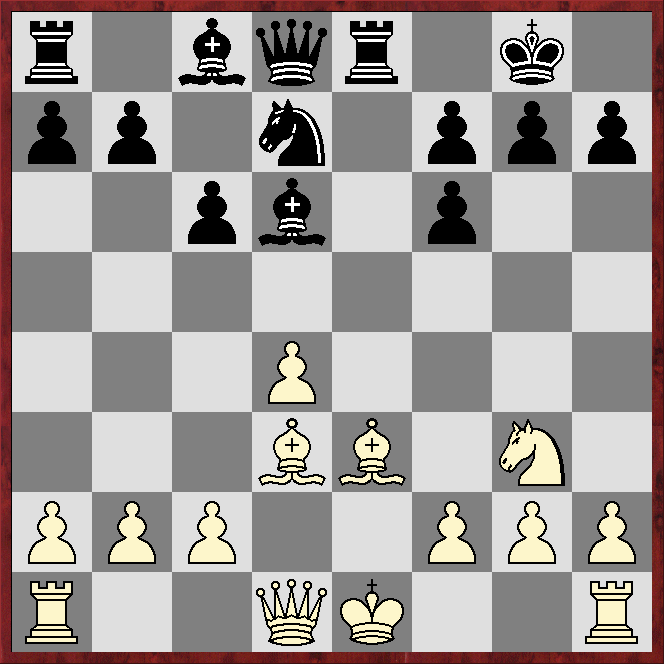
In round four I reached the following position with white against Sheila Jackson (2118 ECF/2039 Fide), who went on to share first place.
I thought I was doing quite well here thanks to pressure down the f file, and with Black having a bad bishop
My positional judgment was probably wrong - the game is equal, according to Stockfish16 and Komodo14.1.
But it certainly was not equal after the horrendous 22.Kb1??, which naturally was met by 22...Qxd1+.

In round five I reached the following position with black against Paul Hutchinson (2043 ECF/1996 Fide).
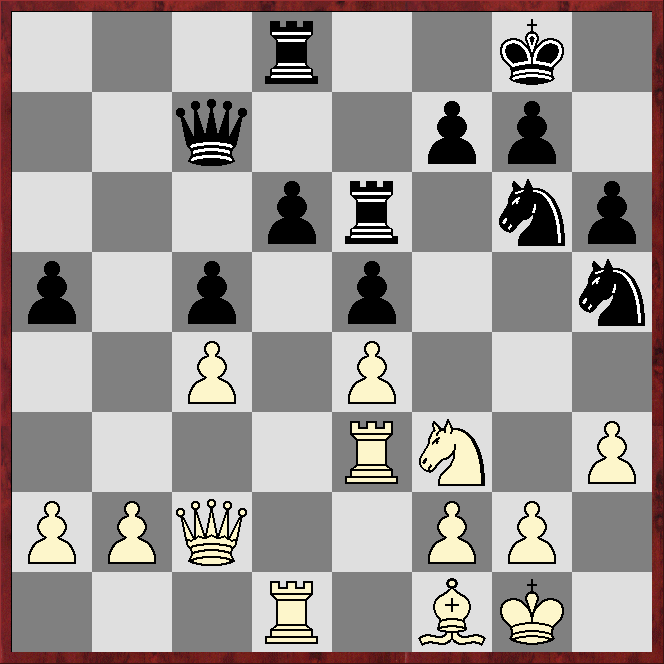
Black has a crushing advantage -  about +7.3 according to Stockfish16;  about +12.4 according to Komodo14.1
I continued 37...Rc5??, only to lose my knight to 38.Qh7+ and 39.Qxd3.

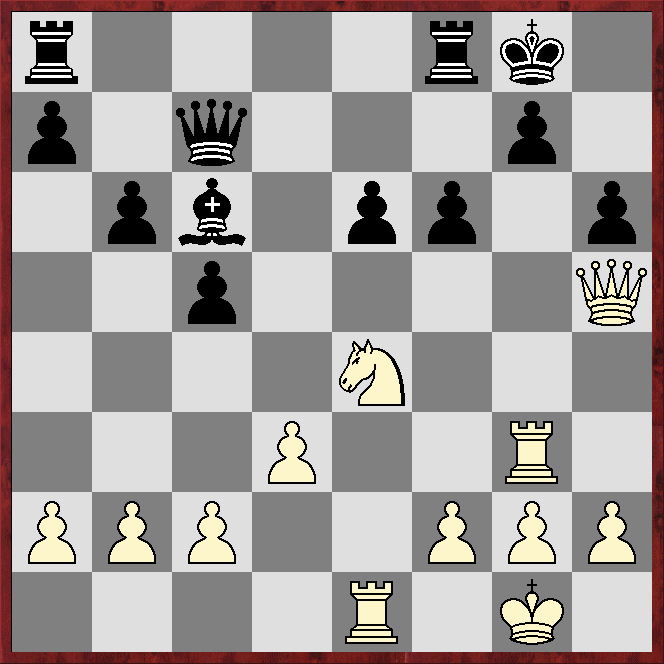
In round six I reached the following position with white against Andrew Morley (2114 ECF/2089 Fide).
After 17.a4 White has a slight edge, or at least the better side of equality, according to the engines
Instead I lost my head and played 17.Bxb5?? axb5 18.Qxb5.
After the further moves 18...Qc7 19.Nd5 Bxd5 20.exd5 Rb8 21.Qc4 Qc5 (even stronger is 21...Nxd5!? 22.Qxd5 Bxb2, according to the engines) I realised my sacrifice had been easily refuted.

In round seven I reached the following position with black against Ray Burgess (1924 ECF).
Black has at least the better side of equality after 21...Ne6, according to the engines, although the position is far from clear
There was nothing unclear about the game continuation of 21...Qe5?? 22.Rb1, after which Black must lose a knight for inadequate compensation.
I considered the correct move, 21...Ne6, but rejected it because of 22.e4?, but then 22...Qe5 wins, eg 23.Nb3 Rac8 24.Rd1 Nef4, after which the engines reckon Black's advantage is worth more than a rook.

What these four losses have in common is a move by me that earns two question marks - something I do not give out lightly.
So what causes such blunders?
The consensus in improvement books I have read is oversights like 22.Kb1?? and 37...Rc5?? are usually a result of tiredness.
Was I tired?
Well I certainly was not overdoing the nightlife - the last time I had an alcoholic drink was June 5, long before arriving in Leicester.
True, most days I was getting up at about 05:30, and going down to breakfast at the Holiday Inn as soon as the restaurant opened at 06:30.
After breakfast I would walk into Leicester's old town and have a couple of coffees while going through my emails and generally surfing the internet on my smartphone.
Come about 09:00 and I was feeling hungry again, so I would pop into Tesco or Marks & Spencer, buy some groceries and head back to my room for an early - very early - lunch between 09:30 and 10:00.
The rest of the morning I would spend on my computer, before having 20-30 minutes shuteye, and then heading to the tournament room for the 14:30 start.
The final round began at 10:00, so there was no time for an early lunch, and yet I did not feel as famished as, bearing in mind the routine I had adopted, I feared I would.
I think the answer to what was going on is that I was not getting hungry at around 09:00 - rather I was getting tired, and was mistaking tiredness for hunger.
And I was making my tiredness worse - much worse - by spending most of the day before each round staring at the screen on my phone or at the screen on my laptop, activities which are known to make people mentally tired.
If I am right about what caused the disappointing way I lost four games in a row, the answer is, thankfully, obvious.
Rather than making myself mentally tired before I sit down to play a game that requires mental concentration, I should rest my brain.
That does not mean doing nothing all morning. Instead I intend taking a leaf out of Mikhail Botvinnik's book and go for invigorating walks.
My next tournament, again a 65+ event, is later this month in the CzechTour's annual Olomouc festival.
I will test my new regimen there ...